




Crete is Greece’s largest island – roughly 26 kilometers (161.56 miles) long and 6 kilometers (37.28 miles) wide. A rental car is the only practical way to access most beaches, mountain villages, and historical sites: public buses (KTEL) connect major towns but do not serve coastal roads, remote gorges, or most of the southern coast.
Disclaimer: Driving laws and fine amounts are subject to change. Always verify current requirements with the Greek Traffic Police (Τροχαία) or your rental company before travel. This guide reflects regulations current as of April 2026.
Driving in Crete Tips at a Glance
The 10 most important driving in Crete tips for first-time visitors:
- Drive on the right – Crete matches most of the EU and the United States; overtake on the left.
- Yield to circulating traffic at roundabouts – give way to vehicles already on the roundabout, entering from your left.
- Use the hard shoulder – move slightly right to let faster traffic pass on two-lane roads.
- Keep BAC under 0.05% – fines start at €200 ($230.74, £170.80) and reach €3 ($3.46, £2.56) with license suspension.
- Download Google Maps offline – cell signal drops in the mountains.
- Request automatic transmission when booking if you’re not confident with manual.
- Carry your license and IDP at all times; non-EU drivers almost always need an IDP.
- Refuel early – remote and mountain areas have sparse petrol stations, most of which close by 19:00.
- Inspect the rental car before driving off – photograph every panel to avoid unfair damage charges.
- Save 112 (pan-European emergency) and 104 (ELPA road assistance) before you start driving.
1. Is Driving in Crete Difficult?
Driving in Crete is challenging for first-timers due to narrow mountain roads and assertive local drivers, but most experienced drivers adapt within a day or two. Based on 50+ years of car rental experience on the island, the most common challenges we see customers encounter are: (1) roundabout right-of-way confusion, (2) not knowing the hard shoulder custom, and (3) getting routed onto unmaintained tracks by GPS. All three are avoidable with the tips in this guide.
What makes Crete’s roads challenging?
Driving in Crete opens access to beaches, gorges, mountain villages, and archaeological sites that public transport cannot reach – but the road network spans conditions from modern motorway to rough mountain track:
- Wide, paved motorways on the north coast (E75/E90) connecting Heraklion, Rethymno, Chania, and Agios Nikolaos
- Meandering, steep country lanes through the White Mountains (Lefka Ori), Psiloritis, and Lasithi plateau
- Urban congestion in Heraklion and Chania during rush hour (08:00–10:00, 17:00–20:00)
- Assertive local driving style – expect confident overtaking and tighter gaps than in Northern Europe
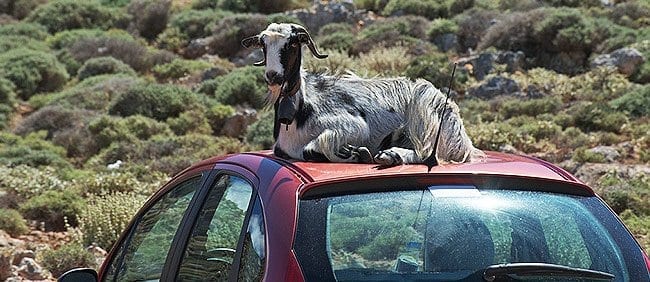
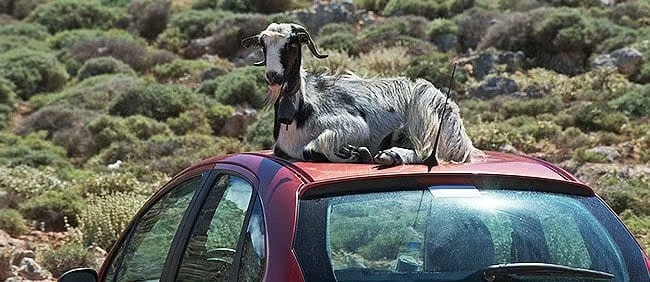
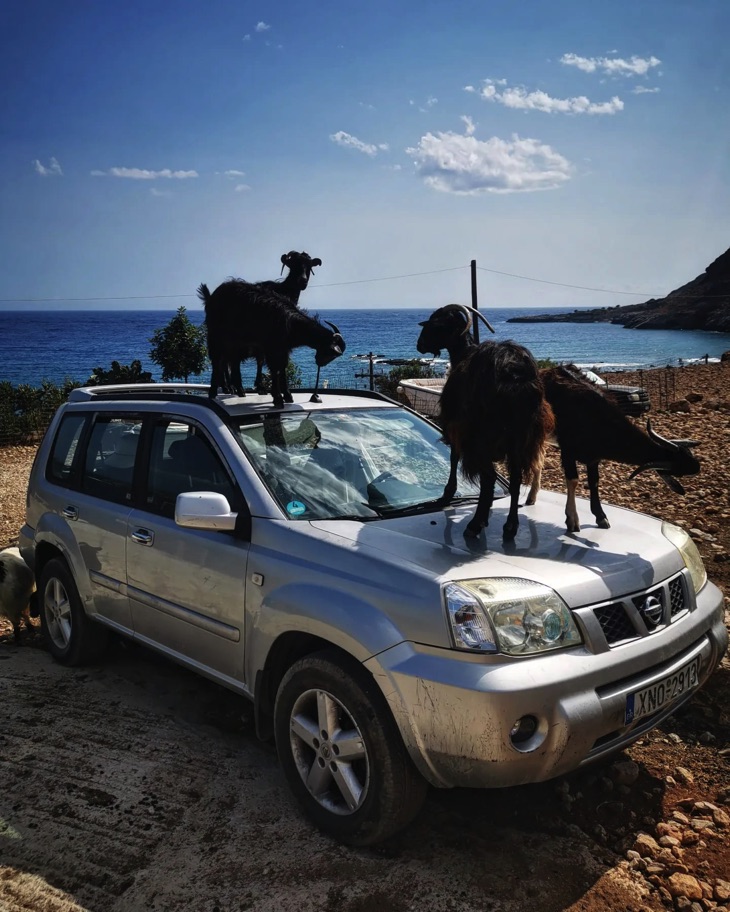
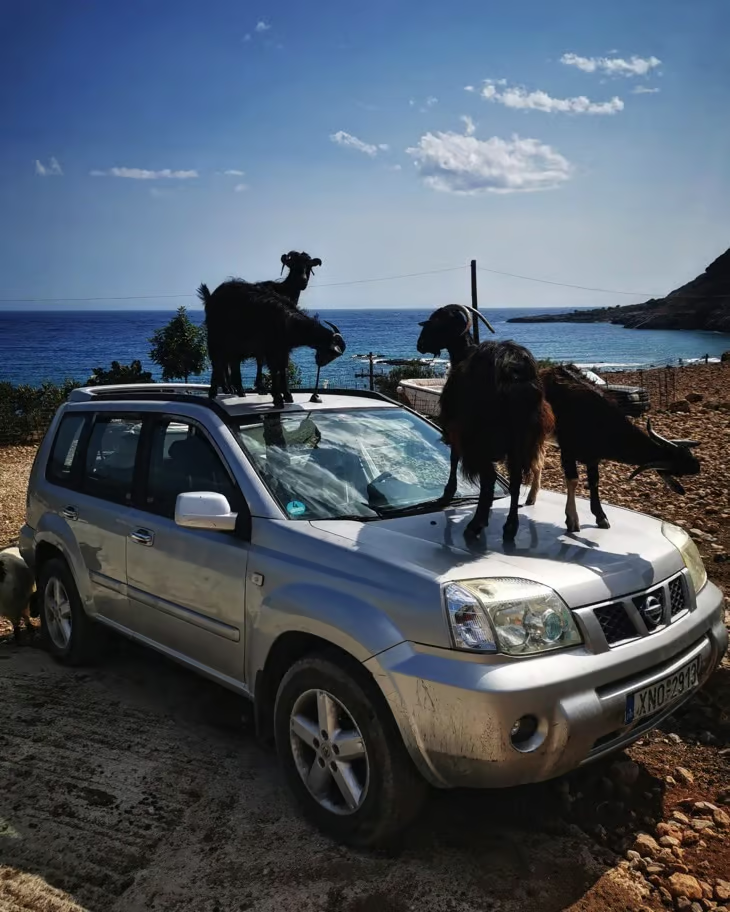
- Occasional livestock – goats and sheep periodically cross rural roads, especially in spring and at dusk
Is it worth renting a car in Crete?
Yes – for any trip longer than 2–3 days, a rental car is essential. Without one, most beaches, gorges, and mountain villages are unreachable. KTEL buses cover inter-city trunk routes (Heraklion–Chania, Heraklion–Agios Nikolaos) but skip coastal roads, the south coast, and the scenic drives that make Crete worth visiting. Day tours from resort hotels cost €40 ($46.15, £34.16)–€80 ($92.30, £68.32) per person per day and tie you to a fixed itinerary; a small rental car at €25 ($28.84, £21.35)–€40 ($46.15, £34.16)/day serves a family of four and lets you stop where you want.
2. Crete Driving Rules and Legal Requirements
Crete follows Greek and EU traffic law: drive on the right, yield to circulating traffic at roundabouts, keep BAC under 0.05%, and carry your license and IDP at all times. Here are the nine rules every driver must know, with fines for violations where applicable:
- Respect the speed limits – 30–50 km/h urban, 90 km/h rural, 110–120 km/h highway
- Drive on the right side and yield to the right at unmarked intersections
- Yield to circulating traffic at roundabouts (standard EU rule)
- Keep BAC under 0.05% – fines €200 ($230.74, £170.80)–€3 ($3.46, £2.56), license suspension 3–6 months
- Carry a valid license (and IDP if required) at all times
- Wear a seatbelt – mandatory for all occupants, front and rear
- Secure children under 1.35 m in appropriate child seats
- Do not use a handheld mobile phone while driving
- Park only in designated areas – fines up to €80 ($92.30, £68.32) (reduced 50% if paid within a week)
Speed Limits in Crete
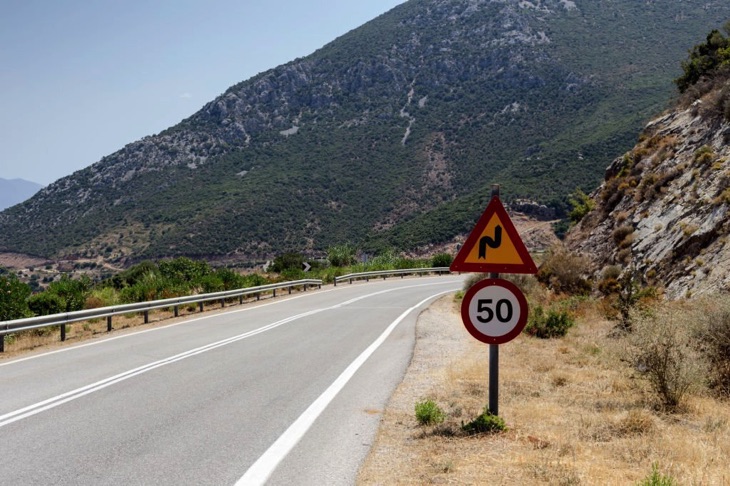
Crete’s speed limits follow the standard Greek framework and are posted in km/h only. Reduce speed below the posted limit in rain, on wet surfaces, or when road conditions deteriorate.
| Road type | Speed limit |
|---|---|
| Urban areas (cities and villages) | 30–50 km/h (19–31 mph) |
| Rural / secondary roads | 90 km/h (56 mph) |
| Highways and motorways (E75/E90) | 110–120 km/h (68–75 mph) |
Highway speed cameras operate in both fixed and mobile forms, concentrated near urban exits and high-accident zones. Rural mountain roads are largely unmonitored, but a fine still applies when a violation is recorded. Most Greek speed cameras face oncoming traffic only.
Driving on the Right Side and Crete Roundabouts
In Crete, drivers use the right-hand side of the road, matching most of the EU and the United States. Overtaking occurs on the left. Visitors from the UK, Cyprus, Australia, New Zealand, or South Africa (where driving is on the left) should plan a short practice loop at the rental depot before heading into traffic.
Roundabout priority: Vehicles already circulating in the roundabout have priority over those entering – give way to traffic approaching from your left as you enter. This matches the standard Greek Road Code (Κ.Ο.Κ.) and EU convention. A few older roundabouts carry yield signs that reverse this rule, so always check the signage at the entry point. Practical note: local practice sometimes differs from the written rule – approach every roundabout cautiously, watch the behaviour of the car ahead, and be prepared to yield even if you technically have right-of-way.
Slower drivers are expected to use the hard shoulder to let faster traffic pass (see Driving Etiquette below). Mopeds frequently overtake on the right, so check the shoulder before changing lanes.
Alcohol Limit and Drunk Driving Fines
Driving in Crete with a BAC above 0.05% is illegal and can result in fines from €200 ($230.74, £170.80) to €3 ($3.46, £2.56), a license suspension of 3–6 months, and jail time for repeat offences. 0.05% is equivalent to approximately 490 ml of beer, 200 ml of wine, 60 ml of ouzo, or 55 ml of whiskey or vodka – but individual tolerance varies, so the safest choice is to abstain entirely before driving.
Penalty structure:
| Violation | Fine | Additional penalty |
|---|---|---|
| BAC 0.05–0.08% | €200 ($230.74, £170.80) | – |
| BAC 0.08–0.11% | €700 ($807.59, £597.80) | License suspended 3 months |
| BAC > 0.11% | €1.2 ($1.38, £1.02)–€3 ($3.46, £2.56) | License suspended 6 months, plates seized up to 6 months |
| Second offence within 2 years | – | Up to 6 months jail |
If you plan to drink, designate a sober driver or use a taxi. Uber does not operate in Crete, but licensed taxis are plentiful in tourist areas.
Driving License Requirements
- EU/EEA license holders drive in Crete using their valid national license with no additional documentation.
- Non-EU license holders need a valid national license plus an International Driving Permit (IDP) issued by the same country as their license.
- Norway, Liechtenstein, Switzerland, and Iceland license holders do not need an IDP.
- UK citizens drive using a UK license without an IDP, even post-Brexit.
- US citizens use a valid national license for stays under six months; stays exceeding 185 days require a Greek license.
Minimum age to drive in Crete: 18. Minimum age to rent a car: 21 (drivers under 25 may pay a “young driver” surcharge; some rental companies cap at 70).
Required documents: valid license, IDP if required, passport, and a credit or debit card in the renter’s name.
Seatbelt and Child Seat Rules
Seatbelt use is mandatory for all vehicle occupants in Crete – front and rear seats – and authorities actively enforce it. Children’s requirements follow EU standards:
- Under 3 years: must be secured in a proper child seat (no exceptions).
- Ages 3–11 or shorter than 1.35 m (4.43 ft): must use an appropriate child restraint (booster seat or child seat).
- Under 10 years: cannot sit in the front passenger seat.
Most rental companies offer child seats at €5 ($5.77, £4.27)–€10 ($11.54, £8.54)/day – reserve in advance, as stock is limited in peak season.
Mobile Phone and Distracted Driving
Using a handheld mobile phone while driving is illegal in Crete and carries fines equivalent to other traffic offences (€100 ($115.37, £85.40)–€350 ($403.80, £298.90) plus license points). Hands-free and Bluetooth are permitted. Use a phone mount with a hands-free setup, or pull over safely before checking maps or messages. Download Google Maps offline before your trip (see Road Conditions and Navigation) to reduce the need to interact with your phone while moving. Running a red light carries a fine of up to €700 ($807.59, £597.80) with immediate license seizure at the roadside.
3. Driving Etiquette in Crete
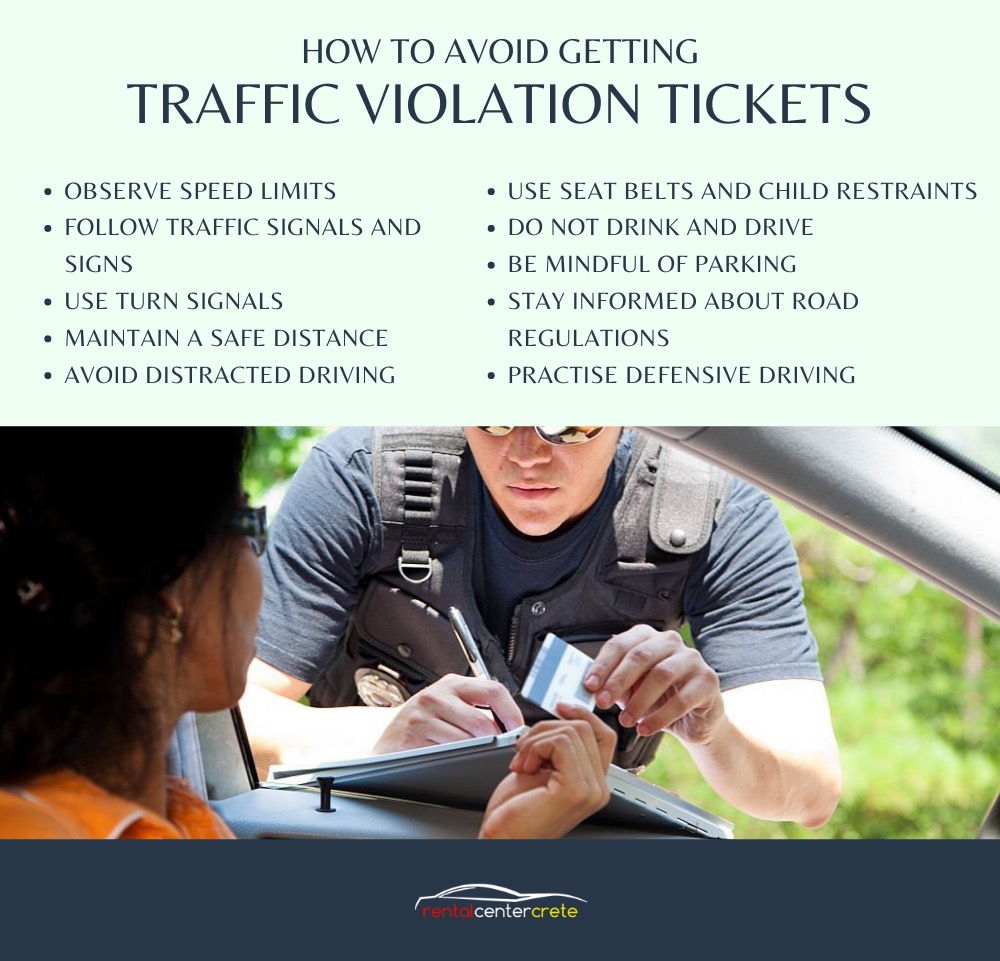
Driving in Crete requires adapting to local customs: use the hard shoulder to let faster drivers pass, tap the horn only as a signal (not frustration), and yield to oncoming traffic on narrow village roads. Greek drivers tend to be confident and assertive – drive defensively, leave extra following distance, and expect the unexpected.
The Hard Shoulder Rule
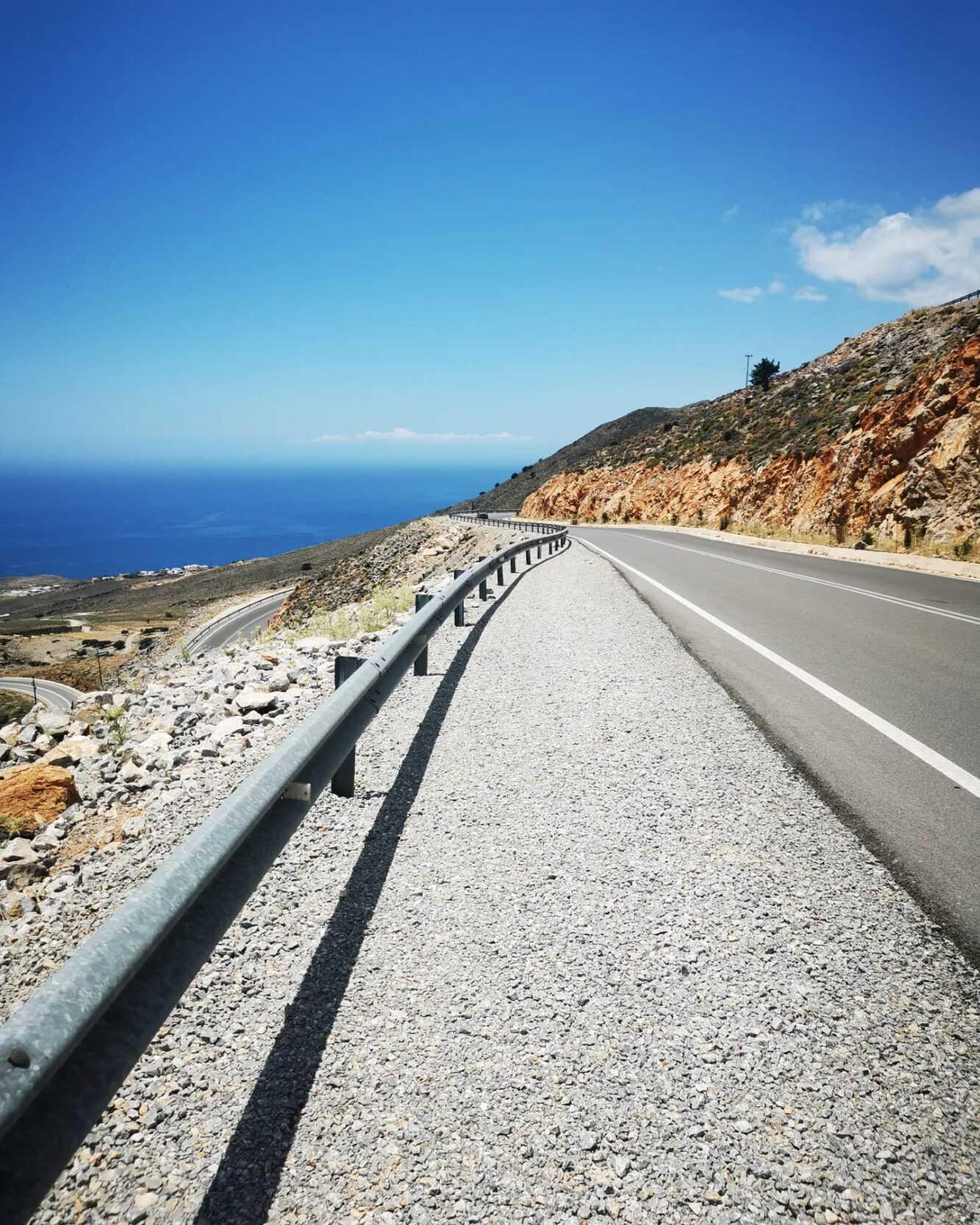
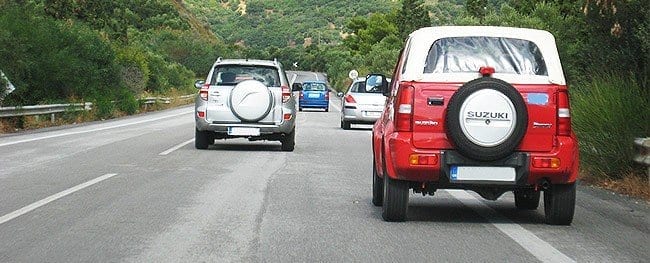
The hard shoulder custom is Crete’s most important unwritten driving rule. When a faster car approaches from behind on a two-lane road, move slightly right onto the paved shoulder to let them pass safely, then return to the lane. You do not need to stop – a brief shoulder move is enough to signal courtesy. This is the standard way slower traffic (campers, scooters, rental cars with cautious tourists) coexists with faster locals on Crete’s winding national road.
Hard shoulders vary in width and sometimes end without warning, so check before moving over. Mopeds frequently use the shoulder to overtake on the right, so watch the shoulder before changing lanes. The hard shoulder is not for parking or prolonged driving – it is a courtesy move, used briefly while the faster car passes.
Overtaking on Crete’s Roads
Overtake with extreme caution on Crete – mountain roads have blind curves, narrow widths, and occasional livestock. Before overtaking:
- Check clear visibility ahead (at least 200 m on a straight section)
- Signal left to communicate your intent
- Check mirrors and blind spots
- Accelerate steadily and pass decisively – don’t linger in the oncoming lane
- Signal right and merge back leaving a safe gap ahead of the car you passed
Yellow lines (solid) prohibit overtaking; white lines permit overtaking when safe and legal. If a local driver overtakes you where you thought it wasn’t possible, that is entirely normal – hold your line, do not speed up.
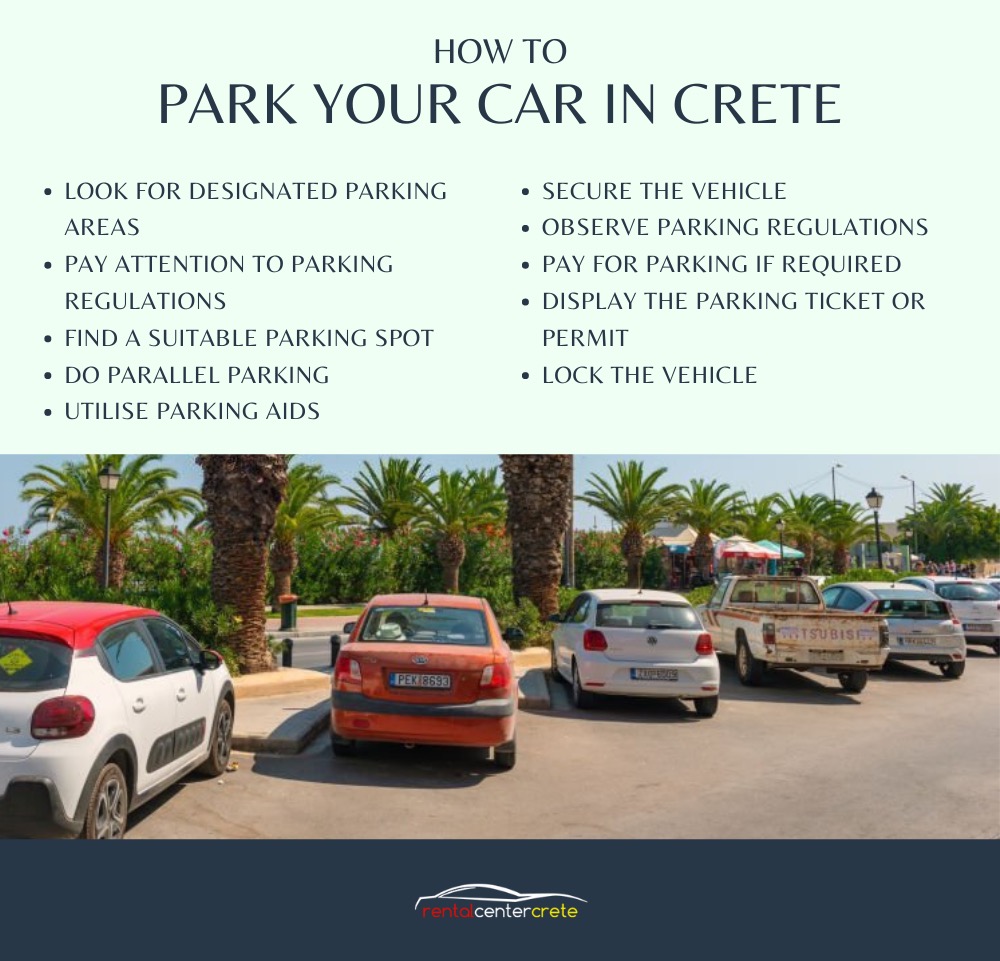
Parking Your Car in Crete
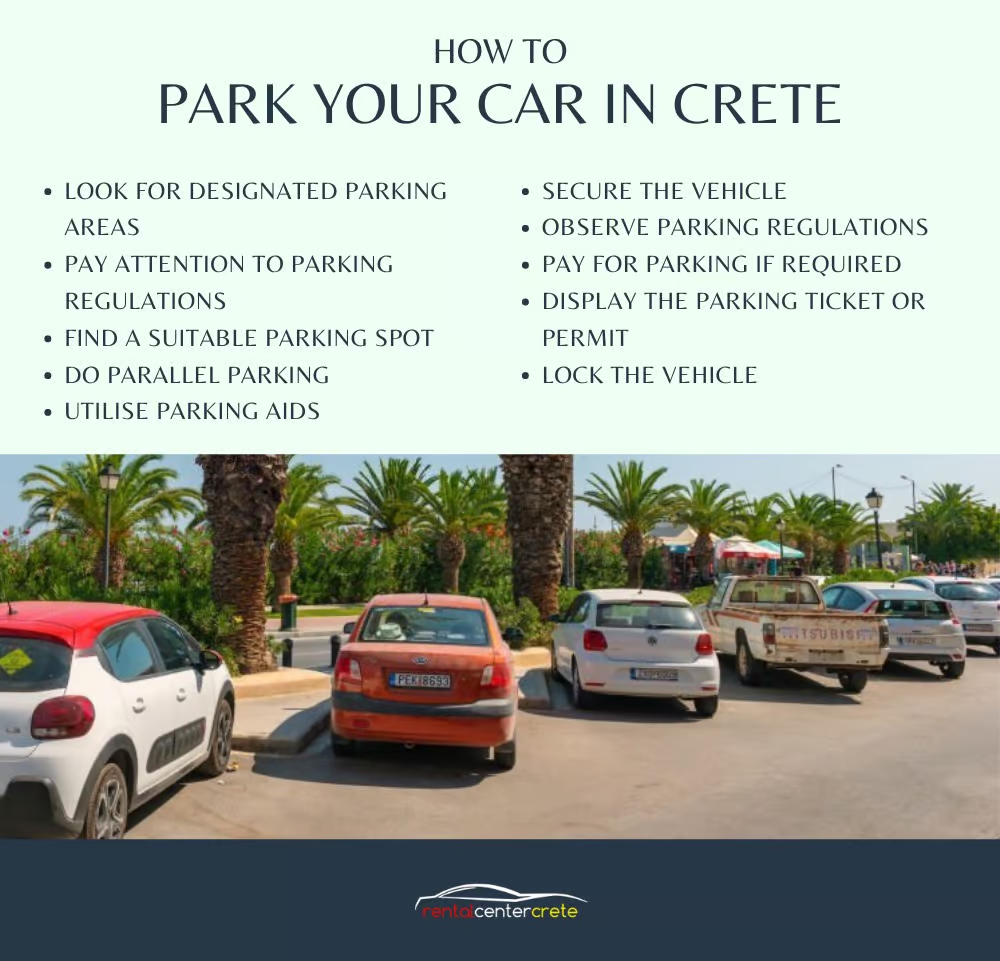
Parking zones are marked by line colour:
- White lines – free parking
- Blue lines – paid parking (use meters, prepaid cards, or mobile apps; display a parking disc with arrival time if required)
- Yellow lines – special vehicle zones, parking prohibited
Payment methods at parking meters include coins and (sometimes) credit cards, with mobile apps and prepaid cards accepted in larger cities. In pedestrian-only zones, historic districts, and streets with no-parking signs, parking is strictly prohibited.
Parking fines reach €80 ($92.30, £68.32), reduced by 50% if paid within a week. Parking garages in city centres sometimes require leaving keys with the attendant. Some residential streets are reserved for permit-holders – watch for signage.
4. Road Conditions and Navigation
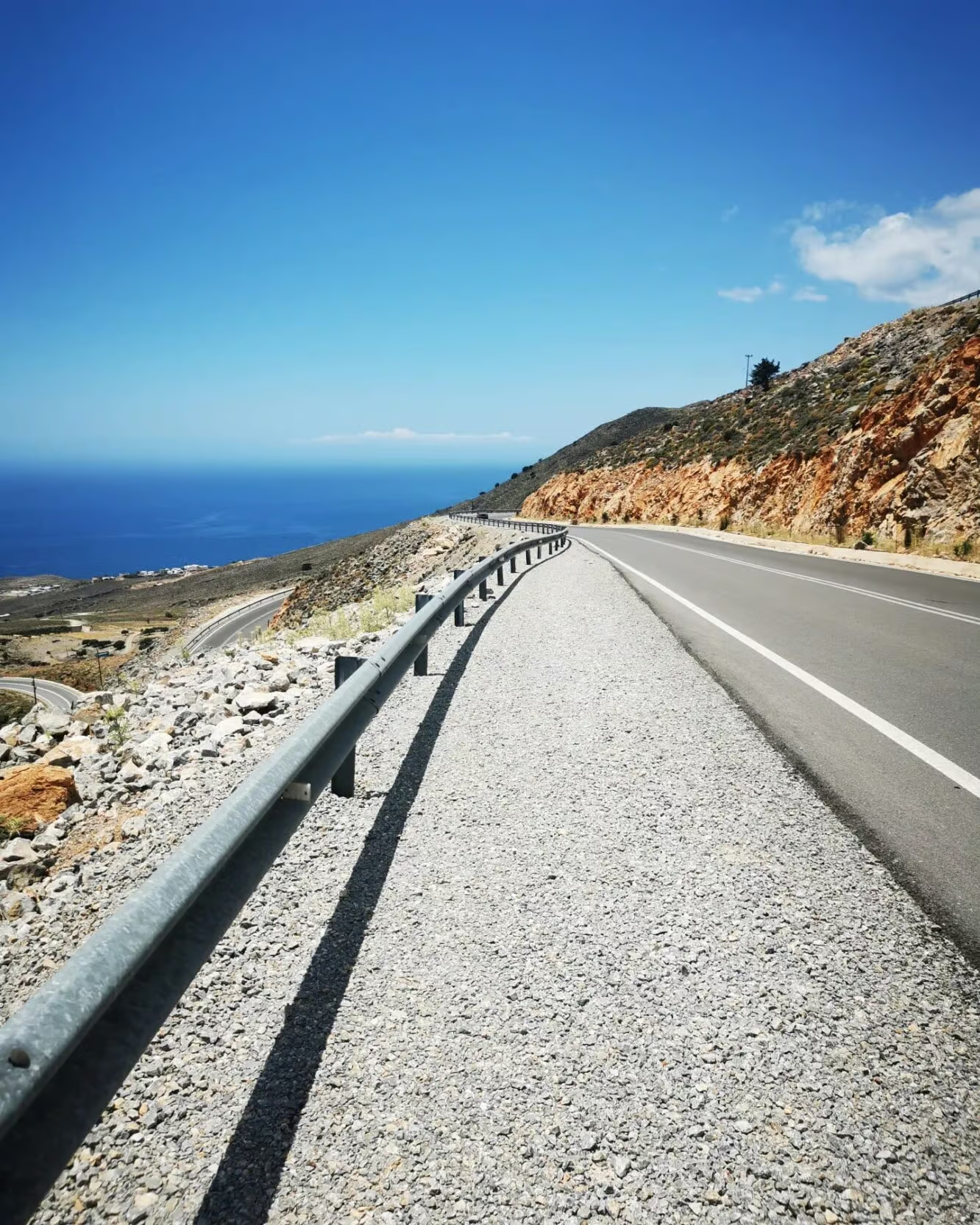
Download Google Maps offline before arriving – cell signal drops in mountain areas, and many rural roads lack signage in English. Road conditions in Crete range from well-paved motorway to gravel tracks, so a little planning avoids 90% of navigation headaches.
GPS and Offline Maps
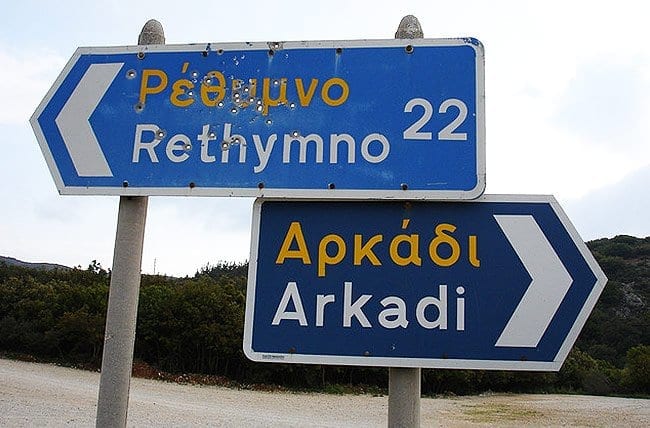
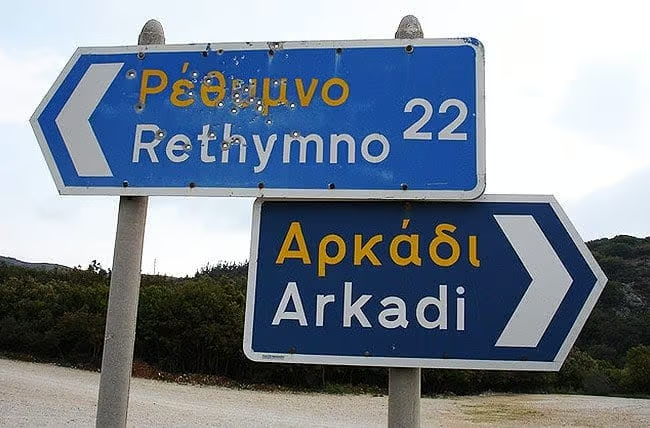
Driving in Crete without GPS risks getting routed onto tracks unsuitable for rental cars. The island’s road network is complex, road signs are often small and infrequent outside cities, and some rural lanes simply have no English signage.
Recommended setup:
- Google Maps with offline maps downloaded – the single most important step; download the full Crete region before you leave Wi-Fi at the airport.
- A dashboard phone mount – check your route without touching the phone (hands-free is legally required).
- Offline alternative: Maps.ME or OsmAnd work without any signal at all.
- Rental GPS: Rental Center Crete rents preconfigured GPS units for pre-booking customers, avoiding the higher cost of buying a device.
When GPS suggests a route that looks like a dirt track or a footpath, trust your eyes and turn back. Google routinely routes small cars onto rural paths in Crete’s interior.
Mountain Roads and Hazards
Crete’s mountain roads – the routes into Lefka Ori (White Mountains), Psiloritis, and the Lasithi Plateau – involve steep inclines, hairpin turns, narrow widths, and occasional uneven surfaces. Practical tips:
- Use engine braking (lower gears) on long descents to save your brake pads
- Sound the horn before blind curves on very narrow roads
- Give way to vehicles coming uphill – they have the right of way
- Watch for livestock (goats, sheep) and falling debris in spring
- Refuel before heading into remote mountain areas – stations are sparse
Speed Cameras in Crete
Highway speed cameras on the E75/E90 north-coast highway have contributed to a notable drop in serious crashes; global studies show speed cameras reduce fatal and serious-injury collisions by 11–44%. Enforcement in Crete is moderate but inconsistent:
- Cameras are concentrated near cities, tourist zones, and high-accident areas
- Rural and mountain roads often lack active monitoring
- Some cameras are fixed and active; others are installed but dormant
- Greek cameras generally monitor one direction only (usually facing oncoming traffic)
Fines are processed through the rental company, which passes them on to you with an administrative fee.
5. Petrol Stations in Crete
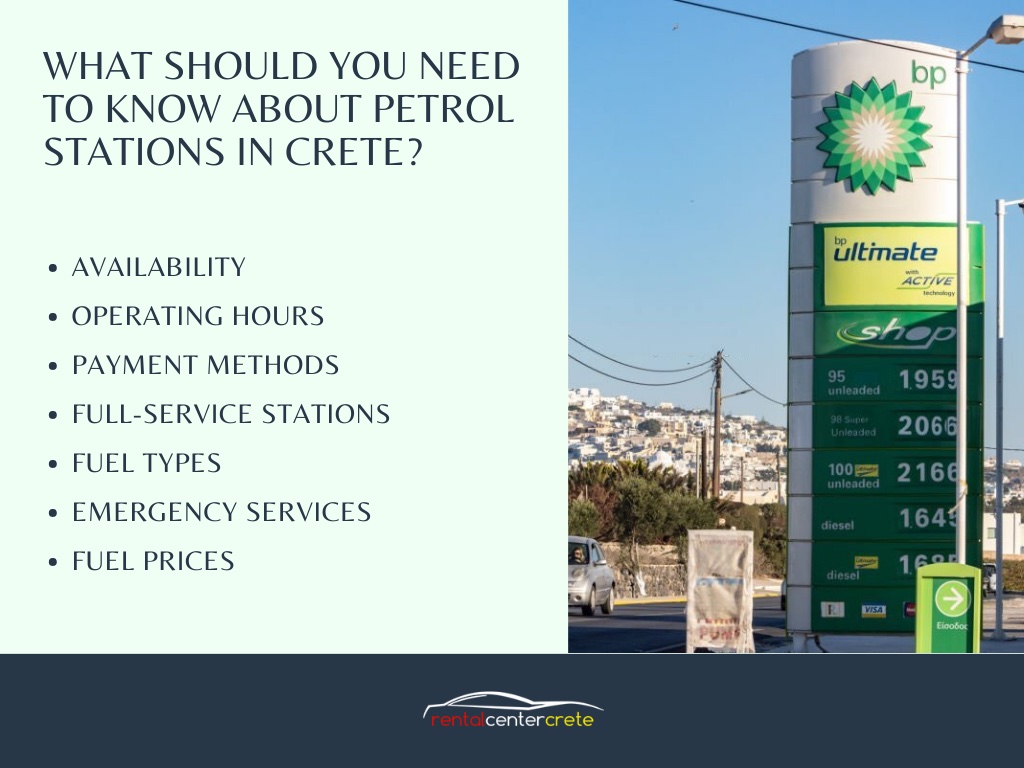
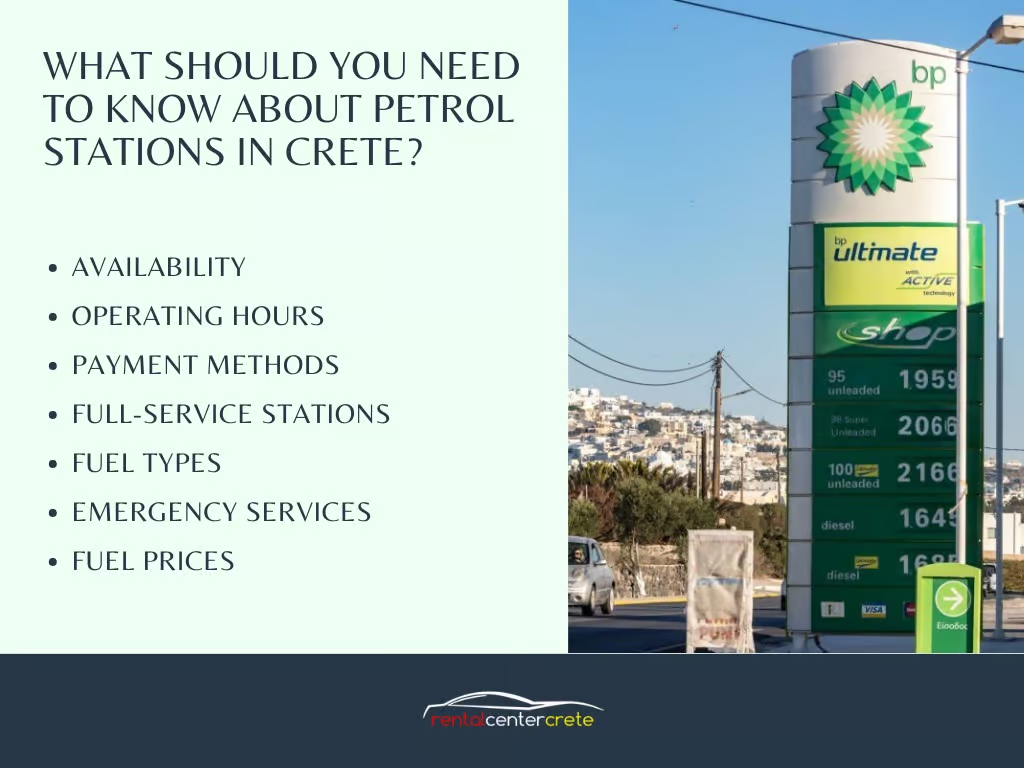
Most petrol stations in Crete are full-service (an attendant fuels your car) and open until around 19:00; remote areas have fewer stations, so refuel when your tank drops below a quarter.
Fuel Types and Prices
Crete’s petrol stations typically offer:
- Unleaded gasoline (95 octane standard; 100 octane “super”)
- Diesel (widely available)
- LPG (limited to specific stations – check in advance if your car needs it)
Fuel prices fluctuate with global oil markets and vary between stations; highway stations tend to be more expensive than town-centre ones. Expect €1.75 ($2.02, £1.49)–€2 ($2.31, £1.71) per litre for unleaded in 2026 (verify current prices on arrival). Cash and major cards are accepted at most stations, but carry some cash in case of payment-system issues or smaller rural stations.
Full-Service Stations and Tipping
In Crete, an attendant will usually pump your fuel, clean your windshield on request, and sometimes check tyre pressure or oil. Tipping is not expected – a simple “thank you” (efcharisto) is the norm. If an attendant goes out of their way (e.g., helps with a flat tyre or a jump-start), rounding up €1 ($1.15, £0.85)–€2 ($2.31, £1.71) is a friendly gesture but never required.
24/7 stations exist on major highways (E75/E90) and in larger cities. A handful of stations offer basic emergency services – tyre inflation, minor repairs, jump-starts.
6. Renting a Car in Crete
Local car rental companies in Crete typically offer better prices and service than international chains; expect to pay €25 ($28.84, £21.35)–€40 ($46.15, £34.16)/day for a small automatic during shoulder season. Book 2–4 weeks in advance during summer to secure automatic transmission and the best rates.
What Kind of Car to Rent
The right choice depends on where you plan to drive:
- City driving (Chania, Heraklion, Rethymno) – a small compact car handles narrow streets and tight parking best.
- Coastal trips and beach days – a compact or small hatchback is plenty.
- Mountain villages and gravel roads to remote beaches (Balos, Preveli, Kedrodasos) – an SUV or 4×4 is safer; some rental agreements actually prohibit taking a standard car on unpaved roads.
- Groups of 5–7 – a small minivan or people-carrier is more comfortable than two sedans.
Automatic vs Manual Transmission
Most rental cars in Crete default to manual (stick shift) transmission, which is cheaper and more widely available. If you are not confident with manual, always request automatic when booking – automatics get reserved early, especially in peak season (June–August), and last-minute availability can be zero.
- Automatic surcharge: typically €5 ($5.77, £4.27)–€10 ($11.54, £8.54)/day over manual
- Strongly recommended for drivers from the US, Canada, and Australia where manual is rare
- Strongly recommended for first-time mountain drivers – automatic removes one significant challenge
How Much Does Car Rental Cost in Crete?
Car rental in Crete is affordable by European standards:
| Season | Compact manual | Compact automatic |
|---|---|---|
| Shoulder (Apr–May, Sep–Oct) | €20 ($23.07, £17.08)–€30 ($34.61, £25.62)/day | €25 ($28.84, £21.35)–€35 ($40.38, £29.89)/day |
| Summer peak (Jul–Aug) | €35 ($40.38, £29.89)–€50 ($57.69, £42.70)/day | €40 ($46.15, £34.16)–€60 ($69.22, £51.24)/day |
| Winter (Nov–Mar) | €18 ($20.77, £15.37)–€25 ($28.84, £21.35)/day | €22 ($25.38, £18.79)–€30 ($34.61, £25.62)/day |
Full comprehensive insurance (CDW with no excess) adds €5 ($5.77, £4.27)–€15 ($17.31, £12.81)/day but is worth it for mountain driving. Booking 2–4 weeks in advance secures better availability and rates; booking on arrival at the airport desk typically costs 20–40% more. Rental Center Crete delivers and collects cars at Heraklion Airport (HER), Chania Airport (CHQ), ports, and hotels at no extra charge.
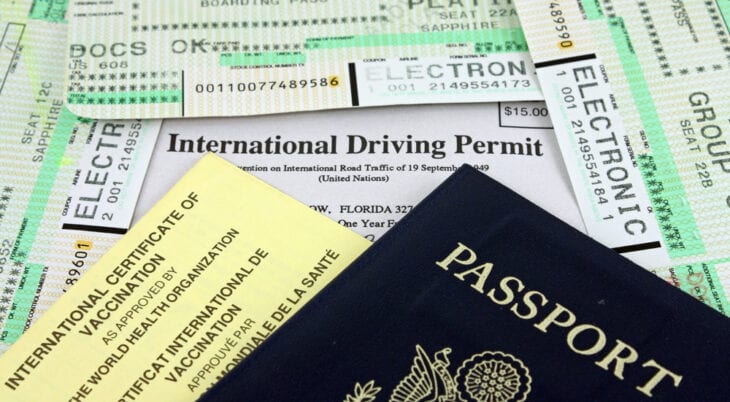
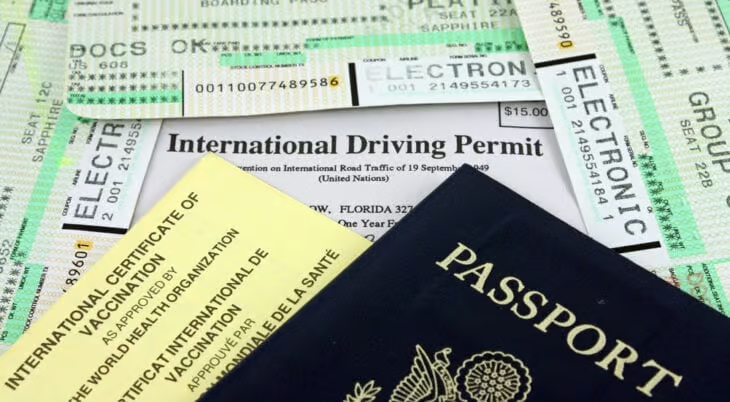
Required Documents
- Valid driver’s license (from your home country)
- International Driving Permit (IDP) if required (non-EU, non-Norway/Switzerland/Iceland/Liechtenstein, non-UK)
- Passport or national ID
- Credit or debit card in the renter’s name (required for deposit)
- Reservation confirmation (voucher or email)
- Additional driver licenses and IDs if more than one person will drive
Car Insurance and CDW
Rental cars in Crete include basic insurance by default. Understand these three layers:
- Third-party liability insurance – legally required; covers damage to other people’s property or injuries to third parties.
- Collision Damage Waiver (CDW) – reduces your financial liability for damage to the rental vehicle. Standard CDW carries an excess (deductible) of €500 ($576.85, £427.00)–€1.5 ($1.73, £1.28).
- Full comprehensive cover / Super CDW – removes the excess entirely. Costs an extra €5 ($5.77, £4.27)–€15 ($17.31, £12.81)/day but replaces several hundred euros of potential liability with zero.
Inspect the car thoroughly before driving off – photograph every panel, the wheels, and the interior. Any unrecorded scratch can be charged against you on return.
7. City Driving: Chania, Heraklion, and Rethymno
Crete’s three main cities each have their own driving character. A compact car handles all of them well; larger SUVs struggle with historic-centre parking.
Driving in Chania
Driving in Chania centres on a compact walled Old Town that is entirely pedestrianised – you cannot drive into the Venetian Quarter, the harbour front, or the narrow alleys of Chalidon and Skridlof streets. Park in one of the paid lots on the edge of the Old Town (Nearchou, Talos Square, or the large Municipal Parking on Piraeus Street) and walk in. Rates: typically €1.5 ($1.73, £1.28)–€2.5 ($2.88, £2.14)/hour, or €8 ($9.23, £6.83)–€15 ($17.31, £12.81)/day. Street-side blue-lined parking is available in the New Town; white lines are free but rarely available near tourist zones. For a fuller breakdown of zones, prices, and how to avoid tickets, see our dedicated guide to parking in Chania.
Traffic in Chania peaks at rush hour (08:00–10:00, 17:00–20:00) and during the morning cruise-ship arrivals. The E65 national road skirts the city – use it to bypass the centre when heading west to Platanias, Kissamos, or Balos, rather than cutting through town. Chania Airport (CHQ) sits 14 kilometers (8.70 miles) east of the city on the Akrotiri peninsula; the airport road is well-signed and takes 20–25 minutes by car.
Driving in Heraklion
Driving in Heraklion is more intense than Chania – the city is Greece’s fifth largest, with heavy traffic, one-way systems, and parking scarcity near the historic centre. The Venetian walls enclose a grid of narrow streets with limited access; most visitors park in the large public lots near the port (Karantzoglou Street, Arsenal car park) and walk in. Rates: €1 ($1.15, £0.85)–€2 ($2.31, £1.71)/hour, €6 ($6.92, £5.12)–€12 ($13.84, £10.25)/day.
The E75 national highway runs along the northern edge of the city – take the Heraklion exits for Knossos, the airport (HER, 5 kilometers (3.11 miles) east), and the port. Avoid the urban centre between 07:30–09:30 and 17:00–20:00 if possible.
Driving in Rethymno
Rethymno is easier than Chania or Heraklion – the Old Town is small and walkable, with paid parking lots immediately outside the Venetian walls (Melissinou and Moatsou streets). Rates are cheaper: €1 ($1.15, £0.85)–€1.5 ($1.73, £1.28)/hour. The E75 highway exit drops you directly onto the waterfront. Street parking in the New Town is generally available even in summer.
8. Famous Places to Drive to in Crete
A rental car unlocks Crete’s most rewarding destinations – Balos Beach, Samaria Gorge, and the southern coast villages are unreachable or impractical by bus. For deeper context on the island’s heritage sites, see our overview of Crete landmarks, monuments and historical points of interest.
- Heraklion – capital and arrival airport for most visitors; home to the Heraklion Fortress, the archaeological site of Knossos, and the Archaeological Museum.
- Chania – western Crete’s main city, famous for its Venetian harbour, narrow alleys, and nightlife in the Old Town.
- Rethymno – between Chania and Heraklion, with a well-preserved old town of Ottoman and Venetian influences and the Fortezza fortress above.
- Agios Nikolaos – eastern Crete, known for Lake Voulismeni and the nearby island of Spinalonga.
- Elounda – tranquil coastal town near Agios Nikolaos, with luxury resorts and clear waters.
- Samaria Gorge – 16 kilometers (9.94 miles) hike through the White Mountains, one of Europe’s longest gorges.
- Balos Beach – turquoise lagoon on the northwest coast, reached by a rough 7 kilometers (4.35 miles) track (4×4 recommended) or a boat from Kissamos.
- Preveli / South Coast – palm-fringed beaches on the Libyan Sea, accessible only by car.
9. Emergency Numbers for Driving in Crete
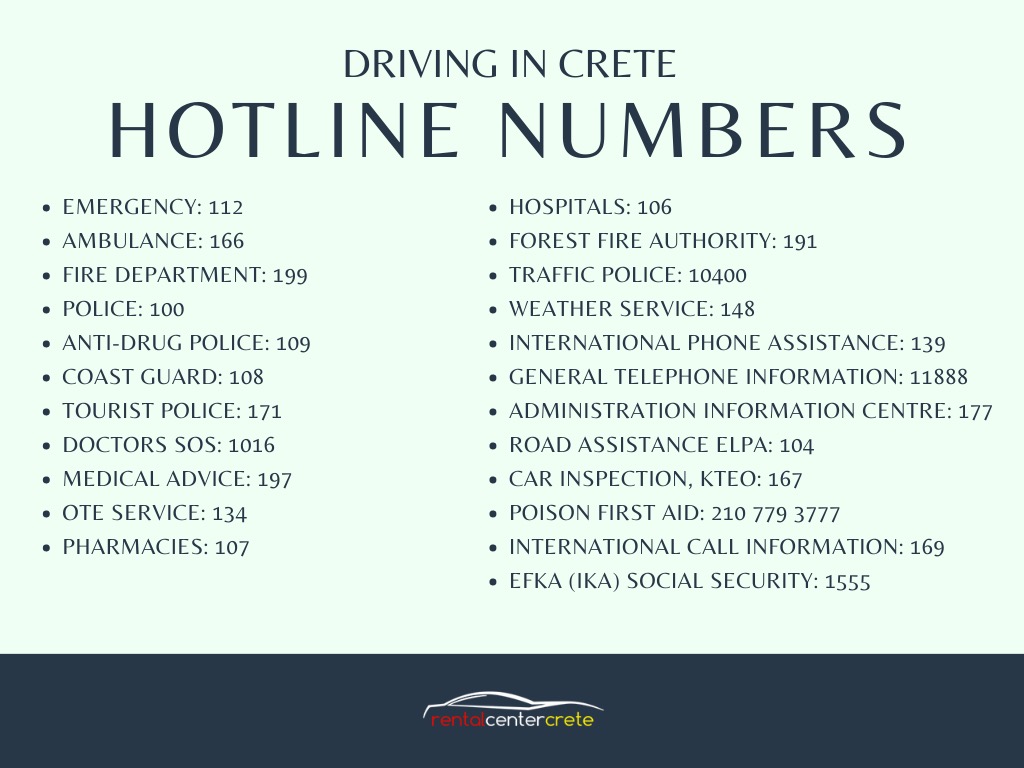
In any emergency while driving in Crete, call 112 (pan-European); for road breakdown call ELPA on 104, and for tourist police call 171.
| Service | Number |
|---|---|
| Emergency (pan-European) | 112 |
| Ambulance | 166 |
| Fire Department | 199 |
| Police | 100 |
| Tourist Police (English-speaking) | 171 |
| Road assistance (ELPA) | 104 |
| Car inspection (KTEO) | 167 |
| Traffic Police | 10400 |
The 112 emergency number works from any phone (including locked, no-SIM, or out-of-contract phones) and connects to English-speaking operators. Save it before you start driving.
10. Roadside Shrines on Crete’s Roads
Small religious structures – known as roadside shrines or wayside shrines – appear throughout Crete, especially at bends, intersections, and accident-prone stretches. They resemble miniature chapels or churches and are adorned with religious icons, candles, and symbolic objects.
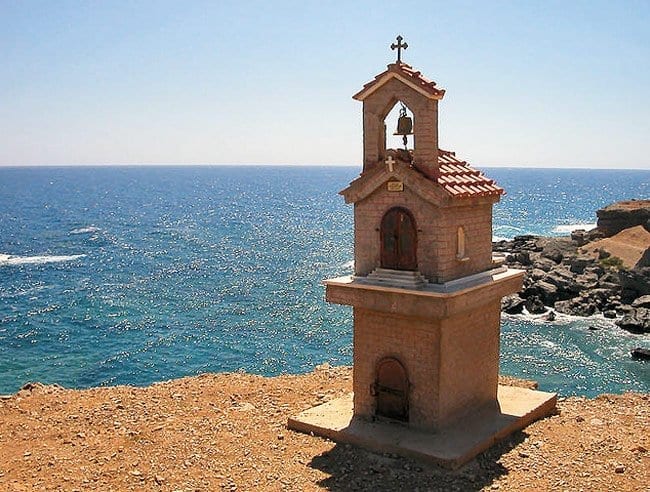
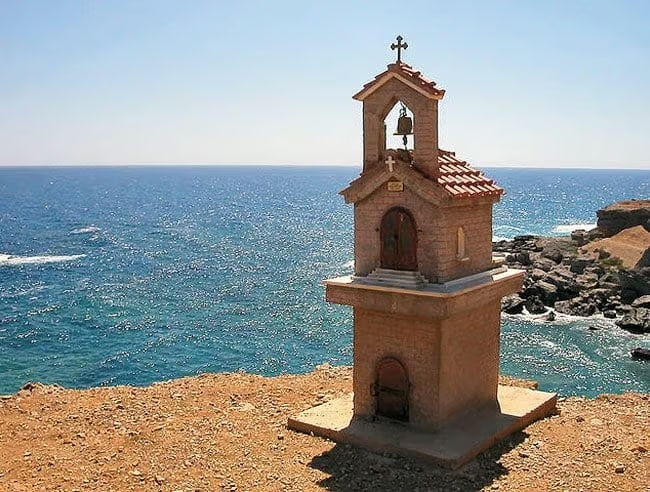
Two kinds of shrines exist:
- Thanksgiving shrines commemorate a driver or passenger who survived a serious accident at that spot – often lit with an oil lamp by the family of the person saved.
- Memorial shrines mark a fatal accident location – quiet reminders to drive carefully, built by relatives of the victim.
A dense cluster of shrines on a particular bend is a real-world warning: that corner has seen multiple accidents. Slow down and take it with extra caution.
What are the Tips when Renting a Car in Crete?
There are several tips to keep in mind to ensure a smooth and enjoyable experience when renting a car in Crete.
- Book in advance: It is advisable to book a car rental in Crete in advance, especially during peak travel seasons, to ensure availability and get the best rates.
- Choose a reputable rental company: Select a reliable and well-established car rental company with positive reviews and a good track record. Doing so helps ensure quality service and reduces the risk of any issues during the rental period.
- Check the rental terms and conditions: Carefully review the rental terms and conditions, including insurance coverage, mileage limitations, fuel policy and any additional fees or charges. Understand the rental agreement before signing it.
- Verify insurance coverage: Check the rental car’s insurance coverage, including liability and collision damage waiver (CDW). Consider purchasing additional insurance if necessary to have comprehensive coverage.
- Inspect the car before rental: Thoroughly inspect the rental car for any existing damage or scratches. Take photos or videos as evidence to avoid being held responsible for pre-existing issues. Report any damage to the rental company.
- Be familiar with the vehicle: Take a few moments to understand the car’s features, controls and any specific driving nuances. Adjust the mirrors and seats and take the time to become familiar with the dashboard controls.
- Follow traffic rules and regulations: Observe and adhere to the traffic rules and regulations of Crete. Pay attention to speed limits, parking restrictions and any specific local driving regulations.
- Park securely: Remember to choose well-lit and secure areas when parking the rental car. Avoid leaving valuables in plain sight, as it tends to attract unwanted attention.
- Refuel before returning: Make sure to return the rental car with a full tank of fuel, as agreed upon in the rental agreement. Failure to do so results in additional charges or fees.
- Report any issues promptly: Promptly inform the rental company and follow their instructions if any problems or accidents occur during the rental period. Doing so helps resolve issues efficiently and ensures that travellers know how to choose the right car to rent in Crete.
What kind of car should a traveler rent in Crete?
Choosing the right car to rent in Crete depends mainly on where you plan to drive during your trip. The island has a mix of modern highways, narrow streets in historic towns, and rough dirt roads leading to remote beaches and mountain villages. Travelers who plan to stay mostly in major cities and use well-maintained roads usually do not need a large vehicle, while those exploring more remote parts of the island benefit from something more rugged.
For city driving in places like Chania or Heraklion, a small compact car is typically the best option. Many streets in historic centers and villages are narrow, and parking spaces can be tight. A compact hatchback is easier to maneuver, cheaper to rent, and more fuel-efficient. This type of car works well if your plans focus on sightseeing in towns, visiting nearby beaches accessible by paved roads, and driving along the island’s main highway.
An SUV or 4×4 becomes a better choice if you plan to explore Crete’s rugged terrain or visit destinations that require driving on gravel or uneven roads. Remote areas, mountain routes in regions like the Lefka Ori, or beaches reached via dirt tracks (strictly forbidden by car rental companies) are easier and more comfortable to access with a vehicle that has higher ground clearance and stronger traction. Although these vehicles cost more to rent and may be harder to park in towns, they provide better stability and confidence when driving outside main tourist routes.
For most travelers visiting Crete for general sightseeing, a compact car is the most practical and economical choice. Renting an SUV or 4×4 is mainly recommended for travelers who specifically plan to explore remote landscapes, mountain roads, or isolated beaches where road conditions are rougher.
What are the Documents Necessary to Rent a Car in Crete?
There are several documents that are typically required when renting a car in Crete. These documents vary slightly depending on the rental company, but generally include the following listed below.
- Valid driver’s licence: Travellers need a valid driver’s licence from their home country or an International Driving Permit (IDP). The driver’s licence must be in English or accompanied by a certified translation.
- Passport or identification: A valid passport or another form of identification, such as a national ID card, is usually required to verify the renter’s identity.
- Credit or Debit card: Most car rental companies in Crete require a valid credit card in the renter’s name. The credit card or a debit is used for security purposes and to cover any additional charges or damages that occur during the rental period. It is important to ensure that the card has a sufficient credit limit.
- Age requirements: The minimum age to rent a car in Crete is typically 21 years old, although some rental companies require drivers to be 23 or 25 years old. Young drivers under a certain age need to pay an additional young driver surcharge when the car rental booking is placed on international companies.
- Reservation confirmation: It is advisable to have a copy of the rental reservation confirmation or voucher, either in print or digital format, to present to the rental company upon arrival.
- Additional driver information: Valid driver’s licences and identification documents for the additional drivers are required at the time of rental.
- Insurance coverage: Travellers need to provide proof of insurance coverage. It includes personal car insurance or purchasing additional insurance from the rental company to cover any potential damages or accidents.
It is important to note that these are general requirements and it is recommended to check with the specific rental company for their exact documentation requirements and any additional conditions or restrictions that apply.
Do Rental Cars have Insurance?
Yes, rental cars typically include insurance coverage. The purpose of rental car insurance is to secure the renter and the rental vehicle in the event of an accident, damage or theft. The particular insurance coverage provided varies based on the rental company and the form of insurance selected. A Collision Damage Waiver (CDW) or Loss Damage Waiver (LDW) is a common form of coverage that reduces the renter’s financial liability for damage to the rental vehicle.
Liability insurance is another essential coverage that protects against damage to other people’s property or injuries to third parties if the renter causes an accident. Personal Accident Insurance (PAI) for medical expenses and accidental fatality benefits, as well as coverage for personal belongings in the rental vehicle, are all available as additional insurance options.
It is imperative that renters examine the insurance coverage offered by the rental company, comprehend any limitations or exclusions and consider their own insurance options to ensure adequate coverage during the rental period. Drivers are able to make informed decisions regarding their car rental insurance coverage by meticulously reading the policy and discussing any questions or concerns with the rental company.
Are Cretan Roads Safe?
Yes, Cretan roads are generally considered safe for driving. Greece, including the island of Crete, has made significant efforts to improve road safety in recent years. The road infrastructure in Crete is well-maintained, with a network of highways, main roads and local routes connecting various towns and villages. Traffic regulations and road signage are in place to guide drivers and ensure orderly traffic flow.
It is important for drivers to exercise caution and be aware of certain factors while driving on Cretan roads. There are some challenging road conditions, such as narrow and winding roads, in mountainous areas. It is crucial to adhere to speed limits and drive defensively, especially on curvy or unfamiliar routes.
Local driving habits and road etiquette differ from what drivers are accustomed to in their home countries. It is advisable to familiarise oneself with the local driving customs and etiquette to ensure a smooth and safe driving experience. It includes being patient, respecting other drivers’ rights of way and using indicators when changing lanes or making turns.
Following traffic rules, driving defensively and being aware of the local driving environment enable drivers to enjoy a safe and pleasant experience on the roads of Crete. It is always a good idea to stay informed about any specific road conditions or advisories and to adjust driving behaviour accordingly.
Does a Driving License Require Driving in Crete?
Yes, a driving licence is required to drive in Crete. Individuals who wish to drive in Crete must possess a valid driving licence just like in any other location. The licence must be recognized and accepted in Greece, allowing the holder to legally operate a vehicle on Cretan roads. It is essential to have the appropriate driving licence category for the type of vehicle being driven.
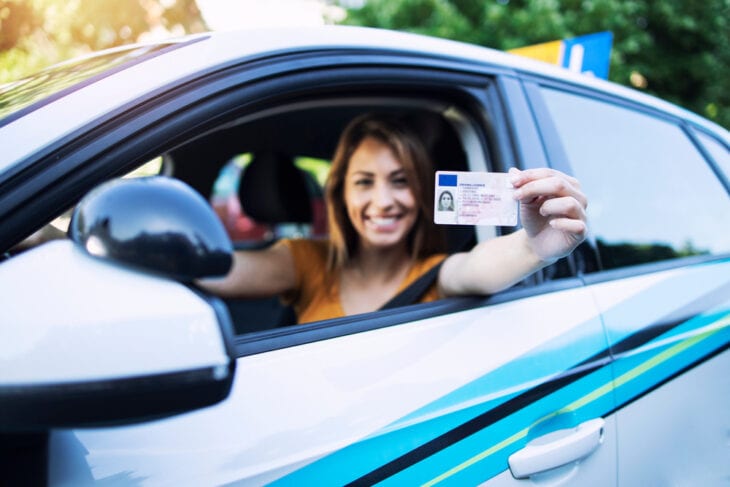
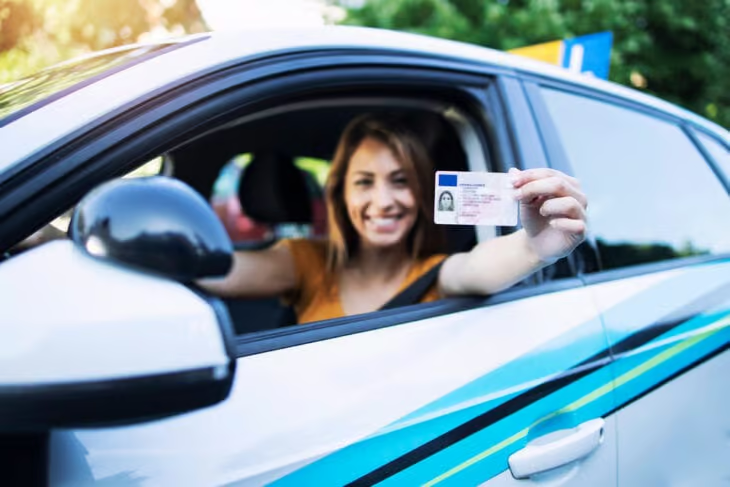
Visitors from other countries must ensure that their driving licence is either in English or accompanied by an official translation. It is important to carry a driving licence at all times while driving in Crete, as it tends to be requested by authorities in case of any traffic stops or incidents. Complying with the legal requirement of possessing a valid driving licence helps ensure a safe and legal driving experience on the island.
Frequently Asked Questions
Is it easy to drive in Crete?
For experienced drivers, yes – with a one-day adjustment period. The main challenges are narrow mountain roads, assertive local driving style, and the hard shoulder custom. Cities (Heraklion, Chania) can be congested at rush hour, but the motorway network is modern and well-signed. Book an automatic transmission if you are not confident with manual, and download offline maps before leaving the airport.
Is it safe to drive in Crete?
Yes – Cretan roads are generally safe for driving. Greece has significantly improved road infrastructure over the past two decades, and the main north-coast highway (E75/E90) along with major arterial roads are well-maintained. Rural mountain roads require more caution due to narrow widths, steep inclines, hairpin turns, and occasional livestock. Drive defensively, use the hard shoulder custom, keep extra following distance, and avoid night driving on unlit mountain routes.
What side of the road do they drive on in Crete?
Crete drives on the right-hand side of the road, same as mainland Greece, most of the EU, and the United States. Overtaking is done on the left, and at unmarked intersections you yield to traffic coming from your right. Visitors from the UK, Cyprus, Australia, New Zealand, Ireland, or South Africa (where driving is on the left) should plan a short practice loop at the rental depot before heading into traffic.
How do roundabouts in Crete work?
At Crete roundabouts, vehicles already circulating have priority over those entering – give way to traffic approaching from your left as you enter. This matches the standard Greek Road Code (Κ.Ο.Κ.) and EU convention. A few older roundabouts carry yield signs that reverse this rule, so always check signage at the entry point. Local driver behaviour sometimes ignores the written rule, so approach every roundabout cautiously, watch the car ahead, and be ready to yield even when you technically have right-of-way.
Do you need GPS to drive around Crete?
Yes – GPS navigation is essential in Crete. Road signs are often small, unclear, and infrequent outside cities. Use Google Maps with offline maps downloaded before you leave the airport’s Wi-Fi.
Does driving in Crete require a driving license?
Yes. You must carry a valid driving license at all times. EU/EEA licenses are accepted directly; non-EU drivers typically need an International Driving Permit (IDP) alongside their national license. UK, Swiss, Norwegian, Icelandic, and Liechtenstein licenses are accepted without an IDP.
Is it hard for an American to drive in Greece?
Moderately – the main adjustments are driving on the right (same as the US), navigating narrower lanes, and the hard shoulder custom. Book an automatic transmission – most rental cars default to manual, which is unfamiliar to most US drivers. Download offline maps and give yourself a practice loop near the rental office before heading into traffic.
Can you drive in Crete with an American license?
Yes – a US driver’s license combined with an International Driving Permit (IDP) is accepted for stays under six months. The IDP must be issued in the same country as your US license (AAA or AATA offices issue it in the US). For stays longer than 185 days, you must convert to a Greek license.


What is the best time for a Crete road trip?
April to mid-June and mid-September to October – mild temperatures, low traffic, open tourist sites, and lower car rental rates. July and August bring the hottest weather (35–40°C), highest prices, and heaviest traffic. Winter (November–March) is cheap and quiet but some mountain roads close after heavy rain or snow.
Speed camera effectiveness data: UK Department for Transport (2022) – “Speed Cameras and Casualty Reduction in Great Britain.” Greek Road Code (Κ.Ο.Κ.): Presidential Decree 167/2014 (last amended 2023). Fines and age limits verified against Greek Ministry of Transport publications, April 2026.