





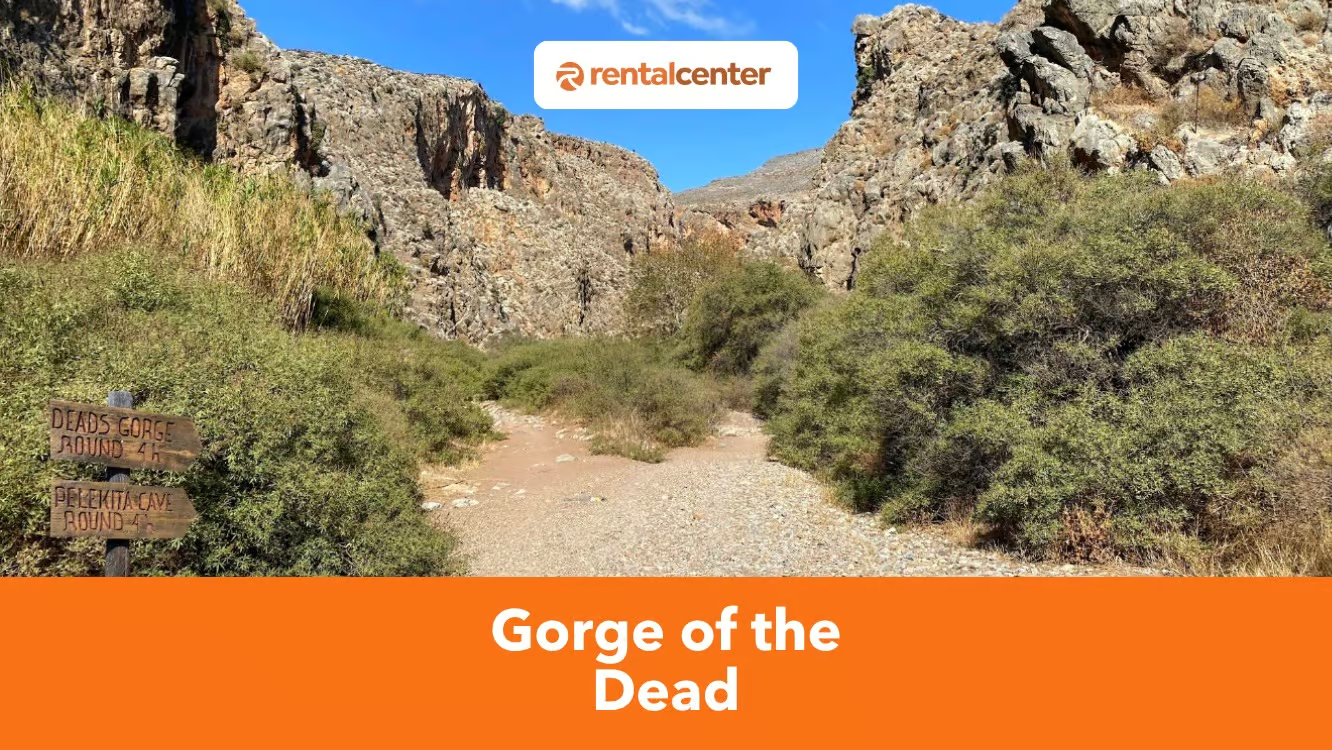
The Zakros Gorge, also known as Gorge of the Dead, is a significant natural and archaeological site in eastern Crete. The gorge stretches 2.5 kilometers (1.55 miles) to 4 kilometers (2.49 miles) kilometers, descending from the village of Ano Zakros to Kato Zakros Beach. Ancient Minoans used the gorge’s caves as burial sites nearly 4,000 years ago, giving it its name. The trail is part of the E4 European long-distance path, and offers an accessible hike through towering cliffs and historic landmarks. Hikers typically complete the route in 2 kilometers (1.24 miles) to 3 kilometers (1.86 miles) hours. Spring, with temperatures from 24°C (75.2 °F) to 3°C (86 °F), is the best season to visit the Gorge of the Dead, though the trail remains open year-round.
Nearby attractions include Kato Zakros Beach, Pelekita Cave, and Chochlakies Gorge. Visitors can reach the trail by car rental from Sitia or by public bus, with parking available at both ends. Overnight stays are available at local accommodations such as Katerina Apartments and Terra Minoika Boutique Resort. Dining options near the gorge include beachside tavernas like Nostos and Akrogiali. The Gorge of the Dead offers a blend of natural beauty, ancient history, and coastal scenery, making it one of the must-see attractions on the island of Crete.
What is the Zakros Gorge?
The Zakros Gorge, or Gorge of the Dead, is a natural and archaeological site in eastern Crete, a rugged canyon with majestic cliffs and traditional burial caves. The gorge was formed through the gradual erosion of limestone by two streams, Adravastra and Pano Zakros, over thousands of years. The Minoans used the caves along the cliffs as burial sites nearly 4,000 years ago, a practice that gave the site its name. Archaeologists have uncovered human remains, pottery, and artifacts in these caves, providing significant insights into Minoan funerary customs. The gorge ends at Kato Zakros, near the Minoan Palace of Zakros, an important administrative and commercial hub of the ancient civilization. The area is preserved as part of the Sitia Geopark and Natura 2000 network, which protects its distinct ecology and cultural heritage. The gorge draws many visitors each year, contributing to Crete’s tourism by offering a well-marked hike through natural scenery and archaeological landmarks.
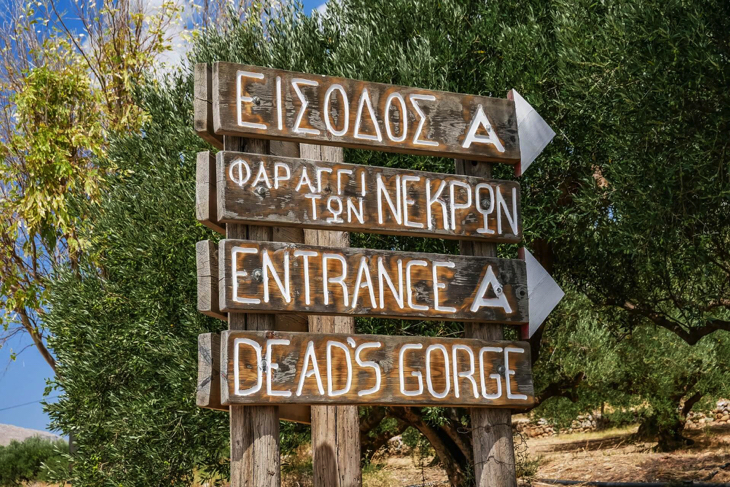
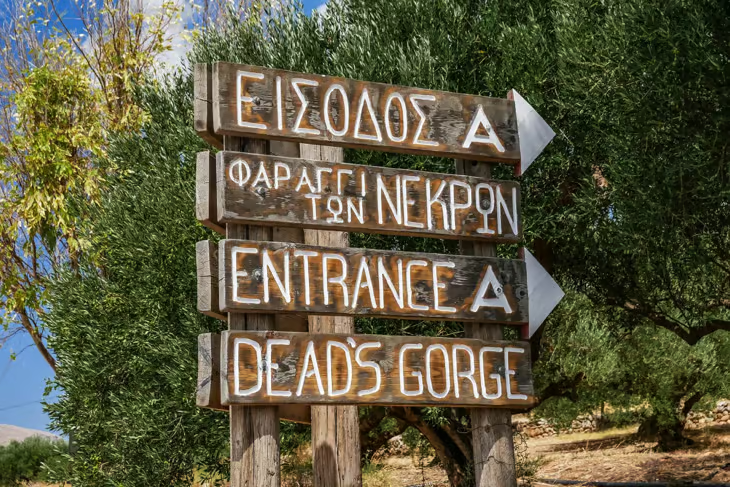
Hiking the Zakros Gorge is moderately easy, an outdoor activity enjoyable for most visitors with basic fitness. The trail stretches between 2.5 kilometers (1.55 miles) to 4 kilometers (2.49 miles), depending on the chosen starting point, and typically takes 2 to 3 hours to complete one way. The path follows a dry riverbed with uneven ground and loose stones, which can pose minor risks such as slips or twisted ankles. The trail does not require technical climbing, and visitors do not need a guide to complete the hike. Local services offer hiking guides for visitors who prefer an organized experience. Elderly people with good mobility can hike the gorge, though caution is advised on uneven sections. Couples frequently hike the trail as a shared activity, while families with older children often find it suitable. The hike is less recommended for very young children due to the gorge’s rocky terrain.
The best time to visit the Zakros Gorge is during spring from March to May, when temperatures hover around 24°C (75.2 °F) to 3°C (86 °F). It is during this period when wildflowers bloom, and the weather remains mild, making the hike pleasant. The gorge remains open year-round, with no official seasonal closures. Temperatures often exceed 3°C (86 °F) in summer (June to August), and the trail becomes hotter and more demanding, especially during midday hours. Autumn, from September to November, offers cooler conditions and fewer visitors, providing an ideal experience for hikers seeking a quieter adventure. The gorge remains open even in winter (December to February), but seasonal rains may increase water flow and create slippery conditions along the trail. Hikers should exercise caution during wet months and check weather forecasts before planning a winter visit.
How does the Zakros map look?
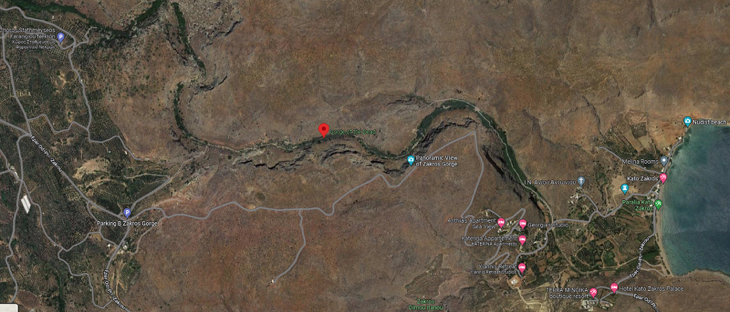
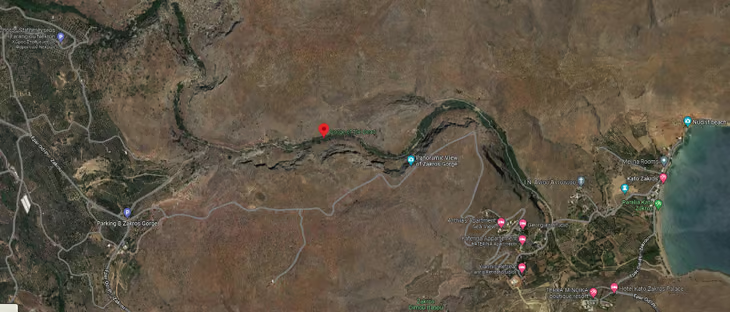
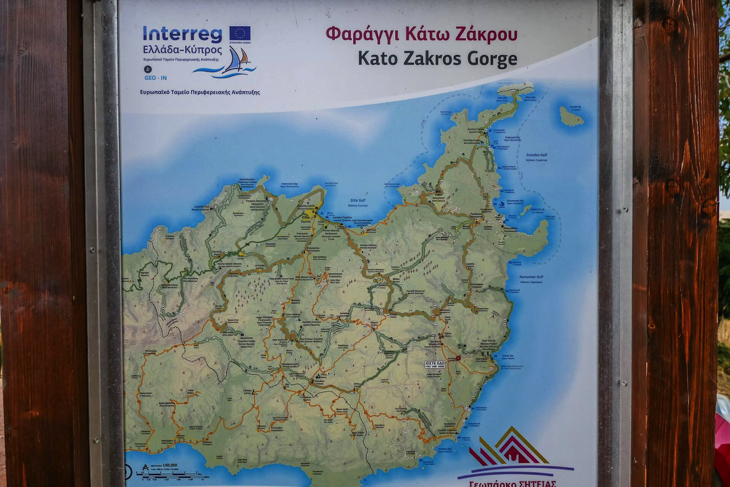
The Zakros Gorge map outlines a linear trail that starts in the village of Ano Zakros and ends at Kato Zakros beach. The trail measures 2.5 kilometers (1.55 miles) to 4 kilometers (2.49 miles) in length and descends roughly 0.1 kilometers (0.06 miles) in elevation from start to finish. The path passes through steep cliffs that rise up to 0.35 kilometers (0.22 miles) and follows the ancient riverbed shaped by the Adravastra and Pano Zakros streams. The map highlights key landmarks, such as the Caves of the Dead, the Minoan Palace of Zakros, and the beach at Kato Zakros. Visitors can expect to encounter rocky terrain, seasonal wildflowers, and diverse flora along the route. The map does not typically mark dedicated rest areas, permanent water sources, or emergency stations, so hikers should prepare accordingly. The topography consists of gradual descent sections mixed with uneven and rocky portions requiring careful footing.
Find below an image describing the Zakros Gorge map.
What are the hiking routes for the Zakros Gorge?
Find below a list of some of the hiking routes for the Gorge of the Dead:
- Ano Zakros to Kato Zakros. The primary hiking route through the Gorge of the Dead commences at Ano Zakros, a small village located 38.5 kilometers (23.92 miles) south of Sitia. This 4 kilometers (2.49 miles) trail follows a gradual descent of approximately 0.1 kilometers (0.06 miles), ending at Kato Zakros near the Libyan Sea. Hikers will encounter rocky paths, ancient burial caves, and towering cliffs reaching up to 0.35 kilometers (0.22 miles) high. The trail passes notable landmarks such as the Caves of the Dead and the Minoan Palace of Zakros. Most tourists complete this hike in Crete in 2 to 3 hours, depending on pace and rest stops.
- Mid-Gorge Access Point to Kato Zakros. A shorter hiking route begins at a mid-gorge access point reachable by a dirt road from Ano Zakros. This 2 kilometers (1.24 miles) section offers an easier option for explorers with limited time or mobility. The trail descends gently through the narrowest part of the gorge, passing several burial caves before arriving at Kato Zakros beach. Hikers typically complete this section in about 1 to 1.5 hours.
- Kato Zakros to Ano Zakros (reverse hike). The Zakros Gorge can be hiked in reverse, starting at Kato Zakros and ascending to Ano Zakros. This 4 kilometers (2.49 miles) route requires more effort due to the elevation gain of approximately 0.1 kilometers (0.06 miles). The trail leads uphill through the same key landmarks, including the burial caves and riverbed. Hikers usually take 2.5 to 3.5 hours for the ascent, allowing for rest and photo stops along the way.
What are the things to bring when visiting the Zakros Gorge?
Find below a list of things to bring when visiting the Zakros Gorge:
- Sturdy hiking shoes. Sturdy hiking shoes provide stability and protect the feet on uneven, rocky terrain. The gorge’s path has loose stones and occasional slippery sections, so proper footwear reduces the risk of injury and improves comfort during the 2 to 3-hour hike.
- Water. Bring at least 1.5 liters of water per person. There are no natural drinking water sources in the gorge, and high temperatures in spring and summer increase the risk of dehydration. Staying hydrated is essential for a safe and enjoyable hike.
- Sun protection. Bring sunscreen, a hat, and sunglasses to shield against the sun. The trail offers little natural shade, especially in the midday hours. Proper sun protection helps prevent sunburn and heat-related discomfort, particularly during the warmer months.
- Snacks. Pack light, energy-boosting snacks such as nuts, dried fruit, or energy bars. The hike requires moderate physical effort, and having small snacks helps maintain energy levels, especially during longer or reverse hikes.
- Map or GPS device. A printed trail map or GPS device helps hikers stay on the well-marked route. Having a navigation aid provides extra security, particularly for first-time visitors or in low-visibility conditions.
- First aid kit. A small first aid kit with essentials like band-aids, antiseptic wipes, blister pads, and pain relievers prepares hikers for minor injuries. The rocky trail can cause small scrapes or blisters, and immediate care prevents discomfort or further issues.
- Camera. A camera allows visitors to document the archaeological caves, natural cliffs, and panoramic views along the trail. The Gorge of the Dead features several historic sites and dramatic landscapes worth capturing for personal memories or sharing.
- Weather-appropriate clothing. Wear lightweight, breathable clothing in summer and layered garments in spring or autumn. Temperatures vary by season and time of day, so proper clothing ensures comfort and protection from weather changes.
- Mobile phone. Carry a fully charged mobile phone for emergencies. Mobile signal may be limited in parts of the gorge, but having a phone still provides a valuable communication tool once the signal is restored near the entrances or exits.
What are the nearby attractions in Zakros Gorge?
Find below a list of the nearby attractions in Zakros Gorge:
- Kato Zakros Beach. Kato Zakros Beach is located directly at the exit of the Zakros Gorge. The beach features pebbles, crystal-clear waters, and a shallow ocean, which make for an inviting spot to relax after hiking. The beach lies next to the archaeological site of the Minoan Palace of Zakros, allowing visitors to explore ancient ruins after a refreshing dip. Several local tavernas near the beachfront serve traditional Cretan dishes. Kato Zakros Beach is easily accessible on foot from the gorge, making it a natural extension of the hiking experience.
- Minoan Palace of Zakros: Minoan Palace of Zakros is situated 0.35 kilometers (0.22 miles) back from the small town of Kato Zakros. The Minoan Palace of Zakros was the last of the major palaces to be discovered. It is the most remote and the smallest of all the Minoan Palaces. Its strategic position shelters it from the strong north winds of Crete.
- Alona Beach (Krinakia). Alona Beach, often referred to as Krinakia, is a secluded beach situated about 10.8 kilometers (6.71 miles) from the Zakros Gorge.The beach offers a peaceful coastal setting with fine sand and clear blue waters. Access requires driving along a dirt road, and a 4×4 vehicle is recommended, particularly after rain. The beach is typically quiet, drawing visitors seeking solitude away from larger tourist areas. There are no organized facilities on-site, so visitors should bring their own supplies.
- Argilos Beach. Argilos Beach is located 11.6 kilometers (7.21 miles) from the Zakros Gorge.The beach is known for its natural clay soil, which visitors often use for skin treatments. The clay can be applied to the skin and washed off in the sea, a practice long enjoyed by locals and tourists. The beach is composed of a mix of sand and clay and remains relatively uncrowded. Access involves driving on unpaved roads, so preparation is required.
- Chochlakies Gorge. Chochlakies Gorge is situated about 15 kilometers (9.32 miles) from the Zakros Gorge. The gorge is 1.5 kilometers (0.93 miles) long and offers an easy hiking trail that leads to Karoumes Beach. The hike is suitable for beginners and families, with gentle elevation changes and rocky terrain. Seasonal water flow may add to the experience during wetter months. The trail features interesting rock formations and pockets of native vegetation. The hike takes approximately one hour to complete.
- Karoumes Beach. Karoumes Beach lies about 14.6 kilometers (9.07 miles) from the Zakros Gorge, but it is only accessible on foot through Chochlakies Gorge or by boat. The beach features fine pebbles and calm, clear waters. Karoumes Beach sees fewer visitors due to its remote location, making it a good choice for tourists who enjoy unspoiled natural settings. The hike through Chochlakies Gorge takes about one hour and offers scenic views. Visitors should carry water and snacks, as there are no facilities at the beach.
- Pelekita Cave. Pelekita Cave is located about 16.2 kilometers (10.07 miles) from the Zakros Gorge and is one of the largest caves in Crete. The cave extends 310 meters in length and covers approximately 4,500 square meters. Visitors will see large stalactites, stalagmites, and spacious caverns. Archaeological evidence suggests the cave was used in ancient times, though it is now valued primarily for its geological features. Access is by foot from Kato Zakros along a marked coastal path, taking about one hour each way.
What are the transportation options to get to the Zakros Gorge?
Find below a list of the transportation options to get to the Zakros Gorge:
- By car rental from Agios Nikolaos. Renting a private vehicle in Agios Nikolaos is the most flexible option for reaching the Gorge of the Dead. The distance from Agios Nikolaos to Ano Zakros, the main trailhead, is approximately 110 kilometers (68 miles), with a drive time of around 2 hours via the VOAK highway and the Epar. Od. Piskokefalou–Zakrou road. Several providers offer car hire in Agios Nikolaos, giving travelers full control over their itinerary while exploring eastern Crete. Parking is available in Ano Zakros near the trail entrance and in Kato Zakros at the beachside exit.
- By public bus. KTEL buses connect Sitia to Zakros, although service frequency is limited, particularly outside peak summer months. The bus route typically terminates in Ano Zakros, where hikers can access the trail. Return connections from Kato Zakros require careful planning, as buses do not run frequently. This option is more suitable for budget travelers with flexible schedules.
- By organized hiking tours. Some local travel companies in Crete offer guided hiking tours to the Gorge of the Dead. These packages usually include round-trip transportation by minibus, a hiking guide, and sometimes a meal stop in Kato Zakros. This option is convenient for visitors who prefer not to manage driving or public bus timetables.
Can you rent a car to go to the Zakros Gorge?
Yes, visitors can rent a car to go to the Zakros Gorge. The drive from Sitia to Ano Zakros, the primary trailhead, takes approximately 50 to 60 minutes, covering a distance of 38 kilometers (23.61 miles)–45 kilometers (27.96 miles). The road is paved and generally in good condition, although there are winding sections common in eastern Crete. A standard compact or mid-size Crete car rental is suitable for the journey. Ample parking is available in Ano Zakros near the trail entrance and in Kato Zakros at the beach and archaeological site. Manual transmission vehicles are more common in Crete, so drivers should confirm if an automatic is preferred and available. Customers must also review the fuel policy and check the comprehensive insurance coverage. It is recommended that the policy include a collision damage waiver (CDW) due to narrow mountain roads. Confirm whether the rental company allows ferry transport if planning to visit other islands, as this may require special permission or added insurance.
How much does a car rental in Crete cost?
The cost of a car rental in Crete varies depending on vehicle type, transmission, rental duration, and season. Rates for a small car range between €25 ($28.84, £21.35) and €40 ($46.15, £34.16) per day, with the lowest rates in winter and the highest in August. A large car costs between €44.7 ($51.57, £38.17)–€95.1 ($109.72, £81.22), while an SUV ranges from €67.8 ($78.22, £57.90)–€120.8 ($139.37, £103.16). Vans cost between €66.2 ($76.37, £56.53)–€137.4 ($158.52, £117.34), and cabriolets range from €47.4 ($54.69, £40.48)–€109.3 ($126.10, £93.34).Peak prices occur in July and August. Off-season months such as January, February, and November offer the best deals. Rental rates typically include basic insurance and taxes. Automatic transmission vehicles may incur an additional daily charge. Factors such as fuel policy, mileage limits, and optional insurance coverage affect the final price. Travelers should compare rates across agencies and confirm all terms before agreeing to rent a vehicle.

Listed below are the factors to consider before renting a car in Crete.
- Insurance: Car rental insurance is important, as it protects a passenger against the cost of damage when renting a car. Crete car rental includes insurance for collision damage waiver and a driver’s credit or debit card is required as a guarantee.
- Driver’s age: The legal age requirement when driving in Crete is 18 years old. In order to rent a car you need to be at least 21 years old. In addition, the driver must have a valid driving licence for at least 12 months and essential documents like an national ID or passport.
- Driver’s gender: Women and men can drive in Crete. As long as the driver is of the legal age of 18, driving is permitted in Crete, regardless of gender.
- Car type: Travelling with groups or family members requires a much bigger car. Car rental companies in Crete offer a variety of cars to choose from. Selecting a smaller car is best when driving in Crete. The reason for that is that some Greek roads are narrow. The car type is one big factor in how to select the best fit car to rent in Crete.
- Documents needed for renting a car: One important document needed for renting a vehicle is a valid driving licence. However, a credit or debit card may also be presented, including a passport or an ID card.
What do visitors say about the Gorge of the Dead?
Visitors frequently describe the Gorge of the Dead as one of the more enjoyable and accessible hikes among Crete gorges. Many highlight the well-marked trail and the manageable distance, which typically takes around 2 to 3 hours to complete. Families often choose this route, with some visitors noting they successfully hiked it with young children in carriers. The ancient burial caves along the gorge fascinate many, adding a strong sense of history to the natural setting. The towering cliffs, rock formations, and overall landscape receive frequent praise. Visitors recommend starting the hike early in the day to avoid the midday heat, particularly in late spring and summer. Carrying sufficient water is strongly advised, as the trail lacks natural shade and water points. The rocky path requires sturdy shoes, and caution is suggested during wetter months due to slippery surfaces. Many hikers appreciate that the trail ends at Kato Zakros Beach, where cozy seaside restaurants provide a perfect spot to relax. The blend of natural beauty and archaeological interest makes the Gorge of the Dead a favorite destination among hikers in Crete.
What are the places to stay overnight near the Gorge of the Dead?
Find below a list of the places to stay overnight near the Gorge of the Dead:
- Katerina Apartments. Katerina Apartments offers 4-star accommodations just 2 kilometers (1.24 miles) from the Gorge of the Dead. The property provides shaded parking and simple, tasteful rooms that can host up to four guests. Each unit includes outdoor seating with views of the sea and surrounding hills. Guests frequently mention the warm welcome, with homemade cakes, jams, and breakfast items provided by the host. The apartments are set within landscaped gardens and are within a 5-minute walk to Kato Zakros Beach and several tavernas.
- Terra Minoika Boutique Resort. Terra Minoika Boutique Resort is a 3-star hotel located 3.6 kilometers (2.24 miles) from the Gorge of the Dead, offering a unique blend of comfort and artistic flair. The stone-built accommodations feature private terraces with sweeping sunrise views. The resort is surrounded by gardens and art installations crafted by the owners, adding charm to each stay. Guests enjoy regional delicacies during breakfast and appreciate personalized tips for exploring nearby coves, beaches, and Minoan sites. Taverns are within walking distance.
- Villa Kalliopi. Villa Kalliopi is a 3-star hotel located 4.6 kilometers (2.86 miles) from the Gorge of the Dead. The property offers a discreet and quiet location, making it ideal for relaxation. Guests appreciate the sun terraces and the refreshing swimming pool, which provide a comfortable spot to unwind after a day of hiking. The villa is cherished for its privacy, cleanliness, and thoughtful touches such as a stocked fridge upon arrival. Its proximity to southern Crete’s beaches adds to its appeal.
What are the places to eat and drink near the Gorge of the Dead?
Find below a list of places to eat and drink near the Gorge of the Dead:
- Nostos. Nostos is a beachside taverna located 2.9 kilometers (1.80 miles) from the Gorge of the Dead, near the Minoan Palace of Zakros. The restaurant serves a variety of Cretan dishes, with highlights such as fried shrimp, dakos, and fresh grilled fish. Guests enjoy the relaxed atmosphere, sea breeze, and friendly service. The taverna’s beachfront location offers excellent views, and sunbeds are complimentary for guests. Many visitors appreciate the balanced flavors and the use of high-quality ingredients, making Nostos a favored dining stop after a day of hiking or sightseeing.
- Akrogiali on the Beach. Akrogiali on the Beach is a popular dining spot 2.8 kilometers (1.74 miles) from the Gorge of the Dead. The taverna is located directly on the beach, providing an ideal setting for a meal with sea views. The menu features both meat and seafood options, with moussaka, lamb, and grilled gyros receiving strong praise from guests. Diners often linger after their meal to enjoy the beach and the sound of the waves. Affordable prices, generous portions, and friendly service make Akrogiali a convenient choice for hikers finishing the trail or visitors staying in Kato Zakros.
- Cafe Pontios. Cafe Pontios, located 4.2 kilometers (2.61 miles) from the Gorge of the Dead in the village of Ano Zakros, offers a traditional Cretan dining experience. This simple, authentic cafe serves local favorites such as Greek salad, tzatziki, souvlaki, homemade cheese pies with thyme honey, and local raki. The cafe is known for its friendly atmosphere and genuine hospitality. Visitors often stop here before or after their hike for a casual meal or refreshments. The prices are affordable, and the homemade dishes provide an excellent opportunity to sample authentic Cretan flavors in a relaxed village setting.