






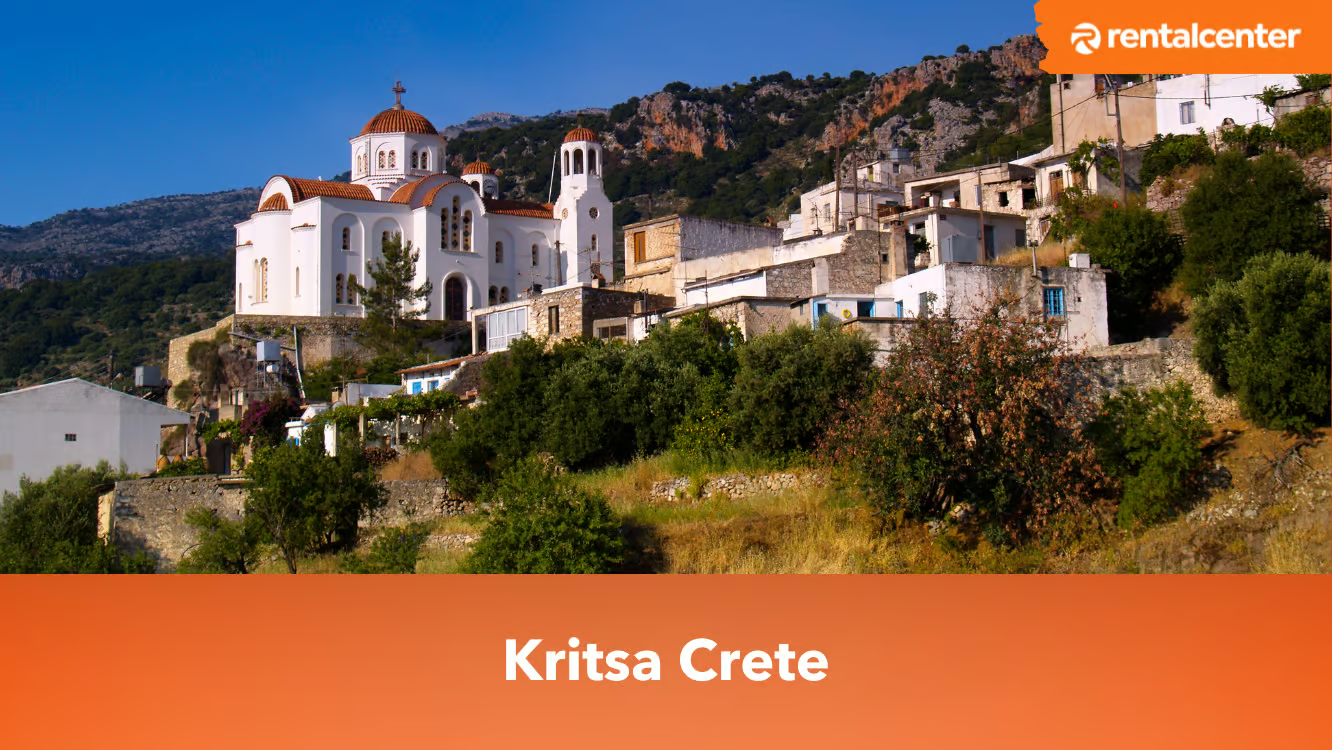
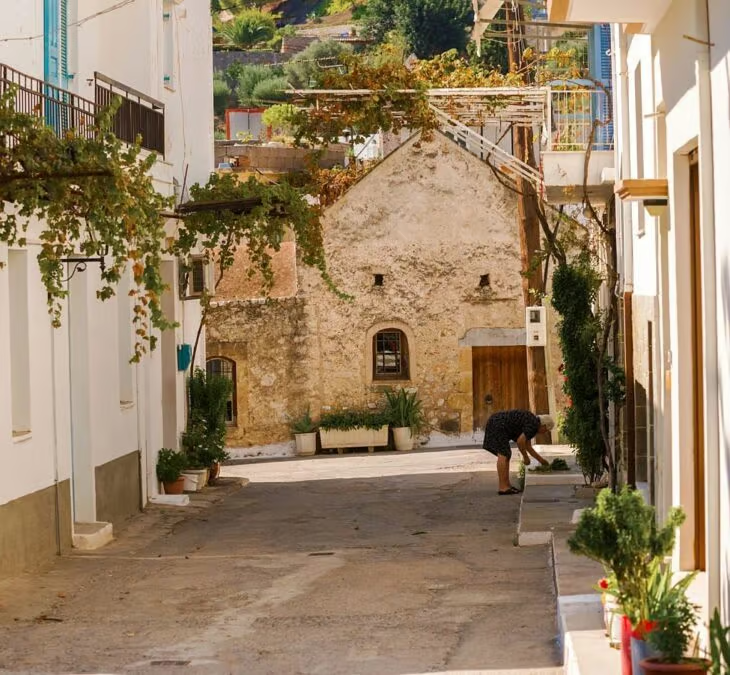
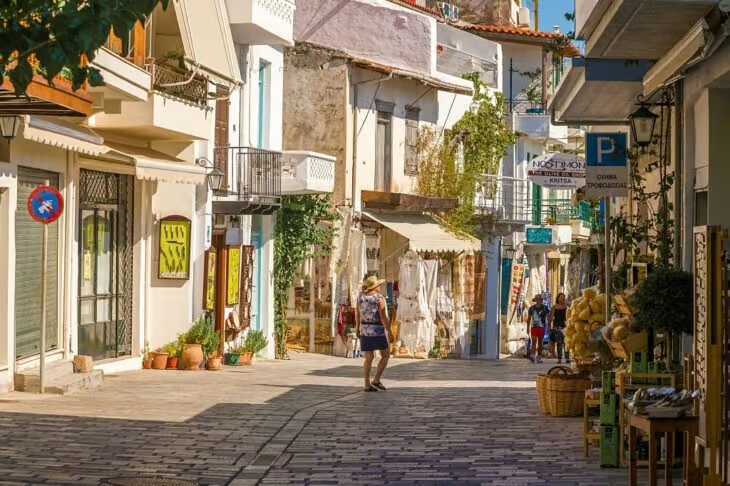
Kritsa is a traditional village in Crete, Greece, 9.8 kilometers (6.09 miles) southwest of Agios Nikolaos. It has a population of around 2,200 inhabitants. Kritsa has a long history, with evidence of occupation dating back to the second millennium BC. The village is built on a hill, and features narrow cobbled streets and houses in the traditional Cretan style. Kritsa’s history is closely tied to Crete’s past. The village is near the ruins of the ancient Greek city of Lato, one of Crete’s most powerful Dorian towns. The oldest settlement in the Kritsa area dates back to the 12th to 13th century BC. Kritsa has been destroyed and rebuilt several times throughout the centuries due to its involvement in Crete’s revolutions.
Renting a car is convenient for exploring Kritsa and the surrounding area. Car rental prices in Kritsa start at €30 ($32.7, £26.1) per day for a compact car. A smaller vehicle, such as a hatchback or a subcompact, would be the best choice for the narrow and winding roads in Kritsa, as they are easier to maneuver and park in the village’s tight spaces. The roads in Kritsa can be quite steep and narrow, so a vehicle with good handling and a compact size is recommended. This will allow visitors to navigate the village’s streets comfortably and safely. A smaller car will be more fuel-efficient, which can be beneficial when exploring the countryside and visiting nearby attractions.
What is the history of Kritsa?
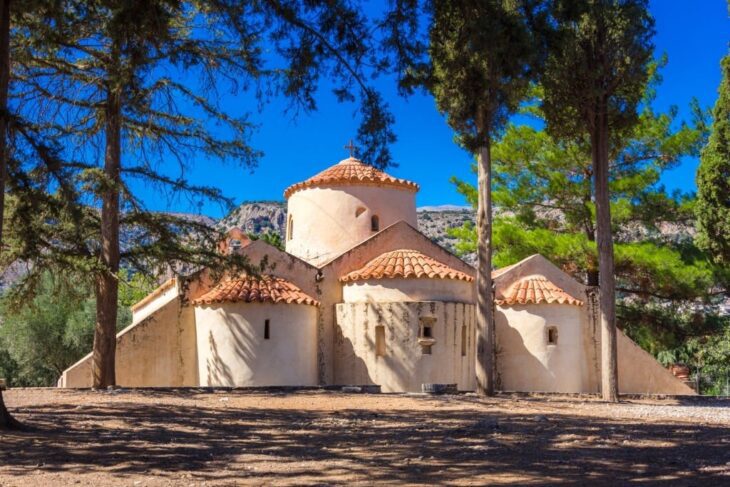
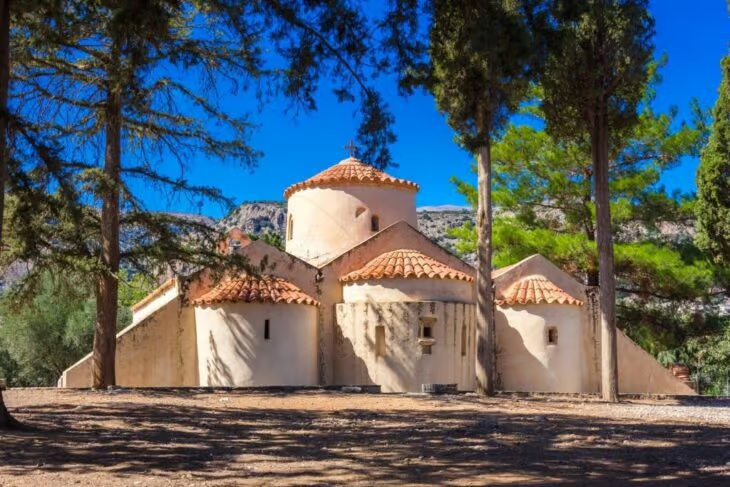
Kritsa has a long and rich history. Evidence shows the area was inhabited as early as the second millennium BC. The village, 3.6 kilometers (2.24 miles) to the north, is near the ruins of the ancient Greek city of Lato, which was one of the most powerful Dorian towns in Crete, with two acropolis. The oldest settlement in the Kritsa area dates back to the 12th to 13th century BC, on a steep rocky hill south of the village called Kastellos. Lato is believed to have been founded when Kastellos was abandoned. Before the entrance to the village, there is an old Byzantine church, the Panagia Kera, with unique and important Byzantine frescoes from the 13th and 14th centuries.
The origin of the name “Kritsa” is not entirely clear. Some believe it is derived from the Dorian pronunciation of the goddess Leto, who was likely worshipped in the nearby ancient city of Lato. The others suggest it may be related to the Greek word “kritsa,” meaning a crack or fissure, referring to the village’s location in a mountainous area. Kritsa covers an area of 375 meters (1230.38 feet) above sea level. The village is part of the municipality of Agios Nikolaos, located 9.8 kilometers (6.09 miles) southwest of the town.
The climate in Kritsa is typical of the Mediterranean region, with hot, dry summers and mild, wet winters. In the summer, temperatures can reach 29°C (84°F), while in the winter, they can drop to 9°C (48°F). Rainfall is highest during winter, with 58 millimeters (2.28 inches) in November. The village’s elevated position means it can be slightly cooler than the coastal areas, providing a refreshing escape from the heat during the summer. The nearby Dikti Mountains also influence the local climate, bringing occasional bouts of cooler weather and increased precipitation compared to the lowland regions.
Kritsa’s location in the Lasithi region of eastern Crete also gives it a unique microclimate, with the surrounding olive groves and mountain landscape contributing to the village’s beauty and character. The combination of its historical significance, traditional architecture, and natural setting make Kritsa a popular destination for visitors to Crete. Despite its small size, Kritsa has managed to preserve its traditional Cretan customs and way of life. The village is one of the most important centers of Cretan weaving and embroidery art, with many locals still practicing these traditional crafts.
Where is Kritsa located?
Kritsa is located in the eastern part of the Greek island of Crete. It is 9.8 kilometers (6.09 miles) southwest of Agios Nikolaos, the capital of the Lasithi region. The nearest airport to Kritsa is Heraklion International Airport, also known as Nikos Kazantzakis Airport. This airport is located 67.6 kilometers (42.01 miles) west of Kritsa and is the main entry point for visitors to Crete. The coordinates of Kritsa are 35°10’N, 25°28’E. The village is built on a hillside at 375 meters (1230.38 feet) above sea level, with panoramic views of the surrounding olive groves and the Mirabello Bay in the distance.
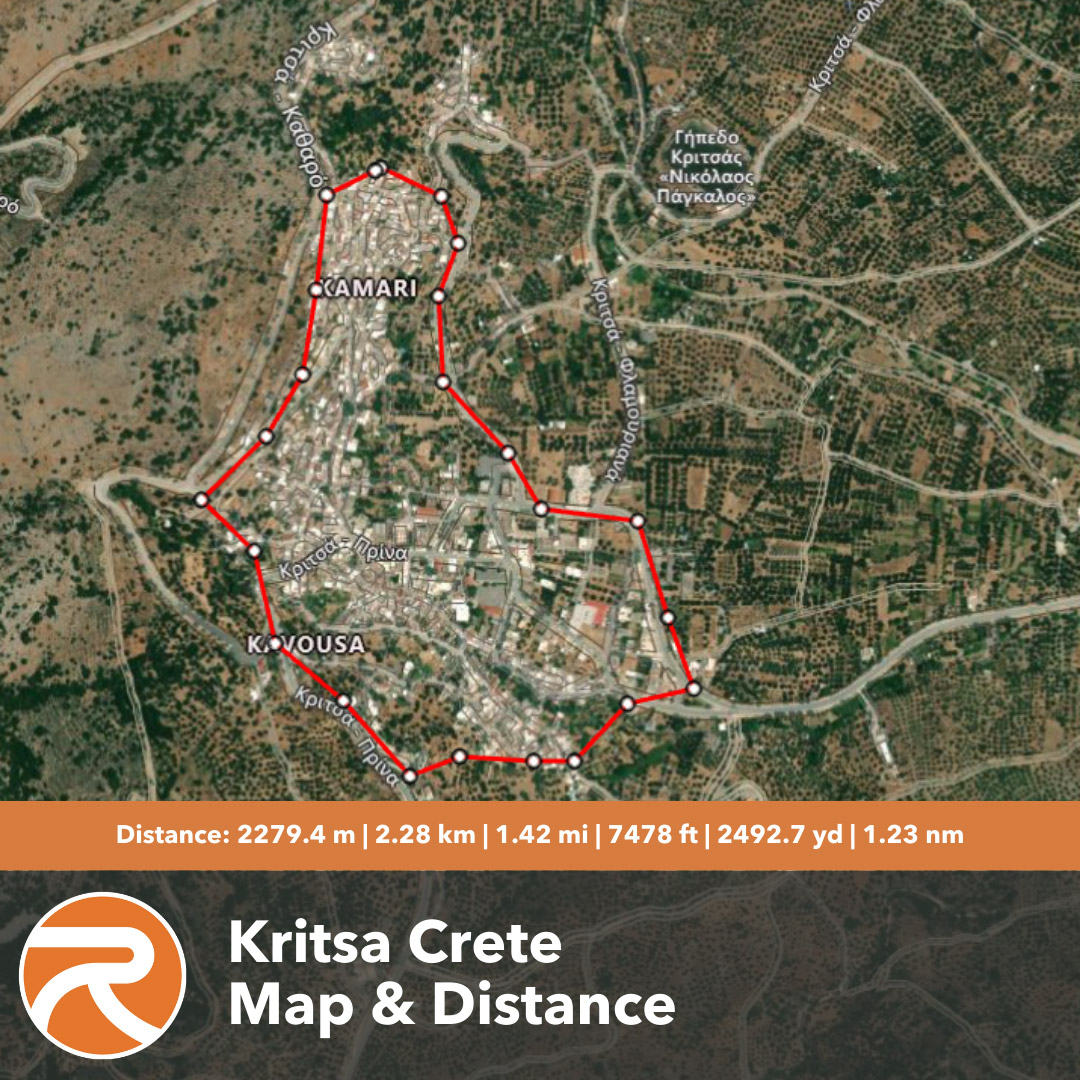
How does Kritsa look on the map?
Find below an image of Kritsa map.
What to know before going to Kritsa?
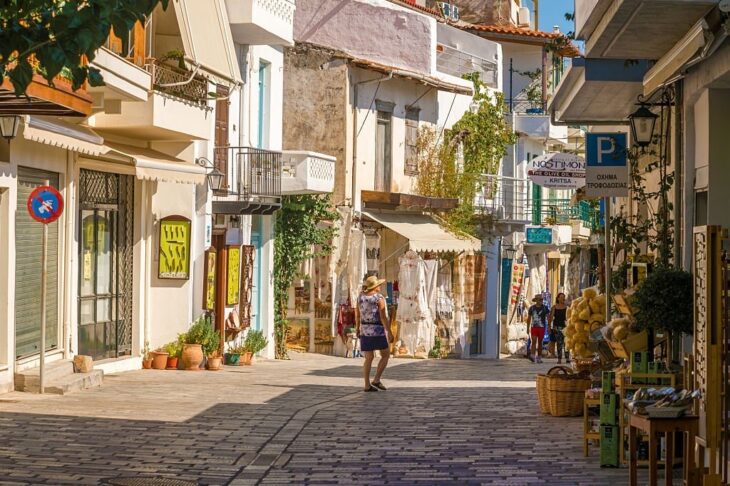
There are four key things to know before visiting Kritsa. The temperature varies significantly by season, with hot summers reaching 29°C (84°F) and milder winters dropping to 9°C (48°F), so packing accordingly is essential. Kritsa’s narrow, winding streets are not suited for modern vehicles, requiring visitors to do a lot of walking. The village offers small shops selling local crafts, providing an opportunity to support local artisans. Food is central to the Kritsa experience, with traditional Cretan cuisine made from locally sourced ingredients like olive oil, cheese, and fresh produce. Sturdy footwear with good traction is recommended for navigating the village’s streets and pathways.
What are the nearest attractions in Kritsa?
Find below the nearest attractions in Kritsa.
- Kritsa Gorge. Kritsa Gorge is a popular attraction located 1.5 kilometers (0.93 miles) south of Kritsa village. This natural wonder offers visitors the opportunity to hike through a scenic canyon with towering cliffs and vegetation. The gorge is known for its breathtaking views and crystal-clear streams, making it an ideal destination for nature lovers and outdoor adventurers. Hiking trails of varying difficulty levels wind through the gorge, providing options for casual strolls and more challenging treks. Exploring Kritsa Gorge allows visitors to enjoy Crete’s natural landscape’s pristine beauty while enjoying birdwatching and photography opportunities.
- Church of Panagia Kera. Church of Panagia Kera is a historic Byzantine church 1.7 kilometers (1.06 miles) northwest of Kritsa village. This 13th-century church is famous for its impressive frescoes, which date back to the 14th century and depict scenes from the New Testament and the lives of saints. The church’s exquisite artwork and architectural details make it a must-visit destination for history and art experts. Visitors can admire the intricate frescoes adorning the church’s interior walls, which have been remarkably well-preserved over the centuries. The Church of Panagia Kera offers visitors a look into Crete’s rich religious and cultural heritage, making it a significant regional cultural landmark.
- Lato Ancient City. The ruins of the ancient city of Lato are located 3.6 kilometers (2.24 miles) northeast of Kritsa village. Founded in the 7th century BCE, Lato was an important city-state in ancient Crete and is now a UNESCO World Heritage Site. Visitors can explore well-preserved remnants of ancient buildings, including houses, temples, and fortifications, offering insight into ancient Greece’s daily life. The site also offers panoramic views of the surrounding landscape, including the nearby Mirabello Bay and the island of Spinalonga. Exploring the ruins of Lato provides visitors with a fascinating journey through ancient history, making it a must-see attraction for archaeology lovers and history experts.
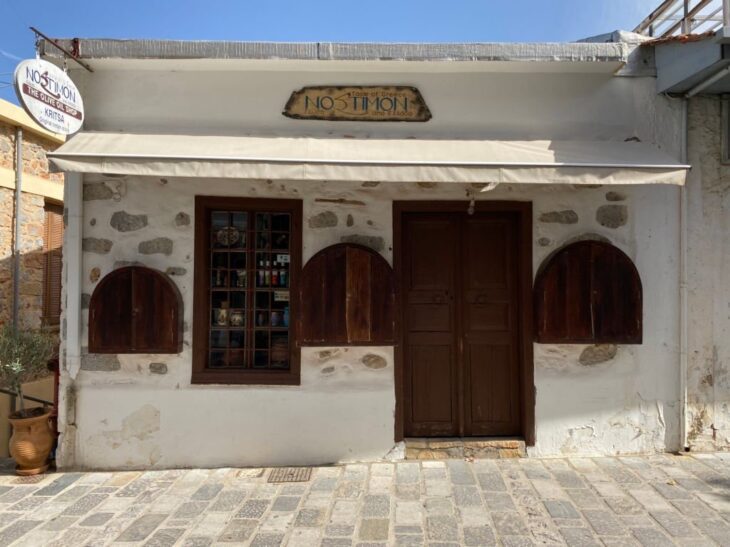
- Shop for traditional handicrafts. You’ll be surprised to know that the village of Kritsa has several little shops around. One shop you may check out is Nostiman, offering Crete delicacies and traditional products. If you’re looking for souvenirs, there are also plenty of shops that sell traditional handicrafts and weaving art, like the Jenny’s Shop. You can enjoy getting lost in the small alleys of the village, where you’ll find charming stores that sell beautiful mementos.
- Visit Rodanthi Museum. For wildlife enthusiasts, Rodanthi Museum is a small gem and a must-visit in Kritsa. Giorgos, the heart of the museum, has amassed a remarkable collection of dried plant specimens, as well as plant and animal fossils, which are on exhibit. You’ll even be able to learn about the traditional way of life in Kritsa and see artefacts from certain eras.
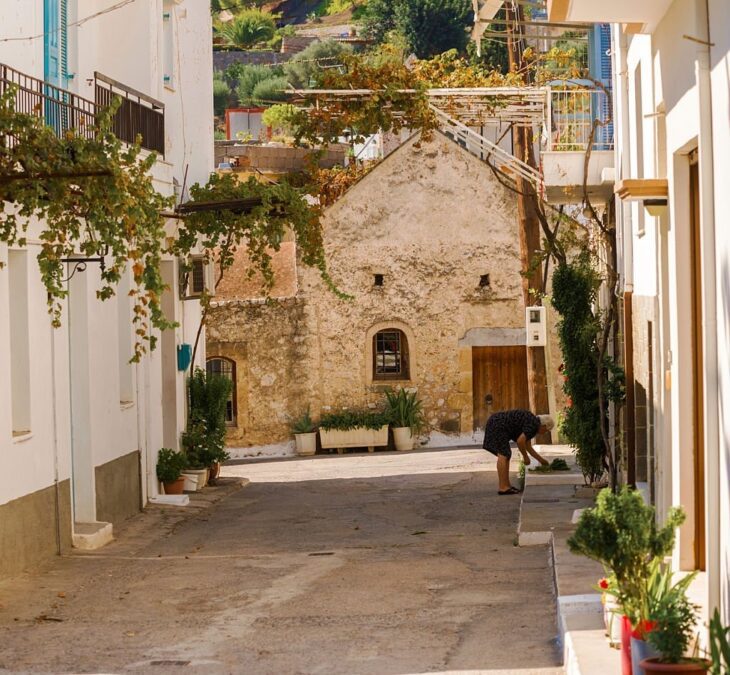
- Enjoy the Mountain Views. The views this mountain village has to offer are beyond amazing. With an old village kept in its original state, Kritsa has managed to retain its charm throughout the years. Just wander around, and you’ll be able to see for yourself why many visitors fall in love with this Cretan beauty. Rock formations, stone-built houses, pretty little alleys, traditional churches, and stunning vistas are just some of the things that await you.
What are the facts about Kritsa?
Listed below are the facts about Kritsa:
- Olive Oil Production: Kritsa is known for its high-quality olive oil from the village’s olive groves. Olive cultivation has been a vital part of Kritsa’s economy and culture for centuries, with many families still involved in olive harvesting and oil production. The village’s olive oil is prized for its fruity flavor and low acidity, making it a sought-after product locally and internationally. Visitors to Kritsa can tour local olive presses to learn about the olive oil production process and sample some of the region’s finest oils.
- Folklore and Traditions: Kritsa is steeped in folklore and traditions passed down through generations. The village celebrates several annual festivals, including the feast day of its patron saint, St. Haralambos, in February and the Kritsotopoula festival in August, commemorating a legendary female warrior who defended the village against pirates in the 19th century. Traditional music and dance are integral to these celebrations, providing insight into Kritsa’s cultural heritage and sense of community. Visitors can engage in the village’s traditions by participating in local festivities and experiencing Cretan hospitality firsthand.
- Traditional Crafts: Kritsa is known for its traditional crafts, particularly its intricate embroidery called “Kritsotopoula” lace. Local women have practiced this ancient craft for centuries, creating delicate lace patterns that adorn clothing, household items, and decorative souvenirs. Visitors to Kritsa can visit workshops and studios where skilled artisans demonstrate the art of lace making and offer handmade lace products for sale. The village’s commitment to preserving traditional crafts has earned it recognition as a UNESCO Creative City of Folk Art and Crafts, further highlighting its importance as a cultural destination in Crete.
How to Get to Kritsa?
Kritsa can be reached by taxi, by bus and by car.
- By Bus. Another option available if you are planning to visit Kritsa or the surrounding area, is the bus. There are buses that lead directly to the village of Kritsa from Agios Nikolaos. Therefore, finding a ride shouldn’t be a problem. However, take note that delays due to stopovers may occur, so if you’re in a hurry, it might be best to opt for the mentioned alternatives above. To get to Kritsa by bus, head to Agios Nikolaos Central Bus Station. You may purchase a ticket at the ticket booth before boarding your respective bus. The cost of a ticket going to Kritsa is around 2-3 Euros while the travel time could be about 15-20 minutes, depending on the traffic and stops.
- By Rental Car. Among the best ways to get to Kritsa is by renting a car. Renting a car allows you to travel at your own pace without being stuck to a bus schedule. When going by car, you can visit many great places of interest in the area as well, making your trip much more than just a visit to Kritsa. In addition, rental cars are often cheaper than travelling by bus or taxi since you won’t have to constantly pay for public transport. If you’re planning to visit Kritsa, you can find affordable car rentals in Agios Nikolaos too. Once you get your rental car, just follow Epar. Od. Agiou Nikolaou-Prinas.
- By Taxi. If renting a car isn’t possible or if you don’t plan to travel around, getting a taxi ride can be a good choice. Taxi services are available throughout the center of Agios Nikolaos, and you can schedule a trip whenever it suits your needs. The average cost of a taxi ride to the village of Kritsa is 9-10 Euros while the trip will take you around 11 minutes, depending on traffic.
What is the best vehicle for visiting Kritsa?
A medium-sized car is the best vehicle for visiting Kritsa. Renting a car is a convenient option for exploring Crete, and several car rental services are available on the island. The narrow and winding streets of Kritsa are not well-suited for large vehicles. A medium-sized car, such as a compact or midsize model, will be easier to maneuver through the village’s tight spaces and park in the limited parking areas. A medium-sized car will provide enough space for passengers and luggage, allowing visitors to easily explore Kritsa and the nearby attractions, such as the ancient city of Lato and the Kritsa Gorge. A medium-sized car will be more fuel-efficient than a larger vehicle, which can be beneficial when driving in the hilly terrain around Kritsa.
Some popular local car rental companies in Crete include Rental Center Crete and Justrentals. These companies offer a range of vehicle sizes and models, with prices starting at €30 ($32.7, £26.1) per day for a compact car. Visitors can easily book their rental car in advance to ensure availability and get the best deal. Suitable medium-sized car models for visiting Kritsa include the Hyundai i30, Toyota Corolla, or Volkswagen Golf. These vehicles have good maneuverability, enough storage space, and are fuel-efficient, making them the ideal choice for navigating the narrow streets and exploring the surrounding Cretan countryside.
Can you rent a car to go to Kritsa?
Yes, visitors can rent a car to go to Kritsa. Renting a car is a convenient option for exploring Kritsa and the surrounding areas in Crete. The village of Kritsa is located 19.8 kilometers (6.09 miles) southwest of Agios Nikolaos, the capital of the Lasithi region. A rental car allows visitors to travel to Kritsa at their own pace and visit nearby attractions, such as the ancient city of Lato and the Kritsa Gorge, with greater flexibility. Renting a car is particularly beneficial for Kritsa, as the village’s narrow, winding streets are not well-suited for large vehicles. A medium-sized car, such as a compact or midsize model, will be easier to maneuver and park in the limited spaces available in Kritsa. This makes a rental car ideal for exploring the area’s traditional beauty and natural setting.
What are the factors to consider before renting a car in Crete?
Listed below are the factors to consider before renting a car in Crete:
- Insurance: Before reserving a car rental in Crete, it is important to consider insurance coverage. Check if the rental company provides comprehensive insurance that covers damages, theft, and liability. It is recommended that the terms and conditions of the insurance policy be carefully reviewed to understand the coverage and any additional costs or deductibles involved.
- Driver’s Age: Some car rental companies may have age restrictions or additional fees for drivers under a certain age. Verify the minimum age requirement and any surcharges that may apply.
- Driver’s Gender: Certain rental companies may have specific policies regarding male or female drivers, so it is essential to check if there are any gender restrictions or additional requirements.
- Car Type: Consider the type of car that suits the needs and preferences. Determine the size, features, and specifications required for the trip. Whether one needs a compact car for easy maneuverability or a larger vehicle for more space, selecting the right car type will ensure a comfortable and convenient experience.
- Documents needed for renting a car: Ensure all necessary documents are available for the car rental. This includes a valid driver’s license, passport or identification, and a credit card for the reservation and security deposit. Check the rental company’s specific requirements to avoid any last-minute complications.
How much does a car rental in Crete cost?
Car rental in Crete costs vary depending on the number of passengers, itinerary, car type, location, and duration. The average price of renting a vehicle in Crete is €30 ($32.7, £26.1) to €40 ($43.6, £34.8) per day. A car rented for a whole week will cost an average of €250 ($272.5, £217.5), while renting for the weekend will cost €78 ($85.02, £67.86). Affordable car rentals in Rental Center Crete vary depending on the car type.
What are the Hiking Routes for Kritsa?
Kritsa offers four main hiking routes. The first route leads from Kritsa to the Panagia Kera church, a 1-kilometer (0.62-mile) easy walk taking 1 hour. A more challenging hike is the 3-kilometer (1.86-mile) route to the ancient city of Lato, which takes 1.5 hours and includes steep sections. Kritsa Gorge, a 6.5-kilometer (4.04-mile) hike, takes 2.5 to 3 hours and is moderate in difficulty, with narrow and rocky sections. The longest route connects Kritsa to the Katharo Plateau, 16 kilometers (9.94 miles) away, taking 3.5 to 4 hours with challenging distance and elevation changes.
Is Kritsa safe?
Yes, Kritsa is safe. Kritsa is a small, traditional village in Crete, Greece, with a population of around 2,200. It does not have the same level of crime as larger cities or tourist hubs as a rural, residential area. Crete is a safe destination overall, with low crime rates compared to other parts of Greece and Europe. The island’s economy heavily depends on tourism, so the local authorities and community are vested in maintaining a safe environment for visitors. There are no reports or indications that Kritsa has any significant crime problems or safety concerns. The village’s focus on preserving its traditional way of life and cultural heritage suggests a close-knit community where crime is likely low.
What is the best season to visit Kritsa?
The best season to visit Kritsa is during the spring and autumn months. These shoulder seasons offer visitors a more comfortable and enjoyable experience compared to the peak summer months. The weather in Kritsa during the spring and autumn is mild and pleasant. Temperatures range from 15°C (59°F) to 24°C (75°F), which is ideal for exploring the village and its surrounding natural areas without the intense heat of summer. Crowds are smaller during the spring and autumn, making it easier to navigate the narrow streets of Kritsa and interact with the local community. The village is less crowded with tourists, giving visitors a more authentic feel for the traditional Cretan lifestyle. The spring and autumn seasons offer the opportunity to see Kritsa’s natural surroundings in bloom. In the spring, the landscapes are lively with wildflowers, while the autumn brings the harvest season and the changing colors of the olive groves.
Do you need to book in advance to visit Kritsa?
No, visitors do not need to book in advance to visit Kritsa. It is not a major tourist hub, so the demand for accommodations is lower compared to more popular destinations on the island. Visitors can often find available rooms or apartments to rent upon arrival, especially during the shoulder seasons of spring and autumn when the crowds are smaller. Booking a rental car in advance can benefit those planning to visit Kritsa. The village’s narrow, winding streets and steep terrain make navigating easier with a smaller, maneuverable vehicle. Reserving a car ahead of time can ensure availability and allow visitors to explore the surrounding areas, such as the ancient city of Lato and the Kritsa Gorge, at their own pace.
What is the contribution of Kritsa to Crete Tourism?
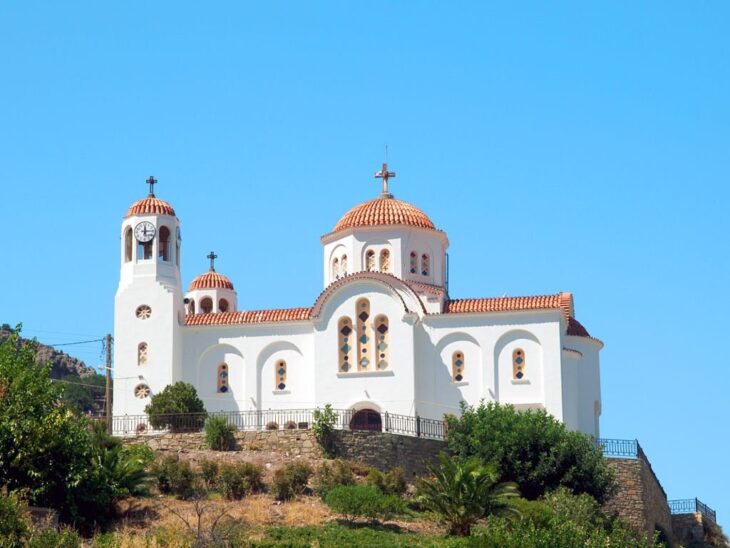
Kritsa contributes to Crete tourism in four ways. The Panagia Kera church, with its exceptional 14th and 15th-century Byzantine frescoes, attracts many tourists. Kritsa is a key center for Cretan weaving and embroidery, with local artisans producing traditional textiles and crafts sold to visitors, boosting the local economy. Kritsa’s well-preserved character and unique offerings continue to draw tourists seeking an authentic Cretan experience.
What are the top places to eat in Kritsa?
Find below the top places to eat in Kritsa.
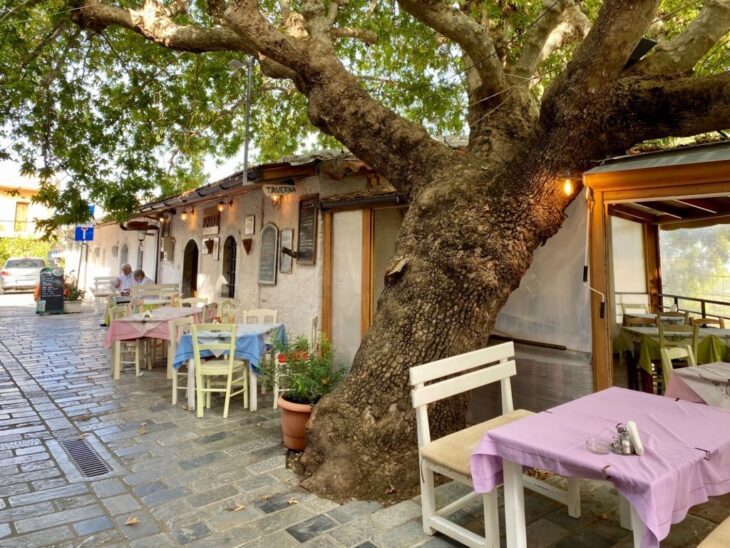
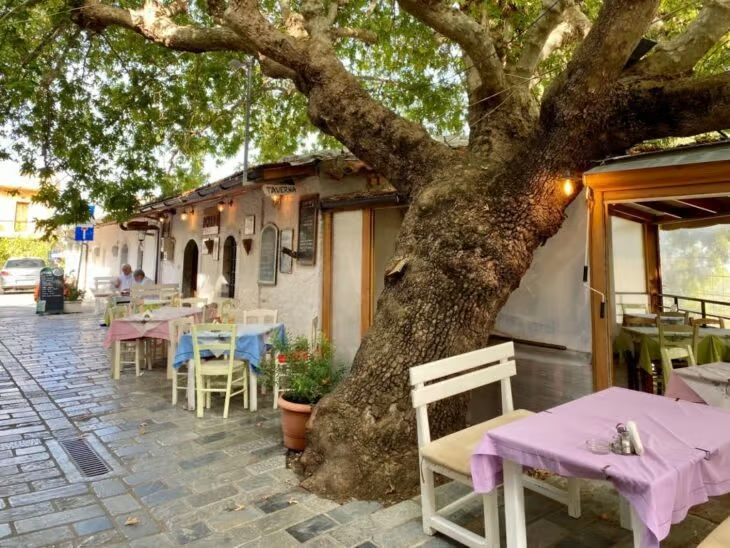
- Platanos. Platanos is a restaurant that is 25.4 kilometers (15.79 miles) from Kritsa village. It is a traditional Greek taverna known for its authentic Cretan cuisine and warm hospitality. The restaurant offers a menu featuring a variety of Greek dishes, including moussaka, souvlaki, and Greek salads made with fresh, locally sourced ingredients. Prices at Platanos are reasonable, with main dishes averaging €10 ($10.9, £8.7) to €15 ($16.35, £13.05) per person.
- Taverna PARADISOS. Taverna PARADISOS is 18.4 kilometers (11.44 miles) from Kritsa village, offering a great setting overlooking the surrounding olive groves and mountains. This family-owned taverna specializes in traditional Cretan cuisine, focusing on grilled meats, seafood, and mezes (appetizers). Visitors can enjoy grilled lamb chops, octopus in vinegar, and dakos (Cretan barley rusk topped with tomatoes, feta cheese, and olive oil). Prices at Taverna PARADISOS are affordable, with main dishes ranging from €8 ($8.72, £6.96) to €12 ($13.08, £10.44) per person.
- Agadiko Τavern. Agadiko Τavern is 200 meters (656.2 feet) from the center of Kritsa village. This taverna offers a rustic ambiance with outdoor seating surrounded by olive trees and grapevines. The restaurant specializes in traditional Greek mezes and grilled dishes, including saganaki (fried cheese), grilled octopus, and lamb kebabs. Prices at Agadiko Τavern are affordable, with mezes starting at €5 ($5.45, £4.35) to €8 ($8.72, £6.96) and main dishes ranging from €10 ($10.9, £8.7) to €15 ($16.35, £13.05) per person.
What are the best beaches to visit near Kritsa?
Find below the best beaches to visit near Kritsa.
- Minos Beach. Minos Beach is a secluded beach located 11.7 kilometers (7.27 miles) east of Kritsa village, near Agios Nikolaos. This beach is characterized by its calm, crystal-clear waters, and soft golden sand, making it ideal for swimming and sunbathing. The beach is surrounded by rocky cliffs and vegetation, providing a relaxed setting for visitors to relax and unwind. Amenities at Minos Beach include sunbeds, umbrellas for rent, and a beachfront taverna serving traditional Greek cuisine. The beach is easily accessible by car or public transportation, with nearby parking.
- Voulisma Beach. Voulisma Beach, also known as Golden Beach, is 12.2 kilometers (7.58 miles) northeast of Kritsa village, near Elounda. This sandy beach stretches along the coastline, offering shallow turquoise waters and panoramic views of Mirabello Bay. Voulisma Beach is popular among families and water sports lovers, with opportunities for snorkeling, paddleboarding, and windsurfing. Facilities at the beach include sunbeds, umbrellas, and beachside tavernas serving refreshments and snacks. The beach can be reached by car or public transportation, with enough parking nearby.
- Mirabello Beach. Mirabello Beach is located 13 kilometers (8.08 miles) from Kritsa village, near Agios Nikolaos. This organized beach features a mixture of sand and pebbles, with shallow waters perfect for swimming and wading. Mirabello Beach offers views of Mirabello Bay and the surrounding mountains, creating a backdrop for sunbathing and relaxation. Amenities at the beach include sunbeds, umbrellas, showers, and beachfront cafes serving drinks and snacks. The beach is easily accessible by car or public transportation, with nearby parking.
What are the best places to stay in Kritsa?
Listed below are the best places to stay in Kritsa.
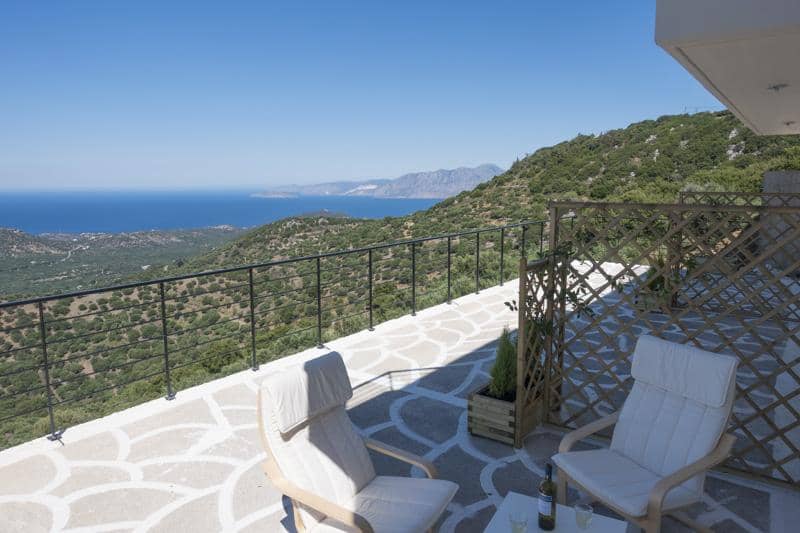
- Villa Dio Petres. Villa Dio Petres is a guesthouse located on the outskirts of Kritsa village, 3.8 kilometers (2.36 miles) from the city center. This traditional Cretan villa offers cozy accommodations in peaceful countryside, surrounded by olive groves and vineyards. The guesthouse features well-appointed rooms and suites, each decorated in a rustic style with modern amenities such as air conditioning and free Wi-Fi. Amenities at Villa Dio Petres include a swimming pool, a sun terrace, and a garden with barbecue facilities, providing guests with relaxation and outdoor dining opportunities. Prices at Villa Dio Petres start at €60 ($65.4, £52.2) to €80 ($87.2, £69.6) per night for a double room, including breakfast.
- Argyro Rooms. Argyro Rooms is a family-run guesthouse in the heart of Kritsa village, a short walk from the main square. This traditional Cretan accommodation offers comfortable rooms and studios with simple furnishings and basic amenities, including air conditioning and private balconies overlooking the village or surrounding countryside. Guests at Argyro Rooms can enjoy a complimentary continental breakfast in the on-site dining area or on the outdoor terrace. The guesthouse is conveniently located near shops, restaurants, and local attractions, making it an ideal base for exploring the village and its surroundings. Prices at Argyro Rooms start at€40 ($43.6, £34.8) to €60 ($65.4, £52.2) per night for a double room.
- Tsiboulas Cretan Cottage. Tsiboulas Cretan Cottage is a traditional stone-built cottage located 44.4 kilometers (27.59 miles) from the city center of Kritsa. This cottage offers self-catering accommodations in a rural setting, surrounded by olive groves and fruit trees. The cottage features a fully equipped kitchen, a comfortable living area, and a private courtyard with outdoor seating, barbecue facilities, and panoramic countryside views. Guests at Tsiboulas Cretan Cottage can enjoy the privacy and independence of self-catering accommodation, with the option to explore local tavernas and restaurants in Kritsa village. Prices at Tsiboulas Cretan Cottage start at €70 ($76.3, £60.9) to €100 ($109, £87) per night for the entire cottage. Fourthly, Alonaki House is a cozy guesthouse located on the outskirts of Kritsa village, 450 meters (1476.45 feet) from the city center. This traditional Cretan house offers comfortable accommodations in the countryside, surrounded by olive groves and vineyards. The guesthouse features well-appointed rooms and suites, each decorated in a rustic style with modern amenities such as air conditioning and free Wi-Fi. Amenities at Alonaki House include a swimming pool, a sun terrace, and a garden with barbecue facilities, providing guests with relaxation and outdoor dining opportunities. Prices at Alonaki House start at €50 ($54.5, £43.5) to €70 ($76.3, £60.9) per night for a double room, including breakfast.
- Cretan Village Hotel. Cretan Village Hotel is a modern hotel located on the outskirts of Kritsa village, 10 kilometers (6.22 miles) from the city center. This family-friendly hotel offers comfortable accommodations in a peaceful setting, surrounded by gardens and olive groves. The hotel features well-appointed rooms and suites, each with modern amenities such as air conditioning, satellite TV, and a private balcony or terrace. Amenities at the Cretan Village Hotel include a swimming pool, a children’s playground, and a restaurant serving traditional Cretan cuisine. The hotel also offers organized activities and excursions, including hiking tours and boat trips to nearby beaches and attractions. Prices at Cretan Village Hotel start at €80 ($87.2, £69.6) to €100 ($109, £87) per night for a double room, including breakfast.
How is the nightlife in Kritsa?
Nightlife in Kritsa is low-key compared to larger tourist hubs in Crete. Visitors find traditional cafes and tavernas in the main square and narrow streets in the evenings. Locals and tourists enjoy drinks like raki or wine, along with simple Cretan snacks and dishes. Kritsa lacks a nightclub scene, but its relaxed atmosphere and cultural focus attract those seeking an authentic Cretan experience. For lively nightlife, visitors may need to visit larger towns, while Kritsa offers a slower-paced, intimate evening atmosphere.
Is Kritsa a UNESCO World Heritage Site?
No, Kritsa is not a UNESCO World Heritage Site. Although the village holds historical and cultural value, it hasn’t been designated as such. UNESCO sites must meet specific criteria and undergo a rigorous evaluation process. Despite Kritsa’s important archaeological sites, like the ancient city of Lato, and its traditional Cretan architecture, it has not been recognized by UNESCO. Achieving this status requires demonstrating global significance and implementing preservation measures, which can be a lengthy process.