







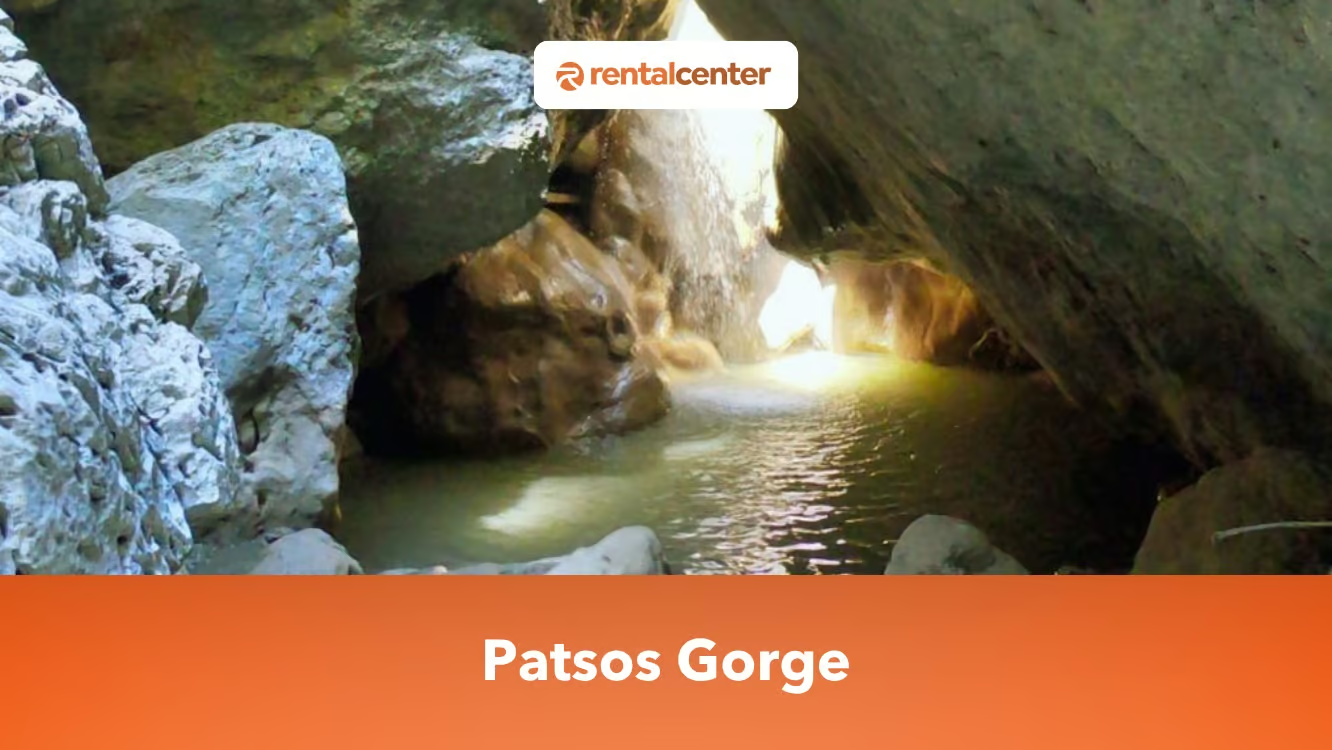
The gorge, also called the St. Antonios Gorge, cuts north of the settlement of Patsos in the region of Sivritos, in the Rethymno region of Crete, about 37 km (22.99 miles) southwest of Rethymno city. It winds through the foothills of the White Mountains and forms part of the Patsos Natural Park. A small river runs through the ravine year-round, feeding dense shade, plane trees, and a lush, garden-like floor. Walkers follow a short, well-marked riverside path from the entrance, cross the stream several times, and reach the cave chapel near the start of the route. Crossing the gorge takes roughly two and a half hours in summer and takes longer when the water runs high. One rental car from Rethymno gets you to the trailhead in about 45 minutes on well-maintained roads.
Safety note: Conditions at Patsos Gorge change with weather and season. This guide is informational. Assess your own fitness and experience, check current conditions locally before you set out, and hike with appropriate footwear and gear.
What is the history of Patsos Gorge?
Patsos Gorge has served as sacred ground since the early Minoan period. Artefacts from the neighbouring Kranaios Cave, in the Agios Antonios valley, date settlement evidence to the early Minoan era or earlier.
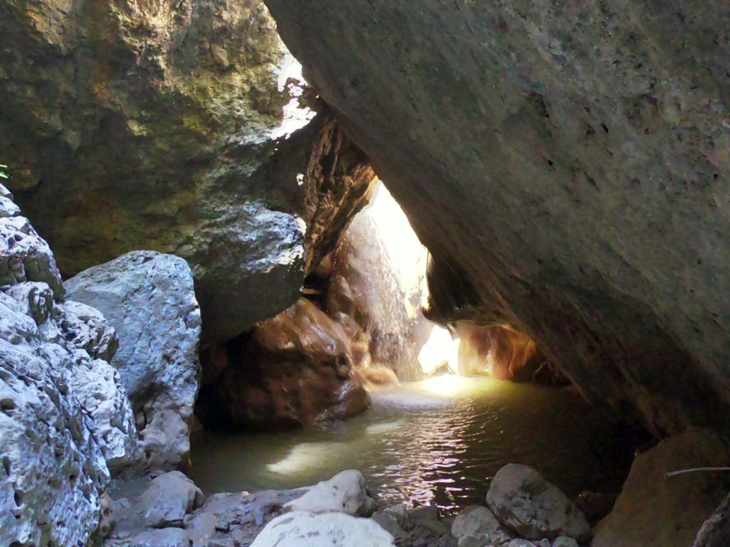

The village records its own timeline. Barozzi counted 110 inhabitants in the town in 1577. The 1881 census placed it in the Municipality of Merona with 301 inhabitants, 14 Greeks and 287 Turks. Patsos joined the Pantanassa community administratively in 1920 and became its own administrative community in 1940. The once-cathedral church of the Virgin Mary stands in ruins on the fringes of the hamlet.
The Cave of Kranaios Ermis sits north of the hamlet in the canyon of Agios Antonios. Its dedicatory inscription records the worship of Hermes: “to Hermes god of springs, I pray by placing this wreath as a gift.”
Patsos Gorge opens roughly 2 km (1.24 miles) south of the village and threads past a botanical-garden-like landscape fed by numerous springs, which keep the greenery growing all year. Wildlife enthusiasts get more out of the walk than the scenery alone suggests.
What is the archaeology of Patsos Gorge?
Halbherr began the first excavations in the cave in 1885 or 1886, at the current location of the church of Agios Antonios. The dig produced mostly humanoid and zoomorphic figurines, now on display in the Heraklion Museum. It also uncovered animal bones sacrificed on stakes, vases, and sculptures, evidence that the Minoans conducted most of their rituals in rock shelters. The same excavations produced a statue of the legendary deity Pan.
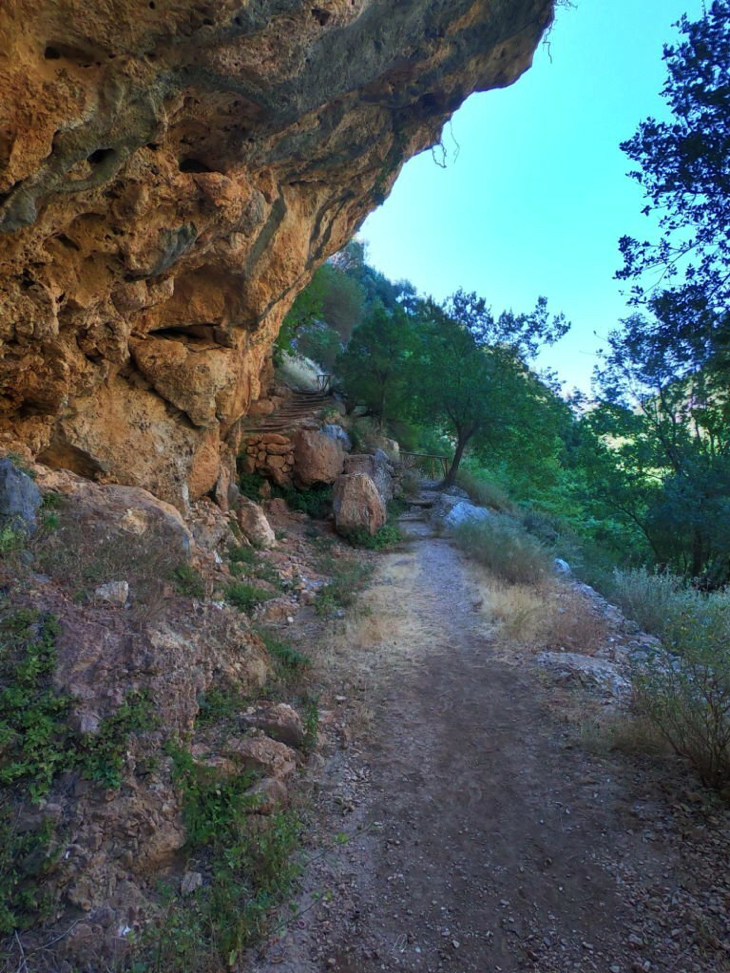
The Forest Protection Directorate later adapted the area for visitors and for worship at the chapel of Agios Antonios, which is carved into the gorge’s rocks. Visitors walk under ancient plane trees, past rock shelters, and alongside the river waters that end at the Potamoi Dam. A path runs from the cave to the dam.
What are the myths about the Patsos Gorge?
2 traditions attach to Patsos Gorge, and both are described below.
- Favourite Cretan gods were adored in Patsos Gorge: Tradition holds that the flute of Pan’s son and the singing of the Nymphs echoed here, and that Kranaios Hermes, the favourite god of the Cretans, was worshipped in the gorge. The gushing springs, the endemic plants, the cave temple of St. Antonios, the birds’ lookout post, the small caves, and the breach in the geological relief still hold a visitor’s attention.
- A place for Minoan cult ceremonies: The site’s sacredness dates to the Minoan era. Patsos Gorge is thought to have hosted Minoan cult rites.
How was Patsos Gorge formed?
Plate tectonics lifted the whole Cretan region rapidly from the late Miocene period, between 5 and 10 million years ago. That uplift accelerated karstic weathering, which carved the island’s gorges, caves, and plateaus. Carbonate rocks, limestone and marble, make up most of Patsos Gorge. River water continues to wear the rock away as faults keep pushing the land upward.
How is the Patsos Gorge preserved?
The Forest Authority maintains Patsos Gorge year-round, because the gorge receives a large number of visitors each year. Greek and European law backs that work. The Environmental Law (Law 1650/1986) and the Environmental Impact Assessment (EIA) Directive (Directive 85/337/EEC) require development projects and activities in Greece to be ecologically sustainable. The local administration and the people of Crete conserve the island’s gorges under those rules.
How does the Patsos Gorge map look?
The map of Patsos Gorge traces a single marked line along the riverbed, from the entrance south of Patsos village, past the cave church of Agios Antonios, to the narrows and on toward the Potamoi Dam. The gorge lies in Crete’s Rethymnon region, and its path stays close to the water, so hikers wade or step across the stream at several points. The walk takes roughly 2.5 hours in summer, and longer when the water runs high. Winter turns the crossing into a bolder, harder proposition, and mostly seasoned hikers attempt it then.
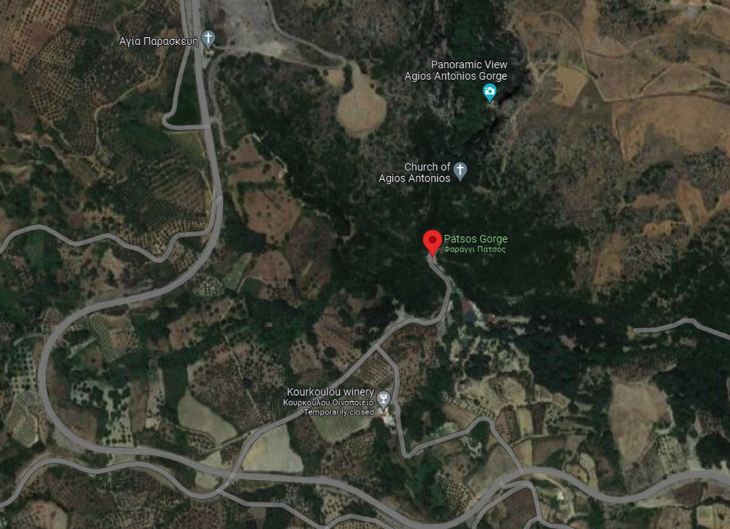
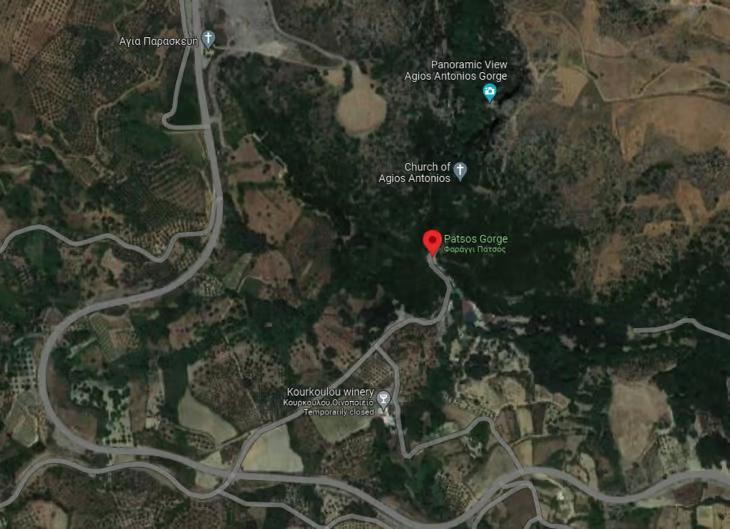
The church of Agios Antonios anchors the route. Builders raised it in stone against the rock face. People healed by a miracle have left crutches outside it, and visitors pray before its portraits and icons.
Rental Center Crete does not publish a GPS track for the gorge. Hikers who want a downloadable GPX file or turn-by-turn navigation will find recorded tracks on outdoor platforms such as Komoot and Wikiloc, whose users log their own Patsos routes.
What are the hiking routes in Patsos Gorge?
Patsos Gorge offers one main walk through the ravine plus several longer routes that link the gorge to surrounding villages and to the Potamon Dam lake. The gorge walk itself is the short one: a well-marked riverside path from the entrance, past the cave church, with stream crossings and stretches of scrambling.
| Route | Distance | Time | Character |
|---|---|---|---|
| The gorge walk (entrance to the narrows) | Short, well-marked riverside path | About 2.5 hours in summer | Easy at first, harder at the narrows |
| Patsos Gorge to Kato Myli | About 7.5 km (4.66 miles) | About 3 hours | Easy |
| Patsos Gorge to Agios Nikolaos | Over 12 km (7.46 miles) | Longer | More challenging |
| Patsos Gorge round trip | About 15 km (9.32 miles) | About 6 hours | Circular |
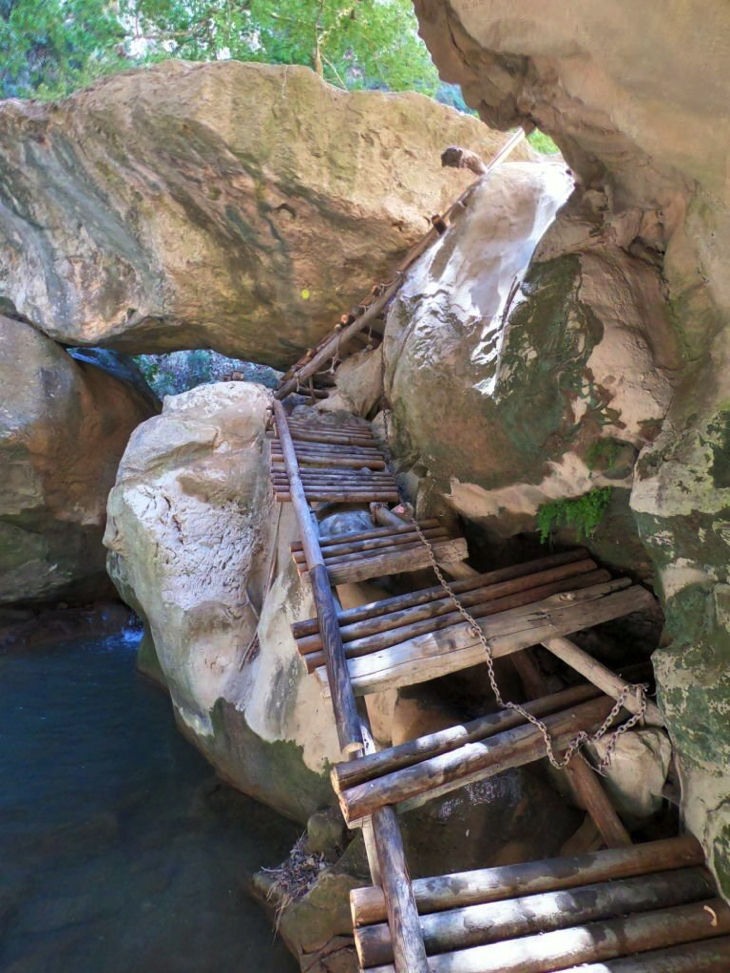
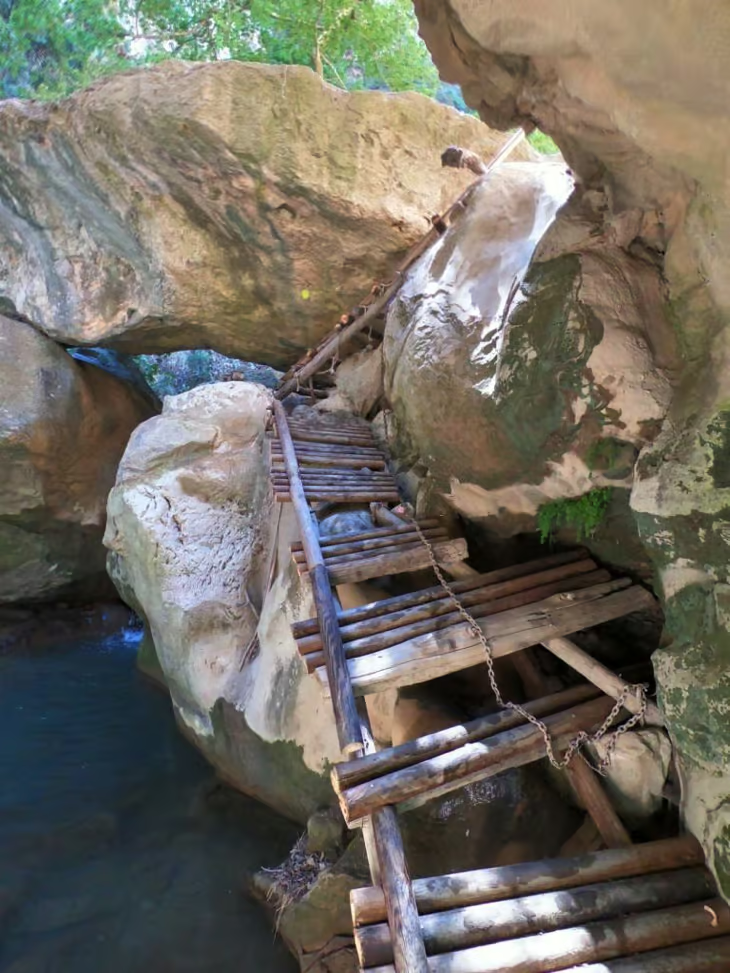
The main trail starts from the village of Patsos at the gorge entrance and climbs gradually past rock shelters and ancient plane trees. Side routes branch off for hikers who want more distance or height. Some sections are steep and offer few handholds, and only experienced hikers with mountain-safety training should attempt those. Fixed ropes, ladders, and wooden platforms assist the scrambling sections. Patsos is walked and scrambled, not abseiled, so canyoning equipment is not part of the kit.
Summer temperatures on Crete climb above 40°C (104°F), so carry water, wear proper clothing, and take care crossing the stream.
How long is the hike to Patsos Gorge?
The gorge walk takes roughly two and a half hours. It stays reasonably straightforward up to the narrowest section, where the well-marked, designated path ends. Beyond that the gorge tightens and drops through several small waterfalls, and the descent toward Lake Potami turns treacherous in winter and spring.
The gorge is a short walk rather than a full-day trek, and its length has been described in conflicting ways across guides and trail platforms. Recorded routes on hiking platforms measure the whole outing, including road sections, not the ravine itself: Komoot logs one Patsos circuit at 7.98 km (4.96 miles), of which 5.1 km (3.17 miles) runs on road, and Wikiloc users record a 15.83 km (9.84 miles) loop that returns via the road. Treat any single “gorge length” figure with caution, and plan by time and water level instead.
Is Patsos Gorge a loop or an out-and-back?
The gorge walk is an out-and-back. Hikers reviewing the gorge on TripAdvisor repeatedly warn that it is not a circular route: you walk and climb back the same way you came in. Only the separate round-trip route, which returns via the road, closes a loop.
Plan the return before you start. Either budget time to retrace the path to your parked car, or arrange transport in advance from Patsos village. The gorge exit is not near the trailhead parking.
Do you need a guide to hike the Patsos Gorge?
A guide helps, and whether you need one depends on your hiking experience, the trail conditions, and the weather. Experienced hikers who are comfortable on steep, rocky terrain generally manage the gorge without one.
Book a guide if you are new to hiking or unsure about conditions. Local guides read the path, explain the flora and fauna, cover the history and culture of Crete, and get walkers safely through the harder sections. Several local tour companies run guided treks in Patsos Gorge, and booking ahead matters in high season.
What are the risks of hiking Patsos Gorge?
Patsos Gorge carries the risks any Cretan gorge walk carries. The 5 main risks of hiking Patsos Gorge, and how each one arises on the route, are listed below.
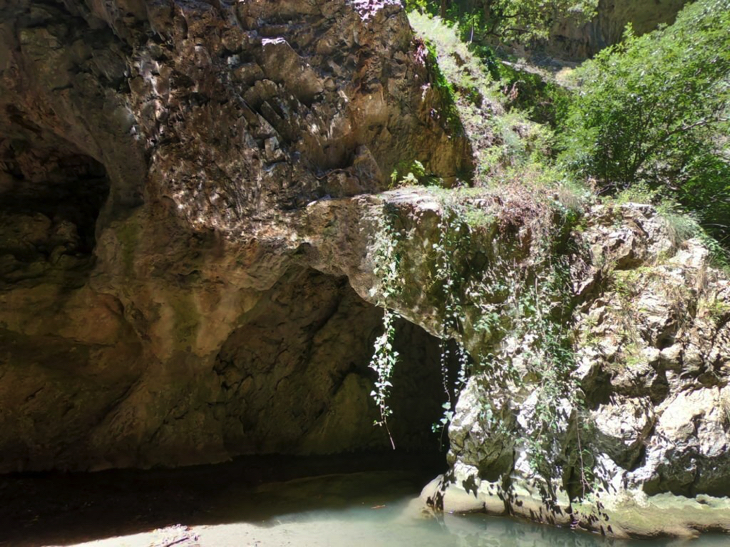
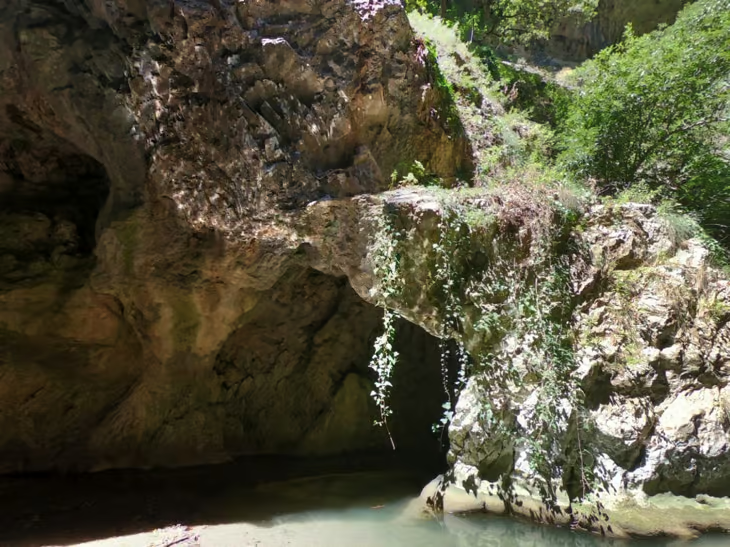
- Physical demand: The terrain turns steep and rocky, and the scrambling sections need a moderate level of fitness. Komoot rates its own recorded 7.98 km (4.96 miles) Patsos circuit as a hard hike requiring good fitness and sure-footedness.
- Weather: Conditions change quickly. Check the forecast, and pack for sun, rain, and wind.
- Dehydration and sunburn: The Cretan sun is fierce. Drink often, and wear a hat, sunglasses, and sunscreen.
- Falls: Wet rock and steep ground raise the risk of a fall. Watch your footing, especially near the narrows and the waterfalls.
- Getting lost: The marked path ends at the narrows. Carry a map, compass, or GPS app beyond that point.
When is the best time to visit Patsos Gorge?
Autumn and summer suit the gorge best, because water levels drop then. Summer is the warmest and busiest season, and it favours walkers who enjoy heat.
Spring rewards visitors with the gorge in flower, but the river runs high and hikers wade across it. In winter and spring, the descent past the narrows toward Lake Potami turns treacherous.
What are the things to bring when visiting Patsos Gorge?
The 10 essentials for a Patsos Gorge walk, and what each one is for, are listed below.
- Comfortable footwear: Wear sturdy hiking shoes or trainers with grip.
- Sun protection: Pack a hat, sunglasses, and sunscreen.
- Water: Carry plenty, in a refillable bottle.
- Snacks: Energy bars or fruit keep energy levels up.
- First aid kit: A small kit covers minor injuries.
- Clothing: Choose lightweight, breathable tops and trousers, plus a light jacket or windbreaker for cooler or windy weather.
- Camera: The cave chapel, the waterfalls, and the plane trees earn the extra weight.
- Trash bag: Carry out everything you carry in.
- Money: Bring cash for food, drinks, or souvenirs.
- Hiking poles: Poles steady you on the steep, rocky sections.
How does Patsos Gorge compare to Samaria Gorge?
Patsos is the smaller, quieter gorge. Samaria draws Crete’s biggest hiking crowds and fills a full day; Patsos fits into a half day and stays uncrowded, which is why several Crete hiking guides recommend it to visitors who want shade, water, and archaeology without the queue. Patsos also asks less of a walker’s schedule: you park, walk in, and walk back out.
What are the nearby attractions in Patsos Gorge?
Patsos Monastery sits near the gorge entrance. Rethymnon, Arkadi Monastery, the Amari Valley, and Preveli Beach all lie within a short drive. A rental car turns the gorge into a base for the whole of central Crete. Arkadi is one of the Crete monasteries covered in a separate Rental Center Crete guide.
The 5 nearby attractions of Patsos Gorge, and what each one offers a visitor, are listed below.
- Patsos Monastery: A historic Byzantine monastery near the entrance of Patsos Gorge. Its small church holds impressive frescoes, and its natural spring is said to have healing properties. The quiet grounds look out over the surrounding countryside.
- Rethymnon: Crete’s third-biggest city, on the north coast, known for its Venetian harbour, mediaeval defences, and well-preserved old town. The Fortezza Castle, the Rimondi Fountain, and the Archaeological Museum of Rethymnon anchor a half-day visit.
- Arkadi Monastery: An Orthodox monastery about 20 km (12.43 miles) from Patsos Gorge, erected in the 16th century and dedicated to the Holy Trinity. Its role in the Cretan War of Independence made it a symbol of the island’s fight for freedom, and its huge dome is typical of Crete’s monasteries.
- Amari Valley: A valley of villages, olive groves, and wineries in the island’s centre, flanked by mountains. Nature lovers and outdoor enthusiasts base themselves here, often in the village of Amari.
- Preveli Beach: A palm-grove beach on the south coast, around 35 km (21.75 miles) south of Rethymno. The Kourtaliotiko River pours into the sea at its eastern end, between rocky cliffs and thick vegetation. Lower Preveli is the larger section; Upper Preveli is the smaller.
What is the contribution of Patsos Gorge to the tourism of Crete?
Patsos anchors Crete’s eco-tourism offer in the mountains. The village stands at an elevation of 490 metres near the base of Mount Soros, and it gives visitors landscapes of great natural beauty, historical and cultural attractions, traditional Cretan cuisine, and the hospitality its people are known for.
Tourism drives the Cretan economy. Crete holds more five-star beds than any other location in Greece and has become the country’s fastest-growing tourist region, with a 60% increase in arrivals over the previous six years. Gorges like Patsos spread those visitors away from the coast and into the interior.
Can you rent a car going to Patsos Gorge?
Yes, you can rent a car to reach Patsos Gorge, and it is the most practical way to get there. No direct bus serves the trailhead, and a car puts the gorge, Arkadi Monastery, and the Amari Valley on the same day’s itinerary. Car rental companies in Crete like, international and local, offer a range of vehicles, and booking in advance secures the best rates and availability.
Check the terms before you book. Some rental companies restrict driving on certain roads, including mountain roads. Bring a valid driving licence, and read the local rules for driving in Crete before you set off.
What are the factors to consider before renting a car in Crete?
The 5 factors to consider before renting a car in Crete, and how each one affects the booking, are listed below.
- Insurance: Car rental insurance covers the cost of damage to the car. Crete car rental includes collision damage waiver insurance, and the rental desk requires a driver’s credit or debit card as a guarantee.
- Driver’s age: The legal driving age in Crete is 18. Renting a car requires a minimum age of 21, a driving licence held for at least 12 months, and an ID or passport.
- Driver’s gender: Crete permits women and men to drive on the same terms, from the legal age of 18.
- Car type: Groups and families need a bigger car. Smaller cars suit Crete better, because many Greek roads are narrow.
- Documents: Bring a valid driving licence, a credit or debit card, and a passport or ID card.
How much does a car rental in Crete cost?
A rental car in Crete typically costs between €30 ($34.44, £25.43) and €40 ($45.92, £33.90) per day. A week averages €250 ($287.03, £211.88), and a weekend rental comes to about €78 ($89.55, £66.11). The final price depends on the number of people, the route, the type of car, the pick-up location, and the time frame.

Most car rental agencies in Crete run an online booking platform, so you reserve the car on their website and collect it on arrival. Gather the documents listed above before you book.
Is overnight car rental allowed in Crete?
Yes, overnight car rental in Crete is allowed. Policies vary by company: some charge an additional fee to keep the car overnight, others restrict or prohibit it.
Check the rental company’s policy before you reserve, and confirm any restrictions or extra fees. Plan where you will park the car and take reasonable security measures to keep it safe.
Does renting a car give you the freedom you want when travelling?
Yes. A rental car lets you build your own itinerary around Patsos Gorge instead of a bus timetable.
The gorge sits about 45 minutes from Rethymno by road, and no direct public bus serves the village of Patsos. With a car, you drive to the trailhead in the cool of the morning, walk the gorge, and still reach Arkadi Monastery, the Amari Valley, or Preveli Beach the same afternoon. You also carry your water, poles, and spare footwear in the boot rather than on your back to the bus stop, and you leave when you are ready rather than when the last bus goes.
What is the nearest traveller’s inn to Patsos Gorge?
The 6 nearest traveller’s inns to Patsos Gorge, with their locations, guest ratings, and prices, are listed below.
| Property | Location | Guest rating | Price |
|---|---|---|---|
| Villa Eleni | Latsida | 5 stars (most customers) | €1,025.87 ($1,177.80, £869.42) for a minimum 7-night stay |
| Stelios Place | Kalo Chorio | — | — |
| Hotel Kastello | Kastello | — | — |
| Lefteris Rooms | Kalo Chorio | 5.0 out of 5 | Budget-friendly |
| Hotel Herakles | Spili | 4.5 out of 5 | About €41.68 ($47.85, £35.32) per night |
| Christina Apartments | — | 4.5 out of 5 (296 reviews) | — |
- Villa Eleni: A traditional Cretan villa in the village of Latsida, a short drive from Patsos Gorge, with 2 bedrooms, 2 bathrooms, a private infinity pool, and an unobstructed view of the Cretan Sea. Amenities include internet access, secure parking, a private yard, a dishwasher, cable/satellite TV, central heating, a balcony, and a microwave. Guests describe it as a secluded, quiet, well-equipped villa surrounded by nature.
- Stelios Place: A family-run hotel in the village of Kalo Chorio, with comfortable rooms, a garden, a terrace, a bar, and an on-site restaurant serving traditional Cretan cuisine. It sits near Patsos Gorge, the hiking trails, and the beaches.
- Hotel Kastello: A hotel in the village of Kastello, offering rooms with panoramic mountain views, a garden, a terrace, a restaurant serving traditional Cretan cuisine, a bar, and a pool.
- Lefteris Rooms: A budget-friendly option in Kalo Chorio, with simple, clean rooms, a private bathroom, air conditioning, and a refrigerator. A local family runs it and shares tips on what to see in the area.
- Hotel Herakles: A hotel in the Cretan hamlet of Spili, with suites whose balconies overlook the hills and garden. Bars and restaurants stand 50 metres away. It offers complimentary Wi-Fi, on-site parking, and pet-friendly rooms.
- Christina Apartments: Apartments with a refrigerator, a kitchenette, air conditioning, and a free internet connection. Guests use the on-site pool and lounge.
Is it possible to hire a hiking guide in Patsos Gorge?
Yes, you can hire a hiking guide in Patsos Gorge. A guide reads the path, points out the flora and fauna, explains the history and culture of Crete, and gets walkers through the difficult sections safely. Several local tour companies run guided treks in the gorge, and booking ahead matters in high season.
What kind of car should you rent when visiting Patsos Gorge?
Rent a car suited to mountainous and rural roads. The approach to Patsos climbs into the foothills, and an SUV handles rocky, uneven surfaces with more ground clearance and stability on hilly, winding roads. Weigh the terrain, the size of your group, and your budget before you choose. Rental Center Crete explains how to choose the right car to rent in Crete in a separate guide.
Can elderly people hike the Patsos Gorge?
No, Patsos Gorge is not recommended for elderly hikers. The gorge climbs steep, rocky terrain and includes scrambling sections with fixed ropes and ladders, which demand a moderate level of fitness. Older visitors in good hiking condition walk the first, easier stretch to the cave chapel, and the narrows beyond it demand more.
Can a couple hike the Patsos Gorge?
Yes, couples can hike Patsos Gorge. Patsos is much smaller than Crete’s famous gorges, so a couple walks it in a half day and still has the afternoon free. The stream crossings, the ladders, and the shaded riverbed make it a route to walk together rather than in single file, and the cave chapel gives the walk a destination.
Is hiking Patsos Gorge child-friendly?
Yes, hiking in Patsos Gorge suits children. Patsos is the gorge to pick in Rethymnon if you are walking with a family. Children climb the ropes, the ladders, and the platforms rather than simply walking, which turns the route into an adventure. Dress them in proper footwear and clothing, because the path gets slippery, and expect to help them at the stream crossings. The streams, cliffs, waterfalls, and views of Crete repay the effort.