


Greek mythology gives Crete a founding cast of gods and goddesses. Zeus, the king of the gods, took the shape of a white bull to carry the mortal maiden Europa across the sea to the island. Europa then gave birth to Minos, Rhadamanthus and Sarpedon, the three legendary Cretan kings. Rhea, wife of Cronus and mother of Zeus, gave the island its nurturing and protecting goddess.
Ancient sources do not always agree with one another. Some traditions place Zeus’s birth cave on Mount Dikte, others on Mount Ida; some count the Athenian tribute to the Minotaur every seven years, others every nine. Where the accounts differ, this article names the differing traditions instead of presenting one version as settled fact.
What is the Mythology of Crete?
Crete’s mythology is the cluster of Greek myths set on the island, from the birth of Zeus to the death of the Minotaur. Cretan mythology covers the origin of the gods, the abduction of Europa, the reign of King Minos, the Labyrinth and its monster, and the flight of Daedalus and Icarus.
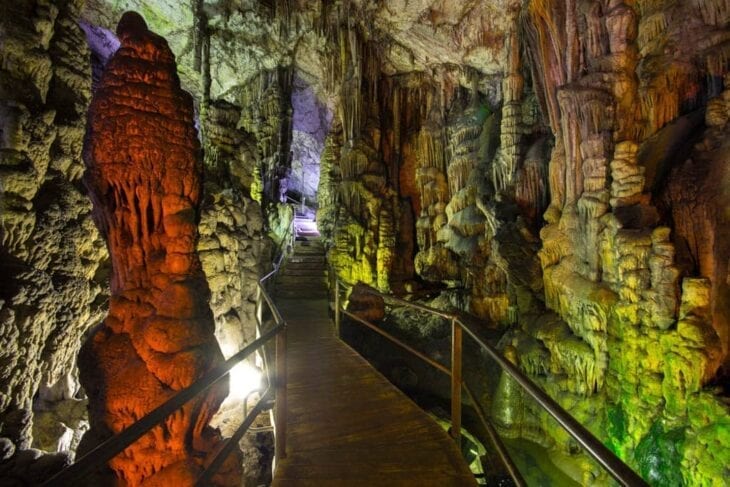
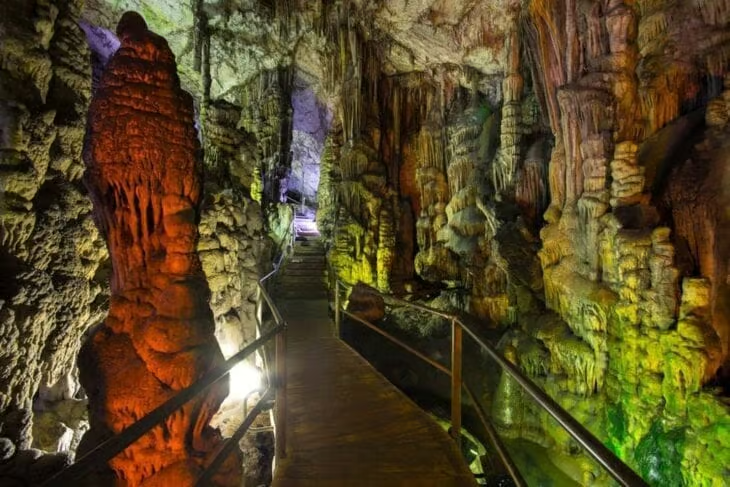
The birthplace of Zeus is the most prominent of these myths. Rhea, according to the tradition attached to the Lassithi Plateau, gave birth to Zeus in the Dikteon Cave and hid the infant there from Cronus. A rival ancient tradition names the Ideon Andron on Mount Ida instead, and both caves are still shown to visitors as the birthplace.
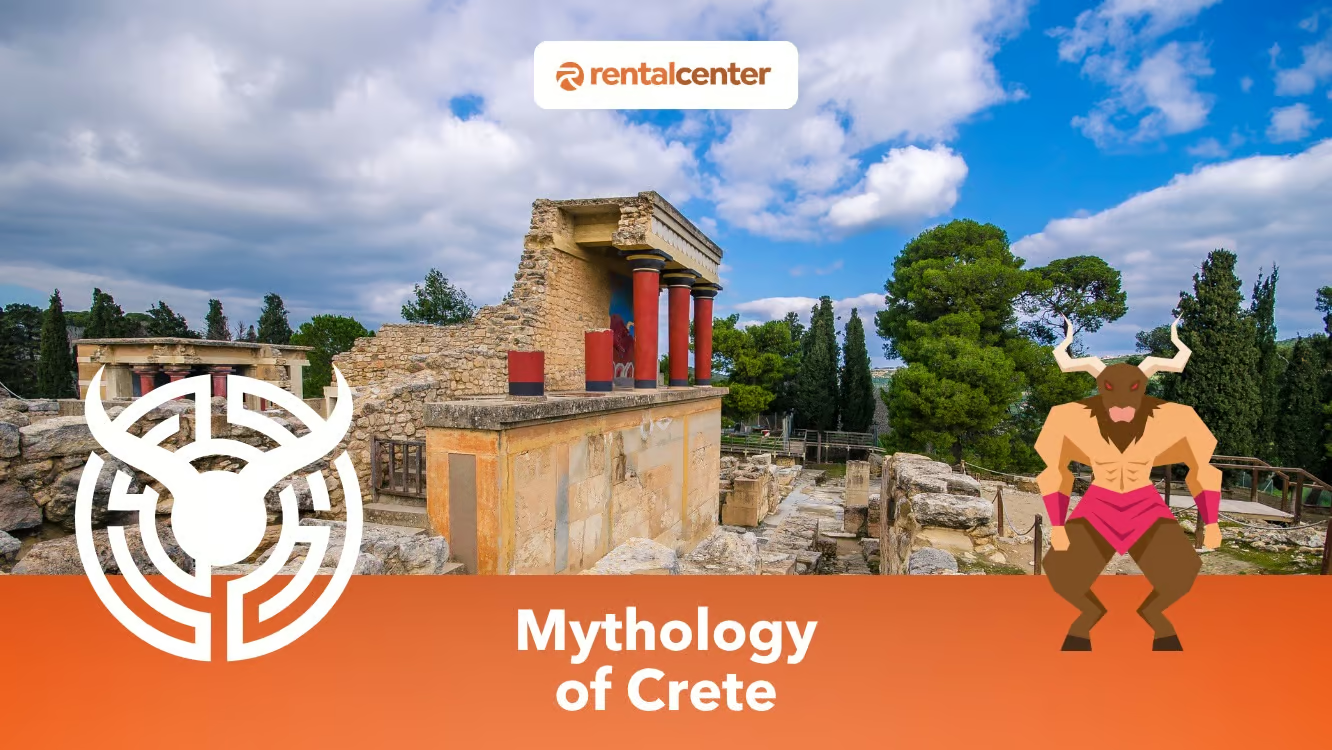
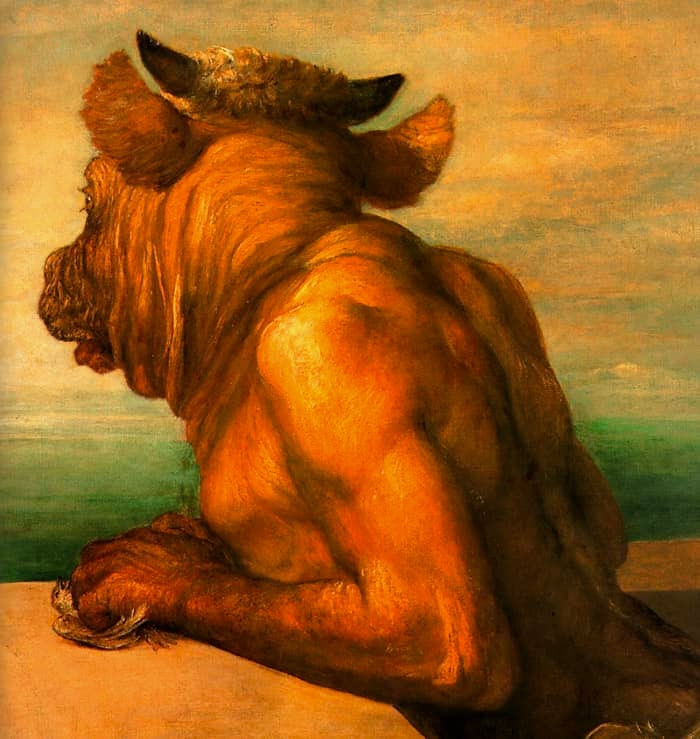
The story of the Minotaur and the Labyrinth is the best known story associated with Crete. King Minos commissioned the construction of a labyrinth to hold the Minotaur, a beast with a human body and a bull’s head. The myth turns on Minos’s strength and cunning and on Theseus’s bravery in entering the labyrinth to kill the creature.
The myth of Europa gives the island its founding story. Zeus, in the form of a white bull, carried the Phoenician princess Europa from her homeland to Crete. The tale marks the island out as a meeting place of gods and mortals.
Cretan mythology also underpins the archaeological marvels displayed in museums and excavated sites across the island. The myths and the finds are inseparable: the Labyrinth belongs to Knossos, the birth of Zeus belongs to the Dikteon Cave, and the statues of Apollo and Artemis belong to Aptera.
How was Crete Formed According to Mythology?
In Greek mythology, Zeus and the Phoenician princess Europa together gave Crete its mythical origin. Zeus, smitten by Europa’s beauty, took the guise of a white bull to approach her. Europa, disarmed by the bull’s gentleness, climbed onto its back, and Zeus carried her across the sea to Crete.
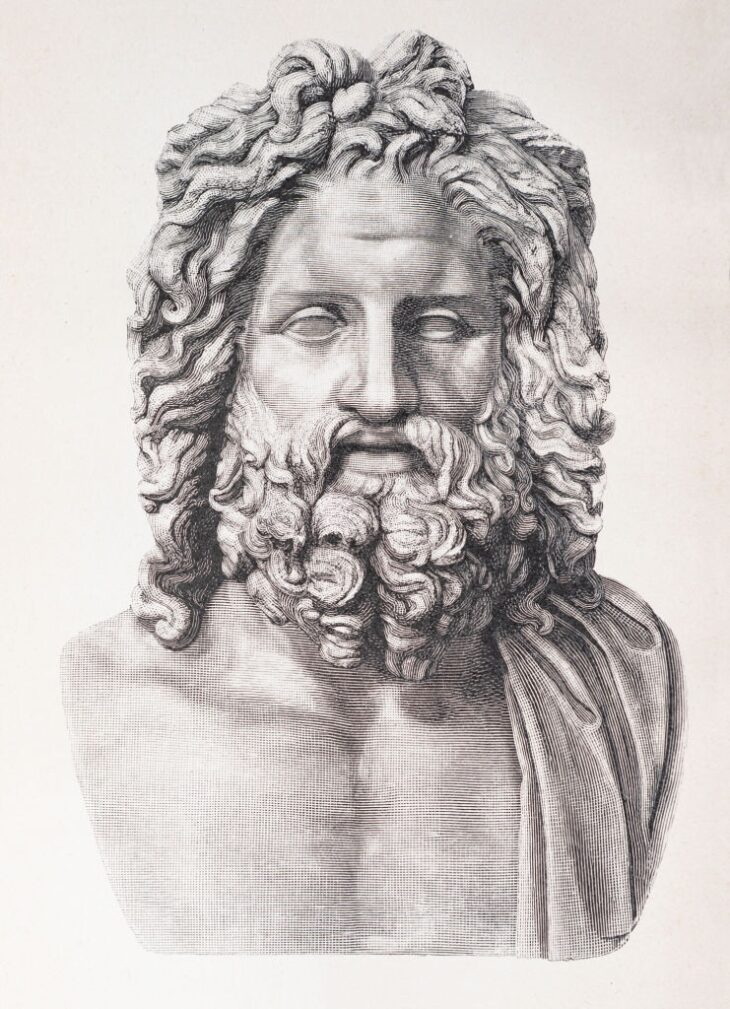
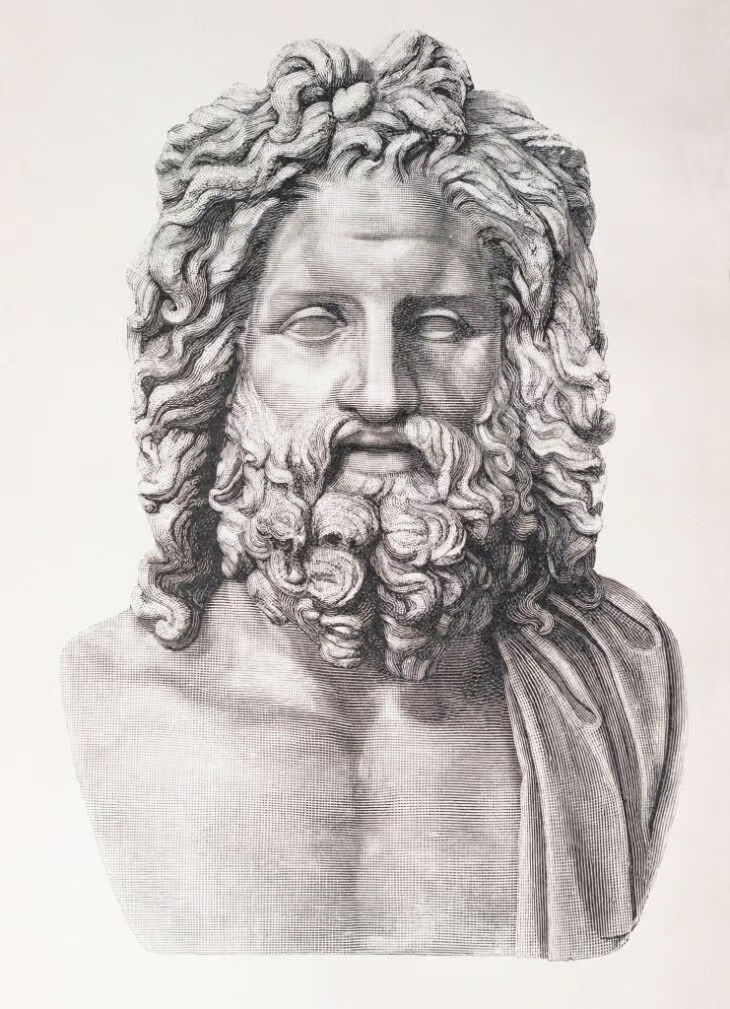
Zeus revealed his true identity on the island and gave Europa a set of gifts, the most formidable of which was Talos. The story of Europa and Zeus explains the island’s genesis and makes Crete a place of divine favour and prosperity.
Who are the Gods and Goddesses of Crete?
Three deities stand at the centre of Crete’s origin myths: Zeus, who was born on the island, Rhea, who protected him, and Poseidon, who ruled its waters and sent Minos the bull. The gods and goddesses involved in the formation of Crete are listed below.
- Zeus: Zeus was born, according to the Cretan tradition, in the Dikteon Cave. The nymph Amalthea raised Zeus on the island, and the Curetes – a band of celestial warriors – clashed their weapons to drown out his cries and hide him from Cronus.
- Rhea: Rhea, the mother of Zeus, gave birth to him in the cave and left the infant in the care of the nymphs and the Curetes. Rhea represents Crete’s part in the birth and upbringing of the king of the gods.
- Poseidon: Poseidon, the god of the sea, shaped the island’s landscape by striking the ground with his trident and opening its springs and rivers. Cretans honoured Poseidon as the guardian of the waters and tied him to the island’s seafaring culture.
How was Zeus Related to the Dikteon Cave?
Zeus was born, in the best-known Cretan tradition, in the Dikteon Cave (locally called the Cave of Zeus), which lies on the Lassithi Plateau in the Mount Dicte range. Cronus, the father of Zeus, tried to swallow the infant, and Rhea hid the child in the cave to keep him safe. The cave became a holy site through that act of concealment.
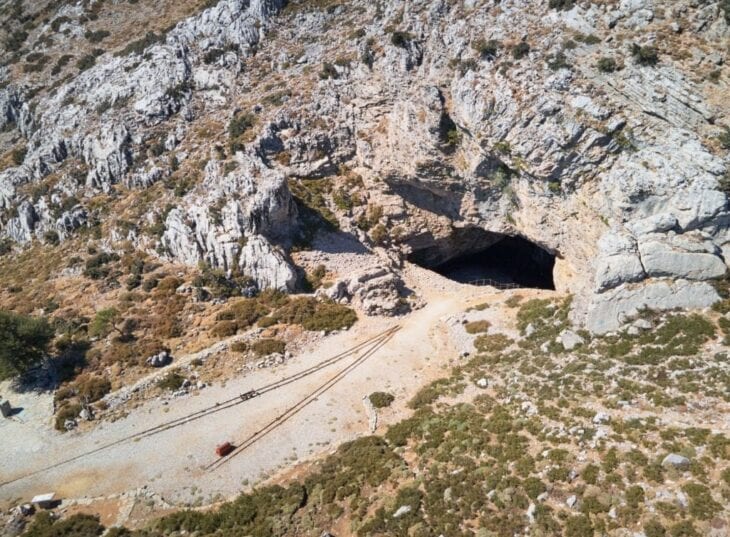
Ancient sources disagree on which cave holds the birth. The Ideon Andron on Mount Ida, Crete’s highest mountain, is named in a rival tradition as the cave where the infant Zeus was hidden. Both traditions survive, and both caves are open to visitors today.
Excavations at the Dikteon Cave have uncovered the foundations of a built altar and the remains of offerings left in the rock crevices, which mark it as one of the most important cult places of Minoan Crete.
The Dikteon Cave sits close to several towns, which makes it an easy stop on a day out. Neapoli, Malia, Stalida and Hersonissos are the nearest settlements. The road up to the cave is winding and steep, so allow for slow driving on the final approach. Neapoli draws visitors with its historic centre, Malia and Stalida with their beaches and nightlife, and Hersonissos with its water sports and its busy port.
Where were Apollo and Artemis Born?
Apollo and Artemis were born, in Greek mythology, on the floating island of Delos in the Aegean Sea, close to Mykonos. Leto, their mother, fled to Delos to escape the wrath of Hera, the jealous wife of Zeus. Hera had forbidden Leto to give birth anywhere on solid Earth, and Delos – small, uninhabited and adrift – offered the loophole and the sanctuary.
Apollo took the domains of light, music and prophecy, and Artemis took the wilderness and the hunt. Delos was chosen as their birthplace for its neutrality and its association with light and purity, since the island stood free of conflicts and disputes among the gods. The worship of the twins turned Delos into a holy site, and the birth of Apollo and Artemis has inspired a wide range of artistic and literary works ever since.
Zeus and Europa: The Founding Myth of Crete
Crete’s founding myth begins when Zeus, disguised as a white bull, carries the Phoenician princess Europa across the sea to the island. Europa bore Zeus three sons – Minos, Rhadamanthus and Sarpedon – and each of them became a king of Crete. Zeus later set the shape of the white bull among the stars as the constellation Taurus, in memory of the crossing.
Two Cretan sites carry the myth on the ground. Matala, the red-cliffed beach on the Libyan Sea in the south of the island, is named in local legend as the shore where Zeus brought Europa out of the water. The plane tree of Gortyn, on the banks of the Lethaios River, is named as the place of their union; the tree was said to have been blessed and to have stayed evergreen ever since.
Talos, the Bronze Guardian of Crete
Talos, a giant bronze automaton, guarded Europa and the island of Crete against invaders. Zeus gave Talos to Europa as one of her gifts on the island, alongside a necklace forged by Hephaestus, the hound Laelaps and a javelin that never missed its mark. Talos patrolled the coast and hurled stones at approaching ships.
Talos was himself the work of Hephaestus, the smith of the gods, and a single vein of ichor – the fluid of the gods – ran from his head to his ankle, sealed by a bolt. Medea, in the account that closes the story, removed that bolt and let the ichor drain out, which killed the bronze guardian. The legend of Talos gives Cretan mythology its image of the island as a fortress under divine protection.
King Minos and the Origin of the Minotaur
Minos, the mortal son of Zeus and Europa, ruled Crete as its king, and his refusal to sacrifice Poseidon’s bull led to the birth of the Minotaur. Ancient sources trace Minos’s lineage to Zeus and Europa and credit Poseidon, the god of the sea, with granting him the throne. Minos then expanded Crete’s influence by colonising islands across the Aegean Sea.
Who was King Minos?
King Minos was a mortal king, not a god, despite being the son of Zeus. The legends surrounding Minos present him as a ruler of remarkable achievements, chief among them a comprehensive and just code of laws that showcased his wisdom. Minos is a complex figure: some accounts portray him as a fair and just ruler, while others cast his reign as tyrannical.
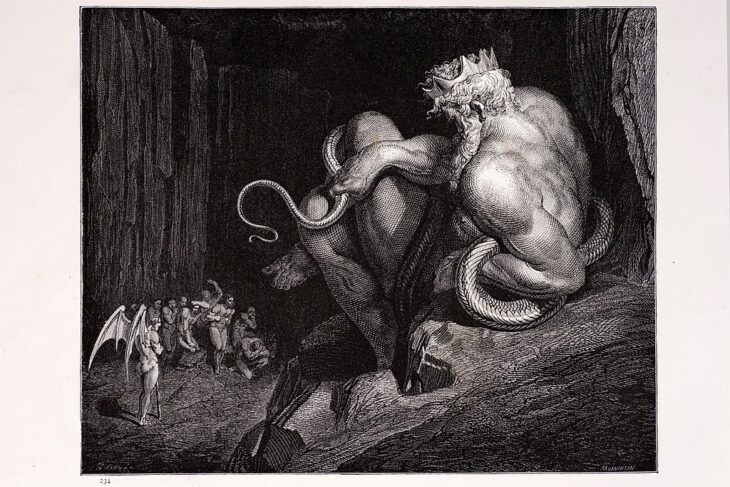
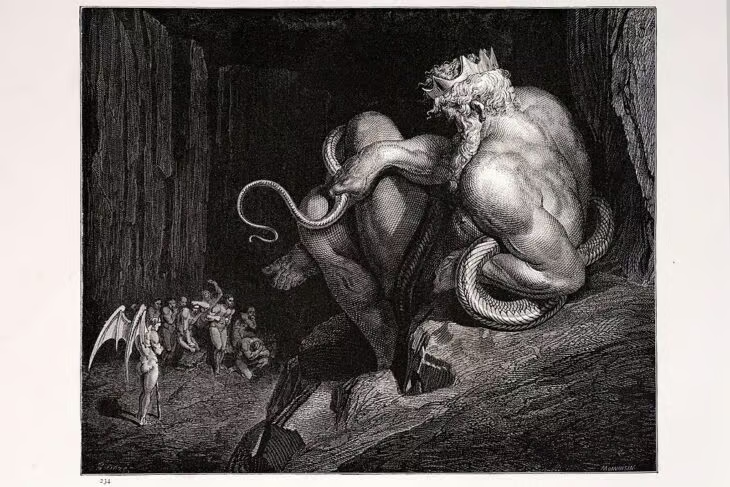
Scholars and historians have suggested that “Minos” was a title borne by the rulers of Bronze Age Crete rather than the name of one man, which deepens the mystery around the figure. In several traditions Minos does not disappear at death but becomes a judge of the dead in the underworld.
How the Minotaur Was Born: Poseidon, Pasiphae and the White Bull
Poseidon sent Minos a snow-white bull as a sign of favour, and Minos kept the animal instead of sacrificing it in the god’s honour. Poseidon took his revenge by making Pasiphae, the wife of Minos, fall in love with the bull; some accounts hand that task to Aphrodite acting on Poseidon’s behalf. Pasiphae’s union with the bull produced the Minotaur, the creature with a human body and a bull’s head.
Minos then ordered Daedalus to build the Labyrinth beneath the palace of Knossos and confined the Minotaur inside it. The causal chain runs in one line: Poseidon’s bull, Minos’s refusal, Pasiphae’s punishment, the Minotaur, the Labyrinth.
Mount Yuchtas, the Legendary Tomb of Zeus
Mount Yuchtas, in the hills south of Heraklion, is named in Cretan legend as the burial place of Zeus. The claim is unique to Crete: elsewhere in the Greek world the Olympians never die, while the Cretan tradition holds that Zeus died, was buried on the island and was reborn each spring. Seen from the west, the profile of the mountain is said to show a bearded head lying as if in sleep – the face of Zeus.
Theseus, Ariadne and the Labyrinth
Theseus, a prince of Athens, entered the Labyrinth at Knossos and killed the Minotaur with Ariadne’s help. King Minos demanded a tribute from Athens of seven young men and seven young women, to be sent to the Minotaur in the labyrinth beneath the palace of Knossos. Ancient sources differ on the interval: the article’s tradition sets the tribute every nine years, while other accounts set it every seven. Theseus volunteered to be one of the sacrificial youths in order to end the tradition.
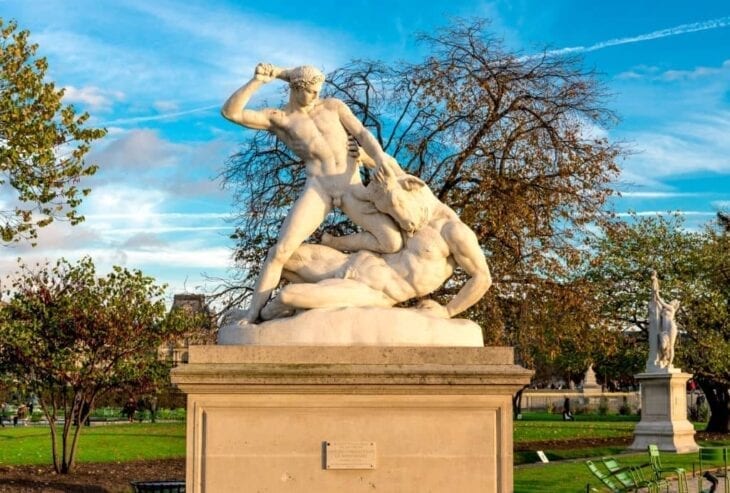
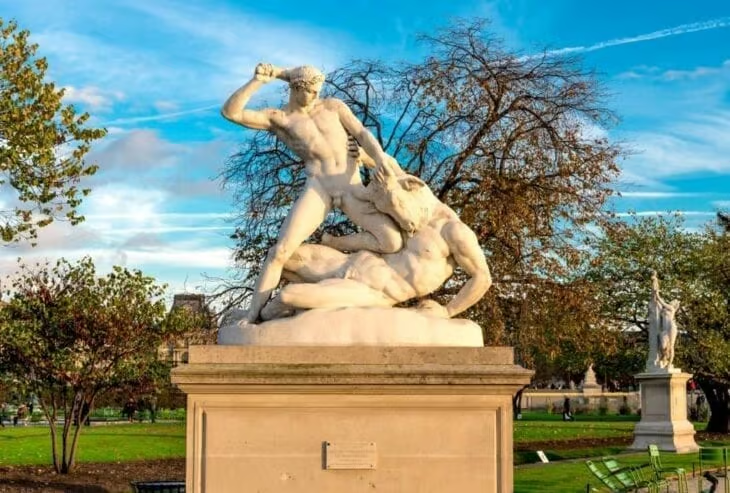
Theseus captured the attention of Ariadne, the daughter of King Minos, on his arrival in Crete. Ariadne fell in love with Theseus and gave him a ball of thread, which he unwound on his way in and followed back out after killing the Minotaur.
Theseus and Ariadne then fled Crete together. The escape turned tragic on the island of Naxos, where Theseus abandoned Ariadne while she slept and left her heartbroken.
Daedalus and Icarus
Daedalus, the craftsman and architect of Greek myth, designed and built the Labyrinth that held the Minotaur. Daedalus also gave Ariadne the thread trick that let Theseus cross the maze and defeat the creature, which turned Minos against him.
Daedalus made wings of feathers and wax to escape Crete with his son Icarus. Icarus flew too close to the sun in spite of his father’s warning, his wings melted, and the boy drowned in the sea. Minos pursued Daedalus as far as Sicily, where King Cocalus sheltered the craftsman and, in one tradition, contrived the death of Minos in a boiling bath.
The Mythological Caves of Crete
Crete’s caves anchor its myths to real, visitable places, from the birth of Zeus to Minoan cult worship. The famous caves of Crete are listed below.
- Dikteon Cave (Psychro Cave): Dikteon Cave, known as the “Cave of Zeus,” is the birthplace of Zeus in the best-known Cretan tradition. Dikteon Cave lies in the Mount Dicte range and holds impressive stalactite and stalagmite formations.
- Ideon Andron: Ideon Andron is a sacred cave on Mount Ida, the highest mountain range in Crete, and the rival candidate for the birth and hiding of the infant Zeus. The cave commands broad views over the surrounding landscape.
- Kournas Cave: Kournas Cave stands at Keratides, west of the settlement of Kournas in the Chania prefecture. The descent to the main hall is long, and the cave decorations that wait at the bottom reward the effort.
- Gerani Cave: Gerani Cave ranks among the most significant caverns in the Rethymno prefecture and in Crete as a whole. The cave lies seven kilometres west of Rethymnon at a place called “Kamari,” near the beach of Gerani, and construction workers building a modern highway discovered it by accident on March 15, 1969.
- Agios Antonios Cave at Patsos: Agios Antonios Cave, the cave of Saint Anthony, opens north of the village of Patsos below a rock shelter in the green gorge of Patsos. The site also carries the name Cave of Hermes.
- Sfentoni Cave: Sfentoni Cave, near the village of Zoniana, is known for its geological formations and its biodiversity. The cave preserves an underground ecosystem of stalactites, stalagmites and rock formations.
- Labyrinth Cave: Labyrinth Cave lies about 5 kilometers (31.07 miles) south of Heraklion, on a hill 3.5 kilometers (2.17 miles) north of the Kastelli settlement in the Messara Plain. The cave is a massive artificial complex with passages longer than 2.5 kilometers (1.55 miles) and rooms that lead nowhere, quarried for the stone used to build the Minoan palace at Phaestus.
- Melidoni Cave: Melidoni Cave, near the village of Melidoni, served as a place of refuge during the Ottoman occupation. The cave holds impressive rock formations and a large chamber used as a burial site in ancient times.
- Skotino Cave: Skotino Cave, near the village of Skotino, is known for its rock formations and underground chambers. The cave was dedicated to the virgin goddess Britomartis and was later used to worship Artemis, and it has been inhabited and used as a place of worship since the Minoan period.
- Kamares Cave: Kamares Cave, also called Kamaraiko, opens on the southern foot of Psiloritis, on the lower slopes of Mount Soros at an elevation of 1700 metres, northeast of the village of Kamares. The discovery of Minoan artefacts raised the cave to an important archaeological site, despite its modest speleological interest.
Drive the Myths of Crete: A Self-Guided Mythological Route
Crete’s mythological sites are spread across the island, and a rental car is the way to link them into one route. The four stops below run from the birth of Zeus to his legendary tomb, and each of them is a real, visitable place. Check current opening times and access conditions for each site before you set out, since they vary by season.
- Dikteon Cave (Lassithi Plateau): Start at the birthplace of Zeus. The road up to the cave is winding and steep, so plan the ascent for daylight.
- Matala beach (south coast): Continue to the shore where Zeus is said to have brought Europa out of the sea. Matala today is a lively village on the Libyan Sea.
- Gortyn (Messara Plain): Stop at the archaeological site of Gortyn and its plane tree, the legendary place of the union of Zeus and Europa.
- Mount Yuchtas (south of Heraklion): Finish at the mountain that Cretan legend names as the tomb of Zeus.
Ideon Andron on Mount Ida makes a natural fifth stop for travellers who want to see both claimed birthplaces of Zeus.

Crete’s Mythology in Art and Archaeology
Crete’s myths survive in real archaeological finds, including statues of Apollo and Artemis unearthed at Aptera. The island’s mythology is not only a body of stories; it is also the subject matter of objects that visitors can see in Cretan museums today.
Does Crete Have Statues of the Mythical Gods and Goddesses?
Yes, Crete has statues of mythical gods and goddesses. Two of the most prominent were discovered in the ancient city of Aptera and depict Apollo and Artemis. Both statues stand at around 54 cm, and their bases measure around 35 cm. The statue of Artemis is made of copper and the statue of Apollo of marble, and both are believed to have been imported to Crete and used to decorate a Roman home.
The Lady of Auxerre is another famous statue from Crete. The limestone figure stands approximately 75 centimetres tall, which makes it a miniature work of art. The statue combines elements from several ancient cultures and is believed to have been made on Crete around 630 BCE. Opinions on its purpose differ: one school of thought holds that the Lady of Auxerre represents nothing more than a young woman or a Greek goddess.
Do Cretan People Believe in Mythology?
Yes, Cretans believe in mythology. The ancient Cretans held a distinctive view of the Greek gods, seeing them as human individuals who attained divine status through benevolent actions and contributions to humanity. That theology grew from the perspective of mortals rather than being imposed by a higher authority.
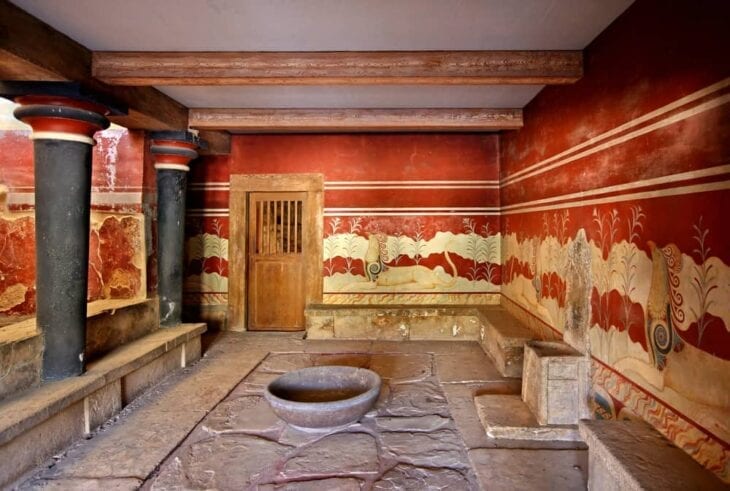
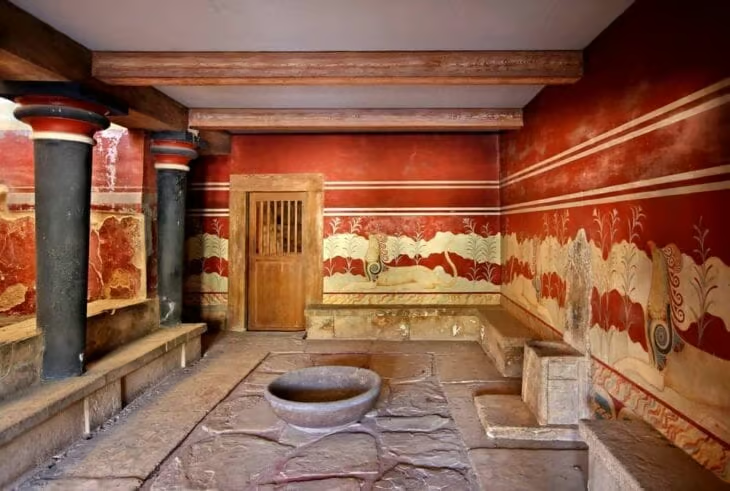
Cretans believed that many of the gods, Zeus above all, were born on the island – and, in the same tradition, that they were buried there. The belief gave the Cretan people a distinct and localised understanding of the divine realm.
How Does Crete’s Mythology Attract Tourists?
Crete’s mythology attracts tourists by tying famous stories to places they can stand in. Visitors step into the tales at the Palace of Knossos and at the Dikteon Cave, the birthplace of Zeus, and the stories give the sites a meaning that the ruins alone do not carry.
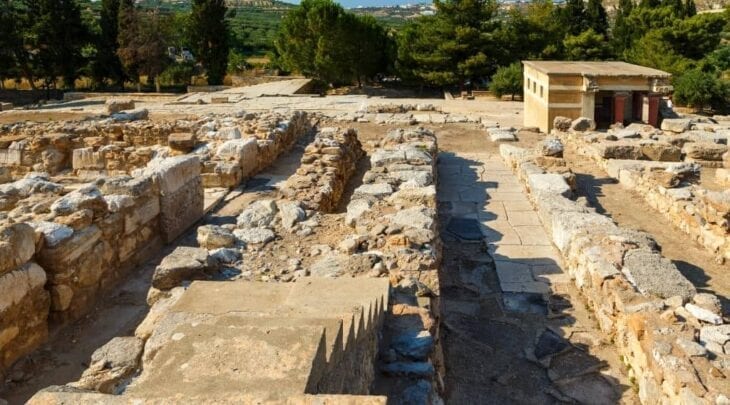
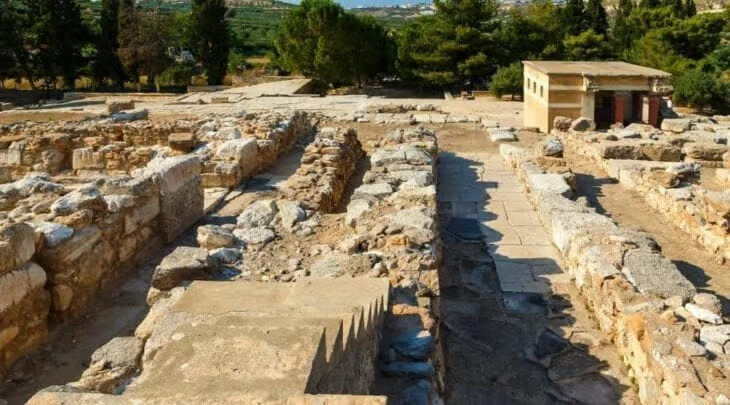
The appeal of travelling in the footsteps of mythical figures, and of seeing the landscapes that produced the tales, makes for a distinctive kind of trip. Crete’s mythology adds a layer of cultural richness to the island and invites visitors to form their own connection with the ancient past.
Literature, films and television series have carried Crete’s mythical heritage to a wider international audience. The enduring popularity of Greek mythology feeds directly into the interest in visiting the island where so many of the myths begin.
Frequently Asked Questions About Crete’s Mythology
What is the mythical creature of Crete?
The Minotaur is the mythical creature of Crete – a monster with a human body and a bull’s head, born to Pasiphae and confined by King Minos in the Labyrinth of Knossos. Talos, the bronze automaton who guarded the coast, is the island’s second mythical creature.
What Greek god is associated with Crete?
Zeus is the Greek god most closely associated with Crete, because the island claims both his birth (in the Dikteon Cave) and, uniquely, his burial (on Mount Yuchtas). Poseidon and Rhea are also tied to the island: Poseidon sent the white bull to Minos, and Rhea gave birth to Zeus and hid him from Cronus.
Which Greek myths are set in Crete?
Four major Greek myths are set in Crete: the birth of Zeus in the Dikteon Cave, the abduction of Europa by Zeus in the form of a white bull, the birth and death of the Minotaur in the Labyrinth of Knossos, and the escape of Daedalus and Icarus on wings of feathers and wax.
Where was Zeus born in Crete?
Zeus was born in the Dikteon Cave on the Lassithi Plateau, according to the most widespread Cretan tradition. A rival ancient tradition names the Ideon Andron on Mount Ida instead, and Crete presents both caves to visitors as the birthplace of the god.