


This guide covers every 2027 date, the Greek name and meaning, what closes, and the unique Crete-specific traditions you won’t find anywhere else.
Last updated: 20 September 2026. All 2027 dates are set out below, calculated from the Orthodox Julian Paschal calendar. One of them needs watching: Labour Day falls inside Holy Week in 2027, so see the note in section 8.
Greece public holidays 2027, quick reference table
Greece has 12 public holidays in 2027: 8 fixed-date holidays plus 4 moveable Orthodox feasts whose dates shift each year following the Julian Paschal calendar. The public sector, banks, and schools observe all 12 dates; private businesses follow a shorter list, explained below the table.
| # | Date (2027) | English name | Greek name | Type |
|---|---|---|---|---|
| 1 | Fri, 1 Jan | New Year’s Day | Protochronia | Mandatory |
| 2 | Wed, 6 Jan | Epiphany | Theofania (Fota) | Mandatory |
| 3 | Mon, 15 Mar | Clean Monday | Kathara Deftera | Moveable |
| 4 | Thu, 25 Mar | Greek Independence Day | Ikosti-Pempti Martiou | Mandatory |
| 5 | Fri, 30 Apr | Good Friday | Megali Paraskevi | Moveable |
| 6 | Mon, 3 May | Easter Monday | Deftera tou Pascha | Moveable |
| 7 | Sat, 1 May | Labour Day | Ergatiki Protomagia | Mandatory |
| 8 | Mon, 21 Jun | Whit Monday / Holy Spirit Monday | Deftera tis Pentikostis (Agiou Pnevmatos) | Moveable |
| 9 | Sun, 15 Aug | Assumption of the Virgin Mary | Dekapentavgoustos / Koimisi tis Theotokou | Mandatory |
| 10 | Thu, 28 Oct | Ochi Day | To Ochi | Mandatory |
| 11 | Sat, 25 Dec | Christmas Day | Christougenna | Mandatory |
| 12 | Sun, 26 Dec | Synaxis of the Mother of God | Synaxis tis Theotokou | Mandatory |
Note on moveable feasts: Clean Monday, Good Friday, Easter Monday, and Whit Monday change dates every year following the Orthodox Julian Paschal calendar. The dates above are for 2027, anchored to Orthodox Easter on Sunday 2 May 2027. Dates for 2028 will be confirmed by the Greek Ministry of Labour by November 2027.
Weekend clashes in 2027: four of the twelve holidays land on a weekend, Labour Day (Sat 1 May), the Assumption (Sun 15 Aug), Christmas Day (Sat 25 Dec) and the Synaxis (Sun 26 Dec). Only Labour Day can legally move: Law 4468/2017 lets the Minister of Labour shift 1 May when it coincides with a Sunday, a day of Holy Week, or Easter Monday, and that is the rule behind the change explained in section 8. Nothing moves the Assumption or the Synaxis when they fall on a Sunday; those two stay on 15 August and 26 December as fixed dates.
Bank holidays in Greece 2027
The Hellenic Bank Association closes all branches on the same 12 dates listed above. ATMs and online banking remain available. Currency exchange counters at Heraklion and Chania airports stay open year-round.
A public holiday is not a day off for everyone: 12 public holidays are observed by the public sector, banks, and schools, but only some are compulsory rest days for private businesses. Private-sector staff work as normal on 26 December, 1 January, and 6 January. Good Friday is not a compulsory rest day for private employers either, though shops still stay closed in the morning under a separate rule (see the “What’s open” table below). Whit Monday is also a working day for most private businesses, with sector exceptions for bookshops, magazine journalists, radio stations, clinics, and tutoring centres. Ochi Day on 28 October is an optional holiday, and each employer decides whether to grant it. When a private-sector employee does work on a compulsory public holiday, the law entitles them to their normal wage plus a 75% premium, and an employer who requires the work without permission risks up to six months’ imprisonment plus a fine.
What’s open in Crete on public holidays?
On most Greek public holidays, supermarkets close or operate limited hours, banks and government offices close entirely, but tourist-facing businesses (restaurants, car-rental offices, some shops) typically stay open, with notable exceptions on Good Friday and Easter Sunday.
| Service | Most public holidays | Good Friday | Easter Sunday | Ochi Day (28 Oct) |
|---|---|---|---|---|
| Banks | Closed | Closed | Closed | Closed |
| Government offices | Closed | Closed | Closed | Closed |
| Schools | Closed | Closed | Closed | Closed |
| Supermarkets | Closed or 9–14 | Closed until noon, then open | Closed | Closed |
| Pharmacies | Rotating on-call | Rotating | Rotating | Rotating |
| Restaurants / tavernas | Open | Many close pm | Most closed | Open |
| Petrol stations | Open (most) | Open | Limited | Open |
| Car rental offices | Open (24/7 at airports) | Open | Open | Open |
| State museums & sites | Closed | Closed | Closed | Free entry |
| KTEL buses | Reduced schedule | Reduced | Reduced | Reduced |
| Taxis | Available | Available | Limited | Available |
Key practical notes:
- Good Friday: Royal Decree 748/1966 (article 4) keeps shops shut until 13:00, then lets them reopen for the afternoon. Local commercial associations set the exact afternoon hours: Heraklion’s association put Good Friday 2026 at 12:00–18:00, earlier than the national Athens and Thessaloniki schedule of 13:00–19:00, because a municipality can request its own local hours from its commercial association. The Epitaphios procession routes disrupt traffic from 8 PM onwards.
- Holy Saturday: a normal working day nationally; Heraklion shops set 2026 hours at 09:00–15:00.
- Easter Sunday: Almost everything closes; only petrol stations, on-call pharmacies, and some tourist shops open. Easter Monday is a compulsory closure day for retail, on top of being a public holiday.
- Ochi Day (28 Oct): All state-owned museums, archaeological sites, and monuments offer free admission, including Heraklion Archaeological Museum, Knossos, and Phaistos. 2027 brings 16 free-entry days in total, listed in the table below.
- Standard shop hours (non-holidays): Mon/Wed/Sat 9 AM – 3 PM; Tue/Thu/Fri 9 AM – 2 PM and 5:30 – 9 PM.
Free museum and archaeological site entry days in 2027
State museums and archaeological sites across Greece, including Crete, grant free entry on 16 days in 2027: five named dates plus the first and third Sunday of every month from November to March. Joint Ministerial Decision 117624/2024, published in the Government Gazette (ΦΕΚ Β’ 1968/29.03.2024), added the recurring Sunday dates on top of the five holidays already observed, in force since 1 April 2025.
| Date | Day | Reason |
|---|---|---|
| 3 January | Sunday | 1st Sunday (Nov-Mar) |
| 17 January | Sunday | 3rd Sunday |
| 7 February | Sunday | 1st Sunday |
| 21 February | Sunday | 3rd Sunday |
| 6 March | Saturday | Melina Mercouri Day |
| 7 March | Sunday | 1st Sunday |
| 21 March | Sunday | 3rd Sunday |
| 18 April | Sunday | International Monuments Day |
| 18 May | Tuesday | International Museum Day |
| 25-26 September | Saturday-Sunday | European Heritage Days |
| 28 October | Thursday | Ochi Day |
| 7 November | Sunday | 1st Sunday |
| 21 November | Sunday | 3rd Sunday |
| 5 December | Sunday | 1st Sunday |
| 19 December | Sunday | 3rd Sunday |
6 and 7 March 2027 fall back to back, so that weekend gives two consecutive free-entry days: Melina Mercouri Day on the Saturday and the first Sunday of March straight after it.
1. Christmas Day, Saturday, 25 December 2027
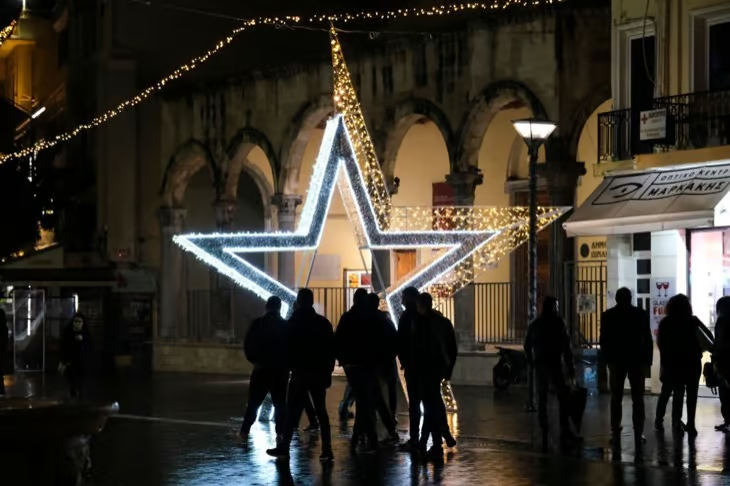
Christmas Day opens Greece’s holiday season, but unlike most of Europe, Cretans traditionally decorate small boats, not Christmas trees, to honour St. Nicholas, patron saint of sailors. Festivities begin on 15 November with the 40-day Nativity Fast and conclude on 6 January with Epiphany. Christmastide officially starts on 24 December.
Christmas in Greece traces back to early Christian traditions from around 354 AD. The blending of ancient customs with Christian beliefs has shaped modern celebrations, including the myth of the kallikantzaroi, mischievous spirits said to appear during the holiday season. Christmas is less significant than Easter for many Greeks but remains essential for family gatherings. For a deeper look at festive traditions on the island, see our guide to Christmas Day in Crete.
Crete-specific Christmas customs:
- Boat decorations, Greek families (especially in Crete) decorate small wooden boats instead of Christmas trees, honouring St. Nicholas, patron saint of sailors.
- Carols (Kalanta), Children sing door-to-door on Christmas Eve with triangles and small drums.
- Christmas lunch, Cretan families gather at 13:00 on 25 December for roasted pork and Christopsomo (sweet spiced bread).
- Vasilopita, A New Year’s cake with a hidden coin for luck, served from Christmas Day onwards.
2. New Year’s Day (Protochronia), Friday, 1 January 2027
New Year’s Day centres on the Vasilopita cake: whoever finds the hidden coin inside is said to have good luck all year. Festivities begin 31 December and continue into 1 January.
Preparations begin days before New Year’s Eve. Homes are cleaned and decorated with pomegranates for good luck and squill (wild sea onions) for fortune. The key tradition is cutting the Vasilopita, a sweet bread with a hidden coin baked inside. The person who finds the coin in their slice is believed to be lucky for the year.
Regional New Year’s customs:
- Crete, The wild squill plant (a large onion that keeps growing leaves and flowers even after uprooting) symbolises natural strength. Cretans hang squill in their homes on New Year’s Day for good fortune.
- Thassos, Families toss olive leaves onto burning fireplace coals while making silent wishes.
- Kavala, A New Year’s custom from Ottoman times involves young men about to leave for military service.
- Cyclades, A north wind on New Year’s Day is considered a good omen.
- Florina, The “Babaria” custom features men dressed in lamb costumes and masks.
3. Epiphany (Theofania / Fota), Wednesday, 6 January 2027
On Epiphany, a Greek Orthodox priest throws a cross into the sea or a river, whoever retrieves it is blessed with good fortune for the year. Epiphany marks the end of the 12-day Christmas period, the baptism of Jesus in the River Jordan, and the revelation of God.
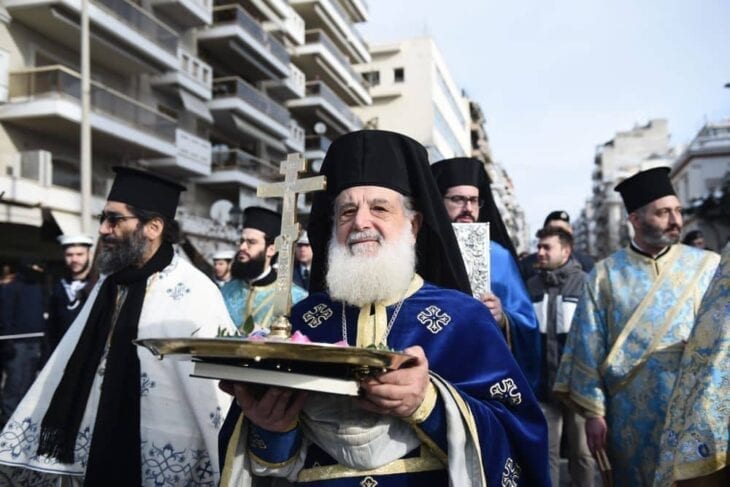
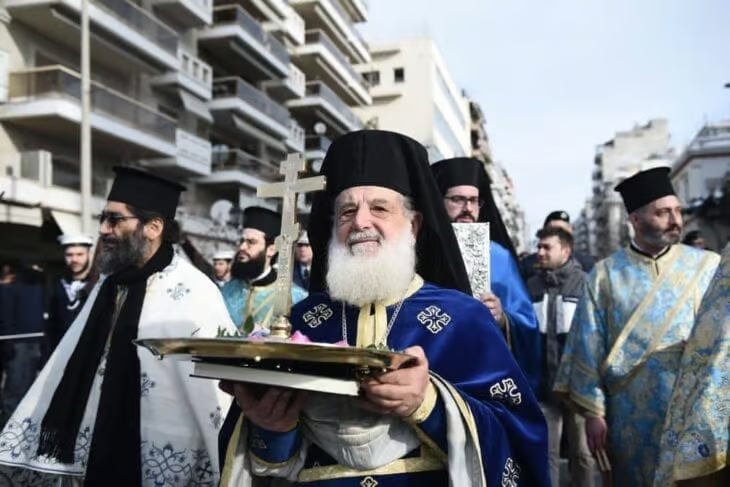
The main event is the “Blessing of the Waters” (Agiasmos) ceremony. In coastal areas, a Greek Orthodox priest throws a special cross into the water; brave divers, increasingly women too, wait nearby ready to retrieve it. The retriever is blessed and is said to receive good luck for the year.
In Heraklion, crowds gather at the old Venetian port to witness the Blessing of the Waters; after the cross is retrieved, the priest releases a white dove symbolising the Holy Spirit.
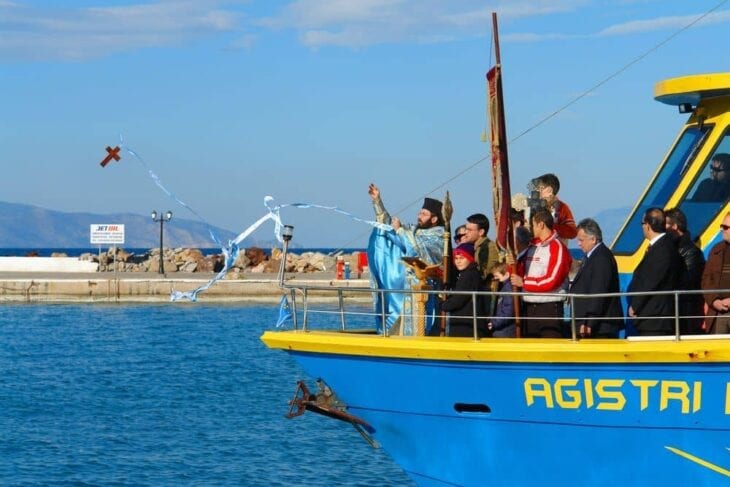
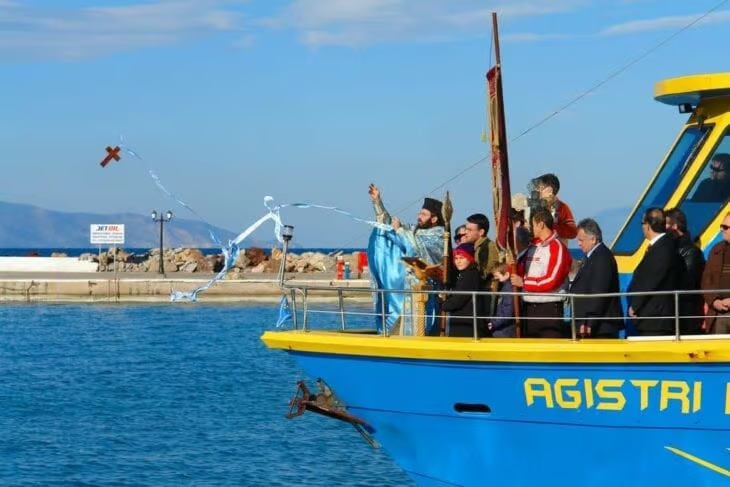
Preparations start on 5 January with children singing “Fota kalanda” (Epiphany carols). Traditional Epiphany foods include Vasilopita, Loukoumades (honey dumplings), and the uniquely Cretan Fotokolyva, a tray of seeds, beans, and nuts shared with farm animals to symbolise prosperity.
4. Clean Monday (Kathara Deftera), Monday, 15 March 2027
Clean Monday marks Day 1 of Orthodox Lent: no meat, no dairy, no eggs, instead, Cretans fly kites outdoors and feast on lagana bread, taramosalata, and fresh octopus. Clean Monday is a moveable feast that always falls 48 days before Orthodox Easter (six Mondays before Palm Sunday).
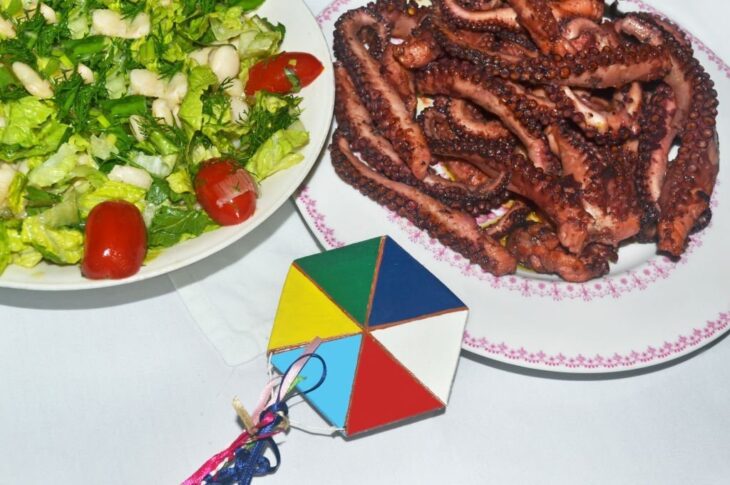
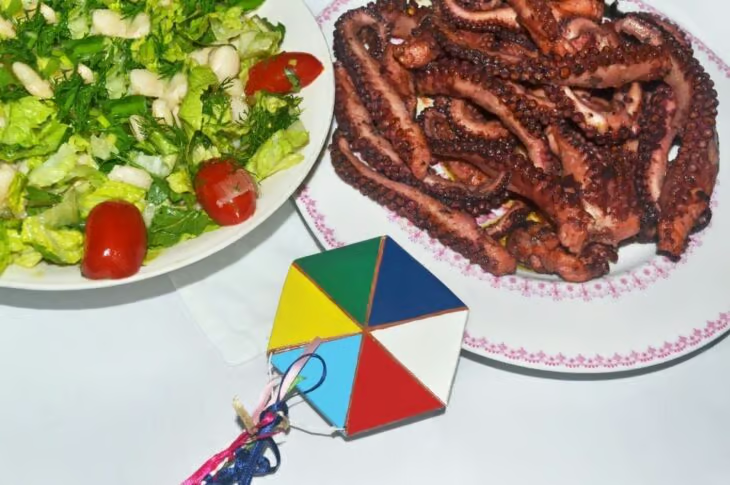
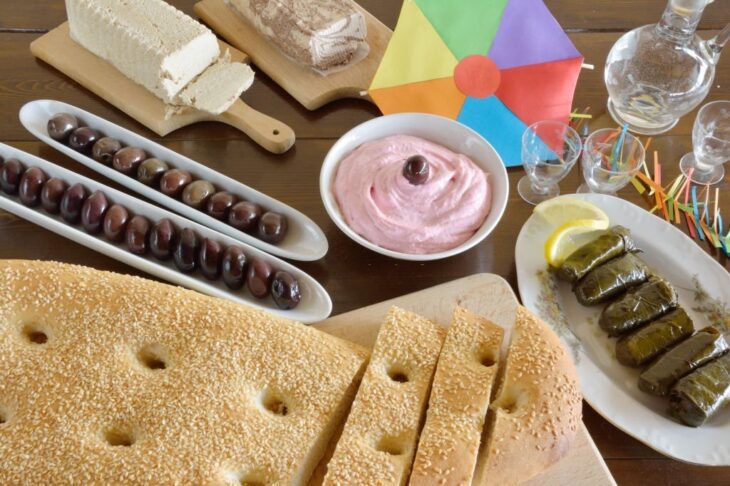
Clean Monday follows the three-week Carnival season (Apokries), which peaks at the Rethymno Carnival, one of Greece’s largest Carnival events. The Municipality of Rethymno has organised the carnival since 1993, and the 2026 Grand Parade drew about 11,000 participants across 28 floats and 32 carnival groups over a four-week programme. The Thursday before Clean Monday is Tsiknopempti (Meat Thursday), when Greeks grill large quantities of meat outdoors for the last time before Lent.
The 2027 Grand Parade is expected on Sunday 14 March, the day before Clean Monday, since the Grand Parade always falls on Cheesefare Sunday; confirm the exact date with the Rethymno Carnival organiser closer to the time. On 2026 parade day, traffic police closed Rethymno’s town entrances once parking filled around midday, at the Atsipopoulo, Spili, Amari, and Gallou junctions and the Old National Road entrance, directing drivers to municipal car parks; 120 Hellenic Red Cross volunteers were on duty. Anyone driving into Rethymno on parade day should plan to park early or use a municipal car park.
Clean Monday then marks the hard reset: outdoor kite-flying, picnics, folk dances, and a strict vegan-style fast that prohibits meat, dairy, and eggs. The 40-day fast prepares Orthodox Christians spiritually for Easter, focusing on “nistisima” (fast-friendly) foods.
Traditional Clean Monday foods:
- Lagana, Flat unleavened bread baked specifically for Clean Monday, often topped with sesame seeds.
- Taramosalata, Dip made from salted fish roe, olive oil, lemon juice, and bread or potato.
- Shellfish, Octopus, squid, and shrimp (allowed during Lent in Orthodox tradition).
- Vegetables, Lentil salads, chickpeas, fava beans, pickles.
- Olives, Especially tsakistes (cracked green olives).
5. Greek Independence Day, Thursday, 25 March 2027
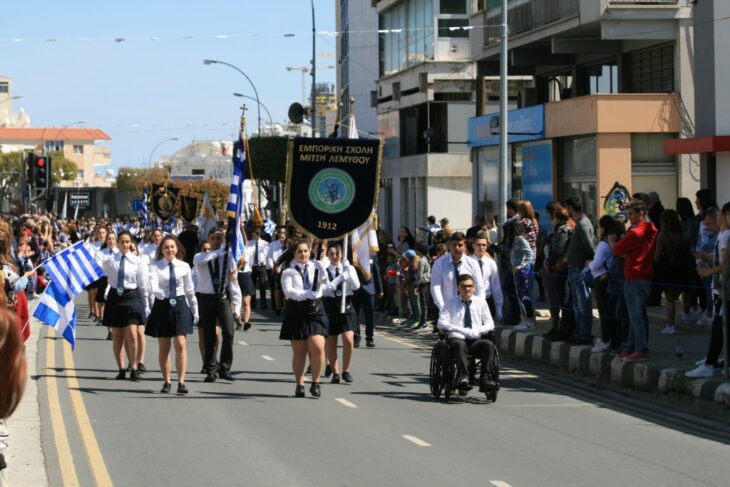
Greek Independence Day commemorates the 1821 uprising against Ottoman rule, and in Crete, Independence means something personal: the island didn’t join Greece until 1913. The day coincides with the Orthodox Feast of the Annunciation.
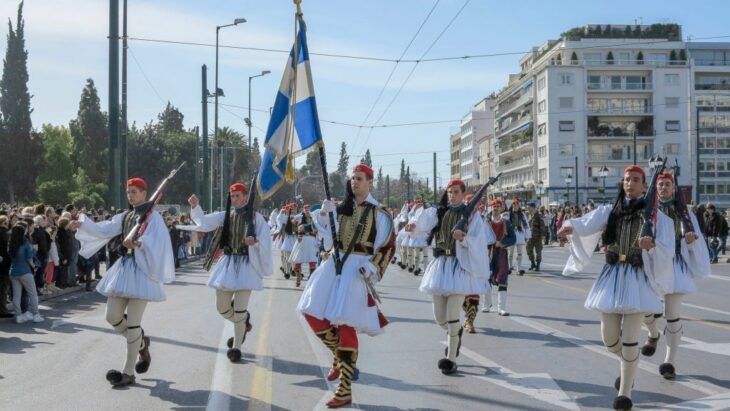
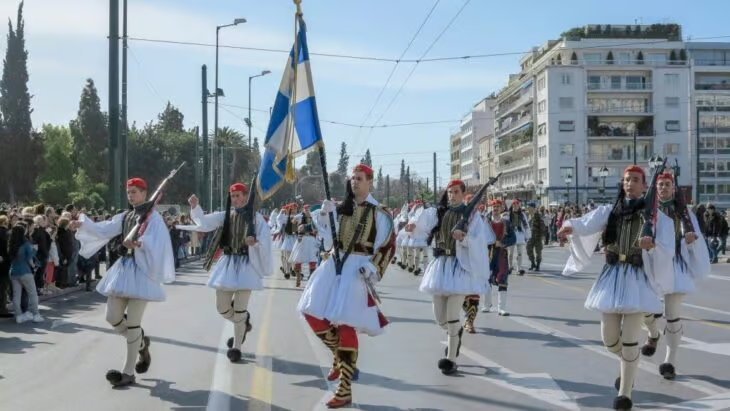
The 1821 Greek War of Independence began symbolically with Bishop Germanos of Patras raising the revolutionary flag at Agia Lavra under the slogan “Eleftheria i Thanatos” (Freedom or Death). Greek independence was internationally recognised in 1832, but Crete remained under Ottoman control until 1897, became an autonomous state in 1898, and only officially joined Greece in 1913, within living memory of older Cretan families.
Nationwide ceremonies include parades, cultural performances, and church services for the Annunciation. In Crete, households display Greek flags, and in Heraklion a giant blue-and-white flag is unfurled over the Koules Fortress. Locally, the traditional Independence Day meal is fried salt cod (bakaliaros) with skordalia (garlic potato dip).
6. Good Friday (Megali Paraskevi), Friday, 30 April 2027
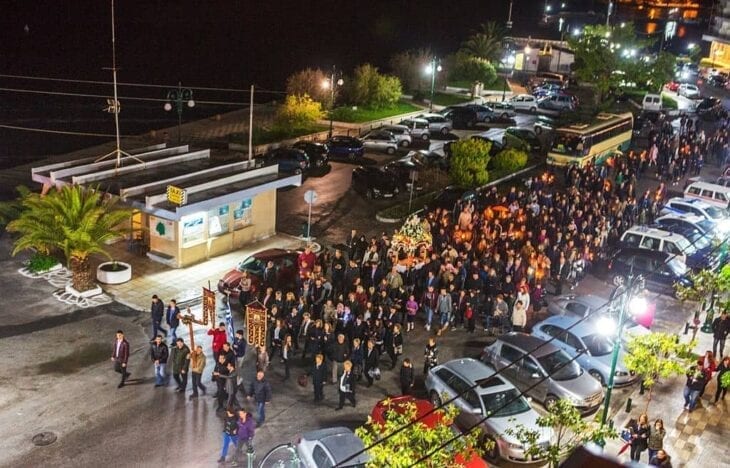
On Good Friday, Crete observes its most solemn public holiday: shops close, church bells toll at dawn, and at 8:30 PM the Epitaphios procession carries Christ’s symbolic coffin through town streets. Good Friday is also called Black Friday or Holy Friday in Greece.
Church bells toll mournfully throughout the morning. The evening service begins at 7 PM, followed by a solemn 8:30 PM procession in which congregants, dressed in black, carry the Epitaphios (a flower-decked symbolic coffin representing Christ’s burial) through the streets behind the priest.
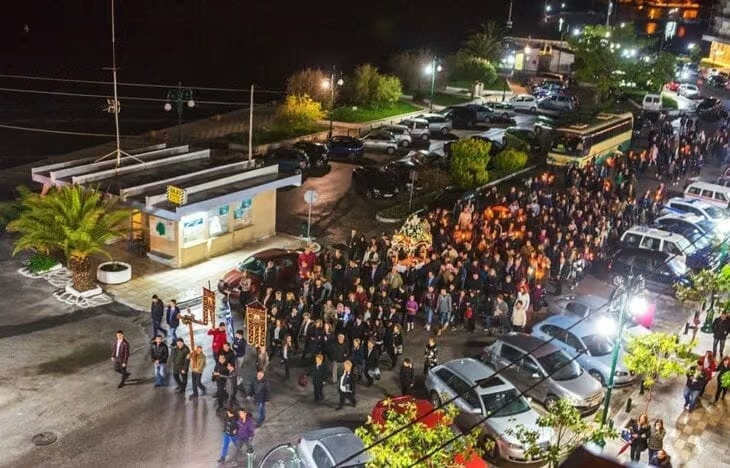
Traditional Good Friday meals are vegetarian: Lenten bread without dairy or eggs, vegetable soups, olives, and nuts. In Crete, Easter preparations begin before Good Friday with locals cleaning homes and preparing traditional foods. Shops operate with reduced hours, and many tavernas close in the afternoon and evening.
7. Easter Monday (Bright Monday), Monday, 3 May 2027
Easter Monday in Crete is called the “Easter of the Dead”: families bring festive food to cemeteries to share a symbolic meal with deceased relatives, a custom Cretans keep with particular devotion. Easter Monday (Bright Monday or Renewal Monday) draws Cretan families to two very different places: cemeteries for the “Easter of the Dead” ritual, and outdoor feast tables for antikristo lamb slow-roasted over open fires.
Holy Saturday, the midnight service
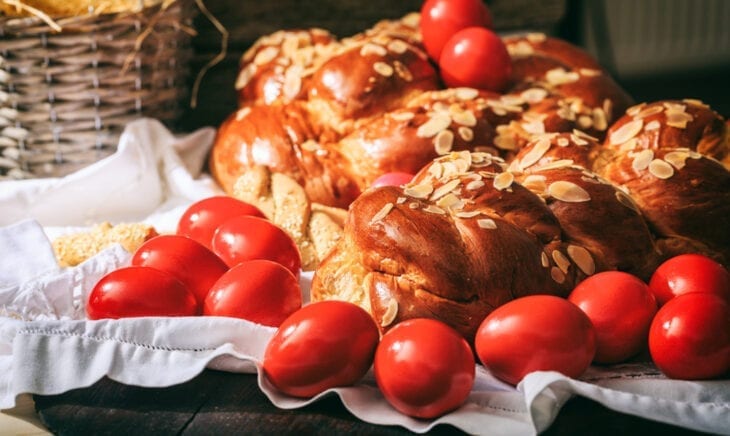
Holy Saturday’s midnight service is the peak of the Orthodox Easter calendar. At midnight, churches across Crete extinguish all lights, the priest emerges chanting “Christos Anesti” (Christ is Risen), and the congregation lights candles from the Holy Flame. Fireworks erupt outside, and the Judas effigy burns in the church courtyard. After the service, families break the Lenten fast with mayiritsa soup (lamb offal, fresh herbs, avgolemono lemon-egg sauce).
Easter Sunday, the antikristo feast
Easter Sunday is all about the feast: families gather outdoors to roast lamb antikristo, the uniquely Cretan method of slow-cooking large cuts of lamb on wooden stakes arranged around an open fire, often for 4–6 hours. The result is smoky, tender meat unlike any other Easter lamb preparation in Greece. Local wines, music, and family gatherings continue all afternoon.
Easter Monday, “Easter of the Dead” in Crete
Easter Monday is when Cretans visit cemeteries carrying the previous day’s Easter food to share a symbolic meal with deceased relatives at the graveside. This custom bridges the living and the dead during the most joyful week of the Orthodox year, and Crete keeps it with particular devotion. The day is also a public holiday across Greece, with most businesses closed.
When is Greek Easter? (Julian calendar explained)
Orthodox Easter follows the Julian Paschal calendar, not the Gregorian calendar used in the West. The date is set as the first Sunday after the first full moon following the spring equinox, but always after Jewish Passover. This means Orthodox Easter can fall 0 to 5 weeks after Western Easter.
| Year | Greek Orthodox Easter | Western Easter |
|---|---|---|
| 2027 | Sunday, 2 May | Sunday, 28 March |
| 2028 | Sunday, 16 April | Sunday, 16 April (same) |
| 2029 | Sunday, 8 April | Sunday, 1 April |
8. Labour Day (Protomagia), Saturday, 1 May 2027
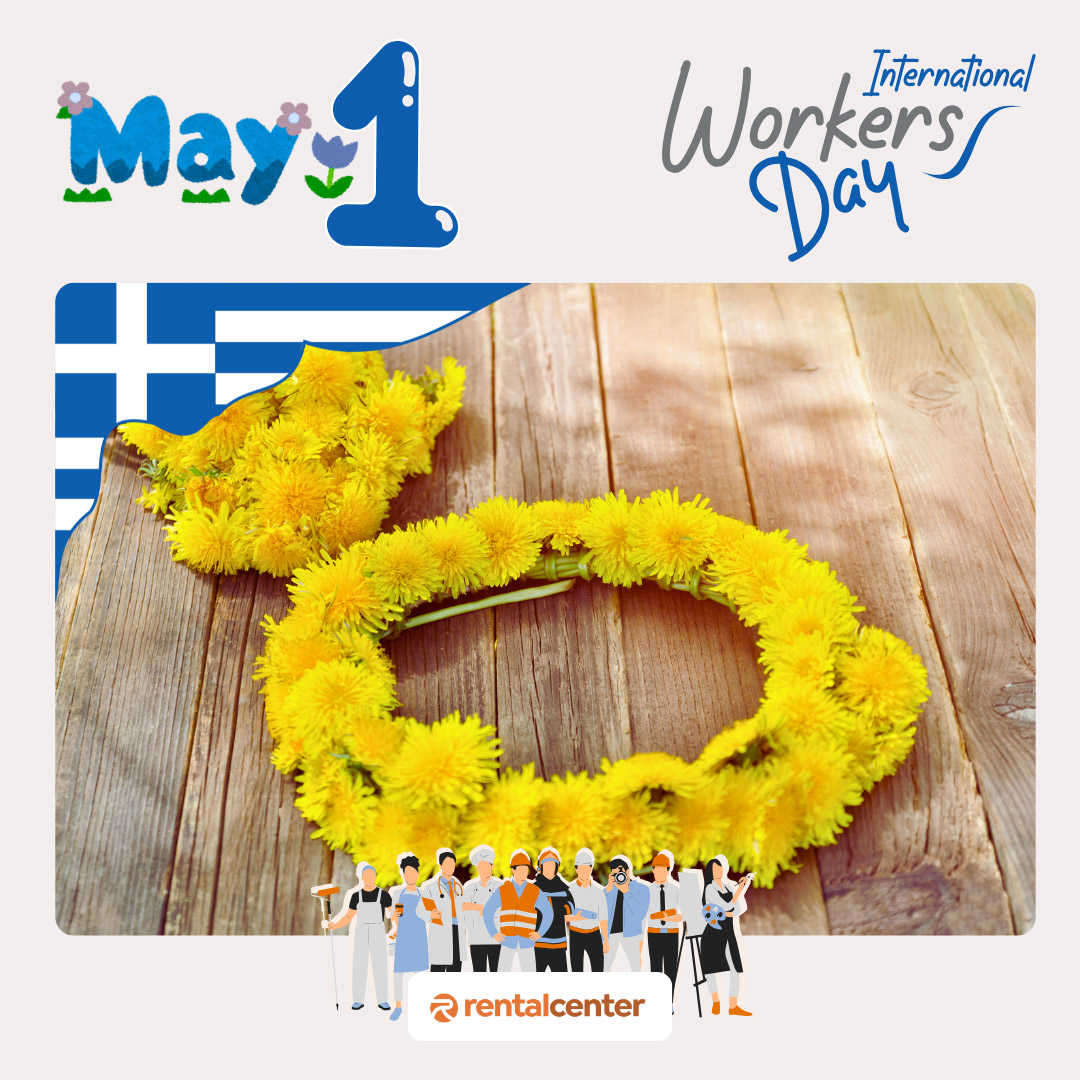
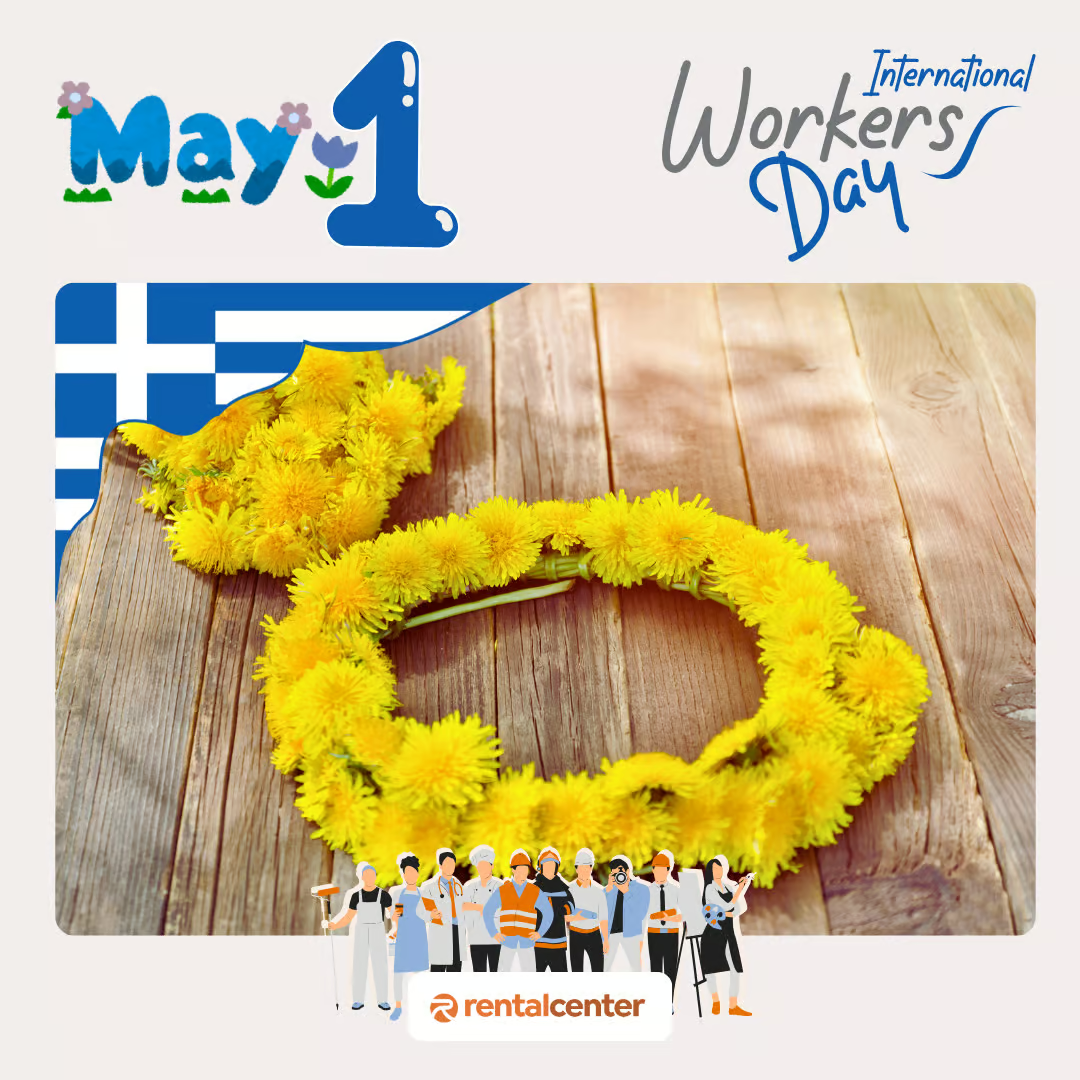
Labour Day (Protomagia) is Greece’s spring festival as much as a workers’ rights holiday, Cretans weave stephanó flower wreaths and hang them on their doors, a tradition dating to the first Athens rally in 1893. Labour Day shuts down offices and sends Cretans outdoors: families weave stephanó wreaths, unions march in Athens and Thessaloniki, and villages host spring picnics and folk music.
Protomagia traces back to 1893, when the Central Socialist Society under Stavros Kallergis organised the first Labour Day rally in Athens. Today, labour-union demonstrations advocate for workers’ rights nationwide. In Crete, customs include decorating homes and workplaces with spring flowers and hanging floral wreaths (stephanó) on doors or wearing them as crowns. Traditional outdoor meals feature roasted lamb or goat.
Law 4468/2017, article 14, requires the Minister of Labour to move the 1 May holiday to another working day whenever it coincides with a Sunday, a day of Holy Week, or Easter Monday. Only the replacement date is a ministerial decision; the transfer itself is a statutory requirement.
1 May 2027 falls on Holy Saturday, the day before Orthodox Easter Sunday on 2 May. Law 4468/2017 amended Emergency Law 380/1968 and replaced its earlier discretionary wording, which only let the minister “transfer” the holiday, with a mandatory rule: the 1 May holiday “is transferred” whenever it coincides with a Sunday, a day of Holy Week, or Easter Monday. The statute fixes the trigger; the Ministry of Labour still chooses the specific replacement date case by case.
2027 has an exact calendar precedent in 2021: Orthodox Easter fell on 2 May and 1 May landed on Holy Saturday, the same combination expected in 2027. The government moved the 2021 holiday to Tuesday 4 May, by Decision 18743, signed on 14 April and gazetted in ΦΕΚ Β’ 1661 on 23 April, only eight days before the holiday itself. A matching Interior Ministry decision covered public-sector staff (ΦΕΚ Β’ 1732), and e-EFKA pushed a payroll-filing deadline from 4 to 5 May to match. Public-sector employees got five consecutive days off that year: Good Friday, the weekend, Easter Monday, and the moved Labour Day, running from 30 April to 4 May 2021.
A second precedent came in 2024: 1 May fell on Holy Wednesday, and the ministry moved it to Tuesday 7 May, by Decision 15102 (ΦΕΚ Β’ 1406/04.03.2024). That decision was published about eight weeks ahead of the holiday, and the ministry cited protecting retail trade as its reason.
Both recent transfers landed the replacement on the Tuesday after Easter, though the announcement timing ranged from eight weeks in 2024 to eight days in 2021. If 2027 follows the same pattern, Labour Day would move to Tuesday 4 May 2027, and public-sector staff could see the same five-day run, 30 April to 4 May 2027. Treat that date as a precedent-based expectation, not a confirmed one: no 2027 decision has been issued yet, so check the Ministry of Labour and the Government Gazette from February 2027 onwards for the official replacement date.
9. Whit Monday / Holy Spirit Monday, Monday, 21 June 2027
Whit Monday (Holy Spirit Monday) is a full bank holiday in Greece, the 50th day after Easter Sunday, when the Easter fasting restrictions on kneeling in church finally end. Pentecost Sunday falls on Sunday, 20 June 2027, with the Whit Monday holiday on 21 June 2027.
Orthodox Pentecost commemorates the descent of the Holy Spirit upon the Apostles, marking the founding of the Church. Celebrations begin with Great Vespers on Saturday evening, Matins on Sunday morning, and the Kneeling Vespers on Sunday afternoon, when the no-kneeling period observed since Easter formally ends. Churches are decorated with greenery and flowers symbolising the renewal of the Holy Spirit.
10. Assumption of the Virgin Mary (Dekapentavgoustos), Sunday, 15 August 2027
The Assumption of the Virgin Mary is called “Easter in summer” in Greece: two weeks of fasting, then an explosion of panigiria feasts, music, and dancing that continues all night in every village. Dekapentavgoustos (15 August) takes over every Greek village: after two weeks of fasting, panigiria feasts erupt with roasted lamb, raki, lyra music, and dancing that lasts until sunrise.
The Assumption (formally Koimisi tis Theotokou, the Dormition of the Mother of God) commemorates the assumption of the Virgin Mary into heaven. Fasting lasts the two weeks before 15 August, during which churches hold liturgies and processions featuring icons of the Virgin Mary. Villages across Greece host panigiria, feasts that include music, dancing, and communal meals.
In Crete, the most famous pilgrimage destination is Panagia Kera in Kritsa, a 13th-century church renowned for its Byzantine frescoes. Pilgrims travel to churches dedicated to the Virgin Mary across the island.
August is Greece’s busiest travel month by revenue as well as by custom. The Bank of Greece recorded €4523.7 ($5193.66, £3833.84) million in travel receipts for August 2025 alone, about 19% of the €23626 ($27125.01, £20023.04) million the country earned across the full year. Heraklion International Airport, Crete’s busiest, handled 1,750,263 passengers in July 2026, the highest monthly total of any of the 24 Hellenic Civil Aviation Authority airports. Families planning an Assumption trip to Crete should book flights, cars, and accommodation well ahead of 15 August, when demand and prices both peak.
Note on the two national figures above: the €23626 ($27125.01, £20023.04) million full-year total is the Bank of Greece’s Balance of Payments measure, which includes cruise revenue. A separate Border Survey measure, the only one published with a regional breakdown, put 2025 receipts at €22607.1 ($25955.21, £19159.52) million nationally and €4342.6 ($4985.74, £3680.35) million for Crete specifically, also about 19% of its total. The two measures track different data, so they are not directly comparable.
11. Ochi Day, Thursday, 28 October 2027
Ochi Day commemorates PM Ioannis Metaxas’s one-word reply, “Ochi” (No), to Italy’s 1940 ultimatum; on this day, entry to all state-owned museums and archaeological sites is free. Greek Prime Minister Ioannis Metaxas rejected Mussolini’s ultimatum to allow Italian troops entry to Greece in October 1940, a decision that brought Greece into the Second World War on the side of the Allies.
In Crete, parades in Chania, Rethymnon, and Heraklion feature schoolchildren and military personnel in traditional Greek costumes. Traditional Ochi Day foods include moussaka, dolmades, and seafood specialities. Beverages such as tsikoudia (Cretan grape spirit), wine, and ouzo accompany family meals.
Free museum admission: All state-owned museums, monuments, and archaeological sites in Greece offer free entry on 28 October, including the Heraklion Archaeological Museum, Knossos, Phaistos, and the Fortezza of Rethymno. The full 2027 list of 16 free-entry days appears in the “What’s open” section above.
Heraklion’s airport traffic shows that 28 October still falls firmly in season. The airport handled 9.595 million passengers between January and October 2025, already above the whole of 2024’s 9.361 million total with two months of that year still to go. Roads near Knossos get busy on the free-admission day itself, on top of the regular tourist traffic.
12. Synaxis of the Mother of God, Sunday, 26 December 2027
The Synaxis of the Mother of God (formally Synaxis tis Theotokou) is Greece’s equivalent of Boxing Day, a public holiday honouring the Virgin Mary, observed with church services and family meals of Christopsomo, melomakarona, and kourabiedes.
The feast dates back to the 4th century. Celebrations begin with the Divine Liturgy held in churches across Greece. Traditional Synaxis foods include Christopsomo (Christmas spiced bread, often decorated with religious symbols), roasted lamb or pork, and the classic Greek Christmas sweets, melomakarona (honey-dipped cookies) and kourabiedes (powdered-sugar almond cookies).
How to get around Crete on public holidays
Car rental offices, taxis, and KTEL buses all operate on public holidays, but timetables are reduced, and some remote routes may not run on Easter Sunday or Christmas Day.
Public transport (KTEL buses) on holidays
KTEL Crete runs reduced schedules on every public holiday. On Easter Sunday and Christmas Day, services are minimal. Verify the current schedule directly with KTEL Heraklion or KTEL Chania the day before travel.
Car rental on public holidays
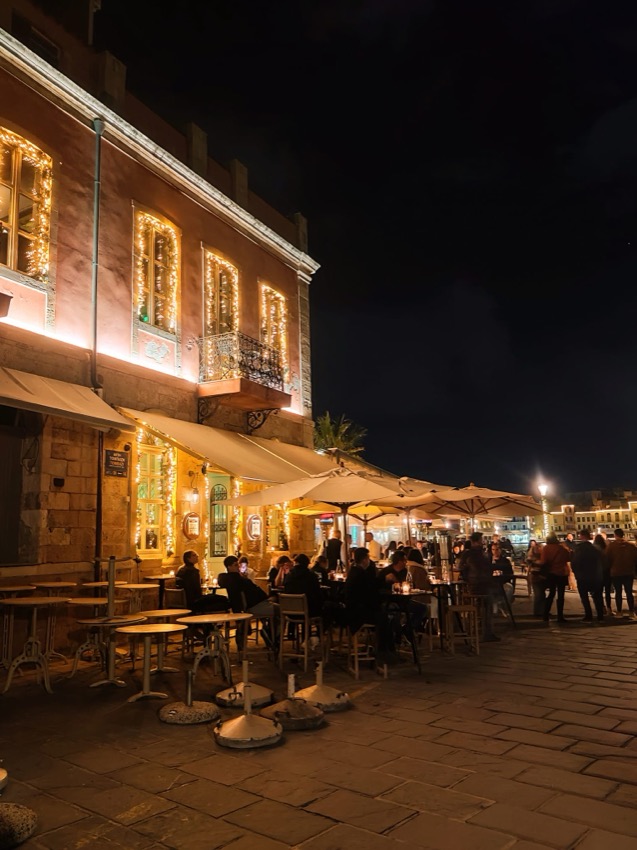
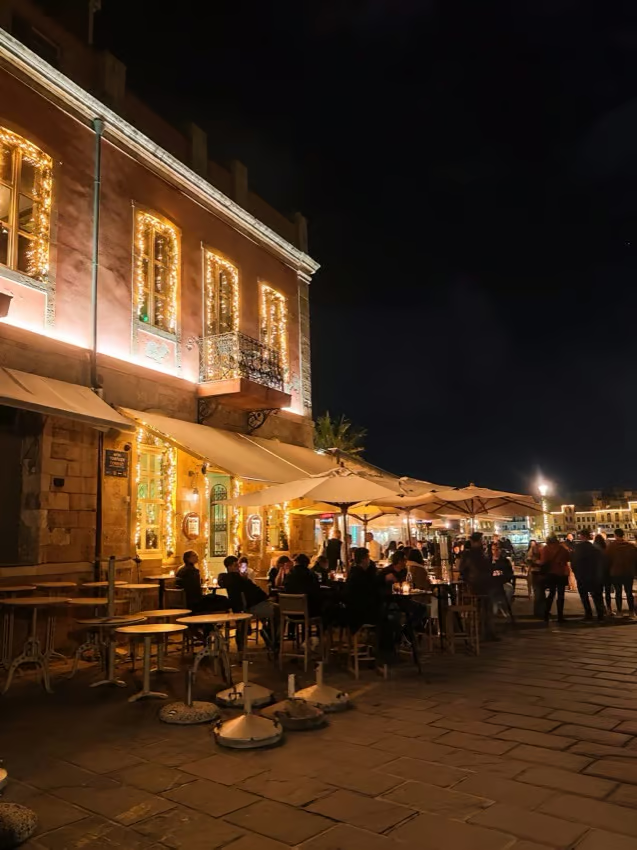
Yes, Rental Center Crete and most other car-hire companies in Crete operate throughout the year, including on every public holiday. Heraklion and Chania airport offices run 24/7; town offices typically open 8 AM – 10 PM. Free delivery and pickup are offered at airports, ports, hotels, and accommodation across Heraklion, Chania, Rethymnon, and Agios Nikolaos.
Is it cheaper to rent a car during holidays?
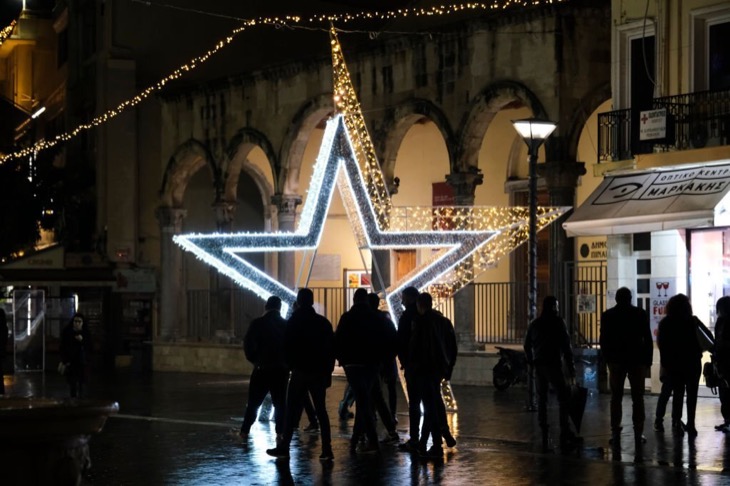
No, public holidays fall in already-expensive periods. Daily rental prices peak in August. The cheapest months are January and February. For Easter, Christmas, and 15 August book at least 4–6 weeks in advance to lock in the best rate.
Flight volumes back this up. Across Fraport Greece’s 14 regional airports, which include Chania but not Heraklion (run separately by the Hellenic Civil Aviation Authority), UK flights rose from 74 in January 2025 to 8,142 in August, a more than hundredfold increase in flights, not passengers. Crete followed the same curve: the island recorded 347,000 international air arrivals in January-April 2025, against 5.0 million across January-September, so the first four months of the year made up only about 7% of the season’s traffic. Fewer flights in January and February mean less competition for rental cars and generally lower prices.
| Month (2025) | UK flights | Germany flights | Domestic flights |
|---|---|---|---|
| January | 74 | 591 | 4,714 |
| February | 104 | 609 | 4,730 |
| March | 191 | 807 | 5,489 |
| April | 1,793 | 1,791 | 6,689 |
| May | 6,036 | 4,185 | 7,632 |
| June | 7,234 | 4,876 | 9,364 |
| July | 7,989 | 5,347 | 10,193 |
| August | 8,142 | 5,486 | 10,137 |
| September | 7,460 | 5,131 | 9,047 |
| October | 4,897 | 4,852 | 7,513 |
| November | 410 | 1,088 | 5,770 |
| December | 128 | 790 | 5,693 |
| Total | 44,458 | 35,553 | 86,971 |
Source: Fraport Greece, 2025 monthly flight counts for its 14 regional airports. Figures count flights, not passengers, and exclude Heraklion.
Local taxis and rideshare
Taxis are available throughout the holidays in cities and main tourist areas. Bike rentals run during the warmer holidays (May–October). Rideshare apps have limited coverage outside Heraklion town.
School holidays in Crete and Greece
Greek schools follow a calendar set by Joint Ministerial Decision 102791/ΓΔ4/2024 (ΦΕΚ Β’ 5130/10.09.2024): the Christmas break runs 24 December to 7 January, and the 2027 Easter break runs Holy Monday to Thomas Sunday, 26 April to 9 May. That Easter break falls in the same window as Labour Day, so families travelling for the 1 May holiday are competing with school-holiday demand at the same time. Book cars and accommodation for that period early.
| Holiday | Date / period |
|---|---|
| First day of school | 10 September (begins with morning Agiasmos blessing) |
| Ochi Day | 28 October |
| Polytechneio Commemoration | 17 November (1973 student uprising) |
| Christmas / New Year break | 24 December – 7 January |
| Three Holy Hierarchs Day | 30 January |
| Clean Monday | Start of Orthodox Lent (varies) |
| Greek Independence Day | 25 March 2027 |
| Easter break | 26 April – 9 May 2027 (Holy Monday to Thomas Sunday) |
| Labour Day | 1 May |
| Holy Spirit Monday | Follows Pentecost |
| Summer break | Mid-June to 10 September |
| Saint Dionysius the Areopagite (Athens) | 3 October |
| Saint Spyridon (Piraeus) | 12 December |
| Saint Dimitrios Day (Thessaloniki) | 26 October |
| Saint Minas Day (Heraklion) | 11 November |
| Theotokos / St Mary (Chania) | 21 November |


Sources
- Law 4468/2017, article 14 (ΦΕΚ Α’ 61/28.04.2017), the statutory rule on moving the 1 May holiday
- Decision 18743/2021 (ΦΕΚ Β’ 1661/23.04.2021), the 2021 Labour Day transfer
- Decision 15102/2024 (ΦΕΚ Β’ 1406/04.03.2024), the 2024 Labour Day transfer
- Joint Ministerial Decision 117624/2024 (ΦΕΚ Β’ 1968/29.03.2024), free museum and archaeological site entry days
- Joint Ministerial Decision 102791/ΓΔ4/2024 (ΦΕΚ Β’ 5130/10.09.2024), the school holiday calendar
- Royal Decree 748/1966, article 4, shop opening hours on Good Friday and other holidays
- Greek Ministry of Labour and Social Security, official mandatory holiday list
- Hellenic Bank Association (hba.gr), official bank holiday schedule
- Greek National Tourism Organisation (gnto.gr), licensed-operator register
- Hellenic Ministry of Culture and Sports (odysseus.culture.gr), museum free-entry days
- Bank of Greece, travel-services balance of payments and Border Survey releases
- INSETE, Greek tourism flash reports on regional air arrivals
- Fraport Greece, monthly flight statistics for its 14 regional airports
- Hellenic Civil Aviation Authority, Heraklion airport passenger statistics