

Crete’s festivals draw visitors from across Europe – 24 distinct events span religious feast days, harvest celebrations, and international arts programs. Whatever your preference, you’ll find a festival in Crete that suits your taste, and because the calendar runs nearly year-round, almost any visit month is a festival opportunity.
Date accuracy disclaimer: Festival dates in Crete change each year, particularly for religious events that follow the Orthodox calendar. The dates listed in this guide are typical seasonal windows – always verify exact dates for the current year at the official municipality websites or by contacting local tourism offices before your visit.
Festivals in Crete by Season
The festival season in Crete runs year-round, with the highest concentration between April (Easter) and October (Raki Distilling), making almost any visit month a festival opportunity. Use this quick-reference table to match your travel dates to the festivals nearest you, then read the full descriptions further down.
| Festival | Month | Location | Type | Entry |
|---|---|---|---|---|
| Easter in Crete | April | Island-wide | Religious | Free |
| Rethymnon Carnival (Apokries) | Feb–Mar | Rethymno | Cultural | Free |
| Feast of Agios Georgios | April 23 | Island-wide | Religious | Free |
| Battle of Crete | May | Near Maleme, Chania | Historical | Free |
| Matala Beach Festival | June | Matala Beach | Music | Ticketed |
| Festival of Analipsi | June (7 days) | Analipsi village | Religious/Local | Free |
| Feast of St John the Baptist | June 24 | Western Crete | Religious | Free |
| Renaissance Festival | July | Rethymno (Fortezza) | Arts | Ticketed |
| Cretan Diet Festival | July | Rethymno | Food | Free |
| The Hyakinthia | July | Anogia | Cultural | Free |
| Thrapsano Pottery Festival | Mid-July | Thrapsano | Craft | Free |
| Wine Festival | July–Aug | Dafnes / Anogia | Food | Free |
| Lato Festival | Jul–Aug | Agios Nikolaos | Arts | Free/Ticketed |
| Chania Summer Festival | Jul–Sept | Chania | Arts/Culture | Free/Ticketed |
| Houdetsi Music Festival | August | Houdetsi | Music | Free |
| Chania Rock Festival | August | Chania old city | Music | Ticketed |
| Dormition of Virgin Mary | August 15 | Island-wide | Religious | Free |
| Feast of Saint Titus | August 25 | Heraklion | Religious | Free |
| Heraklion Summer Art Festival | Summer | Heraklion | Arts | Free |
| Chestnut Festival, Elos | October | Elos village | Harvest | Free |
| Chania Film Festival | October (10 days) | Chania | Arts | Ticketed |
| Raki Distilling (Rakokazano) | Oct–Dec | Island-wide | Tradition | Free |
| Agios Nikolaos Nameday | December 6 | Agios Nikolaos | Religious | Free |
| International Sculpture Symposium | Biennial | Venerato | Arts | Free |
What Are the Main Types of Festivals in Crete?
Cretan festivals – called panigiria – fall into three main categories: religious feast days honoring patron saints, harvest and food festivals tied to agricultural seasons, and arts and music festivals running from May through October.
Panigiria – The Heart of Cretan Celebrations
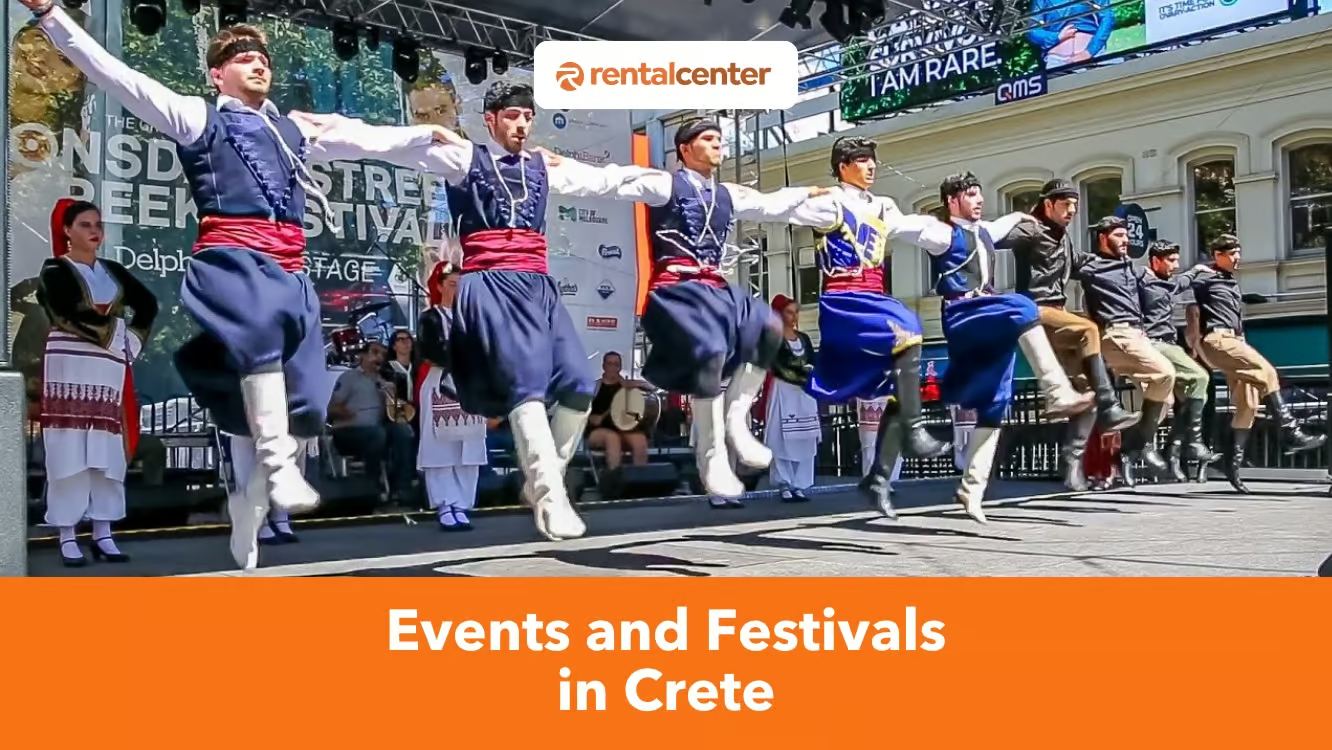
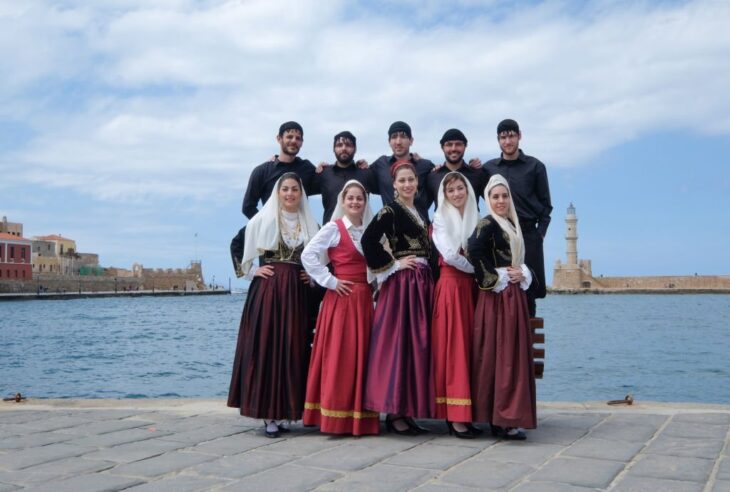
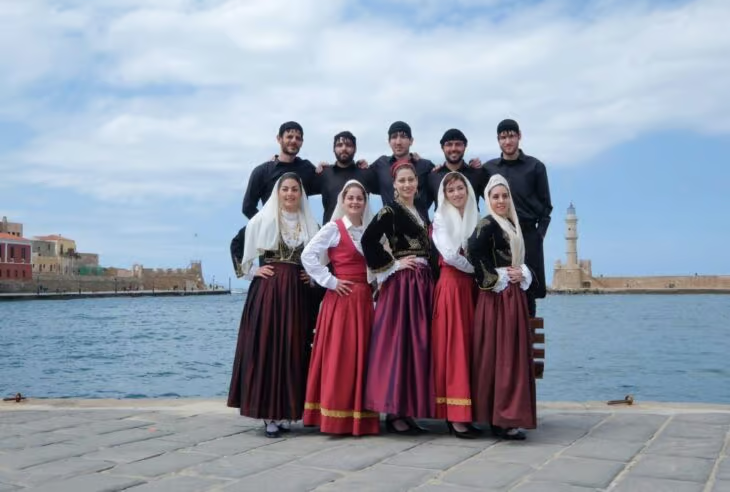
Cretan festivals are traditionally known as panigiria (singular: panigiri) – community celebrations tied to the feast days of patron saints, agricultural harvests, or seasonal milestones. A typical panigiri features live Cretan music (often played on the lyra and laouto), traditional dances performed in circles, communal tables with local food and wine, and a deeply participatory atmosphere where visitors are welcomed alongside locals. Panigiria happen in every region of Crete throughout the year, with the highest frequency between May and October.
Religious, Harvest, and Arts Festivals
The three festival types overlap but each has a distinct rhythm. Religious panigiria follow the Greek Orthodox calendar and cluster around saints’ feast days and Easter. Harvest and food festivals celebrate a single local product – wine, chestnuts, pottery clay, bread, or fish soup – usually in the village that produces it. Arts and music festivals, organized by municipalities and cultural associations, run through the summer in cities such as Rethymno, Chania, and Heraklion. The seasonal table above maps every festival in this guide to its type so you can plan around your interests.
Religious Events and Festivals in Crete
The six major religious festivals in Crete follow the Greek Orthodox calendar and are celebrated with church services, communal feasts, and local customs that differ village by village. These events bring people together to honor their beliefs, take part in religious rituals, and share feasts that showcase the unique religious heritage of the island – from the grand Easter celebrations to the nameday of Agios Nikolaos.
1. Easter in Crete
Easter is one of the most important religious festivals in Crete, and it is usually celebrated in April by both Orthodox and Catholics. During the Holy Week a number of rites are performed, and on Saturday the Resurrection is celebrated paired with fireworks. On Easter Sunday and Monday, everyone feasts on roasted lamb and local drinks. Many Cretan towns have their own way of celebrating Easter in Crete, so check the schedule of events in advance.
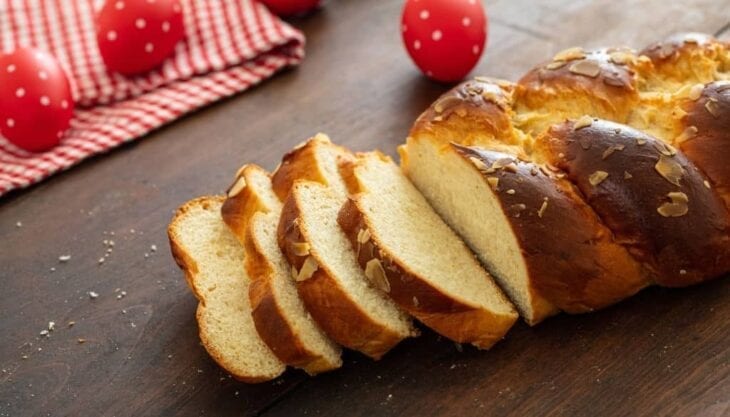
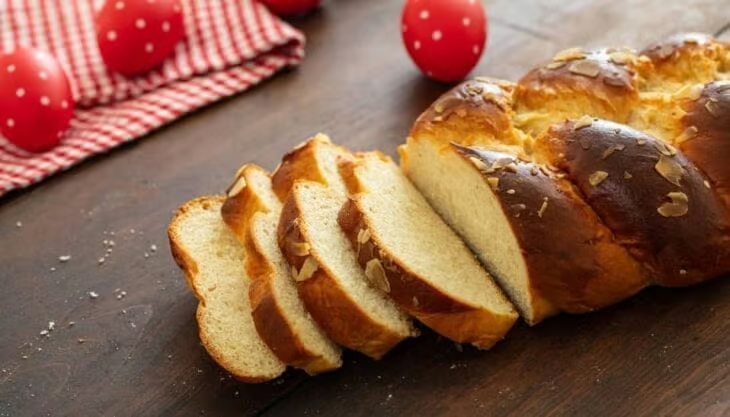
The social club of Mothiana-Skiafotou commemorates Easter by inviting all inhabitants to the Table of Love, where everyone enjoys a large feast with red eggs, Easter dishes, and roasted lamb while listening to Cretan music in Glossa, Kolymbari.
Don’t miss the Agios Nikolaos area during Easter Sunday night, when residents assemble around the lake carrying candles to observe the burning of Judas. The same custom is followed in Rethymno, where traditional red eggs, kalitsounia, Easter tsoureki, and a wide variety of traditional meals are served. In Toplou Monastery, the Resurrection of Christ is celebrated with great devotion. The orange festival in Skines, Chania, takes place on the second and third days of Easter, featuring traditional dances and singing.
2. The Feast of Agios Georgios (April 23)
Saint George (Agios Georgios) is among Crete’s most revered saints, venerated by the Anglican, Orthodox, Catholic, Lutheran, and Armenian churches. Saint George’s Day is commemorated in Crete on April 23rd, and many areas of the island hold large events and fairs in his honour to seek the Saint’s blessings.
In Greece, Saint George is revered as the guardian of the army and soldiers. The best-known folk tale about him, passed down through the decades, is the one in which the Saint kills the dragon to save a princess.
3. The Feast of St John the Baptist (June 24)
On June 24, the day of Saint John the Baptist – known as Ioannis Prodromos in Greek – is celebrated all over Crete with special care. The feast is one of the most popular events in Western Crete, with many feasts and fairs held in his honour. People come together to enjoy traditional Cretan music and dance, as well as local food and drink.
4. The Feast for Saint Titus (August 25)
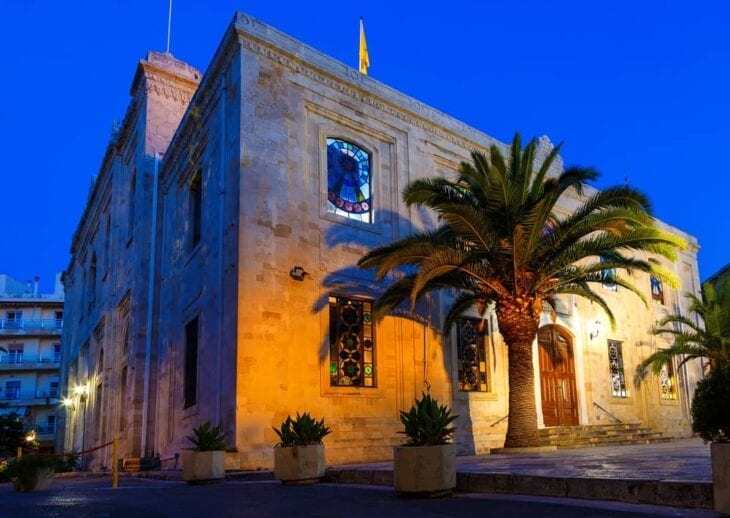
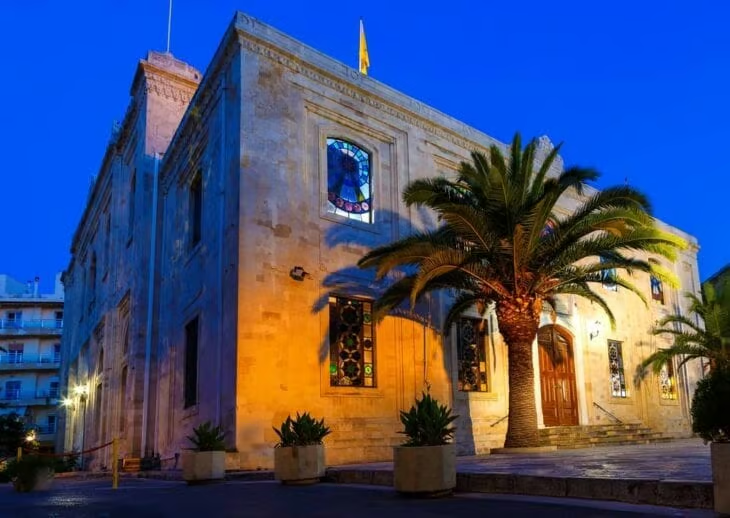
On August 25th, Heraklion Town hosts a great feast honouring Saint Titus, Crete’s first bishop and the island’s protector. People hold religious ceremonies in front of his tomb and offer traditional food and sweets as a sign of their gratitude.
5. The Feast of the Dormition of the Virgin Mary (August 15)
Every year on August 15, Crete celebrates the Feast of the Dormition of the Virgin Mary, one of Orthodox Christianity’s holiest days. This popular Greek public holiday is also known as “Summer Easter”, and people commemorate it by attending religious services, hosting parties, and even organising sailboat races. Every region of Crete has its own narrative about the Virgin Mary (known in Greek as “the Panagia”), and every city on the island celebrates Her on August 15th.
6. Agios Nikolaos Nameday (December 6)
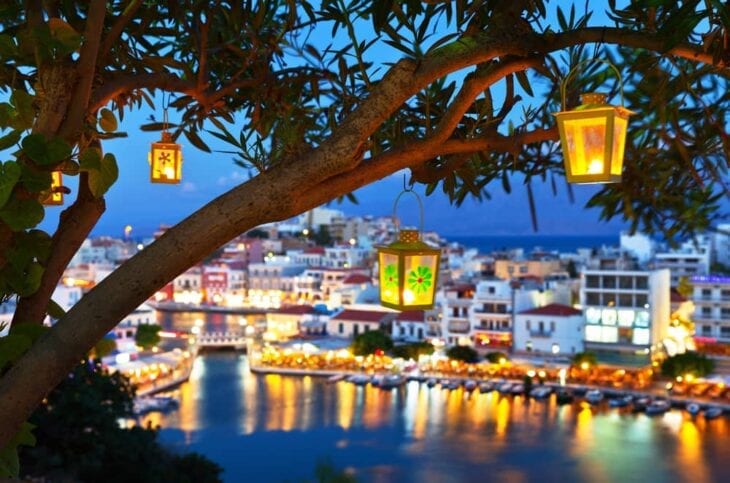
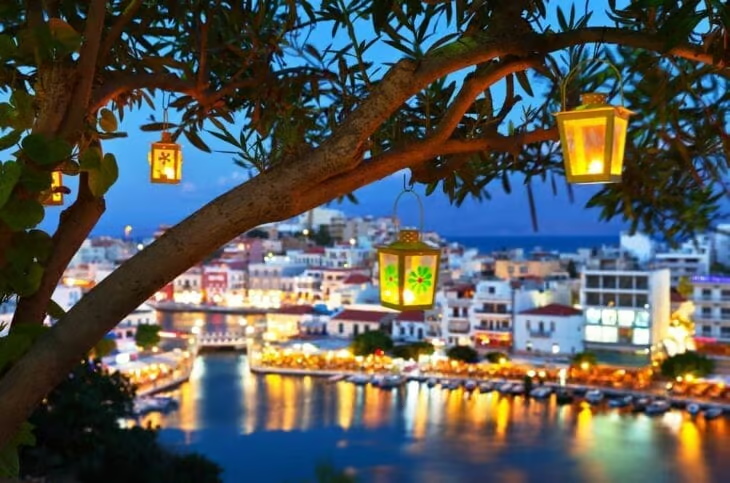
The patron saint of the town, Agios Nikolaos – also known as the protector of mariners – is honoured with a large ceremony on December 6th. Small boats float down the shore all lit up, creating a spectacular ambiance, and a firework show ends the festivities.
Cultural and Arts Festivals in Crete
Crete’s cultural festival calendar is anchored by the Rethymnon Carnival (February–March) and the Renaissance Festival (July, since 1987) – both ranked among the most important arts events in the Greek islands. Cretan cultural festivals draw on three thousand years of heritage: Minoan pottery traditions, Byzantine religious feasts (panigiria), and Venetian-era arts. Each event invites visitors to participate alongside locals, not as spectators.
7. Rethymnon’s Carnival / Apokries (February–March)
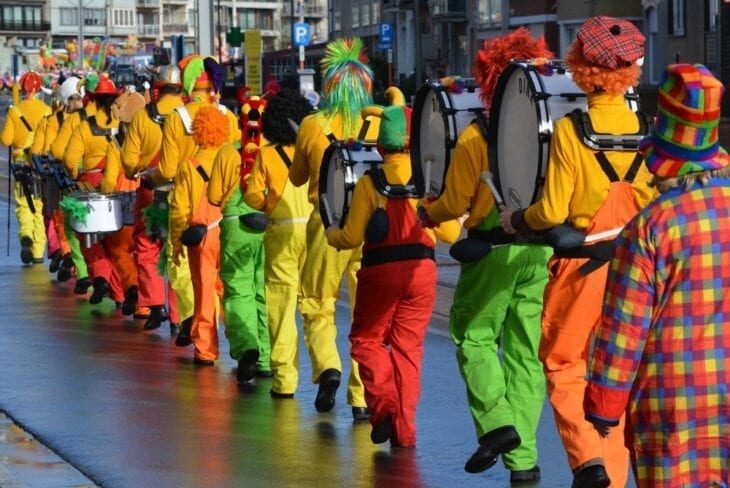
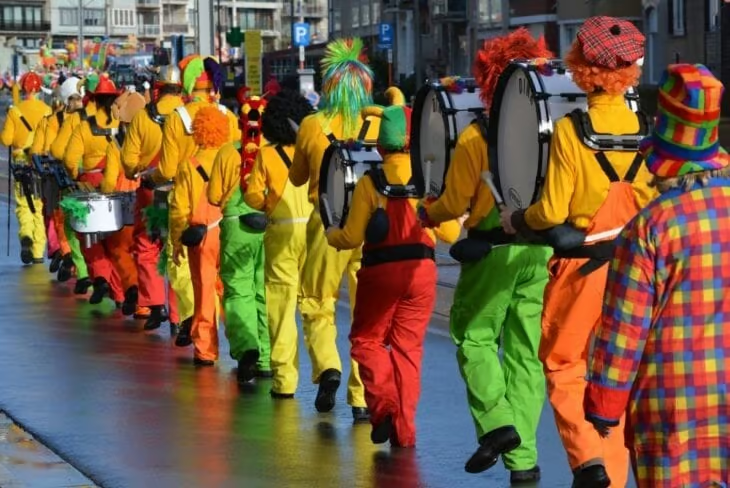
Rethymnon’s Carnival (Apokries) is the largest carnival in Crete and one of the most spectacular in Greece, with over 10,000 costumed participants in its Grand Saturday Parade through the Venetian old town. The three-week festival includes masked balls, children’s events, and a satirical float parade before culminating on Clean Monday (typically February or early March). The celebration reflects Rethymno’s Venetian heritage and is free to attend along the parade route.
8. The Renaissance Festival, Rethymno (July, since 1987)
The Renaissance Festival in Rethymno has been organized by the Municipality of Rethymno every summer since 1987, making it one of the longest-running arts festivals in Crete. The two-week July program brings hundreds of artists from across Europe and beyond to perform at the Erofili Theatre inside the Fortezza (the Venetian fortress) and the Neratzes Mosque – two of Rethymno’s most atmospheric venues. Performances span theatre, classical music, dance, and art exhibitions. More info: rfr.gr – program details and tickets are updated each June.
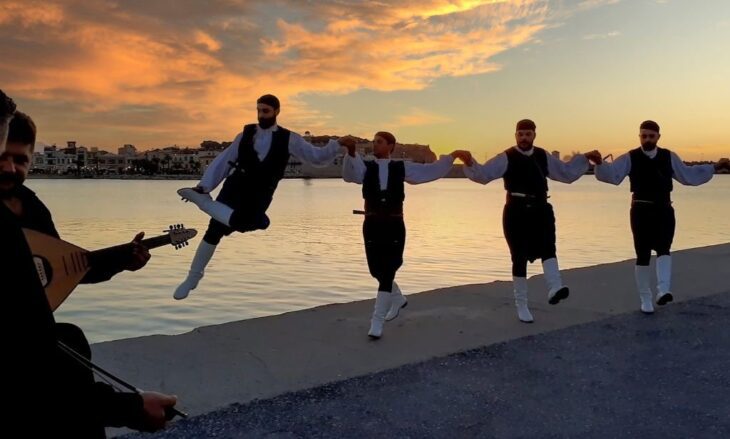
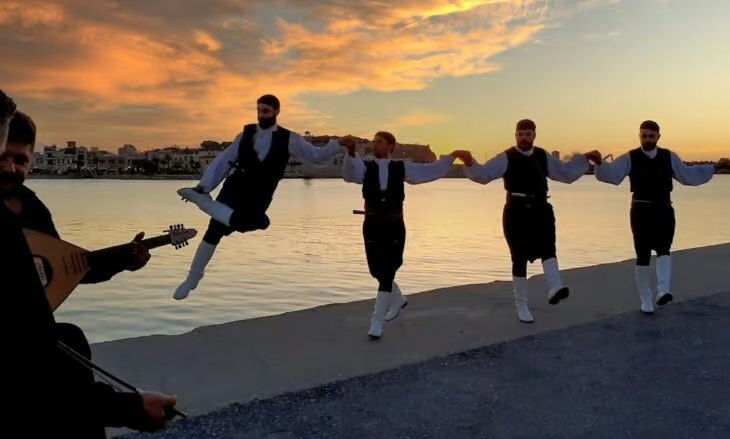
9. Chania Summer Festival (July–September)
From May through September, experience a variety of performances, folklore music, dances, exhibits, plays, and fairs at the Chania Summer Festival. The event takes place at the Old Harbour as well as the old and modern city of Chania, running across the heart of the summer season.
10. The Battle of Crete (May, near Maleme)
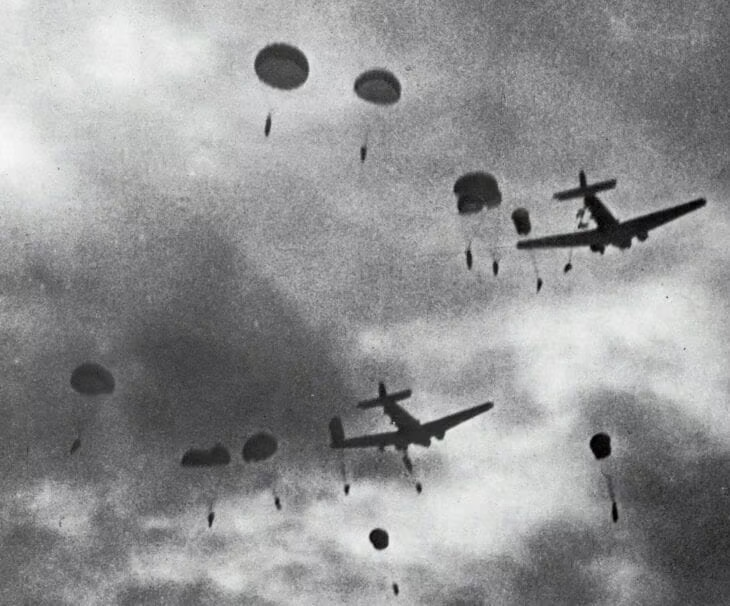
One of the most important commemorations in Chania is the remembrance of the Battle of Crete during WWII, which includes sports competitions, ceremonial activities, and folk dancing. The celebration occurs in May near Maleme, where the first fighting took place. Many events are organised by veterans and their families to ensure younger generations do not forget this day.

11. The Hyakinthia (July, Anogia)
The Hyakinthia is a three-day festival in July in the village of Anogia, on the foothills of Psiloritis. With feasts and events, the occasion commemorates the Saint of Love, Agios Hyakinthos. Every year a new theme is created, all based on Cretan history, music, and legacy.
12. Chania Film Festival (October, 10 days)
The Chania Film Festival is a 10-day international program held each October in Chania, screening feature films, documentaries, and short films alongside masterclasses and industry workshops. It has grown into one of western Crete’s flagship autumn cultural events, extending the festival calendar well past the summer season.
13. Dance Days Chania (certified EFFE Label)
Dance Days Chania is a contemporary dance festival held in Chania that has earned the EFFE Label (Europe for Festivals, Festivals for Europe), a quality mark awarded to outstanding European arts festivals. The program fills the city’s squares, historic buildings, and open-air venues with performances, workshops, and screenings by Greek and international dance companies.
14. Jazz in July Festival, Vamos (since 2012)
Jazz in July has been held annually in the village of Vamos, in the Apokoronas region, since 2012. The festival brings Greek and international jazz musicians to an intimate village setting for evening concerts under the summer sky. Official website: jazzinjuly.gr.
15. Chania Rock Festival (August)
During the first half of August, the Chania Rock Festival fills Chania’s old city with rock music fans from across Greece. The festival brings together a diverse range of Greek and international performers, up-and-coming artists, and rock bands to give the summer a memorable send-off.
Food, Wine, and Harvest Festivals in Crete
Every summer, Crete’s villages host free festivals dedicated to local products – wine (Dafnes, 15 days of free tastings), olive oil, pottery, and bread – reflecting the island’s Mediterranean agricultural heritage. These harvest celebrations are among the most authentic panigiria on the island, where you taste the product at its source and dance with the people who made it.
16. Wine Festival (Dafnes – 15 days, free tastings)
The Wine Festival in Dafnes, Heraklion, runs for around 15 days each summer and is one of Crete’s best-known wine celebrations, offering free tastings of the region’s red and white wines alongside folk music and traditional Cretan dances. Other wine festivals take place across the island – the festival in Anogia is especially popular thanks to the area’s excellent wines, and additional events are held in Rethymno’s National City Park at the end of July and in Kastelli village in early August.
17. The Cretan Diet Festival (July, Rethymno)
During the first week of July, the Cretan Diet Festival takes place in Rethymno, showcasing locally produced items while honouring Cretan cuisine and the famed Mediterranean diet. Food lovers can enjoy traditional dishes, cooking demonstrations, and even a “Cretan diet” seminar.
18. Raki Distilling – Rakokazano (October–December)
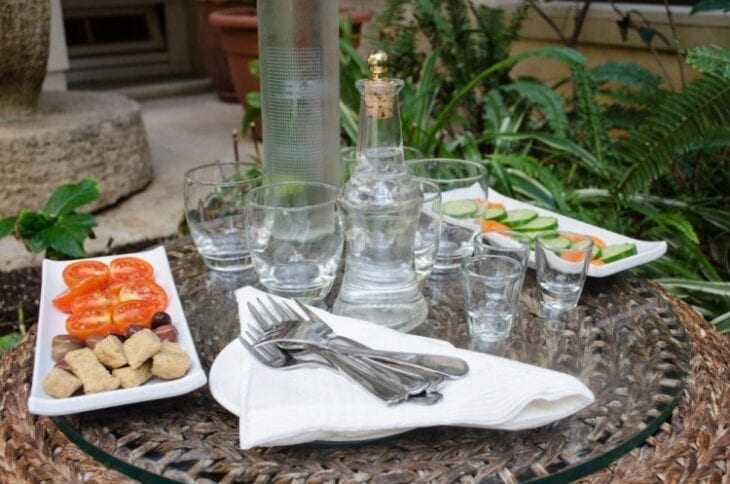
Between October and December, Crete celebrates the traditional drink of the island. The process of turning grape-must into raki – known as raki distillation or rakokazano – is almost a ceremony for locals. The festival is held around the stills (the kazani), in various locations throughout Crete, and is followed by a feast featuring traditional products, Cretan delicacies, local wine, and freshly made raki.
19. Kakavia Fish Soup Festival
The Kakavia Festival pays tribute to kakavia, the traditional Greek fish soup enjoyed all over Crete, and is celebrated in seaside villages such as Sissi and Milatos as well as on the southern shore of Heraklion. The celebration features cooking competitions, tastings, and music performed by local bands – a great chance to try this island favourite at its freshest.
20. Thrapsano Pottery Festival (July, Minoan tradition)
The Thrapsano Pottery Festival is held in the historic pottery village of Thrapsano, usually over two days in the middle of July. The festival honours local potters who have carried on the ancestral pottery tradition in Crete since the Minoan era, with exhibitions, workshops, and demonstrations. Each night concludes with food, drinks, and a variety of musical performances.
21. Eftazymo Bread Festival (Kastamonitsa)
The Eftazymo Festival takes place in Kastamonitsa, a village about 4 kilometers (24.85 miles) from Heraklion, near Kasteli. This celebration honours eftazymo bread, a local specialty and the region’s most traditional loaf. Village ovens prepare thousands of loaves in the days before the festival, which are shared and eaten by guests during the festivities.
22. Chestnut Festival, Elos (October)
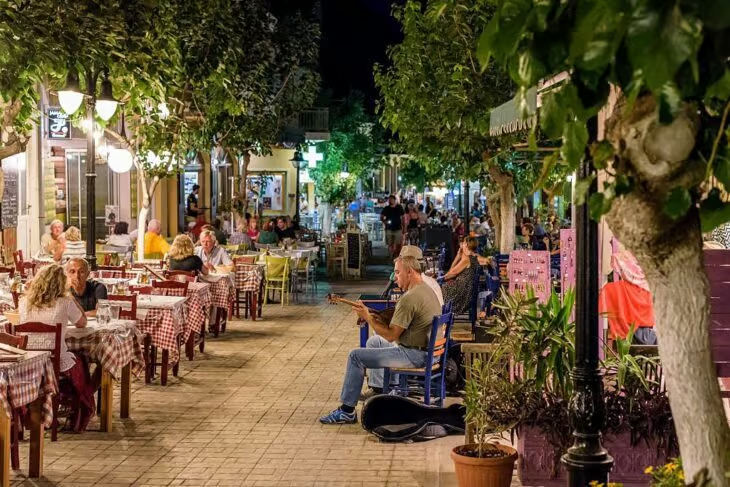
The Chestnut Festival is held each October in the mountain village of Elos, in western Crete’s Kissamos region. The harvest celebration centres on the local chestnut crop, with roasted chestnuts, chestnut-based dishes and sweets, traditional Cretan music, and dancing in the village square. It is one of the most atmospheric autumn panigiria on the island.
Music and Beach Festivals in Crete
The Matala Beach Festival (since 2011) and the Houdetsi Music Festival (August) are Crete’s two flagship music events, drawing international performers and thousands of visitors each summer. Together with the Lato Festival and the Heraklion Summer Art Festival, they anchor the island’s summer music calendar from June through August.
23. Matala Beach Festival (since 2011)
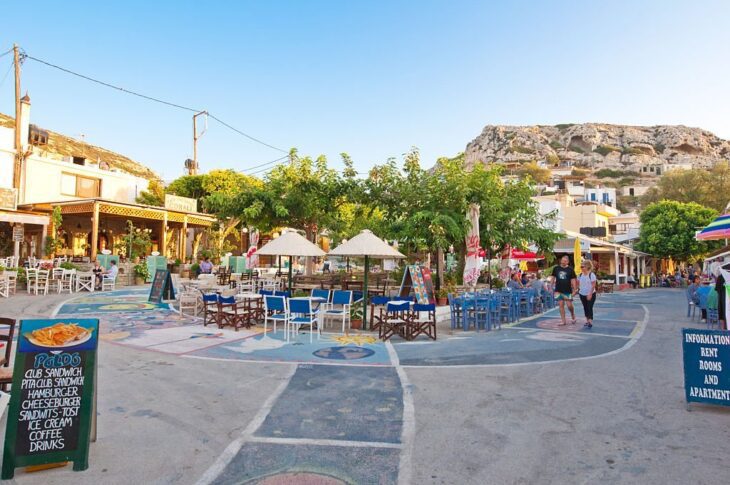
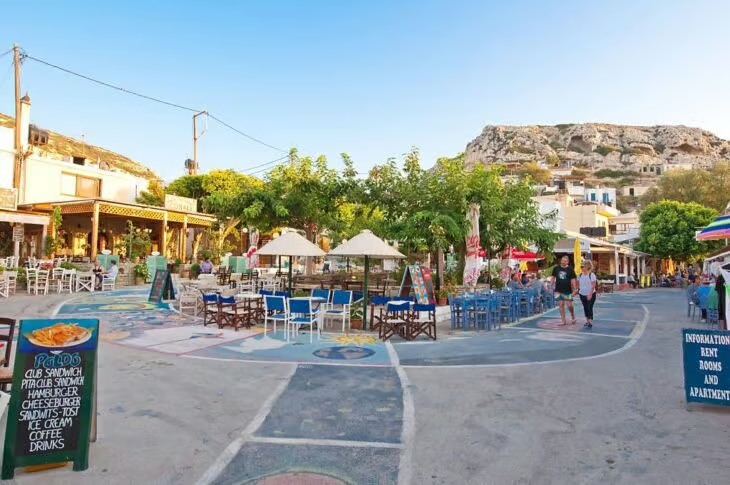
Held on the famous Matala Beach since 2011, this beach and summer festival transforms the hippie village into a flower-power revival that pays homage to the 1960s and 70s and Matala’s iconic past. The region’s culture, its caves, literature, creative writing, street art, painting, and music are all celebrated over the festival weekend, with music, crafts, and art filling the streets. Official website: matalabeachfestival.gr – tickets are available from April.
24. Houdetsi Music Festival (August)
Every August, the Houdetsi Festival takes place in the village of Houdetsi, about 23 kilometers (14.29 miles) from Heraklion. It is a one-of-a-kind event that combines Cretan music with musical traditions from around the world. Music lovers will enjoy the diverse range of genres on offer, including classical, rock, and jazz, and there are workshops where you can learn about traditional Cretan instruments such as the lyra and laouto.
Lato Festival, Agios Nikolaos (July–August)
In July and August, the town of Agios Nikolaos hosts the Lato Cultural Festival – a lively fair with local concerts, foreign musicians, traditional mantinades contests, dance performances, art exhibits, and theatre productions.
Heraklion Summer Art Festival
The Heraklion Summer Art Festival combines art and music at the Nikos Kazantzakis and Manos Hatzidakis theatres. Both traditional and modern music is played throughout the city, with theatrical performances, dance shows, and visual arts exhibitions. Live bands and acoustic chill nights fill many of the city’s taverns, drawing visitors from across Crete.
International Sculpture Symposium (Venerato, biennial)
The International Sculpture Symposium is a month-long festival featuring a large outdoor exhibition of human forms carved from Cretan limestone. Held every two years in Venerato, it attracts sculptors from all over Europe, and the exhibition is free and open to the public to visit and enjoy.
Local Village Festivals in Crete
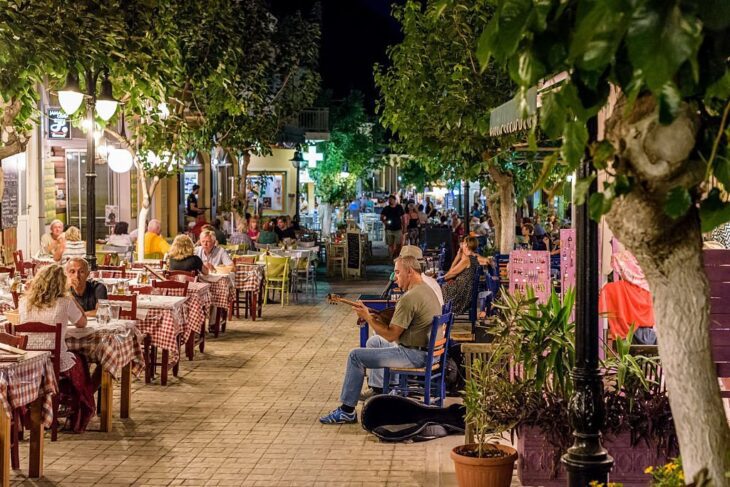
The most authentic festival experiences in Crete are the small village panigiria, where you eat at communal tables, dance with locals, and hear live lyra and laouto into the night. These celebrations are not staged for tourists – visitors simply join in.
Festival of Analipsi (June, 7 days)
The Festival of Analipsi (the Ascension of Christ) is a 7-day celebration in June centered on the village of Analipsi in eastern Crete. The Festival of Analipsi draws visitors from across the island each June, with communal beach feasts, traditional Cretan music, and religious ceremonies filling the village for a full week. It is one of the more locally-rooted festivals on the island, where you can sample authentic Cretan food including souvlaki, mezedes, and seasonal seafood.
Panigiria Near You – How to Find Local Celebrations
Beyond the named festivals in this guide, a panigiri is happening somewhere in Crete almost every weekend between May and October, usually marking the feast day of a village’s patron saint. To find one near you, ask at your accommodation or the local kafenio, watch for hand-painted banners strung across village roads, and check the noticeboards outside churches and town halls. Most panigiria are free, start in the evening, and run late into the night.
How to Get to Festivals in Crete
Most festivals in Crete take place in the evening in village squares or coastal areas not served by public buses after midnight – a rental car is the most reliable way to attend and return freely.
You have three main options: public bus, taxi, or rental car. Public transport is challenging because most festivals run at night and buses stop around midnight, so you will need an alternative way home. Taxis work but can be costly for long-distance or rural trips. A Crete car rental is the most convenient way to reach festivals and return on your own schedule – economy cars start at around €25 ($28.84, £21.35)–€40 ($46.15, £34.16) per day and handle the island’s narrow village roads with ease. See our car rental page for current rates and availability.

How much do compact and mid-sized car rentals cost in Crete?
Listed below find the average cost of renting a compact and medium-sized car in Crete:
- Compact Cars: The average cost of renting a compact car in Crete is around €40 ($46.15, £34.16) to €50 ($57.69, £42.70) per day. Compact cars offer a balance between size and fuel efficiency, making them a popular choice for exploring the island. Compact car models in Crete are considered models with 5 doors, 4 or 5 seats, able to comfortably travel for a family of 4. Car models listed as Compact cars in Crete are Toyota Yaris, Volkswagen Polo, Nissan Micra, Renault Clio, Citroen C3 and Peugeot 208.
- Mid-sized Cars: The average cost of renting a midsize car in Crete is around €50 ($57.69, £42.70) to €60 ($69.22, £51.24) per day. Midsize cars provide more space and comfort compared to compact cars, making them suitable for longer journeys or traveling with a larger group or a family of 5. Car models listed as Mid-sized cars in Crete are Volkswagen Golf, Toyota Corolla, Fiat Tipo, Kia Stonic, Seat Arona and Skoda Kamiq.
It is important to note that the effective cost may vary depending on factors such as the rental company, duration of rental, and the time of year. It is recommended to contact Rental Center Crete for specific pricing information and availability.
Do Rental Cars in Crete have Insurance?
Yes, rental cars typically include insurance coverage. The purpose of rental car insurance is to secure the renter and the rental vehicle in the event of an accident, damage or theft. The particular insurance coverage provided varies based on the rental company and the form of insurance selected. A Collision Damage Waiver (CDW) or Loss Damage Waiver (LDW) is a common form of coverage that reduces the renter’s financial liability for damage to the rental vehicle.
Liability insurance is another essential coverage that protects against damage to other people’s property or injuries to third parties if the renter causes an accident. Personal Accident Insurance (PAI) for medical cost and accidental casualty benefits, as well as coverage for personal things in the rental vehicle, are all available as supplementary insurance options.
It is essential that renters review the insurance coverage offered by the rental company, understand any restriction or exclusions and consider their own insurance options to ensure appropriate coverage during the rental period. Drivers are able to make decisions regarding their car rental insurance coverage by thoroughly reading the rental terms and discussing any questions or concerns with the rental company.