




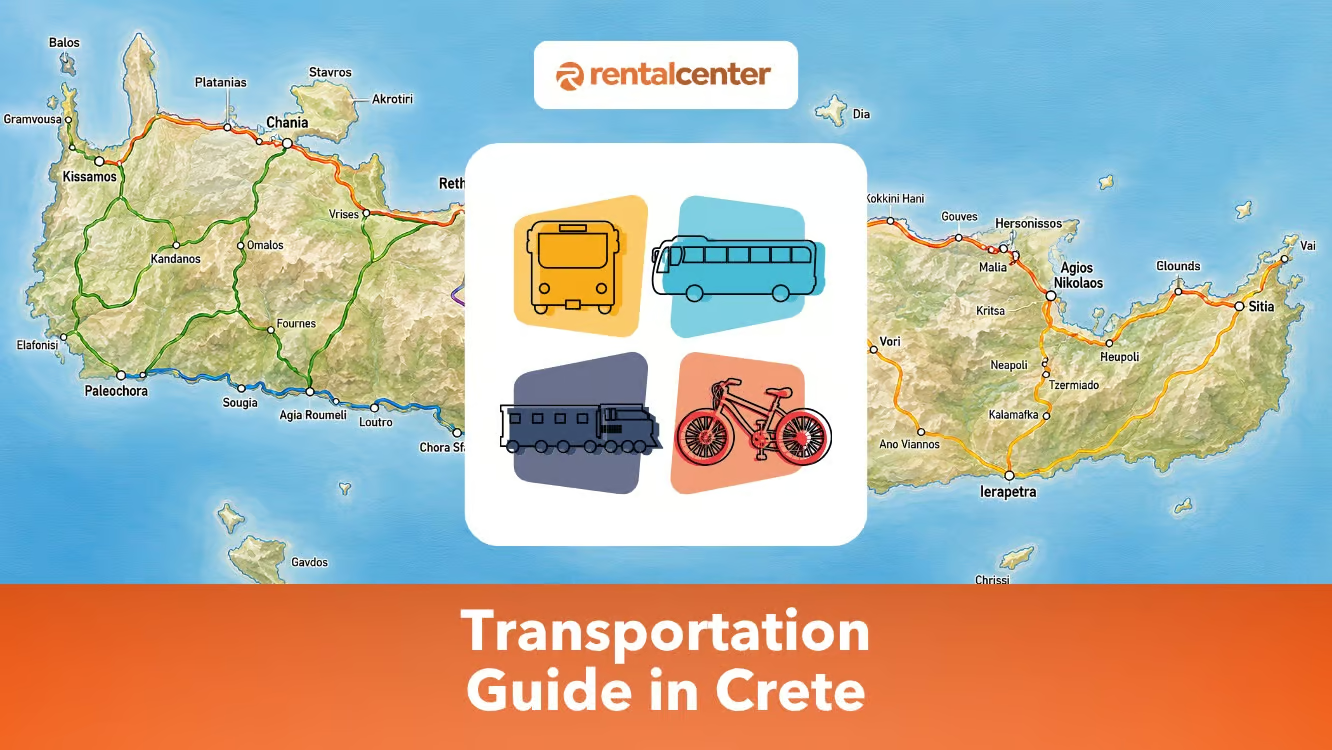
Crete offers six main ways to get around: KTEL buses on the north-coast corridor, taxis for door-to-door trips, rental cars for rural exploration, south-coast Anendyk ferries between coastal villages, cycling in towns, and organised transfers from the airports. Each mode suits a different budget, itinerary and comfort level – and you do not necessarily need a rental car to have a complete Crete holiday.
Editorial note: Fares and schedules in this guide are approximate and subject to seasonal change. Always verify current fares at KTEL station counters (ktelherlas.gr / e-ktel.com) or with your taxi driver before travel. This guide is produced by a licensed car rental operator; where relevant, car rental is offered as one option among many.
Quick-Pick Transport by Traveller Type
| Traveller type | Recommended primary mode | Why |
|---|---|---|
| First-timer (north-coast resorts) | KTEL bus + occasional taxi | Cheap, reliable; covers Chania–Rethymno–Heraklion–Agios Nikolaos every €1.6 ($1.83, £1.36)–€14 ($16.01, £11.91) |
| Beach-only holiday (one base) | City bus + walking + taxi for evenings | No car costs; resort shuttles cover the main beaches |
| Hikers (Samaria, Imbros, gorges) | Organised tour or KTEL + Anendyk ferry | Tour transport included; ferry from Sfakia/Agia Roumeli completes the loop |
| Island-hoppers (Santorini, Rhodes) | Inter-island ferry from Heraklion | SeaJets and Minoan Lines reach Santorini in ~2 h; Rhodes overnight |
| Budget travellers | KTEL bus + Bolt in Heraklion | Single fares from €1.6 ($1.83, £1.36); Bolt undercuts street taxis in town |
| Families | Rental car | Child seats, luggage, beach gear, multiple stops per day |
| Couples (rural villages) | Rental car or motorbike | Many mountain villages have no bus link |
| Solo backpacker | KTEL + ferry + walking | Full island accessible without a car if you plan around schedules |
How to Get Around Crete: Quick Overview
Crete has six main transport modes – KTEL bus, taxi, rental car, ferry, bicycle and walking – and your best choice depends on your destination, budget and how far off the main roads you plan to go. The north-coast corridor (Chania → Rethymno → Heraklion → Agios Nikolaos) is fully covered by KTEL buses every 30–60 minutes in summer. The south coast is connected by the Anendyk ferry network. Rural mountain villages and isolated beaches need a car, motorbike or pre-booked transfer.
Getting Around Crete Without a Car
You can travel the entire north-coast corridor by KTEL bus, reach the south-coast villages by Anendyk ferry from Sfakia, and navigate any town comfortably on foot – no rental car required. Roughly 75% of visitor destinations in Crete are accessible by public transport.
- North coast (Chania → Rethymno → Heraklion → Agios Nikolaos): KTEL buses run every 30–60 minutes in summer. The entire corridor is air-conditioned, punctual and direct. A single Chania–Heraklion ticket costs €14 ($16.01, £11.91) for a 14 kilometers (86.99 miles) journey (~2 hours).
- South coast (Sfakia, Loutro, Agia Roumeli, Sougia, Paleochora): These villages are inaccessible by road to most visitors. Anendyk ferries connect them daily in summer. Take the KTEL bus from Chania to Hora Sfakion (3–4 departures/day, 1h 45m, ~€8.3 ($9.49, £7.06)) and catch the Anendyk ferry from there.
- Gorge day trips (Samaria, Imbros, Aradena): Organised tours from Heraklion, Chania and Rethymno include round-trip transport, gorge entry and the return ferry from Agia Roumeli. Prices start at ~€35 ($40.03, £29.77) per person.
- Towns and beaches: City buses (Heraklion’s Astiko KTEL, Chania’s Chaniabus) cover suburbs and nearby beaches for €1.1 ($1.26, £0.94)–€2 ($2.29, £1.70). The Old Towns of Chania, Rethymno and Heraklion are pedestrianised and easily explored on foot.
- Inter-island links: From Heraklion port, ferries reach Santorini, Mykonos, Rhodes and Karpathos without a car at any stage.
- Airport arrivals: Both Heraklion Airport (HER) and Chania Airport (CHQ) have direct city bus links every 10–20 minutes (see Airport Bus Connections below).
Limitation – honest caveat: Remote mountain villages (the Lassithi Plateau, Sfakia inland, Anogia), the eastern Sitia hinterland and beaches without a bus stop (Balos approach, Seitan Limania, some south-coast coves) require a charter car, motorbike or pre-booked taxi transfer. Plan these as day trips rather than your daily commute.
How to Get to Crete (Air and Sea Arrivals)
Most international visitors fly into Heraklion (HER) or Chania (CHQ) airports; those preferring a sea arrival take the overnight ferry from Piraeus Port (9–10 hours), departing daily year-round. Crete has six commercial ports and three airports, so choose the gateway closest to your final destination.
Flights to Crete: Heraklion, Chania and Sitia Airports
Crete has three airports serving different parts of the island.
- Heraklion International Airport “Nikos Kazantzakis” (HER) – the largest, located 4 kilometers (2.49 miles) east of Heraklion city centre. Direct seasonal flights from most European capitals plus year-round connections via Athens. Carriers include Aegean, Olympic, Ryanair, easyJet, Wizz Air, Lufthansa, British Airways and Jet2.
- Chania International Airport “Ioannis Daskalogiannis” (CHQ) – second largest, on the Akrotiri peninsula 14 kilometers (8.70 miles) east of Chania town. Serves western Crete; gateway to the Samaria Gorge, Balos and Elafonissi.
- Sitia Public Airport (JSH) – small regional airport in far eastern Crete, mostly domestic flights from Athens, Rhodes and Karpathos.
Travellers already in Greece can connect via Athens International Airport (ATH) with multiple daily flights to HER and CHQ on Aegean and Olympic Air.
Ferry from Piraeus to Crete: Routes, Duration and Ports
The Piraeus → Heraklion and Piraeus → Chania (Souda) overnight ferries run daily year-round. Operators: Minoan Lines, ANEK Lines and Blue Star Ferries (joint operations). Crossing duration: 9–10 hours, departing Piraeus around 21:00 and arriving Crete around 06:00. Cabin, airline-style seat and deck-class tickets are all available; book cabins early for July–August.
Choose your Crete ferry port by final destination:
- Heraklion – central Crete, Knossos, Lassithi
- Chania (Souda) – west Crete, Samaria Gorge, Balos
- Rethymno – limited connections, mainly summer
- Agios Nikolaos / Sitia – east Crete, weekly Dodecanese link
- Kissamos (Kastelli) – west, summer Peloponnese connection
From every Crete port, KTEL buses and taxis connect onward to your hotel or destination town. Avoid sea crossings December–February when winter storms cause cancellations.
Inter-Island Ferries: Crete to Santorini, Mykonos, Rhodes
See “Island Hopping from Crete: Ferry Routes” further down for the full route and duration table.
KTEL Public Buses in Crete: Routes, Timetables and Fares
KTEL buses are the cheapest way to travel between Crete’s cities. A single ticket from Chania to Heraklion costs €14 ($16.01, £11.91) (under 2 hours; every 30–60 min during summer). Buses are air-conditioned, punctual on the north-coast route, and accept card payment at main stations. KTEL (“Koino Tameio Eispraxeon Leoforeion”) is the only form of public intercity transport in Crete. Two regional operators run the network: KTEL Heraklion–Lassithi for east and central Crete, and KTEL Chania–Rethymno for west and central Crete. Each has its own website, stations and timetables.
KTEL Heraklion–Lassithi (East and Central Crete)
Covers the eastern half of the island from Heraklion Bus Station A. Sample routes and fares from Heraklion:
| Route | Distance | Duration | Fare | Frequency (summer) |
|---|---|---|---|---|
| Heraklion → Agios Nikolaos | 65 kilometers (40.39 miles) | 1h 30m | ~€8.3 ($9.49, £7.06) | Every 30–60 min |
| Heraklion → Ierapetra | 105 kilometers (65.24 miles) | 2h 30m | ~€11.4 ($13.04, £9.70) | Hourly |
| Heraklion → Sitia | 135 kilometers (83.89 miles) | 3h 15m | ~€15.5 ($17.73, £13.19) | 4–5 daily |
| Heraklion → Malia / Hersonissos | 3 kilometers (18.64 miles) | 45 min | ~€4.3 ($4.92, £3.66) | Every 30 min |
| Heraklion → Matala (south coast) | 7 kilometers (43.50 miles) | 2h | ~€8.3 ($9.49, £7.06) | 4–5 daily |
Tickets are bought at the station counter or onboard for shorter routes. Card payment accepted at main stations.
KTEL Chania–Rethymno (West and Central Crete)
Covers the western half of the island from Chania KTEL Station (Kydonias St) and Rethymno KTEL Station. Sample routes and fares:
| Route | Distance | Duration | Fare | Frequency (summer) |
|---|---|---|---|---|
| Chania → Rethymno | 6 kilometers (37.28 miles) | 1h | ~€7 ($8.01, £5.95) | Every 30–60 min |
| Chania → Heraklion | 14 kilometers (86.99 miles) | 2h 45m | ~€14 ($16.01, £11.91) | Every 30–60 min |
| Rethymno → Heraklion | 8 kilometers (49.71 miles) | 1h 30m | ~€8.3 ($9.49, £7.06) | Every 30–60 min |
| Chania → Hora Sfakion | 75 kilometers (46.60 miles) | 1h 45m | ~€8.3 ($9.49, £7.06) | 3–4 daily |
| Chania → Paleochora | 77 kilometers (47.85 miles) | 2h | ~€9.2 ($10.52, £7.83) | 4–5 daily |
| Chania → Omalos (Samaria entry) | 4 kilometers (24.85 miles) | 1h | ~€7.5 ($8.58, £6.38) | 2 daily (06:15, 07:45) |
Winter note: Frequencies drop significantly from November to March; some south-coast routes run only 1–2 days per week.
City Buses in Heraklion and Chania
City (urban) buses handle short trips inside town and to nearby beaches and suburbs. They are entirely separate from the intercity KTEL network.
- Heraklion city buses – operated by Astiko KTEL Heraklion (astiko-irakleiou.gr). Blue and white buses. Single fare €1.2 ($1.37, £1.02) (buy onboard) or €1.1 ($1.26, £0.94) from kiosks. Main lines connect the airport, city centre, port, and beach suburbs (Amoudara, Ammoudara, Karteros).
- Chania city buses – operated by Chaniabus (chaniabus.gr). Single fare €1.5 ($1.72, £1.28) in town, €1.8 ($2.06, £1.53)–€2.5 ($2.86, £2.13) to the coastal beaches west of town (Kalamaki, Agia Marina, Platanias, Gerani). Tickets from the driver or kiosks.
Heraklion Bus Station A and Bus Station B
Heraklion has two KTEL intercity stations – confirm which station your bus departs from before you arrive.
- Bus Station A (KTEL Heraklion–Lassithi, “Long-Distance Station”) – next to the port and ferry terminal. Departures east (Agios Nikolaos, Sitia, Ierapetra, Malia, Hersonissos) and to the airport.
- Bus Station B (KTEL Heraklion–Lassithi, “Chania Gate Station”) – at the western edge of Heraklion centre, near Chania Gate. Departures south and west (Matala, Phaistos, Anogia, Agia Galini).
Airport Bus Connections
- Heraklion Airport (HER) → city centre / port: Line 1 of Astiko KTEL Heraklion runs every 10–15 minutes, €1.2 ($1.37, £1.02), journey time 15 minutes. The bus stop is opposite the terminal exit. Continues to Heraklion Bus Station A and the port.
- Chania Airport (CHQ) → Chania town: Chaniabus runs every 30–60 minutes (more frequent on flight arrivals), €2.5 ($2.86, £2.13), journey time 30 minutes.
- Sitia Airport (JSH): No regular city bus; pre-book a taxi (~€10 ($11.44, £8.51)).
Taxis in Crete: Fares, How to Book and What to Watch Out For
Taxis in Crete are affordable for short airport runs but expensive for cross-island journeys. Always agree the fare before getting in, as drivers may forget to start the meter – a common issue across the island. Cretan taxis are silver-grey with a TAXI roof sign. They are available at every airport, port, town square and major resort.
Taxi Fare Table: Airport to Town Prices
| Journey | Approximate Fare |
|---|---|
| Heraklion Airport (HER) → Heraklion city | €22 ($25.16, £18.72) |
| Heraklion Airport (HER) → Hersonissos | €40 ($45.75, £34.03) |
| Heraklion Airport (HER) → Malia | €50 ($57.19, £42.54) |
| Chania Airport (CHQ) → Chania town | €30 ($34.31, £25.52) |
| Chania Airport (CHQ) → Platanias | €45 ($51.47, £38.28) |
| Heraklion city → Agios Nikolaos | €70 ($80.06, £59.55) |
| Heraklion city → Rethymno | €85 ($97.21, £72.31) |
| Heraklion city → Chania city | €150 ($171.56, £127.61) |
| Rethymno city → Chania town | €80 ($91.50, £68.06) |
| In-town short trip | €2 ($2.29, £1.70)–€5 ($5.72, £4.25) |
Fares subject to change – confirm with the driver on arrival. Tip: write down your destination, as several Cretan place names sound similar (e.g. Agia Pelagia vs Agios Pelagias).
Practical Tips for Taxis
- Tariff 1 (day rate, 05:00–24:00) applies inside built-up areas. Tariff 2 (double rate) applies between 24:00–05:00 and on intercity journeys.
- Always agree the fare upfront on routes longer than a town hop; the meter is often “broken”.
- Extra charges: airport/port pickup ~€4 ($4.57, £3.40); each luggage piece over 10 kg ~€0.5 ($0.57, £0.43).
- Most drivers prefer cash. Larger taxi companies in Heraklion and Chania accept card on request.
Uber and Bolt in Crete
Uber does not operate in Crete. FreeNow is available in Heraklion and operates a limited service in Chania during the summer season, primarily for airport and town-centre runs. For most destinations outside these two cities, you will need a traditional taxi or a pre-booked transfer.
The FreeNow app works on iOS and Android and accepts card payment – useful for travellers who prefer cashless rides in Heraklion. FreeNow fares are typically 10–20% lower than street taxi rates within the city. Outside Heraklion and Chania (Rethymno, Agios Nikolaos, Sitia, rural areas) FreeNow has no driver coverage; assume taxi is the only ride-hailing option.
Pre-Booked Transfers vs Street Taxis
Pre-booked airport transfers (booked online before arrival) are fixed-fare, English-speaking, and a driver meets you at arrivals with a name board. Prices are typically similar to or slightly above the street taxi rate (~€25 ($28.59, £21.27)–€55 ($62.90, £46.79) for airport → resort), but you avoid airport-arrival queues and miscommunication. Reputable operators include CreteCab, Welcome Pickups, HolidayTaxis, and several local Cretan providers. For families with car seats or groups of 4+, pre-booked minivans usually beat the street taxi rate.
Street taxis are best for spontaneous trips and short town hops. Pre-booked transfers are best for airport pickups, large groups, late-night arrivals and any journey where you need certainty on price and timing.
Renting a Car in Crete: What You Need to Know
Car rental in Crete requires a minimum age of 21, a full driving licence held for at least one year, and – for non-EU/EEA drivers – an International Driving Permit (IDP). A rental car gives you maximum freedom across Crete, but mountain roads are narrow and winding; experienced drivers will find them manageable while nervous drivers should plan routes on main roads only.
Car Rental Requirements (Age, Licence, Insurance)
- Minimum age: 21 years (some categories 23 or 25).
- Licence: full driving licence held for at least 12 months. UK, EU and EEA licences accepted as-is.
- Non-EU drivers: International Driving Permit (IDP) required alongside your home licence. This includes US, Canadian, Australian, New Zealand, Japanese, Chinese and most other non-EU licences.
- Credit card: required for the deposit (debit cards accepted at some companies).
- Insurance: all rentals include third-party liability and basic CDW. Excess reduction and full no-deductible cover available as upgrades. Personal travel insurance with car-hire excess cover is a cheap alternative.
Weekly rental prices in Crete start from around €100 ($114.37, £85.07) for a small hatchback (off-season) and climb to €350 ($400.30, £297.75)+ in peak August for an SUV or family car. Major rental firms (Hertz, Avis, Sixt, Europcar) operate desks at Heraklion and Chania airports, alongside local Cretan operators like Rental Center Crete and Justrentals.
Driving in Crete: Road Conditions and Tips
Driving in Crete is a pleasurable experience with the right amount of planning, observance of road safety requirements and attentiveness. A less stressful trip is achievable by just learning and adhering to the local traffic laws, safety guidelines and Crete driving etiquette.
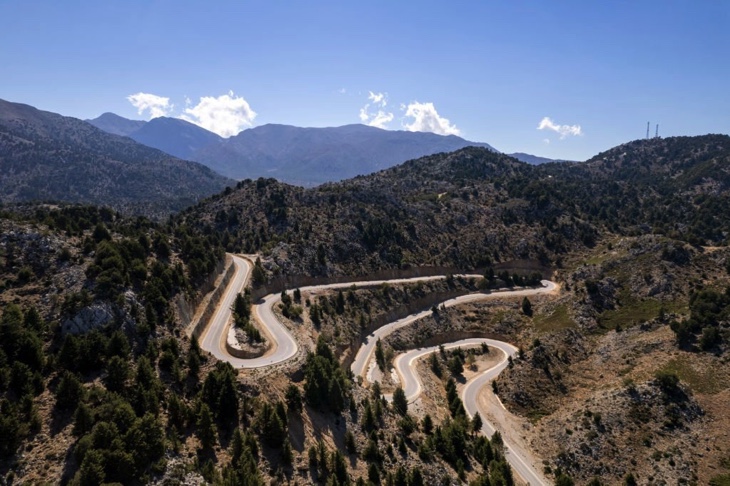
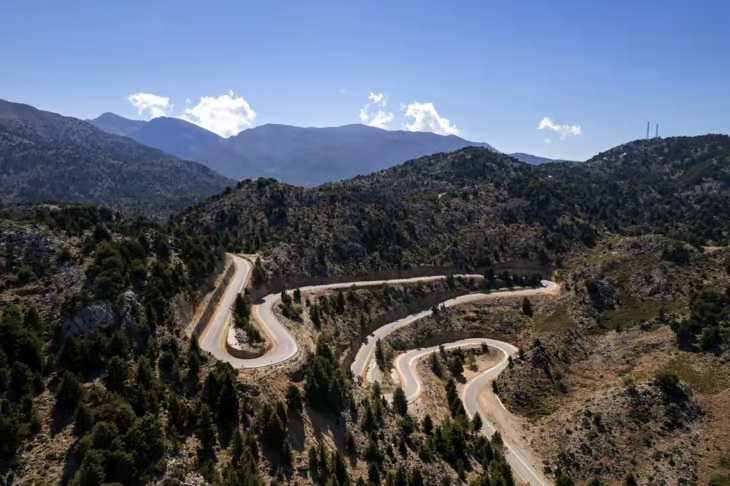
The new northern motorway (E75 / VOAK) connects Chania, Rethymno, Heraklion and Agios Nikolaos – well-paved, two-lane in most sections, with intermittent emergency-lane driving expected (locals pull right to let faster cars overtake). Secondary roads in rural and mountainous areas are narrow, steep and winding; some are unpaved. Expect goats and sheep on the road in upland areas.
- Speed limits: 90 km/h on highways, 50 km/h in towns, 110 km/h on motorway sections.
- Seatbelts compulsory; child seats required under age 12.
- Zero tolerance for drink-driving below 0.5 g/l.
- Headlights mandatory in tunnels and at night.
- Parking in Heraklion and Chania Old Towns is restricted; use signposted car parks.
- Fuel: unleaded around €1.85 ($2.12, £1.57)/litre, diesel ~€1.6 ($1.83, £1.36)/litre (2026 prices, fluctuates).
Motorbike and Scooter Rental
Scooters and motorbikes are widely available in beach resorts and town centres. A 50cc scooter starts from around €15 ($17.16, £12.76)/day; a 125cc from €25 ($28.59, £21.27)/day; larger motorbikes from €40 ($45.75, £34.03)/day. A full motorcycle licence is required for engines over 50cc; for 50cc and under, a car licence is sufficient. Helmets are legally compulsory and reputable rentals always provide them.
Scooters suit coastal resort exploration (Hersonissos, Platanias, Malia, Stalida) but are not recommended for mountain roads, long-distance trips, or for inexperienced riders on unfamiliar machinery.
EV and Hybrid Car Rental Options
Several local operators including Rental Center Crete offer hybrid and full-electric rentals. Public charging points are concentrated in Heraklion, Chania and the major resorts; rural Crete still has charging gaps. A hybrid is the more flexible choice for a full-island tour; EVs work well if you base yourself on the north coast and plan short daily loops. EV rental prices are typically 15–25% above an equivalent petrol model.
Ferries in Crete: South Coast Routes and Island Hopping
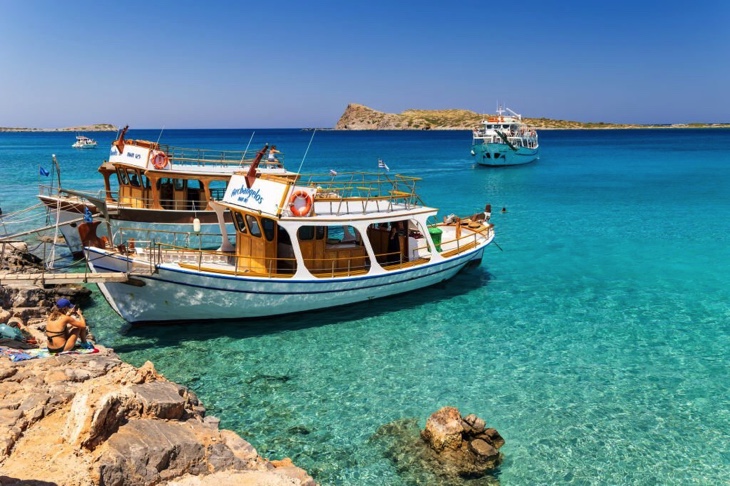
Crete has two distinct ferry networks: the daily Piraeus overnight ferry for arrivals and departures, and the south-coast Anendyk ferry linking the road-inaccessible coastal villages of Sfakia, Loutro, Agia Roumeli, Sougia and Paleochora. Plus inter-island connections to Santorini, Mykonos, Rhodes and Karpathos.
South Coast Ferries: Sfakia, Loutro, Agia Roumeli, Sougia, Paleochora
The south-coast route is operated by Anendyk Maritime Company (anendyk.gr). It links villages along the rugged southwest coast that have no road connection or only a difficult mountain road. This network is the backbone of car-free travel in southwest Crete and is essential for the Samaria Gorge round trip.
Main daily route (April–October):
- Hora Sfakion → Loutro → Agia Roumeli (and return)
- Paleochora → Sougia → Agia Roumeli → Loutro → Hora Sfakion (and return)
- Hora Sfakion → Gavdos (2–4 sailings/week in summer)
- Paleochora → Gavdos (2–3 sailings/week in summer)
Sample fares:
- Hora Sfakion → Loutro: ~€7 ($8.01, £5.95)
- Hora Sfakion → Agia Roumeli: ~€15 ($17.16, £12.76)
- Paleochora → Sougia: ~€7 ($8.01, £5.95)
- Paleochora → Agia Roumeli: ~€14 ($16.01, £11.91)
Tickets buy at the dock office before departure; reserve in peak season. Crossings are sometimes cancelled in strong south winds – check the day before.
Samaria Gorge classic loop: KTEL bus Chania → Omalos → walk 16 kilometers (9.94 miles) down the gorge → Agia Roumeli → Anendyk ferry to Hora Sfakion → KTEL bus back to Chania. Doable in a single day; no car needed.
Gavdos Island: Europe’s Most Southerly Point
Gavdos is the southernmost inhabited point in Europe, ~45 kilometers (27.96 miles) south of Crete. The island has fewer than 100 year-round residents, sandy unspoilt beaches (Sarakiniko, Agios Ioannis) and basic taverna accommodation. Reach it by Anendyk ferry from Hora Sfakion (2–4 weekly summer sailings, ~2h 30m, ~€20 ($22.87, £17.01) one way) or from Paleochora (2–3 weekly, ~4 hours). The ferry runs reliably from late May to early October; check Anendyk’s website for current timetables.
Island Hopping from Crete: Ferry Routes
Crete connects by sea to the Cyclades, Dodecanese and back to Athens. Most routes depart Heraklion port; some western connections leave from Chania (Souda) or Kissamos (Kastelli).
| Destination | Departure port | Approximate Duration | Operators | Frequency |
|---|---|---|---|---|
| Santorini (Thira) | Heraklion | ~2h high-speed (SeaJets) / ~5h conventional (Minoan) | SeaJets, Minoan Lines | Daily in summer |
| Mykonos | Heraklion | 4–5h high-speed | SeaJets, Golden Star Ferries | Several weekly (summer) |
| Paros, Naxos, Ios | Heraklion | 3–6h | SeaJets, Minoan Lines | Several weekly (summer) |
| Rhodes | Heraklion / Sitia | 10–12h overnight | Anek Lines, Blue Star | 2–3 weekly |
| Karpathos | Sitia / Heraklion | ~5–7h | Anek Lines, Blue Star | 1–2 weekly |
| Kasos | Sitia | ~4h | Anek Lines | 1–2 weekly |
| Piraeus (Athens) | Heraklion / Chania (Souda) | 9–10h overnight | Minoan Lines, ANEK Lines, Blue Star | Daily year-round |
| Kissamos → Peloponnese (Kythira, Gythio) | Kissamos | 6–8h | LANE Lines | 2–3 weekly summer |
Book in advance for July and August sailings (especially Santorini high-speed). Winter crossings can be cancelled by weather; always have flexibility on return dates outside the May–October window.
Getting Around Crete’s Main Towns
In Heraklion, Chania, Rethymno and Agios Nikolaos, the old-town centres are best explored on foot; city buses cover suburbs and nearby beaches; taxis handle longer in-town trips. Each town has its own KTEL departure point for intercity travel.
Getting Around Heraklion
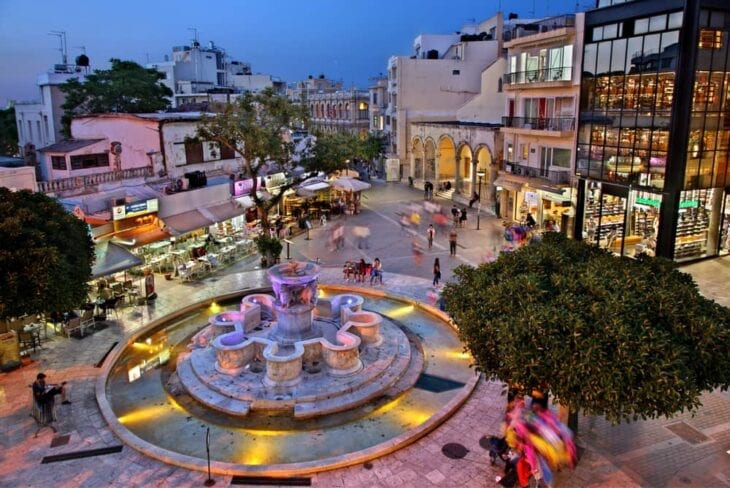
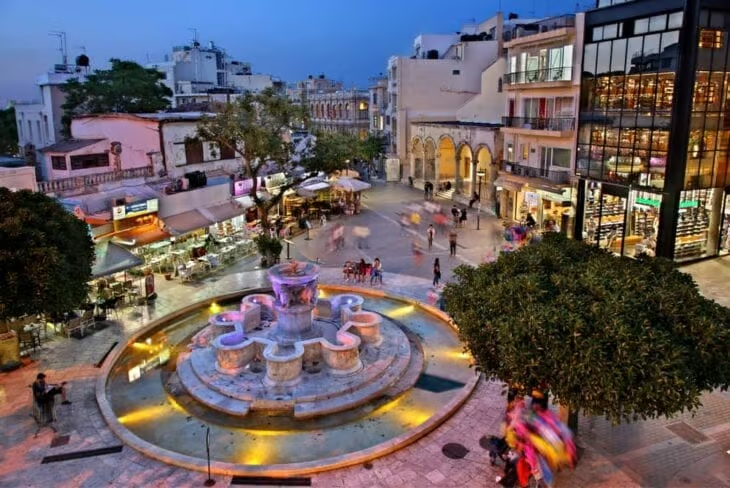
Heraklion’s city centre (around Lions Square / Liondaria, 25th August Street and the harbour) is walkable in 20–30 minutes end to end. Astiko KTEL blue and white city buses run from the airport, port and Bus Station A across the city, €1.2 ($1.37, £1.02) single. Taxis from Heraklion Airport to the city centre cost ~€22 ($25.16, £18.72) (4 kilometers (2.49 miles)). For intercity travel, KTEL Heraklion–Lassithi departs Bus Station A (east + airport) and Bus Station B (south + west). Chania-bound buses depart Bus Station A every 30–60 minutes (~2h 45m, ~€14 ($16.01, £11.91)). Agios Nikolaos: 1h 30m, ~€8.3 ($9.49, £7.06). Bolt is available in Heraklion for in-city rides.
Getting Around Chania
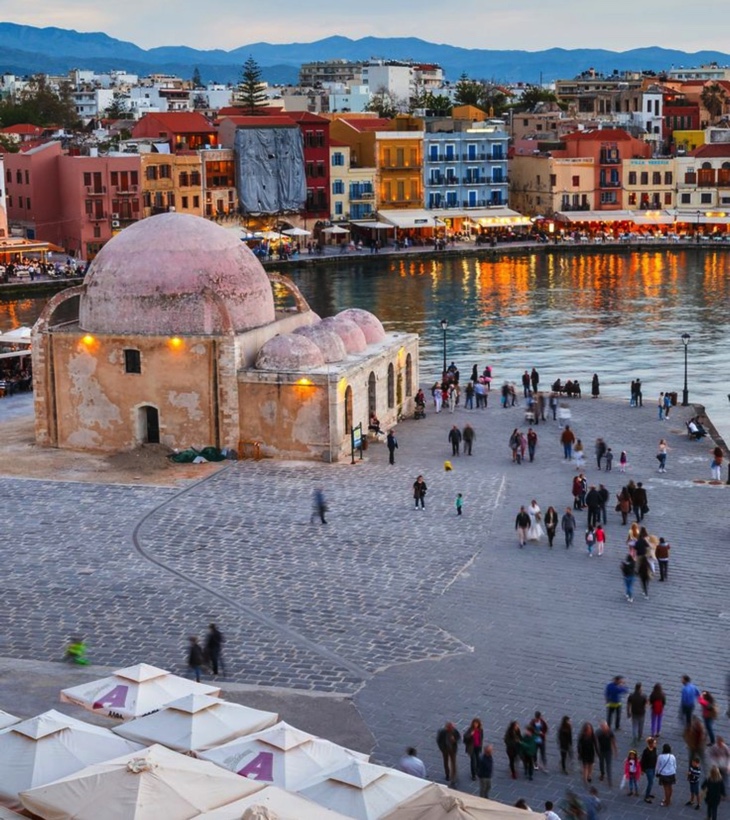
Chania’s Old Town and Venetian harbour are walkable in 20–30 minutes. The Chaniabus city network runs to coastal beaches west of town (Kalamaki, Agia Marina, Platanias) for €1.5 ($1.72, £1.28)–€2.5 ($2.86, £2.13). Taxis from Chania Airport to the city cost ~€30 ($34.31, £25.52) (14 kilometers (8.70 miles)). KTEL Chania–Rethymno departs from Kydonias St KTEL Station: hourly toward Rethymno (1h, ~€7 ($8.01, £5.95)) and Heraklion (2h 45m, ~€14 ($16.01, £11.91)); 3–4 daily to Hora Sfakion (~€8.3 ($9.49, £7.06)); 2 morning buses to Omalos for Samaria Gorge access. Bolt has a limited summer presence in Chania.
Getting Around Rethymno
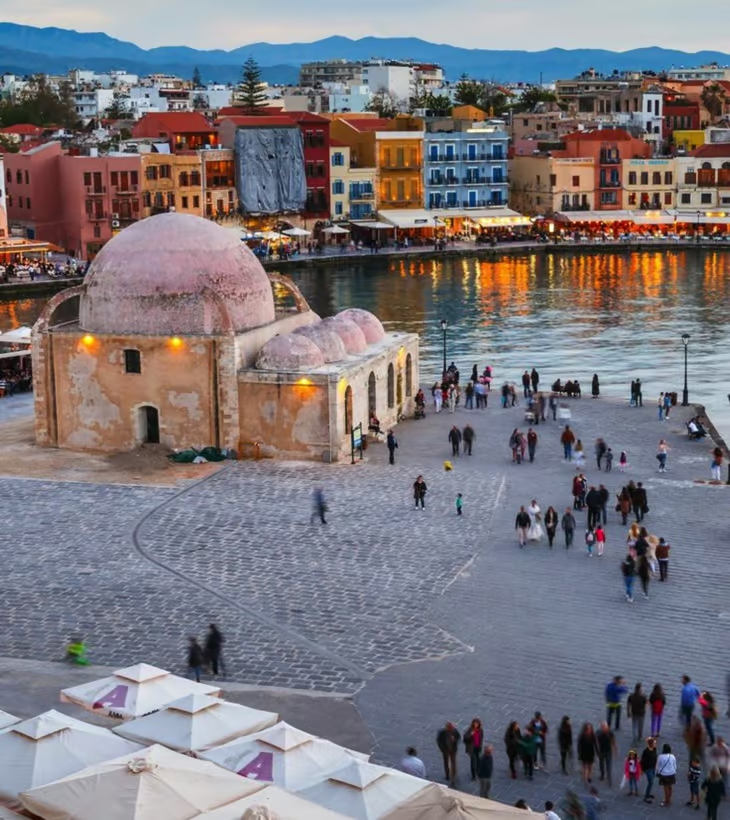
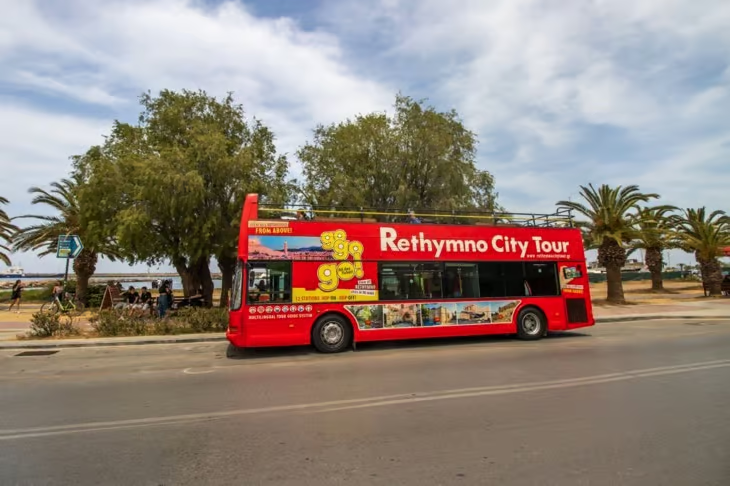
Rethymno’s compact Old Town and waterfront are easily covered on foot. The town centre lies between Chania and Heraklion on the north-coast KTEL corridor. Rethymno KTEL Station (Kefalogianidon St) operates buses every 30–60 minutes to Chania (1h, ~€7 ($8.01, £5.95)) and Heraklion (1h 30m, ~€8.3 ($9.49, £7.06)). Local buses serve the long Rethymno beach strip and inland mountain villages (Argyroupoli, Spili, Plakias). The nearest airports are Chania (6 kilometers (37.28 miles)) and Heraklion (8 kilometers (49.71 miles)). No Bolt service – use traditional taxis.
Getting Around Agios Nikolaos
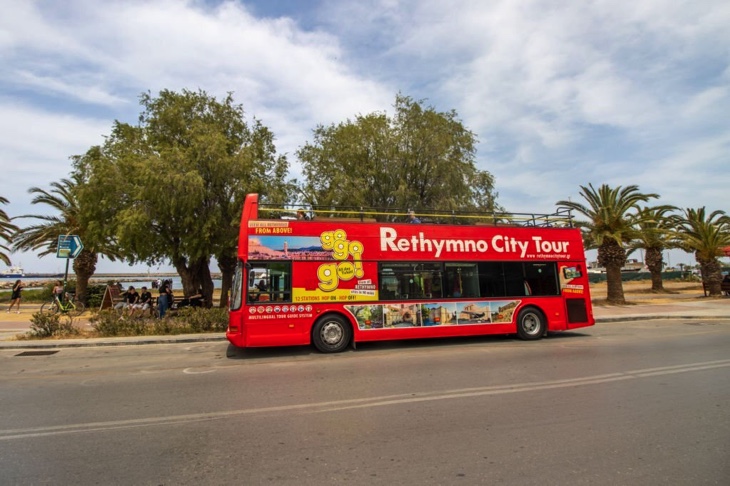
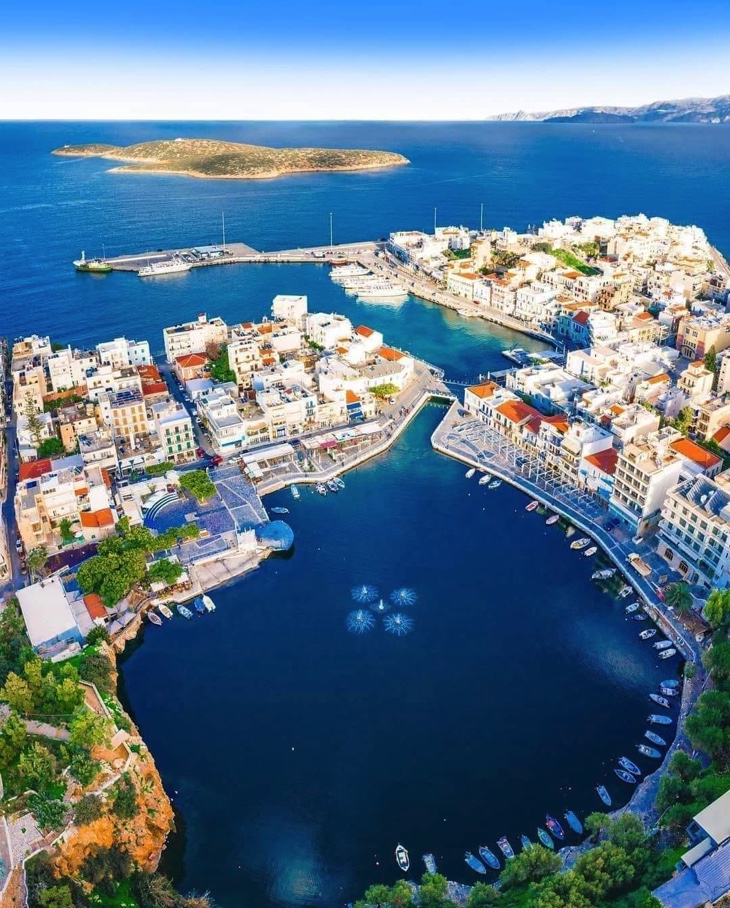
Agios Nikolaos’s central Voulismeni Lake area, harbour and main shopping streets are walkable in 15–20 minutes. The town sits on the KTEL Heraklion–Lassithi network; the local KTEL station is on Atlantidos St. Departures every 30–60 minutes to Heraklion (1h 30m, ~€8.3 ($9.49, £7.06)); regular services to Elounda, Plaka, Sitia and Ierapetra. The nearest airport is Heraklion (65 kilometers (40.39 miles)); a taxi from HER to Agios Nikolaos costs ~€70 ($80.06, £59.55). City buses connect to nearby beach suburbs. No Bolt service.
Walking and Cycling in Crete
Walking Within Towns
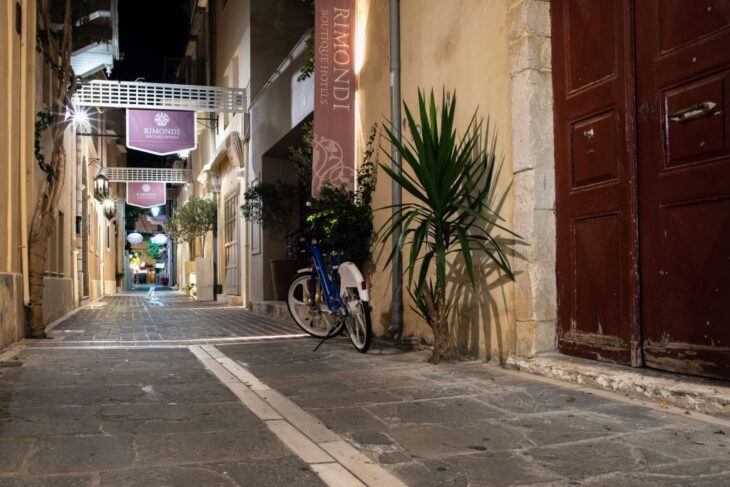
Every major Cretan town centre is pedestrianised or pedestrian-friendly in its historic core. Chania’s Old Town (cobbled, partly car-free), Rethymno’s Old Town (largely car-free), Heraklion’s 25th August Street and Lions Square area, and the Agios Nikolaos harbour ring are all comfortably walkable. Wear closed shoes – cobblestones and uneven stone slabs are common.
Cycling as Transport
Cycling works well for short town and coastal trips, especially flat coastal sections (Heraklion–Amoudara, Rethymno waterfront, Chania → Agia Marina). Bike rentals are available in town centres and beach resorts from around €10 ($11.44, £8.51)–€15 ($17.16, £12.76)/day.
Road condition note: Crete has very few dedicated cycle lanes. Main roads have narrow shoulders, traffic moves fast, and mountain roads are steep with poor sightlines. Cycling is best confined to coastal flats, dedicated touring routes (Lassithi Plateau in cooler months) and resort areas. Serious touring cyclists should arrive equipped and plan routes that avoid the E75 motorway and the steep south-coast switchbacks.
Organised Tours and Transfers
Organised day tours are the simplest way to reach destinations that public transport doesn’t serve directly: Samaria Gorge, Imbros Gorge, Balos and Gramvousa, Elafonissi, Knossos + Heraklion combo, Spinalonga, the Lassithi Plateau. Tour prices typically include round-trip air-conditioned coach, guide, gorge entry (where applicable) and the south-coast Anendyk ferry. Booking through your hotel, a local agency or online platforms like GetYourGuide and Viator. Prices start from ~€35 ($40.03, £29.77) per person for a gorge day; ~€50 ($57.19, £42.54)–€80 ($91.50, £68.06) for full-day boat excursions.


Pre-booked airport transfers (see “Pre-Booked Transfers vs Street Taxis” above) are the simplest door-to-door option for arrivals.
Car Rental vs Public Transport: Which is Right for You?
| Factor | KTEL Bus | Rental Car | Taxi/Bolt |
|---|---|---|---|
| Cost (couple, 1 week) | ~€80 ($91.50, £68.06) | ~€280 ($320.24, £238.20)+ fuel | High for cross-island |
| North-coast corridor | Excellent | Excellent | Expensive |
| Rural villages | Limited | Excellent | Very expensive |
| South-coast beaches | Ferry-dependent | Limited road access | Impractical |
| Family with kids | Difficult | Excellent | Expensive |
| Stress (driving) | Zero | Moderate (mountain roads) | Zero |
| Parking | N/A | Issue in Old Towns | N/A |
| Spontaneity | Low (fixed schedules) | High | Medium |
Bus or car? Your itinerary decides. North-coast-only trips suit KTEL buses perfectly; rural, mountain and remote south-coast exploration requires a car or organised transfer. Mixed itineraries can combine both – rent a car for 2–3 days of specific exploration and use buses for the rest.
When to Visit Crete and How Seasonality Affects Transport
The best times to visit Crete for travellers using public transport are mid-May to late June and September to mid-October – full bus and ferry schedules, manageable crowds, warm seas. July–August is peak: schedules are at their fullest but trains, ferries and taxis are crowded.
Seasonal transport notes:
- April–October: Full KTEL frequencies; daily Anendyk south-coast ferries; daily Santorini ferries; full city bus services.
- November–March: KTEL frequencies drop by 30–60% on regional routes; some south-coast Anendyk ferries reduce to 2–3 sailings a week; inter-island ferries (Santorini, Mykonos) often pause or run weekly only; Piraeus overnight ferry continues year-round but rougher.
- Christmas/Easter: Reduced service over public holidays; check schedules in advance.
If you depend on public transport, build your Crete itinerary around the April–October window; if you have a rental car, year-round travel is straightforward.
What are the advantages of choosing Car rentals over Public Transportation in Crete?
The main advantages of car rentals over public transportation in Crete are flexibility, convenience and expanded access. A rental car lets you explore remote areas and beaches at your own pace, which public transportation cannot reach as efficiently. Rental costs, particularly when shared among passengers, make this an economical option for travelers wanting full access to Crete’s attractions without the constraints of bus schedules.
Find below the advantages of choosing Car rentals over Public Transportation in Crete.
- Grants Freedom and flexibility. A rental car in Crete provides full autonomy, enabling spontaneous trips to hidden beaches, mountain villages, and archaeological sites beyond bus schedule limitations. This freedom allows travelers to craft flexible itineraries and adjust plans as they wish, making each vacation moment uniquely self-directed and personal.
- Maximizes Time Efficiency. A rental car in Crete enhances time efficiency by eliminating the need to wait for public transportation, potentially saving up to 25 minutes per journey. Travelers can avoid the rush for buses and the hassle of connections, ensuring direct and efficient travel to each destination, allowing for more time to explore and enjoy.
- Enhances Convenience and Comfort. A rental car in Crete enhances convenience and comfort, offering private transportation with ample space for luggage and shopping, along with air-conditioned relief during warm seasons. Families especially benefit, easily transporting children, beach gear, and groceries without the limitations or crowding of public transit.
- Ensures Cost-Effectiveness for groups or families. A rental car in Crete is cost-effective, maximizing travel budgets by offering unlimited mileage and a second driver option at no extra charge. It is Ideal for groups or families and provides affordable access to remote locations by eliminating the need for expensive taxi or bus fares and making it a budget-friendly choice for exploring the island.
- Promotes Environmental Consideration with hybrid and EV cars. Electric and hybrid car rentals in Crete promote eco-friendly travel, blending the convenience of private transport with a reduced environmental impact. Many rental companies, including Rental Center Crete, offer hybrid and electric car options, allowing travelers to explore the island while minimizing their carbon footprint, making sustainable tourism both accessible and practical.
What are the advantages of Public Transportation over Car rentals in Crete?
Find below the advantages of choosing Public Transportation over Car rentals in Crete.
- Minimizes Costs for Solo Travelers. Public transportation in Crete minimizes travel costs for solo travelers, with bus fares significantly cheaper than car rentals. A one-way trip from Chania to Heraklion costs under €14 ($16.01, £11.91), and shorter routes start at €1.6 ($1.83, £1.36), making public transit a budget-friendly option for individuals or couples compared to renting a car.
- Removes stress for driving to unfamiliar roads. Public buses in Crete remove the stress of driving on unfamiliar roads, allowing travelers to avoid navigating complex routes or dealing with aggressive drivers. With modern, air-conditioned buses, passengers can travel comfortably, enjoy the scenery, and avoid concerns about parking, road conditions, and local traffic rules.
- Facilitates Cultural Immersion. Public buses in Crete facilitate cultural immersion by offering travelers a genuine experience of local life. Using public transportation allows visitors to interact with residents, observe daily routines, and engage with fellow travelers, providing an authentic and socially enriching way to explore the island.
- Lowers Carbon Footprint. Public transportation in Crete lowers carbon footprints by providing an eco-friendly alternative to (non-eco) car rentals. Buses support sustainable travel for eco-conscious visitors, helping to reduce the environmental impact of tourism on the island’s landscape.
Why Rental Cars are the Best Option to Go Around Crete Especially for the Family?
Rental cars are the best option to go around Crete, especially for families, due to the convenience, flexibility and cost-effectiveness they offer. Rental cars provide unparalleled ease for families visiting Crete. A rental automobile allows visitors to go at their own pace and on their own schedule. The flexibility is especially beneficial when travelling with children because it allows for fulfilling their demands, such as rest stops or impromptu detours, without the limits of public transit or tour bus fixed routes.
Rental automobiles have plenty of space, making them excellent for families. They offer comfy seating and extra storage for baggage, strollers and other family necessities, making for more calm and enjoyable travel. Crete car rental provides a more family-friendly environment, unlike public transportation, which has limited space and is uncomfortable for children.

Crete has many rural and off-the-beaten-path sites that are unreachable by public transit. Rental cars allow families to discover these hidden jewels and enjoy the natural beauty of the island, which includes isolated beaches, quaint villages and stunning vistas. Access to isolated sites improves the entire experience and allows for more personalised family trips.
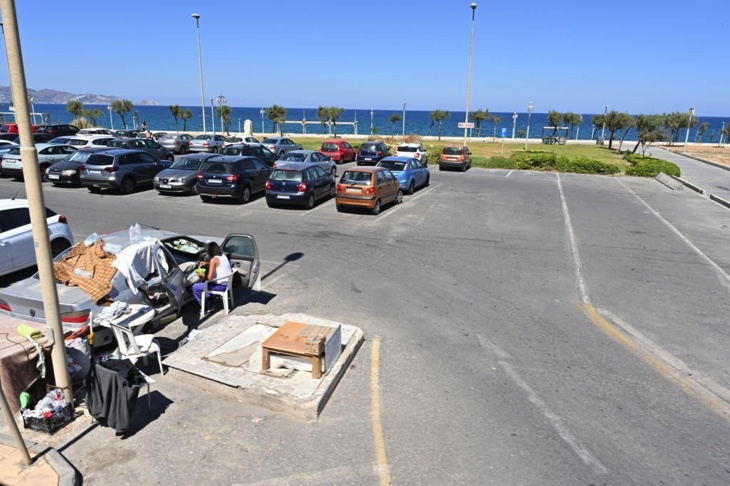
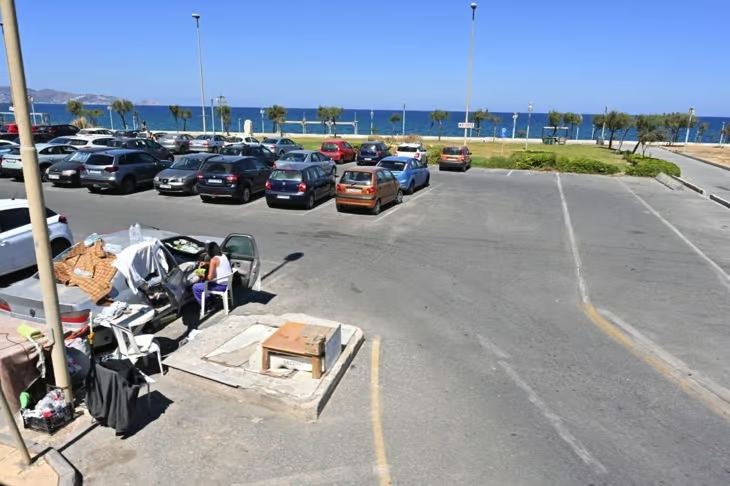
Rental automobiles appear to be more expensive at first, but they are cost-effective for families. The expense of public transport quickly adds up while purchasing tickets for family members, particularly for longer travels or while visiting multiple sites. Rental automobiles have a fixed charge, which lets families budget more effectively and potentially save money, especially if the expense is shared among numerous family members.
Children travel safely and comfortably in rental automobiles. Child seats and safety features are easily incorporated to protect the safety of children, which is difficult or unavailable on public buses. It improved safety and comfort, making family outings less stressful and more enjoyable.
Does Rental Cars have Insurance?
Yes, rental cars come with insurance coverage. The standard level of insurance coverage that comes with renting an automobile is provided by the rental company and is part of the rental price. The insurance includes liability coverage in the event of damage to someone else’s property or harm to someone while driving the rental automobile.
The level of insurance coverage varies based on the rental agency and the specific rental agreement. Many rental companies provide extra insurance choices that are bought to boost coverage or lower the deductible in the event of an accident.
Review the terms and conditions of the rental agreement and inquire about the insurance coverage provided. Checking with the insurance company to determine the scope of coverage is a good idea if one has personal auto insurance because it covers rental automobiles. Having insurance coverage is needed for peace of mind while driving a rental automobile, particularly in the event of an unforeseen accident or damage.
Are the Bus Fare in Crete Cheaper than Renting a Car?
Yes, bus fare in Crete is cheaper than renting a car. Public buses in Crete offer an economical means of transportation for travellers, particularly if their primary focus is on exploring the island’s main towns and cities. The affordability of bus fares makes them an attractive choice for those seeking to navigate urban areas and popular tourist destinations without incurring the additional costs associated with renting a car, such as fuel expenses, insurance fees and parking charges.
The economics of using the bus in Crete are especially enticing for travellers exploring urban areas and well-known tourist spots. Public buses offer a practical method to get around, whether wandering through the lovely streets of Chania, touring the ancient sights in Heraklion or unwinding on the beaches of Agios Nikolaos.
Bus services in Crete have limits. The limitations include fixed schedules and routes that do not necessarily correspond with travellers’ plans or allow access to more isolated or less popular sections of the island. The lack of flexibility is a trade-off for the financial savings associated with bus travel.
The choice between taking the bus or hiring a car in Crete is determined by individual travel needs, preferences and the specific areas travellers intend to visit. Bus travel is a cheap and easy choice for people who are primarily interested in urban adventures or well-trodden tourist destinations.
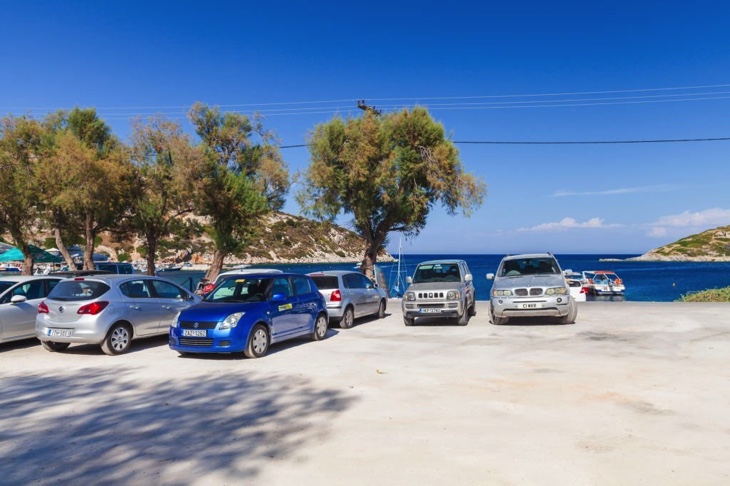
Choosing automobile rental in Crete offers a unique set of benefits. Having a car at their disposal is a must for individuals looking for maximum flexibility and independence when touring the island. It allows individuals to visit rural or less-frequently visited regions, take unexpected detours and tailor their itinerary to their tastes.
A rental automobile is a reasonable solution for families or parties because it provides additional space, convenience and simplicity for hauling luggage or outdoor equipment. Having a car enhances the overall experience for those planning to explore Crete’s stunning countryside, find secret beaches or embark on spectacular drives through the highlands.
The decision between taking the bus or renting a car in Crete is determined by the traveller’s priorities and the nature of their exploration. The choice must be based on elements such as the budget, the itinerary and the desire for flexibility because both methods have advantages.
FAQ: Transportation in Crete
What is the cheapest way to get around Crete?
KTEL intercity buses are the cheapest way to get around Crete. A single ticket on the north-coast corridor (Chania → Rethymno → Heraklion → Agios Nikolaos) costs €1.6 ($1.83, £1.36)–€14 ($16.01, £11.91) depending on distance, and buses run every 30–60 minutes in summer. Within towns, city buses cost €1.1 ($1.26, £0.94)–€2.5 ($2.86, £2.13); walking is free and works well in Old Towns.
Is there Uber in Crete?
No. Uber does not operate in Crete. Bolt is available in Heraklion and runs a limited summer service in Chania. Outside these two cities, use a traditional taxi or a pre-booked transfer.
How much is a taxi from Heraklion Airport to Hersonissos?
A taxi from Heraklion Airport (HER) to Hersonissos costs approximately €40 ($45.75, £34.03). The journey is about 25 kilometers (15.53 miles) and takes 25–35 minutes depending on traffic. Always confirm the fare before getting in.
Can you get around Crete without renting a car?
Yes. The north-coast corridor (Chania → Rethymno → Heraklion → Agios Nikolaos) is fully covered by KTEL buses every 30–60 minutes. South-coast villages (Sfakia, Loutro, Agia Roumeli, Sougia, Paleochora) are connected daily in summer by Anendyk ferries. Day tours handle gorges and remote beaches. Only remote mountain villages and a handful of isolated beaches genuinely require a car.
What is the best way to get from Heraklion to Chania?
The KTEL bus is the easiest and cheapest. Buses depart Heraklion Bus Station A every 30–60 minutes, take 2h 45m and cost ~€14 ($16.01, £11.91). A taxi covers the same route in 2h on the motorway for ~€150 ($171.56, £127.61). Driving yourself takes 2h on the E75 / VOAK motorway. There is no commercial passenger train in Crete.
Are there ferries between Crete towns?
No regular ferry service runs along the north coast (Chania → Rethymno → Heraklion) – use KTEL buses. The Anendyk south-coast ferry connects Hora Sfakion, Loutro, Agia Roumeli, Sougia and Paleochora daily in summer because these villages have no usable road link.