




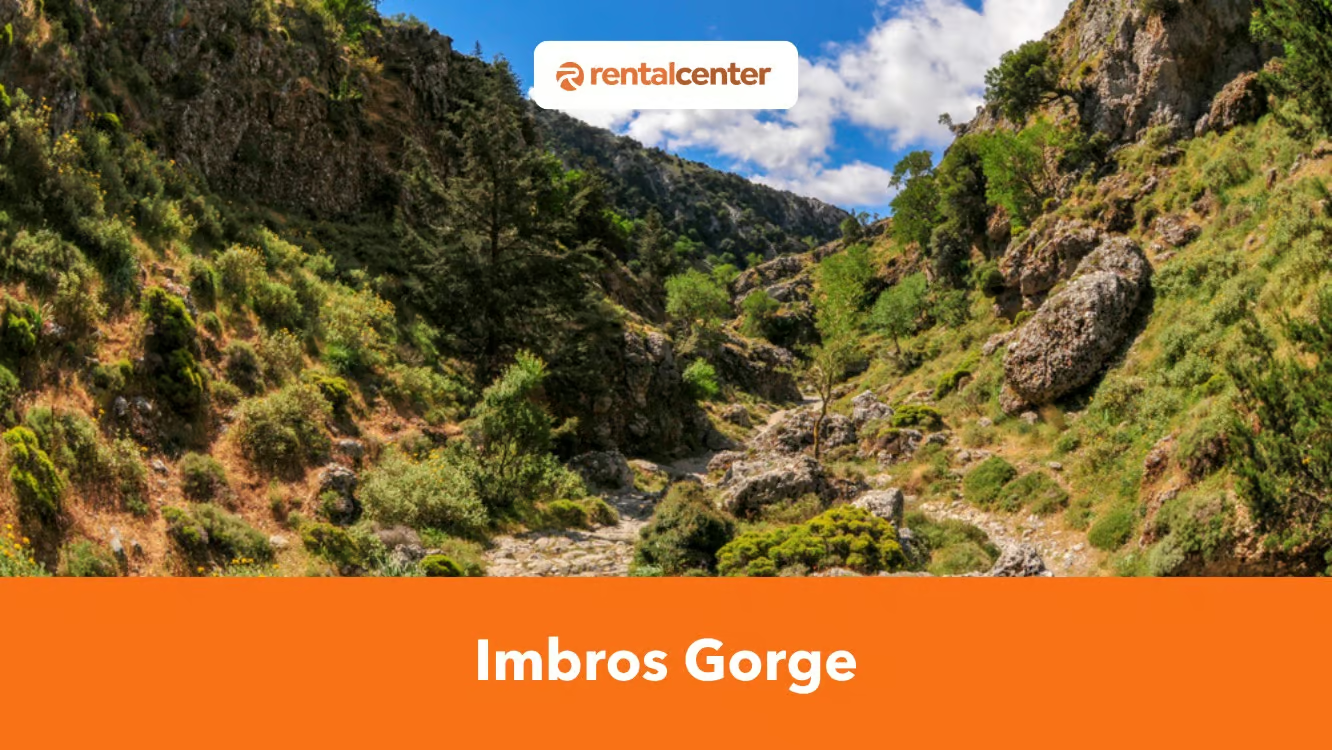
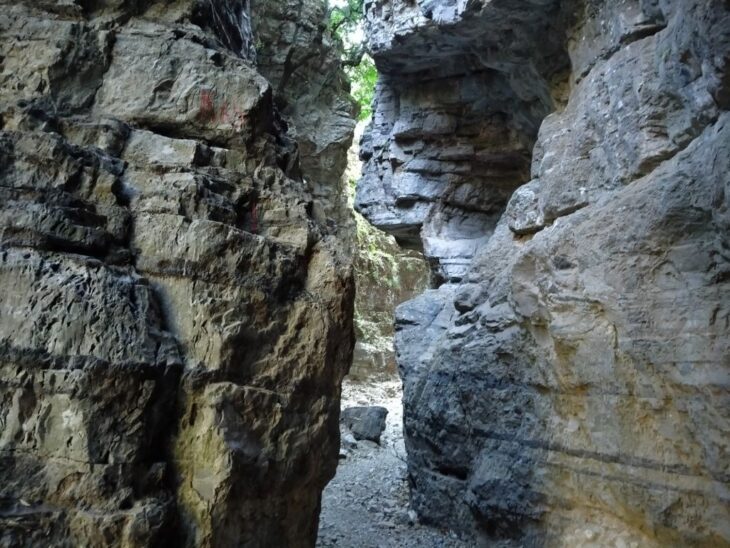
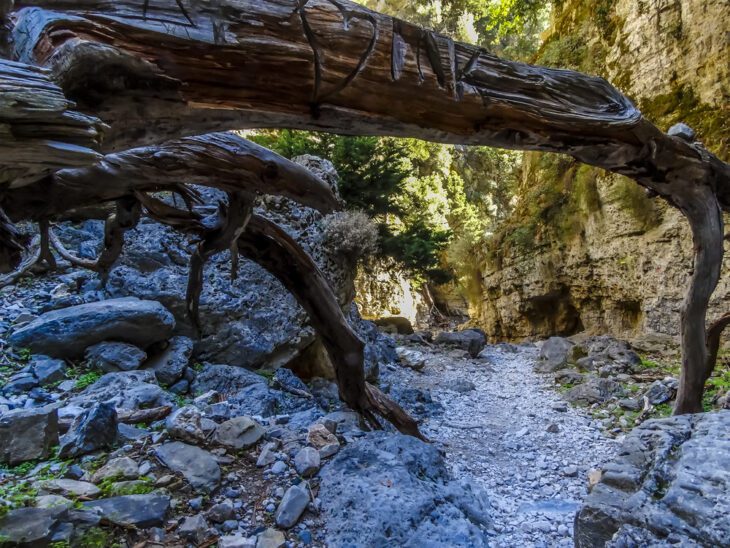
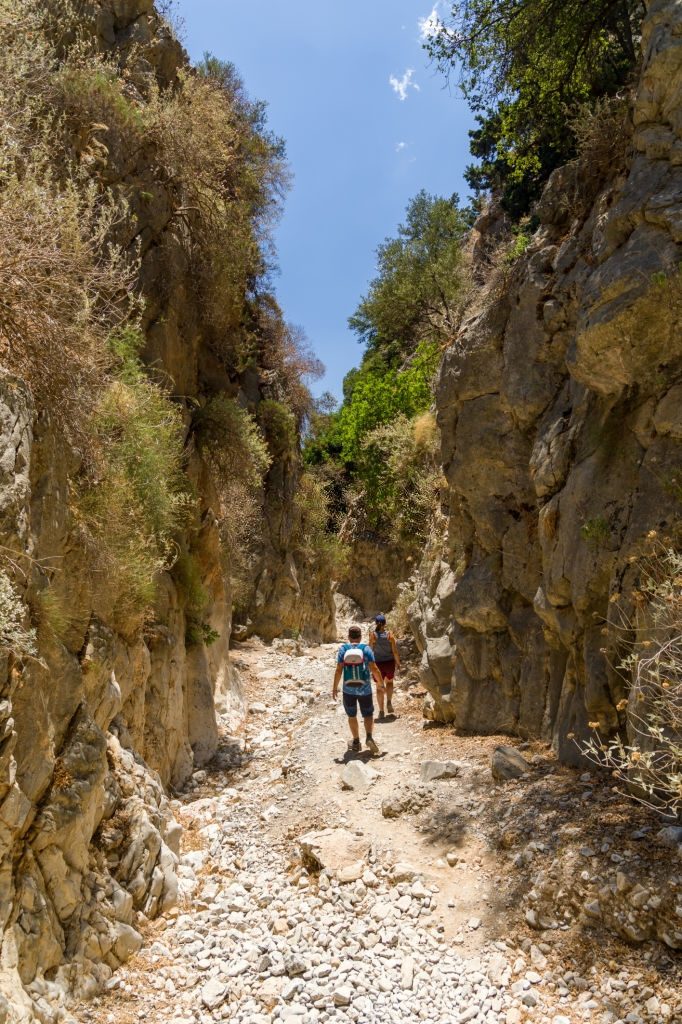
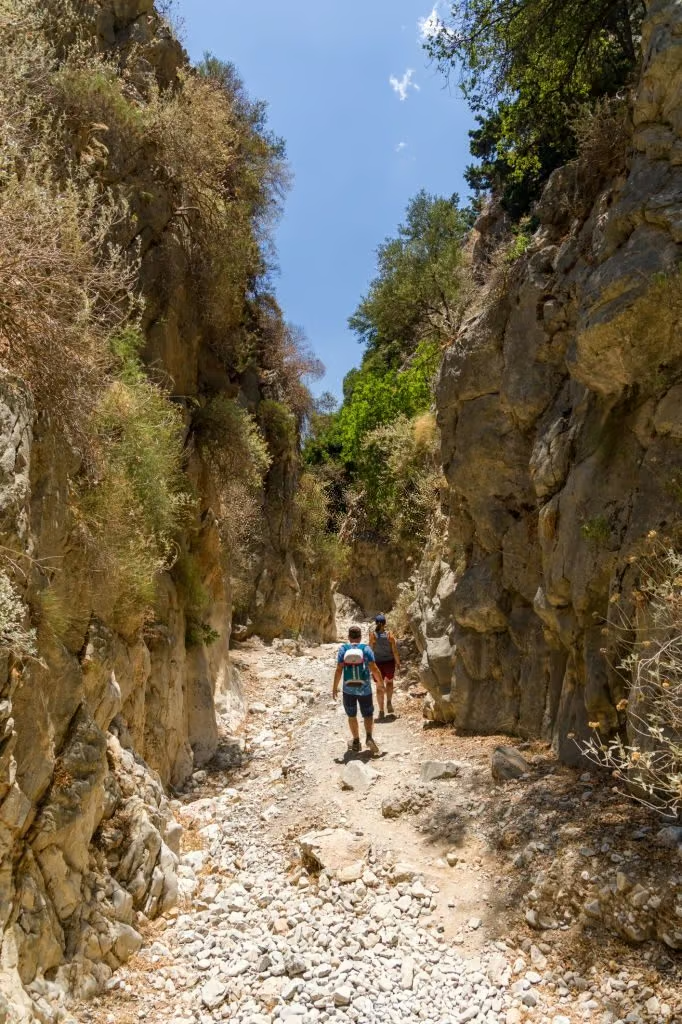
Imbros Gorge is an 8-kilometre (4.97 miles) hiking route in southern Crete. Imbros Gorge is part of the E4 European hiking path. The narrowest point of the gorge measures 1.60 meters (5.25 feet), framed by cliffs rising 300 meters (984 feet). Imbros Gorge runs parallel to Samaria Gorge and lies 57 kilometres (35.42 miles) southeast of Chania.
Imbros Gorge holds historical significance as a World War II evacuation route used by British soldiers. A stone mule path remains visible as the former sole route between Chania and Hora Sfakion. The Imbros Gorge area saw conflict during the 19th-century Turkish occupation. A local legend links the name to exiles from Imbros in Turkey. Asphendou Cave nearby contains some of Greece’s oldest petroglyphs.
Imbros Gorge formed over millions of years through erosion and tectonic activity. Rivers and earthquakes shaped its features. The E4 path preserves the gorge through controlled access and environmental protections, supporting eco-tourism.

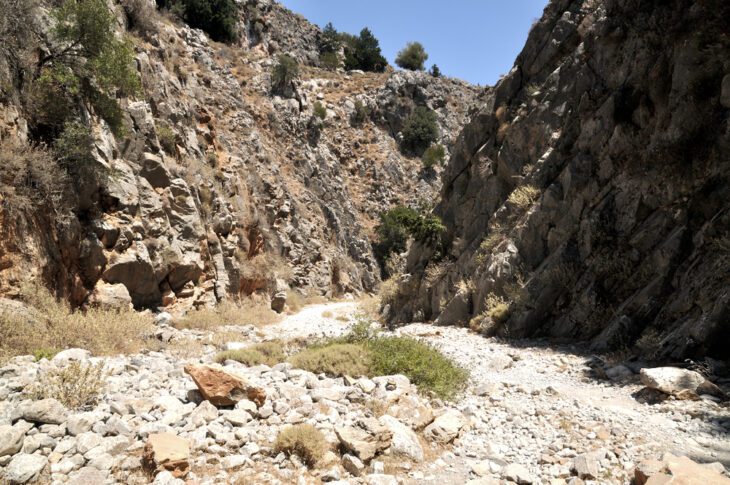
Imbros Gorge is one of Crete’s accessible hikes. The trail descends 600–650 meters (1,969–2,133 feet) across dry creek beds and uneven rocks. Most visitors finish in 2–2.5 hours. The moderate difficulty suits families and healthy seniors. The route lacks steep climbs but requires ankle-supporting footwear. Children over age five complete the hike comfortably.
Three hiking routes cross Imbros Gorge. The most common is the 8-kilometre trail from Arai to Komitades, passing landmarks like the Chapel of Saint Nicholas. A 15-kilometre (9.32 miles) route leads to Milia village. A 20-kilometre (12.43 miles) circuit from Komitades to Sfakia requires fitness and offers elevated landscapes.
Weather affects safety in Imbros Gorge. The gorge closes from November to April due to flash flood risk. Summer temperatures often exceed 35–40 ℃ (95–104 ℉), increasing dehydration danger. Hikers need hydration, proper footwear, and sun protection. Spring and autumn are the best seasons for hiking Imbros Gorge, with temperatures between 16–24 ℃ (60.8–75.2 ℉) and dry paths.
Nearby attractions to Imbros Gorge include Komitades Village, Frangokastello Beach, Chora Sfakion, Askyfou Plateau, Kournas Lake, Georgioupoli, and Filaki Beach. Dining options near the gorge include Drosia Cafe Taverna, Cafe Restaurant Ostria, and Kitchen Stories by the Sea.
Access to Imbros Gorge is possible by taxi, bus, guided tour, or rental car. Rentals from Chania or Heraklion airports offer the most flexible travel. Vehicles must suit rural terrain. Parking is available at both trail ends. Daily rental costs range from 20 € ($22, £17) to 70 € ($76, £60). Weeklong costs range from 150 € ($163, £129) to 350 € ($381, £301).
Overnight stays are available at Epavlis Iosif, Vritomartis Naturist Resort, and Sofia’s Lovely Room in nearby villages. Visitor reviews describe Imbros Gorge as scenic, peaceful, and rewarding.
What is Imbros Gorge?
Imbros Gorge is an 8-kilometre (4.97 miles) hiking route in southern Crete. The gorge follows a steep, narrow canyon south of the village of Imbros. The trail, part of the E4 European hiking path, descends from 780 meters (2,559 feet) above sea level and exits at Komitades village. The narrowest point of Imbros Gorge measures 1.60 meters (5.25 feet), with cliffs reaching 300 meters (984 feet) high.
Imbros Gorge attracts fewer visitors than Samaria Gorge but offers a less crowded trekking experience with equally dramatic terrain. It is located 57 kilometres (35.42 miles) southeast of Chania and runs parallel to Samaria Gorge and features a consistent elevation descent along its path.
Imbros Gorge is historically important as a key evacuation route during World War II when British soldiers retreated through it after the Battle of Crete. The gorge’s mule trail was the only link between Chania and Hora Sfakion, before modern roads. Remains of the original stone path are still visible today. Imbros Gorge does not have any major archaeological sites, but its proximity to locations like Asphendou Cave enhances its historical value. Asphendou Cave, near the village of Asphendou, features Paleolithic petroglyphs, possibly depicting extinct Cretan deer. These engravings represent some of the oldest known artworks in Greece.
Imbros Gorge served as a battleground during the 19th-century Turkish occupation, witnessing conflicts in 1821 and 1867 between Christians and Ottoman Turks. Local legend attributes the Imbros Gorge to two exiled brothers from Imbros in Turkey who settled in the Cretan village of the same name.
Imbros Gorge was formed through millions of years of erosion as rivers and streams cut through layers of limestone and clay. Tectonic shifts fractured the land, creating deep ravines later widened by flowing water. Earthquakes and geological shifts further shaped the gorge’s steep cliffs and narrow passageways. Imbros Gorge is preserved through its inclusion in the E4 European hiking path and its regulated trekking access. The E4 trail’s natural and historical features are protected by limiting development, maintaining the original mule path, and promoting eco-friendly tourism that minimizes environmental impact.
Imbros Gorge enhances Crete’s tourism by attracting visitors and hikers. Tour operators include Imbros Gorge in itineraries with Komitades and Chora Sfakion, enriching tourist experiences and supporting local economies. Imbros Gorge draws diverse visitors for hiking, nature exploration, promoting nearby villages through spending on food, products, and transport. Visiting Imbros Gorge supports the local economy and strengthens Crete’s reputation as a multifaceted tourist destination. Imbros Gorge increases Crete’s appeal with accessible hiking routes and scenic value.
The best time to visit Imbros Gorge in Crete is during spring (April–May) and autumn (September–October) when temperatures stay between 16°C (60.8°F) and 24°C (75.2°F), offering safer hiking conditions and scenic beauty. These seasons avoid the summer heat and winter hazards while providing a more comfortable and crowd-free experience.
Spring provides blooming wildflowers, dry weather, and cooler temperatures, making hiking both safe and visually rewarding. Autumn offers fewer tourists, pleasant weather, and dry trails. Summer heat can reach 35–40°C (95–104°F), requiring early hikes and hydration. Winter often brings flash floods and trail closures due to rain and snow.
What is the difficult level of hiking in Imbros Gorge?
Imbros Gorge hiking difficulty is moderate and suitable for visitors with average fitness. The Imbros village to Komitades trail is 8 kilometres (4.97 miles) and typically takes 2 to 2.5 hours to hike. The trail descends 600–650 meters (1,969–2,133 feet) across rocky terrain and a dry creek bed, requiring proper footwear and attention to footing. Most hikers complete it comfortably, including families and seniors in good health.
Imbros Gorge is easier than Samaria Gorge but still demands balance and caution. Uneven ground, loose stones, and narrow passages challenge stability, especially for children under age 5 or those with mobility issues. Hikers should wear ankle-supporting shoes and consider medical advice if concerned about health conditions.
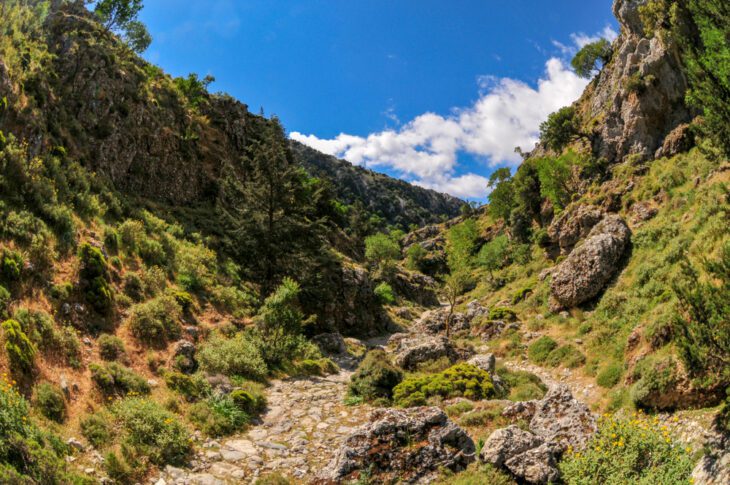
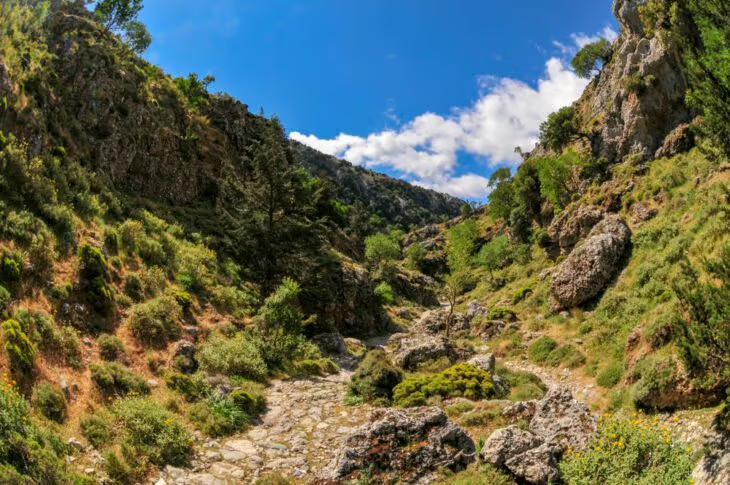
The complete Imbros Gorge trail length is between 7 kilometres (4.35 miles) and 11 kilometres (6.84 miles), depending on whether additional segments or access paths are included in the measurement. Trail variations reflect differences in how the route is measured, with the core hiking section being 8 kilometers (4.97 miles). The descent from 780 meters (2,560 feet) at Imbros to 300 meters (984 feet) at Komitades makes the hike easier in terms of cardio but places strain on knees.
Hikers reach the gorge’s narrowest point—under 2 meters (6.56 feet) wide and 300 meters (984 feet) high—after 75 minutes. The first 30 minutes pass through wildflower meadows. Visitors should plan for half a day, while full-day guided tours can last up to 9 hours.
A guide is not required to hike the Imbros Gorge, as the trail is well-marked and follows a straightforward downhill route from Imbros to Komitades. Guided tours offer local insights and simplify transportation. Licensed guides explain the area’s geology, flora, and fauna, though engagement levels vary. Elderly or inexperienced hikers benefit from a guide’s support.
Healthy, fit elderly people can easily hike Imbros Gorge, one of Crete’s more accessible gorges, due to its lack of steep climbs. Fit seniors complete the hike, but uneven terrain demands careful footing and proper footwear. Elderly individuals with mobility or health issues should avoid Imbros Gorge. Safety requires medical consultation, good ankle support, and a cautious pace. Fitness and sure-footedness are more critical than age.
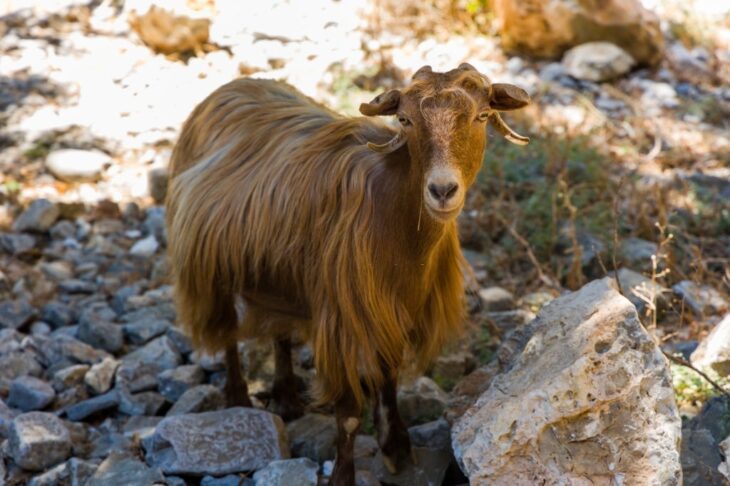
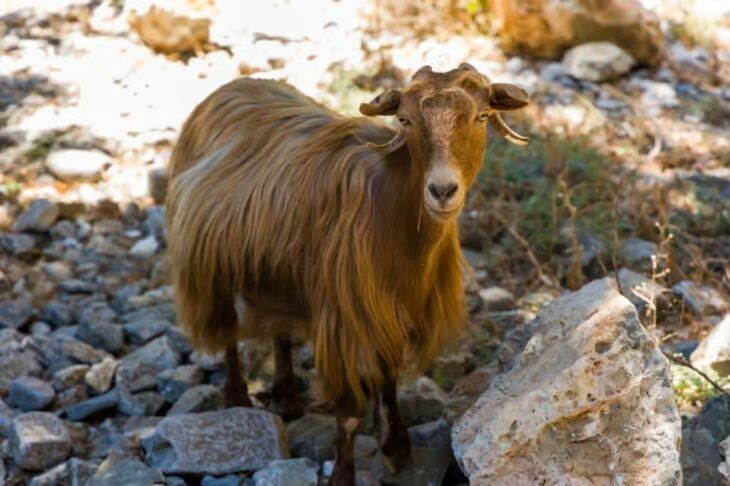
Families with children can hike Imbros Gorge as it is a moderate difficulty trail. Hiking the Imbros Gorge in Crete is generally considered child-friendly, especially for families with children aged 5 and above. Families with kids appreciate the gorge’s accessibility, with no steep climbs and a well-marked path, though rocky terrain may challenge very young children.
Hiking Imbros Gorge presents weather, terrain, and exertion risks. Flash floods close the gorge from November to April; summer heat raises the dehydration risk. Uneven rocky ground, falling rocks, and steep descents increase injury chances, necessitating proper footwear and hydration.
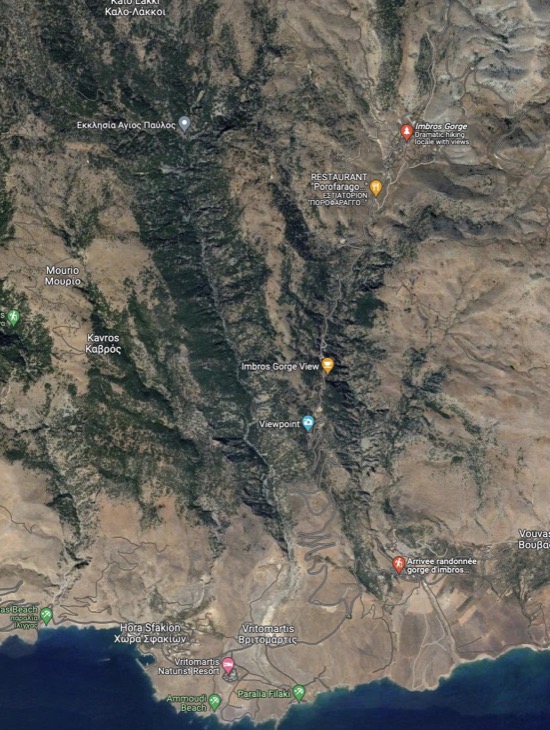
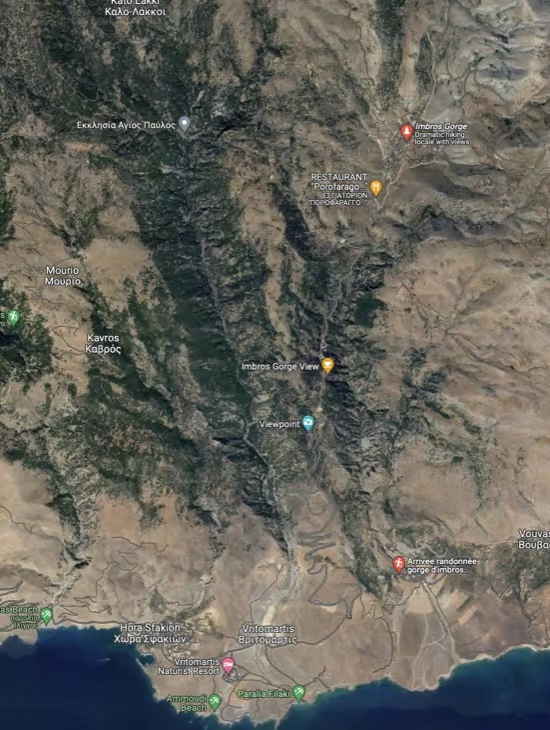
How does the Imbros Gorge map look?
Below is an image of the map of Imbros Gorge.
What are the hiking routes for Imbros Gorge?
Find below a list with the hiking routes for Imbros Gorge.
- Imbros Gorge: Arai to Komitades route. Imbros Gorge, on this trail starting at the village of Arai, leads hikers on an 8-kilometre (4.97 miles) hiking route to Komitades. This is the most popular and beginner-friendly path, offering accessible terrain, narrow cliff passages, and scenic landmarks like the Chapel of Saint Nicholas. The route showcases Imbros Gorge’s towering rock formations and serpentine pathways ideal for novice trekkers. At the end of the hike in Komitades village, you can arrange for a taxi back to your starting point in Imbros
- Imbros Gorge: Arai to Milia route. Imbros Gorge, via this 15-kilometre (9.32 miles) hiking route to the abandoned village of Milia, presents a challenging trek requiring higher fitness levels. The path features steep inclines, boulder scrambling sections, and elevated panoramic lookouts. Imbros Gorge here offers a remote wilderness experience and historical solitude amidst dramatic natural terrain.
- Imbros Gorge: Komitades to Sfakia route. Imbros Gorge, along this 20-kilometre (12.43 miles) circuit from Komitades to coastal Sfakia, traverses mountain passes, gorge descents, and alpine ridges. This hiking route requires good physical conditioning due to its elevation shifts but rewards trekkers with world-class scenery and deep geological immersion through the gorge’s ancient, wind-sculpted landscapes.
What are the things to bring when visiting Imbros Gorge?
Here is the list of items to bring with you when visiting Imbros Gorge:
- Sturdy Hiking Shoes: The terrain is rocky and uneven, so proper hiking boots or shoes with good grip and ankle support are crucial to prevent slips and injuries.
- Lightweight, Breathable Clothing: Opt for moisture-wicking fabrics to stay cool and comfortable during the hike.
- Hat, Sunglasses and Sunscreen: Protect yourself from the sun, especially in stretches without shade. Summer heat at Imbros gorge can reach 35–40°C (95–104°F)
- Water: Carry at least 1.5–2 liters (50.7–67.6 fl oz) of water per person as there are no water sources until halfway through the trail.
- Snacks: Energy-rich snacks like nuts, granola bars, or fruit will keep you fueled throughout the hike.
- First Aid Kit: Include basic supplies such as band-aids, antiseptic wipes, and pain relievers in case of minor injuries.
- Trekking Poles (Optional): These can provide extra stability on uneven terrain.
- Whistle and Flashlight: Useful in case of emergencies or low-light conditions.
- Cash: Bring small bills for a €2.50 ($2.70, £2.09) entrance fee and any refreshments at the end of the hike.
- Swimwear (Optional): If you plan to visit nearby beaches like Frangokastello after the hike, swimwear will come in handy.
- Map or Guidebook: While the trail is straightforward, having a map can be helpful for orientation.
- Camera or Smartphone: Capture the stunning rock formations and narrow passages along the way.
What are the nearby attractions near Imbros Gorge?
Find below a list of attractions near Imbros Gorge.
- Komitades Village: Komitades Village sits at the southern exit of Imbros gorge. This small village offers traditional Cretan tavernas where hikers can enjoy authentic local dishes, such as lamb with herbs or fresh seafood.
- Frangokastello Beach and Castle: Frangokastello lies 15 kilometers (9 miles) from the gorge exit and offers a sandy beach beside a 14th-century Venetian castle, where visitors swim, sunbathe, and explore ruins tied to local legends.
- Chora Sfakion: Chora Sfakion lies 5 kilometers (3 miles) from Komitades. It is a picturesque coastal village known for its charming harbor and laid-back vibe. Chora Sfakion serves as a gateway to other parts of southern Crete and offers ferry connections to nearby islands like Gavdos.
- Askyfou Plateau: Askyfou Plateau lies on the route to Imbros Gorge if traveling from Chania. This fertile plateau is surrounded by mountains and dotted with small villages. It is known for its natural beauty and historical significance during World War II.
- Kournas Lake: Kournas Lake is located 40 kilometers (25 miles) from Imbros Gorge. It is the only freshwater lake in Crete. Kournas Lake is surrounded by lush hills and offers a tranquil setting for outdoor activities like pedal boating and swimming.
- Georgioupoli: Georgioupoli is located 28 kilometers (17.4 miles) north of Imbros Gorge. The village has long sandy beaches with shallow waters, perfect for families and relaxation. The highlight of Georgioupoli is the picturesque Agios Nikolaos chapel located on a rocky islet accessible via a narrow causeway.
- Filaki Beach: Filaki Beach is the only official nudist beach in Crete, managed by the nearby Vritomartis Naturist Resort. It is well-maintained, with clean facilities and a calm atmosphere. The beach features grey pebbles and deep blue waters, creating a striking contrast with the surrounding rugged cliffs. After hiking through the Imbros gorge, Filaki Beach provides a serene spot to relax and cool off.
What are the transportation options to get to Imbros Gorge?
Here is the list of transportation options to get to Imbros Gorge:
1. By Taxi
- From Chania town: From Chania, taxis are readily available and can take you directly to Imbros Gorge. The cost for this service is between €55–€70 for a one-way trip.
- From Chora Sfakion: If you are staying in Chora Sfakion, taxis are a quick option to reach the Imbros gorge. The taxi ride will cost between €17–€20 ($18.39–$21.64, £14.22–£16.73).
- From Heraklion: Getting from Heraklion to Imbros Gorge by taxi takes 2 hours and costs €120–€160 ($130–$173, £100–£134).
- From Rethymno: From Rethymno, it will take 1 1-hour drive by taxi to reach Imbros gorge and it will cost €70–€90 ($76–$98, £59–£75).
2. By Bus
- Bus from Chania: Travel from Chania to Imbros Gorge by taking a bus to either Vrisses, Esperos or Chora Sfakion, then continuing by taxi to the gorge. The total travel time is 1 hour and 10 minutes, with costs ranging from €29–€40 ($31–$43, £24–£33). Buses run hourly, and taxis are readily available at all intermediate stops.
- Bus from Rethymno: Travel from Rethymno to Imbros Gorge by taking a bus to Vrisses or Chora Sfakion, followed by a taxi to the gorge. The total journey lasts 1 hour and 40 minutes (bus plus taxi), with costs between €30–€50 ($32–$54, £25–£42). Bus service runs multiple times a day.
- Bus from Heraklion: Travel from Heraklion to Imbros Gorge by taking a bus to Rethymno and then to Vrisses or Chora Sfakion, then continuing by taxi. The full trip takes 2 hours and 30 minutes, with total costs between €33 and €50 ($36–$54, £28–£42).
3. By Organized Tours
Many travel agencies offer guided tours from major cities like Chania or Rethymno to Imbros Gorge. These tours typically include round-trip transportation by bus, entrance fees, and a guide. Prices start from €30 ($32.5, £25.1) per person. Tours often include stops at Komitades village or Chora Sfakion after the hike for lunch or relaxation before returning.
4. By Car Rental
- From Chania Airport: The distance from Chania Airport to the Imbros gorge is 62 kilometres (38.5 miles). It takes 1 hour and 14 minutes via the National Road and local roads, depending on traffic conditions. Car rental prices vary based on the type of vehicle, rental duration, and season. Prices increase during peak tourist months like July and August, the economy cars costing up to €45 ($48.69, £37.64) per day. Booking in advance can help secure lower rates. Renting a car at Chania Airport is a convenient option for reaching Imbros Gorge and exploring Crete.
- From Heraklion Airport: Heraklion Airport is located 130 kilometres (80.78 miles) from Imbros Gorge. The drive takes 1 hour and 38 minutes, assuming an average speed of 80 km/h (49.7 mph) on Crete’s roads. To get from Heraklion Airport to Imbros gorge by car drive on the National Road E75 heading west toward Rethymno and Chania until you reach the exit for Imbros Village. Follow local roads to the gorge entrance in Imbros Village.
Can you rent a car to go to Imbros Gorge?
Yes, you can rent a car to go to Imbros Gorge. Renting a car is one of the most convenient ways to visit Imbros Gorge in Crete. If you want to travel at your own pace, avoiding the constraints of public transportation schedules or group tours renting a car is a great option.
Parking near Imbros Gorge is available at both Imbros Village (northern entrance) and Komitades Village (southern exit), with free roadside spots and taverna lots. Most taverna parking is free with a food or drink purchase. Spaces are generally safe and sufficient, but early arrival is advised during summer months.
An SUV is the best car to rent when visiting Imbros Gorge due to its higher ground clearance, spacious interior, and ability to handle rural terrain. Compact cars work well for solo travelers or couples focused on budget and ease of parking. Minivans are ideal for large groups needing extra space. Renting a car in Crete requires attention to insurance options, driver age, car type, and required documents. Most agencies need a valid licence, credit card, and may ask for an International Driving Permit. Vehicle choice should match terrain needs, and comprehensive insurance offers full coverage against damage. The driver’s age should be a minimum of 21 or 23, depending on the rental agency, and there may also be an upper age limit. Some agencies charge an additional fee for drivers under a certain age.

How much does a car rental in Crete cost?
Car rental prices in Crete fluctuate based on multiple factors. A one-week rental typically costs between 150 € ($163, £129) and 350 € ($381, £301), depending on vehicle type and provider. Day rentals range from 20 € ($22, £17) to 70 € ($76, £60), with luxury models priced higher. Some companies may offer night trip discounts, though this is uncommon.
Rental location like airport, city centre or tourist zone affects pricing. Itinerary specifics and mileage limits further influence the total cost. Group size does not alter base rates but may require a larger vehicle, raising the price. Economy models remain the cheapest; SUVs, luxury and specialty cars carry higher charges. Comparing offers across Crete agencies and checking insurance and terms ensures clarity on the final cost.
What do visitors say about Imbros Gorge?
Visitors describe Imbros Gorge as a scenic and moderately easy hike, praised for its natural beauty, historical value, and peaceful atmosphere. The trail’s manageable 8-kilometer descent, lighter crowds, and dramatic cliffs attract families and casual hikers. Many hikers find the experience rewarding, with highlights like the narrow Iron Gates and WWII landmarks.
Imbros Gorge reviews emphasize the need for sturdy footwear due to rocky ground and suggest bringing water, as facilities are limited. Most people consider it easier than Samaria Gorge, hikers with knee issues or limited mobility may face challenges. Visitors strongly recommend the hike as a worthwhile adventure and consider it as one of the top crete gorges to visit.
What are the nearest places to overnight near Imbros Gorge?
Listed below are the nearest places to overnight near Imbros Gorge:
- Epavlis Iosif: Epavlis Iosif villa stands next to the northern entrance of Imbros Gorge. The villa in Imvros includes two bedrooms and a living room. Facilities include a garden, barbecue area, kitchenette, washing machine, and private bathroom. Mountain views, a patio, and a dining space complete the setup. Free private parking is available on site. Overnight at Epavlis Iosif villa suits hikers planning to explore Imbros Gorge.
- Vritomartis Naturist Resort: Vritomartis Naturist Resort provides a convenient and comfortable overnight stay near Imbros Gorge, located 4 kilometres (2.5 miles) away. The resort offers 85 rooms across its main building and bungalows, a 25-meter pool, a private naturist beach, dining options, and wellness facilities. Guided tours to Imbros Gorge are also available.
- Sofia’s Lovely Room: Sofia’s Lovely Rooms offers low-cost apartments in Chora Sfakion. The hotel lies 4.7 kilometers (2.9 miles) from the south entrance of Imbros Gorge. Each apartment includes a kitchenette and a private balcony facing the village and the sea.
What are the places to eat and drink near Imbros Gorge?
Listed below are where to eat and drink near Imbros Gorge:
- Cafe Restaurant Ostria: Cafe Restaurant Ostria is located in Komitades village at the southern exit of Imbros Gorge. Restaurant Ostria serves Greek food and local drinks. The Restaurant includes starters like zucchini croquettes and shrimp saganaki and mains such as moussaka, grilled octopus, lamb kleftiko, and stuffed sea bream. Cafe Restaurant Ostria provides warm service and reasonable prices. Restaurant Ostria features a patio dining space with views of the surrounding landscape.
- Drosia Cafe Taverna: Drosia Cafe Taverna located near the entrance of Imbros Gorge offers traditional Cretan meals in a peaceful village setting. Located in Imbros, Drosia Cafe Taverna serves hikers with local dishes like lamb in cheese sauce, stuffed vegetables, and raki. The family-run taverna is known for warm hospitality, outdoor seating, and convenient parking.
- Kitchen Stories by the Sea – Cretan Tavern: Kitchen Stories by the Sea is located in Chora Sfakion village, 5 kilometers (3 miles) away from the south entrance of the Imbros gorge. The Tavern serves Cretan cuisine using local ingredients. Kitchen Stories by the Sea offers grilled snapper, moussaka, Sfakian pies, octopus salad, shrimp risotto, and giant beans in tomato sauce. The restaurant includes local wines, raki, and baklava. Kitchen Stories by the Sea provides outdoor waterfront seating. It maintains affordable prices and friendly service.