


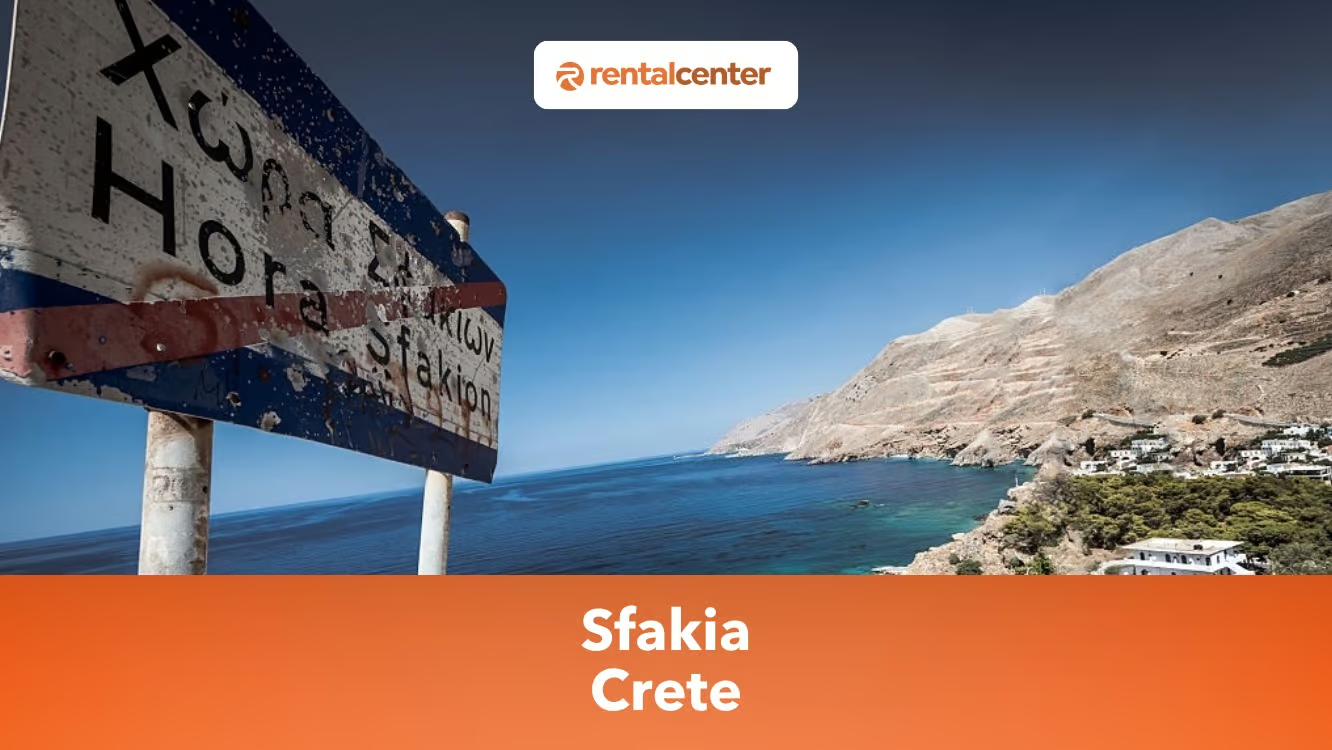
Getting to Sfakia takes some planning. The nearest airport is Chania (CHQ), 75.9 kilometers (47.16 miles) away and 1.5 to 2 hours by road over winding mountain passes, and the only public transport is a single daily KTEL bus that leaves you without a car once you arrive. Renting a car is the practical way to reach Chora Sfakion and then explore inland Sfakia at your own pace, the Imbros Gorge, Frangokastello, and the mountain villages of the Lefka Ori, before the roadless coast takes over and boats do the rest.
Where is Sfakia?
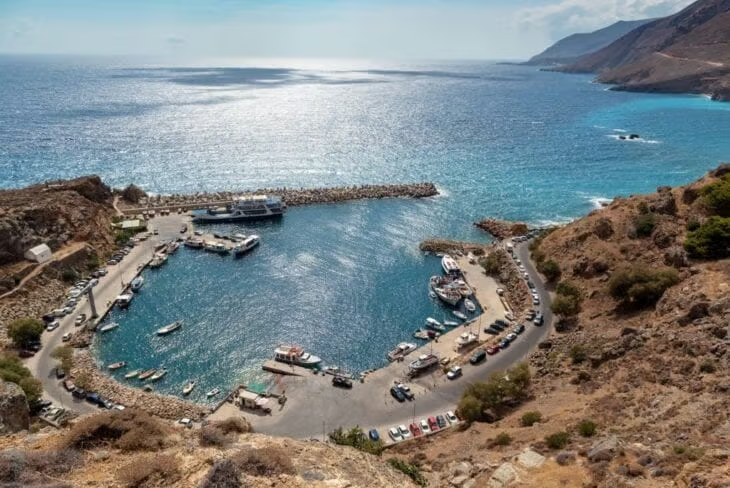
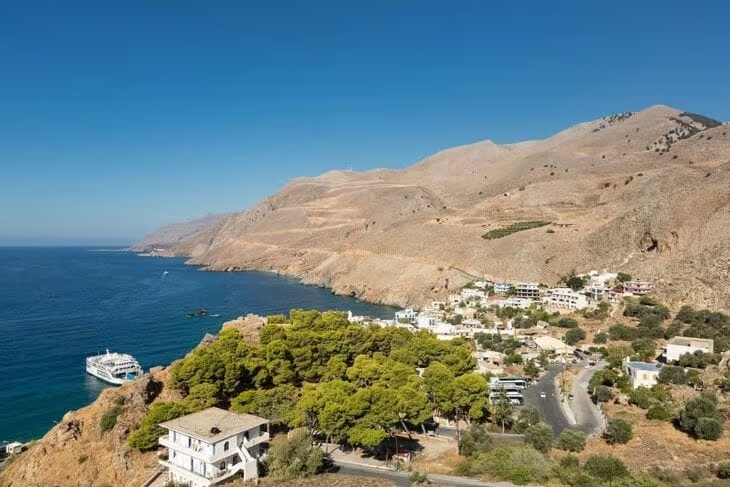
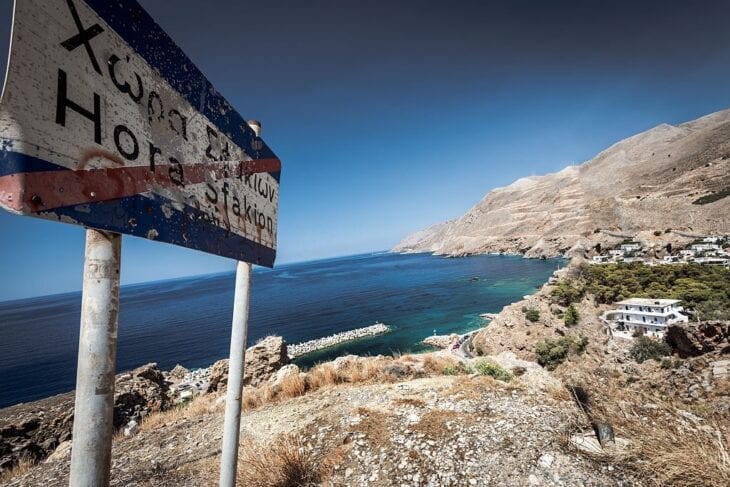
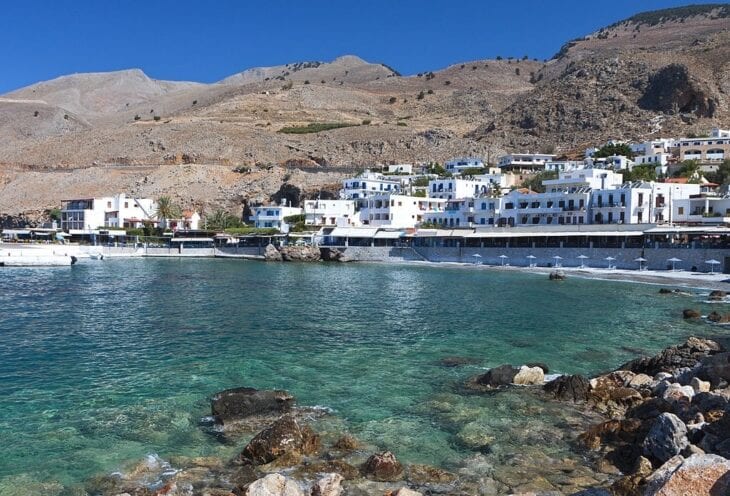
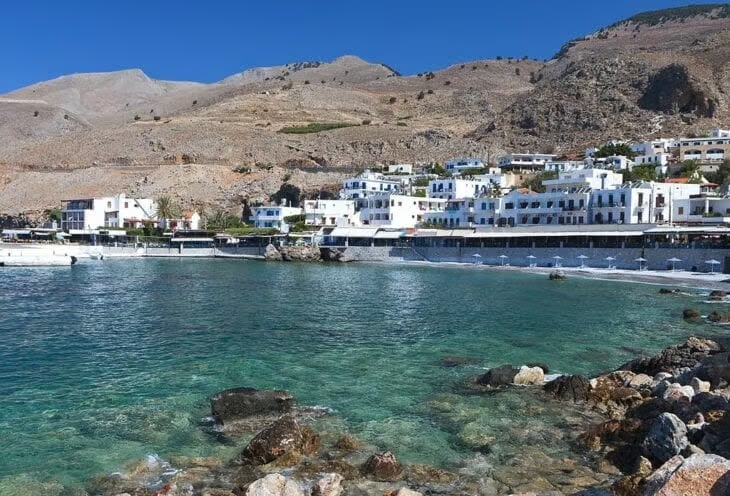
Sfakia occupies the southwestern part of Crete, in the Chania regional unit, along the Libyan Sea coast. The municipality covers the southern flank of the White Mountains and reaches down to a rugged coastline, spanning 467 square kilometers. Its coordinates are 35°12′N 24°8′E. Chora Sfakion sits at the foot of the mountains around a small harbor, where ferries leave for the coastal villages and for the island of Gavdos.
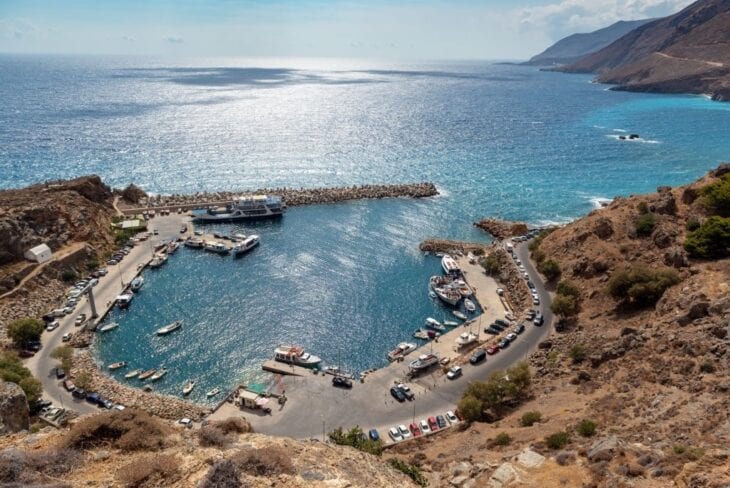
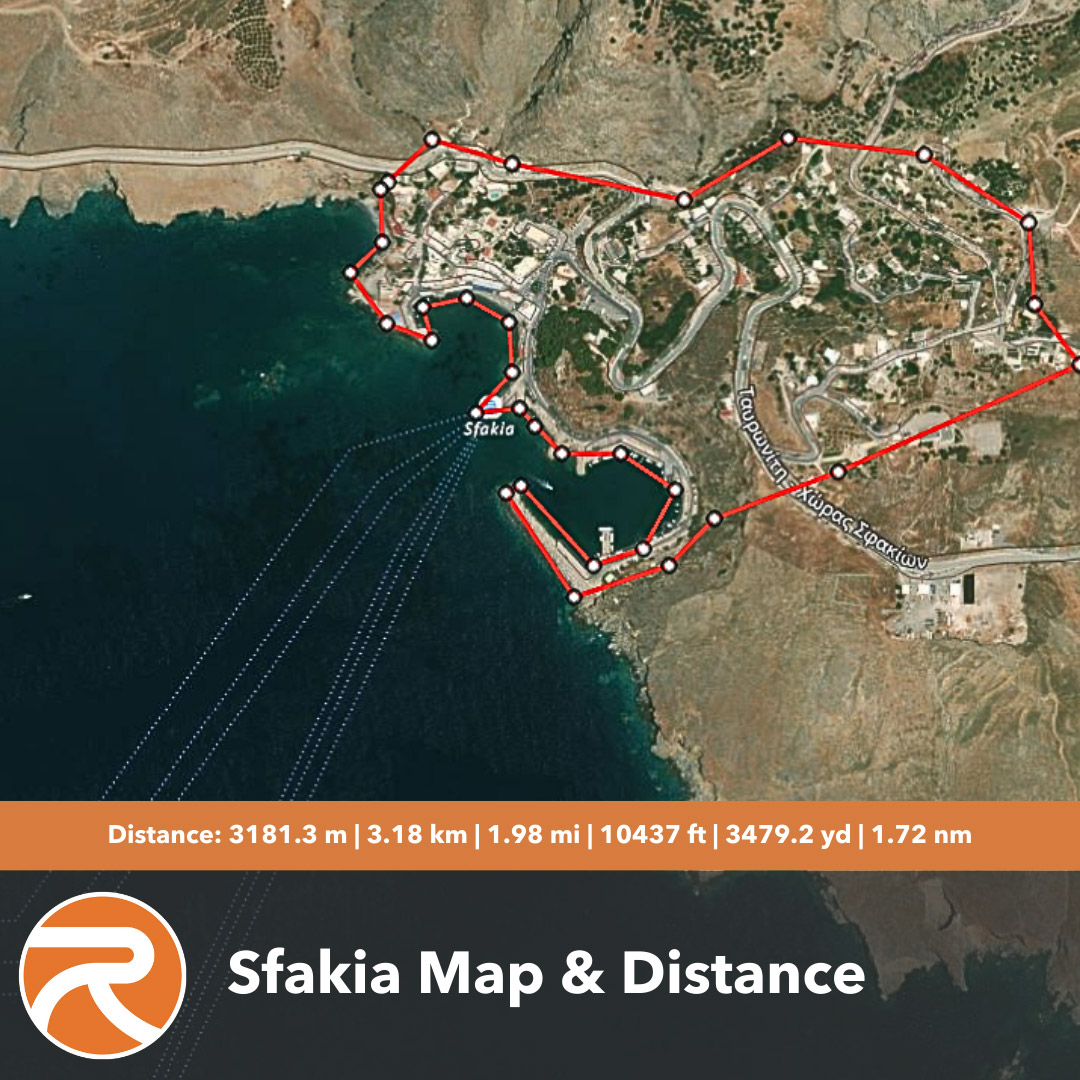
Find below an image describing the map of Sfakia.
How to get to Sfakia?
The easiest way to reach Sfakia is to drive, with a daily bus as a budget alternative and onward ferries from Chora Sfakion for the roadless villages.
By car
A car is the most flexible way to reach and explore Sfakia. The nearest airport is Chania International Airport (CHQ), also called Ioannis Daskalogiannis Airport, near the city of Chania on the north coast. The drive from Chania Airport to Sfakia covers 75.9 kilometers (47.16 miles) and takes 1.5 to 2 hours, depending on traffic and the winding mountain roads.
By bus
KTEL runs a daily bus service from Chania to Chora Sfakion. The bus is the cheapest way to reach the town, though it ties you to a fixed timetable and leaves you without transport once you arrive.
Ferries from Chora Sfakion
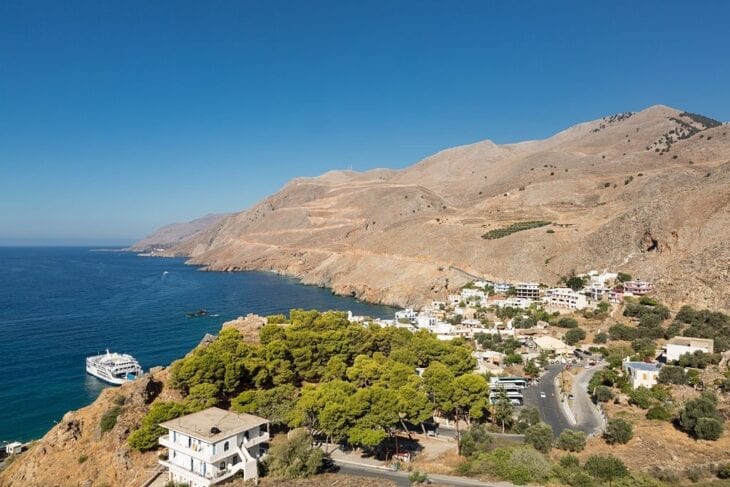
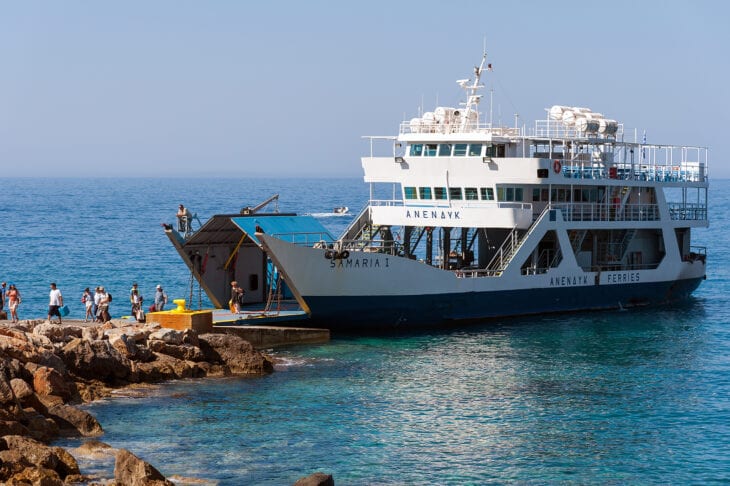
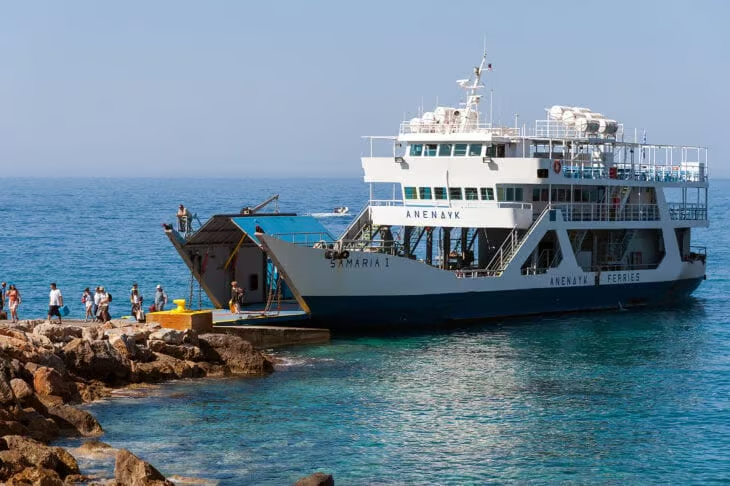
Chora Sfakion is the ferry hub for southwest Crete’s roadless coast. Boats run west to Loutro and Agia Roumeli, the exit point of the Samaria Gorge, and south to Gavdos, the southernmost inhabited point of Europe. For these villages the boat is the road, because no cars can reach them.
What are the best things to do in Sfakia?
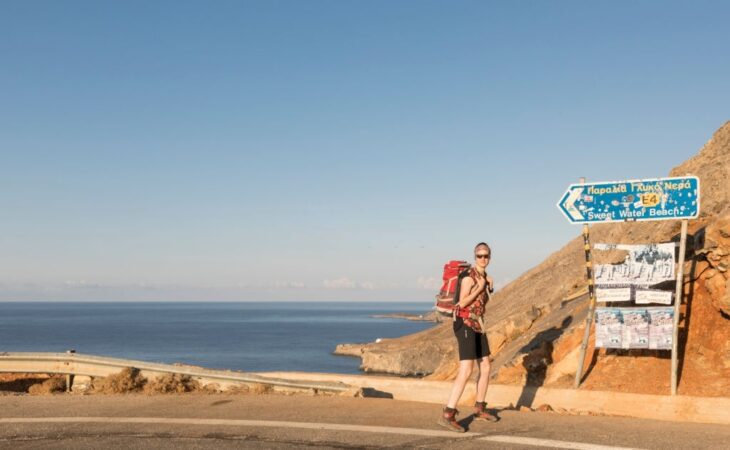
Sfakia is built for the outdoors. The best things to do are hiking the gorges, taking a boat to the car-free village of Loutro, swimming at freshwater Sweet Water Beach, and bungee jumping off the Aradena Bridge.
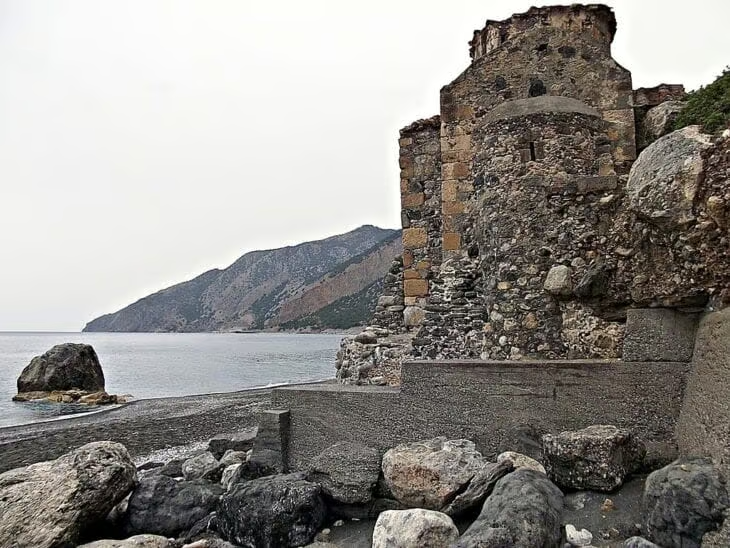
Hike the gorges of Sfakia
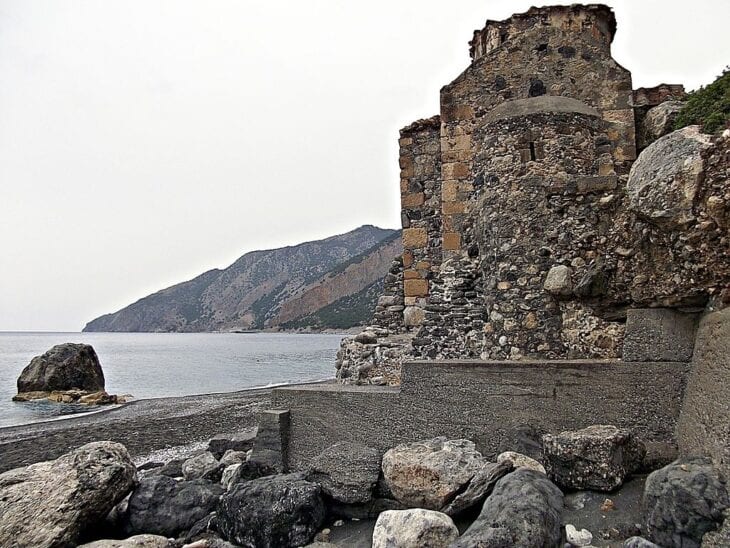
The top hiking routes near Sfakia are the Samaria Gorge, the Aradena Gorge and the Imbros Gorge.
- Samaria Gorge. Samaria Gorge is a 16-kilometer trek through Europe’s longest canyon. Hikers start at the Omalos Plateau and descend more than 1,400 meters to the village of Agia Roumeli on the Libyan Sea, a walk of 5 to 7 hours. A ferry from Agia Roumeli then returns hikers to Chora Sfakion. The E4 long-distance trail also crosses Sfakia; its 6-kilometer coastal section from Chora Sfakion to Loutro takes about 2 hours and hugs the cliffs above the sea.
- Aradena Gorge. Aradena Gorge suits experienced trekkers. The 10-kilometer route starts from the village of Anopoli and drops more than 600 meters into the ravine over rough terrain, ending at a remote beach after crossing the famous Aradena Bridge. Plan for about 6 hours.
- Imbros Gorge. Imbros Gorge is the easiest option. The 2-kilometer walk from Imbros village to Komitades takes about 2 hours and suits families. A separate 3-kilometer trail from Chora Sfakion to Glyka Nera beach takes 1.5 hours each way.
Loutro, the car-free village
Loutro is a whitewashed fishing village reachable only by boat or on foot. With no cars and no road in, it is the quintessential Sfakia experience: a horseshoe bay of blue-shuttered houses, a handful of tavernas, and swimming straight off the rocks. Boats connect Loutro to Chora Sfakion in a few minutes.
Sea kayaking and boat trips
Boat trips from Chora Sfakion reach the beaches and villages that the roads cannot, and sea kayaking along the sheltered south coast is a popular way to explore the coves between Loutro and Sweet Water Beach at your own pace.
Bungee jump off the Aradena Bridge
Sfakia is home to the Aradena Bridge, the tallest bungee-jumping bridge in Greece and the second tallest in Europe. The bridge stands 138 meters above the Aradena Gorge, a deep, narrow canyon that cuts through the landscape, and offers a heart-pounding jump for anyone brave enough to leap.
What are the best beaches in Sfakia?
The best beaches near Sfakia are Sweet Water Beach (Glyka Nera), Ilingas Beach, Frangokastello Beach and Orthi Ammos Beach.
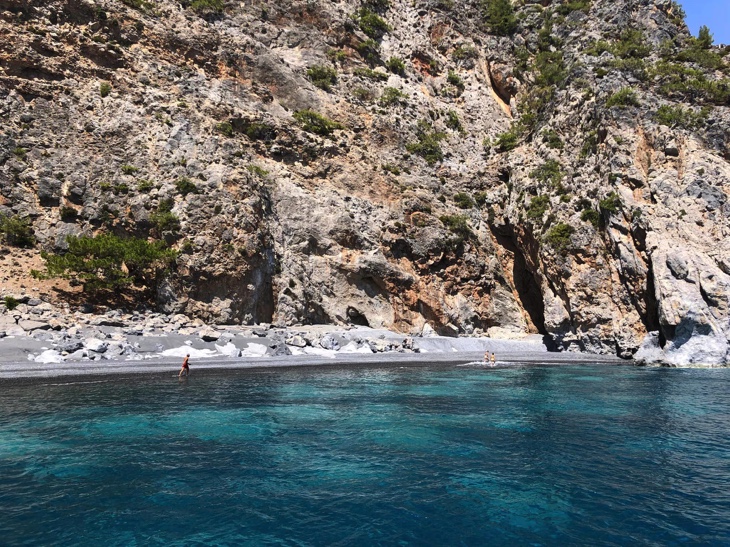
- Sweet Water Beach (Glyka Nera). Glyka Nera means “sweet water”, named for the freshwater springs that bubble up through the pebbles along the shore. The beach sits between cliffs and is reached on foot or by boat from Chora Sfakion, offering crystal-clear water ideal for swimming and snorkeling. Sweet Water Beach lies 8.5 kilometers (5.28 miles) from Sfakia.
- Ilingas Beach. Ilingas Beach is a secluded cove between cliffs, only 1.9 kilometers (1.18 miles) from Sfakia. The clear water is ideal for swimming and snorkeling, and its limited amenities keep it quiet and natural.
- Frangokastello Beach. Frangokastello Beach spreads below a 14th-century Venetian fortress, with clear water and sandy shores 15.1 kilometers (9.38 miles) from Sfakia. Local legend tells of the Drosoulites, ghostly figures said to march toward the castle at dawn in late May. The beach rents sunbeds and umbrellas.
- Orthi Ammos Beach. Orthi Ammos Beach is known for its fine white sand and towering cliffs, 15.9 kilometers (9.88 miles) from Sfakia. Strong winds make it a favorite with windsurfers and kiteboarders, though amenities are limited.
What are the best places to eat in Sfakia?
The best places to eat in Sfakia are Mesohori Taverna, Taverna Vatalos and Delfini Tavern. Wherever you eat, order the Sfakian pie, a thin cheese pie drizzled with local honey that is the signature dish of the region.

- Mesohori Taverna. Mesohori Taverna serves traditional Greek dishes such as moussaka, grilled lamb chops and fresh seafood. It sits within Sfakia, 550 meters from the center. Meals cost €15 ($17.22, £12.71) to €20 ($22.96, £16.95) per person.
- Taverna Vatalos. Taverna Vatalos is a family-run restaurant specializing in Cretan dishes such as stuffed vine leaves, fried cheese and lamb kleftiko, 13.1 kilometers (8.14 miles) from Sfakia. A meal costs €10 ($11.48, £8.48) to €15 ($17.22, £12.71) per person.
- Delfini Tavern. Delfini Tavern is a seaside restaurant serving grilled octopus, Greek salads and homemade pastitsio, 350 meters from Sfakia. Meals cost €20 ($22.96, £16.95) to €25 ($28.70, £21.19) per person.
What are the best places to stay in Sfakia?
The best places to stay in Sfakia are Xenia Hotel, Hotel Stavris, The Authentic Village Boutique Hotel, From Samaria To Livikon and Hotel Lefka Ori.
- Xenia Hotel. Xenia Hotel offers comfortable rooms with air conditioning and free Wi-Fi in the heart of town, plus a breakfast buffet, 550 meters from the center. A night costs €60 ($68.89, £50.85) to €80 ($91.85, £67.80).
- Hotel Stavris. Hotel Stavris blends traditional Cretan architecture with private balconies overlooking the sea or the village, 50 meters from the beach and harbor. It has a swimming pool, a restaurant and free parking. A night costs €70 ($80.37, £59.33) to €100 ($114.81, £84.75).
- The Authentic Village Boutique Hotel. The Authentic Village Boutique Hotel occupies restored historic buildings 450 meters from the town center, with a rooftop terrace, a bar and a restaurant serving Cretan cuisine. A night costs €100 ($114.81, £84.75) to €150 ($172.22, £127.13).
- From Samaria To Livikon. From Samaria To Livikon is a guesthouse in the village of Anopoli, 400 meters from Sfakia, with simple, comfortable rooms, home-cooked meals and nearby hiking trails. A night costs €40 ($45.92, £33.90) to €60 ($68.89, £50.85).
- Hotel Lefka Ori. Hotel Lefka Ori offers budget rooms with basic amenities 100 meters from the main beach, plus breakfast each morning. A night costs €50 ($57.41, £42.38) to €70 ($80.37, £59.33).
How is the nightlife in Sfakia?
The nightlife in Sfakia is low-key but enjoyable. A handful of bars draw locals and tourists for drinks and music in a relaxed setting, with local wines and cocktails rather than clubs. The emphasis is on good company and a slow evening by the sea.
What are the best bars in Sfakia?
The best bars in Sfakia are Cafe Bar Alkyon, Akrogiáli and Faros Cafe.
- Cafe Bar Alkyon. Cafe Bar Alkyon sits in the heart of Sfakia, 450 meters from the town center, and serves cocktails, beers and wines in a laid-back setting. Its signature drink is the “Alkyon Sunrise”. Drinks cost €5 ($5.74, £4.24) to €10 ($11.48, £8.48), and the bar hosts occasional live music.
- Akrogiáli. Akrogiáli is a seaside bar 550 meters from the town center, popular for sunset drinks over the Libyan Sea. Its signature drink is the “Blue Horizon”. Drinks cost €6 ($6.89, £5.09) to €12 ($13.78, £10.17).
- Faros Cafe. Faros Cafe overlooks the harbor 550 meters from the town center, with indoor and outdoor seating and a menu of coffee, beers and cocktails. Its signature drink is the “Sfakian Sunset”. Drinks cost €4 ($4.59, £3.39) to €8 ($9.18, £6.78).
What is the history of Sfakia?
Sfakia’s history is a history of resistance. Its most famous chapter is the 1770 revolt led by Ioannis Daskalogiannis, a Sfakian ship-owner who rose against Ottoman rule. Sfakians also fought the Venetians before them and, during World War II, helped Allied forces escape the island after the Battle of Crete.
The name “Sfakia” has 3 possible origins. One theory traces it to the ancient Greek word “sfax”, meaning “chasm” or “gorge”, a fitting name for such rugged terrain. Another links it to the oleander plant, called “sfaka” in the Cretan dialect. A third holds that the town was originally called “Sfikia”, which later became “Sfakia”.
What is the weather and best time to visit Sfakia?
Sfakia rewards visitors from May to November, when the sea is warm and the gorges are open. The coast has a Mediterranean climate with mild winters and warm, dry summers; average temperatures range from 12°C in January to 26°C in July, and coastal Sfakia soaks up roughly 3,000 hours of sunshine a year. The mountains run cooler, with colder winters and occasional snowfall.
Rain falls mostly between October and April. The coast receives 600 to 800 millimeters a year, while the mountains can receive up to 2,000 millimeters. Strong summer winds known as the “meltemia” can roughen the sea and cool the coast, and they blow hardest in the eastern part of Sfakia.
Do you need to book in advance to visit Sfakia?
Yes, you should book in advance to visit Sfakia. The region has a limited number of hotels, guesthouses and rentals, and rooms fill quickly in peak summer, so reserving ahead guarantees a place to stay. Popular activities such as hiking the Samaria Gorge or taking a boat trip also sell out in the busy months, so book them early. Booking a rental car in advance secures a better rate and lets you explore Sfakia’s winding roads at your own pace.
What to know before going to Sfakia
4 things are worth knowing before you go to Sfakia.
- Pack for a range of temperatures. The coast can reach 35°C in summer, while the higher elevations stay much cooler, especially at night. Bring layers you can add or remove easily.
- Bring your own supplies. Some areas have limited shops or services. If you plan to hike the mountains or gorges, carry a backpack, water, sunscreen, a hat and a first-aid kit.
- Try the local food. Sfakia is known for the Sfakian pie, lamb and fresh seafood. Many tavernas serve authentic, home-cooked meals using local ingredients.
- Wear sturdy footwear. Towns, beaches and trails have uneven surfaces, rocky paths and cobbled streets. Choose hiking boots or trainers with good support and traction.
Is Sfakia safe?
Yes, Sfakia is safe. Crime rates are extremely low compared with major tourist destinations, though a few basic precautions still help. Petty theft is rare but can happen in busier spots such as Chora Sfakion in peak season, so keep valuables secure. The main risks are natural: the mountainous inland terrain and sudden weather changes make unmapped trails and gorges dangerous without proper gear and supplies. Violent crime against tourists is essentially unheard of, and reasonable care is all that is needed.
What is the best vehicle for visiting Sfakia?
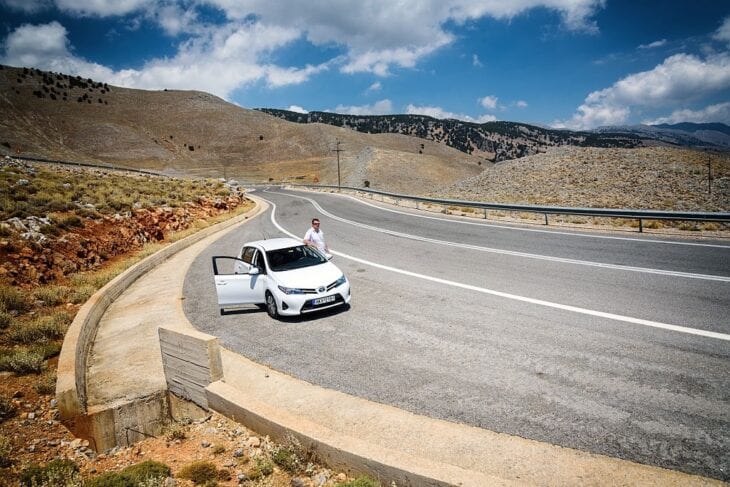
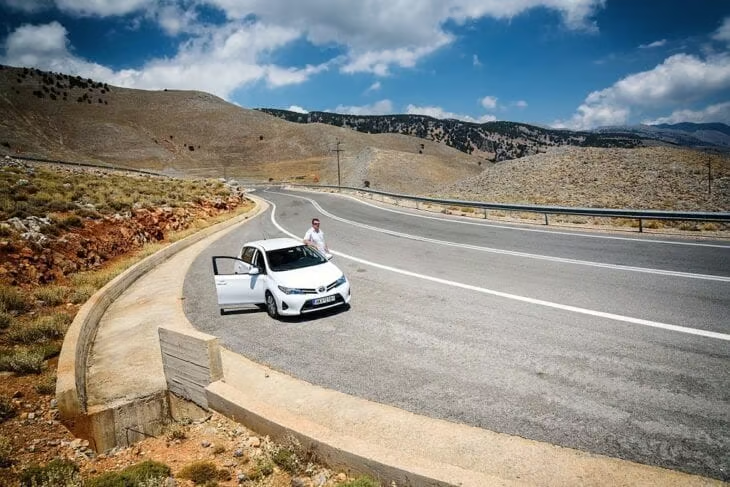
A medium-sized car is the best vehicle for visiting Sfakia. The region’s roads are winding, narrow and often steep, and a medium car such as a Skoda Octavia or Hyundai i30 gives the right balance of maneuverability and stability while still holding luggage and gear. A car from a reputable Crete car rental service like Rental Center Crete handles the varied terrain comfortably and lets you focus on the scenery rather than the road.
Can you rent a car to go to Sfakia?
Yes, you can rent a car to go to Sfakia, and it is the option we recommend. A car lets you handle the winding mountain roads, stop for the views, and reach remote corners that public transport misses. It also opens up the villages, beaches and attractions beyond Sfakia, so you can build your own itinerary and discover the region at your own pace.
What are the factors to consider before renting a car in Crete?
Consider the following factors before renting a car in Crete.

- Insurance. Check that the rental includes comprehensive cover for damage, theft and liability, and read the terms for any deductible or extra costs.
- Car type. Match the car to your trip. For Sfakia specifically, choose a medium car with good brakes and air conditioning that handles steep, winding mountain roads.
- Documents. Bring a valid driver’s license, a passport or ID, and a credit card for the reservation and deposit, and confirm the company’s exact requirements before you travel.
How much does a car rental in Crete cost?
Car rental in Crete costs depend on the season, car type, location and duration. The average price is €30 ($34.44, £25.43) to €40 ($45.92, £33.90) per day. A full week averages around €250 ($287.03, £211.88), while a weekend averages around €78 ($89.55, £66.11). In Sfakia itself, a compact car runs €40 ($45.92, £33.90) to €60 ($68.89, £50.85) per day and a larger vehicle or SUV runs €60 ($68.89, £50.85) to €100 ($114.81, £84.75) per day, so booking ahead secures the best rate.

Is Sfakia worth visiting?
Yes, Sfakia is worth visiting. It is one of the last genuinely wild corners of Crete, with boat-only villages such as Loutro and Agia Roumeli, Europe’s most famous gorge at Samaria, and beaches you reach on foot or by ferry. Travelers who want authentic Cretan culture, dramatic landscapes and far fewer crowds than the north coast will find Sfakia rewarding.