






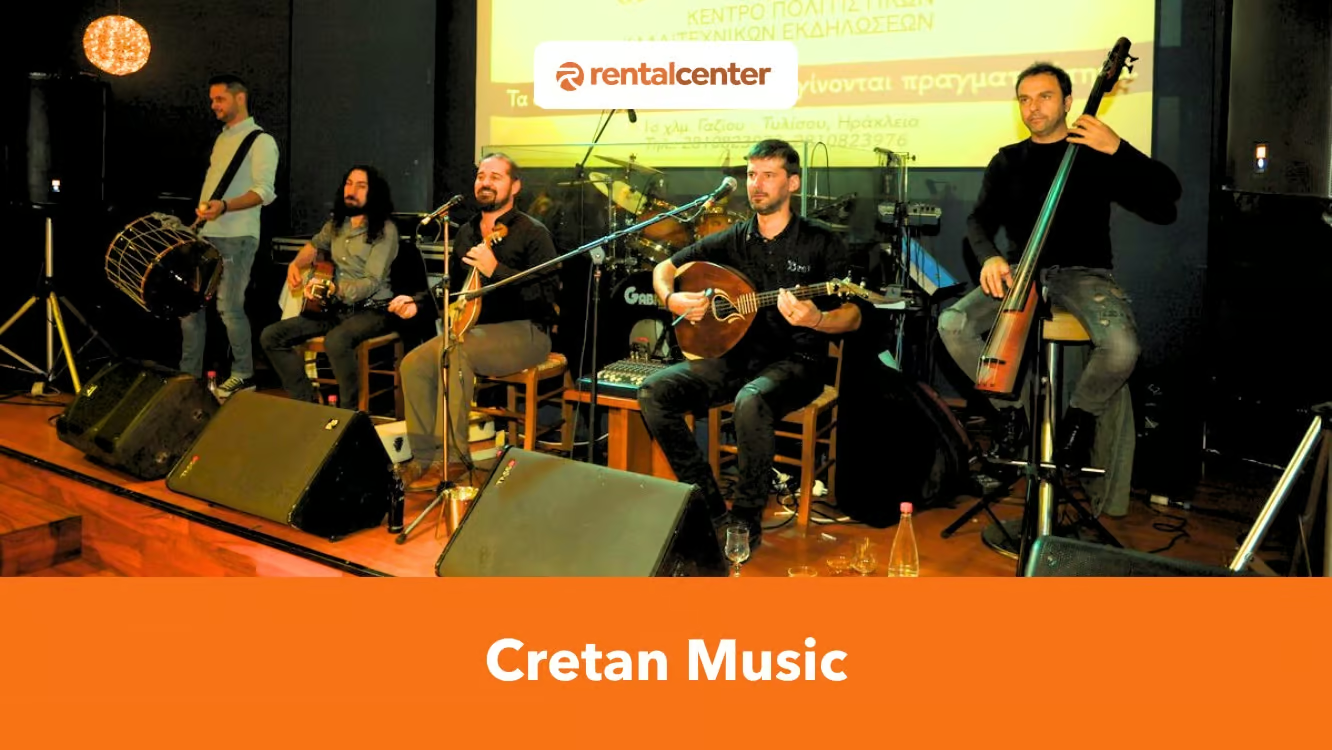
Cretan music – known in Greek as Kritika (Κρητικά) – is the traditional folk music of Crete, built around three core traditions: mantinades (improvised 15-syllable rhyming couplets), rizitika (a cappella heroic narrative songs), and instrumental dance music played on the three-stringed lyra and the laouto lute. Performed at panigiria (community festivals), weddings, and kentra (live music clubs) across the island, Cretan music has evolved from Byzantine and Venetian roots into a living tradition that today also incorporates jazz, rock, and world music influences. Key institutions preserving this heritage include the Labyrinth Musical Workshop in Houdetsi and the Museum of Traditional Music Instruments “Thirathen” in Heraklion.
Popular songs like Erotokritos and Agrimia Ki Agrimakia Mou remain culturally known, and the island hosts music festivals such as Houdetsi, Matala Beach, Rokkas, and the Chania Rock Festival. These events showcase traditional Cretan music alongside diverse genres, promoting cultural exchange and creativity.
What is Cretan Music?
Cretan music shapes the island’s identity – it carries the memory of Cretan history, defines social traditions, and gives voice to collective emotion through mantinades, rizitika, and live lyra performances. Unlike many mainland Greek traditions that survive mainly on stage, Cretan music has remained a living daily practice: the improvised mantinades sung at weddings, the rizitika performed by village men at communal tables (tis tavlas), and the instrumental syrtos and pentozali dances at panigiria. Its improvisational nature lets musicians express personal emotion in real time, so the music keeps evolving while staying rooted in tradition.
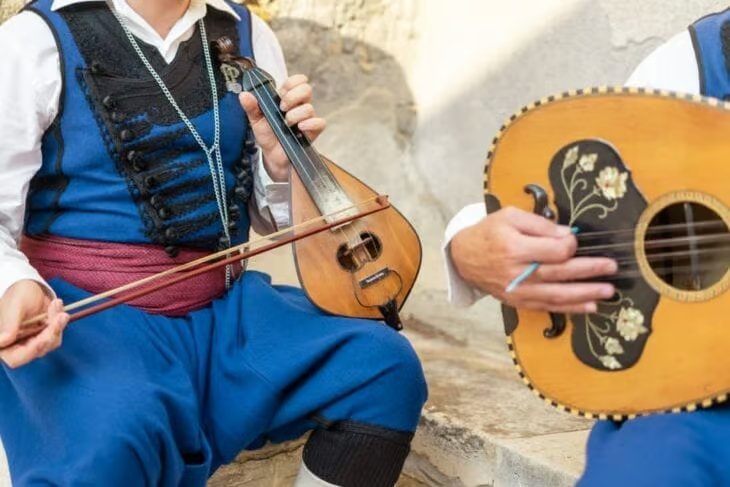
Cretan musical traditions – particularly mantinades and rizitika – are recognized as part of Greece’s living intangible cultural heritage, a designation that reflects their ongoing role in Cretan social life rather than as historical relics.
Mantinades vs Rizitika: Key Differences
Mantinades and rizitika are the two pillars of Cretan song, but they differ in performance, structure, and theme:
| Mantinades | Rizitika | |
|---|---|---|
| Performance | With lyra and laouto | A cappella (no instruments) |
| Structure | 15-syllable rhyming couplets | Narrative songs (tis stratas / tis tavlas) |
| Improvisation | High – poets improvise in performance | Lower – traditional fixed texts |
| Themes | Love, nature, everyday life | Heroism, war, historical events |
| Origin | Venetian-era poetry (14th century) | Mountain village tradition (pre-Ottoman) |
The History of Cretan Music
Cretan music has evolved over more than a thousand years – beginning with Byzantine lyra traditions in the 9th century, transformed by Venetian cultural influence after 1204, and consolidated into a unified island-wide tradition during the 20th century.
Byzantine and Ancient Roots
The lyra – Cretan music’s defining instrument – descends from the Byzantine lyra, documented as early as the 9th century by the Persian geographer Ibn Khurradadhbih. The Byzantine Empire reconquered Crete from Arab rule in 961 AD under Nikephoros Phokas, and noble families from Constantinople reintroduced Byzantine musical traditions to the island, including the lyra and formal modes of chant.
Venetian Influence and the Erotokritos Era (13th–17th Century)
After the Fourth Crusade (1204), Venetian rule brought new instruments – including the bowed lira da braccio – and new poetic forms. By the 14th century the mantinada, the 15-syllable rhyming couplet, had emerged as the dominant lyric form. This era produced the Erotokritos (c. 1600), an epic poem by Vitsentzos Kornaros that remains the cornerstone of the Cretan musical-literary tradition and is still sung today to traditional lyra tunes.
20th-Century Consolidation and Modern Revival
Cretan music was first recorded in 1917, beginning a process of island-wide standardization. Musicians such as Thanassis Skordalos and Kostas Mountakis helped establish a shared canon of melodies. In the early 1970s, Nikos Xylouris’s recordings of rizitika – arranged by Yannis Markopoulos – defined the modern Cretan music canon and brought it to national and international audiences for the first time.
What is the Traditional Music of Crete?
Traditional Cretan music centers on the three-stringed lyra as lead instrument, accompanied by the laouto and other instruments like the askomandoura and thiaboli, with lyrics drawn from the poetic mantinades and the narrative rizitika. Dances like Pentozalis and Syrtos complement the music, embodying Cretan heritage.
The Cretan lyra leads every traditional performance – its three-string bowed melody carries the kondylies and dance tunes, while the laouto (Cretan lute) provides rhythmic support and the occasional melodic passage. Other instruments, such as the askomandoura (bagpipe), mandolin, and thiaboli (flute), contribute to its distinct sound. Mantinades, improvised to convey emotion or tell a story, and rizitika, narrating history or heroic themes, highlight Crete’s poetic traditions. The traditional music is often paired with dances like the energetic Pentozalis and the slower Syrtos.
What Instruments Are Used in Cretan Music?
The Cretan lyra and laouto are the defining instruments of Cretan folk music: the lyra serves as melody lead while the laouto provides rhythmic and harmonic support, together producing the characteristic heterophonic texture of Cretan performance. Cretan music organizes Cretan cultural life – it marks births, weddings, mourning, and seasonal celebrations, while the mantinada tradition allows the music to evolve in real time through improvisation. Below is a list of the primary instruments used in Cretan music:
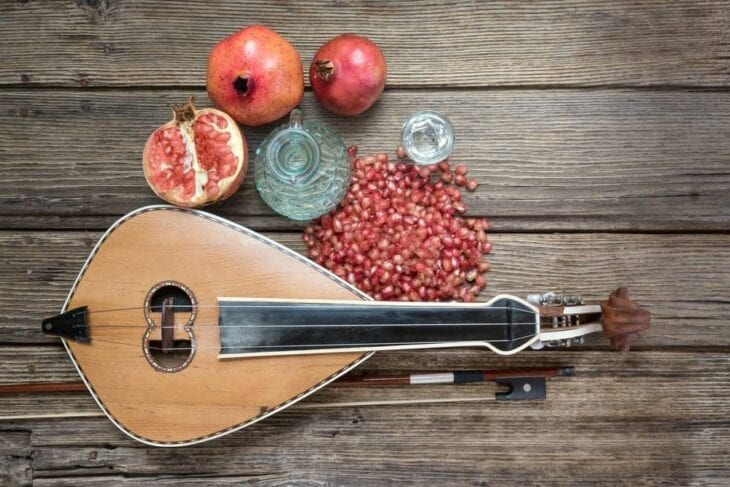
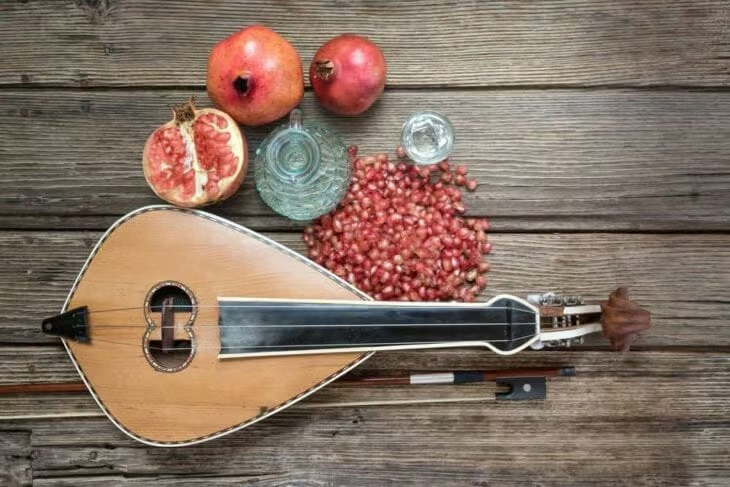
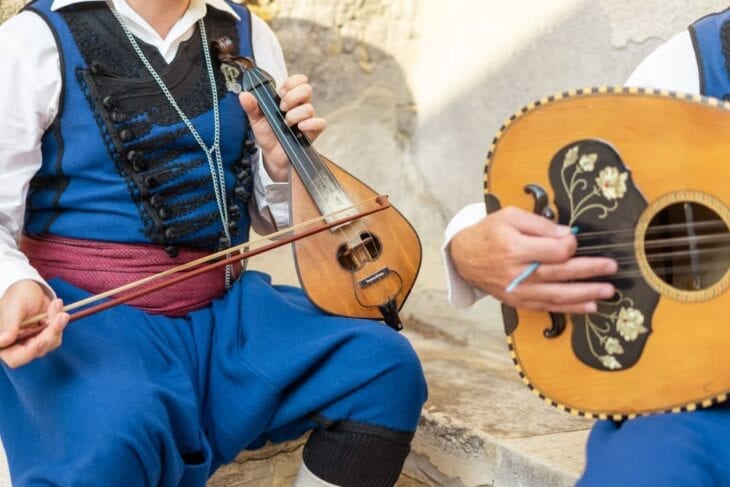
- Cretan Lyra: The lyra is the most iconic instrument of Crete – a three-stringed, pear-shaped bowed instrument traditionally held upright on the musician’s lap. It produces melancholic yet uplifting melodies central to Cretan folk music, especially at weddings and festivals, and its sound often accompanies mantinades. Typically made from wood such as maple or plane, the Cretan lyra symbolizes the heart of Cretan musical tradition.
- Laouto (Lute): The laouto is a long-necked lute with four double strings, played with a plectrum. It provides rhythmic support in Cretan music, often accompanying the lyra, and is known for warm, resonant tones. Now widely used across Crete, in some regions it also plays melodic roles alongside other instruments.
- Askomandoura (Bagpipe): The askomandoura is a traditional bagpipe with a goat-skin pouch and wooden pipes, producing a distinctive, resonant sound in rural Crete. Although historically significant, it is now rare and blends with other instruments in traditional orchestras.
- Thiaboli (Flute): The thiaboli, also known as souravli, is a simple wind instrument resembling a flute. Made from reed or wood, with thickness and length determining its tone, it adds a light, airy quality to Cretan music and is often handmade by the musicians themselves to complement the stringed instruments.
The Cretan Lyra: Types and Playing Style
The Cretan lyra exists in three main types: the lyraki (small, close to the original Byzantine form, used for dances), the vrontolyra (a powerful sound, used for song accompaniment), and the common lyra (developed in the 1940s by combining the lyraki with the violin and tuned G–d–a’). Historically, the lyra’s bow carried small spherical bells called gerakokoudouna (falcon bells), which provided rhythmic accompaniment as the bow moved; today most players use a standard violin bow. The soundboard is traditionally carved from aged softwood – ideally from old Venetian-era wooden beams.
Kondylies, Taximi, and How Cretan Music Is Structured
Cretan instrumental music is built on kondylies – short, four-measure melodic units that musicians repeat and chain together during improvised performance. A typical Cretan music session begins with a taximi: a rhythmically free, improvised solo on the lyra or laouto in a specific musical mode, similar to the Arabic taqsim, which establishes the mood before the dance song begins.
Tabachaniotika – Crete’s Urban Music Tradition
Tabachaniotika is a distinct urban Cretan musical genre – instrumental and vocal music played in kentra (live music clubs) in Cretan cities. Distinct from rebetiko, tabachaniotika was not underground music; it was performed at domestic gatherings and used instruments like the boulgari (a mandolin-like instrument) and the laouto. The most famous tabachaniotika performer was Stelios Foustalieris (1911–1992) of Rethymno, whose boulgari recordings defined the genre.
How is Modern Cretan Music?
Modern Cretan music absorbs jazz, rock, and world music while keeping the lyra-laouto core intact. Traditional forms such as mantinades and rizitika remain central, and the lyra and laouto dominate performances, often paired with new instruments or electronic elements to produce innovative sounds. Improvisation plays a crucial role in adapting traditional melodies to modern styles. Artists like Ross Daly and Psarantonis have connected Cretan music with global traditions, while festivals and music clubs (kentra) keep these traditions alive for younger generations.
What kind of Music Is Popular in Crete?
Traditional Cretan music – mantinades and rizitika – dominates the repertoire at festivals, weddings, and local events, where audiences still request these forms over pop or electronic music. Modern artists blend Cretan sounds with rock, jazz, and Mediterranean folk, while pop and electronic music appeal to younger audiences in urban areas. Crete’s music culture balances tradition and modern influences effectively.
Songs like mantinades (improvised rhyming couplets) and rizitika (narrative a cappella songs) are still widely performed, and there is growing appreciation for modern adaptations of these traditional forms. Contemporary artists blend traditional Cretan sounds with genres like rock, jazz, and Mediterranean folk, while global styles such as pop and electronic have gained popularity among younger audiences in Crete’s urban areas.
What are the Popular Songs in Crete?
The most culturally significant Cretan songs include the epic Erotokritos (17th century), the resistance rizitiko “Agrimia Ki Agrimakia Mou” popularized by Nikos Xylouris, and the dance song Pentozalis tied to Crete’s revolutionary history. These songs are performed at Crete festivals, weddings, and gatherings. Below is a list of some of the most iconic and popular songs in Cretan music.
- Erotokritos: Written by Vitsentzos Kornaros during the 17th century, Erotokritos narrates the love story of Erotokritos and Aretousa through mantinades, accompanied by the lyra and laouto, highlighting themes of love, honor, and resilience. Agrimia Ki Agrimakia Mou, a rizitiko popularized by Nikos Xylouris, celebrates the freedom fighters who hid in Crete’s mountains.
- Zorba the Greek Syrtaki Song: Composed by Mikis Theodorakis, the Zorba the Greek syrtaki is internationally famous and widely performed in Crete, though the syrtaki itself was choreographed for the 1964 film and is not a traditional Cretan dance. Voskaroudaki Amoustako celebrates rural life and has been modernized by Giannis Haroulis to combine traditional and contemporary sounds.
- Rizitika: Rizitika songs are performed a cappella and narrate heroic or historical events. They are often categorized as tis stratas (road songs) or tis tavlas (table songs). Pentozalis ties to Crete’s revolutionary history with a fast rhythm that symbolizes freedom and unity.
- Mikri Mou Lemonia: Antonis Martsakis performs Mikri Mou Lemonia, which celebrates love and nature and features traditional instruments like the lyra and laouto. Foustalieris, associated with Stelios Foustalieris, belongs to the tabachaniotika genre and reflects urban themes of love and grief.
- Lousakies: Lousakies, a syrto dance song performed at Crete festivals, showcases improvisation while maintaining folk roots. Pacharde, a modern creation by Babel Trio, blends traditional Cretan music with rock elements using an electric laouto, demonstrating the innovative spirit of younger generations while respecting cultural traditions.
What is the Best Cretan Music Playlist?
The best Cretan music playlist features traditional melodies with the lyra and laouto as central instruments, alongside iconic artists like Nikos Xylouris, Giannis Haroulis, and Antonis Martsakis. Find below a list of the best Cretan music tracks.
- Erotokritos: A classic Cretan epic poem written in the 17th century by Vitsentzos Kornaros. It tells the love story of Erotokritos and Aretousa, symbolizing themes of love, honor, and resilience. Often performed with the lyra and laouto, it is a cornerstone of Cretan musical tradition.
- Syrtos of Rodinos: An instrumental medley of syrta melodies recorded by legendary lyra player Andreas Rodinos in 1933. These melodies accompany the traditional syrtos dance and are among the few recordings left by Rodinos, who tragically passed away at age 22.
- Chalepianos Manes: A nostalgic melody recorded in the early 20th century, reflecting themes of exile and longing for home. It resonated deeply with emigrants from Crete, offering a heartfelt connection to their homeland.
- Kondilies – Pentozali: A medley that begins with kondylies (short melodic themes) and transitions into the Pentozali, a fast-paced jumping dance originating in western Crete. Its lyrics express homesickness and resilience in foreign lands.
- Mikri Mou Lemonia (My Little Lemon Tree): Performed by Antonis Martsakis, a cheerful traditional song celebrating love and nature. Its bright melody, accompanied by the lyra and laouto, makes it a favorite at weddings and festive gatherings.
- Agrimia Ki Agrimakia Mou: Popularized by Nikos Xylouris in the 1970s, a powerful rizitiko commemorating the freedom fighters hiding in Crete’s mountains during resistance struggles. Its lyrics embody the Cretan people’s pride, defiance, and resilience.
- Pentozalis: One of Crete’s most iconic dance songs, closely tied to the island’s revolutionary history. Its lively rhythm accompanies the energetic Pentozali dance, symbolizing freedom, unity, and celebration.
- Maleviziotis: A traditional dance song with a fast-paced rhythm that complements the Maleviziotis dance, known for its quick and dynamic footwork. It highlights the energy and vitality of Cretan music and dance.
- Voskaroudaki Amoustako (Young Shepherd): A traditional song celebrating rural life in Crete. Modern renditions by artists such as Giannis Haroulis have renewed its popularity, blending tradition with contemporary influences.
- Foustalieris: Associated with Stelios Foustalieris, this urban-style song reflects themes of existential grief. It belongs to the tabachaniotika genre, which thrived in Cretan cities during the early 20th century and offers a more introspective take on Cretan music.
Who are the Popular Artists of Crete?
Nikos Xylouris – known as the “Archangel of Crete” – is the most iconic Cretan musician, whose recordings of rizitika in the 1970s defined the modern canon of Cretan music. His brother Psarantonis is famous for his lyra artistry and expressive singing. Thanassis Skordalos and Kostas Mountakis are iconic lyra players who shaped Cretan music with their mastery. Ross Daly integrates global influences into traditional Cretan sounds, while Giannis Haroulis blends modern genres like rock with Cretan traditions. Vasilis Skoulas, Haralambos Garganourakis, and Stelios Foustalieris further contribute to Crete’s rich musical legacy with distinctive styles and innovations.
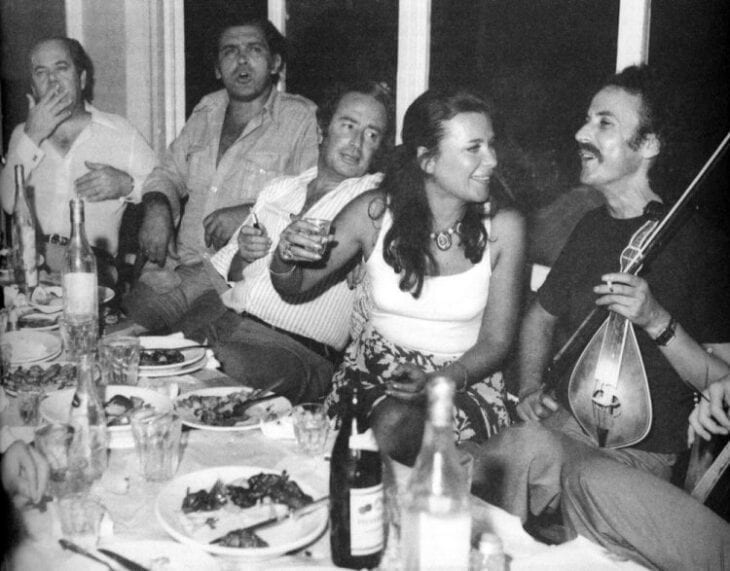
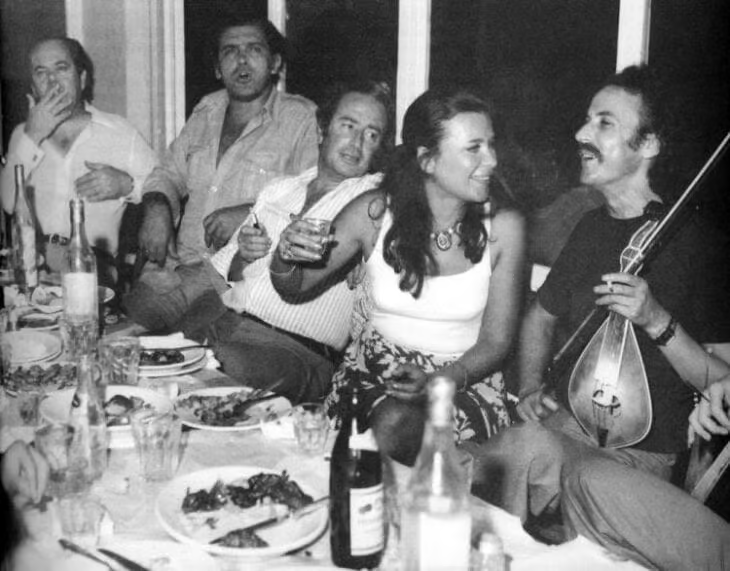
Nikos Xylouris, the “Archangel of Crete”, became a legendary figure for his powerful voice and renditions of rizitika songs, symbolizing resistance during Greece’s military dictatorship. His younger brother, Psarantonis, earned recognition for his unique lyra playing style and deep, expressive voice.
Thanassis Skordalos, a virtuoso lyra player, recorded over 150 Cretan music classics during his decades-long career. Kostas Mountakis transformed lyra playing with innovative techniques while maintaining Cretan traditions. Both are pillars of Cretan music.
Ross Daly, an Irish-born musician, mastered the lyra and traditional instruments after settling in Crete, blending Cretan music with global influences to expand its international reach. Giannis Haroulis fuses traditional Cretan sounds with modern rock and folk genres, appealing to younger audiences while safeguarding the island’s musical heritage.
Vasilis Skoulas, a singer and lyra player from Anogia, has sustained a career spanning over 40 years. Haralambos Garganourakis, celebrated for his heartfelt performances, is deeply cherished in Crete. Stelios Foustalieris (1911–1992), linked to the tabachaniotika genre, enriched Cretan music with urban influences through his boulgari expertise.
What are the Music Bands in Crete?
The music bands of Crete include Chainides, known for blending traditional lyra and laouto with poetic lyrics; Xylouris White, merging Cretan music with experimental rock; Babel Trio, innovating with electric laouto in progressive rock; Balothizer, combining Cretan melodies with heavy metal; and Daulute, Couleur Locale, and Marmaladies, each offering unique modern interpretations of Cretan music. A list of the music bands of Crete is given below.
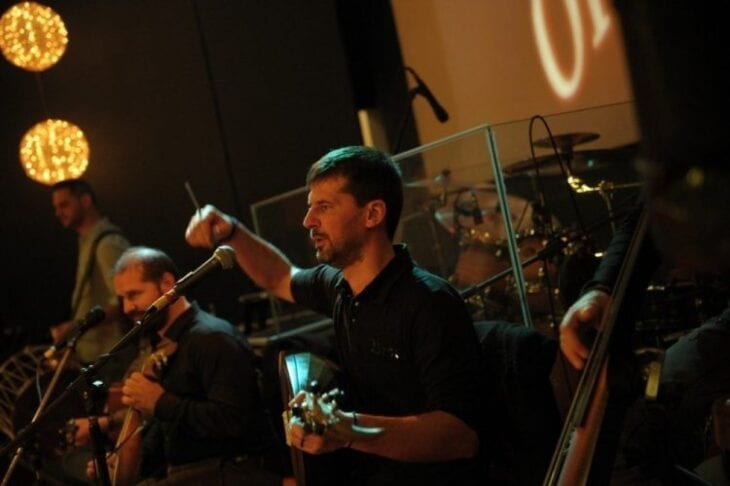
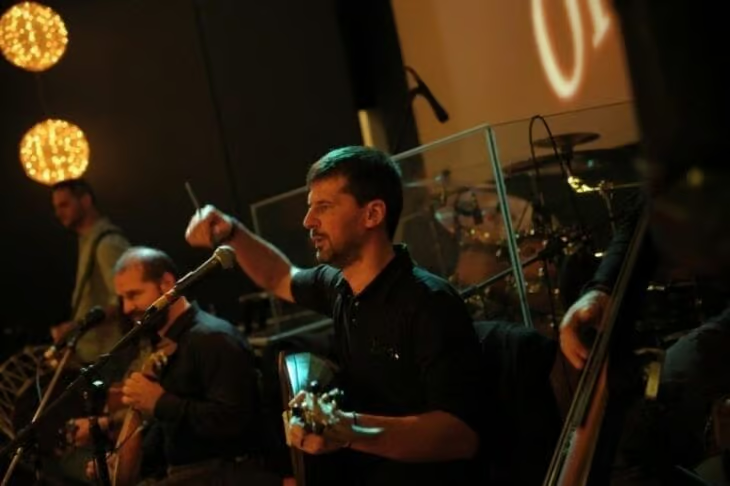
- Chainides (Χαΐνηδες): Formed in 1990, Chainides are at the center of Cretan folk music. They mix traditional instruments like the lyra and laouto with poetic lyrics and experimental elements, and their innovative performances appeal to both older generations and younger audiences.
- Xylouris White: A duo featuring Giorgis Xylouris (Psarogiorgis) on laouto and Australian drummer Jim White, fusing Cretan music with experimental rock and improvisation. Albums like Goats (2014) and Black Peak (2016) have received international acclaim.
- Babel Trio: Babel Trio combines Cretan music with progressive rock, using an electric laouto as the lead instrument. Their fusion of tradition and modernity is showcased in songs like Pacharde.
- Balothizer: A London-based band blending traditional Cretan melodies with heavy rock and metal influences. Their motto, “Cretan Music from Hell,” reflects their intense fusion of laouto, bass, and drums, reimagining Cretan music for global audiences.
- Daulute: Daulute emphasizes improvisation rooted in traditional Cretan styles like syrta. Their song Ftohi Kardia (Poor Heart) highlights their ability to merge vocals, percussion, and woodwinds with classic rhythms.
- Couleur Locale: Known for live performances at festivals like Houdetsi, Couleur Locale reinterpret traditional songs like Lousakies. Their combination of laouto, bass, and drums produces a modern yet authentic sound.
- Marmaladies: Founded in 2004 in Heraklion, Marmaladies blend funk, psychedelic, and folk influences, adding a fresh dynamic to Crete’s contemporary music scene.
What are the Popular Dances in Crete?
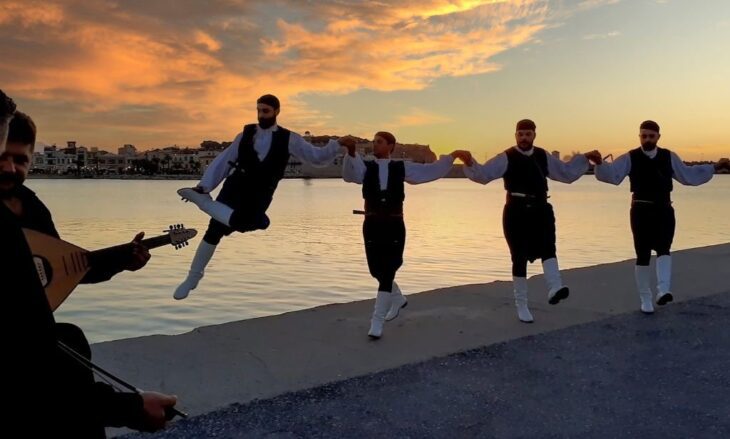
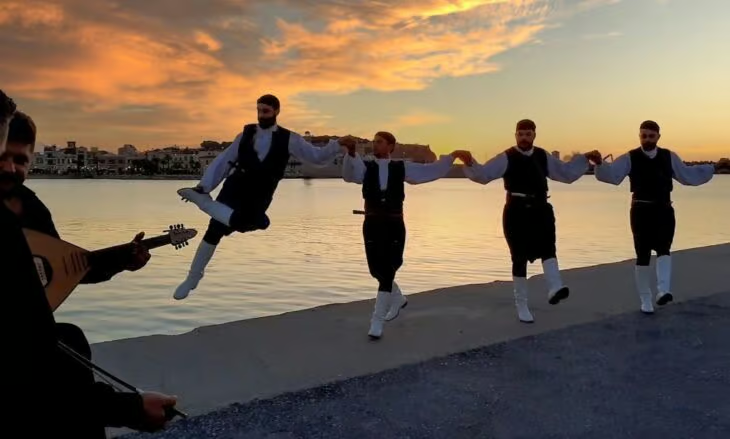
Cretan music drives every dance tradition on the island – the lyra and laouto provide the rhythmic and melodic engine for pentozali, syrtos, maleviziotis, and sousta at panigiria and wedding celebrations. The popular traditional Cretan dances include Pentozali, a fast-paced war dance symbolizing heroism and freedom; Syrtos, celebrated for its elegance; and Maleviziotis, known for its energetic jumps and complex steps. Sousta, a romantic couple’s dance, mimics courtship, while Siganos embodies unity and resilience. Lassithiotikos Pidihtos reflects eastern Crete’s modesty and dignity through leaping movements.
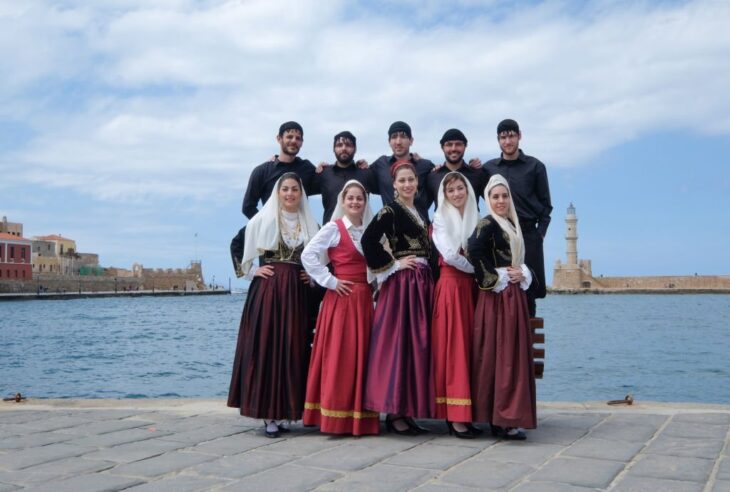
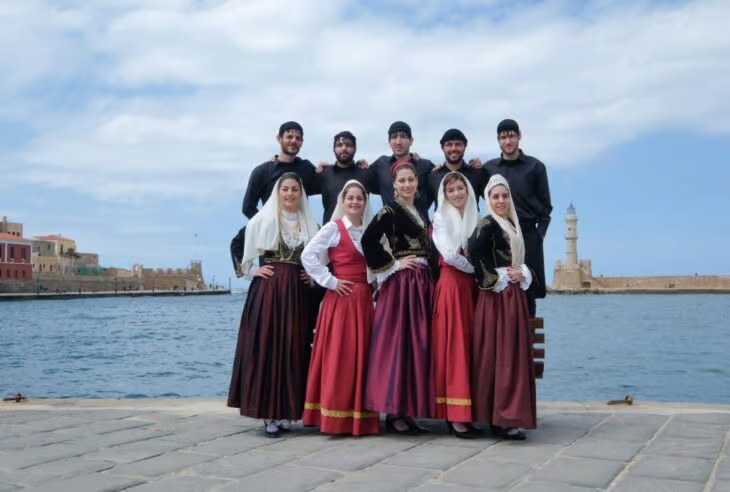
Pentozali, a fast-paced Cretan war dance, symbolizes revolution and heroism. Its five basic steps (pente means “five” in Greek) represent leaps of freedom, making it a hallmark of Cretan identity. Syrtos, or Chaniotikos Syrtos, is an elegant dance reflecting grace and tradition.
Maleviziotis, also called Kastrinos Pidichtos, is one of Crete’s most vigorous dances, characterized by energetic jumps and complex steps. Originating from the Malevizi region near Heraklion, it showcases speed and grace, testing dancers’ stamina and agility. Sousta, a romantic couple’s dance, mimics courtship with playful movements and is often performed at weddings as a celebration of love and union.
Siganos, a slower dance from the Ottoman occupation, represents unity and resilience. Its smooth, deliberate movements often transition into the faster Pentozali. Lassithiotikos Pidihtos, from eastern Crete, is a leaping dance symbolizing the dignity and modesty of the region’s people, and it stands out as one of eastern Crete’s most distinctive dances.
What are the Music Festivals in Crete?
Crete hosts six major music festivals annually, ranging from the traditional world-music Houdetsi Festival (founded by Ross Daly near Heraklion) to the Chania Rock Festival, which has featured international acts since 2002. Here are the most popular music festivals in Crete:
- Chania Rock Festival: Held annually since 2002 in the historic East Moat Theater in Chania, this is one of Crete’s largest rock events, featuring renowned international and Greek rock and metal bands such as Sabaton and Sisters of Mercy.
- Houdetsi Festival: Hosted in the village of Houdetsi near Heraklion, this festival celebrates traditional Cretan music and world music, fostering artistic exchange through concerts on multiple stages, workshops, and instrument exhibitions.
- Cretan World Music Festival: Held in Chania at venues like the San Salvatore Bastion, this festival blends Cretan traditional music with global sounds. Founded in 2014, it features local and international musicians, art exhibitions, and workshops.
- Matala Beach Festival: Inspired by the hippie culture of the 1960s and 1970s, the Matala Beach Festival takes place on the iconic Matala Beach, known for its lively atmosphere, live performances by Greek and international musicians, art exhibitions, and celebrations of freedom and unity.
- Rokkas Festival: Held in the villages of Rokka and Kera in Chania, this festival combines classical music with traditional Cretan sounds. It takes place under the full moon in August and includes cultural activities and performances in natural settings.
- Vlatos Jazz Festival: Hosted in Vlatos village in Chania, this festival is dedicated to jazz and world music.
Beyond formal festivals, much of Crete’s live music still happens in kentra – traditional live music clubs where lyra and laouto players perform late into the night for dancing audiences.
What are the Important Music Institutions in Crete?
Three institutions anchor Cretan music education and preservation: the Labyrinth Musical Workshop (Houdetsi), the Museum of Traditional Music Instruments “Thirathen” (Heraklion), and the School of Music and Optoacoustic Technologies at Hellenic Mediterranean University (Rethymno). Find below a list of the important music institutions in Crete.
- School of Music and Optoacoustic Technologies: Located in Rethymno at Hellenic Mediterranean University, this institution includes the Department of Music Technology and Acoustics, active since 1999. It specializes in sound and music technologies, acoustics, and audiovisual techniques, bridging traditional music with modern technologies and fostering research, education, and innovation.
- Museum of Traditional Music Instruments “Thirathen”: Located in Heraklion, the museum documents and promotes Cretan and Mediterranean traditional music. It features a vast collection of instruments from Crete, Thrace, Pontus, and Asia Minor, with interactive tours, educational programs, and live performances that let visitors engage with the history and craftsmanship of traditional instruments.
- Labyrinth Musical Workshop: Founded by Ross Daly in Houdetsi near Heraklion, this workshop focuses on modal music traditions from Crete and the Eastern Mediterranean. It offers seminars, masterclasses, and concerts on instruments like the lyra, laouto, oud, and lavta, bringing musicians from diverse backgrounds together to explore and innovate within traditional practices.
Sources and Further Reading
- Wikipedia. “Music of Crete.” en.wikipedia.org/wiki/MusicofCrete
- Anoyanakis, Fivos. Greek Popular Musical Instruments (Ellinika laika mousika organa). Athens: National Bank of Greece, 1976.
- Baud-Bovy, Samuel. La chanson populaire grecque du Dodécanèse – documenting the connection between Cretan music and Byzantine chant.
- Labyrinth Musical Workshop, Houdetsi – labyrinthmusicworkshop.com
This article provides a cultural overview of Cretan music for visitors and enthusiasts. Festival dates change annually – verify with local tourist offices or official festival websites before travel.