







A Cretan wedding is one of the most elaborate celebrations in Europe – a multi-day event rooted in Greek Orthodox ceremony, ancient Minoan music, and communal feasting for 500 to 3,000 guests. Unlike a typical Greek wedding, a Cretan wedding follows centuries-old village customs: the progamos party the night before, the Orthodox stefana (wedding crown) ritual, and a communal feast of gamopilafo that the whole village cooks together. A Cretan wedding amplifies every element of a Greek wedding – the feast seats hundreds, the music runs until sunrise, and the entire community contributes food, labour, and money.
Editorial note: The customs below reflect traditional Cretan wedding practices, mainly in rural and mountain villages; urban and destination weddings vary, and traditions differ by region – Anogia (Rethymno) is not Heraklion or Chania. This article was written with local cultural knowledge and reviewed by members of the Cretan community.
What is a Cretan wedding?
A Cretan wedding is not a single-day event – it is a multi-day community celebration that involves the entire village, typically hosting 500 to 3,000 guests, with ancient Orthodox rituals, live lyra music, and a communal feast of gamopilafo. In an island of large extended families and many villages, a wedding draws people from the surrounding area and far beyond, uniting three and four generations as the primary social event of the summer.
How Cretan weddings differ from other Greek weddings
Cretan weddings take the Greek wedding template and make everything bigger and more communal. Where a mainland Greek wedding might host 150–300 guests, a Cretan village wedding of 500 counts as small. The whole village cooks the feast, fires guns into the air (balothies), plays the lyra until dawn, and the celebration spills from the church into the village square for an entire night.
When do Cretan weddings take place?
Cretan weddings follow a traditional calendar:
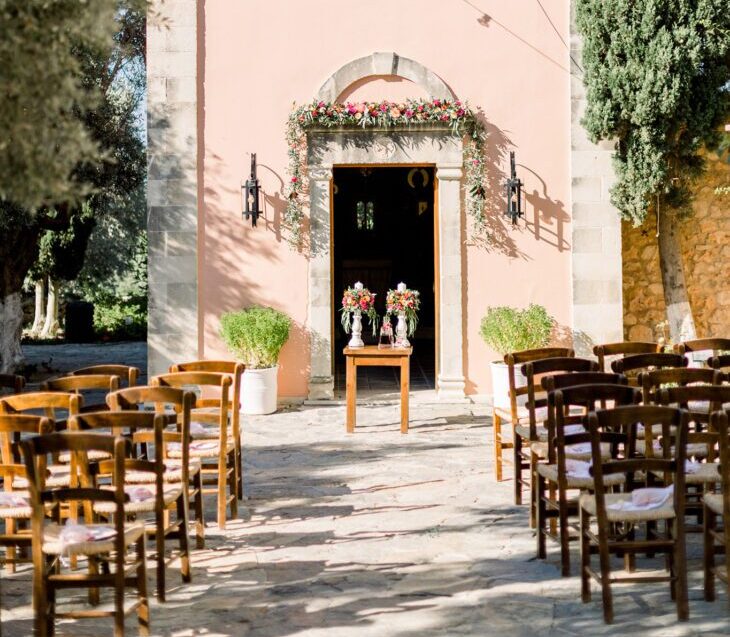
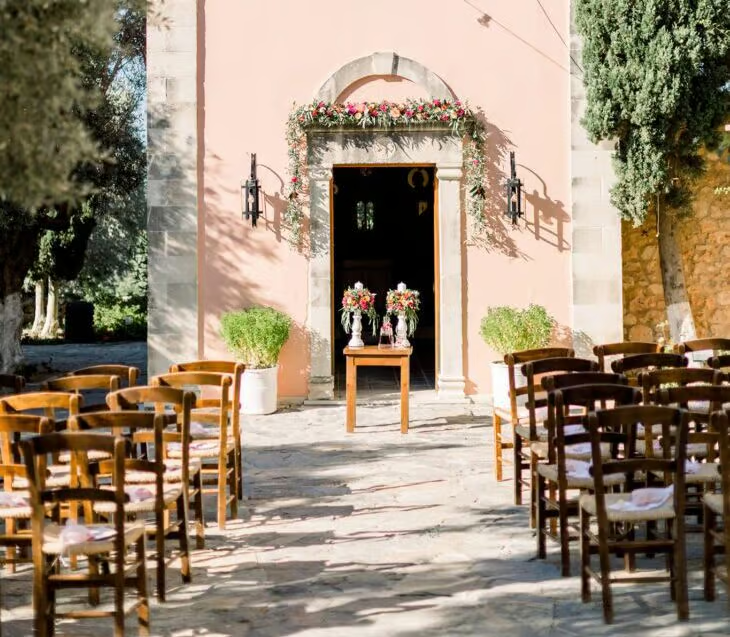
- Preferred day: Saturday, so guests have time to travel.
- Peak season: May to September, for the warm weather a large outdoor celebration needs.
- Avoid: the Lenten period before Easter, and the two weeks before the Feast of the Assumption of the Virgin (August 15).
- Setting: village weddings are almost always held outdoors to accommodate 500+ guests.
Pre-wedding traditions: the days before the ceremony
A Cretan wedding orchestrates days of preparation, beginning with the invitations and building through the progamos (pre-wedding party) on the night before – when guests throw money on the decorated bridal bed and celebrate with music and dancing.
Invitations
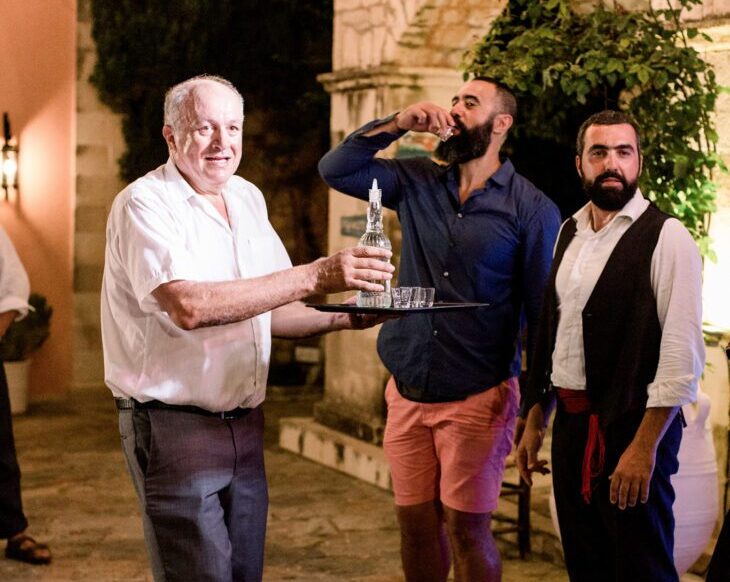
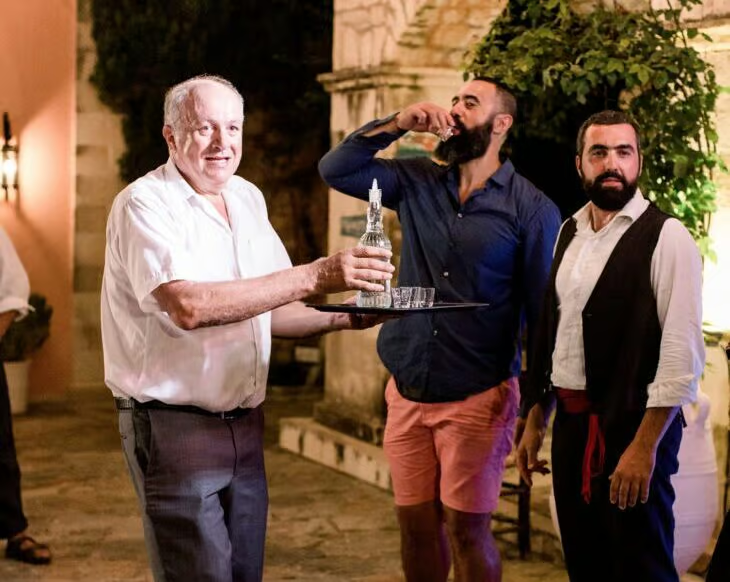
The celebrations start with the invitations, an event in themselves. In traditional villages, invitations are sometimes delivered in person, accompanied by a shot of raki to toast the couple’s health, and the usual toast – “Kala Stefana!” (“Happy Wreaths!”) – refers to the stefana crowns placed on the couple’s heads during the ceremony. There is usually a little music too.
Preparing the marriage bed
On the Thursday before the wedding, women of the family and close female friends and neighbours gather at the couple’s home-to-be to make the bed decoratively. Visitors – both men and women – then come and throw money on it for good luck, blessing the couple’s new life with prosperity and fertility.
The progamos: the night before
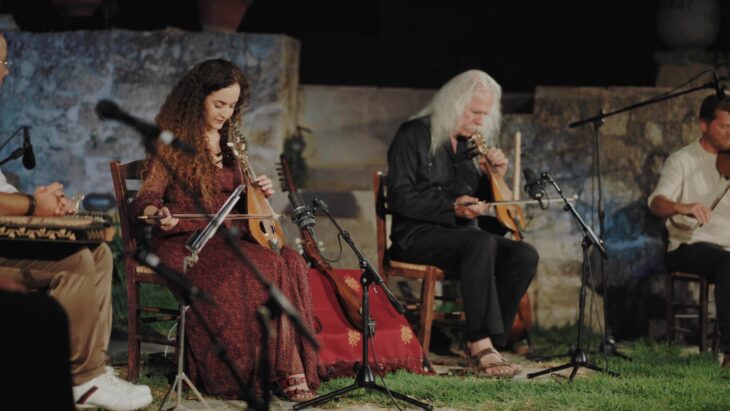
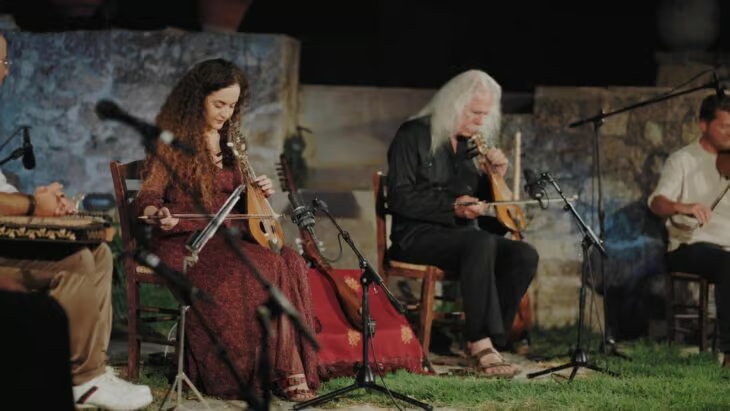
The night before the wedding is the progamos. The bride celebrates with her female friends and the groom with his male friends, and part of the festivities is preparing them: the best man shaves the groom (a symbol of trust) and the bride’s friends do her hair, all accompanied by special songs, music, and dancing.
The wedding morning: procession to church
After very little sleep, the bride and groom get ready in their separate homes, then meet – together with the koumbari (the best man or maid of honour) – for a festive procession of the whole wedding party to the church, led by live music from the lyra and the laouto.
The Greek Orthodox wedding ceremony
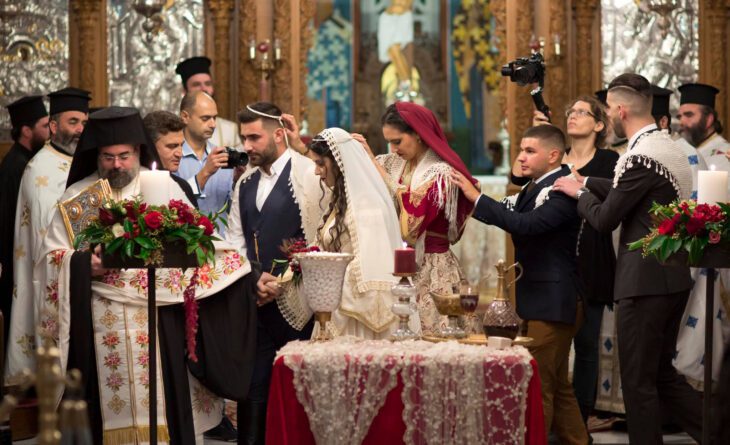
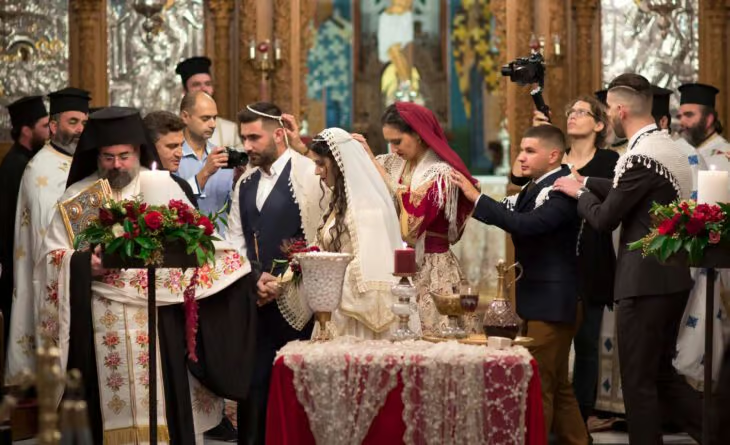
A Cretan wedding ceremony follows Greek Orthodox rites centred on the stefana (wedding crowns) ritual, in which the koumbaros links the two crowns and leads the couple three times around the altar table. Many people stand close to the altar: the bride and groom, the koumbaros or koumbara, and the paranifakia and paragambri – the festively dressed little girls and boys of the family – with the parents as near as they can be.
The role of the koumbaros
The koumbaros (or koumbara for a woman) is the spiritual sponsor who actually joins the couple: he links the stefana on their heads, swaps the crowns three times, and leads them in the procession around the wedding table. The role creates a lifelong bond between the families, much like a godparent.
Stefana (wedding crowns)
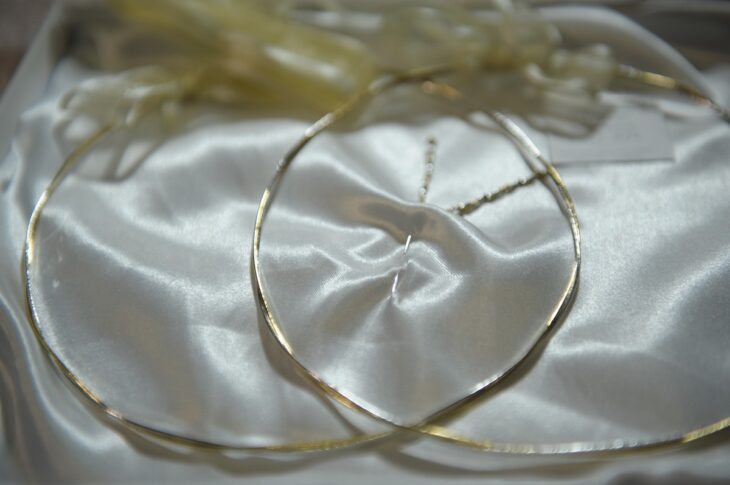
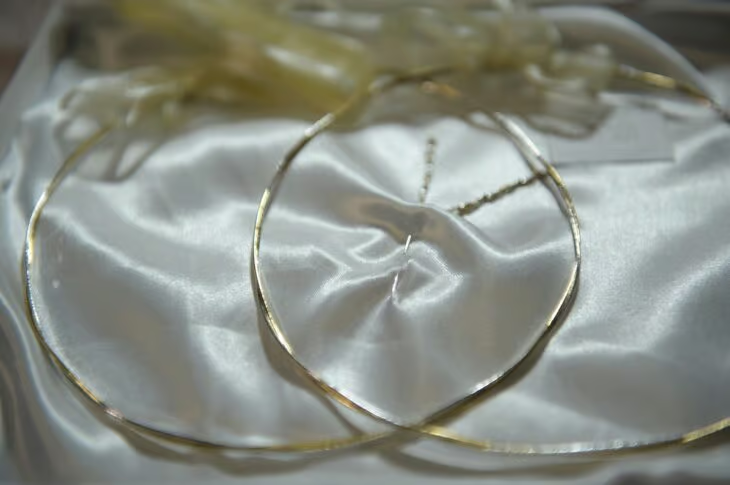
The stefana are two crowns joined by a single ribbon, symbolising that the couple are united as one and crowned as the king and queen of their own home. The koumbaros crowns them and exchanges the crowns three times over their heads, and the priest leads the couple three times around the table in the “Dance of Isaiah” – the first steps they take as a married couple.
Boubouniera: the wedding favour
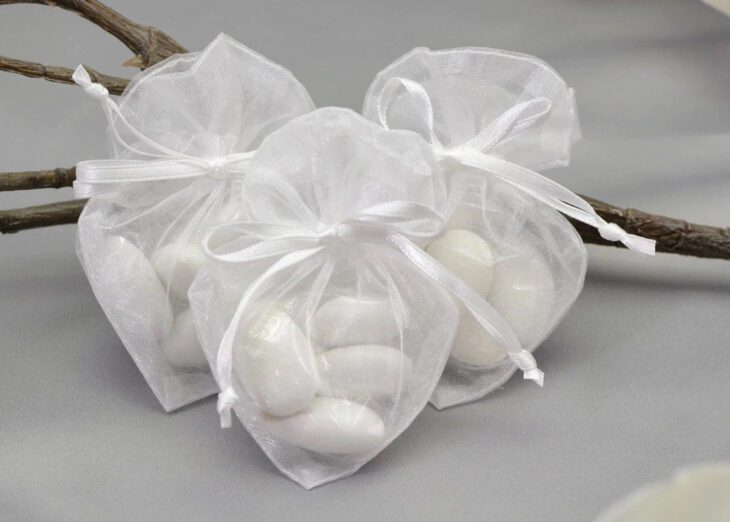
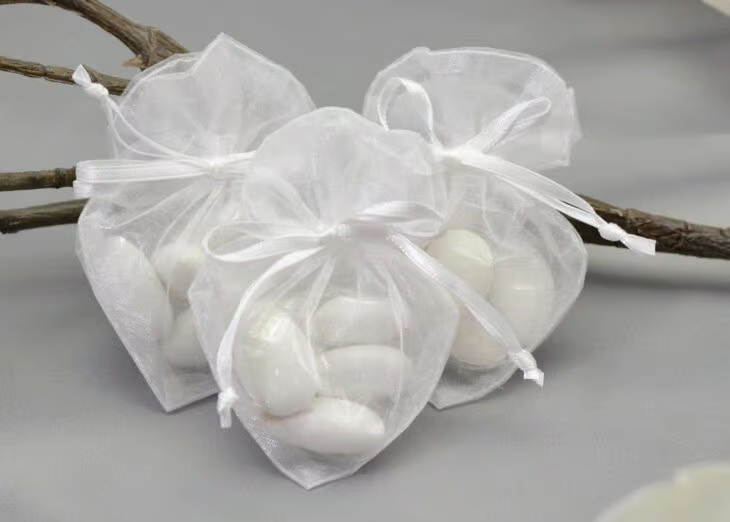
On leaving the church, every guest receives a boubouniera: a bundle of tulle filled with white sugared almonds (coufeta). The number of almonds must be odd – five (for health, happiness, fertility, longevity, and prosperity) or seven (for the divine mysteries of the Greek Orthodox Church) – because an odd number cannot be divided in half, symbolising a couple that cannot be separated. A small memento, often a tiny icon, is tied to the bundle.
The wedding feast: gamopilafo and Cretan hospitality
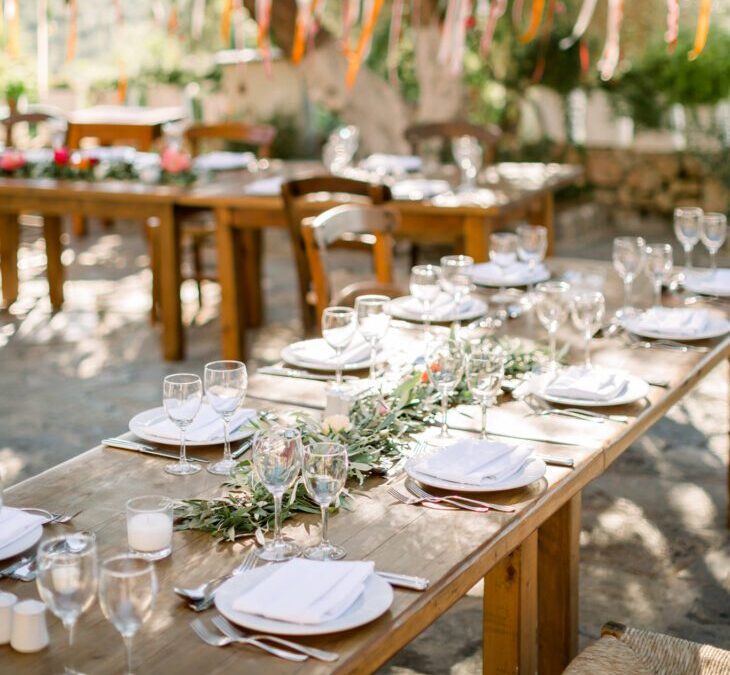
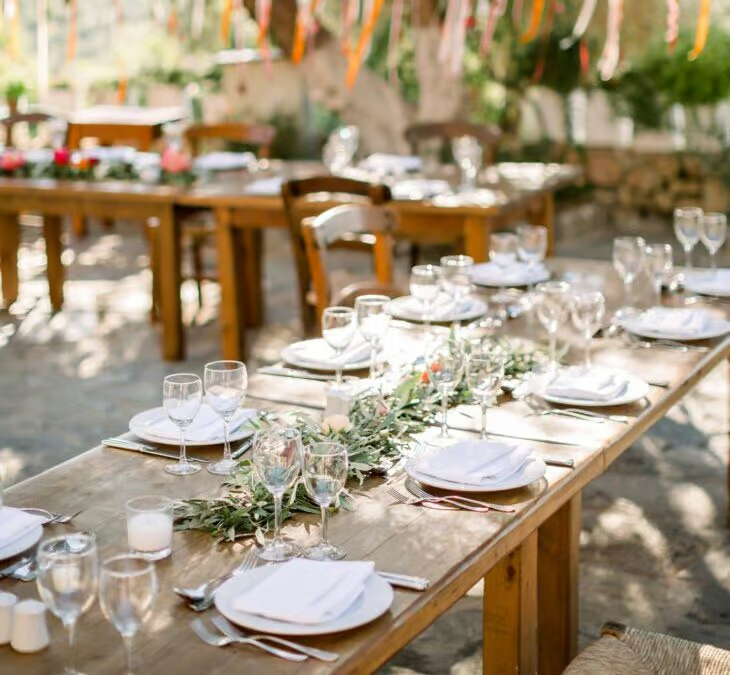
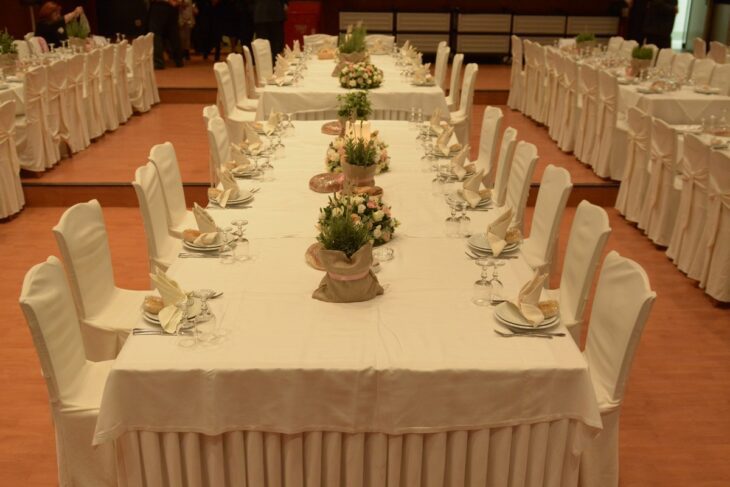
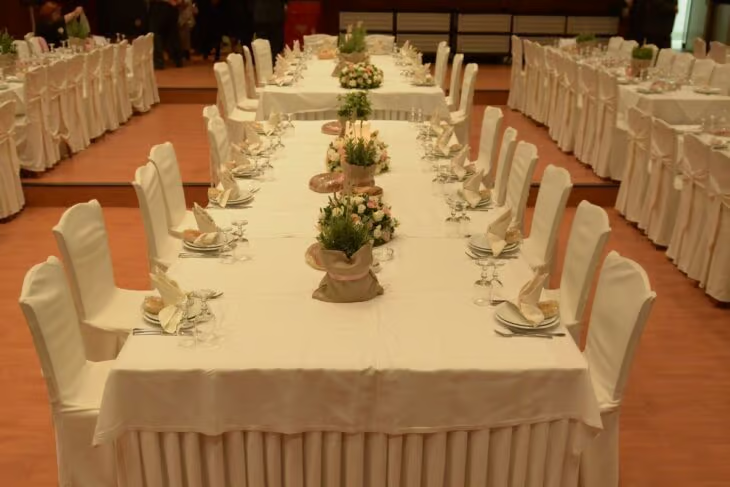
After the ceremony, long tables fill the village square to seat the hundreds of guests, and the heart of the feast is gamopilafo – the wedding pilaf. Much of the food comes from the family’s own resources: their animals, whole wheels of graviera, the wine, and the tsikoudia (Cretan raki), with salads alongside the meat and pilaf.
What is gamopilafo?
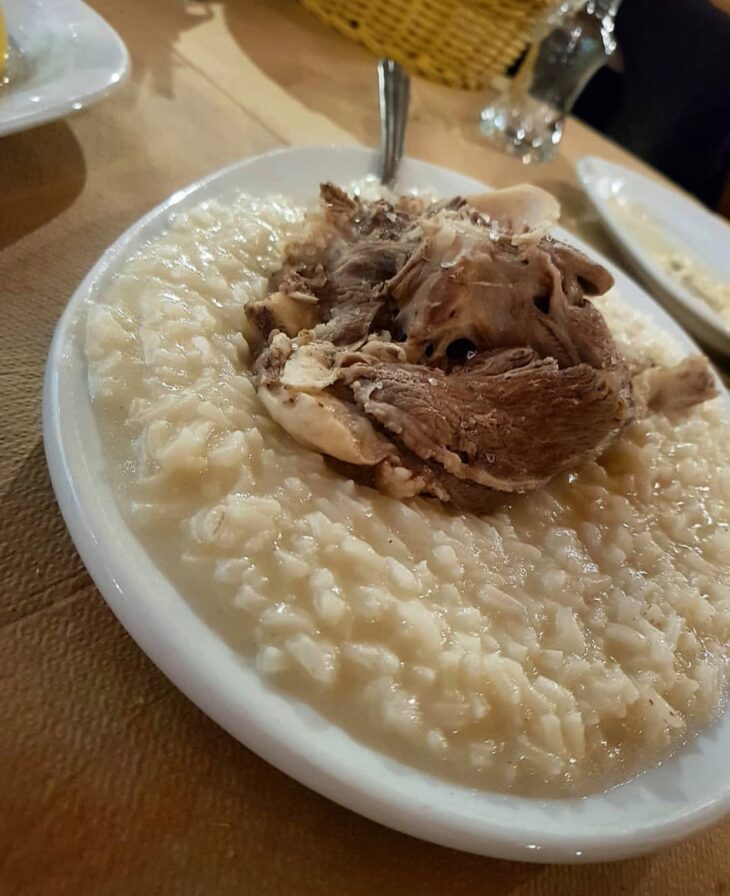
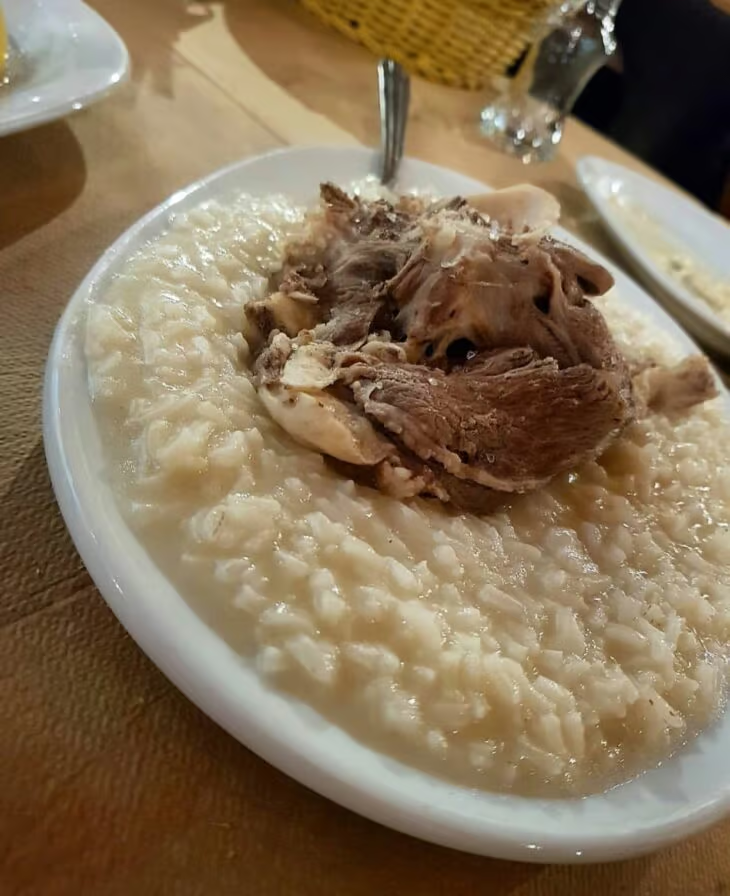
Gamopilafo takes its name from gamos (γάμος, “wedding”) and pilafi (πιλάφι, “pilaf”), and it is the centrepiece of every Cretan wedding feast. Whole goat or young lamb is slow-simmered for hours until the meat falls from the bone; the rice is then cooked directly in the rich, golden meat broth and finished with stakovoutiro – fresh goat’s butter – and cracked black pepper. It looks plain but tastes extraordinary, and it is cooked in enormous communal pots that the village keeps for such occasions (or that professional cooks bring). Preparation is itself a community ritual – heavy work for many hands, often led by an elder cook who rises before dawn.
Kserotigana and wedding sweets
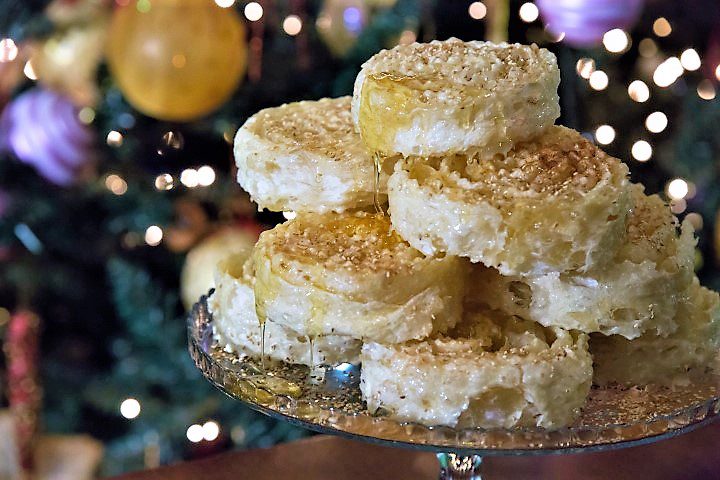
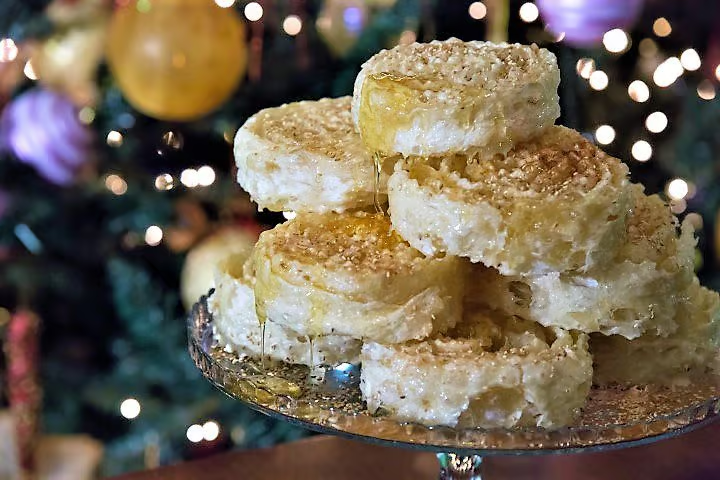
For dessert, there is graviera drizzled with thyme honey and, above all, kserotigana – whisper-thin rolls of dough fried crisp, dipped in honey syrup, and dusted with chopped walnuts. The same treat appears at Cretan baptisms because it can be made in advance and keeps well in the heat, making it the ideal sweet for a large crowd.
Cretan wedding music and dancing
Live Cretan music begins with the wedding procession and continues for hours, played on the lyra (a three-stringed bowed instrument held upright) and the laouto (a long-necked lute) – the defining sound of Cretan culture since Minoan times. The lead musician, the lirari, plays continuously while guests join traditional folk dances that grow more energetic as the night goes on.
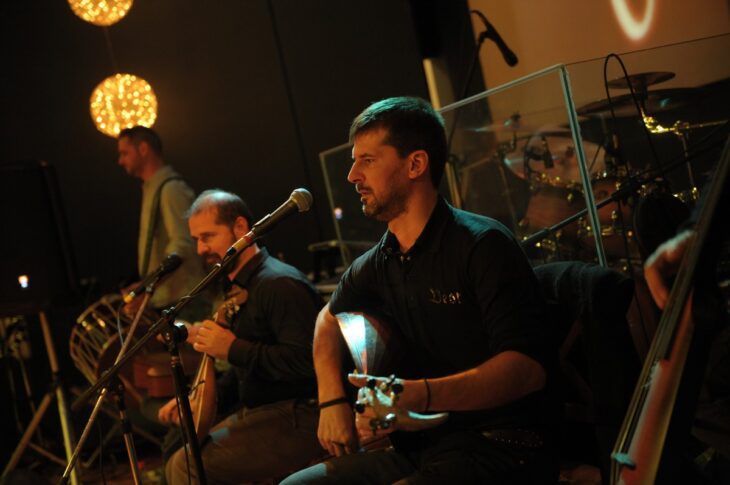
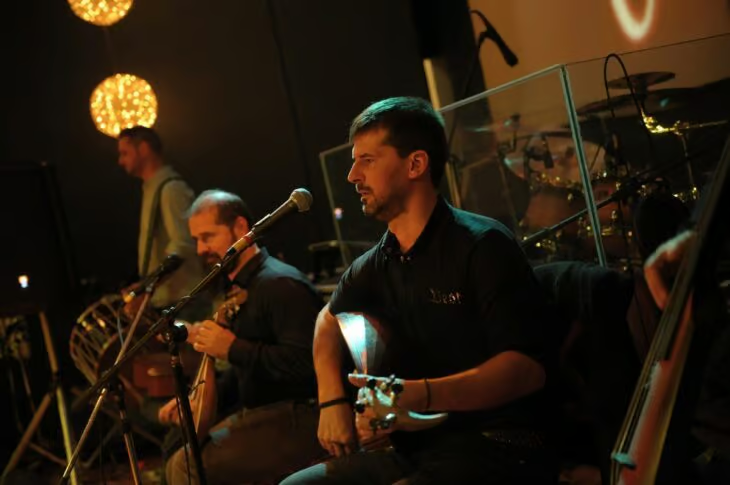
Traditional Cretan wedding dances:
- Pentozalis – a fast, powerful five-step dance with roots in Cretan resistance; the lead dancer performs high leaps called tsalimia.
- Syrtos – a slower, sweeping circle dance for men and women together.
- Kalamatianos – a twelve-step dance popular at receptions across Greece.
Musicians also sing mantinades – improvised fifteen-syllable rhyming couplets addressed to the couple, the guests, and the moment. Guests tip the lirari generously: at large village weddings, a celebrated lead musician can earn €4 ($4.61, £3.42)–€10 ($11.54, £8.54) for a single performance.
Wedding gifts and the fakelaki tradition
At a Cretan wedding, cash is the expected gift, and the tradition is called the fakelaki (φακελάκι – “little envelope”): a small white envelope with your name on it, containing cash. At a village wedding, €100 ($115.37, £85.40) is the polite minimum; close family and friends may give significantly more (sometimes a month’s salary), and a designated family member guards the envelope bag throughout the reception. Cretans are generous – couples often end up with enough to cover much of the wedding, and they pass the generosity on by giving freely at the next couple’s wedding.
In return, the couple gives gifts to their guests: as they leave, guests receive more kserotigana, perhaps some nuts, and a wedding koulouri – a large sesame bread ring.
Rural Cretan wedding traditions you may not know
Two of the most distinctive customs survive mainly in mountain villages:
- Antigamos (the “anti-wedding”): on the wedding morning, the groom’s friends race on horseback to the bride’s home to announce that the groom is waiting at the church; the first to arrive receives a koulouri from the bride, who then rides to the church on the winner’s horse.
- Balothies (celebratory shooting): at traditional mountain weddings, guests fire guns into the air in celebration – a custom rooted in Cretan resistance history. It is unexpected for visitors but harmless.
After the wedding: morning rituals and beyond
The celebration does not end with the night. The morning after, the couple meet at the village fountain for one of Crete’s most charming rituals.
The fountain koulouri ritual
The new couple bring a wedding koulouri of their own to the village fountain and break it in half under the running water, each pulling on one side. Whoever ends up with the larger piece is said to have the larger say in the marriage – and on Crete, known as much for its strong women as its strong men, the outcome is never a foregone conclusion.
How much does a Cretan wedding cost?
A traditional Cretan village wedding is expensive to host but partly self-financing through the fakelaki tradition – the cash gifts from 500–3,000 guests often cover much of the cost, making it a community-funded celebration. Key benchmarks:
- Guest gift minimum: €100 ($115.37, £85.40) per guest at village weddings; €50 ($57.69, £42.70)+ at town weddings.
- Average fakelaki: around €150 ($173.06, £128.10) per guest (close family may give much more).
- Lirari (lead musician) fee: €4 ($4.61, £3.42)–€10 ($11.54, £8.54) per wedding, depending on fame.
- Total hosting cost: roughly €15 ($17.31, £12.81)–€50 ($57.69, £42.70)+ for a village wedding of 500–1,000 guests.
Traditional village wedding vs destination wedding
A traditional village wedding is a communal, family-funded event with hundreds of guests. A destination wedding in Crete is a different proposition: international couples typically book a small civil or blessing ceremony for around 30 guests at a venue or hotel, with planner packages starting from roughly €14.5 ($16.73, £12.38), covering venue, ceremony, and reception logistics.
FAQ: Cretan wedding questions answered
What is the tradition of the Cretan wedding?
A Cretan wedding is a multi-day community celebration combining a Greek Orthodox church ceremony (the stefana crowning) with days of pre-wedding rituals (bed-making, the progamos), a huge communal feast of gamopilafo, live lyra music and circle dancing until dawn, cash gifts in fakelaki envelopes, and a morning-after fountain ritual. The whole village takes part.
What is gamopilafo?
Gamopilafo (from gamos, “wedding,” and pilafi, “pilaf”) is the traditional Cretan wedding pilaf: goat or lamb slow-cooked until tender, with rice simmered in the meat broth and finished with fresh goat’s butter (stakovoutiro) and black pepper, cooked in huge communal pots to serve hundreds of guests.
Can tourists attend a Cretan wedding?
Yes. Traditional village weddings are open community events – if you happen to be near a village where one is taking place, locals will often invite you in, feed you gamopilafo, and insist you stay. Cretans consider it an honour to share their celebrations with guests.
What should I wear to a Cretan wedding?
Smart-casual to formal is appropriate. The wedding party and folk dancers at traditional weddings wear embroidered Cretan costumes and high boots, but guests dress as for any formal celebration; avoid anything too revealing for the church ceremony.
What is a boubouniera?
A boubouniera is the wedding favour given to guests as they leave the church: a tulle bundle of 5 or 7 white sugared almonds (coufeta) – always an odd number – symbolising good fortune and the couple’s inseparable union.
As you drive across Crete on a summer weekend, you are likely to encounter a wedding in one village or another – the lyra drifting across the square, tables stretching the length of the street, and the smell of gamopilafo from the communal pots. It offers a wonderful taste of authentic Cretan life and the island’s living local traditions.
How important is local traditions and culture in Crete?
Local Traditions in Crete serve as the bridge between the island’s ancient history and its modern culture. Cretan tradition deeply rooted in the influence of the Minoan civilization, which was known for its advanced art and architecture. Local traditions play a critical role in maintaining the island’s identity and continuity, especially in the fields of art, music, dance, and cuisine. Visitors are invited to experience this authentic culture through various traditional practices.
The optimal time to immerse oneself in Cretan traditions is during the summer festivals. These events take place from late June to early September and offer a close look at the core of Cretan culture. They range from smaller village fairs to larger regional gatherings and focus on traditional music, dance, and food. Key celebrations include the Feast of St. John the Baptist on June 24th and the Feast of the Assumption of Mary on August 15th. These festivals feature religious processions, folkloric dances, and communal feasting.
Cretan cuisine is another expression of the island’s rich cultural heritage. The food is known for its simple yet flavorful dishes, with ingredients like olive oil, dairy, and herbs. Popular dishes include souvlaki, kalitsounia, and dakos. These culinary traditions offer visitors a sensory journey into the island’s history and culture.
Local traditions not only celebrate the island’s history but also help in preserving it. They give insights into the social, cultural, and religious behaviors that shape the Cretan identity. Local traditions in Crete also highlight the significance of storytelling and cultural expression, often passed down through myths like the tale of King Minos and the Minotaur. These narratives, along with art forms like pottery and jewelry, convey deeper societal messages and contribute to the island’s unique cultural richness.
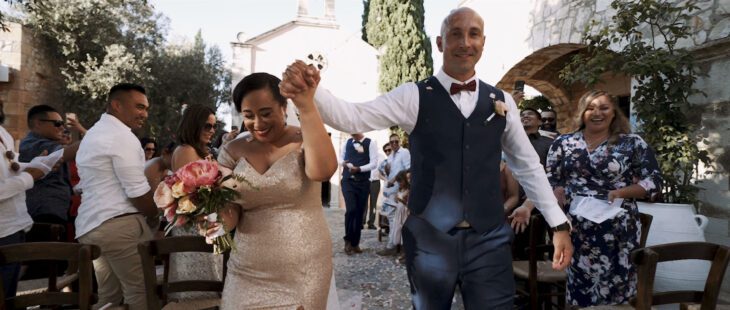
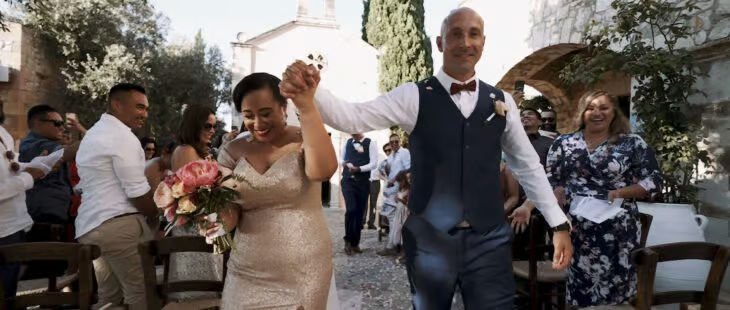
Special thanks to the talented Cretan videographer Alexandros Ktistakis for the wedding photographs in this post.