








Raki, known across Crete as tsikoudia, is a clear grape-pomace brandy distilled on the island at 35–60% alcohol by volume. It is unflavoured, single-distilled, and served on almost every occasion as a sign of Cretan hospitality. You will be handed a glass of it in tavernas, kafeneia, and homes from Chania to Sitia, and it is made each autumn, when villages across Crete fire up their copper stills for the rakokazana celebrations. Meeting raki at the source rewards touring the island’s wine villages and distilleries rather than staying in one resort. This guide explains what raki is, where its name comes from, how Cretans distil it, how to drink it, and where to buy it.
What is raki (tsikoudia)?
Raki is a traditional Cretan spirit made by distilling grape pomace, the skins, seeds and stems left after winemaking. In Crete the same drink is called tsikoudia, and it matches mainland Greek tsipouro in production and taste. Cretan raki typically contains 35–60% alcohol by volume, carries no anise (unlike Turkish rakı), and symbolises friendship, hospitality and social bonding rather than heavy drinking.
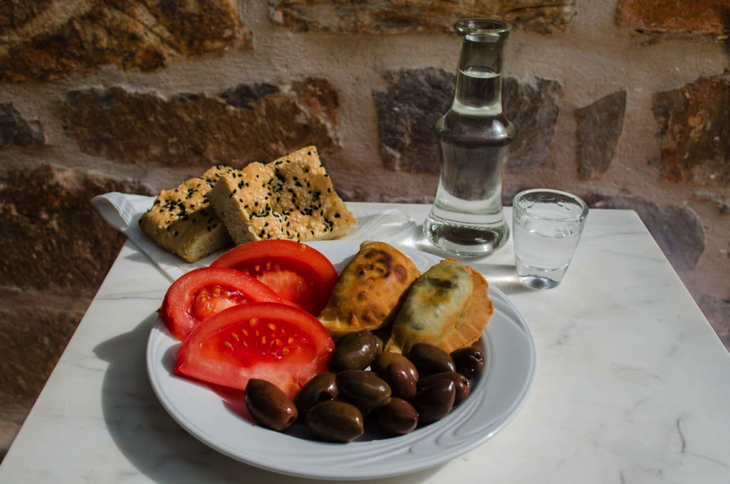
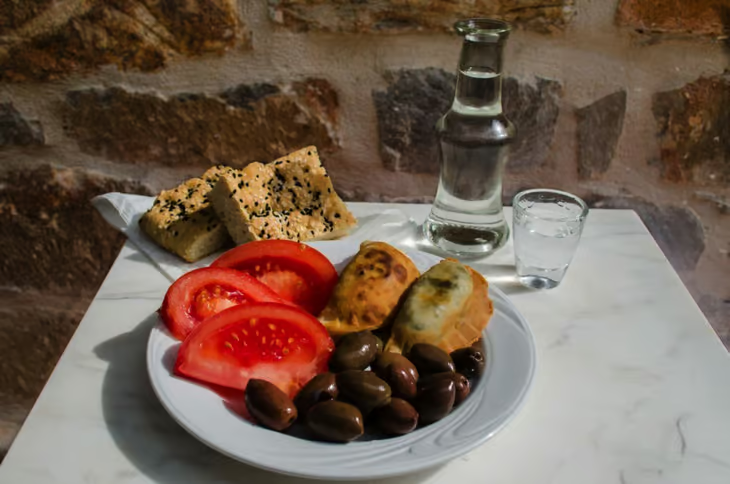
Cretans pour raki to open a meal, greet guests, and mark almost any gathering. You will find it in every part of the island, from traditional cafés to the shelves of the smallest village supermarket, where it is usually distilled on site and offered freely to visitors.
Is tsikoudia the same as raki?
Yes. Tsikoudia and raki are two names for the same Cretan grape distillate, and both are essentially the same spirit as mainland tsipouro. Western Crete tends to say “tsikoudia”, while eastern Crete more often says “raki”. The drink belongs to a wider Mediterranean family of grape-pomace spirits that includes Italian grappa, Spanish orujo, French marc, Georgian chacha and the Balkan rakia. Cypriot zivania is a close relative. The key difference: tsikoudia is single-distilled and unflavoured, so it keeps more of the raw grape character than the double-distilled, often spiced spirits it sits beside.
What does tsikoudia taste like?
Tsikoudia is clear, grape-forward and warming, with a clean finish and no anise sweetness. Because it is single-distilled, the flavour stays close to the fruit. It is comparable in style to Italian grappa and, like grappa, is drunk neat rather than diluted with water.
Where does the name come from?
The name “tsikoudiá” literally means terebinth, while “raki” traces back through the Turkish rakı to the Arabic arak, meaning “distilled”. Middle Eastern languages use related names such as Araka, Araki and Ariki.
When raki is diluted with water it turns milky white, which earns it the nickname “lion’s milk”. Some people link the name to Iraq, claiming the drink was first made there; others tie it to the razaki grapes used in production. The most credible theory is the Arabic root: arak also means “sweat”, and when the spirit is distilled it falls drop by drop, much as a heavy pour can make the drinker sweat.
Turkish raki, by contrast, is anise-flavoured; its most famous brand is Yeni rakı. Greek ouzo is also anise-led, whereas Cretan raki keeps none.
How is raki made?
Distillers make raki by fermenting grape pomace for about 40 days, then single-distilling it in a copper still called a kazani, keeping only the middle “heart” of the run. The process, known as kazanemata, begins after the grape harvest, roughly 50 to 70 days after fruit set.
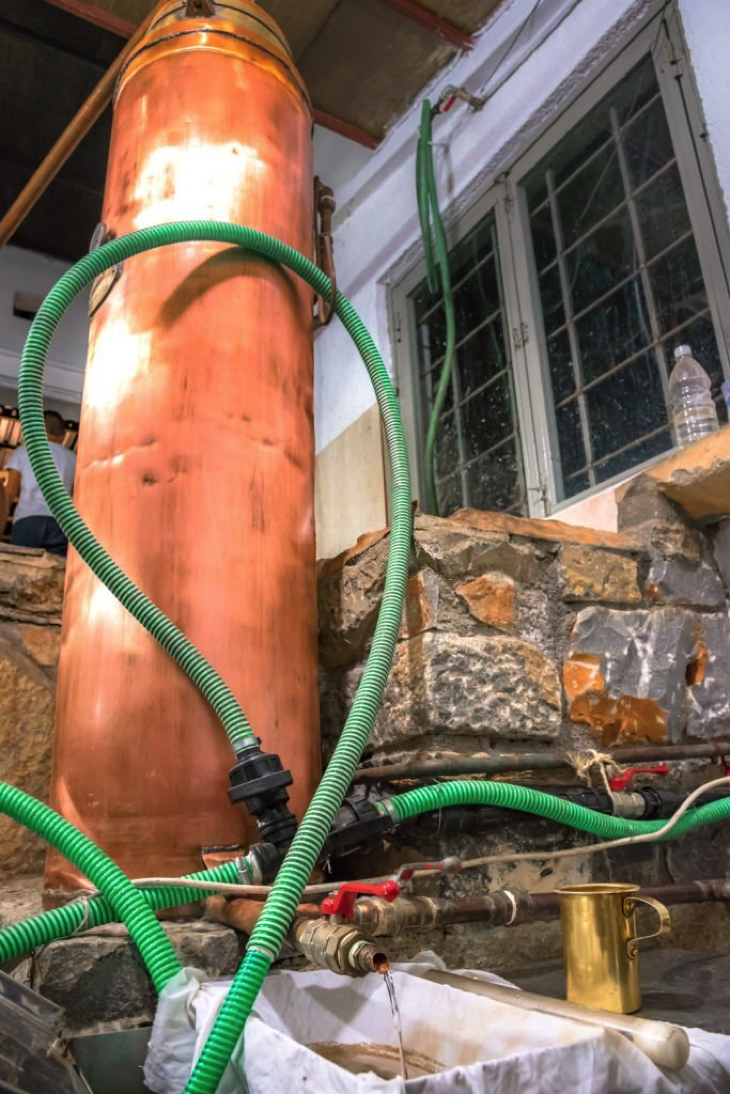

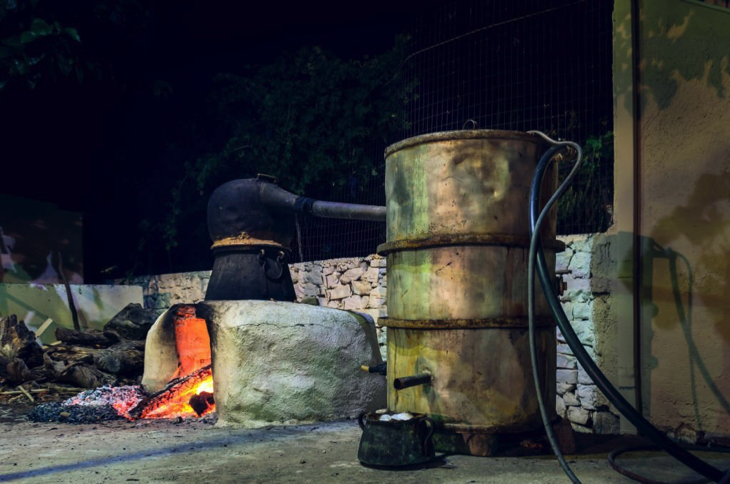
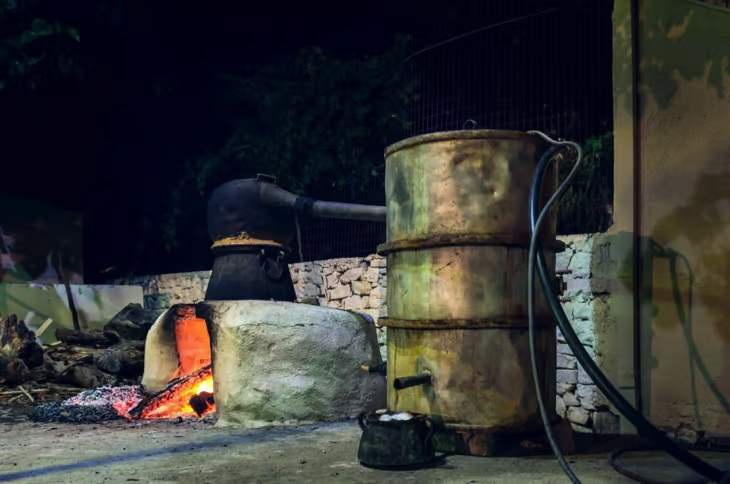
Grapes are crushed and the pomace is sealed in barrels, where sugars ferment into alcohol over a month or more. The distiller then loads the fermented pomace and water into the kazani and lights a wood fire beneath it. The fire must stay steady, neither so strong that the pomace scorches and taints the spirit, nor so weak that distillation stalls.
The kazani and the head, heart and tail
The kazani has three basic parts: the pot, the lid, and a pipe that carries the steam. As the mixture boils, alcohol-rich steam rises through the pipe and passes through a tank of cold water, where it condenses back into liquid. The first drops, the protoraki, are almost pure alcohol, traditionally used for rubbing rather than drinking.
The run divides into three fractions: the “head”, the “heart” and the “tail”. The head is high in alcohol; the tail carries heavier alcohols with a strong aroma. Both head and tail are set aside and returned to the still for the next batch. Only the “heart”, thinned, matured and filtered, is bottled for drinking. A full distillation takes about three hours, during which the still owner tastes the run and adjusts the heat until the raki reaches the desired character.
Measuring strength with a Baumé hydrometer
In Crete, distillers measure strength with a Baumé hydrometer, a calibrated glass tube that floats in the liquid. Good raki sits at about 17 degrees Baumé (roughly 40% alcohol) and sometimes 18 degrees Baumé (about 43%). Because so much raki is home-distilled, strength varies by producer across the 35–60% range.
What is rakokazano?
Rakokazano is the traditional, licensed autumn gathering, held mainly in late October and November, where a Cretan village distils the season’s first raki around food, music and company. It is both a production method and a social festival, and it is the moment to see tsikoudia made the old way.
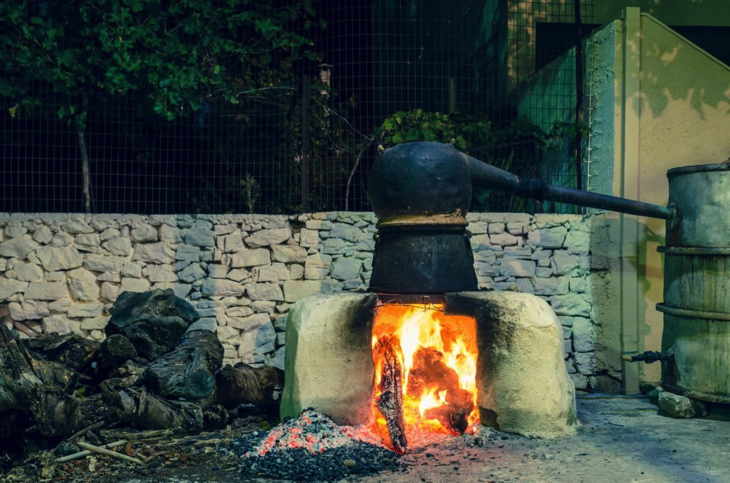
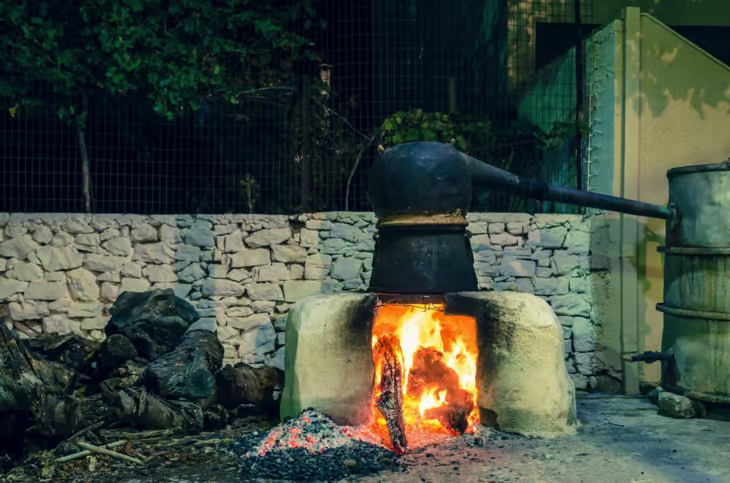
The licence behind it dates to 1920, when Cretan Prime Minister Eleftherios Venizelos institutionalised home distillation. These permits pass down through generations, much like taxi licences in the cities, and allow 48 hours of distilling with a limit of 400 litres for personal use. Fees apply, and unlicensed distillation carries severe penalties, so a genuine family licence is prized. The income from a kazani is small; families keep the tradition for honour and social standing, not profit.
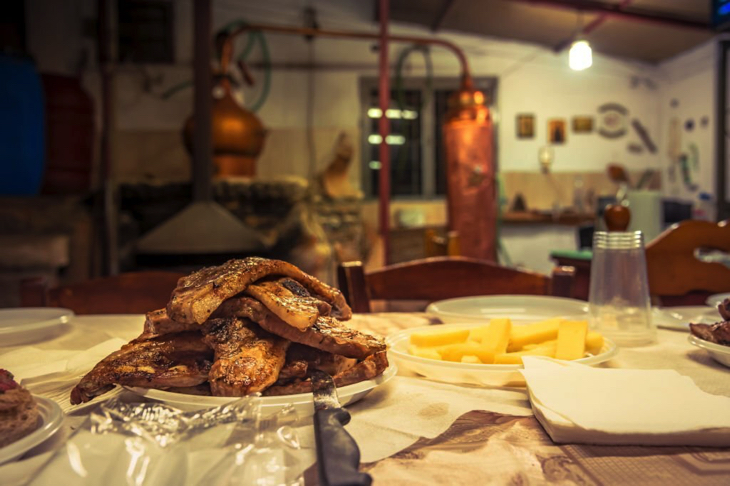
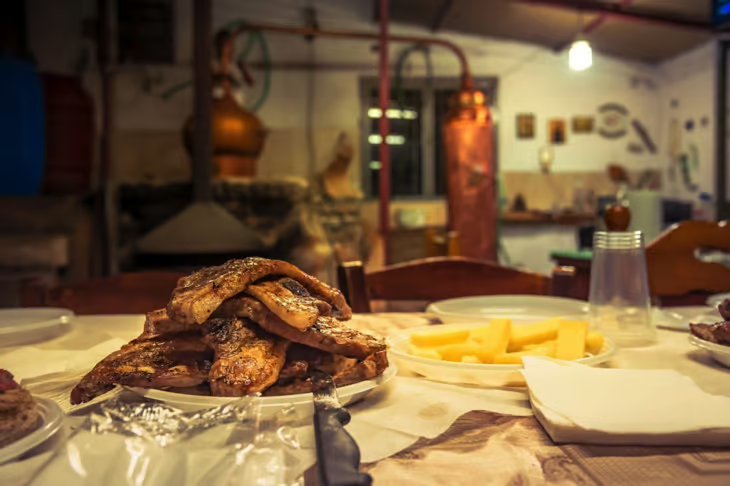
During rakokazano the still may run for a day or more, depending on how much pomace guests bring. The gathering becomes an all-day feast set to the Cretan lyra, with mantinades (rhyming couplets), dancing and toasts. Local products anchor the table: potatoes oftes (whole potatoes roasted in the ashes), apaki and sausages on the charcoal, goat cooked by the fire, and seasonal walnuts, chestnuts, pomegranates, apples and quinces. If you are in Crete in these months, head for a mountain village in the hinterland and you will likely find one.


How do you drink raki, and what do you eat with it?
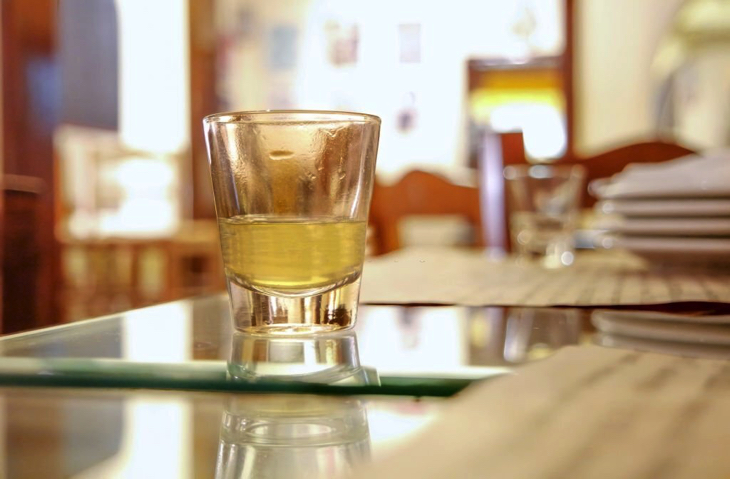
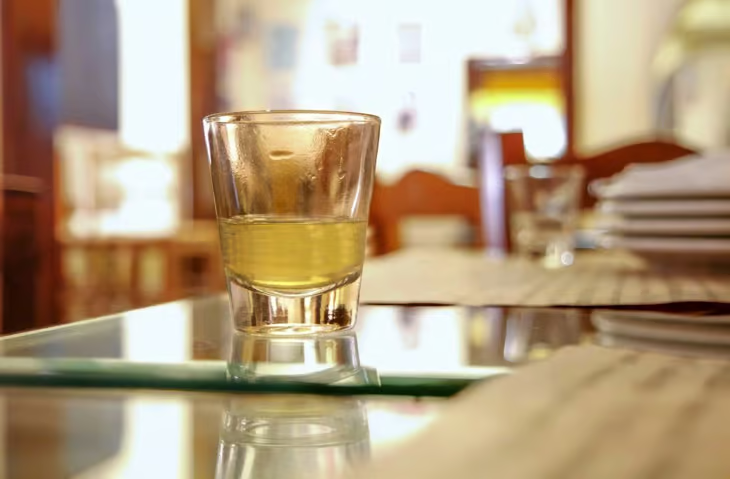
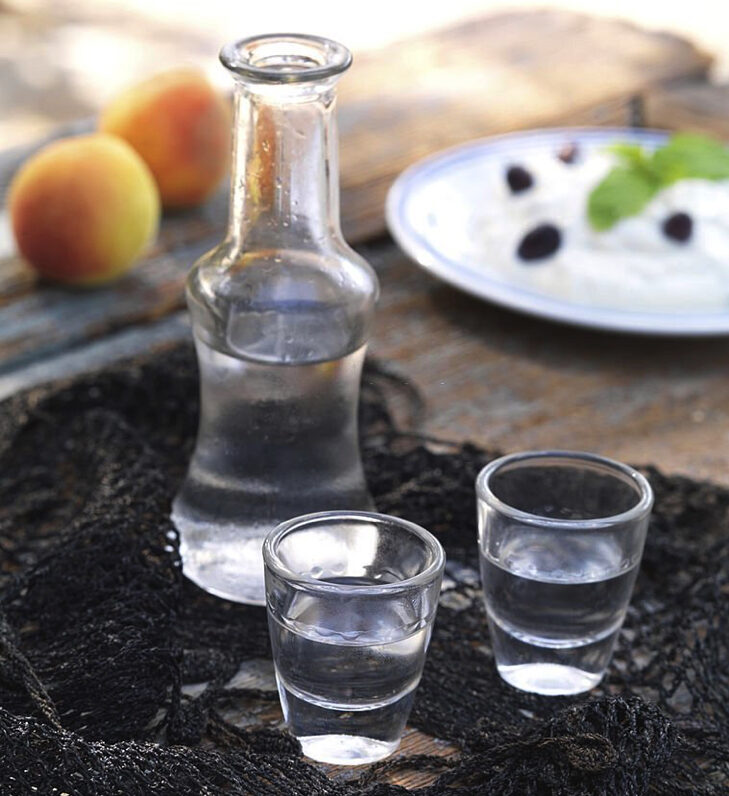
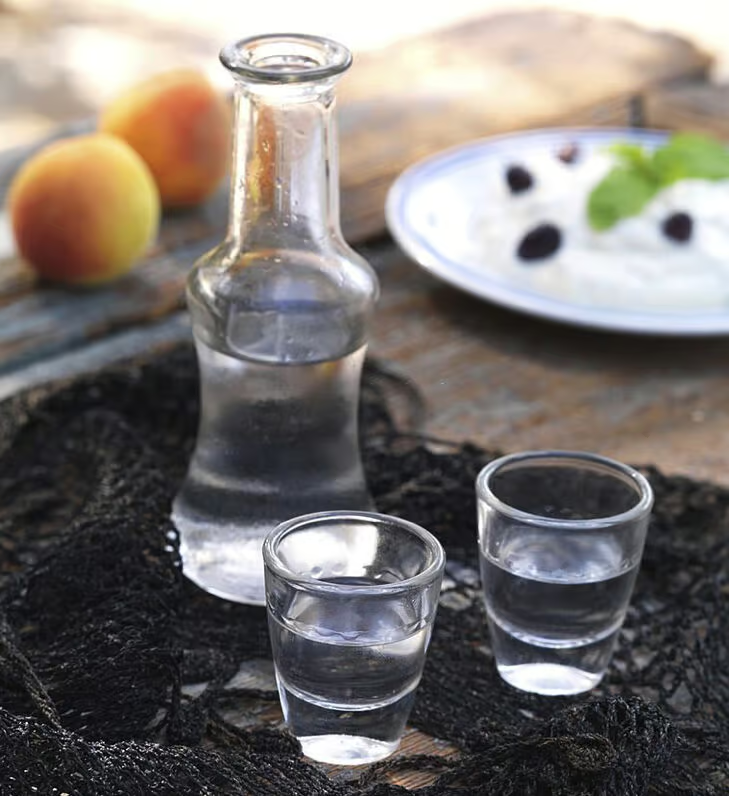
Serve raki chilled, around 10 °C, or with a little ice in summer, in a small straight shot glass called a rakopotiro, and never drink it plain. Raki is a companion to food, and Cretans raise it with the toast “yamas”.


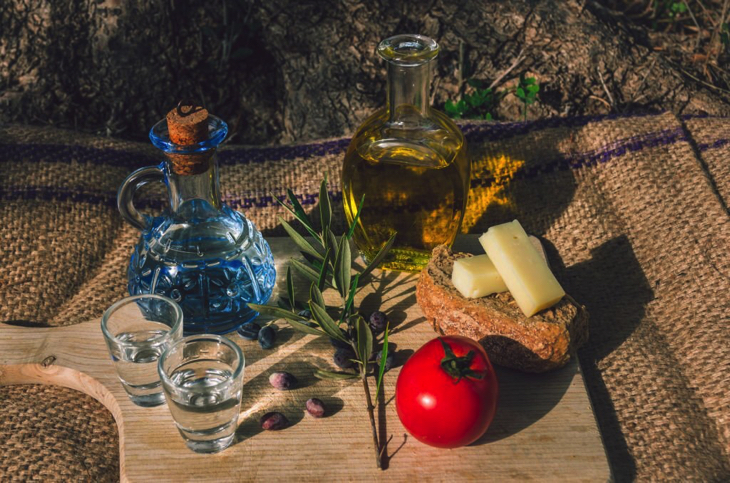
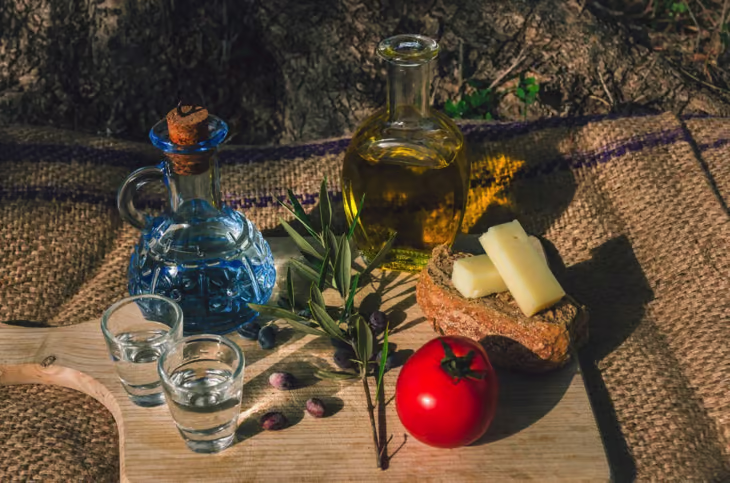
Pair it with meze and matured flavours: rusks, tomatoes, cucumbers, olives and cheese; seasonal beans and artichokes in spring; fresh fruit in summer; and grilled meat or seafood. A classic partner is antikristo, a Cretan technique in which a young lamb or goat is cut into quarters (goulidia), salted, skewered on large wooden stakes and arranged in a circle around an open fire. Thanks to its clean, intense character, raki also works as a digestif at the end of a rich meal.
Does raki have health benefits?
In moderation, one or two glasses, Cretan raki is traditionally credited with mild benefits: it may promote vasodilation (which can lower blood pressure), has antimicrobial properties, and features in home remedies for colds, coughs and headaches. Some studies associate moderate alcohol intake with reduced cardiovascular risk. Any benefit only holds within an already healthy lifestyle, a balanced Mediterranean diet, daily exercise and no smoking.


Other Cretan drinks to try
Beyond raki, Crete rewards curious drinkers with rakomelo, ouzo, local wines and a growing craft-beer scene.
Rakomelo (raki and honey)
Rakomelo is raki gently warmed with honey and spice, subtly sweet, with a hint of clove and cinnamon in the finish. It suits chilly evenings and doubles as a remedy for coughs and sore throats, though it can also be served chilled over ice in summer. The drink dates to the 12th century, with origins claimed in the Peloponnese, Crete or the Cyclades. To make it at home, add one or two teaspoons of honey to every four shots of raki with a little cinnamon and clove, warm gently until the honey melts, then serve warm or chilled.
Raki vs ouzo
The main difference is anise and strength: ouzo is anise-flavoured and originated in Greece, while Cretan raki carries no anise and is markedly stronger. Both are distilled from grape material, but raki keeps the raw grape character that ouzo masks.
Cretan wines
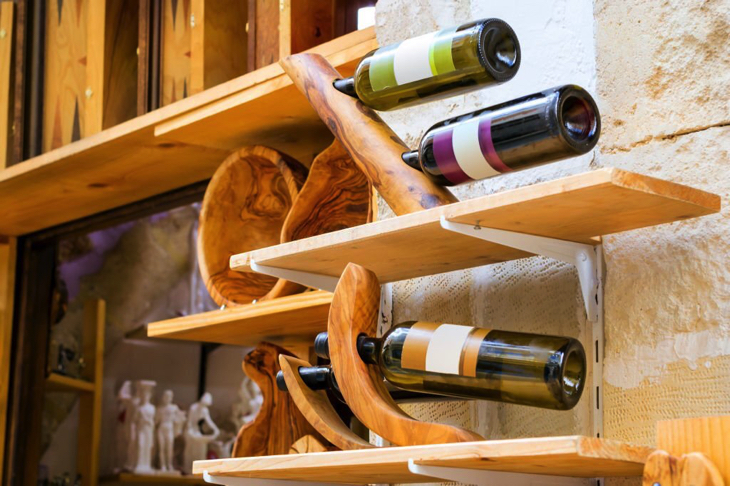
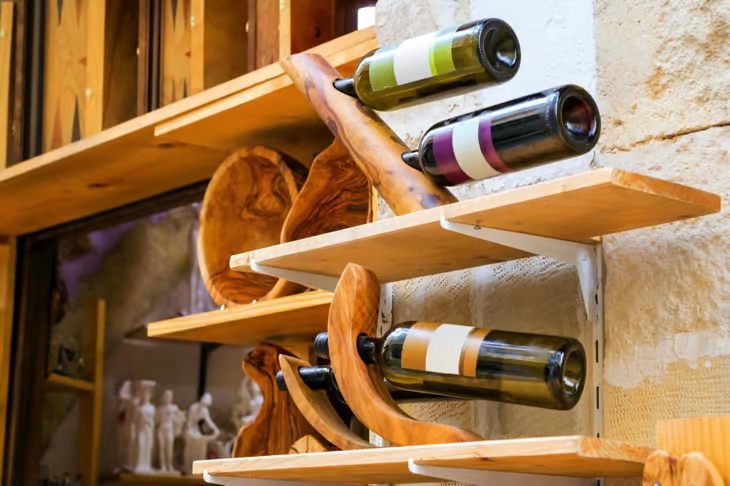
Cretan wine has a deep pedigree, Sir Arthur Evans found an ideogram for “wine” in Linear B, the earliest known Greek writing. The island now has more than 80 producers, with strong work in Chania and Sitia and a renaissance centred on greater Heraklion, where around 50 growers account for about 90% of production. The signature indigenous grapes are Kotsifali and Liatiko, alongside Mandilaria, Muscat of Spinas and international varieties such as Mourvèdre and Syrah. Liatiko is the most widely planted red; the Vidiano white is among the island’s finest.
Cretan beers
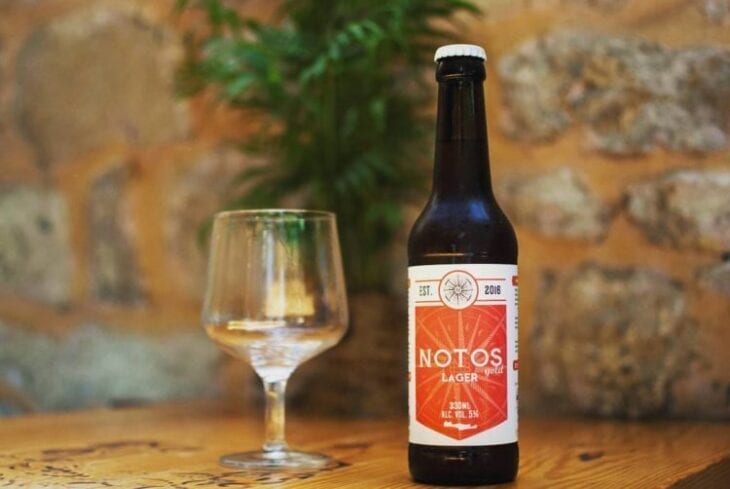
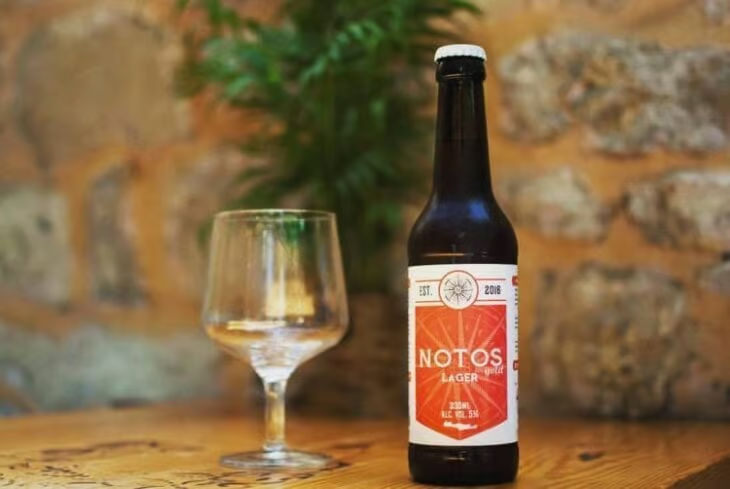
Crete’s craft beer is younger and less famous, but organic artisanal brewing is growing. Local names include Cretan Brewery, Solo Beer, Charma Beer and Notos Lager by Notos brewery.
Where to buy raki in Crete
You can buy Cretan raki in souvenir shops across the island, near major sights such as Knossos Palace, and in the local markets of Heraklion and Chania. At Heraklion and Chania airports, duty-free shops sell 200 ml bottles paired with four shot glasses, a practical souvenir within flight liquid limits.
Three well-known Cretan raki producers
- Kretaraki Traditional Cretan Raki (DS Distillers): made from selected sweet sultanina grapes grown in Cretan mountain vineyards, fermented for 30 days and double-extracted to collect only the pure heart, giving a peppery, fruity character.
- Tsikoudia Paradise by Domaine Paterianakis: from Crete’s first organic winery; the second-generation Paterianakis sisters produce single-variety tsikoudia from organically grown Vidiano and Kotsifali. The winery welcomes visitors in summer.
- Tsikoudia Raki by Vassilakis Estate: distilled among the family’s olive groves and vineyards and bottled in small quantities, available in 700 ml and 200 ml. In eastern Crete, Ktima Toplou also produces a fine organic tsikoudia, including an oak-aged raki.
The raki market today
Tsikoudia is now a Protected Designation of Origin (PDO) product that represents Crete internationally, and it is protected within the European Union as an original spirit only when produced in its home region. Demand has grown sharply over the past decade, which raised the risk of low-quality bulk raki, so regulated distillation, bottling and labelling now matter more than ever for keeping the drink authentic.
Alcohol limits when driving in Crete
Greece’s legal drink-drive limit is 50 mg of alcohol per 100 ml of blood, 0.05% BAC, which is lower than in the USA or UK. As a rough guide, that is reached by a 490 ml large beer, a small glass of wine, about 60 ml of ouzo, or 55 ml of vodka or whisky. Given how readily raki is offered in Crete, plan a designated driver on distilling days.
Penalties for drink-driving reach fines of up to €700 ($803.67, £593.25), licence suspension of three to six months, and removal of your plates for up to six months; a second offence within two years can carry up to six months in jail. Remember that Crete drives on the right, and vehicles already in a roundabout have priority. For a hire car, note that the registered owner is not the driver, so responsibility for any drink-driving offence rests with you as the renter. Enjoy the raki, but keep the driving and the drinking separate.