


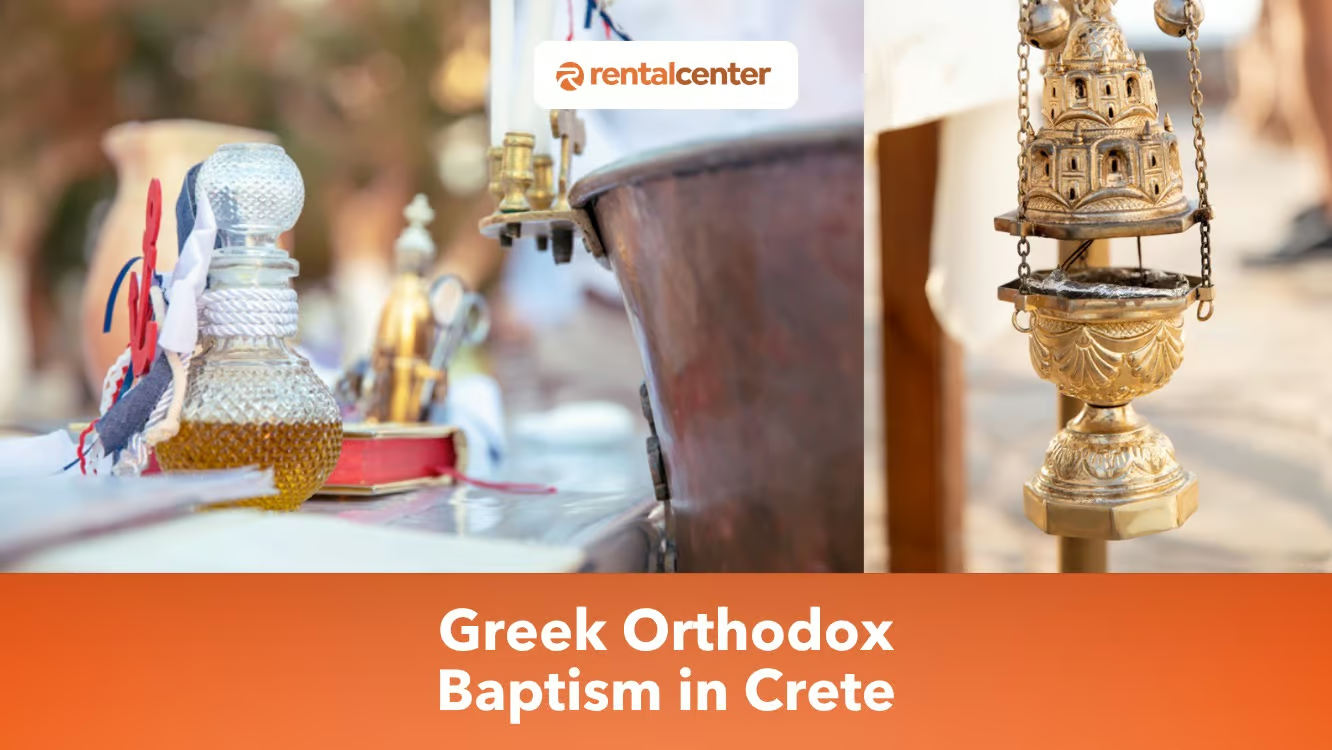
Greek Orthodox baptism (christening) in Crete is a full-immersion sacramental ceremony performed for infants between 40 days and two years of age. The child is baptised and chrismated – two sacraments in a single service – sponsored by a godparent who covers the ceremonial costs and takes on a lifelong spiritual role. In Crete, the church service is followed by a festive banquet with traditional food, music on the Cretan lyra, and the island’s signature sweet, kserotigana. This guide covers the ceremony step by step, godparent responsibilities, naming customs, what guests should know about dress and gifts, and what makes a Cretan baptism distinctive.
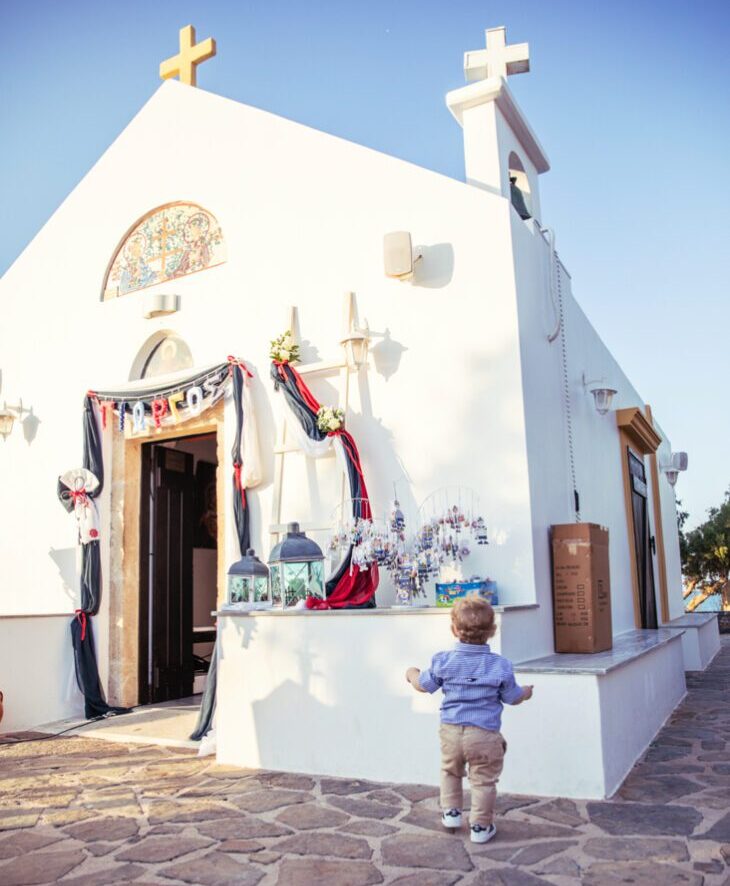
While baptisms take place all year round in Crete, the warmer months are the most popular, which is also when most visitors travel to Greece. If you are visiting the island in summer, there is a good chance you will come across one.
A note on regional customs: The religious core of a Greek Orthodox baptism – immersion, chrismation, and the recitation of the Nicene Creed – is universal across Greece. The food, sweets, and post-ceremony celebrations described here reflect Cretan regional traditions and may differ in Athens or elsewhere.
What Is a Greek Orthodox Baptism?
A Greek Orthodox baptism is the sacrament through which a child, sponsored by a godparent, formally becomes a member of the Orthodox Church. It is one of the most important family events of the year, and much festivity surrounds it.
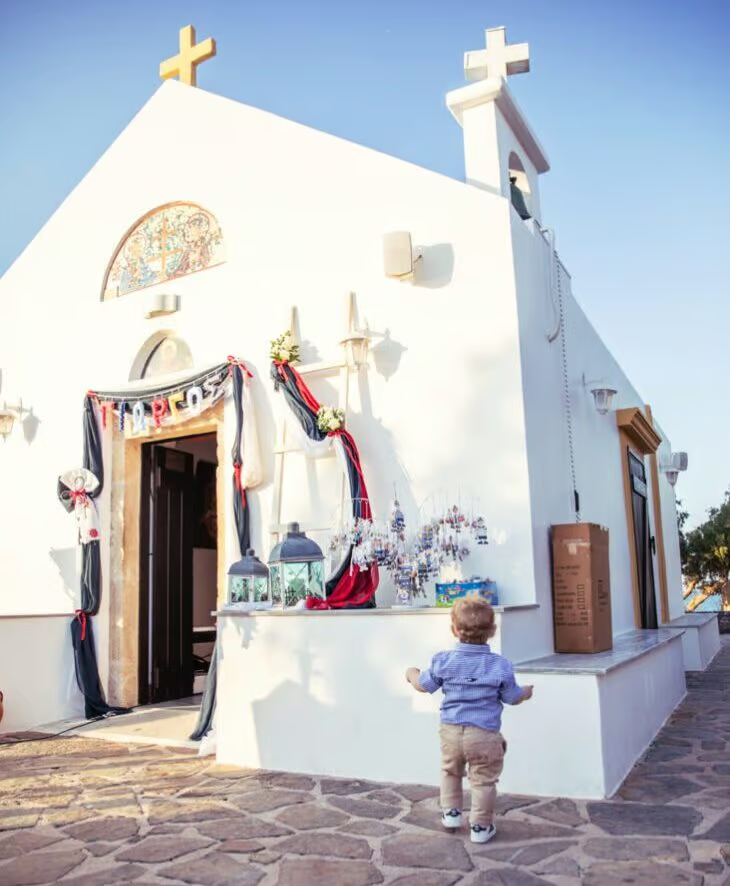
Baptism vs. Chrismation: Two Sacraments, One Ceremony
A Greek Orthodox christening is actually two distinct sacraments performed in the same service: Baptism and Chrismation.
Baptism is the triple immersion in holy water that cleanses the infant of original sin and brings them into the Church. Chrismation follows immediately: the priest anoints the child’s forehead, eyes, nostrils, lips, ears, chest, hands, and feet with a holy oil called Miron (Holy Chrism), which is consecrated by the Ecumenical Patriarch in Constantinople. Chrismation is the Orthodox equivalent of Confirmation in the Western Church, with one key difference – in Orthodoxy it happens straight after baptism rather than years later.
When Do Greek Children Get Baptised?
Because the Greek Orthodox tradition uses full immersion, the child is rarely a newborn. Tradition waits until the infant is at least 40 days old and physically robust enough for the ceremony, and children are usually baptised before they turn two.
The Baptism Ceremony: Step by Step
The ceremony begins with the godparent renouncing Satan and reciting the Nicene Creed, moves to the triple immersion at the font, and concludes with chrismation, first communion, and three circuits of the font. Here is how it unfolds:
- Renunciation – At the back of the church, the godparent faces west, holds the child, and formally renounces the devil, reconfirming allegiance to the Church.
- Nicene Creed – The godparent then turns east and recites the Nicene Creed as a profession of faith, speaking on the infant’s behalf before God and the congregation.
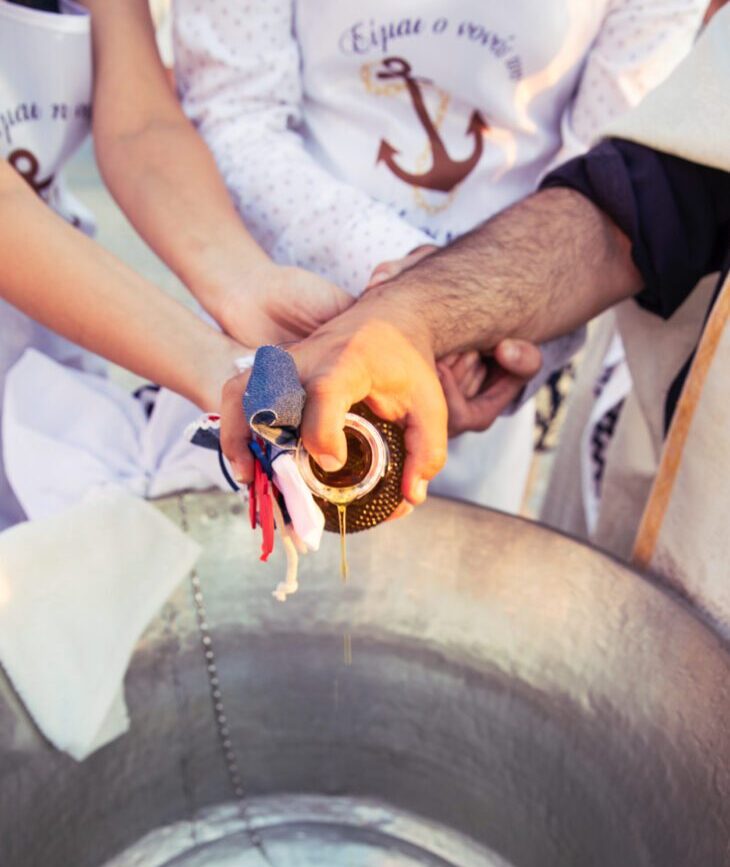
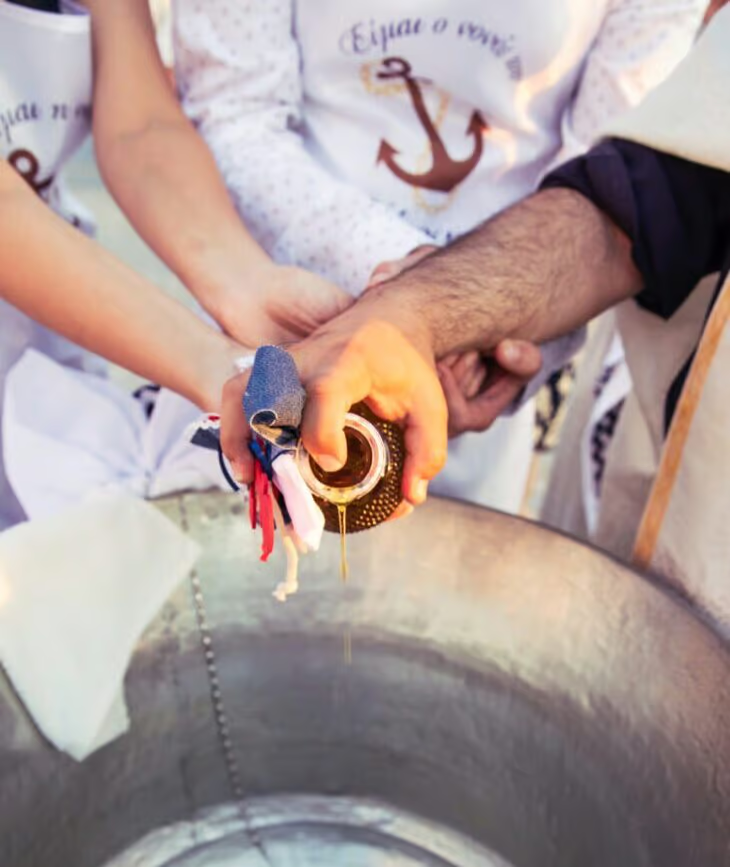
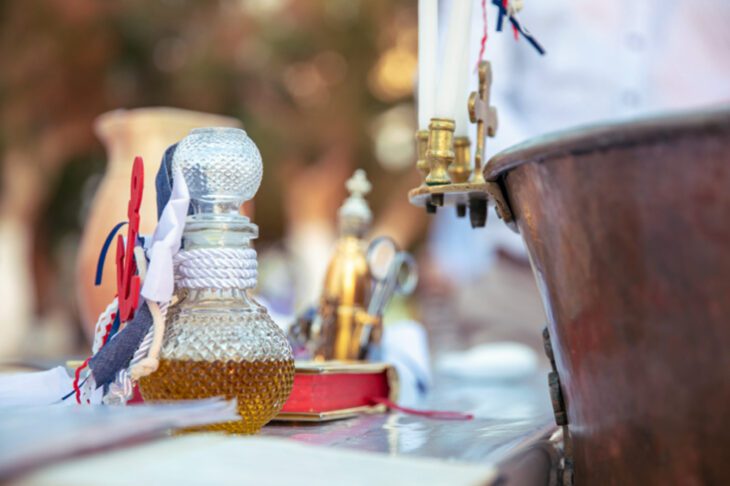
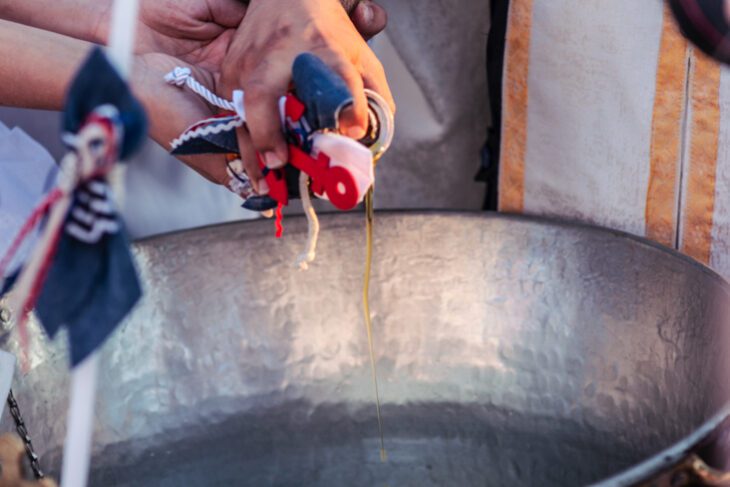
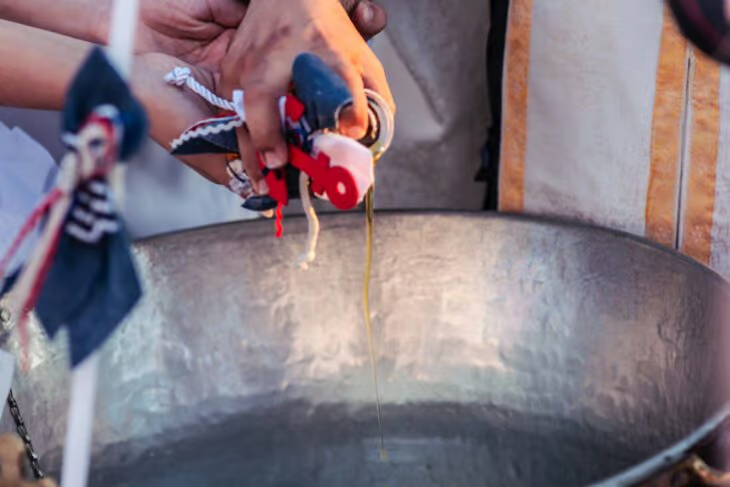
- Anointing with oil – The priest anoints the child with blessed olive oil, symbolically preparing them to enter the water.
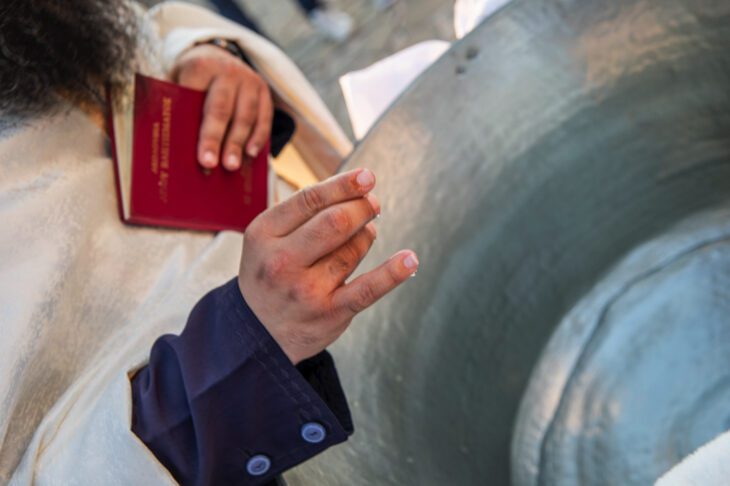
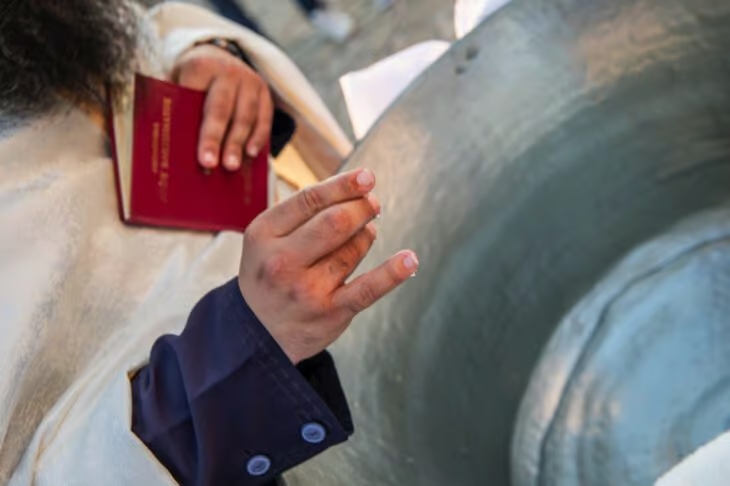
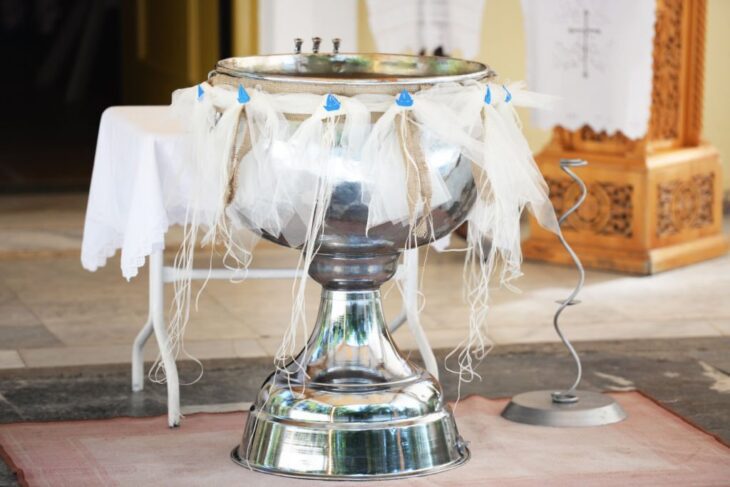
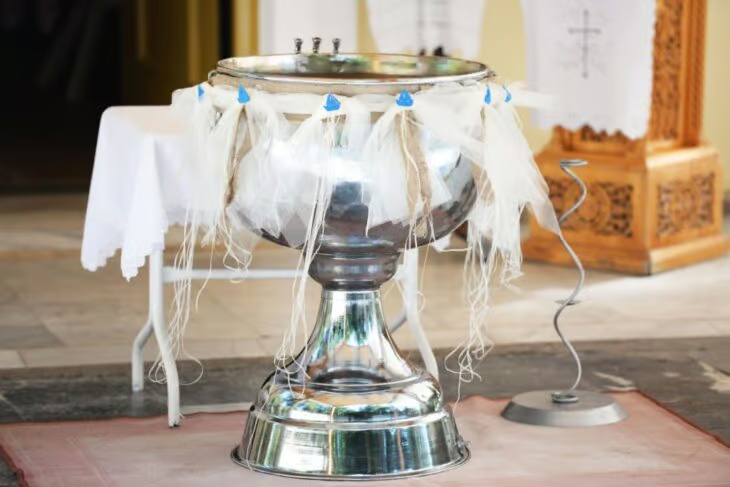
- Triple immersion – At the baptismal font in the main part of the church, the child enters the holy water three times as the priest immerses them fully, invoking the Father, the Son, and the Holy Spirit with each immersion.
- Chrismation – Immediately after immersion, the priest anoints the child with Miron (Holy Chrism), confirming the gift of the Holy Spirit.
- Dressing – The godparent wraps the child in a white towel – drying them lightly, so that some of the holy oil stays on the skin – and dresses them head to toe in entirely new clothing that the priest has also blessed.
- Three circuits of the font – The godparent carries the child three times around the baptismal font, with young children walking alongside holding tulle-wrapped candles.
- First communion and name announcement – The child receives their first communion, and the priest announces their name to the congregation for the first time.
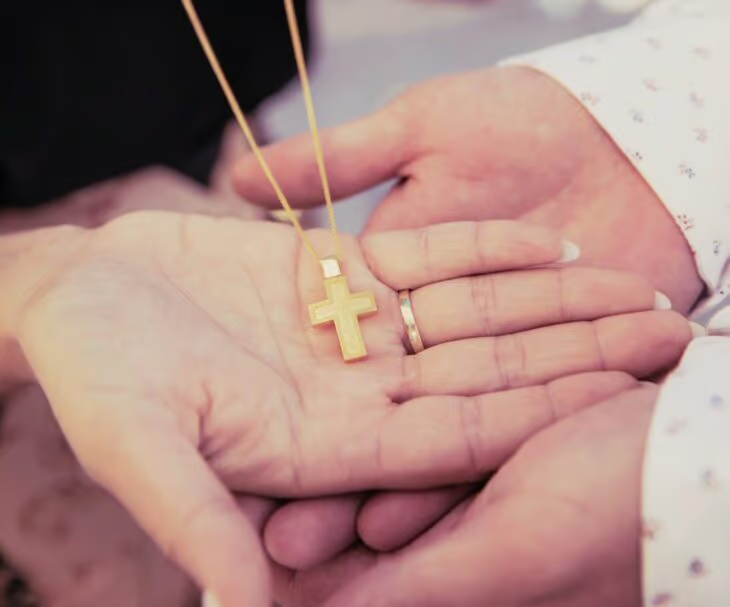
Sometimes the child is quite angry by this point, but the love and attention soon soothe away any tears. After the ceremony, the parents kiss the hand of the godparent, and well-wishers come forward to say “Na sas zisi” – “Life to the child!”
The Role of the Godparents in Greece
The godparent (koumbaros for men, koumbara for women) carries both the financial and the spiritual weight of the ceremony, and remains an active figure throughout the child’s life. The godparent is usually a very close friend of the mother or father, though sometimes a cousin or another relative.
What Godparents Provide: The Complete List
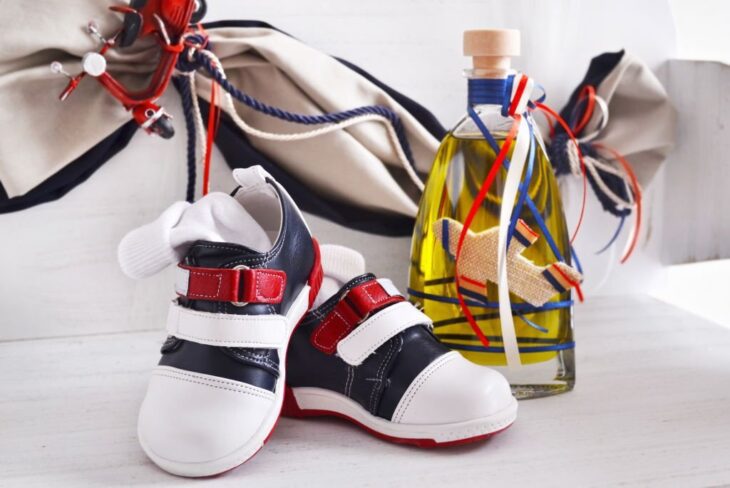
Being a godparent is a great honour and a considerable expense. The godparent is responsible for:
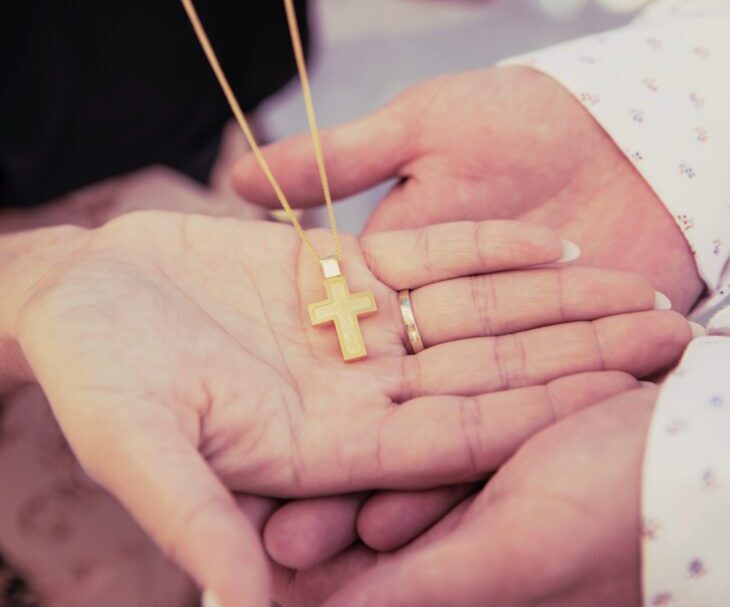
- The gold cross – worn by the child from the day of baptism.
- The child’s complete outfit – from underwear to shoes, all new and blessed by the priest.
- Ladopana – a special ceremonial set of white underwear; ladi (λάδι) means oil in Greek.
- Ceremony supplies – white towels, a small bottle of olive oil for the font, and soap for the priest to wash his hands after the baptism.
- Martirika – small crosses with a ribbon and pin, worn by every guest during the ceremony.
- Church decorations – festive candles wrapped in tulle, like those used at weddings, held by children during the service.
- The decorative chest – a keepsake box that holds all these items and stays in the child’s room for years as a memento of the day.
The Spiritual Bond: Koumbaros and Koumbara
The relationship created at baptism is the same kind of bond as when one couple sponsors another’s marriage. It is not just for the day – it is a lasting tie. The godparent is spiritually considered a parent, which is why, by custom, a person only ever baptises girls or only ever baptises boys: their spiritual “siblings” should not marry, in case they meet later in life.
Naming the Child: Greek Orthodox Tradition
In Greek Orthodox families, children are named after their grandparents, typically beginning with the paternal grandparents. Because the practice is so widespread, first cousins often share the same name. The baptism is the moment the child officially receives their name for the first time.
The name chosen must belong to a Greek Orthodox saint. That saint’s feast day becomes the child’s name day (onomasteri), which is celebrated every year – often more than the birthday – with family visits and gifts. Even though the grandparent expects to hear their name given to the child, it remains one of the most emotional moments of the day.
The Parents’ Role: Invitations, Gifts, and Boubounieras
The parents are the hosts of the baptism. They send the invitations and prepare the traditional boubounieras – bundles of white sugared almonds gathered in tulle and tied with a ribbon, much like at a Greek wedding. Alongside the boubouniera, each guest receives a small gift to keep as a memento, such as a picture frame, a small toy, or a decorative object, together with a small sweet. The parents also choose a substantial, meaningful gift for the godparent.
The Baptism Banquet in Crete
Cretan baptism banquets are full celebrations with traditional island food, local wine, and live music – and the signature sweet is kserotigana.
Traditional Cretan Baptism Food
Greeks in general, and Cretans in particular, celebrate with food. A baptism – whether in a village or a town – is followed by a festive lunch or dinner for the extended family, the godparents and their family, and close friends. Cretan specialities are served: goat, freshly made pies, excellent local cheeses and salads, and homemade wines. There is usually music and dancing to the sound of the Cretan lyra.
Kserotigana: The Cretan Christening Sweet
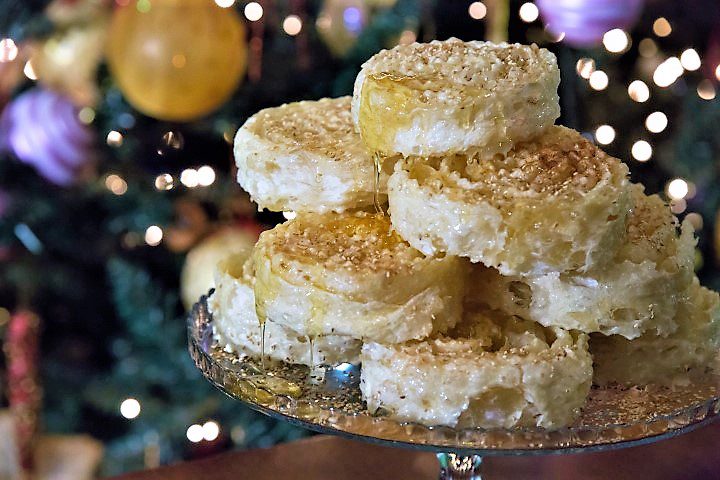
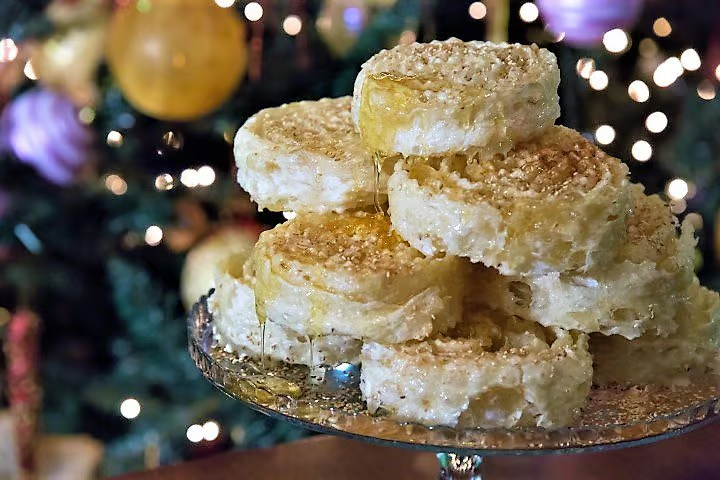
While elsewhere in Greece the baptism sweet might be a miniature profiterole or a small cake, in Crete it is most often kserotigana – the same treat served at Cretan weddings. These are rolls of crisp, very thin fried dough drenched in honey syrup. Because they can be prepared in advance and keep well even in the heat, they make an ideal kerasma – something to offer guests – at a large celebration.
After the Baptism: What Happens Next
After the church service, guests greet the newly named child and congratulate the godparent, the parents, and the families. They accept their small gifts and snack on the sweets. Water is provided, and, this being Crete, there will almost certainly be some raki on hand as well.
Three Days, Three Sundays: Post-Baptism Traditions
For three days after the baptism, the family does not bathe the child, so that the Miron oil can stay on the skin as tradition prescribes. The child then attends church to receive holy communion on each of the three consecutive Sundays following the ceremony, completing their formal entry into the Orthodox community.
The godparent continues to play a role for years to come. They make sure the child has an Easter Lambada – the candle used to receive the holy light of the resurrection at the midnight church service – and they give a gift on the child’s name day. Most importantly, they remain a spiritually significant figure as the child grows up.
Attending a Baptism in Crete: Guest Guide
If you are invited to a baptism while visiting Crete, here is what you need to know about dress, gifts, and cost.
What to Wear to a Greek Baptism
Dress smart and conservatively – a dress, or trousers and a shirt. Avoid white, the colour reserved for the child. For a summer baptism in Crete, choose breathable fabrics, but keep beachwear and casual clothing out of the church.
What Gift to Bring
A monetary gift is standard and most appreciated; place cash in a card or envelope addressed to the child. Practical gifts such as a silver keepsake or a named item are also welcome. As a guest, you are not expected to provide any of the ceremony items – those are the godparent’s responsibility.
How Much Does a Greek Baptism Cost?
- Godparent’s total: roughly €500 ($576.85, £427.00)–€2 ($2.31, £1.71) or more, depending on scale (gold cross, full outfit, ceremony supplies, church decoration, and martirika for every guest).
- Guest gift: typically €50 ($57.69, £42.70)–€200 ($230.74, £170.80) in cash.
- The banquet: covered by the parents; village baptisms can host anywhere from 100 to 300 guests.
As a guest you will receive boubounieras, a small personal gift, refreshments after the church service (including raki in Crete), and a place at the banquet.
Greek Baptism Terms Glossary
| Term | Pronunciation | Meaning |
|---|---|---|
| Chrismation | kriz-MAY-shun | The sacrament of anointing with holy oil (Miron), immediately following Baptism |
| Miron | mee-RON | Holy Chrism oil, consecrated by the Ecumenical Patriarch in Constantinople |
| Koumbaros | koom-BAR-os | Godfather; a title carrying the same spiritual weight as a marriage sponsor |
| Koumbara | koom-BAR-a | Godmother |
| Ladopana | lah-do-PAH-na | Ceremonial white underwear provided by the godparent; ladi = oil |
| Martirika | mar-tee-REE-ka | Small cross pins with ribbon, worn by all guests at the baptism |
| Boubounieras | boo-boo-NYEH-ra | Sugared almond favours in tulle, given to guests by the parents |
| Kserotigana | xer-o-TEE-ya-na | Crispy fried pastry rolls in honey syrup; the traditional Cretan christening sweet |
| Lambada | lam-BAH-da | The decorated Easter candle the godparent provides to the child each year |
| Na sas zisi | na sas ZEE-see | “Life to the child!” – said to the parents after the baptism |
| Onomasteri | o-no-mas-TER-ee | Name day; the feast day of the saint the child is named after |
How important is tradition for local Cretans?
Local traditions are deeply ingrained in the cultural fabric of Crete and hold great importance for Cretans as they serve as a vital bridge between the past and present. The tradition of Crete reflect its rich historical and cultural influences, including the iconic Minoan civilization, which provides Cretans a profound sense of cultural identity and continuity.
Various festivals on the island showcase long-held traditions in music, dance, art, and cuisine, allowing both locals and visitors alike to fully immerse themselves in and experience authentic Cretan culture and heritage.
Religious traditions like Easter and Epiphany carry deep cultural significance, bringing together families and communities in celebration. Food traditions utilizing fresh local ingredients also embody the spirit of Cretan culture and geography, with traditional dishes that connect people to the island’s long history.
Art forms like pottery-making and embroidery represent cherished Cretan crafts that have been honed and passed down through generations. Music and dances such as the mantinades folk songs and pentozali circle dances are communal artistic expressions of the Cretan soul. Even life cycle events like weddings and baptisms incorporate customary rituals that reflect the cultural values and traditions of the island.
Upholding these age-old traditions allows Cretans to proudly preserve their cultural identity and seamlessly share it with visitors from around the world.
FAQ: Greek Orthodox Baptism
What is the difference between baptism and chrismation?
Baptism is the triple immersion in holy water that brings the child into the Church. Chrismation, performed immediately afterwards in the same service, is the anointing with holy oil (Miron) that confirms the gift of the Holy Spirit. It is the Orthodox equivalent of Confirmation.
At what age are Greek children baptised?
The child must be at least 40 days old and is usually baptised before the age of two, because the ceremony involves full immersion in water.
What do godparents do at a Greek baptism?
The godparent covers the cost of the ceremony – the gold cross, the child’s new outfit, the ladopana, the martirika for guests, and the church decorations – and takes on a lifelong spiritual role in the child’s life.
What should guests wear and bring?
Wear smart, conservative clothing and avoid white. A monetary gift placed in a card for the child is the standard and most appreciated present.
How much does a Greek baptism cost?
The godparent typically spends €500 ($576.85, £427.00)–€2 ($2.31, £1.71) or more. Guests usually give €50 ($57.69, £42.70)–€200 ($230.74, £170.80) in cash, while the parents cover the banquet.
A baptism is one of the clearest windows into the living tradition of Crete, and if you are on the island during the warmer months you are very likely to witness one.