





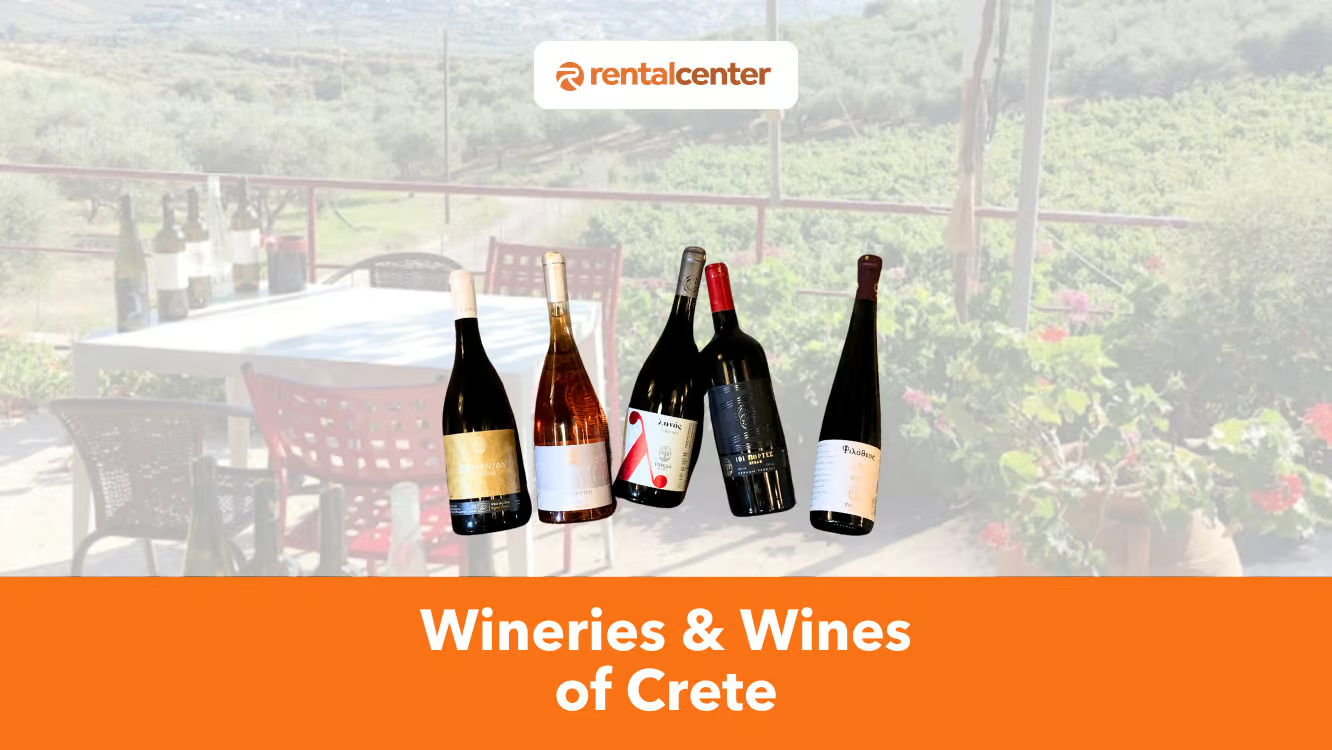
Crete is home to 80+ wineries producing some of Greece’s most distinctive wines from indigenous varieties like Vidiano, Liatiko, and Kotsifali. The best estates to visit span four PDO appellations – Archanes, Peza, Dafnes, and Sitia – most concentrated around Heraklion in the Peza-Archanes-Dafnes cluster, 15–30 minutes by car. Below you will find the top wineries, the grape varieties they champion, the wine routes that connect them, and practical tips for planning your tasting day.
History of Wine in Crete
Winemaking in Crete predates ancient Greece – the island hosts Europe’s oldest known vineyard, discovered at Kato Zakros and dated to over 4,000 years ago. The oldest wine press, dating back 3,500 years, was found in the adjacent Archanes. Wine has always been inextricably linked to daily Cretan life, and viniculture festivals continue a centuries-old tradition that has endured to the present day, now enhanced by accumulated knowledge and modern technology.
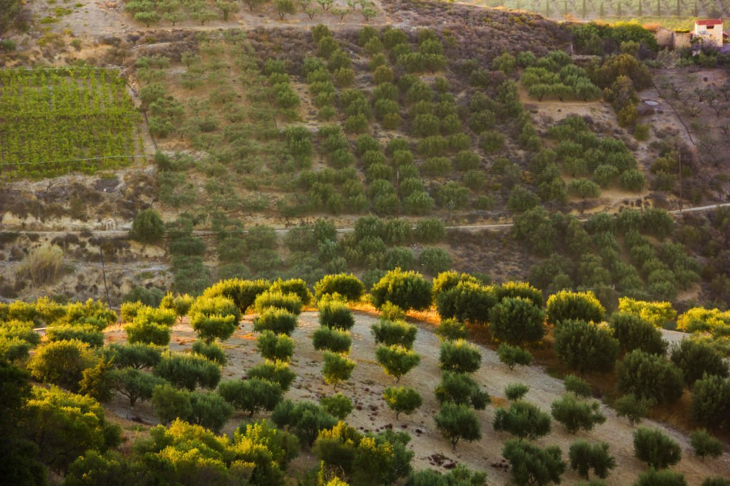
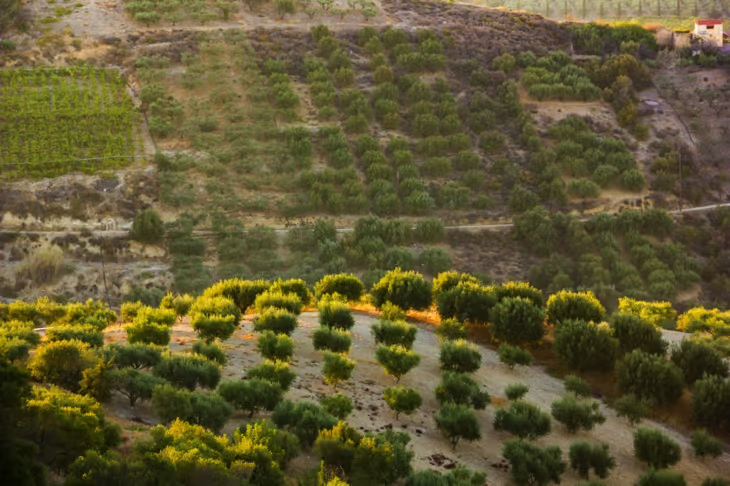
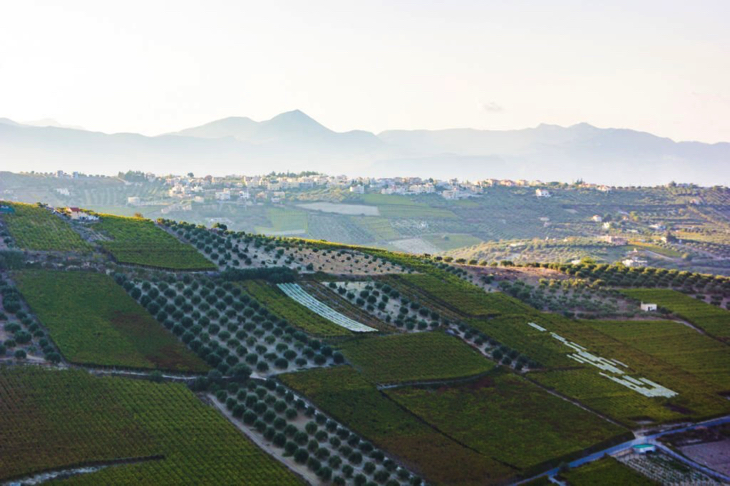
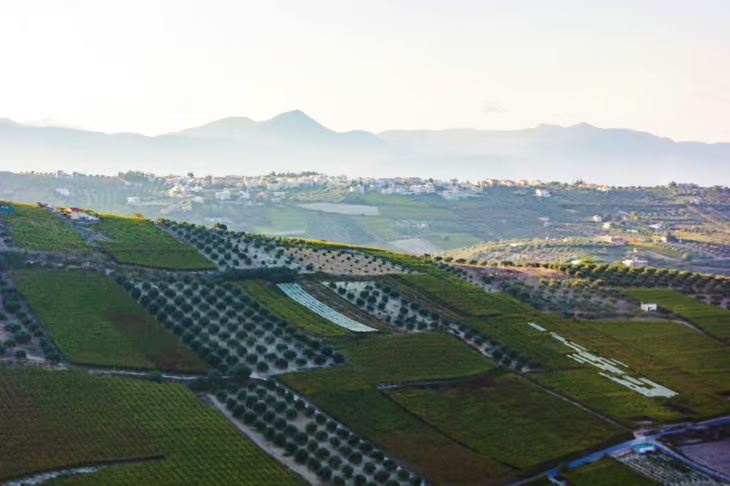
Crete’s limestone soils, average altitude of 200–600 metres, and cooling Aegean breeze enable its vineyards to ripen grapes slowly, producing wines with natural acidity and complex aromatics. Cretan viticulturalists select their vineyard sites carefully – matching grape variety to altitude, aspect, and soil type to maximise each variety’s aromatic potential.
Cretan wines pair naturally with the island’s cuisine – Vidiano’s bright acidity cuts through olive-oil-rich dishes, while Kotsifali’s softness complements slow-roasted meats. The well-known local cuisine and the new generation of Cretan wines make for a delicious pairing that will undoubtedly make this part of your journey a culinary treat.
Cretan Grape Varieties: White, Red & Rosé
Crete grows 12 indigenous grape varieties found nowhere else in the world, protected under the PGI Crete designation and divided into seven whites and five reds. The whites are Vilana, Vidiano, Dafni, Thrapsathiri, Plyto, Malvasia di Candia (Malvazia of Chandakas), and Muscat of Spina; the reds are Kotsifali, Liatiko, Mandilari, Romeiko, and Tsardana. PGI Crete labels certify both native varietals and blends with international (mainly French) cultivars. Many of these native grapes descend directly from cultivars grown by the Minoans more than 4,000 years ago, maintaining Crete’s ancient viniculture legacy.
White Grapes
Listed below are the most significant white grape wines in Crete:
- Plyto. According to Wine Grapes, Plyto has an “herbal, slightly grassy character with a delicate chalky, pear-grained texture and bright citrus flavours”. It smells like Muscat and is grapey.
- Dafni. Dafni is an aromatic white grape varietal that Lyrarakis saved from extinction. The distinctly herbal nature is reflected in the name “laurel”. It shows flavours of oregano, rosemary, and thyme with a zesty lemon-curd undertone. In 2010, Lyrarakis found this grape, on the verge of extinction, growing in the Mt. Psiloritis foothills and replanted it in a vineyard.
- Vidiano. Like many Cretan whites, Vidiano benefits from the mild climate by developing luscious apricot and tropical flavours.
- Vilana. Vilana is the island’s most significant white wine variety, usually flavourful and aromatic with light citrus and floral character.
- Thrapsathiri. Spicy and slightly nutty, with vibrant citrus and pear-fruit character and a touch of cedar; pairs well with chicken and pasta.
- Malvasia di Candia (Malvazia of Chandakas). A historic aromatic white linked to Crete’s medieval Malvasia wine trade, contributing floral richness to native blends.
- Muscat of Spina. A rare indigenous Muscat grown in Crete’s western region, known in ancient times as the “bee grape” for the swarms it attracted at harvest; intensely floral on the nose, crisp and vibrant on the palate.
Red Grapes
Listed below are the most significant red grape wines in Crete:
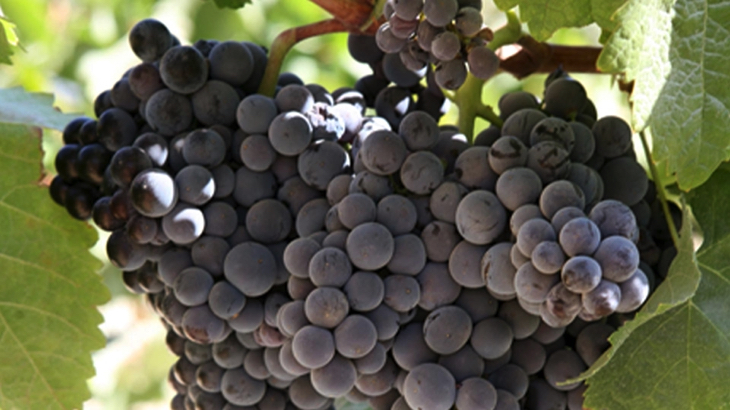
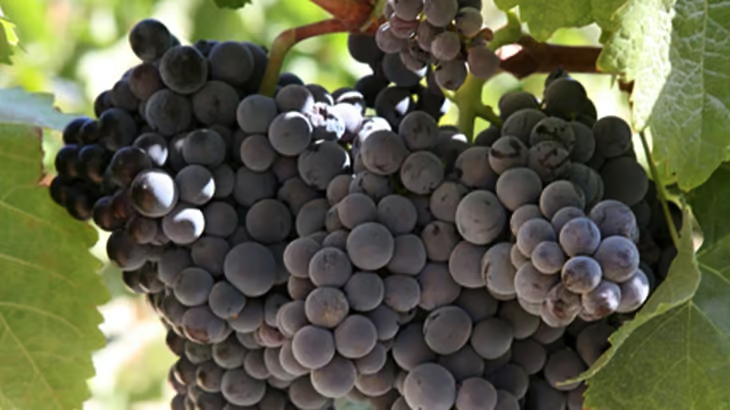
- Kotsifali. Given the warm environment, Crete wine frequently shows high alcohol – whites with an ABV of 14.5% are common, and Kotsifali is no exception. According to Wine Grapes, it is “soft, pale and possibly fragrant”.
- Liatiko. Liatiko is the most extensively grown red grape in Crete, used to make both rosé and red wines. It shows light colour with aromas of strawberry, red fruit, and culinary herbs.
- Mandilari. Mandilari is referred to as the Xinomavro of the Aegean for its dark colour and firm tannin.
- Romeiko. The fabled Romeiko is an earthy, rustic red grown mainly in the Chania region, traditionally used for the local Marouvas-style wine; pairs well with slow-cooked meats.
- Tsardana. A scarce indigenous Cretan red variety, preserved by a handful of growers as part of the island’s native-grape revival.
Rosé Wines
The two indigenous grape varieties most frequently used to make Cretan rosé are Kotsifali and Liatiko, though Mandilaria, Muscat of Spina, and foreign grapes like Mourvèdre and Syrah are also used. The early-maturing, light-coloured Liatiko is the most extensively planted red grape in Crete. Kotsifali, despite its thin skin, high alcohol, and low acidity, can produce fresh-tasting wines when picked early for rosé and directly pressed; it is frequently blended with other varieties. The Mandilaria grape, which adds colour and acidity, lifts the Haralabakis rosé.
Listed below are the most significant rosé wines in Crete:
- Fereniki Douloufakis. A light copper-salmon rosé, quite dry and well-balanced, with blood-orange and red-berry undertones, good weight, and a gritty texture. An 80/20 blend of Liatiko and Muscat of Spina, made saignée-style by winemaker Fereniki Douloufaki. ABV 13.5%. €11 ($12.63, £9.32) per bottle. Pairs with vegetable and fish dishes.
- Primos Rosé Diamantakis. A copper-orange Syrah-Mandilaria blend (70% Syrah, 30% Mandilaria) with notes of blood orange and juicy strawberries, crisp acidity, and orange-citrus aromas. Roughly three hours on the skins before fermentation in stainless steel; 2 g/L residual sugar.
- Haralabakis 2021. A medium copper-salmon 50/50 Kotsifali-Mandilari blend, made saignée-style from free-run juice, with a rich, earthy, red-berry fragrance, dry attack, palate grip, smooth mouthfeel, and a clean finish. Kotsifali and Mandilari supply the acidity and colour. Winemaker Manolis Dramintinos. ABV 12.5%.
Grape Varieties at a Glance
| Variety | Color | Key Flavors | ABV Typical | Best Paired With |
|---|---|---|---|---|
| Vidiano | White | Apricot, tropical, peach | 12.5–13.5% | Grilled fish, soft cheese |
| Vilana | White | Light citrus, floral | 11.5–12.5% | Seafood, salads |
| Dafni | White | Laurel, oregano, lemon | 12–13% | Mezze, grilled vegetables |
| Thrapsathiri | White | Spicy, nutty, citrus-pear | 12–13% | Chicken, pasta |
| Plyto | White | Herbal, chalky, citrus | 12–13% | Light fish, aperitif |
| Kotsifali | Red | Soft, pale, high alcohol | 14–14.5% | Grilled meats (blended) |
| Liatiko | Red | Strawberry, red fruit, herbs | 12–14% | Rosé style, Sitia sweet red |
| Mandilari | Red | Dark, tannic, primary aromas | 13–14% | Lamb, aged cheese |
| Romeiko | Red | Earthy, rustic | 13–14% | Slow-cooked meats |
Wine Appellations of Crete: PDO & PGI Explained
Crete has four PDO (Protected Designation of Origin) wine zones – Archanes, Peza, Dafnes, and Sitia – plus the broader PGI Crete regional label that covers all four districts of the island. Understanding these appellations is the key to reading any Cretan wine label and choosing where to taste, because each zone has a distinct terroir of soil, altitude, and climate that shapes its wines.
Crete’s four PDO appellations represent the highest tier of Greek wine classification:
| PDO Zone | Location | Primary Grapes | Character |
|---|---|---|---|
| PDO Archanes | 15 km (9.32 miles) SE of Heraklion | Kotsifali, Mandilari | Bold reds; best paired with lamb |
| PDO Peza | Heraklion hinterland | Vilana (white), Kotsifali-Mandilari (red) | 70% of Crete’s wine output |
| PDO Dafnes | South Heraklion | Liatiko only | Sweet and dry reds; raisin notes |
| PDO Sitia | Eastern Crete | Liatiko (red), Vilana (white) | Sweet Liatiko reds; historic prestige |
PDO Archanes
Archanes, a highland village at the base of the revered Mount Giouchtas some 15 km (9.32 miles) inland from Heraklion, is one of Crete’s largest and oldest wine-growing regions. Its terroir of well-drained limestone slopes favours the Kotsifali-Mandilari red blend that defines the appellation. The route from Heraklion to Archanes is often called the Wine Route of Crete because numerous wineries offer tastings along the way. The Byzantine frescoes in the monasteries “Panagia,” “Agia Paraskevi,” and “Agia Triada” and the renovated neoclassical buildings are worth viewing. Some of the best wineries in Archanes are Winery Stilianou and Winery Sinadinakis.
PDO Peza
The Peza area in the Heraklion district produces 70% of all the wine made in Crete. Across the whole island the vineyard covers roughly 50,000 hectares and produces about 950,000 hectolitres of wine each year – and Crete as a whole accounts for 20% of Greece’s total wine output. The Peza appellation permits both white grapes (chiefly Vilana) and the Kotsifali-Mandilari red blend. Some of the best wineries in Peza are the Boutari Winery (Scalarea Estate) and Minos Wines.
PDO Dafnes
Wine from Dafnes was already sought-after throughout the Middle Ages, and archaeological finds prove that viticulture has never ceased here. According to legend, the region took its name from a laurel tree (“daphne”) that grew in the yard of the Holy Belt of the Theotokos church. The Dafnes appellation permits only the Liatiko grape, producing both sweet and dry reds with characteristic raisin notes, though various other grapes are also grown under vine. Some of the best wineries in Dafnes are Daf Wines by Douloufaki Fereniki and Amargiotakis Winery.
PDO Sitia
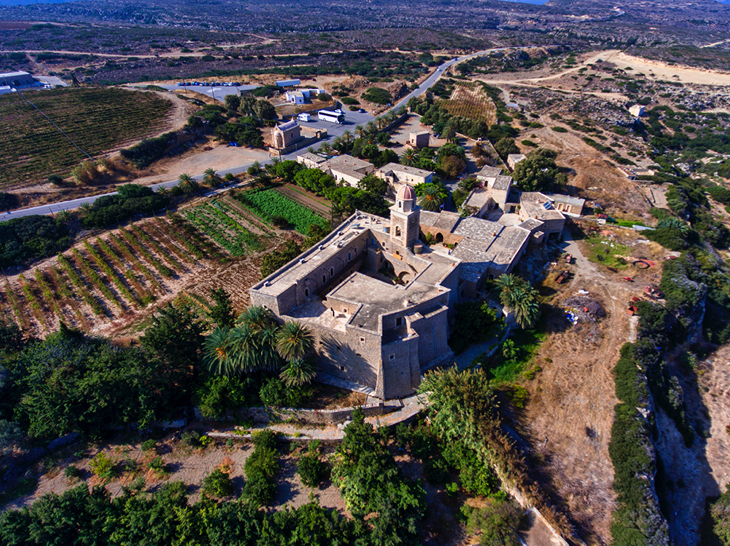
Sitia, in eastern Crete, has a virtually unique place in wine history – evidence of grape vinification thousands of years ago was discovered at the Palace of Kato Zakros, and Lucullus is said to have brought Sitia wine to Rome for his lavish banquets. Sitia’s winemakers are reclaiming the region’s ancient prestige – led by Domaine Economou and Toplou Monastery, both producing benchmark Liatiko that sell internationally for €30 ($34.44, £25.43)–60 per bottle. The appellation’s flagship is its sweet, dark-coloured Liatiko red, alongside white Vilana.
PGI Crete (regional label)
PGI Crete (Protected Geographical Indication), established in 1989, covers all four districts of the island and permits blends of native and international varieties. Most wines from Klados, Manousakis, and Silva carry the PGI Crete label.
Sources: Wines of Crete (winesofcrete.gr) – the official promotional body for PGI Crete wines, funded by the EU and the Greek government. Grape variety profiles based on Wine Grapes by Robinson, Harding & Vouillamoz (2012), the definitive reference for Cretan indigenous varieties.
Best Wineries in Crete to Visit
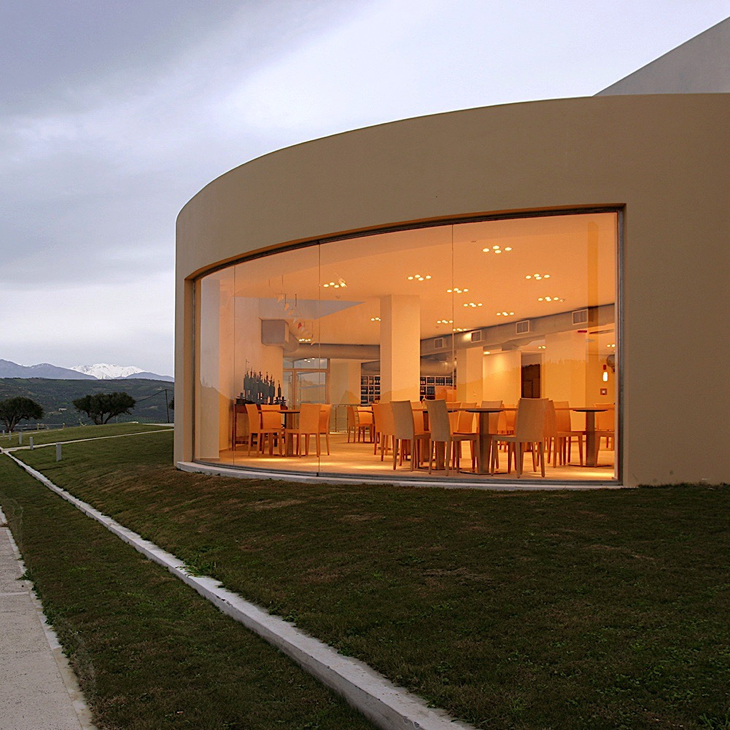
The best wineries in Crete cluster in three main areas: the Heraklion hinterland (Peza and Archanes appellations), the Rethymno coast, and the Chania foothills – most offer drop-in tastings, some require advance booking. The selection below standardises each estate with its founding story, signature wines, address, and practical visit logistics.
Heraklion Region Wineries
Lyrarakis Wines
Lyrarakis, a family-owned winery, was founded in 1966 and first bottled wine under the Lyrarakis label in 1992. It is headquartered in Alagni, Heraklion, in the Peza appellation, with 14 hectares of gravel-over-limestone vineyards at an average altitude of 550 metres that tempers the mild climate. Manolis Lyrarakis advocates for native varieties, several of which he has saved from extinction, alongside international cultivars.
The famous wines of Lyrarakis are:
- Vineyard Lyrarakis Vilana Pyrovolikes [2016]. Vilana alone. Fresh, vibrant, and pure – a little peppery and nutty, with rich pear and melon, good acidity and focus. Rated 89/100.
- Lyrarakis Plyto Psarades Vineyard [2016]. 100% Plyto. Unique and aromatic with a waxy flavour and a hint of pithy bitterness, yet nice fruit. Rated 87/100.
- Lyrarakis Vidiano Ippodromos Vineyard [2016]. Totally Vidiano. Detailed, nutty, waxy, with citrus fruit, white peach, and a touch of mint. Rated 89/100.
- Lyrarakis Melissaki Gero-Deti Vineyard [2016]. Lightly honeyed with a vibrant citrus flavour, strong and slightly waxy, with some herbal characters. Rated 90/100.
- Vineyard Lyrarakis Thrapsathiri Armi [2015]. Spicy and slightly nutty with vibrant citrus, pear fruit, and some cedar wood. Rated 88/100.
Visiting Lyrarakis: Tours and tastings in the estate’s tasting room are available by appointment. Hours: Monday–Friday 9:00–17:00 (April–October); Saturday by arrangement. Tasting fee: €10 ($11.48, £8.48)–15 per person (includes 5 wines and local appetizers). A guided wine cellar tour can be added on request. Reserve via website or call +30 281 028 4614. English-speaking staff available.
Address: Alagni, Arkalochori, Crete 703 00, Greece Phone: +30 281 028 4614
Alexakis Winery
Alexakis Winery is a family-run company founded in the 1970s by Sofia and Stelios Alexakis, a chemical engineer and oenologist. It is the largest privately owned winery in Crete and has maintained long-term relationships with vine farmers across the island, giving it deep knowledge of the Cretan vineyard.
The famous wines of Alexakis are:
- Alexakis Hatiri. A dry, wonderfully aromatic white with roses, peaches, and a faint green note; bright acidity supports substantial palate weight and a zesty, phenolic finish.
- Alexakis Muscat of Spina. A dry white combining roses, jasmine, lime, and chamomile into a complex floral-herbal composition; medium-bodied and fresh, with rose, lime, and orange blossom highlighting the premium Muscat essence.
- Alexakis Syrah Rosé. A dry rosé with a striking pink colour and a nose of strawberries, cherries, tomatoes, and white pepper; smooth and caressing from the saignée process, medium-bodied with generous acidity and a peppery finish.
- Alexakis Vidiano. A dry white showing elegant floral and fruity scents with a cool grassy touch; balanced alcohol enhances peach and apricot flavours; medium-bodied, satiny, and fruity with a lingering finish.
Visiting Alexakis: Tasting room open Monday–Friday, 10:00–16:00 (April–October); tastings by appointment. Tasting fee: approximately €10 ($11.48, £8.48) per person. Book ahead by phone. English-speaking staff available.
Address: 104-106 Irinis & Filias, Peridi Metohi, Heraklion, Crete 715 00, Greece Phone: +30 281 025 2019
Domaine Paterianakis
Domaine Paterianakis sits near Melesses in the Peza wine area of Crete. Giorgos Paterianakis founded it in 1988 to produce high-quality Cretan wine, and Emmanuela and Niki Paterianakis – the family’s third generation – now carry on the organic-farming legacy, producing distinctive Cretan wines from certified organic vineyards.
The most popular wines of Domaine Paterianakis:
- The Product. A vintage red from old vines, made under the PDO Peza designation from 80% Kotsifali and 20% Mandilari. Mandilari contributes deep colour, primary aromas, and firm tannins, while Kotsifali brings high alcohol, acidity, and fragrance – a balance Peza has produced for generations. Founder Georgios Paterianakis painted the label by hand.
- Moschato Spina. A classy, crisp wine from the rare indigenous Moschato Spina (Muscat of Spina), native to Crete’s western region and known anciently as the “bee grape.” Sweet and floral on the nose, crisp and vibrant on the palate.
Visiting Domaine Paterianakis: Organic estate open for tasting-room visits May–October, by appointment. Tasting fee: approximately €10 ($11.48, £8.48) per person, including a tour of the organic vineyard. Reserve by phone. The estate is also a stop on Route 3 below.
Address: Melesses 703 00, Greece Phone: +30 281 022 6674
Boutari Winery Crete (Scalarea Estate)
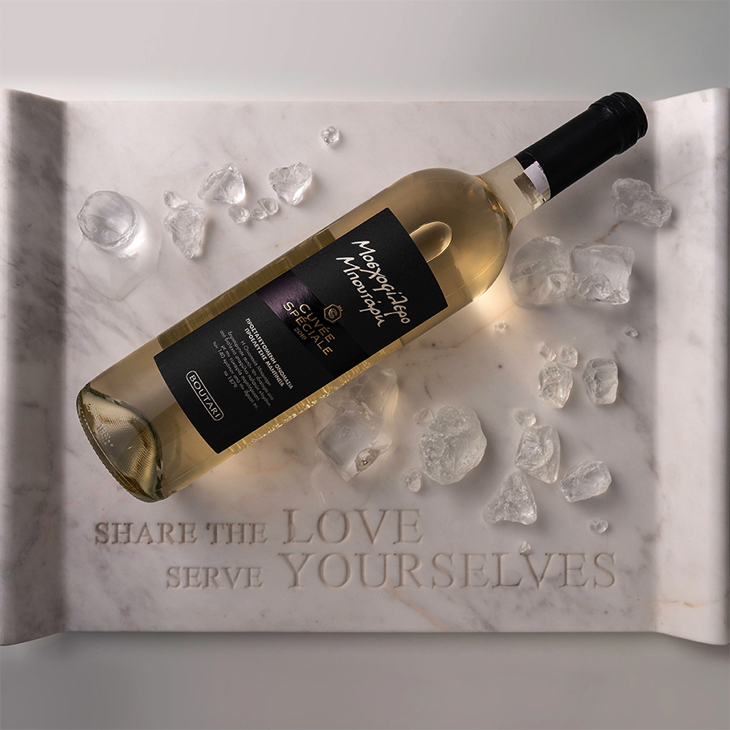
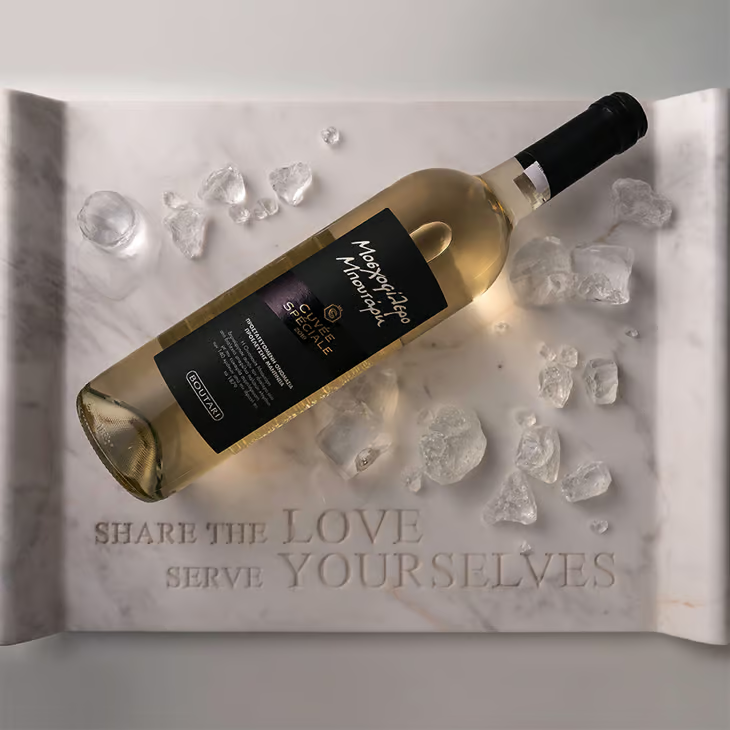
The Scalarea Estate – Boutari’s Cretan winery – has been producing wine in Skalani, near Archanes, since its first harvest in 1989. Located in the PDO Archanes zone, the estate focuses on indigenous Cretan varieties alongside international cultivars. Its flagship Cretan wines include a Kotsifali-Mandilari red blend and a white from Vilana, all reflecting the limestone terroir of the Archanes hills.
The popular Cretan wines of the Scalarea Estate:
- Scalarea Red (Kotsifali-Mandilari). A PDO Archanes blend with deep colour, ripe red fruit, and firm but rounded tannins; pairs well with slow-roasted lamb and aged graviera.
- Scalarea White (Vilana). A bright, citrus-and-floral Vilana with reviving acidity; excellent with seafood, dakos, and fresh feta.
Visiting: Skalani, Archanes, 701 00 – call +30 281 073 1617 for an appointment. Tours and tasting-room visits available by arrangement.
Address: Skalani, Archanes, 701 00 Phone: +30 281 073 1617
Rethymno Region Wineries
Klados Winery
Klados Winery, in Panormos in Crete’s Rethymno region, sits along the northern shore amid olive groves and rolling hills with scenic Mediterranean views. Manolis Klados, a chemist and oenologist with over 30 years in wine production, founded the winery in 1997, merging traditional methods with modern expertise. Its wines carry the PGI Crete label and embody the island’s terroir and Mediterranean climate.
Visiting Klados: The winery operates April 1 to October 31, open Monday to Saturday 11:00–18:00. No reservations are needed, and tastings cost €10 ($11.48, £8.48) per person. Guests sample six wines accompanied by Cretan rusks, tomatoes, and olive oil, with optional guided wine cellar tours that include insights into the winemaking process. Visitors praise the picturesque setting, high-quality organic wines, knowledgeable staff, and welcoming, family-run atmosphere.
Address: Panormo, Rethymno, Greece Phone: +30 28340 51 589
Chania Region Wineries
The Chania foothills in western Crete are the island’s fourth wine district, home to the native Romeiko grape and a cluster of estates blending Cretan terroir with international varieties. Two stand out for visitors.
Manousakis Winery
Manousakis Winery, located in Vatolakkos near Chania, produces wines under the PGI Crete label from both indigenous and Rhône varieties – including Roussanne, Grenache, and Syrah grown alongside Vidiano and Romeiko. The estate is best known for its “Nostos” range, which blends Cretan terroir with southern French winemaking techniques. Winemaker Alexandros Manousakis studied in California and Bordeaux before returning to his family’s olive groves to plant vines.
Visiting Manousakis: Tasting room open by appointment from May to October. Address: Vatolakkos, Chania – contact via the estate website. Tasting fee: approximately €10 ($11.48, £8.48)–15 per person.
Dourakis Winery
Dourakis Winery (also Chania region) is a family winery in Alikampos, Apokoronas, producing certified organic wines from Syrah, Cabernet Sauvignon, and indigenous varieties – part of the growing natural-wine and organic movement in Crete.
Visiting Dourakis: Tasting room open May–October, no reservation needed; wine cellar tour and tasting €8 ($9.18, £6.78) per person.
Lassithi / East Crete Wineries
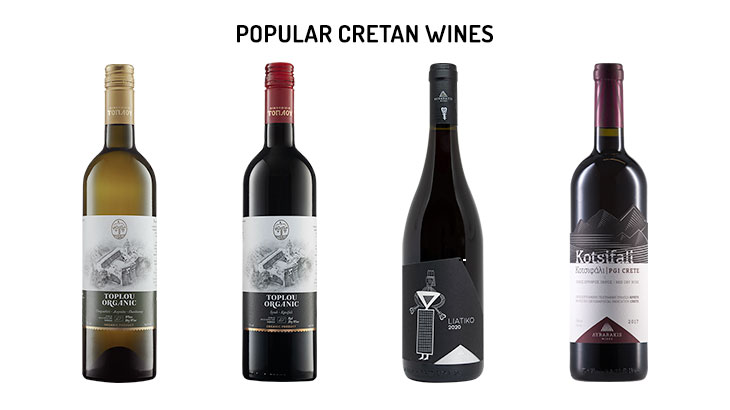
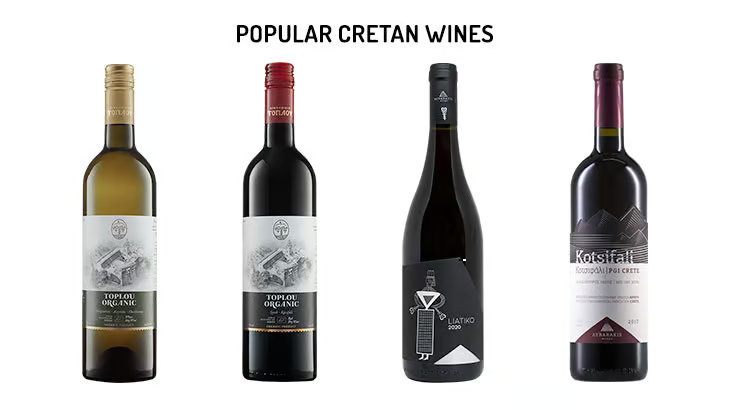
Toplou Monastery
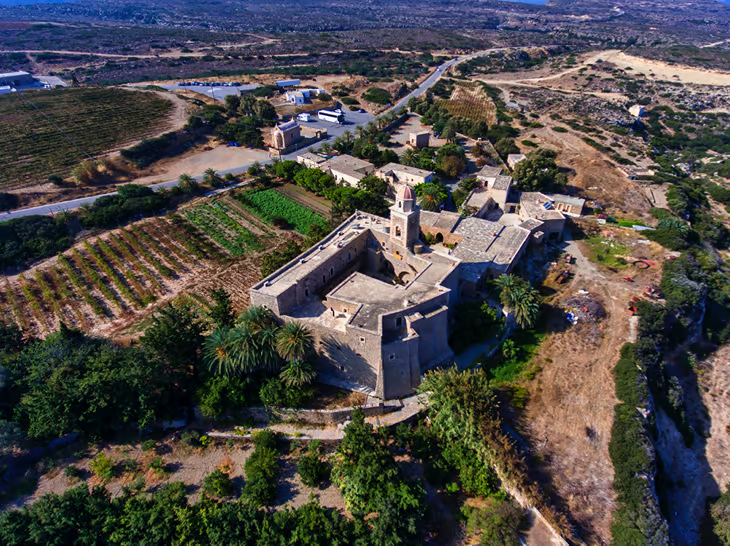
The poor, windy, dry lands surrounding Toplou Monastery in eastern Crete are well suited to grapevines, and the monastery has long produced wine for religious and social purposes. In the 1990s, abbot Filotheos Spanoudakis restored and revalued the monastery’s historic vines, which now yield acclaimed PDO Sitia wines.
The popular wines of Toplou Monastery:
- Vilana. PDO Peza or Sitia wines featuring the white star of the island – fine perfume, light flavour, and reviving lemon-scented acidity.
- Vidiano. A distinct apricot aroma, thick richness, and creamy flavour that mark Vidiano as the rising star of Cretan wine, often called “Greece’s Viognier”.
- Dafni. Named for its laurel-like aromas, a truly extraordinary cultivar whose rarity is matched by the uniqueness of its flavour.
Visiting Toplou: The monastery and its winery are open to visitors most of the year (best April–October); the tasting room offers PDO Sitia Liatiko and white varieties. Confirm hours seasonally.
Address: Monastery Toplou, Greece Phone: +30 2843 061226
Domaine Economou
Domaine Economou, in the village of Ziros in the Sitia region, is one of Crete’s most celebrated estates. Yiannis (Oikonomou) Economou trained in Italy before returning to revive his family’s old Liatiko vineyards, ageing his benchmark reds for years before release. His Sitia Liatiko and Assyrtiko have raised the region’s standard to international acclaim, with flagship bottles selling for €30 ($34.44, £25.43)–60 and his Oikonomou Assyrtiko among the most sought-after Cretan wines worldwide.
Visiting Domaine Economou: Visits are by appointment only, given the estate’s small scale; serious wine enthusiasts should contact the winery well in advance. Best visited May–October.
Address: Ziros, Sitia, Lassithi, Crete Phone: contact via the estate before visiting.
Silva Winery
Silva Winery carries worth, prestige, know-how, and high distinctions for its varieties and quality. A family tradition that began in 1920 and continues today produces distinctive wines under internationally recognised labels that reflect the history of Minoan Crete.
The famous wines of Silva Winery:
- Enstikto White. Vinified with the “pre-fermentative extraction” method and aged 12 months in French oak; rich and oily palate with tropical fruit, citrus, and sweet vanilla. Pairs with white meats, chilled salmon, lobster pasta, and yellow cheeses.
- Sera Red. A two-variety blend aged 8 months in oak, powerful in flavour; pairs with cheese, red meat, and grilled fillets. Serve 16–18°C.
- Sera White. Golden with greenish accents and a nuanced fruity-citrus nose, with a full palate and harmonious acidity-alcohol balance. Pairs with white meats and yellow cheeses. Serve 10–12°C.
Visiting Silva: Tasting room open by appointment, April–October. Tasting fee approximately €8 ($9.18, £6.78)–10 per person. Call ahead to book.
Address: Siva 700 11, Greece Phone: +30 281 079 2021
Best Cretan Wines: Ratings & Prices
Lyrarakis produces Crete’s highest-rated wines (up to 91/100), with bottles starting at €14 ($16.07, £11.87); the island’s cheapest quality wines start at €5 ($5.74, £4.24)–7 from Douloufakis. The consolidated list below pulls together the top-rated bottles and the best value picks. Ratings are drawn from Vivino and independent wine publications; prices are indicative and may change.
Top-Rated Cretan Wines
| Wine | Winery | Variety | Price | Expert Rating |
|---|---|---|---|---|
| Lyrarakis Plakoura Vineyard Oak Aged Mandilari [2018] | Lyrarakis | Mandilari (red) | €20 ($22.96, £16.95) | 91/100 |
| Lyrarakis Aggelis Liatiko | Lyrarakis | Liatiko (red) | €20 ($22.96, £16.95) | 90/100 |
| Lyrarakis Plakoura Vineyard Oak Aged Mandilari [2017] | Lyrarakis | Mandilari (red) | €16 ($18.37, £13.56) | 90/100 |
| Lyrarakis ‘Ipodromos Vineyard’ Vidiano | Lyrarakis | Vidiano (white) | €14 ($16.07, £11.87) | 89/100 |
| Lyrarakis Armi Vineyard Thrapsathiri | Lyrarakis | Thrapsathiri (rare white) | €17 ($19.52, £14.41) | 89/100 |
| Oikonomou Assyrtiko | Domaine Economou | Assyrtiko (white) | €59 ($67.74, £50.00) | 89/100 |
| Douloufakis ‘Dafnios’ Vidiano | Douloufakis | Vidiano (white) | €16 ($18.37, £13.56) | 88/100 |
| Douloufakis ‘Dafnios’ Liatiko | Douloufakis | Liatiko (red) | €16 ($18.37, £13.56) | 88/100 |
Best Value Cretan Wines
| Wine | Winery | Variety | Price |
|---|---|---|---|
| Lyrarakis Aggelis Liatiko [2019] | Lyrarakis | Liatiko (red), rated 90/100 | €18 ($20.67, £15.26) |
| Douloufakis Enotria Red | Douloufakis | Rare red blend | €7 ($8.04, £5.93) |
| Kourtaki Vin de Crete Red | Vin de Crete | Kotsifali-Mandilaria | €6 ($6.89, £5.09) |
| Douloufakis Enotria Rosé | Douloufakis | Rare rosé blend | €5 ($5.74, £4.24) |
Crete Wine Tasting Routes by Car
All three wine tasting routes below depart from Heraklion, cover 30–60 km (37.28 miles) each, and can be completed in half a day with a rental car – allowing you to visit 2–4 wineries per route. Renting a car frees you from tour timetables and lets you combine wineries with natural parks, traditional villages, and beaches along the way.
Route 1: Heraklion – Skalani – Kounavoi – Thrapsano
(Approx. 35 km (21.75 miles) round trip; allow half a day for 2–3 stops.)
The first route departs from Heraklion, the island’s capital, heading southeast past ancient palaces, picturesque paths, and vineyards near Mount Youchtas. Leaving the city toward Skala you pass the Palace of Knossos and enter the Archanes-Asterousia municipality. The spectacular Scalarea (Boutari) winery, well worth a visit, is on the outskirts of Skalani. Continuing toward Kounavi, you are surrounded by olive trees and vineyards. Thrapsano, famous for its centuries-old pottery tradition, is a must – stop at the Aggelakis winery, where part of the fermentation occurs in clay pots, alongside working pottery studios.
Route 2: Heraklion – Peza – Kaloni
(Approx. 40 km (24.85 miles) round trip; allow half a day for 2–3 stops plus lunch.)
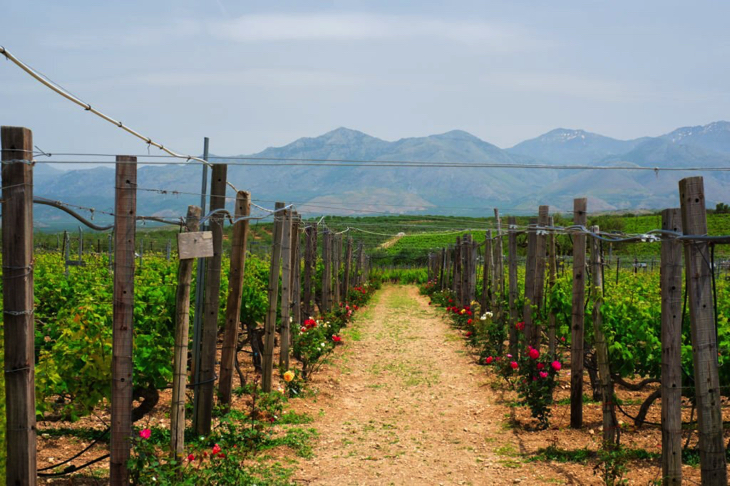
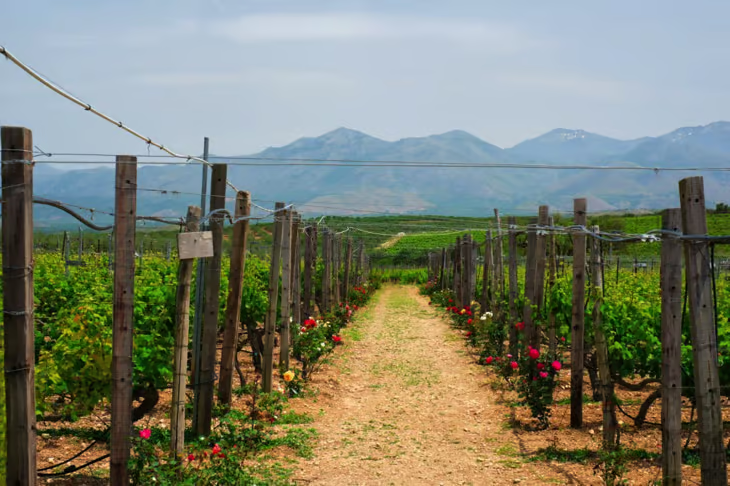
Leaving Heraklion toward the island’s interior, the Archanes-Asterousia municipality blends countryside beauty with vineyards. Start at the picturesque village of Myrtia, birthplace of writer Nikos Kazantzakis, and visit the Nikos Kazantzakis Museum on the village square. Take the back route through Agies Paraskies to Kaloni, then on to Peza, where the Onissimos tavern serves genuine Cretan cuisine and the Miliarakis family’s beautifully restored historic wine plant offers tastings of the well-known Minos wines. A short detour to Katalagari rewards you with a village viewpoint. On the way back, pause at the Stilianou winery in Kounavi for one more tasting.
Route 3: Melesses – Alagni – Kasteliana
(Approx. 55–60 km (37.28 miles) round trip; the wildest route – allow a full half day.)
The south of the island is the most natural and wild. Near Heraklion, the village of Houdetsi hosts the Labyrinth musical workshop and museum, where musicians gather each summer. The antique Minoan wine press at the nearby villa of Vathypetro – the Minoan wine press Vathypetro – is a remarkable stop. Travel east to Melesses and the Domaine Paterianakis estate to taste organic wine the family has made for three generations. Continue south to Alagni and the Lyrarakis estate, where you can tour the cellar, sample distinctive wines, and learn about the revival of classic Cretan varieties. Finally, the Stataridakis Winery in the Kasteliana region combines tradition and technology under careful, environmentally minded brothers.

If you want to rent a car in Crete, then Rental Center Crete is the ideal choice! Our company, based in Heraklion, offers Crete car rental services across the whole island, with delivery and collection 24 hours a day from Heraklion and Chania International airports, plus free Premium car rental insurance included on every booking. With a car you are not limited to wineries – you can also reach natural parks like the Samaria Gorge, traditional villages, and Crete’s most beautiful beaches.
Practical Tips: Driving & Tasting Responsibly
Driving in Crete is on the right; vehicles entering a roundabout yield to those already in it. As for alcohol, the legal limit in Greece is 50 mg of alcohol per 100 ml of blood – 0.05%, considerably lower than in the USA or UK.
The 0.05% limit is roughly equivalent to:
- 490 ml of beer (a large glass)
- 200 ml of wine
- 60 ml of ouzo
- 55 ml of vodka or whiskey
If you are stopped for drink-driving, fines can reach €700 ($803.67, £593.25), with a licence suspension of three to six months and, for a second offence within two years, a jail sentence of up to six months.
Note on drink-driving: This article includes practical information on Greece’s legal BAC limit (0.05%) as a guide for responsible wine tourism. Rental Center Crete does not encourage drink-driving. We recommend using a designated driver, booking a guided wine tour, or planning your route to limit tasting quantities at each stop.
When to Visit Wineries in Crete
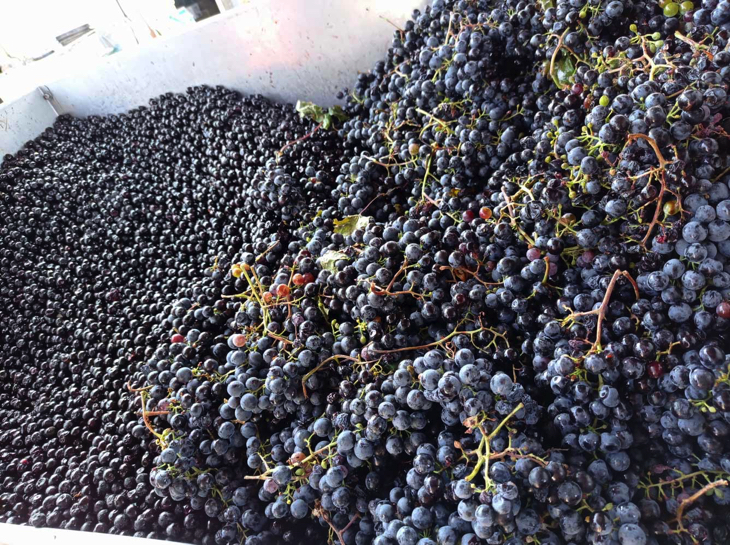
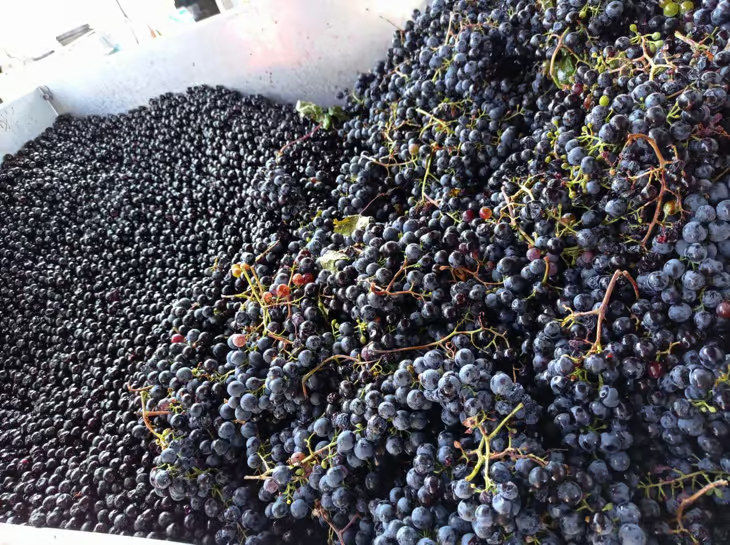
Most Cretan wineries are open April to October; harvest runs August to early October, when many estates offer pick-your-own experiences and tasting of young wine straight from the barrel – the best time to see winemaking in action.
Each May, the Wines of Crete network organises “Open Doors” weekends, when 30+ estates open their cellars for free tastings. This is the single best event for exploring multiple wineries in a day. Check winesofcrete.gr for the current year’s dates.
For a quieter visit with more one-on-one time with winemakers, aim for May–June or September.
Cretan Wine & Food Pairing
Vidiano pairs best with grilled seafood and soft cheeses; Kotsifali-Mandilari blends match slow-cooked lamb; Liatiko rosé is ideal alongside Cretan mezze. The table below maps each major Cretan wine to its classic local pairing.
| Wine | Best Cretan Pairing |
|---|---|
| Vidiano | Grilled octopus, staka (cream cheese), grilled seabream |
| Vilana | Greek salad, dakos (barley rusk salad), fresh feta |
| Dafni | Snails with herbs, stuffed vine leaves, grilled vegetables |
| Kotsifali-Mandilari blend | Slow-roasted lamb, kleftiko, aged graviera cheese |
| Liatiko (red) | Rabbit stifado, wild boar, roasted mushrooms |
| Liatiko (sweet/PDO Sitia) | Xerotigana (honey pastry), dried figs, aged myzithra |
| Rosé (Liatiko or Kotsifali) | Cretan mezze platter, grilled fish, fresh vegetables |
Raki: Crete’s Other Great Drink
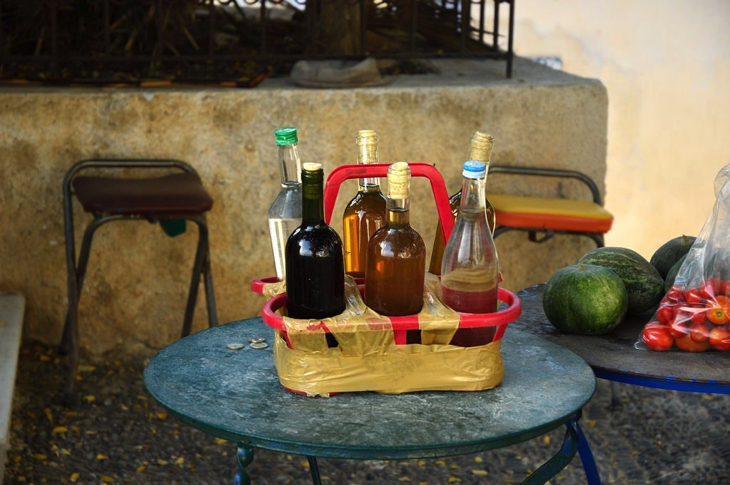
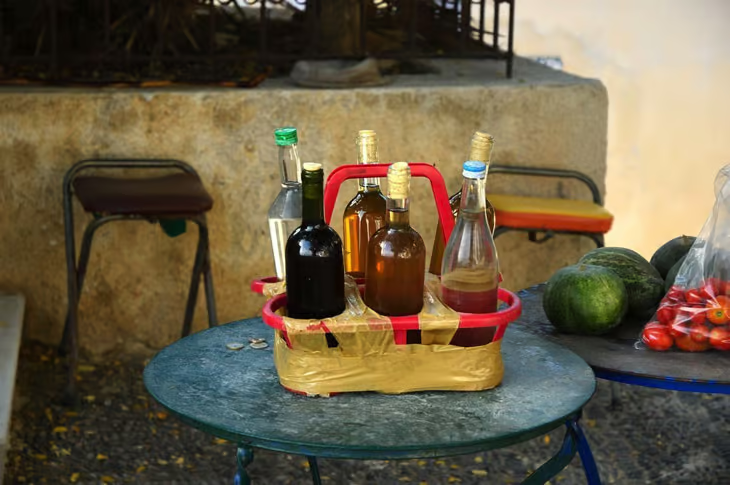
Raki (tsikoudia) is Crete’s signature grape spirit, distilled after harvest in November and traditionally offered free as a welcome drink – unlike wine, it is never sold commercially at the table. For Cretans, raki is a sign of friendship, hospitality, and good conversation, served to make guests feel at home.
What are the best wine tasting Routes with a Crete car rental?
Want to visit the paradise of wineries but need to know how? Rental Center Crete can help you make your wish come true. Our company based in Heraklion offers Crete car rental services all over Crete, offers delivery and collection 24 hours a day from Heraklion and Chania International airports, plus free Premium car rental insurance always included to the bookings. By renting a car you do not have to limit your visit to Wineries. You can visit natural parks like Samaria Gorge, tours to traditional villages and enchanting-unique Cretan beaches.
Listed below are 3 popular wine tasting routes:
- Skalani – Kounavoi – Thrapsano
- Kounavoi – Peza – Kaloni
- Melesses – Alagni – Kasteliana
1. Skalani – Kounavoi – Thrapsano
The first route we recommend departs from Heraklion, the island of Crete’s capital, which keeps some of its most stunning features well disguised. Ancient palaces, picturesque paths and villages near Mount Youchtas and Asteria and fantastic vineyards.
You are about to enter Nikos Kazantzakis’ Archanes-Asterousia municipality, which is made up of small villages and blends the enthusiasm of young people who choose to live here with the beauty of the agricultural landscape. You may find the Palace of Knossos by leaving the city of Heraklion and travelling southeast toward the town of Skala.
The spectacular Boutari winery, which is well worth a visit, is located on the outskirts of Skalani. Returning to the road leading to the village of Kounavi, you will find yourself surrounded by olive trees and vineyards, the latter being the island’s primary agricultural product.
Thrapsano is a village that must be visited. Pottery-making has been a long-standing tradition in the region even before dawn. Definitely stop by the Aggelakis winery, where a portion of the wine fermenting process occurs within clay pots and various pottery studios.
You’ll feel euphoric as you make your way back to the city. You will have been to a location in Crete where the first man walked and made wine and other things.
2. Kounavoi – Peza – Kaloni
You are leaving Heraklion and travelling towards the island’s deep soul. The municipality of Archanes-Asterousia, which is made up of a web of villages and is not far from the city, blends the natural beauty of the countryside with vineyards and other unique “not-to-miss” attractions.
Visit the picturesque village of Myrtia, where the legendary writer Nikos Kazantzakis was born, to start your journey. It is worthwhile to learn about his life and work by visiting the Nikos Kazantzakis Museum, situated in the village’s modest plaza. You will reach the settlement of Kaloni, which means beauty, by taking the back village route through Agies Paraskies.
The next village is Peza, where you may stop for a fantastic, genuine Cretan lunch at the Onissimos tavern, which has a long history of serving delicious regional cuisine. A wine-tasting tour is available inside the stunningly restored antique wine plant owned by the Miliarakis family. You can experience the well-known Minos wines there and learn everything there is to know about creating wine.
If you take a little detour and drive to Katalagari for a photo from the village’s viewpoint, you will have completed this journey.
It is worthwhile to pause on the way back to Heraklion at the Stilianou winery in Kounavi village for one more wine tasting. A wonderful way to end your wine and village meal in this region.
3. Melesses – Alagni – Kasteliana
The south half of the island is the most natural and wild. Travellers and guests are only sometimes welcome to drive around the curvy, narrow roads and sharp edges. However, Crete will repay you with its secrets and wonders if you choose to travel south.
The small village of Houdetsi, which is close to Heraklion, has a wonderful “secret.” Every summer, musicians from all over the world gather to jam and perform at the Labyrinth musical workshop and museum. The antique wine press can be found at the nearby Minoan villa of Vathypetro. You can appreciate the hundreds of acres of vines around you by travelling east to the village of Melesses and the Paterianakis domain. Drink some of the organic wine the Paterianakis family has been making for three generations.
Continue travelling southward until you reach the settlement of Alagni, where the Lyrarakis mansion is situated. You shouldn’t pass up the opportunity to tour their magnificent cellar, sample their distinctive wine and learn about the rebirth of classic Cretan types. The majestic Asterousia mountains dominate the region from the lovely seashore down. If you choose the southern route, you can see wilderness, picturesque hidden settlements and the Libyan sea’s sweeping beaches.
Tradition and technology are combined at the Stataridakis Winery in the Kasteliana region. The brothers manage the company with understanding and reverence for the environment.
If you want to rent a car in Crete, then Rental Center Crete is the ideal choice!
Frequently Asked Questions
What is the best winery in Crete? For first-time visitors, Lyrarakis Wines (Alagni, Heraklion) is the strongest all-round choice – it produces Crete’s highest-rated wines (up to 91/100), pioneered the revival of grapes like Dafni and Plyto, and offers a well-organised tasting room with English-speaking staff. Manousakis (Chania) and Domaine Economou (Sitia) are the top picks in the west and east.
Is Crete good for wine? Yes. Crete is one of Greece’s most important wine regions, producing 20% of the country’s total output across 80+ wineries, with a winemaking history of over 4,000 years and 12 indigenous grape varieties found nowhere else.
What kind of wine is Crete known for? Crete is best known for whites from Vidiano, Vilana, Dafni, and Thrapsathiri, and reds from Kotsifali, Liatiko, and Mandilari – including the sweet Liatiko reds of PDO Sitia and the Kotsifali-Mandilari blends of PDO Archanes and Peza.
Do Cretan wineries require reservations? It varies. Some estates (Klados, Dourakis) welcome drop-in visitors with no booking, while others (Lyrarakis, Alexakis, Manousakis, Domaine Economou) prefer or require an appointment, especially outside summer. Always confirm directly before visiting.
When is the best time to visit wineries in Crete? April to October. Harvest (August–early October) is the most dynamic time, while the “Open Doors” weekends each May offer free tastings at 30+ estates. For quieter visits, choose May–June or September.
What is PGI Crete? PGI Crete (Protected Geographical Indication), established in 1989, is the regional wine label covering all four districts of the island; it permits blends of native and international varieties. It sits below the four PDO appellations (Archanes, Peza, Dafnes, Sitia), which are the highest tier of Greek wine classification.