





Crete is the largest of the Greek islands, a gem in the Mediterranean with a rich tapestry of history and natural beauty. Crete spans across its vast landscape, allowing visitors to find a blend of stunning beaches, ancient ruins and picturesque towns. 5 days in Crete offer ample opportunity to dive deep into the essence of the island.
Prices, ferry schedules and driving conditions change with the season. Check current rates and road conditions before you travel.
The 5-Day Crete Itinerary at a Glance
Base yourself in Chania for all five nights. Every stop below is a day trip from Chania, which means no repacking, no changing hotels and no wasted transfer time.
| Day | Stop | Why go | Budget (excl. hotel) |
|---|---|---|---|
| Day 1 | Chania Old Town | Venetian Harbour, lighthouse, Cretan food | €100 ($115.37, £85.40)–€150 ($173.06, £128.10) |
| Day 2 | Elafonissi Beach | Pink-tinged sand, shallow lagoon | €60 ($69.22, £51.24)–€120 ($138.44, £102.48) |
| Day 3 | Samaria Gorge | 16 kilometers (9.94 miles) hike, Iron Gates, Kri-kri goat | €100 ($115.37, £85.40)–€150 ($173.06, £128.10) |
| Day 4 | Chania’s museums | Archaeological and Maritime museums | €75 ($86.53, £64.05)–€125 ($144.21, £106.75) |
| Day 5 | Balos Beach | Turquoise lagoon, Gramvousa islet | €60 ($69.22, £51.24)–€100 ($115.37, £85.40) |
| Day 6 (optional extension) | Rethymno | Fortezza fortress, Venetian old town | €80 ($92.30, £68.32)–€140 ($161.52, £119.56) |
Day 6 is an add-on, not part of the core five days. Finish at Balos on Day 5 and the itinerary is complete.
Driving distances and times
Crete stretches over 26 kilometers (161.56 miles) from east to west, so route planning matters more here than on a small island. The figures below come from published traveller accounts and are given with their sources – treat them as planning estimates, not guarantees, and check live conditions before each leg.
| Route | Distance | Reported driving time | Source |
|---|---|---|---|
| Chania → Elafonissi Beach | About 75 kilometers (46.60 miles) (per World on a Whim) | 90 minutes estimated; nearer two hours in practice on the winding mountain roads (per RTW in 30 Days) | Competitor travel blogs |
| Chania → Kissamos (for Balos) | About 56 kilometers (34.80 miles), with the final 1 kilometers (6.21 miles) unpaved (per World on a Whim) | Not stated by our sources | Competitor travel blogs |
| Chania → Seitan Limania (Akrotiri) | Not stated by our sources | Around 30 minutes (per Beantown Traveller) | Competitor travel blog |
| Chania → Heraklion | Not stated by our sources | About 2 hours by car (per Beantown Traveller) | Competitor travel blog |
| Crete, west coast → east coast | Not stated by our sources | Up to 4 hours one way (per Beantown Traveller) | Competitor travel blog |
Driving times for the Samaria Gorge trailhead, Rethymno, Preveli Beach and Almyrida are not published in our sources, so no figure is given for those legs. Plan them on the day with a live map.
Two legs deserve a warning. The final approach to Balos runs on an unpaved track, which many rental agreements exclude from insurance cover – check your rental terms before you drive it, or reach Balos by boat from Kissamos instead. The road to Elafonissi crosses the mountainous centre of the island, so allow more time than a map suggests.
Why Visit Crete?
Crete rewards a visit for 4 concrete reasons: Minoan archaeology, 2 of Europe’s most photographed beaches, 1 of its longest gorges, and a food culture built on the island’s own olive oil, cheese and wine. Crete delivers each of these within a single island, which is why 5 days here beat 5 days spread across several smaller ones.
The history of Crete dates back to ancient times, with the Minoan civilization that once thrived here being among the earliest in Europe. Palaces and artefacts unearthed over the years provide a glimpse into a society that existed thousands of years ago. The island later saw the influence of various conquerors, from the Romans and Byzantines to the Venetians and Ottomans, each leaving their indelible mark.
Crete boasts a Mediterranean climate characterised by mild, rainy winters and hot, dry summers. The embrace of the sea moderates temperatures, making it pleasant for most of the year. Crete presents its best weather conditions from April through October, making the months suitable for exploring the outdoors and indulging in beach activities. Mild winters and warm summers mean the island welcomes visitors year-round, whether for a summer beach holiday or a winter escape.
Palaces like Knossos stand as a testament to the island’s rich past. Visitors delve into the mysteries of ancient Crete and walk in the footsteps of legends like the Minotaur.
Elafonissi and Balos rank among the most beautiful beaches in the world, with turquoise waters and soft sands. Majestic mountains rise behind them, and gorges like Samaria offer both a physical challenge and a chance to see the local flora and fauna. Nature thrives in Crete and those who venture into the less trodden paths discover a side of Crete that many miss.
Cretan food has its own spin on Greek cuisine. Olive oil, cheese and wine are all produced on the island and form the tent poles of its culinary traditions. Travellers meet the local culture in the music that floats from the taverns, in the dances that locals have performed for centuries, and in the warm hospitality Cretans are known for.
Historical architecture surrounds the landscape of Crete, from Venetian fortresses to Byzantine churches. Towns such as Rethymnon and Chania retain their old-world charm with cobbled streets and ancient structures. Religious and secular festivals take place throughout the year and provide a window into the soul of the island.
What are the things to do in Crete for 5 Days?
The 5 things to do in Crete over 5 days, and the attraction each day is built around, are listed below in running order, followed by an optional 6th day for travellers who can extend.
- Day 1 – Start your trip in Chania: Chania Old Town offers a walk back in time through its maze of narrow streets and historic buildings. The Venetian Harbour is a great place for a stroll. Dining at one of the harbour’s waterfront restaurants ends the day well.
- Day 2 – Visit Elafonissi Beach: Elafonissi Beach draws travellers with its pink sands and crystal-clear waters. Gentle waves and shallow water make Elafonissi family-friendly and safe for children. Rocky islets and sand dunes surround the beach and provide landscapes for photography.
- Day 3 – Hike the Samaria Gorge: Samaria Gorge ranks among Europe’s longest canyons. The 16-kilometre hike starts at Xyloskalo and ends in the village of Agia Roumeli. Trekkers pass towering cliffs, ancient cypress-pine forests and the endangered Kri-kri goat.
- Day 4 – Visit Chania’s museums: The Archaeological Museum of Chania displays artefacts that record the region’s history. The Maritime Museum of Crete covers the island’s naval past. The lighthouse presents panoramic views of the city and the sea.
- Day 5 – Discover Balos Beach: Balos Beach rewards visitors with a lagoon setting of turquoise water and white sand. The Gramvousa islet sits nearby and carries a historic Venetian castle.
- Day 6 (optional extension) – Venture to Rethymno: Rethymno combines history and culture in one compact old town of Renaissance buildings and winding streets. The Fortezza fortress overlooks the city. Taverns and cafes line the harbour and serve Cretan delicacies.
Day 1: Start Your Trip in Chania
Spend Day 1 on foot in Chania Old Town, ending at the Venetian Harbour for dinner. Collect your rental car on arrival and leave it parked – you will not need it until Day 2.
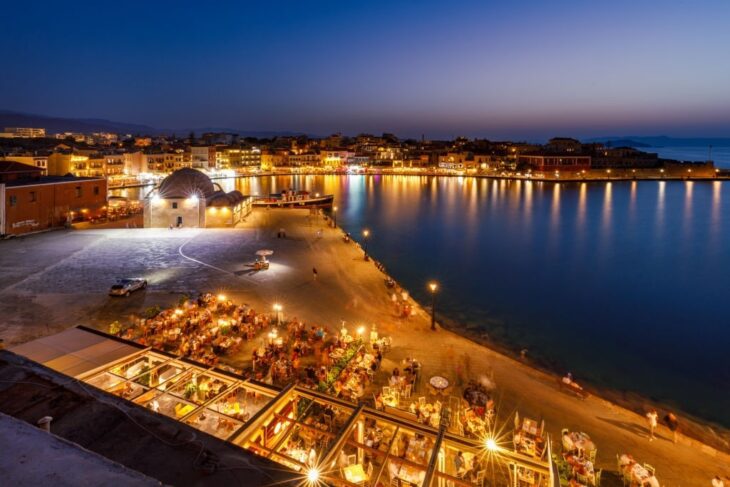
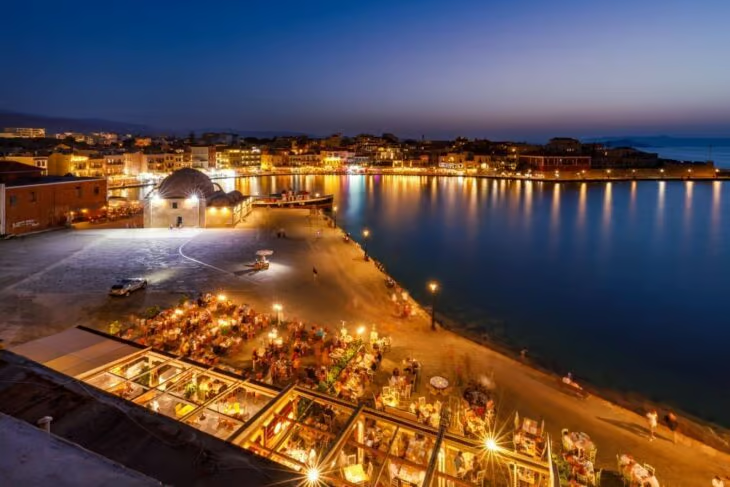
Chania Old Town’s allure pulls travellers into its quaint alleys. The old town has several architectural gems that showcase Venetian-era mansions juxtaposed with timeless churches. The Venetian Harbour is one example.
The Venetian Harbour combines ancient architecture with the Aegean Sea’s serene embrace. The harbour’s lighthouse stands tall and provides an ideal backdrop for evocative photography. Boutiques surround the old town, teeming with treasures from artisanal jewellery to Cretan crafts.
Eat your way through the city’s tavernas and restaurants. Dakos is a crispy bread crowned with tomatoes and cheese, and Kalitsounia is a sweet cheese-filled pastry worth trying. Buy local olive oil to cook Cretan food at home, because it forms the basis of Crete’s many dishes.
Walk or cycle Chania – both give you an intimate glimpse into the city’s diverse landscapes. Taxis and local buses cater to travellers seeking broader exploration or a more relaxed journey.
Chania has several high-quality hotels, one of which is Casa Delfino Hotel & Spa. Casa Delfino promises luxury with its refined rooms and spa services. Another is the Samaria Hotel, which combines contemporary comforts with traditional charm. Kydon, The Heart City Hotel provides unparalleled accessibility to the city’s prime attractions.
Budget €100 ($115.37, £85.40) to €150 ($173.06, £128.10) for the day, excluding hotel expenses. Starting the 5-day trip in Chania eases travellers into Crete’s history and nature.
Day 2: Visit Elafonissi Beach
Drive to Elafonissi Beach on Day 2 to swim in its shallow lagoon and see the pink-tinged sand. The route crosses the mountainous centre of the island – RTW in 30 Days reports the drive takes nearly two hours in practice against an estimated 90 minutes, and World on a Whim puts the distance at about 75 kilometers (46.60 miles) from Chania. Leave early.
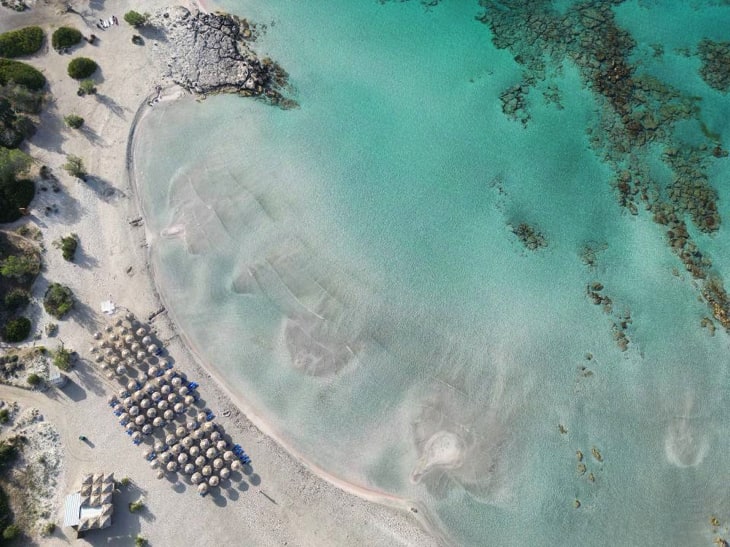
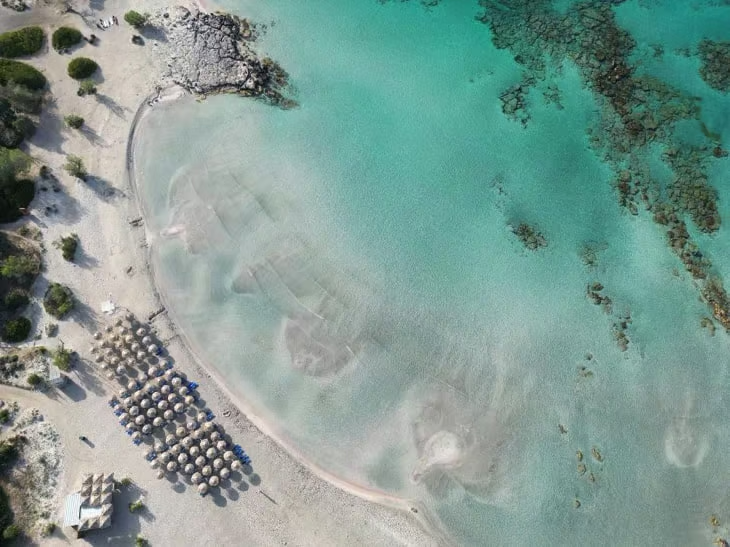
Elafonissi Beach offers fun and relaxing activities for beachgoers. Sunbathe in the warmth of the Cretan sun. Snorkel to discover the vibrant marine life beneath the waves. Walk the beach’s natural dunes to see the local flora and the unique landscape that defines Elafonissi.
Elafonissi Beach has a selection of beachside stalls offering a range of goods. The stalls sell souvenirs, from handcrafted jewellery inspired by the island’s motifs to local textiles showcasing Crete’s craftsmanship. Kalomirakis Tavern serves Cretan dishes infused with local flavours. Taverna Kochilas impresses diners with its traditional offerings.
Buses operate regular routes from Chania to Elafonissi Beach. Car rentals suit travellers who want to sightsee at their own pace and leave when they choose – the public bus, according to World on a Whim, does not depart Elafonissi until late afternoon, which locks you into a long day. Walk once you reach the beach itself.
Budget €60 ($69.22, £51.24) to €120 ($138.44, £102.48) for a fulfilling day at Elafonissi. The beach offers travellers a blend of relaxation and adventure, making it a highlight of a Crete itinerary.
Day 3: Hike the Samaria Gorge
Hike the Samaria Gorge on Day 3. The trail runs 16 kilometers (9.94 miles) from Xyloskalo, on the Omalos plateau, down to Agia Roumeli on the Libyan Sea, making it one of the longest gorges in Europe.
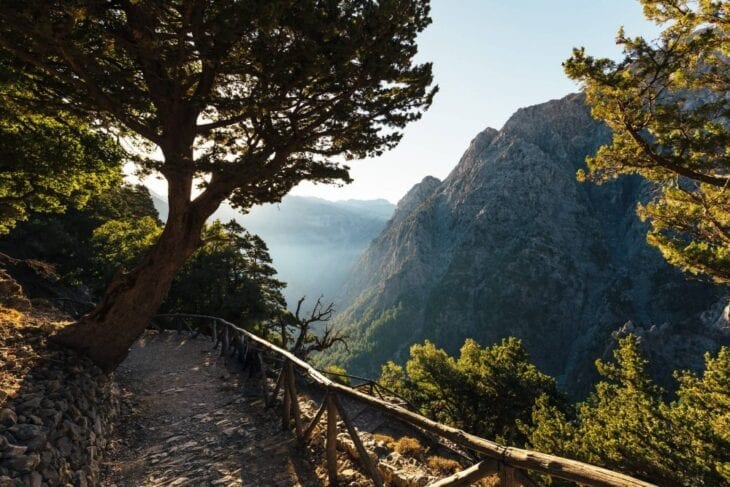
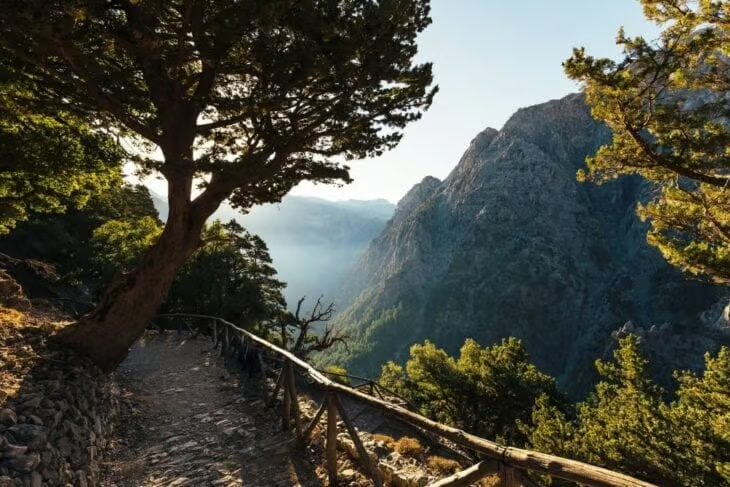
Start the hike at Xyloskalo and follow the trail through lush pine and cypress forests and past historic chapels. The ruins of once-thriving settlements sit along the path.
The hike ends at the Libyan Sea’s shores in the village of Agia Roumeli. Notable sections include wooden bridges that arch over rushing streams and rugged terrain carved over time. The famous Iron Gates are found here, where the gorge narrows into a 4-metre gap between walls that soar 300 metres high.
Pace this day carefully. The gorge is a full-day commitment, and hiking accounts published by travellers put the walk itself at five to six hours (World on a Whim) or six to seven hours (Beantown Traveller), depending on pace. Do not schedule another excursion on the same day, and wear proper footwear.
The Agia Roumeli village has a coastal charm, with quaint shops selling handcrafted leather items and artisan crafts. Xyloskalo Restaurant, at the trail’s entrance, serves dishes that celebrate local ingredients. Artemis Restaurant in Agia Roumeli offers traditional Greek meals and seaside views over the Libyan Sea.
Getting there and back is the one leg of this itinerary where a car does not help end-to-end: the gorge is a one-way, point-to-point walk. Regular buses ferry visitors from Chania to the Omalos plateau. From Agia Roumeli, take the ferry to Sfakia, which has buses going back to Chania. Leave your rental car in Chania for the day, or park at Omalos and return by bus to collect it.
Budget €100 ($115.37, £85.40) to €150 ($173.06, £128.10) for the day. The budget covers Samaria Gorge entrance fees, transport costs, meals and souvenir shopping.
Day 4: Visit Chania’s Museums
Spend Day 4 in Chania’s two main museums, then shop the old town’s alleys. This is a deliberate rest day after the gorge.
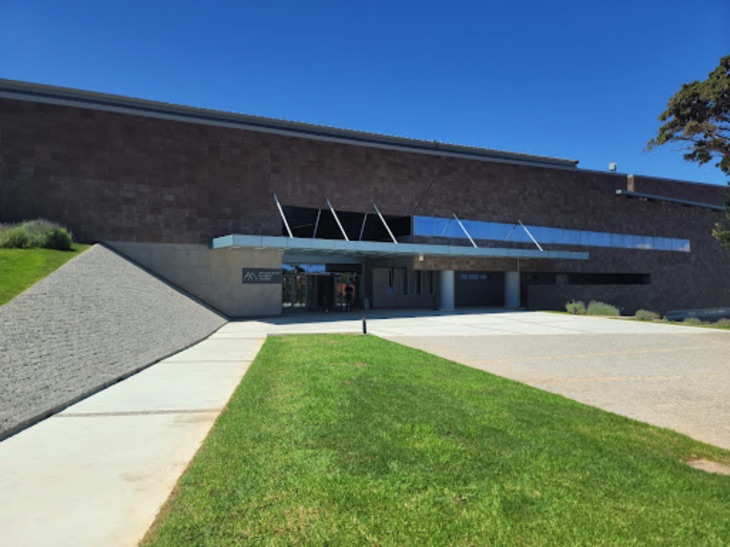
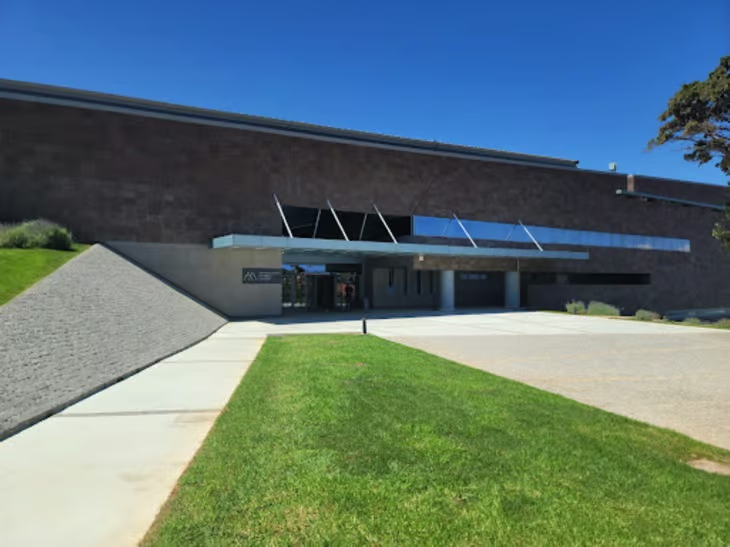
The Archaeological Museum of Chania sits in the 16th-century Venetian church of Saint Francis and displays artefacts from the Neolithic to the Roman eras. Each piece reflects Chania’s past, from Minoan pottery and Hellenistic sculptures to jewellery from diverse periods.
The Maritime Museum of Crete, a short distance away, casts light on the island’s maritime traditions. The museum sits within the Venetian Harbour and covers naval history and the marine biodiversity of the region. Exhibits showcase ship models, ancient naval tools and a recreated Minoan ship.
The alleys and marketplaces of Chania add a different flavour to the day. Shops sell handcrafted leather items and traditional Cretan fabrics. Olive oil remains a popular choice for travellers wanting to take a taste of Crete home, alongside fragrant local herbs and spices.
Blue Restaurant Chania, close to the Archaeological Museum, serves Mediterranean and Greek cuisine in a historic setting. Laganon Restaurant, near the Maritime Museum, takes a modern approach to Cretan cooking, with dishes ranging from handmade pastas to fresh seafood.
Walk between the attractions, or use taxis and local buses, which connect the city’s sights to the central bus depot. Budget €75 ($86.53, £64.05) to €125 ($144.21, £106.75) for the day.
Day 5: Discover Balos Beach
Close the core itinerary at Balos Beach on Day 5, where a turquoise lagoon sits between white sand and the Gramvousa islet.
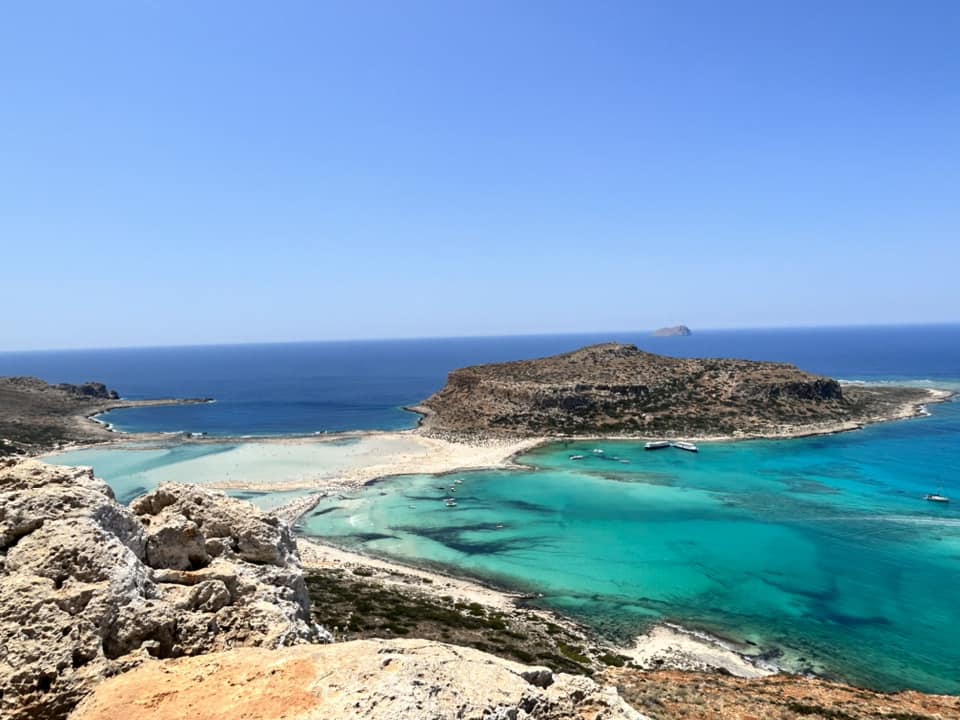
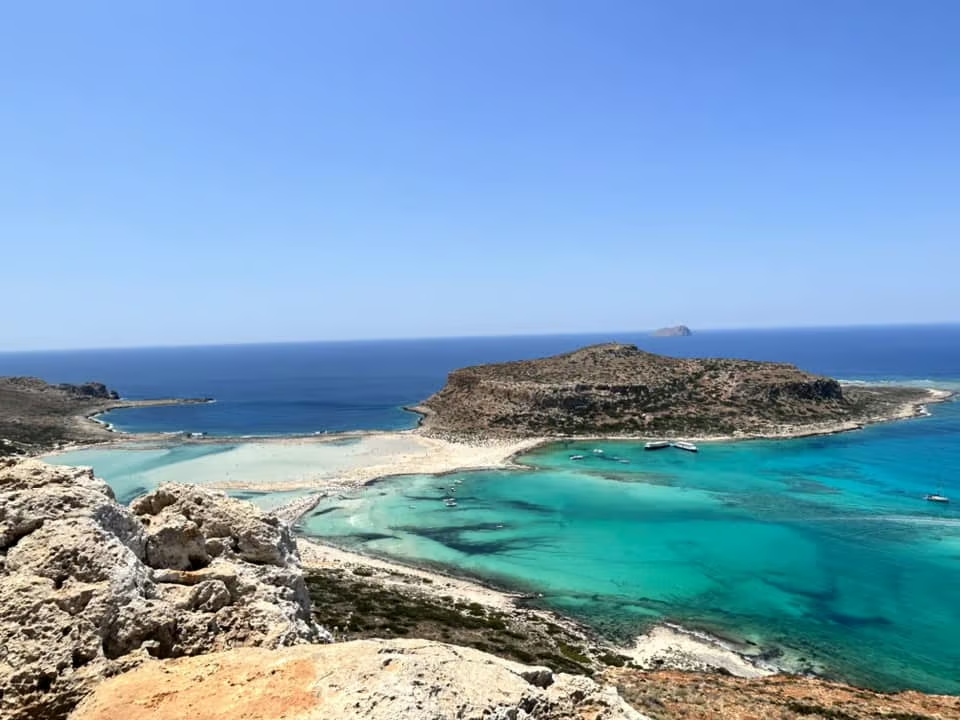
Reach Balos one of two ways. Drive from Chania towards Kissamos – World on a Whim puts the distance at about 56 kilometers (34.80 miles) and reports that the last 1 kilometers (6.21 miles) are unpaved, which may violate your rental car’s insurance policy, so check your rental terms first. From the parking area a walk down to the lagoon remains. Alternatively, take a boat from Kissamos to Balos and Gramvousa, which removes the unpaved track entirely and is the route many visitors prefer.
Snorkel Balos for its colourful underwater world, or swim in the shallow, gentle water. Hikers can follow the trails that wind around the peninsula for panoramic views of the sea and the islet of Gramvousa, which is crowned by an old Venetian castle.
Small shops near the beach sell handmade jewellery crafted from local materials and sea sponges. Cretan olive oil and raki make reliable souvenirs. Gramboussa Restaurant serves Cretan dishes and overlooks the sea. PIXIDA offers fresh seafood and traditional Greek salads.
Budget €60 ($69.22, £51.24) to €100 ($115.37, £85.40) for the whole day. Wear proper footwear – the final approach to the sand is on foot either way.
Day 6 (optional extension): Venture to Rethymno
If you have a sixth day, drive east to Rethymno to see its Venetian harbour and the Fortezza fortress, then return to Chania. Skip this day and the five-day plan still closes cleanly at Balos.
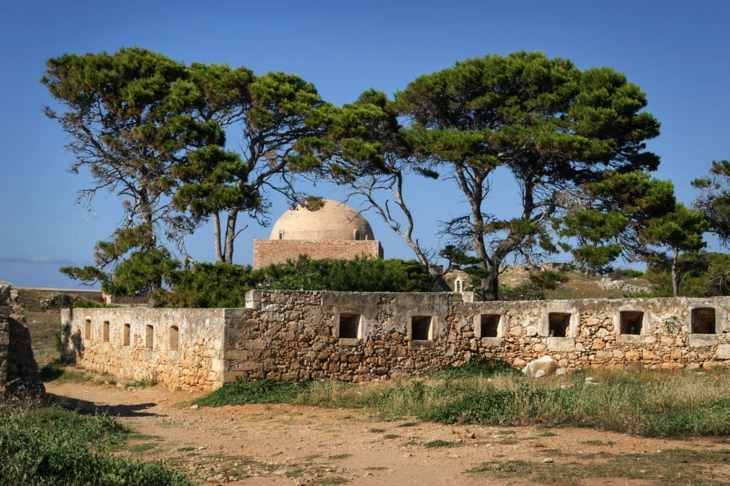
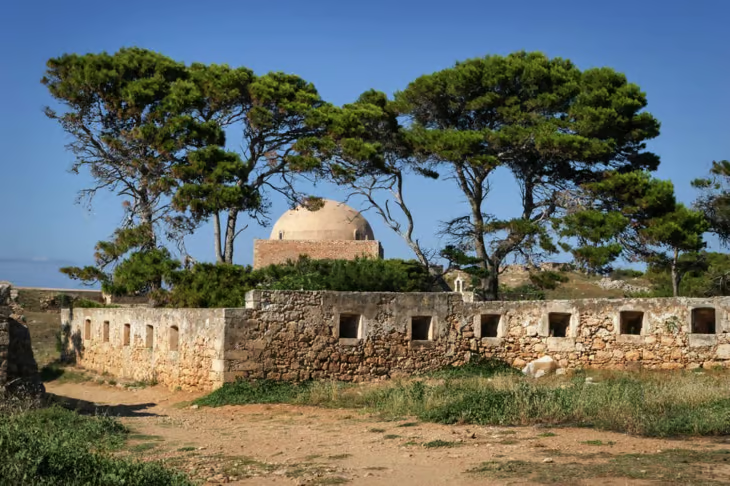
The Fortezza is a Venetian fortress that stands atop a hill, providing panoramic views of the city and the sea. Rethymno’s old town has intricate alleyways and Venetian architecture. The Historical and Folk Art Museum covers the region’s cultural history.
Shop the streets of Rethymno for hand-woven textiles, leather goods and jewellery. Local wines and cheeses are popular souvenirs.
Eat at Vatania Taverna Meze Bar, which serves Cretan dishes made with fresh local ingredients. To Parastratima offers a modern twist on the region’s cuisine.
Rent a car to travel between Balos Beach and Rethymno at your own pace. The drive is scenic and filled with Cretan landscapes, and the return to Chania completes the circuit, allowing for a restful evening before the journey’s end. Our sources do not publish a driving time for this leg, so check a live map on the day.
Budget €80 ($92.30, £68.32) to €140 ($161.52, £119.56) for a day in Rethymno.
Where does Knossos fit into a 5-day Crete itinerary?
Knossos does not fit into this Chania-based itinerary without a trade-off, and it is worth stating that plainly. The Palace of Knossos sits near Heraklion, and Beantown Traveller reports that Heraklion is about a two-hour drive from Chania – so visiting Knossos from Chania costs roughly four hours of driving plus the site itself, which consumes a full day.
The 3 ways to handle Knossos on a Chania-based trip, and what each one costs you, are listed below.
- Swap Knossos in. Replace Day 4, the Chania museum day, with a Knossos day. Drive to Heraklion, tour the palace ruins and pair them with the Heraklion Archaeological Museum, which holds an extensive collection of Minoan artefacts. The Palace of Knossos has an entrance fee of €15 ($17.31, £12.81). This costs you Chania’s two museums.
- Add Knossos as a 6th day. Spend the optional extension day at Knossos instead of Rethymno. This costs you Rethymno and requires a 6th day you may not have.
- Skip Knossos. A western-Crete plan built on Chania, Elafonissi, Samaria and Balos loses no coherence without it. This costs you Crete’s best-known archaeological site.
Touring the sprawling palace complex offers a glimpse into Minoan architecture and the myths of the Minotaur and the Labyrinth. Base yourself in Heraklion rather than Chania if Minoan archaeology is the reason you are visiting Crete.
What is another example of a 5 Days Crete Itinerary?
A second 5-day Crete itinerary trades the Samaria Gorge for more beaches and reaches Balos by boat rather than by unpaved road. This alternative route also runs from a single Chania base, and its 5 days plus an optional 6th day are listed below.
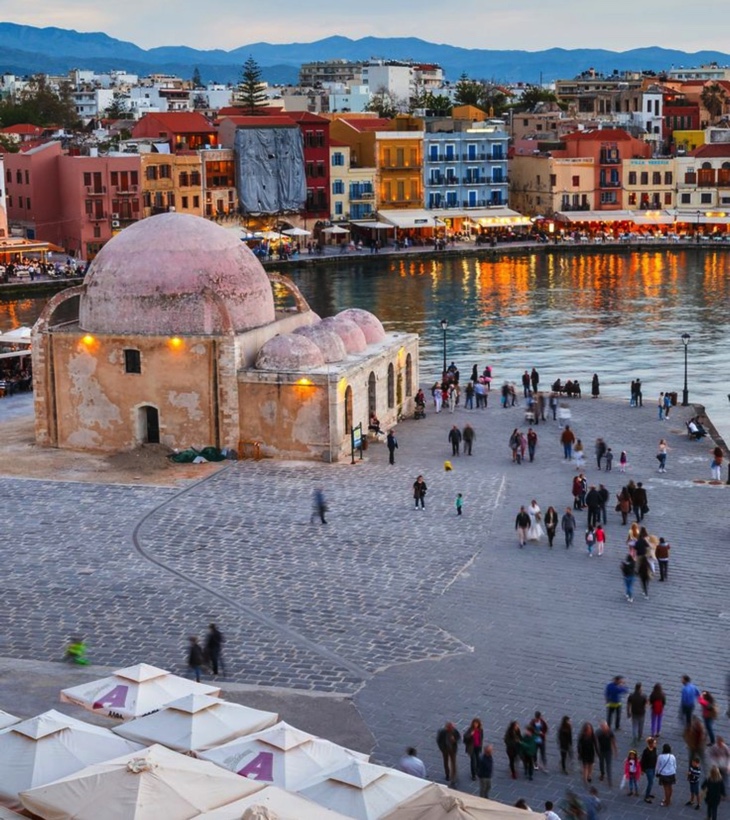
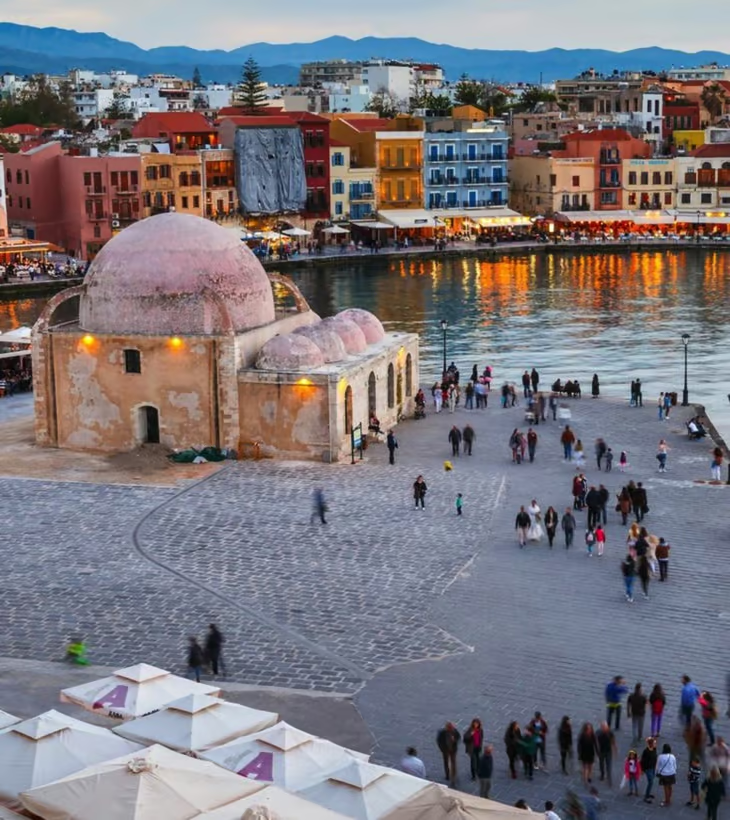
- Day 1 – Arrive in Chania and explore the old town: Chania’s Old Town paints a vivid picture of Crete’s past, where Venetian, Ottoman and Cretan influences intertwine.
- Day 2 – Experience Elafonissi Beach: Elafonissi Beach offers an idyllic setting for relaxation, with gentle waves reaching a shallow, pink-tinged shore.
- Day 3 – Discover Balos Beach on a boat day trip: Balos Beach rewards a boat approach with turquoise water set against pristine sand, and skips the unpaved road entirely.
- Day 4 – Drive to Preveli Beach: Preveli Beach marks a confluence of river and sea, ringed by palm trees. The drive crosses Crete’s landscapes, from rugged mountains to verdant valleys.
- Day 5 – Take a local bus to Almyrida Beach and Kolatsos Beach: Almyrida Beach and Kolatsos Beach deliver a quieter day of sun and sand beyond the well-trodden paths.
- Day 6 (optional extension) – Explore the north Chania peninsula: The Akrotiri peninsula holds rugged terrain, secluded beaches and monasteries, including Seitan Limania Beach, a narrow cove with azure water.
Day 1: Arrive in Chania and Explore the Old Town
Start in Chania Old Town on foot. Walk the narrow streets to reach an atmosphere steeped in history, and use the day to adjust before the driving days that follow.
Chania Old Town’s winding alleys lead to shops selling local crafts and artisanal products. Handmade leather goods, such as sandals and bags, make authentic souvenirs. Cretan olive oil remains a reliable purchase to bring home.
The Agora Market is a lively setting where locals shop for fresh produce, meat and dairy. The Municipal Garden offers a serene escape with lush greenery and a small zoo. The Orthodox Cathedral of the Presentation of the Virgin Mary reflects the spiritual heritage of the region in its architecture.
Eat Pastitsio, a savoury pasta bake with meat sauce and béchamel, and Bougatsa, a creamy custard pie sprinkled with sugar and cinnamon. Tirokafteri, a spicy cheese spread, is another Chania staple.
Rent a car for flexible exploration of Chania and its surroundings. The roads in and around the city accommodate drivers of all experience levels, and numerous car rental agencies provide a range of vehicles to suit varying budgets. Local buses serve as reliable alternatives for travellers not keen on driving.
Budget at least €100 ($115.37, £85.40) to €150 ($173.06, £128.10) for a comfortable day.
Day 2: Experience Elafonissi Beach
Drive to Elafonissi Beach on Day 2. The sand’s soft pink hue comes from crushed seashell particles, and it shows best during the golden hour.
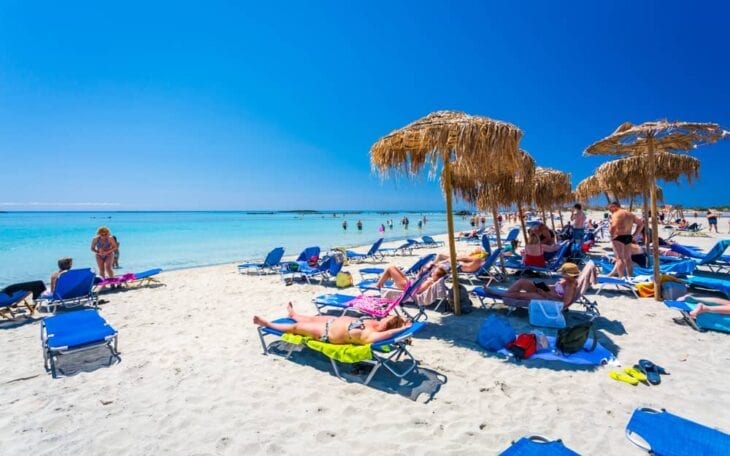
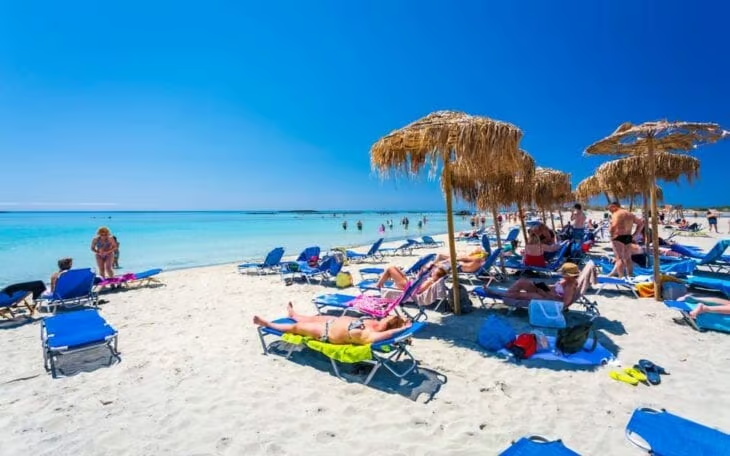
Swim in the shallow, warm lagoons, which are safe for families with young children. The nearby rock formations and isolated islets invite exploration and offer a quieter experience away from the main beach area.
Elafonissi’s local artisans set up stalls to showcase their crafts. Handcrafted jewellery made with semi-precious stones is available for purchase, as are organic skincare products made from olive oil and local herbs.
Panorama serves traditional Cretan dishes with a modern twist. Canteen Kukurakis offers a more laid-back experience with snacks and sandwiches. Both look out over the beach.
Rent a car to explore Elafonissi and its surroundings. World on a Whim puts the distance at about 75 kilometers (46.60 miles) from Chania, and RTW in 30 Days reports the drive takes nearly two hours in practice against an estimated 90 minutes, on scenic but winding roads through the Cretan countryside. Organised tours and local buses serve as alternatives but come with set schedules.
Budget €80 ($92.30, £68.32) to €140 ($161.52, £119.56), covering transportation, meals and souvenir shopping.
Day 3: Discover Balos Beach on a Boat Day Trip
Take the boat to Balos on Day 3. Balos Beach’s lagoon and the Gramvousa islet present a spectacle of nature’s brilliance, and the crystal-clear water shifts between shades of blue and turquoise against white and pink sand.
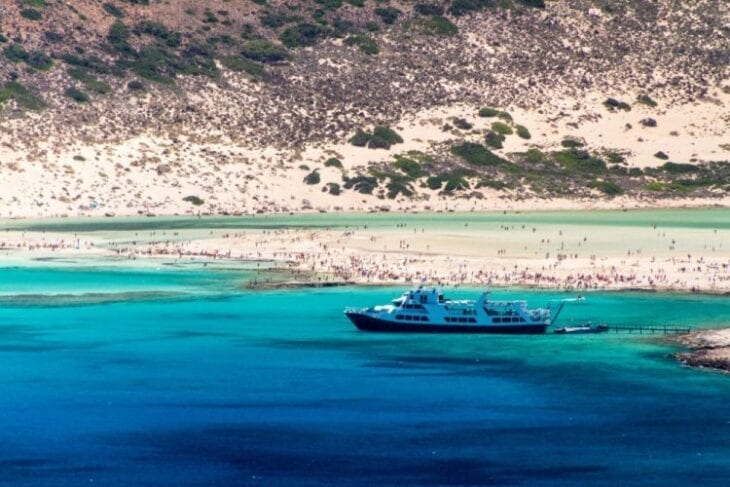
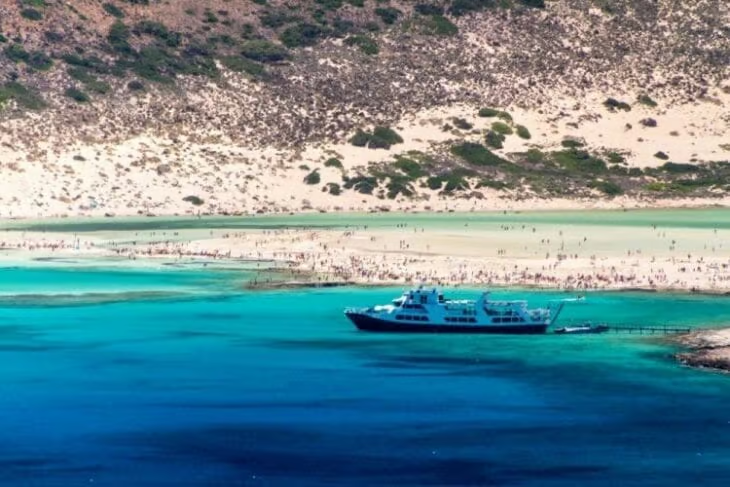
Snorkel Balos for the marine life beneath the surface. The Gramvousa islet, accessible by boat, houses an old Venetian castle with panoramic views of the beach and the surrounding seascape.
Local markets around Balos sell handmade leather sandals crafted using traditional methods, and local thyme honey renowned for its flavour. Taverna Sunset serves traditional fare with a view of the sunset. The Cellar Restaurant has an extensive wine list of Greek and international selections.
Drive to Kissamos port and board a boat from there – this is the reason to take the boat option rather than drive the whole way. World on a Whim reports the drive from Chania to Kissamos covers about 56 kilometers (34.80 miles), and that the final 1 kilometers (6.21 miles) of the direct road approach to Balos are unpaved and may violate your rental car’s insurance policy. The boat sidesteps that track entirely. Taxi services and organised tours offer a convenient alternative.
Budget €100 ($115.37, £85.40) to €150 ($173.06, £128.10) for Balos Beach.
Day 4: Rent a Car and Head to Preveli Beach
Drive to Preveli Beach on Day 4, on Crete’s southern coast, where a river meets the sea. Palm trees line the riverbank and the river divides the sandy shore in two.
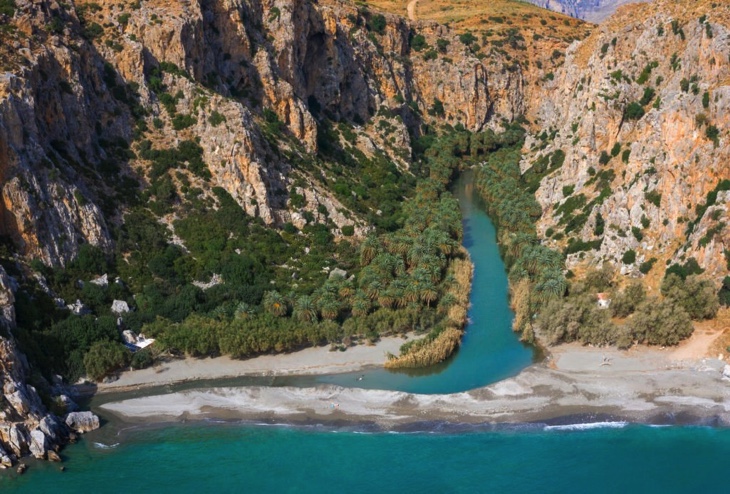
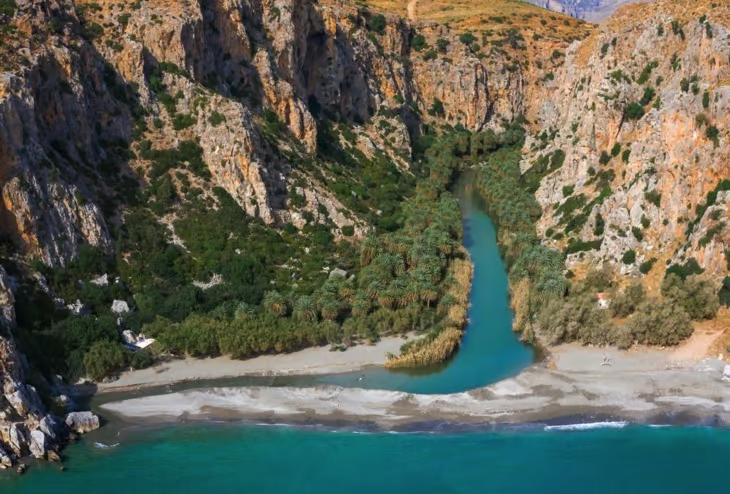
Swim in the cool fresh water of the river or dive into the sea. The nearby Palm Forest provides a shaded haven for relaxation.
Visit the Monastery of Preveli, which sits atop the hill. The monastery played a significant role during World War II, offering shelter to Allied soldiers.
Local craft makers display handwoven textiles and pottery near the beach, and olive oil remains a popular purchase. Taverna Gefyra Cafe sits close to the river and provides a tranquil setting for a meal. Dionyssos Restaurant serves Greek specialties with fresh seafood taking centre stage.
A rental car is the practical way to reach Preveli and explore the area at your own pace. Our sources do not publish a driving time from Chania to Preveli, so check a live map before you set out – this is a southern-coast destination and the longest leg of this itinerary.
Budget €100 ($115.37, £85.40) to €150 ($173.06, £128.10) for the day.
Day 5: Take a Local Bus to Almyrida Beach and Kolatsos Beach
Close this itinerary at Almyrida Beach and Kolatsos Beach on Crete’s northern coast. Both are quieter than the island’s headline beaches and both are reachable by local bus.
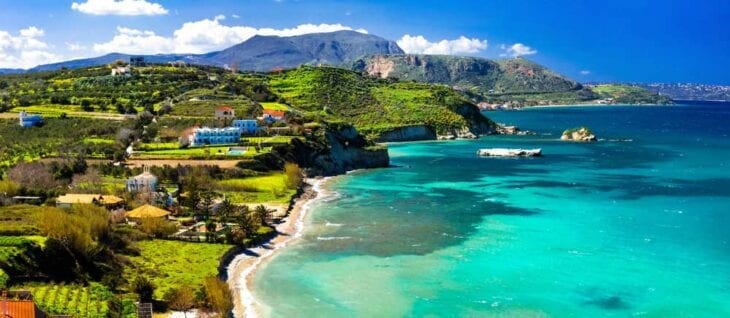
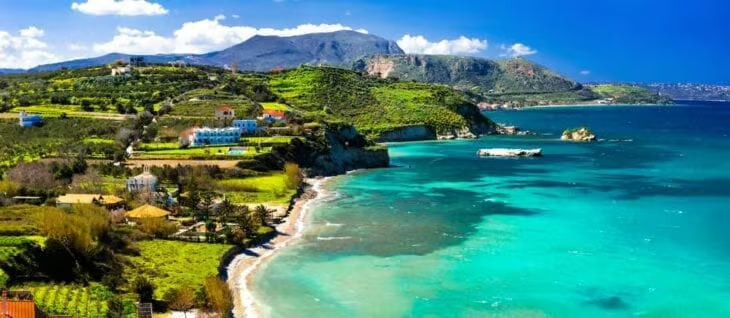
Almyrida Beach has clear turquoise water and soft sand, with shallow water that makes it safe for swimming. The village of Almyrida is close by and offers a glimpse into traditional Cretan life through its narrow streets and boutiques.
Kolatsos Beach is more secluded than Almyrida and promises peace and privacy. Sand and pebbles mix underfoot, and olive groves stretch out near the beach.
Windsurf at Almyrida, which has gained popularity thanks to favourable wind conditions. Walking trails meander through the region for travellers who want to explore the local flora and fauna.
Buy handmade ceramics, local wines and traditional Greek sweets. Lagos Taverna near Almyrida Beach serves local dishes and is a favourite among locals and visitors. Almy Seaside offers a menu of seafood.
Local buses run between Almyrida and Kolatsos. The buses are economical, the routes are straightforward and the schedules are relatively consistent.
Budget €80 ($92.30, £68.32) to €130 ($149.98, £111.02) for the day.
Day 6 (optional extension): Explore the North Chania Peninsula
If you extend to a sixth day, drive north to the Akrotiri peninsula. Beantown Traveller reports Seitan Limania sits around 30 minutes from Chania, which makes this the shortest excursion in either itinerary.
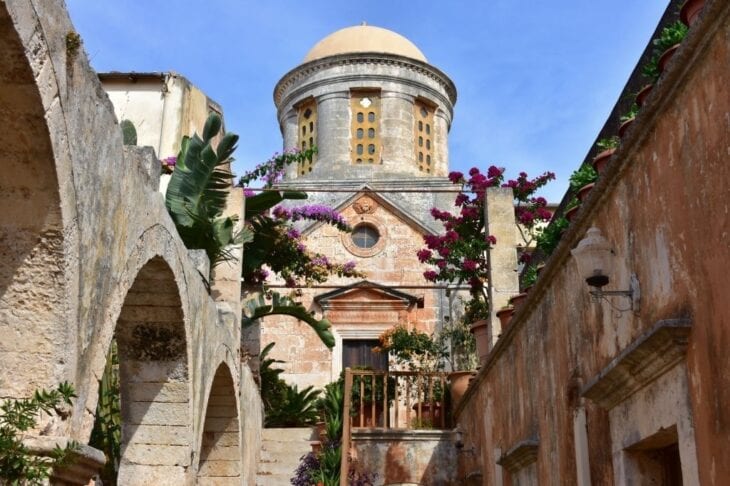
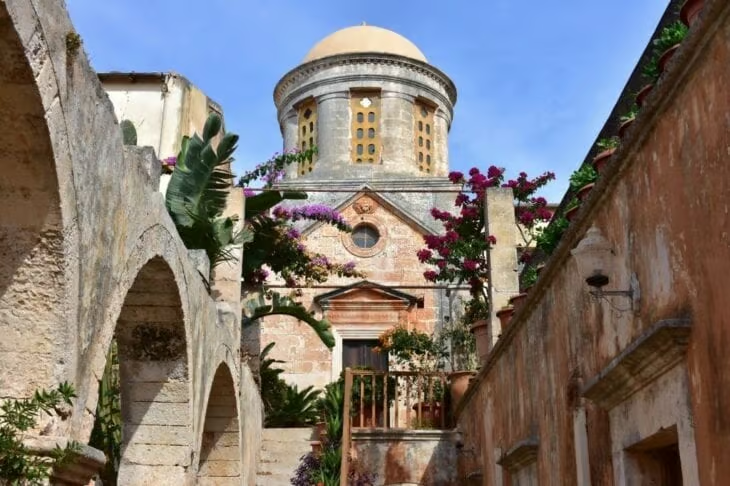
Seitan Limania Beach is a secluded cove with shimmering turquoise water, reached by a steep and winding road. Agia Triada Monastery and Gouverneto Monastery add historical depth to the peninsula, with intricate architectural designs and religious relics.
The caves of Arkoudiotissa and Katholiko suit thrill seekers. The cave formations impress with their stalactite structures and carry tales of hermit dwellers and age-old rituals. Local markets sell ceramics, textiles and jewellery, alongside olive oil harvested from the region’s groves.
Irene’s Tavern serves traditional Cretan dishes. The Original Bar and Grill offers a menu that marries Greek traditions with international tastes against the backdrop of the sea.
Drive Akrotiri – a rental car gives you the freedom to reach the peninsula’s lesser-known spots, which the bus network does not serve well.
Budget €80 ($92.30, £68.32) to €120 ($138.44, £102.48) for a fulfilling day trip.
What is a suitable budget for a 5 Days trip to Crete?
A suitable budget for a 5-day trip to Crete starts at €500 ($576.85, £427.00) for budget-conscious travellers and rises above €2000 ($2307.40, £1708.00) for travellers seeking luxury experiences. Mid-range travellers should budget €500 ($576.85, £427.00) to €750 ($865.28, £640.50), and high-end trips need €1000 ($1153.70, £854.00) or more.
Accommodation is the principal cost. Hostels and economical hotels charge €20 ($23.07, £17.08) to €50 ($57.69, £42.70) for a night’s stay. Upscale resorts and boutique establishments start at €150 ($173.06, £128.10) or higher per night.
Dining in Crete spans a wide range. Authentic local tavernas serve traditional Cretan dishes at €10 ($11.54, £8.54) to €20 ($23.07, £17.08) for a hearty meal. Upscale restaurants and seafood specialists charge €30 ($34.61, £25.62) to €50 ($57.69, £42.70) per meal.
Public buses are the affordable transit option, with daily commutes averaging €10 ($11.54, £8.54).
Crete’s attractions charge modest entrance fees. The Palace of Knossos has an entrance fee of €15 ($17.31, £12.81). Souvenirs range from €5 ($5.77, £4.27) to €50 ($57.69, £42.70).
Set aside funds for emergencies outside the main budget, for unplanned expenses or spur-of-the-moment adventures.
How much does it cost to rent a car in Crete?
Car rental in Crete begins at €90 ($103.83, £76.86) per day. The rate varies with the vehicle category, the season and the length of the rental – a five-day booking is typically priced better per day than a single-day hire, and shoulder-season rates run below peak summer.

Weigh that against the alternative. Organised day tours are charged per person, so for two or more travellers the cost of several separate excursions can exceed a car rental for the same period, while leaving you tied to fixed departure times.
What is the best way to get around Crete?
Renting a car is the best way to get around Crete. The island stretches over 26 kilometers (161.56 miles) from east to west, and Beantown Traveller reports that driving from the western part of the island to the eastern side can take up to four hours one way – distances that reward a vehicle you control.
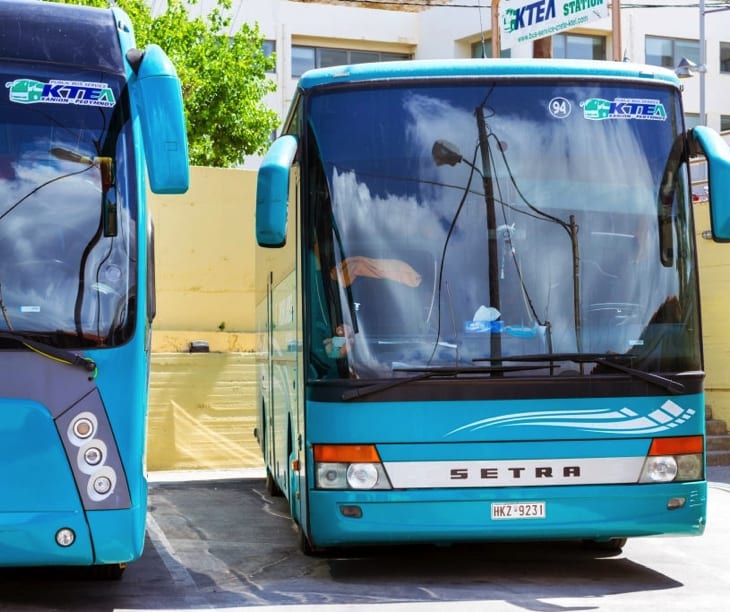

A rental car allows travellers the freedom to visit hidden beaches and ancient ruins at their own pace. Roads in Crete vary in quality: main highways are well-maintained, while secondary roads sometimes present challenges. Note that some unpaved approaches, such as the final stretch to Balos, may fall outside rental insurance cover – always check your rental terms.
Public buses connect major cities, towns and popular tourist destinations. The buses are economical, reliable, modern and comfortable, and they reach well-known locations. Their weakness is scheduling: fixed departure times can strand you at a beach for hours, as the Elafonissi bus timetable demonstrates.
Taxis and private transfers are abundant in larger cities such as Heraklion and Chania. They provide a quick way to get from one place to another at a higher cost than buses, and suit visitors looking for comfort and direct routes.
Boats and ferries serve coastal and island destinations. Certain beaches and islands, such as Chrissi Island, are accessible only by boat, and the boat is also the recommended way to reach Balos without driving the unpaved track. Several companies operate trips during the tourist season.
Each mode of transport in Crete has its place: cars offer flexibility, buses offer cost savings, taxis offer comfort and boats reach what roads cannot.
Is Renting a Car in Crete Recommended for a 5 Days Trip?
Yes, renting a car in Crete is recommended for a 5-day trip. Crete is the most expansive island in Greece, and a five-day window is too short to lose hours to bus timetables.
Public transport does not cater to every location. Buses operate mainly between towns and do not venture into the more secluded areas where some of the island’s best sites are found.
A 5-day trip gives tourists a limited amount of time. Flexibility matters most when you plan to visit multiple sites in a day, and a car allows last-minute changes to travel plans or impromptu stops.

Crete’s most memorable sights sit outside the main towns. Beaches such as Balos and Elafonissi, and the Samaria Gorge, are the clearest examples. A car removes the need to adhere to bus schedules or negotiate fares with taxi drivers.
One honest exception: the Samaria Gorge is a one-way hike ending at a village reachable only by ferry, so a car cannot carry you end to end on that day. Every other day in this itinerary runs better with one.
Is Crete walkable?
No, Crete is not walkable as a whole, though its city centres are. Crete covers a vast expanse of land containing mountains, beaches and historical sites.
Chania, Heraklion, Rethymno and Agios Nikolaos are the major cities on the island. Each has walkable sections, particularly their old towns, where narrow lanes and cobblestone streets invite pedestrians. Chania’s old Venetian harbour is a favourite spot for leisure walks, blending history, architecture and sea views.
Crete stretches over 26 kilometers (161.56 miles) from east to west. Its landscapes, from the Samaria Gorge to the beaches of Elafonissi, require a vehicle, a bus or a boat to reach. Walk the cities; drive the island.
Is 5 days enough for Crete?
Yes, 5 days is enough for Crete if you commit to one region rather than trying to cover the island. Five days covers Chania, one major gorge hike and two of Crete’s best beaches without over-packing the schedule.
Chania is a picturesque city on Crete’s northwest coast, and a single day gives access to many of its attractions. Elafonissi Beach, with its pink-hued sands, sits on the southwestern tip of Crete and rewards a full day trip. Balos is the other headline beach.
Crete is home to the Samaria Gorge, one of the longest gorges in Europe, which showcases dramatic cliffs and diverse flora and fauna along its 16-kilometre length. Rethymno is the island’s historical soul, with an old town of alleyways leading to hidden squares and ancient buildings.
The constraint is geography, not time. Because driving from the west of the island to the east can take up to four hours one way (per Beantown Traveller), a 5-day itinerary that spans both ends of Crete spends its days in the car. Pick a region – this guide picks the west – and five days is generous.
When is the best time to visit Crete?
The best time to visit Crete is spring and early summer, when temperatures are moderate and the crowds have not arrived. Crete’s overall season for outdoor activity and beaches runs April through October.
Spring brings the island to life with wildflowers and greenery. The climate remains pleasant, which lets travellers visit beachfront attractions and archaeological sites while avoiding the extreme heat of peak summer.
Early summer balances warm weather against manageable tourist crowds. Beaches become inviting as temperatures rise while remaining uncrowded, and accommodation is easier to secure.
Late summer and early autumn bring hotter temperatures and the majority of tourists. Local festivals celebrate the heritage and customs of Crete during this period, so the crowds come with a payoff.
Winter presents a quieter side of Crete. It is not the season for beach activities, but many restaurants and attractions remain open and the island is at its most tranquil.
What are other things to do in Crete?
The 7 other things to do in Crete, and what each site offers, are listed below. Each one sits in central or eastern Crete and suits a longer trip or a Heraklion base.
- Heraklion Archaeological Museum: The Heraklion Archaeological Museum holds an extensive collection of artefacts from the Minoan civilization. Each room presents a chapter of the island’s past, which makes the museum a natural pairing with Knossos.
- Knossos Palace: Knossos Palace echoes with the tales of the Minotaur and the Labyrinth. The palace complex offers a glimpse into Minoan architecture, and entrance costs €15 ($17.31, £12.81).
- Dikteon Cave: Dikteon Cave exemplifies the bond between Crete and mythology. Legend proclaims the cave as the birthplace of Zeus, and stalactites and stalagmites adorn its chambers.
- CretAquarium: CretAquarium houses hundreds of species and showcases the aquatic life of the Mediterranean. Its facilities and informative displays suit families and marine enthusiasts.
- Loutro Village: Loutro Village sits between rugged mountains and the Libyan Sea, accessible only by boat or on foot. Whitewashed buildings spread along the coastline, and the absence of vehicular noise makes the village a place for relaxation.
- Phaistos Minoan Palace: Phaistos Minoan Palace stands against the Mesara Plain and offers panoramic views. Visitors walk through ancient courtyards and grand staircases.
- Agios Nikolaos Lake: Agios Nikolaos Lake, also called Voulismeni Lake, is steeped in mythology. Local legend calls the lake bottomless and names it the bathing spot of the goddess Athena, and cafes and eateries line its shores.
Is Crete worth visiting?
Yes, Crete is worth visiting. Crete combines Minoan ruins, a long coastline of beaches, a distinct cuisine and a living local culture in a single island.
Crete is filled with ancient ruins that tell the story of the Minoan civilization. Mythology places the birth of Zeus in its mountains.
Crete’s coastline offers pristine beaches, some of them secluded enough to deliver genuine quiet. The turquoise water of the Mediterranean invites swimming from spring to autumn.
Traditional Cretan cuisine uses fresh ingredients from the land and sea. Dakos, lamb with stamnagathi and mizithropites are the dishes to seek out, and olive groves across the island produce some of the finest olive oil in the world.
Crete’s locals are warm and welcoming. They uphold traditions and festivals that give visitors an insight into authentic Cretan life, and music, dance and art thrive in the towns and villages.
Is Renting a Car in Crete Recommended for 5 Days Trip?
Yes, it’s recommended to rent a car in Crete for a 5-day trip. Crete is the most expansive island in Greece. Navigating Crete in full is crucial to experiencing what the island has to offer, such as its breathtaking landscapes and diverse attractions.
Public transport is available, but it doesn’t cater to all locations that the island presents. Buses operate mainly between towns. They do not venture into the more secluded areas where some of the island’s true gems are hidden.
A 5-day trip gives tourists a limited amount of time to explore the wonders of Crete. Relying on public transportation or taxis is not the most efficient means of travel. Flexibility in moving between attractions, more so if tourists plan to visit multiple sites in a day. Renting a car provides that flexibility, allowing for last-minute changes to travel plans or impromptu stops at captivating sites.
Crete’s most mesmerising sights exist outside the main towns. Beaches, such as Balos and Elafonissi or the Samaria Gorge, offer unique experiences for visitors to remember for a lifetime. Renting a car provides personal transport that ensures reaching places is a hassle-free experience. It eliminates the need to adhere to bus schedules or negotiate fares with taxi drivers.
Renting a car grants tourists the freedom to explore at their own pace. Renting a Car in Crete turns the journey into an adventure, where every turn leads to a new discovery. Crete has hidden gems, such as a quaint village or a picturesque beach. Crete boasts excellent attractions that every visitor cherishes and having a car enhances the experience by turning a trip into an unforgettable journey.
Is Crete walkable?
No, Crete is not walkable. Crete is an island that consists of multiple cities, each with its own unique charm and characteristics. Crete covers a vast expanse of land and contains mountains, beaches and historical sites.
Chania, Heraklion, Rethymno and Agios Nikolaos are the major cities on the island. Each city boasts its own attractions and distinct vibes. The cities have certain areas, such as their old towns, that provide a walkable environment.
Narrow lanes and cobblestone streets invite pedestrians to explore them on foot. Chania’s old Venetian harbour, for example, is a favourite spot for leisure walks as it offers a blend of history, architecture and sea views. Each city within Crete has walkable sections, but exploring Crete in its entirety requires a vehicle.
Crete stretches over 26 kilometers (161.56 miles) from east to west. Its diverse landscapes, from the Samaria Gorge to the beaches of Elafonissi, require different modes of transportation to reach them. Buses and boats are popular means of transportation, ensuring that visitors’ access to the various attractions spread across the island.
Renting a car is the best way to explore Crete at one’s own pace. Crete as a whole is quite expansive, making it impossible to cover everything by foot, but specific parts of Crete’s cities and towns offer walkable environments. The island as a whole necessitates other modes of transportation for comprehensive exploration.
Is 5 days enough for Crete?
Yes, 5 days is enough for Crete visitors who aim to capture the essence of the island’s offerings. Crete is Greece’s largest island and boasts a diverse landscape filled with mountains, beaches and historical sites. Five days allow visitors to grasp the beauty and history the island offers.
Chania is a picturesque city on Crete’s northwest coast. Travellers immerse themselves in a maze of charming alleyways, Venetian harbours and ancient architecture. A single day in Chania gives access to many of its attractions.
Elafonissi Beach, with its pink-hued sands, sits on the southwestern tip of Crete. A day trip to the location allows beach enthusiasts to relax and soak up the Mediterranean sun. Another famous beach is Balos. Crete is abundant with beautiful beaches for everyone to soak in.
Crete is home to Samaria Gorge, one of the longest gorges in Europe. The gorge offers a once in a lifetime experience for nature enthusiasts and hikers, showcasing dramatic cliffs and diverse flora and fauna along its 16-kilometre length. Rethymno is the island’s historical soul, with its old town filled with alleyways that lead to hidden squares and ancient buildings. Platanias and Adelianos Kampos are beaches found just outside the city.
Crete’s local tavernas serve traditional Cretan dishes that represent the island’s rich culinary heritage. Every meal becomes an opportunity to taste authentic Cretan flavours, from freshly caught seafood to robust olive oils. Renting a car proves beneficial for exploring the island. Having a car ensures efficient use of time, helping travellers make the most of their 5-day itinerary.
Crete covers a large amount of land, but 5 days provides a generous window to experience its highlights. The key lies in prioritising what resonates most with individual preferences, be it history, gastronomy or nature. A well-planned 5-day itinerary ensures a fulfilling and memorable experience in Crete.
Frequently asked questions about a 5-day Crete itinerary
Which airport should I fly into for this itinerary?
Fly into Chania (CHQ) for this itinerary, because every stop in the core five days is a day trip from Chania. Chania airport has limited flight options, according to World on a Whim, so Heraklion (HER) is often the only practical point of entry for international travellers. If you land at Heraklion, allow for the transfer west – Beantown Traveller reports the drive from Heraklion to Chania takes about two hours, while World on a Whim reports the bus takes about three hours.10. Picking up your rental car at the airport you land in solves this in one step.
Should I stay in one base or split my stay?
Stay in one base for a 5-day trip. This itinerary uses Chania for all five nights because every stop is a day trip from there, and moving hotels mid-trip costs you a half-day of packing and driving that a 5-day window cannot spare. Split stays make sense on trips of 7 days or longer, where you can give both western and central Crete their own base.
How do I get to Crete from Athens?
Fly or take a ferry. A flight from Athens to Chania takes about an hour, according to Ware on the Globe. The ferry takes considerably longer and the published estimates vary – RTW in 30 Days reports 6 to 9 hours with several stops, while Beantown Traveller reports 9 to 12 hours. For a 5-day trip, the flight preserves the most usable time.
Is 4 days or 7 days better than 5 in Crete?
Four days works if you cut one beach day and keep Chania, Elafonissi and one of Samaria or Balos. Seven days is the point at which central Crete becomes worthwhile: with a week you can add Knossos, the Heraklion Archaeological Museum and a second base, rather than absorbing a four-hour cross-island drive into a short trip. Five days is the sweet spot for a single-region, single-base itinerary.
Can I do Athens and Crete in one trip?
Yes, but budget the transit honestly. A one-hour flight each way (per Ware on the Globe) makes an Athens add-on realistic; a ferry does not, on a 5-day Crete window, given the 6-to-12-hour crossing times reported by RTW in 30 Days and Beantown Traveller. Treat Athens as a separate leg with its own nights rather than a day trip.
How physically demanding is this itinerary?
Day 3 is demanding; the rest are not. The Samaria Gorge is a 16-kilometre, one-way hike, and traveller accounts put the walk at five to seven hours (World on a Whim, Beantown Traveller). Day 4 is deliberately scheduled as a low-effort museum day to recover. Balos on Day 5 requires a walk down to the sand and back, so wear proper footwear rather than flip-flops.