








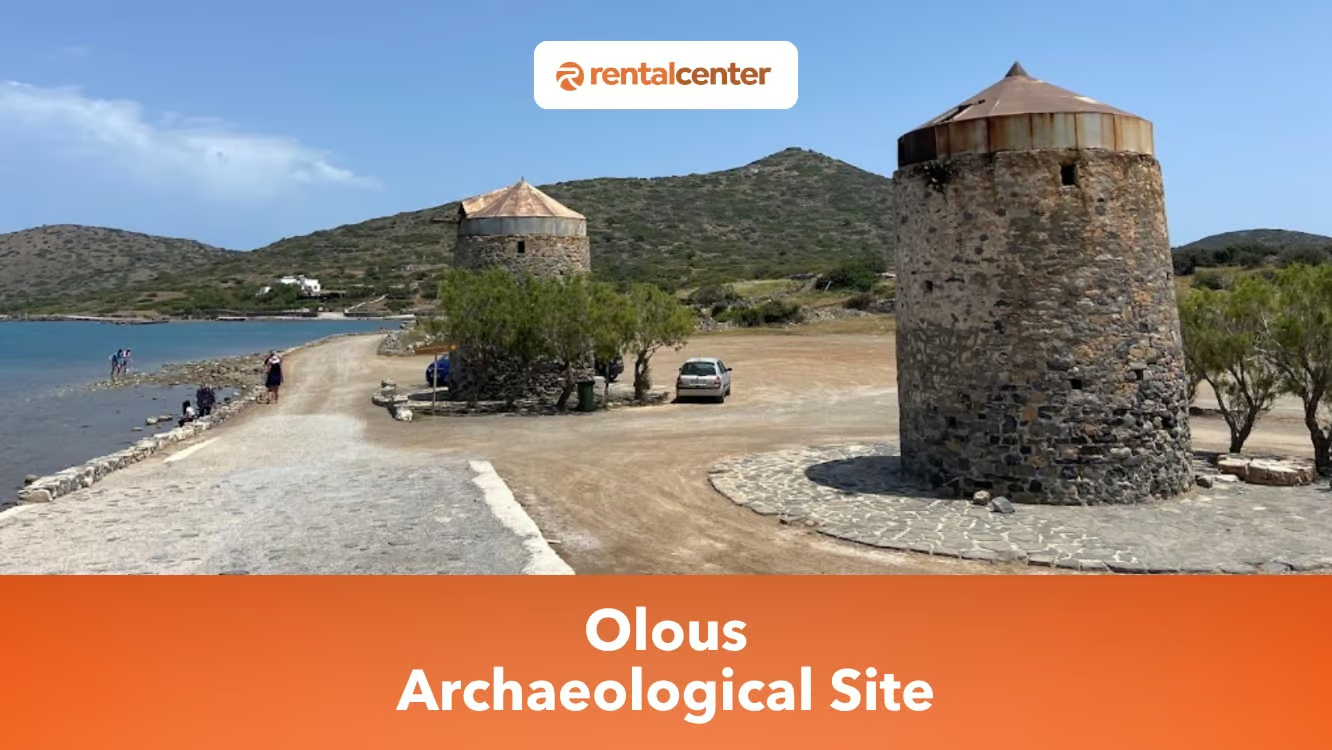
Olous is a sunken ancient Dorian city on the isthmus that links the Spinalonga peninsula to the mainland, at present-day Elounda in the Lasithi region of eastern Crete. Today only scattered wall bases survive, submerged in the shallow water of Elounda Bay, and you can see them by snorkelling or swimming on a calm day. The site is free and open, with no gate and no entrance fee.
Olous flourished across the Minoan, Hellenistic, Roman and Byzantine periods. The city minted its own coins, ran its own harbour, and traded across the Mediterranean, linking Crete with the Aegean islands and civilisations beyond. Its ruins reveal the daily life, culture and architecture of the people who lived on this coast for centuries.
What is the Archaeological Site of Olous?
Olous was a submerged city of ancient Crete at the modern town of Elounda, in the Lasithi regional unit. It sat on the isthmus connecting the Spinalonga peninsula to the mainland, overlooking Mirabello Bay. According to the Stadiasmus Maris Magni, an ancient coastal navigation guide, Olous had a harbour and lay 260 stadia from Chersonasus and 15 stadia from Camara. Its coastal position made it a hub of trade and cultural exchange.
The site’s geographical coordinates are roughly 35.2562° latitude North and 25.7335° longitude East. On Google Maps the entry point is marked “Archaeologikos Choros Olous”.
Underwater and coastal remains include the lines of old streets and roads, building foundations, sections of the harbour wall, and traces of fortifications and gates. Finds recovered from the area, pottery, tools, inscriptions, marble statue fragments and Roman tombs, have been documented by the Ephorate of Underwater Antiquities. Together they mark Olous as a working commercial port rather than a monumental city.
The History of Olous: Deities, Coins and Trade
Olous was an independent city-state that minted its own coins and worshipped its own gods before it slipped beneath Mirabello Bay. It was one of the more powerful settlements on this coast, with its own port and currency, and it held long-running boundary disputes, later settled by treaty, with the neighbouring hillfort of Lato.
The city developed on a maritime crossroads that connected northern Crete with the Aegean islands and the wider Mediterranean. Because ancient writers say little about Olous, most of what we know comes from coins, inscriptions and archaeological finds. Ancient texts recovered from the ruins link Olous with Knossos and with the island of Rhodes.
The Temple of Britomartis and the coins of Olous
Olous worshipped the goddess Britomartis, whose wooden statue in the city was attributed to the mythical craftsman Daedalus. Britomartis appears, alongside Zeus Tallaios, the city’s chief deity, on coins minted at Olous around 330–280 BC. Inscriptions also point to a cult of Asklepios. These coins and inscriptions are the clearest surviving evidence of the city’s religious life.
Why and when Olous sank?
Researchers propose two theories for the submersion. One holds that a coastal shift from an earthquake in the Roman era gradually put the city underwater; another attributes the collapse to an earthquake or landslide around 780 AD. Either way, the ancient city sank into the sea, and its remnants are visible when the water is calm.
Later history is easier to trace. Olous prospered under Roman and Byzantine rule until Arab raids in the 7th century damaged its trade-based economy. During the Venetian period the wider Elounda area revived: the harbour was rebuilt and a large salt-pan complex was developed in the shallows. Stone from the ancient city was reused to build the fortress on the Spinalonga islet, which guarded the entrance to the harbour.
Where is Olous and What Can You See Today?
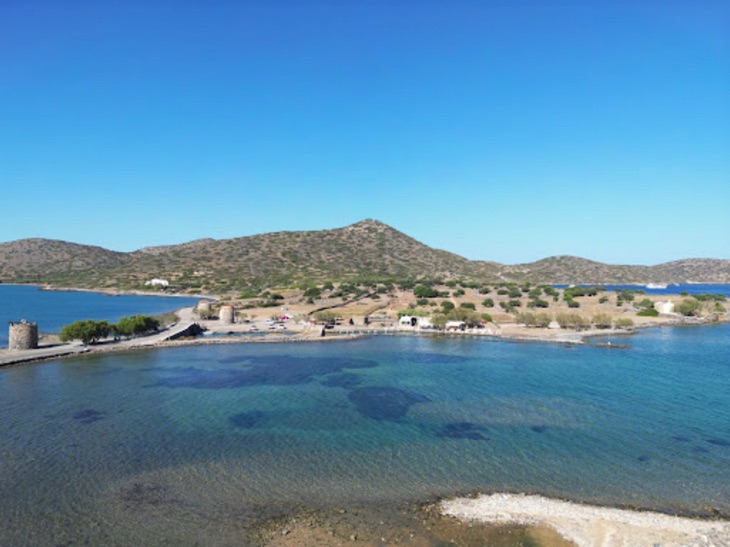
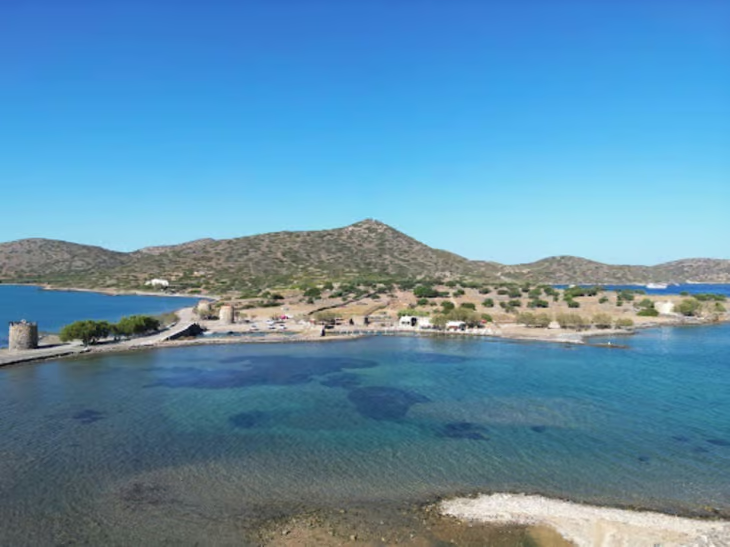
The Olous Archaeological Site is on the shore of Elounda in northeastern Crete, on the Gulf of Mirabello. Elounda is a beach village known for its clear waters, beaches and resorts, and Olous sits right at its edge.
Today, the only visible remnants of the city are scattered wall bases in the shallow water, best seen by snorkelling or swimming on a calm day. There is no fenced enclosure and no admission gate; you walk the seafront and look for the lines of stone through the water.
The surrounding area adds to the visit: Mirabello Bay, the Spinalonga peninsula, and Spinalonga Island itself with its Venetian fortress. Together these make Olous one of the more atmospheric coastal Crete landmarks in Lasithi.
The Kolokytha peninsula: basilica, mosaic, windmills and bridge
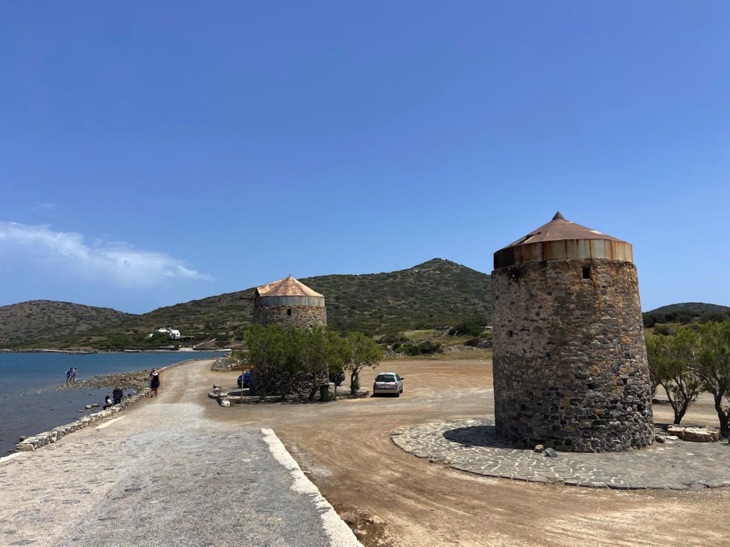
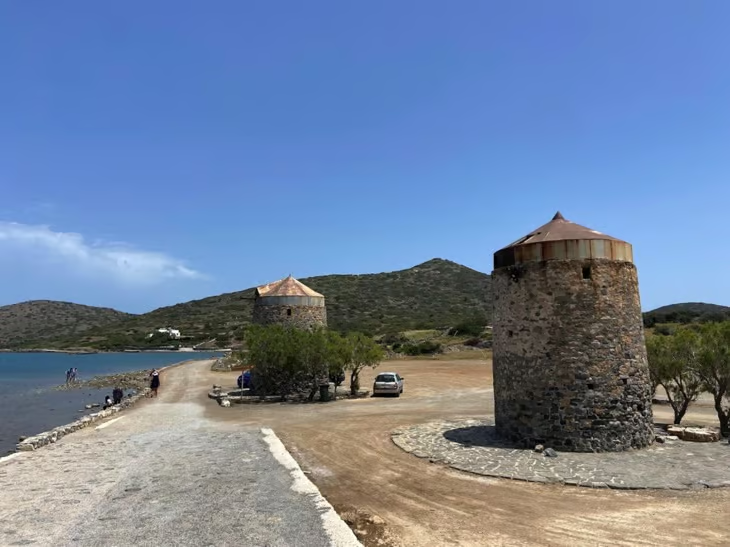
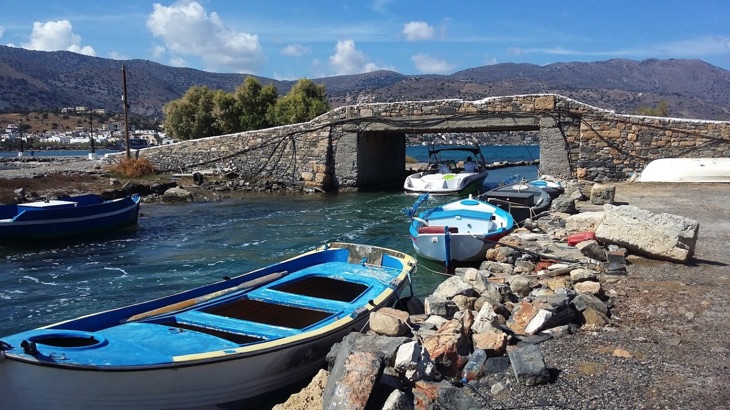
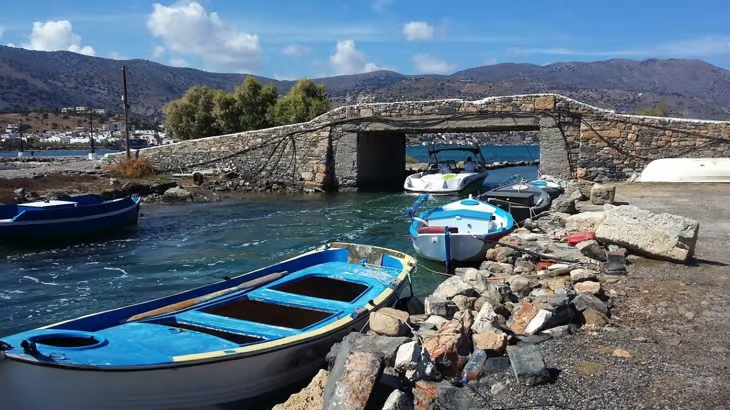
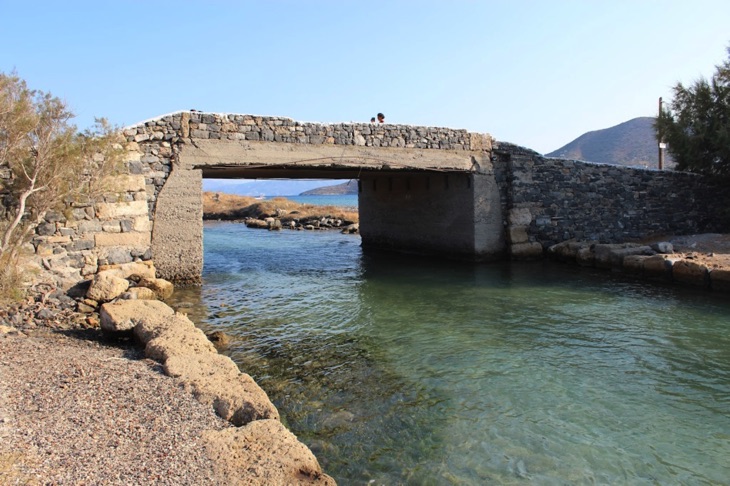
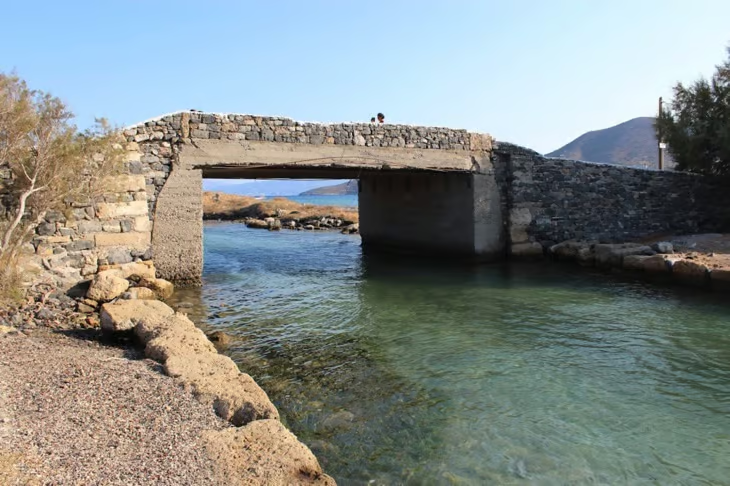
About 1.5 km (0.93 miles) from the site, on the Kolokytha (Kolokitha) peninsula, are the sights most visitors actually walk to: the stone windmills that are the area’s trademark, an early Byzantine basilica with a mosaic floor, the Ascension Church, and a small stone bridge lined with fishing boats. You can reach them on foot or by car, and the walk along the water is part of the appeal.
What is the Historical Origin of Olous?
Olous began as a coastal settlement on the northeastern shore of Crete and grew because of the sea. Its strategic position on Mirabello Bay suited marine activity, trade and contact with other Mediterranean civilisations, and it thrived through the Minoan, Hellenistic, Roman and Byzantine eras.
The city was identified as an archaeological site through systematic excavation over many years. Work on land and underwater has uncovered streets, house foundations, artefacts and other evidence that let archaeologists reconstruct how the people of Olous lived, traded and worshipped.
How Far is the Archaeological Site of Olous from the Airport?
The straight-line distance between Olous and the nearest airport, Heraklion International Airport, is 68.5 km (42.56 miles); by road the drive is about 72 km (44.74 miles). Olous is at Elounda on Crete’s northeastern coast.
Most visitors drive east along the northern coast on National Road 90 (the New National Road) to Agios Nikolaos, then north to Elounda. The trip takes about 1.5 to 2 hours depending on traffic, and passes coastline, mountains and villages along the way.
Not every ancient site is reachable to the door by car; at Olous you park in Elounda and walk a short distance along the seafront. Check with local authorities for the latest on access and parking.
Can I Rent a Car to Visit the Archaeological Site of Olous?
Yes. a Crete car rental is the most convenient way to reach Olous. Given the site’s location on Crete’s northeastern coast, a car lets you travel from Heraklion Airport at your own pace and combine Olous with nearby stops such as Spinalonga and Agios Nikolaos. The usual route is National Road 90 east, then north to Elounda, where you park and continue on foot. Renting a car gives you the freedom to explore the coast on your own schedule; if it is your first time behind the wheel here, read our guide to driving in Crete before you set off.

What is the Best Transport to the Archaeological Site of Olous?
The three best transport options for reaching Olous are listed below, ranked by flexibility.
- Rental Car: Renting a car in Crete is the most flexible option. Drive from your arrival point to Elounda, park, and reach the site on foot, adding nearby coastal stops at your own pace.
- Bus: Taking the bus is the cheapest option. Regional buses run from Agios Nikolaos to Elounda (about an 11 km (6.84 miles) trip); coordinate with the timetable.
- Taxi: Taking a taxi is direct and comfortable, though more expensive. Order a taxi from the airport, Agios Nikolaos or Heraklion.
How to Get to the Archaeological Site of Olous?
To reach Olous, choose from six options, listed below.
- By Car: Take National Road 90 from Heraklion to Agios Nikolaos, then continue along the coast to Elounda. Park in Elounda and walk to the site.
- By Bus: Take a bus from Heraklion to Agios Nikolaos, then a local bus to Elounda.
- By Taxi: Take a taxi from Heraklion or Agios Nikolaos to Elounda for direct access.
- By Tour: Book a guided snorkelling trip that runs to the sunken city.
- By Walking: Walk to the site along the seafront if you are staying in Elounda.
- By Boat: Approach from nearby coastal spots by boat for a different view of the submerged remains.
Visiting Olous: Parking, Cost and Best Time
The archaeological area is free and open. Park in Elounda, walk the seafront, and visit in spring or autumn for the best conditions.
Where to Park Near the Archaeological Site of Olous?
The places to park near Olous are listed below.
- Public Car Parking by the Beach: A convenient public parking area near the beach, close to the ruins and the shore.
- Elounda Port Parking: Designated parking in the Elounda Port area.
- Parking Elounda Orama: A parking lot near the site.
- Elounda Colour Parking: A further parking option near the site.
Is There a Fee to Visit Olous?
There is no entrance fee, Olous is an open coastal site with no gate. The only paid options are third-party guided snorkelling excursions. A guided snorkelling excursion to the sunken city is listed from about €56.63 ($65.02, £47.99) per adult on Viator/TripAdvisor at the time of writing; the fee typically covers a briefing on the site’s history, an instructor-led snorkel in a small group, and transport to the meeting point. Confirm the current price and inclusions directly with the operator, as offerings change.
When is the Best Time to Visit the Archaeological Site of Olous?
The best time to visit Olous is spring (April to June) and autumn (September to October). These seasons bring temperate weather, calm seas and smaller crowds, the conditions that make the submerged walls easiest to see. Spring adds wildflowers and green surroundings, while autumn brings mild weather after the summer heat, which is why these months are also the best time to visit Crete as a whole.
July and August are hot and busy, which makes long walks on the exposed shore less comfortable. Winter (November to February) is milder but wetter, and rain can cut visibility in the water.
What Should You Consider Before Visiting Olous?
Things to consider before visiting Olous are listed below.
- Swim gear: The submerged ruins are best seen by snorkelling or swimming; bring a mask and water shoes, as the shallows are rocky.
- Weather and sea: Choose a calm, clear day for the clearest underwater visibility, and dress for walking and sun.
- Facilities: The site is unfenced and undeveloped; carry water and snacks, and use the tavernas and amenities in Elounda.
- Site rules: Do not remove stones or artefacts, as the remains are protected.
- Transport: Plan your route and parking in Elounda in advance.
Are There Hotels Near the Archaeological Site of Olous?
Yes. Elounda offers a wide range of accommodation within walking or short-drive distance of Olous, from luxury resorts to boutique hotels and guesthouses. Many have sea views and beach access, and staying nearby lets you visit the site early or late to avoid crowds. Book ahead in the tourist season.
Are There Restaurants Near the Archaeological Site of Olous?
Yes. Elounda has many tavernas and restaurants serving traditional Cretan dishes, seafood and Mediterranean cuisine, several with views over the bay. Combining the site with a meal on the waterfront makes for an easy half-day out.
What Do People Say About the Archaeological Site of Olous?
Visitors describe Olous as an unusual, atmospheric place worth a visit. Even though little stands above the water, people find it transportive, calm shallows and glimpses of partly submerged walls let you imagine the vanished city. Snorkellers note the clear water and the mix of stone remains and marine life. Many walk the seaside route from Elounda to the site, stopping at cafés along the way, and several recommend bringing a swimsuit for the calm bay. Some wish for more visible ruins or signage, but most value Olous for its quiet, unspoiled coastal setting over any staged attraction.