






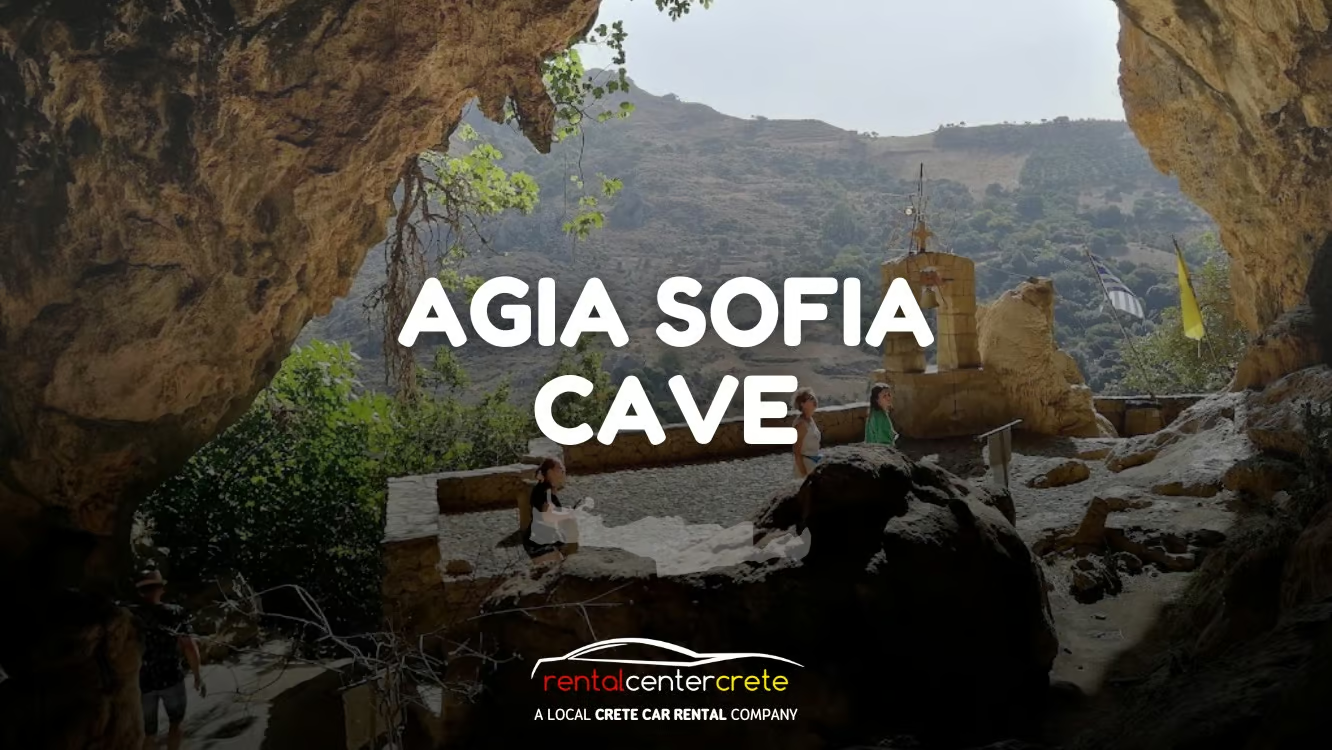
The Cave of Agia Sofia is a captivating natural wonder that holds historical, cultural and geological significance. The Cave of Agia Sofia is an awe-inspiring underground place shrouded in mystique, renowned for its unique rock formations, breathtaking stalactites and stalagmites that have been shaped over thousands of years. The cave offers a mesmerising journey through time and nature’s artistic craftsmanship nestled deep within the Earth’s embrace.
Stepping into the Cave of Agia Sofia is like entering a hidden realm, where an otherworldly atmosphere envelops visitors. The air is cool and damp, creating an ethereal ambience that enhances the sense of wonder and adventure.
The Cave of Agia Sofia is a testament to the power and beauty of nature, offering visitors a glimpse into the Earth’s geological history and a deep appreciation for the wonders that lie beneath the surface. It is a place where the ancient and the timeless converge, captivating the imagination and leaving a lasting impression on all who have the privilege to experience its natural splendour.
The specific location of the Cave of Agia Sofia is Minoa Pediada 734 00. It is situated in the Minoa Pediada area of Crete, Greece. The cave is found near the Agia Sofia village, which belongs to the larger Lasithi Plateau region of eastern Crete.
The Cave of Agia Sofia in Crete is known for its exceptional stalactite and stalagmite formations, which have captivated the attention of tourists. The intricate and mesmerising calcite formations create a unique and enchanting atmosphere within the cave. The cave holds historical and cultural significance beyond its geological marvels, as it was used for religious worship during the Byzantine era. The presence of Byzantine-era icons, inscriptions and frescoes adds to the cave’s allure, combining natural beauty with a rich historical heritage.
Renting a car in Crete is a convenient way to reach the Cave of Agia Sofia from Chania. The recommended route is the Vorios Odikos Axonas Kritis/E65 Road, which is relatively short and safe. Driving along the E65 road offers stunning views and takes approximately 40 minutes to 1 hour from Chania International Airport. Look for signs directing visitors to the village of Agia Sofia in the Lasithi Plateau region, where the cave is located. Local assistance guides visitors to the exact location of the cave once in Agia Sofia.
What is the Cave of Agia Sofia?
The Cave of Agia Sofia, commonly known as Agia Sofia Cave, is a well-known natural marvel that is found on the Greek Island of Crete’s Lasithi Plateau. The Cave of Agia Sofia is an intriguing cavern system due to its amazing stalactite and stalagmite formations, distinctive geological characteristics and historical significance.
The Cave of Agia Sofia is assumed to have been formed over millions of years through the natural processes of erosion and dissolution. Stalagmites that emerge from the cave floor and towering stalactites that hang from the ceiling are just two of the spectacular and intricate formations that embellish the inside of the cave. The fascinating formations were developed over time by the continual flow of mineral-rich water, transforming the cave into a magical underground world.
The cave is significant historically and religiously, in addition to its natural splendour. It was used as a place of worship throughout the Byzantine era and the cave still has evidence of its ancient past. The cave has cultural and spiritual value due to the presence of Byzantine-era icons, inscriptions and murals.
The Cave of Agia Sofia was discovered in the 1930s. The Patriarch of Greek Speleology, Ioannis Petrohilos and Anna, who is the wife, found the place. The reason for its discovery is to scientifically study the cave to obtain knowledge about its history and culture through the artefacts and other ancient remains.
How was the Cave of Agia Sofia Named?
The Cave of Agia Sofia was named after the veneration of Agia Sofia, the Holy Wisdom. The cathedral honouring the saint is located inside the cave, which adds to the name’s importance. Agia Sofia, which means “Holy Wisdom” in Greek, is a typical name for churches that value God’s omniscient wisdom. The cave’s name was influenced by the chapel honouring Agia Sofia, which is located inside the series of caves.
The term “Agia Sofia” eventually evolved to refer to both the cave and the attendant religious devotion. The naming practice emphasises the cave’s spiritual significance, its relationship to the saint and the religious rituals performed within its holy chambers. The venerated saint’s name and the worship that takes place there are both associated with the cave known as Agia Sofia as a result.
Where is the Cave of Agia Sofia Located in Crete?
The Cave of Agia Sofia is located in the Minoa Pediada area of Crete, Greece. The place is where visitors find the Cave of Agia Sofia. The specific address of the cave is Minoa Pediada 734 00. The cave is located close to the community of Agia Sofia, which is a part of eastern Crete’s larger Lasithi Plateau region.
The cave of Agia Sofia is located inside the scenic Minoa Pediada environment and is one of the historically significant caves in Crete, providing tourists with a distinctive natural attraction. The cave of Agia Sofia offers an opportunity to dig into the intriguing world of spectacular stalactite and stalagmite formations because of its scenic beauty and serene settings. The Cave of Agia Sofia is a Crete landmark that provides both geological marvels and an opportunity to take in the alluring beauty of the island’s various landscapes. It is reachable from various locations on the island of Crete.
What is the Cave of Agia Sofia Known For?
The cave of Agia Sofia is known for various things, which include its astonishing geological structures along with its historical and cultural influence.
The exceptional stalactite and stalagmite formations in the Cave of Agia Sofia are its most well-known feature. The intricate beauty and mesmerising shapes have captured the attention of numerous tourists. The cave is decorated with stunning geological formations that were created over thousands of years and display natural geological marvels. The impressive calcite formations in the cave produce a singular and mesmerising atmosphere.
The Cave of Agia Sofia is significant not just geologically but historically and culturally. The cave was used as a place of worship and religious observance during the Byzantine era. The cave still contains Byzantine-era icons, inscriptions and frescoes that give insight into the ancient people’s spiritual practices. The historical artefacts add to the cultural and historical significance of the cave and heighten the allure of its natural wonders.
The Agia Sofia Cave is still used for religious activities today. Its church honouring Agia Sofia draws pilgrims and tourists looking for a spiritual connection inside its revered quarters. Its use as a location for prayer and reflection is facilitated by the serene ambience and the presence of religious artefacts and symbols.
How to Get to the Cave of Agia Sofia in Crete?
The steps to get to the Cave of Agia Sofia in Crete are listed below.
- Rent a Car and drive from Chania. Renting a car in Crete is a convenient way to drive and reach certain destinations, including the Cave of Agia Sofia in Crete.
- Take the Vorios Odikos Axonas Kritis/E65 Road. The Vorios Odikos Axonas Kritis/E65 Road is the most recommended route to follow when going to the Cave of Agia Sofia in Crete because it is not dangerous and is short. Visitors must ensure that they are taking the route and not driving to another one because it leads to another location or is longer to drive.
- Follow the E65 Road. The E65 road is approximately 50 to 60 kilometres long, which means visitors have to drive around 40 minutes to 1 hour from the Chania International Airport to the Lasithi Plateau region. Visitors must not worry about the long travel time, as driving in Crete is a beautiful experience due to the stunning views.
- Look for Signs Directing to the Village of Agia Sofia. There are signs erected in the Lasithi Plateau region, that lead to Agia Sofia village, where the Cave of Agia Sofia is located. Follow the signs and turn onto the appropriate roads leading to Agia Sofia.
- Inquire locally for directions to the Cave of Agia Sofia. Visitors must coordinate with locals of Agia Sofia in Crete once they arrive. The locals guide visitors to the exact location, as it is directly visible from the main road.
What to See in the Cave of Agia Sofia Crete?
The things to see in the Cave of Agia Sofia Crete are listed below.
- Stalactites and Stalagmites Formations: The cave is well-known for its breathtaking stalagmite and stalactite formations. Stalactites and stalagmites, which rise from the cave floor or hang from the ceiling, are fascinating structures made of such mineral deposits. Visitors observe the complex patterns and shapes that have developed over thousands of years.
- Frescoes and Byzantine Icons: Visitors come across frescoes and icons from the Byzantine era as they explore the cave. The historical significance of the cave as a site of worship during the Byzantine era is revealed by the religious artworks. Visitors look closely at the complex symbols and details portrayed in the old artworks.
- Cave Interior: Visitors take in the unique ambience of the cave’s interior. A calm and ethereal atmosphere is created by the natural lighting and acoustics. The cool temperature enhances the tranquillity and sense of wonder as visitors explore the chambers.
- Underground Chapel: Visitors discover the chapel below ground that is devoted to Agia Sofia, the Holy Wisdom. The sacred area is used for religious activities and provides a place for meditation and prayer. Travellers observe the religious artefacts and icons that decorate the chapel.
- Cave Exploration: Visitors enjoy the adventure of discovering the passages, chambers and secret spaces in the cave. They are led along the designated paths by knowledgeable guides or neighbourhood experts who offer insights into the cave’s geology and history.
- Natural Beauty: Visitors take in the surroundings of the cave’s natural beauty, which is common in caves in Crete. They enjoy the unusual formations, the play of light and shadow and the eerie sense of timelessness that permeates the cave for a moment.
How Far is the Cave of Agia Sofia from the Airport?
The distance of the Cave of Agia Sofia from the airport is approximately 64.2 kilometres (40 miles). The location of Chania International Airport in Crete is around 64.2 kilometres away from the Cave of Agia Sofia, which means that it takes around 1 hour and 2 minutes to teach it. There must be a consideration regarding traffic conditions, road quality and the specific route taken because they influence the travel time.
Visitors need to take the Vorios Odikos Axonas Kritis/E65 route to reach the cave from the airport. Travellers have the opportunity to enjoy the scenic landscapes of Crete as they embark on their drive while making their way to the Cave of Agia Sofia. It is advisable to use a reliable navigation system or GPS to assist visitors in navigating the roads and ensuring a smooth journey.
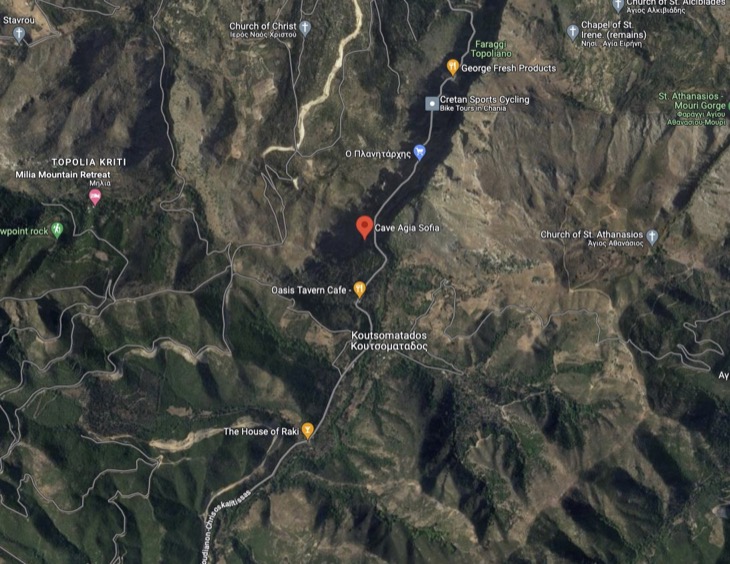
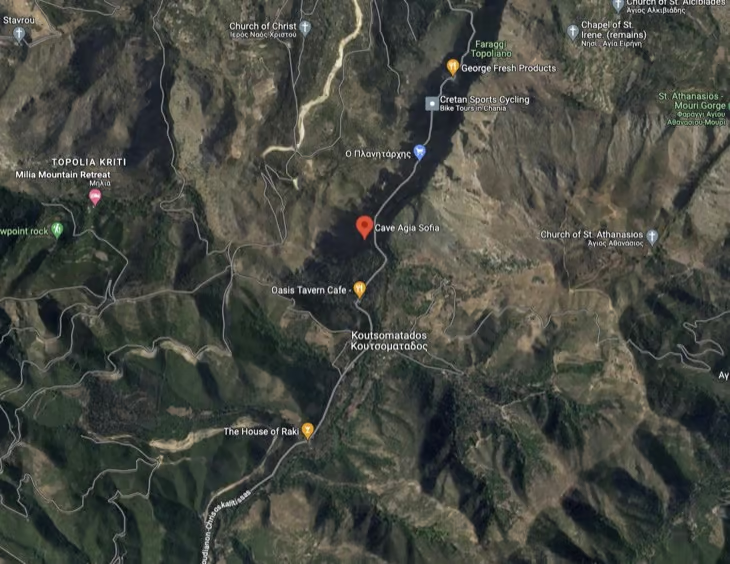
Find below an image map of the Cave of Agia Sofia.
How Much is the Admission for the Cave of Agia Sofia Tour in Crete?
The admission for the Cave of Agia Sofia tour in Crete varies from around €40.50 to €597.37.
The Elafonisi Full-Day Tour from Chania is a €40.50 worth package that allows visitors to visit Elafonisi Beach and explore the Cave of Agia Sofia as an inclusion. The duration of the tour is around 8 to 10 hours, which means tourists have ample time to wander around the area.
The Elafonisi Beach and Agia Sofia Cave Tour is another package that costs €39.47 per adult person. The package allows tourists to visit Elafonisi Beach and stop by the Agia Sofia Cave. The duration of the tour is approximately 10 hours, giving the opportunity to tourists to explore the two locations and appreciate their beauty.
The Tailored Private Elafonisi Day Tour from Heraklion is a package that covers up to 3 people. The price is around €597.37 and already includes access to Elafonisi Beach and a visit to the Cave of Agia Sofia. The duration of the tour is around 8 hours at maximum.
What are the Challenges Getting into the Cave of Agia Sofia in Crete?
The challenges of getting into the Cave of Agia Sofia in Crete are listed below.
- Accessibility: People with physical limitations or mobility problems find it difficult to enter the cave. Navigating the landscape leading to the cave includes rough routes, steps or natural impediments for someone with restricted mobility.
- Limited Access or Restrictions: Access to some portions is restricted or limited due to the cave’s religious importance and its ongoing usage as a place of worship. Visitors need to observe set visiting hours, stay on defined routes or abide by a set of regulations or guidelines to maintain the sanctity of the place.
- Environmental Factors: The interior of the cave have different environmental factors than the exterior. Visitors must be ready for colder temperatures, high humidity levels or dim illumination within the cave. The environmental conditions call for the proper attire, cosy shoes and even a torch or headlamp for enhanced visibility.
- Safety Precautions: There are areas with slippery surfaces or low ceilings in the Cave of Agia Sofia, just like other underground caves. It is important to exercise caution and follow any safety instructions provided by guides or posted signs. Visitors must pay attention to their surroundings and be mindful of potential hazards to ensure a safe and enjoyable visit.
- Tour Availability and Bookings: It is advised to check for tour availability and to think about booking in advance, depending on the time of year and demand. It is particularly crucial during the busiest travel seasons because the entrance to the cave is restricted or only available during certain hours.
Driving to the cave requires navigating the roads leading to the village of Agia Sofia. The road conditions vary, so it’s advisable to drive cautiously and be prepared for potential twists, turns and narrow passages. It requires some skill, attention and initiative to choose the right car to rent, especially if visitors encounter challenging road conditions depending on their comfort level while driving in unfamiliar terrain.
Hiking to the cave has different difficulty levels depending on the trail that is chosen by the visitors. Some hiking routes involve uphill sections, uneven paths or rocky terrain, which makes the hike moderately challenging. It is recommended to wear appropriate footwear, carry sufficient water and be prepared for varying elevations and weather conditions.
What are the Nearest Hotels in the Cave of Agia Sofia Crete?
The nearest hotels in the Cave of Agia Sofia Crete are listed below.
- Nautilus Bay Hotel: The Nautilus Bay Hotel offers an outdoor pool and a sun terrace with modern architecture that provides a relaxing experience to its customers. Free parking, free high-speed internet, a beach, a shared lounge, free breakfast and airport transportation are just a few of the amenities and accommodations. The hotel is located at Kalergon Plaka Beach, Kissamos, Crete 734 00 Greece, which is around 6.4 miles away from the Cave of Agia Sofia Crete. The price of a one-day stay in the Nautilus Bay Hotel is approximately €92.57.
- Kavousi Resort: The Kavousi Resort is an excellent place to go to continue the fun and tranquillity with its beach and fancy rooms after exploration to the Cave of Agia Sofia Crete. There is free parking, a bar, children’s activities, baggage storage, free Wi-Fi, bicycle rental and laundry service, among others. The Kavousi Resort is situated at Kavousi Falasarna, Falassarna, Crete 73400 Greece, which is roughly 7 miles away from the Cave of Agia Sofia Crete. The cost of staying a night in Kavousi Resort is around €70.54.
- Hotel Kissamos: The Hotel Kissamos is a cosy place that combines the refreshment of a pool and a garden. There are 24 rooms available in the hotel, which provide the needs of customers based on their needs. The property amenities are free parking, free internet, breakfast and a bar. The Hotel Kissamos is established at 172 Iroon Politechniou, Kissamos, Crete 734 00, Greece, which is roughly 6 miles away from the Cave of Agia Sofia Crete. The cost of staying in the Hotel Kissamos is roughly €70.70.
- Maria Beach Hotel: The Maria Beach Hotel is a tiny family hotel with a restaurant and bar built at the seafront. The amenities of the Maria Beach Hotel are free parking, bicycle rental, baggage storage, free Wi-Fi internet, car hire and outdoor furniture. The hotel is located at Kissamos, Crete 734 00 Greece, which is estimated to be around 6.4 miles away from the cave. The price of staying in the hotel is approximately €101.14 per night.
- Avra Imperial Hotel: The Avra Imperial Hotel is known for its lush, aromatic gardens and sparkling waterways. The Avra Imperial Hotel has 328 opulent rooms and suites along with a host of first-rate amenities, including magnificent swimming pools, five top-notch restaurants, four exciting bars, sports and recreation areas, a nursery and shops. It has an unrivalled conference centre as an extra amenity. The Avra Imperial Hotel is erected at Kolymbari, Platanias, Crete 730 06, Greece, which is roughly 10.6 miles from the Cave of Agia Sofia Crete. The Avra Imperial Hotel is considered a bestseller and it is the most expensive one, costing around €313.19 per night.
What are the Nearest Restaurants in the Cave of Agia Sofia Crete?
The nearest restaurants in the Cave of Agia Sofia Crete are listed below.
- Romantza: Romantza restaurant offers dinner, breakfast and lunch, along with alcoholic beverages. The restaurant is known for offering a seat and having a view of the mountains surrounding it. Romantza restaurant is located at Spilaio Agias Sofias, Kissamos, Crete 73400 Greece. The opening hours are from 8:00 AM to 8:00 PM.
- Oasis Tavern Café: Oasis Tavern Café is a restaurant that offers various kinds of food, which include seafood, Mediterranean, barbecue and Greek. The place is considerate to some people as they provide vegetarian, friendly, vegan options and gluten-free options. The foods are served for lunch, dinner, brunch and breakfast and they offer drinks. The restaurant is located at Katsomatados, Kissamos, Crete 734 00 Greece. They accept orders from 12:00 AM to 11:59 PM.
- Tavern Restaurant Hotel: Tavern Restaurant Hotel is a relaxing place to fill the visitors’ tummy as it is surrounded by mountains, which delivers a great view of Crete. Tavern Restaurant serves Mediterranean, Greek and grill cuisines. The special diets they provide are vegetarian-friendly, vegan options and gluten-free options. The meals are available for breakfast, lunch, dinner, brunch and late night. Tavern Restaurant is located at Katsomatados, Kissamos, Crete 734 00 Greece. The opening hours are from 10:30 AM to 1:00 AM.
- Topos and Elia: Topos and Elia restaurant is a cosy establishment that offers delicious food. The restaurant delivers several kinds of cuisines, including international, Mediterranean, Greek and healthy. The special diets are vegetarian-friendly and vegan options. The price range is around €5.01 to €10.02. The location of Topos and Elia is Topolia, Topolia, Kissamos, Crete 73010 Greece. The restaurant is open from 11:00 AM to 11:00 PM.
- Oinohos: Oinohos is a restaurant that offers food and a stunning view of the surrounding mountains, which helps visitors enjoy what they are eating more. The cuisines in Oinohos restaurant are Greek and Mediterranean. The special diets are vegetarian-friendly, vegan options and gluten-free options. The price range is around €2.00 to €10.02. The location of Oinohos restaurant is Topolia, Kissamos, Crete 73400 Greece. The place is open from 8:00 AM to 2:00 AM.
What are the Rules in the Cave of Agia Sofia?
The rules in the Cave of Agia Sofia are listed below.
- Wear proper attire as the place is devoted to religious activities. Visitors must avoid wearing revealing clothing or attire that is considered inappropriate for a sacred site.
- Respect any restrictions on photography or videography within the cave. Some religious sites prohibit photography or have specific areas where it is not allowed. Follow any instructions provided by guides or posted signs.
- Maintain a quiet and respectful demeanour within the cave. Visitors must keep noise to a minimum to preserve the tranquillity of the space and to avoid disturbing other visitors or any ongoing religious practices.
- Follow any designated paths or instructions regarding restricted areas within the cave. Some sections are off-limits or reserved for religious ceremonies. It is important to respect the boundaries and not trespass into restricted areas.
- Help maintain the cleanliness of the cave by properly disposing of any waste or litter. Visitors must be mindful of the environment and use designated waste bins or carry their trash with them until they dispose of it appropriately.
- Listen to any instructions provided by guides, staff or local authorities. Guides, staff and local authorities are there to ensure the safety of visitors and the preservation of the site. Cooperate and follow their guidance to have a smooth and respectful experience.
When is the Best Time to Visit the Cave of Agia Sofia in Crete?
The best time to visit the Cave of Agia Sofia in Crete is during the shoulder seasons of spring and fall. The shoulder seasons, which normally run from April to May and September to October, provide more temperate weather and less crowding, in contrast to the busiest summer months. They are the times of the year that often have excellent weather, making it convenient and comfortable to explore the cave and its surroundings.
Visitors take pleasure in the brilliant foliage and blooming wildflowers of the landscape in the spring. It is the perfect time of the year for outdoor sports and trekking in the region around the cave because of the warm weather.
The weather begins to drop off in the autumn, which is considered the best time to visit Crete in general, making it a wonderful time to explore the cave. The surrounding countryside is particularly charming during the fall and harvest season, making for a lovely setting for visitors’ visits.
It is advised to avoid the hotter weather and greater crowds that are normally associated with the summer tourist season from June to August. It is best to arrive early if visitors do intend to visit during the summer to avoid the heat and larger crowds.
Can I Bring Food to the Cave of Agia Sofia?
No, one is not allowed to bring food to the cave of Agia Sofia. It is generally not advised to not bring food to the Cave of Agia Sofia, as it is a religious site with specific guidelines and customs to be followed. Eating inside the cave is not allowed as a sign of respect for the sacred nature of the site. Food attracts pests and creates litter, potentially disrupting the serene environment and affecting the preservation of the cave.
It is recommended to consume any food or snacks outside the cave premises before or after the visit to ensure a respectful visit. There are designated areas or nearby facilities where visitors enjoy a meal or have a picnic. It is always a good practice to carry any waste outside and dispose of it properly in designated waste bins outside the cave area.
Are there Parking Spots in the Cave of Agia Sofia?
Yes, there are parking spots in the Cave of Agia Sofia. The parking spots in the Cave of Agia Sofia is situated at the base part of the cave. The parking spot is a bit away from the actual location of the cave. The visitors have to go through 257 up to the mountain to reach the cave from the parking spot. The parking spot is sometimes fully-occupied, especially during the peak season, considering the space available.
Published on .