


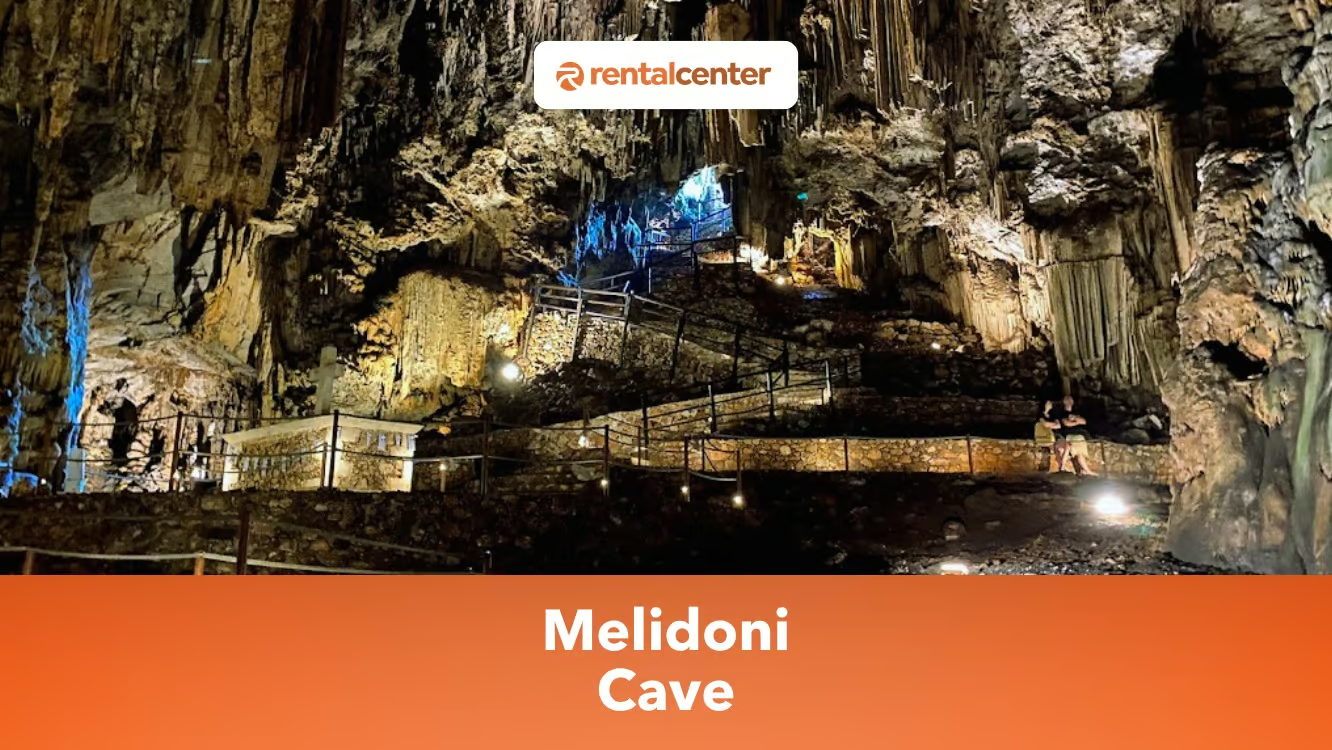
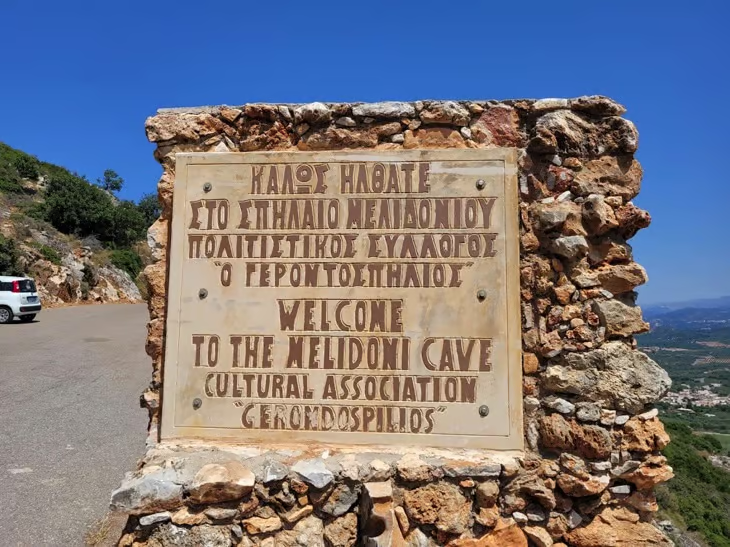
Melidoni Cave, also called Gerontospilios, is a limestone cave 2 kilometers (1.24 miles) from Melidoni village on the southern slope of Kouloukonas Mountain in northern Crete, Greece. Melidoni Cave belongs to the municipality of Mylopotamos and sits at an elevation of 220 metres. The cave charges €4 ($4.59, £3.39) per person for entry, €3 ($3.44, £2.54) for organised groups and students-Families etc., and opens to visitors from 9:00 am until 7:00 pm. Guided tours lead visitors down a lit path into the main chamber, which measures more than 60 metres in length and more than 20 metres in height.
Prices, opening hours and visitor rules for Melidoni Cave change over time. Confirm the current admission price and opening times with the cave’s ticket office or the official Melidoni Cave website before your visit.
Melidoni Cave Quick Facts
| Fact | Value |
|---|---|
| Alternative name | Gerontospilios |
| Entry price | €4 ($4.59, £3.39) per person (€3 ($3.44, £2.54) for organised groups and students-Families etc.) |
| Opening hours | 9:00 am – 7:00 pm |
| Location | Southern slope of Kouloukonas Mountain, municipality of Mylopotamos, Crete |
| Elevation | 220 metres |
| Coordinates | 35°23′N, 24°44′E (coordinates of Melidoni village, per German Wikipedia; the cave lies 2 kilometers (1.24 miles) from the village) |
| Distance from Melidoni village | 2 kilometers (1.24 miles) |
| Main chamber size | Over 60 metres long (197 feet), over 20 metres high (65 feet) |
| Distance from parking area | 200-300 metres (656-984 feet) |
| Distance from Heraklion Airport (HER) | ~6 kilometers (37.28 miles), ~1 hour 15 minutes by car |
| Distance from Chania Airport (CHQ) | ~85 kilometers (52.82 miles), ~1 hour 30-45 minutes by car |
| Opened to tourists | 2001 |
| Tripadvisor rating | 4.1/5 from 723 reviews, Travellers’ Choice award (Tripadvisor) |
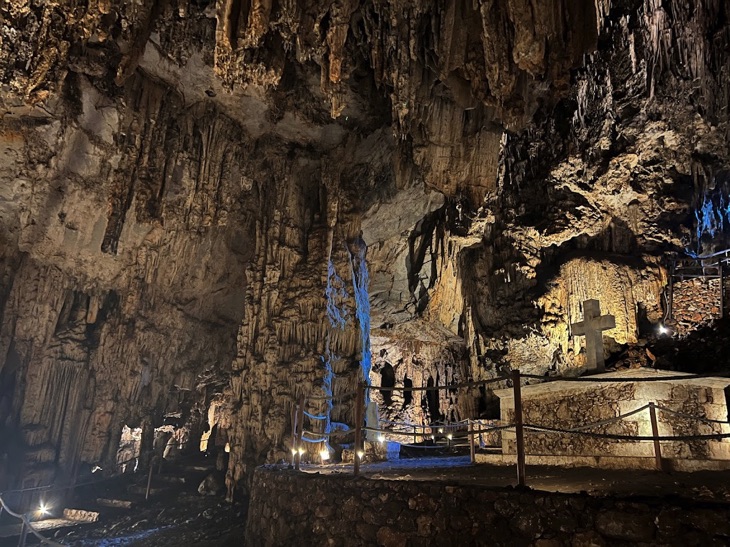
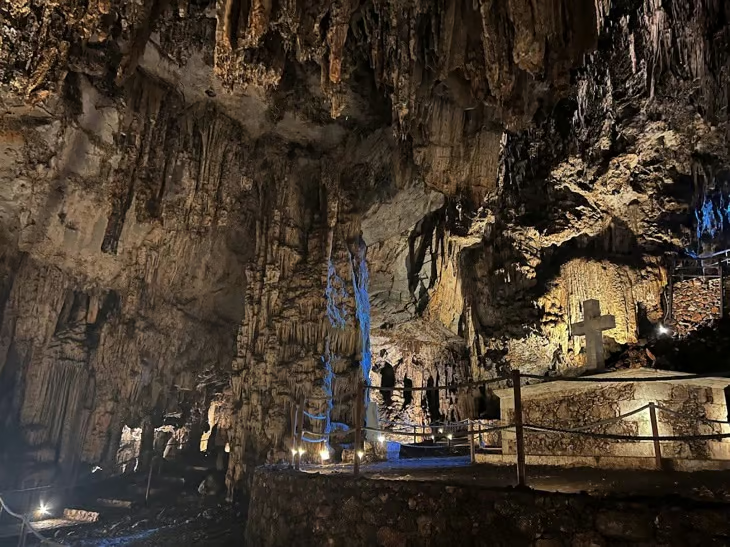
Locals sought safety in the cave in 1824 during the Cretan Revolution but perished when the entrance was set on fire. Melidoni Cave now welcomes the public and offers guided tours, so visitors explore its chambers and learn the geology and historical backdrop of the site.
The mythological and cultural significance of Melidoni Cave in Crete is immense. Melidoni Cave links to the birthplace of Zeus, Rhea’s sanctuary, Hermes’ temple under the Roman Empire and the fabled bronze giant Talos, who guarded Crete but was vanquished by Jason’s Argonauts. Visitors walk the cave’s chambers and picture the mythical creatures that once inhabited them.
Several nearby locations for exploration surround Melidoni Cave. Melidoni village itself, with its architecture and small pubs, offers a look into traditional Cretan life. Rethymno, about 3 kilometers (18.64 miles) to the east, has a broader choice of attractions, such as the Venetian Fortress, the Old Town with its narrow alleyways and Ottoman-era structures and its beaches. The Amari Valley, with rich vegetation and quaint towns, lies nearby and offers nature hikes and Cretan country life.
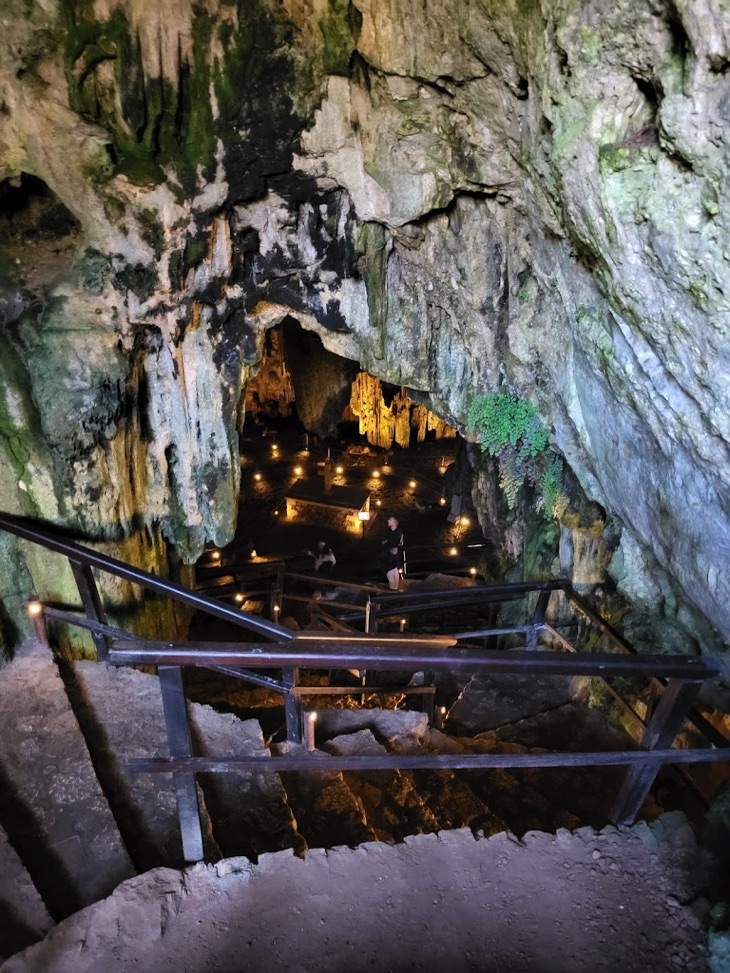
Where is Melidoni Cave in Crete?
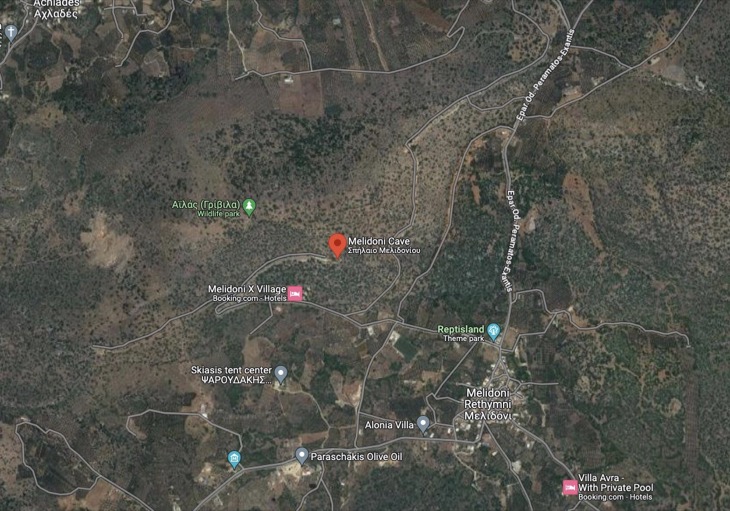
Melidoni Cave, known as Gerontospilios, sits in northern Crete, Greece’s biggest island, 2 kilometers (1.24 miles) from Melidoni village in the municipality of Rethymno. Melidoni Cave occupies the south side of Kouloukonas Mountain, inside the municipality of Mylopotamos, at an elevation of 220 metres. German Wikipedia places Melidoni village at coordinates 35°23′N, 24°44′E.
The limestone cave played an important part in the island’s history. 370 locals took sanctuary from the invaders in the cave in 1824 but were smothered by smoke when the entrance was set on fire during the Cretan Revolution against the Ottoman Empire. Melidoni Cave ranks as a noteworthy attraction when looking for Crete Landmarks owing to its historical and geological importance.
Melidoni Cave now welcomes the public, and many tourists explore its chambers, stalactites and stalagmites. Lighting illuminates the interior, and guides provide tours that explain the cave’s geological formation and historical significance.
According to Ancient World Magazine, whose editor-in-chief Josho Brouwers holds a PhD in Mediterranean archaeology, visitors walk a short distance from the ticket booth across a doline roughly 25 metres in diameter – a natural depression formed when part of the cave roof collapsed – and pass under a low natural arch that forms the cave entrance.
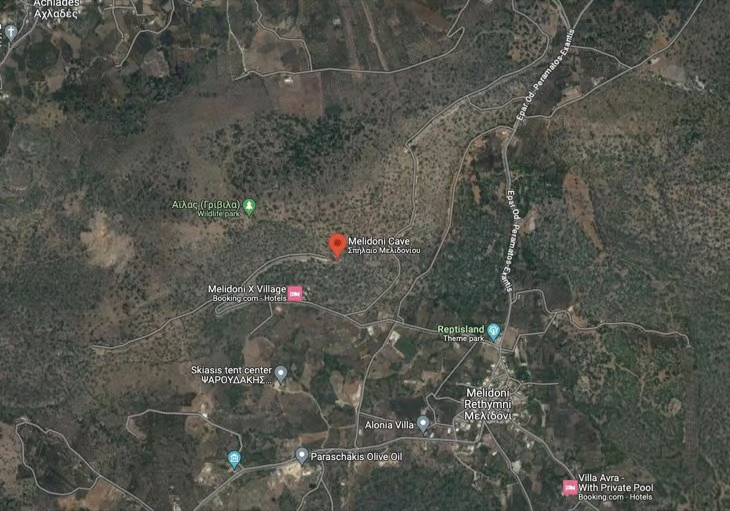
The image below is a map showing the location of Melidoni Cave in Crete.
What Can You See in Melidoni Cave in Crete?
Visitors to Melidoni Cave in Crete see named chambers, an ossuary monument, stalactites and stalagmites, columns and flowstones, and pools with reflective surfaces. Visitors also see the interplay of dim lighting and shadow that gives the cave its atmosphere.
The chambers of Melidoni Cave carry individual names. The official Melidoni Cave website (melidoni.gr) describes the route through them, and the chambers are listed below.
- Room of Heroes: The arched entrance leads into the first and largest chamber, the “Room of Heroes”, which holds the “Mnemion” (Monument), a complex filled with stalagmites, and the ossuary of the 1824 victims at its centre. Stairs take visitors down to the floor of this hall, where a path runs in a circle.
- Stavrodromi (Crossroad): Stavrodromi is the junction point that splits the route through Melidoni Cave, with one chamber system to the right and one chamber to the left.
- Pashley Room: The Pashley Room lies to the right of Stavrodromi, where stalagmites and stalactites form a dense complex.
- Room of the Rocks, Chamber of Katavothra and Iperoon (Gallery): These halls continue beyond the Pashley Room, reached through a narrow path, and their rock formations give the impression of another planet.
- Chamber of Curtains: The Chamber of Curtains is the single chamber on the left side of Stavrodromi, adorned with stalactites and stalagmites.
- Raulin Room: The Raulin Room is a recess accessible from the Room of Heroes, where a 1987 rescue excavation unearthed layers of charcoal dated to the Late Minoan period, according to Ancient World Magazine.
Access to parts of the cave changes over time. Ancient World Magazine reported that the Raulin and Pashley Rooms were closed to the public during its 2020 visit, so confirm which halls are open when you arrive.
Melidoni Cave holds pools of water and reflective surfaces that add an attractive aspect to the underground environment. The waters produce mirror-like reflections, and the interaction of light and water creates a striking ambience as visitors descend.
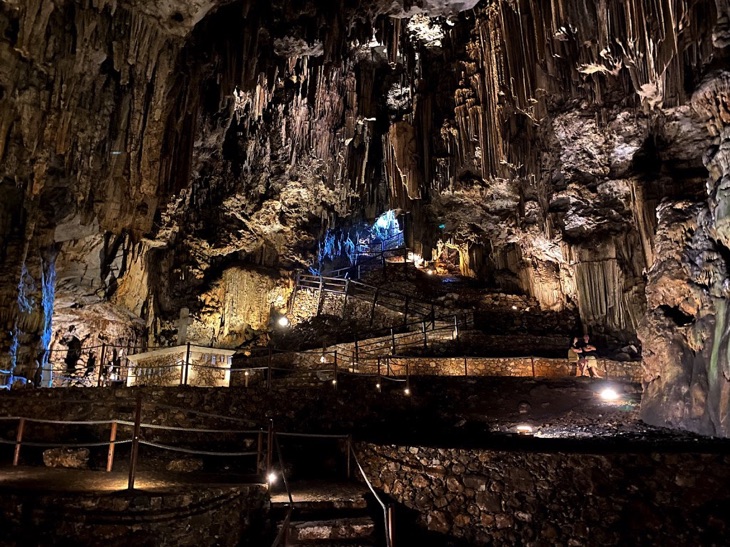
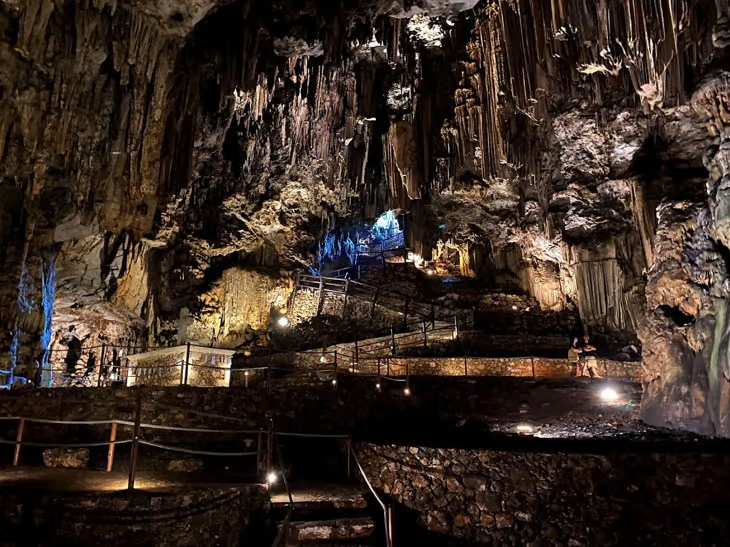
Melidoni Cave displays columns and flowstones alongside its dripstone formations. Columns arise when stalactites and stalagmites merge into a solid, pillar-like structure. Flowstones occur when mineral-rich water runs over cave walls and deposits minerals in cascading patterns.
Stalactites cling to the cave ceiling after thousands of years of mineral-rich water flowing down. Stalagmites rise from the cave floor through the build-up of mineral deposits over time. The formations appear in various shapes and sizes and create an enthralling subterranean landscape.
What is the History of Melidoni Cave in Crete?
Melidoni Cave in Crete carries a historical heritage that spans the Late Neolithic Era to the Late Roman Era and the 1824 Cretan Revolution. Locals named Melidoni Cave after Antonios Melidonis, a key participant in the 1824 revolt against the Ottoman Turks, and also call it Gerontospilios. Archaeologists recovered essential artefacts from the cave, some of which the Archaeological Museum of Rethymno now displays.
Melidoni Cave holds a central place in Greek history because it sheltered 340 women and children, along with 30 men from Melidoni village, fleeing the advancing Turkish army. The Cretans inside the cave resisted capitulation after several fruitless Turkish efforts to take it. The Turkish commander Hussein Bey then sealed the cave entrance and started a fire in January 1824, and the citizens who had sought protection inside suffocated.
The artefacts found inside Melidoni Cave demonstrate continuous human occupation across history. Early inhabitants used the cave as a dwelling during the Neolithic era, and worshippers turned it into a place of cult during the Middle Minoan period. The discovery of a copper axe during unauthorised excavations in 1940 demonstrates the cave’s link to the worship of Talos, the fabled bronze giant of Crete who was thought to protect the island from attackers.
Archaeological work at Melidoni Cave spans decades. Ancient World Magazine, citing the site’s own brochure, records illegal excavations that revealed Neolithic tools in 1928, systematic excavations by the archaeologist P. Faure in 1954 that unearthed Late Minoan, Geometric and Roman pottery, a rescue excavation in 1987 as the site was being prepared for tourism, and a 1998 investigation that revealed a makeshift lime-kiln near the entrance.
An English explorer accompanying the lone survivor found the bodies of the dead inside the cave eleven years after the tragedy. The bones were gathered and placed in an ossuary – a stone bone repository topped with a cross – in the cave’s central hall, the Room of Heroes, where it stands today as a memorial. Locals gather yearly to remember their forefathers’ struggle for freedom, and a modest church was built near the cave entrance to memorialise the incident.
People have inhabited Melidoni Cave since prehistoric times. Early people used the cave as a shelter and a site of living and sanctuary. Stone tools and pottery shards recovered inside the cave give insights into the ancient societies that populated the region.
Melidoni Cave is both a natural marvel and a place of mourning. Visitors explore its geological structures while reflecting on a history that spans ancient periods to the tragic events of the Cretan Revolution.
What are Myths About Melidoni Cave in Crete?
The myths about Melidoni Cave in Crete are the birth of Zeus, the Roman-era worship of Hermes and the legend of Talos the bronze giant. Melidoni Cave connects to the origin of Zeus, the Greek deity, because Zeus’ mother Rhea sought sanctuary in a Cretan cave to save Zeus from being eaten by Cronus, Zeus’ father.
Another myth casts the cave as a shrine to Hermes, the deity who was Zeus’ son, throughout the Roman Empire. Worshippers performed sacrifices to honour Hermes, the guardian and patron of herders, thieves, athletes, merchants and travellers. The cave was significant to the Romans because it stood at the meeting point of three ancient cities: Eleftherna, Grivilon and Axos. Ancient World Magazine notes that inscriptions near the cave entrance associate the site with Hermes (Roman: Mercury).
Melidoni Cave also carries the legend of Talos, the bronze giant. Hephaestus or Daedalus created Talos, depending on the interpretation of the myth. The giant was sent to King Minos, born in the Dikteon Cave or Cave of Psychro, to guard the Cretans against intruders. Talos patrolled the island’s shore many times each day and attacked any outsiders. Jason’s Argonauts ended Talos’ rule when Medea, who sailed with the crew, discovered the giant’s weakness and removed a pin that blocked a vein in his foot.
The relationship of Melidoni Cave with the tale of Talos adds to its attraction and mystery. Visitors walk the chambers and imagine themselves in the presence of the bronze giant that once guarded the island of Crete.
When did Crete Open Melidoni Cave for Tourists?
Crete opened Melidoni Cave to tourists in 2001. The cave had stayed closed to the public for many years before that reopening, owing to its historical value and the need for renovation and safety works.
Authorities carried out extensive repair work to secure the cave’s infrastructure and prepare a visitor-friendly route. Ancient World Magazine records a rescue excavation in 1987, conducted as the site was about to be turned into a tourist destination.
The 2001 opening allowed travellers to explore the chambers and see the geological formations firsthand. Melidoni Cave has since become a popular site for those who want to study its geology and reflect on the events of the Cretan revolt against the Ottoman Turks.
How Many Tourists Visit Melidoni Cave in a Year?
Melidoni Cave does not publish annual visitor figures, so no verified yearly total exists. Melidoni Cave draws its heaviest visitor numbers during Crete’s peak tourism season in June, July and August, and its lightest numbers in spring and autumn.
Visit Melidoni Cave in the cooler shoulder seasons, spring and autumn, for a calmer and less crowded experience. Check the operating hours and plan the visit accordingly if a quieter experience matters to you.
Holidays, school vacations and special events also raise visitor numbers. Weekends and public holidays draw more visitors than weekdays.
What are the Rules when Entering Melidoni Cave?
The rules when entering Melidoni Cave protect visitor safety and preserve the cave’s formations and archaeology. The 7 rules are listed below.
- Respect the authorised routes: Stay on the approved trails and pathways to protect the sensitive environment of the cave and to avoid damaging formations.
- Avoid touching or removing formations: Stalactites, stalagmites and other cave formations must not be touched, leaned on or removed, because they take thousands of years to develop and are delicate.
- Carry out all litter: Maintain the cleanliness of the cave by removing any rubbish and other debris. Take the rubbish outside the cave and dispose of it properly.
- Refrain from smoking or open flames: Smoking and open flames represent a substantial danger in caves owing to the possibility of flammable gases and the fragility of the cave ecosystem. Smoking or making fire within the cave is forbidden.
- Stay with the group: Stick to the assigned tour group and follow any rules supplied by the cave’s administration, because this guarantees security and helps preserve the cave’s natural setting.
- Observe any photography restrictions: Flash photography and tripods are restricted to prevent disturbing cave-dwelling creatures or damaging the formations. Observe any photography limitations that are posted.
- Leave no vandalism or graffiti: Defacing the cave walls is not permitted. Leave no traces or graffiti, out of respect for the cave’s historical and cultural value.
How Big is the Melidoni Cave in Crete?
The main chamber of Melidoni Cave measures more than 60 metres (197 feet) in length and more than 20 metres (65 feet) in height. Visitors reach the lowest part of that chamber down a flight of steps, a descent of about two minutes, and the space opens up with an impression of grandeur and emptiness.
The dim, well-handled lighting gives the cave an eerie and mysterious feel and improves the mood. The low lighting shows the stalactites that hang from the cave’s roof and casts long shadows. Visitors sometimes feel chilly water droplets falling from the stalactites, a reminder that the formation process continues inside the cave.
Visitors follow a well-marked trail around the chamber walls and look closely at its formations. Tripadvisor visitor reports put a typical stop at roughly 20 to 30 minutes, and Ancient World Magazine reported a 20-minute limit on the main chamber during the 2020 pandemic restrictions. Visitors climb the steps once more to leave Melidoni Cave and return to the surface.
Melidoni Cave on Crete is considerably smaller than Dikteon Cave (the Cave of Psychro). Dikteon Cave is more well-known for its cultural and mythical importance as the location of Zeus’ birth, while Melidoni Cave is known for its chamber proportions. Dikteon Cave measures approximately 220 metres (722 feet). Melidoni Cave offers a lengthier subterranean route, whereas Dikteon Cave immerses visitors in the mythological legacy of Zeus.
How Far is the Melidoni Cave from the Parking Area in Crete?
The parking area sits 200 to 300 metres (656 to 984 feet) from the entrance of Melidoni Cave, a walk of a few minutes. The exact distance varies with the parking spot you take and the route you follow.
The terrain between the car park and the cave mouth is uneven in places, because the path crosses the doline that formed when part of the cave roof collapsed. Check with the local authorities, tour providers or tourist information centres for the most exact and recent data on the parking area and the approach to the cave.
How to Get to the Melidoni Cave?
To get to Melidoni Cave, drive to Melidoni village near Rethymno and follow the signs to the cave, 2 kilometers (1.24 miles) from the village. The 7 steps are listed below.
- Drive to the Melidoni settlement on the Greek island of Crete first, which is close to Rethymno. The village is accessible by car, taxi or public transportation. The Melidoni cave lies at 220 metres of elevation, about 2 kilometers (1.24 miles) from Melidoni town near Rethymno.
- Look for signs or instructions for Perama after reaching Melidoni. The distance from Rethymno to Perama is about 25 kilometers (15.53 miles). The path from Perama to Melidoni passes via Melidoni Cave.
- Continue along the designated path to Melidoni. Follow the signs to the settlement and to Melidoni Cave.
- Locate a parking space close to Melidoni Cave. Search for allocated parking spaces or ask the locals where the closest parking lots are. Leave the car parked in a legal and secure area.
- Follow the official route or trail to the entrance of Melidoni Cave from the parking lot. The path is well-marked and well-kept for visitors.
- Obtain tickets at the cave’s entrance and pay the admission fee. Get more details or recommendations for visiting the cave from the personnel there.
- Follow the guidelines given by cave authorities to guarantee a safe and pleasurable time within the cave.
What are the Nearby Locations Around Melidoni Cave in Crete?
The nearby locations around Melidoni Cave in Crete are villages, monasteries, archaeological sites, beaches and small visitor attractions within a short drive. The main locations are listed below.
- Spili: Spili is a settlement located around 2 kilometers (12.43 miles) southwest of Melidoni Cave. Spili is known for its lion-headed Venetian fountain, small lanes, old buildings and the adjoining Agia Fotini Church with its murals.
- Arkadi Monastery: Arkadi Monastery stands roughly 15 kilometers (9.32 miles) southwest of Melidoni Cave. Arkadi Monastery is recognised for its architecture, religious artefacts and its role in Cretan resistance to Ottoman rule in the nineteenth century – a role German Wikipedia places on the same historical level as Melidoni Cave itself.
- Margarites: Margarites is a traditional hamlet around 8 kilometers (4.97 miles) east of Melidoni Cave. Margarites is well-known for its pottery studios, where tourists watch local craftsmen create traditional ceramics and buy one-of-a-kind clay pieces.
- Rethymno: Rethymno is a coastal town around 28 kilometers (17.40 miles) northwest of Melidoni Cave. Rethymno is famous for its old town, Venetian stronghold, small lanes, busy waterfront and sandy beaches.
- Eleftherna: Eleftherna is an ancient city and archaeological site 14 kilometers (8.70 miles) east of Melidoni Cave. Eleftherna provides a view into the region’s past, with well-preserved ruins, old tombs and artefacts.
- Panormo: Panormo is a beach town roughly 14 kilometers (8.70 miles) north of Melidoni Cave. Panormo has a sandy beach, a scenic harbour, traditional taverns and a laid-back ambience.
Tripadvisor’s “Best nearby” list for Melidoni Cave adds several smaller attractions within a few kilometres of the cave, and these are listed below with the distances Tripadvisor reports.
- Reptisland: Reptisland is a reptile park 0.8 kilometers (0.50 miles) from Melidoni Cave.
- Paraschakis Olive Oil: Paraschakis Olive Oil is a working olive-oil farm 0.9 kilometers (0.56 miles) from Melidoni Cave.
- Apithano Honey Museum: Apithano Honey Museum is a honey museum with tastings and tours 1 kilometers (0.62 miles) from Melidoni Cave.
- Church of St. John the Baptist: The Church of St. John the Baptist is a religious site 2.3 kilometers (1.43 miles) from Melidoni Cave, near Margarites.
- Klados Winery: Klados Winery is a winery 4.2 kilometers (2.61 miles) from Melidoni Cave, near Panormo.
- Karavostasi Beach: Karavostasi Beach is a beach near Bali, on the coast north of the cave.
A car rental gives convenience and flexibility to those who wish to visit the neighbouring attractions around Melidoni Cave in Crete. Renting a vehicle lets tourists reach Rethymno, Arkadi Monastery, Margarites, Eleftherna, Panormos and Spili in a single day, because no direct bus route links them. It lets visitors make the most of their time while discovering the region’s beauty and cultural diversity.
Hire a vehicle in Crete by contacting “Rental Center Crete”, a car rental company on the island. Rental Center Crete provides a diverse choice of automobiles to meet a variety of purposes and budgets. Visit the cities, villages and regions surrounding Melidoni Cave by hiring a vehicle from Rental Center Crete.

Visit the official Rental Center Crete website or contact the company directly to find the closest Rental Center Crete location. They provide information on their rental centres’ addresses and availability, so visitors begin their exploration of Crete at the most convenient location.
How is the Melidoni Cave Being Preserved?
Local administrations, archaeological agencies and conservation organisations preserve Melidoni Cave by limiting access, controlling the lighting and monitoring the cave environment. These bodies protect the cave’s ecological balance, geological structures and cultural history for current and future generations.
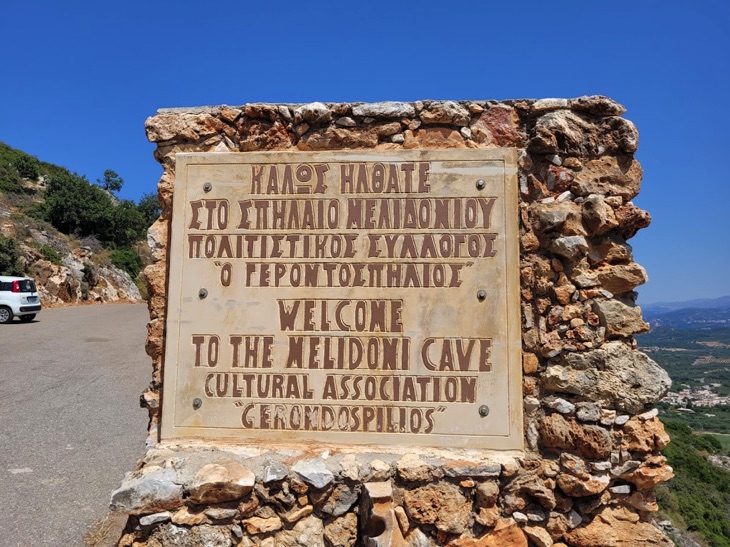
Cave managers minimise human impact on the biological habitat. They restrict access to some cave portions or organise guided tours to prevent unauthorised entry and damage. Engineers design lighting systems to cause the least disruption to the cave ecology while still letting visitors see its features.
Archaeological study and documentation record the cave’s history and any artefacts or traces of human activity. Signage and teaching materials educate visitors about the cave’s importance and promote responsible behaviour.
Conservation teams monitor temperature, humidity and air quality inside the cave to limit damage to the fragile formations and the archaeological deposits. Regular inspections and maintenance address erosion, water damage and the growth of undesirable plants.
Collaboration between local people, scientific specialists and tourist authorities drives Melidoni Cave preservation. Their collaborative efforts increase conservation awareness, promote sustainable tourism and keep the cave’s natural beauty and historical value intact for future generations.
How Much Do You Need to Pay for the Melidoni Cave Tour?
The Melidoni Cave tour costs €4 ($4.59, £3.39) per person to enter. The price is reduced to €3 ($3.44, £2.54) for organised groups and students-Families etc. The charge allows tourists to explore the cave’s depths and see its geological forms, and the tour fee includes information from experienced personnel or tour guides about the cave’s characteristics, history and archaeological discoveries.
Prices change over time. Confirm the current admission price with the cave’s ticket office, local tourist agencies, visitor centres or the official Melidoni Cave website before visiting, because the figures above reflect the prices published at the time of writing.
Day trips also visit Melidoni Cave alongside other sights in Crete, including Rethymno, Arkadi and Margarites, at €35 ($40.18, £29.66) per person. The Heraklion Trip, which includes visits to Melidoni Cave and the Western Crete Shore Excursion, costs €165 ($189.44, £139.84) per person.
Visitors who pay the tour ticket both explore Melidoni Cave and help preserve it. The monies raised support conservation activities, keep the cave accessible for future tourists and fund research and preservation projects.
What Time Does the Melidoni Cave Open for Tourists?
Melidoni Cave opens to tourists at 9:00 am and closes at 7:00 pm. The 9:00 am opening gives staff time for the inspections, maintenance and preparations that keep the route safe, and it gives tourists a full day to reach the site.
The long opening hours, from 9:00 am to 7:00 pm, give travellers time to explore the cave and take in the stalactites and stalagmites that have grown over thousands of years. Guided tours run within these hours and explain the cave’s history and geological importance.
The opening hours suit varied schedules. Visit early in the morning for a quiet start or later in the afternoon for a more leisurely exploration, and plan the rest of the day around the visit.
When is the Best Time to Visit Melidoni Cave in Crete?
The best time to visit Melidoni Cave in Crete is the spring months of April to June or the autumn months of September to October. These months bring pleasant weather and fewer people than the high summer season.
Temperatures in April and May range from 18 to 24 degrees Celsius (64 to 75 degrees Fahrenheit). Spring on the island brings blossoming flowers and lush vegetation, which makes a fine setting for the drive to the cave. September and October bring temperatures of 20 to 26 degrees Celsius (68 to 79 degrees Fahrenheit), which balance mild weather with a quieter site.
Visiting Melidoni Cave during the spring or autumn shoulder seasons coincides with the optimum time to explore Crete. The climate of Crete is Mediterranean, with hot, dry summers and moderate, wet winters. July and August are the busiest months on the island, with large crowds and temperatures above 30 degrees Celsius (86 degrees Fahrenheit). Skip the busy summer season to explore the cave without the crowds. Aligning the visit with the Best Time to Visit Crete lets you experience the cave at your own pace and take in the geological structures it holds.
What are the Nearby Restaurants in Melidoni Cave?
The nearby restaurants to Melidoni Cave serve Cretan, Greek, Mediterranean and fusion cuisine within roughly 8 kilometers (4.97 miles) of the site. The 5 restaurants are listed below.
- Carob N Olive: Carob N Olive is a traditional Cretan tavern in Melidoni. It serves Greek, Mediterranean, European and health-conscious cuisine. Moussaka, meatballs, lamb kebabs, Greek salad and homemade lemonade are the restaurant’s signature dishes. Breakfast, lunch, dinner, brunch, late-night options and drinks are available. It caters to various dietary preferences, with vegetarian, vegan and gluten-free options available. Carob N Olive’s prices typically range between €2 ($2.30, £1.70) and €13 ($14.93, £11.02).
- Dili-dili: Dili-dili is a traditional grill/bar restaurant 2 kilometers (1.24 miles) from Melidoni Cave, located in Melidoni’s centre on the village’s public square. The menu covers Mediterranean, barbecue and Greek dishes, with soft drinks, coffee and traditional homemade alcoholic beverages. Breakfast, lunch, dinner and brunch are all available. Dili-dili offers takeout, accepts reservations and has outdoor and indoor seating. There is street parking nearby and the restaurant is wheelchair accessible. They serve alcohol, including wine and beer, and accept Mastercard, Visa and cash.
- Hellenic Street Food: Hellenic Street Food serves the Original Greek Pita Gyros and other Greek street food specialities and has done so since 2001. Hellenic Street Food’s prices typically range between €3 ($3.44, £2.54) and €10 ($11.48, £8.48). The restaurant sits roughly 3.7 kilometers (2.30 miles) from Melidoni Cave and has a broad menu that includes steakhouse selections, fast food, barbeque, grill and street food. Vegetarian and vegan options are available.
- Kastro Cretan Cuisine: Kastro Cretan Cuisine offers a Cretan culinary legacy noted for its high-quality ingredients, 3.3 miles from Melidoni Cave. Kastro holds the “Cretan cuisine” accreditation from the Agronutritional Cooperation of the Region of Crete. The menu includes Mediterranean, Greek, steakhouse and seafood meals, with vegan, vegetarian and gluten-free alternatives. Prices range from €15 ($17.22, £12.71) to €50 ($57.41, £42.38).
- Romeo & Juliet Fusion Cuisine: Romeo & Juliet Fusion Cuisine sits in Hamalevri’s traditional hamlet, about 7.5 kilometers (4.66 miles) from Melidoni Cave. The restaurant blends Indian, Thai, Chinese and Greek foods under one roof and serves lunch, dinner, brunch and cocktails. The price range is generally between €3 ($3.44, £2.54) and €22 ($25.26, £18.65). Vegetarian, vegan and gluten-free dishes are available. Romeo & Juliet Fusion Cuisine ranked 4 out of 330 Restaurants in Rethymno.
What are the Nearby Hotels in Melidoni Cave?
The nearby hotels to Melidoni Cave range from village studios to five-star coastal resorts within roughly 1 kilometers (6.21 miles) of the site. The 5 hotels are listed below.
- Hotel Iliana Panormos: The mid-range Hotel Iliana Panormos lies in Panormo, 3.2 kilometers (1.99 miles) from Melidoni Cave. The hotel has 18 studios for 2 people and 13 flats for 4. All rooms include air conditioning, a safety deposit box, a bathroom with tub or shower, a hairdryer, satellite TV, telephone, kitchen, refrigerator and private balcony. Public spaces and rooms have free WiFi. The hotel provides free parking, high-speed internet, a pool, breakfast, bicycle rental, hiking, highchairs and airport transfers. The hotel is open from April to October. The average costs for a typical accommodation range from €46 ($52.81, £38.99) to €84 ($96.44, £71.19) per night.
- Melidoni X Village: Melidoni X Village is a resort situated 0.19 kilometers (0.12 miles) from Melidoni Cave in Crete. The resort features five independent villas with private pools, well-kept gardens and a restaurant that serves breakfast every morning. Free parking, high-speed internet, a pool and a bar/lounge are provided. The accommodations offer views of a mountain, a landmark or a pool and are equipped with air conditioning, blackout curtains and supplementary restrooms. A standard accommodation typically costs between €134 ($153.85, £113.57) and €228 ($261.77, £193.23).
- Atali Grand Resort: Atali Grand Resort is a recently renovated four-star hotel 5.3 kilometers (3.29 miles) from Melidoni Cave, a short distance from the 600-metre-long beach known as “Livadi”. Bali is a popular tourist destination with four beaches and sits between Heraklion (43 kilometers (26.72 miles)) and Rethymno (3 kilometers (18.64 miles)). Atali Grand Resort features three outdoor swimming pools, four cafes and two restaurants, all overlooking the Cretan Sea. The average nightly rate for standard accommodation is between €104 ($119.40, £88.14) and €159 ($182.55, £134.75).
- The Royal Senses Resort & Spa Crete, Curio Collection by Hilton: The Royal Senses Resort & Spa Crete is Hilton’s first property on a Greek island, approximately 7 kilometers (4.35 miles) from Melidoni Cave. The family-friendly beach resort sits on a peninsula near the fishing village of Panormos on the northwest coast of Crete and offers 178 accommodations with sea views. The 5-star accommodations include Deluxe Rooms, Family & Luxury Suites and Villas, some with a private pool and others with shared pools. The price range for a standard room is between €281 ($322.62, £238.15) and €435 ($499.42, £368.66) per night.
- The Rethymno Mare Hotel & Water Park: The Rethymno Mare Hotel & Water Park is a seaside hotel in Skaleta, 10.2 kilometers (6.34 miles) from Melidoni Cave. The hotel features a pool with a sun terrace, bars, restaurants and a water park. The resort offers a tennis court, a small store, a jewellery shop, two conference rooms and a 20,000 square metre natural environment. The accommodations and suites feature views of the pool and the Cretan Sea. On-site parking is provided at no cost. The hotel offers a children’s pool, an animation programme, a kids’ buffet and a mini club for families. Rethymno Mare & Water Park is approximately 11 kilometers (6.84 miles) from the town and port of Rethymno and 65 kilometers (40.39 miles) from Heraklion. The typical price range for a standard accommodation is between €178 ($204.36, £150.86) and €307 ($352.47, £260.18).
Rethymno town sits around 28 kilometers (17.40 miles) northwest of Melidoni Cave. Travellers who prefer to base themselves there can browse Hotels in Rethymno for more options.
How to Book for Melidoni Cave?
To book Melidoni Cave, contact the cave management with your date, time and group size, and confirm the reservation with them. The 7 steps are listed below.
- Research Melidoni Cave first, including its opening hours, admission prices and any special requirements or restrictions. This gives a clear understanding of what to expect and lets you plan the visit around accessibility and age considerations.
- Find Melidoni Cave’s contact information, such as a phone number, email address or website. The information lets visitors contact the cave management to ask about availability, make a reservation or raise any concerns.
- Choose a date and time of visit, taking the operating hours and availability into account. Check the Melidoni Cave opening hours and select a date and time that fit the travel plans.
- Contact Melidoni Cave through the details given. Inquire about availability and make reservations via phone, email or the official website.
- Provide the required information when placing a reservation, including the number of visitors in the group, the preferred date and time of the visit and any specific requirements, such as accessibility needs or preferred types of guided tours.
- Follow Melidoni Cave’s instructions to validate the reservation. The facility’s rules allow for prepayment or payment upon arrival. Review the instructions carefully and complete the steps to secure the reservation.
- Keep the confirmation for reference during the visit. It consists of an email confirmation or a booking reference number, which speeds up check-in on arrival.
How Far is the Melidoni Cave from the Crete Airport?
Melidoni Cave lies approximately 6 kilometers (37.28 miles) from Heraklion International Airport (HER) and roughly 85 kilometers (52.82 miles) from Chania International Airport (CHQ). Crete has several airports that serve different parts of the island, and Heraklion and Chania are the two main ones.
The drive from Heraklion Airport to Melidoni Cave takes about one hour to one hour fifteen minutes, depending on traffic and the selected route. The typical route runs west on the National Road (E75) towards Rethymno, then follows minor roads to Melidoni Village, where the cave is located.
The drive from Chania Airport to Melidoni Cave takes around 1 hour 30 minutes to 1 hour 45 minutes, depending on traffic and route. The usual route runs eastward on the National Road (E75) towards Rethymno, then follows minor roads to Melidoni Village.
These distances and durations are estimates and vary with the route taken and traffic conditions. Carry a GPS navigation device or local maps for the drive from either airport to Melidoni Cave in Crete.
What are the Reviews About Melidoni Cave in Crete?
Melidoni Cave holds a 4.1 out of 5 rating from 723 Tripadvisor reviews and carries a Tripadvisor Travellers’ Choice award, which Tripadvisor gives to attractions in the top 10% of businesses on its platform. Reviewers describe the cave as majestic and a Crete treasure, and they single out the stalactites and stalagmites as breathtaking features that create a mystical atmosphere.
Reviewers also focus on the historical significance of Melidoni Cave. The cave is famous for its association with the Cretan resistance against Ottoman rule in the nineteenth century, and visitors express respect for the courage and sacrifice of the people who sought refuge inside. The historical context makes the visit emotionally resonant as well as visually captivating.
Reviewers frequently mention the knowledgeable guides who explain the history, geology and significance of the cave. The well-maintained walkways and safety precautions inside the cave also draw favourable comments.
Is Melidoni Cave Open for Children?
Yes, Melidoni Cave is open to children. Children enter the cave and discover its formations under the supervision of parents or guides. Some areas have uneven terrain, low ceilings or restricted passageways, so parents and guardians must watch children constantly and follow the posted safety procedures.
Melidoni Cave accepts people of all ages, but the route involves walking on designated walkways and steps, which needs a degree of mobility. Assess whether young children are comfortable and able to traverse the cave’s terrain safely before you visit.
What visitors say about Melidoni Cave?
Visitors say Melidoni Cave offers impressive rock formations, a cool escape from the summer heat and good value for the ticket price. Reviewers praise the stalagmites and stalactites that create a cathedral-like atmosphere, and they note that the lighting inside is well done and lets them see the details.
Visitors also describe the steps down into the cave as comfortable to walk, and the interior as spacious, with an interesting historical background and a temperature around 18 degrees Celsius. Reviewers recommend the cave as a worthwhile, hidden gem and a fascinating break from a drive around Crete. The area around the cave draws positive remarks for its mountain views and a cafe with friendly staff.
Is Melidoni Cave Safe?
Yes, Melidoni Cave is safe for visitors. Safety procedures are in place inside the cave, and following the guidance of the guides and staff protects your safety.
The administration of Melidoni Cave keeps walkways well-lit, installs railings where necessary and takes precautions to avoid accidents. The infrastructure of the cave is designed to facilitate visitors and minimise hazards.
Proceed with care and follow any advice from tour guides or staff members, because some cave portions have uneven surfaces, low ceilings or narrow pathways. Remain on designated paths, refrain from handling the cave formations and stay aware of your surroundings.
Consider any physical limits or health problems that make it hard to move safely inside the cave. Wear proper footwear and clothing for mobility and comfort. Melidoni Cave is a safe place to visit when tourists follow the safety rules and respect the cave’s natural surroundings.
Is the Melidoni Cave the deepest cave in Crete?
No, Melidoni Cave is not the deepest cave in Crete. Crete has deeper caverns, yet Melidoni Cave stands out for its geological and historical significance.
Gourgouthakas Cave, often called the Gourgouthakas Abyss, is the deepest known cave in Crete. Gourgouthakas sits in the White Mountains (Lefka Ori) range and reaches approximately 1,260 metres (4,134 ft) in depth. Speleologists and cave explorers know Gourgouthakas Cave for its sheer fall and complex subterranean pathways.
Melidoni Cave is recognised for its historical significance and natural beauty rather than its depth. It gives tourists a look at the rock formations and at the cave’s part in the 19th-century Cretan struggle against Ottoman rule.
Which caves are near Rethymno?
The caves near Rethymno are Melidoni Cave and Sfendoni Cave. Melidoni Cave lies about 3 kilometers (18.64 miles) east of Rethymno, near Melidoni village, and Sfendoni Cave lies in the Mylopotamos area near the village of Zoniana. Tour operators listed on Tripadvisor pair the two caves on the same day trip from Rethymno, and a rental car covers both in a single morning.
Which cave in Crete is the most beautiful?
No official ranking of Crete’s caves exists, so “most beautiful” depends on what you want to see. Melidoni Cave attracts visitors with its single vast chamber, its ossuary monument and the Chamber of Curtains, while Dikteon Cave (the Cave of Psychro) draws visitors with the myth of the birth of Zeus. Melidoni Cave holds a 4.1 out of 5 rating from 723 Tripadvisor reviews and a Travellers’ Choice award, which places it in the top 10% of attractions on that platform.