







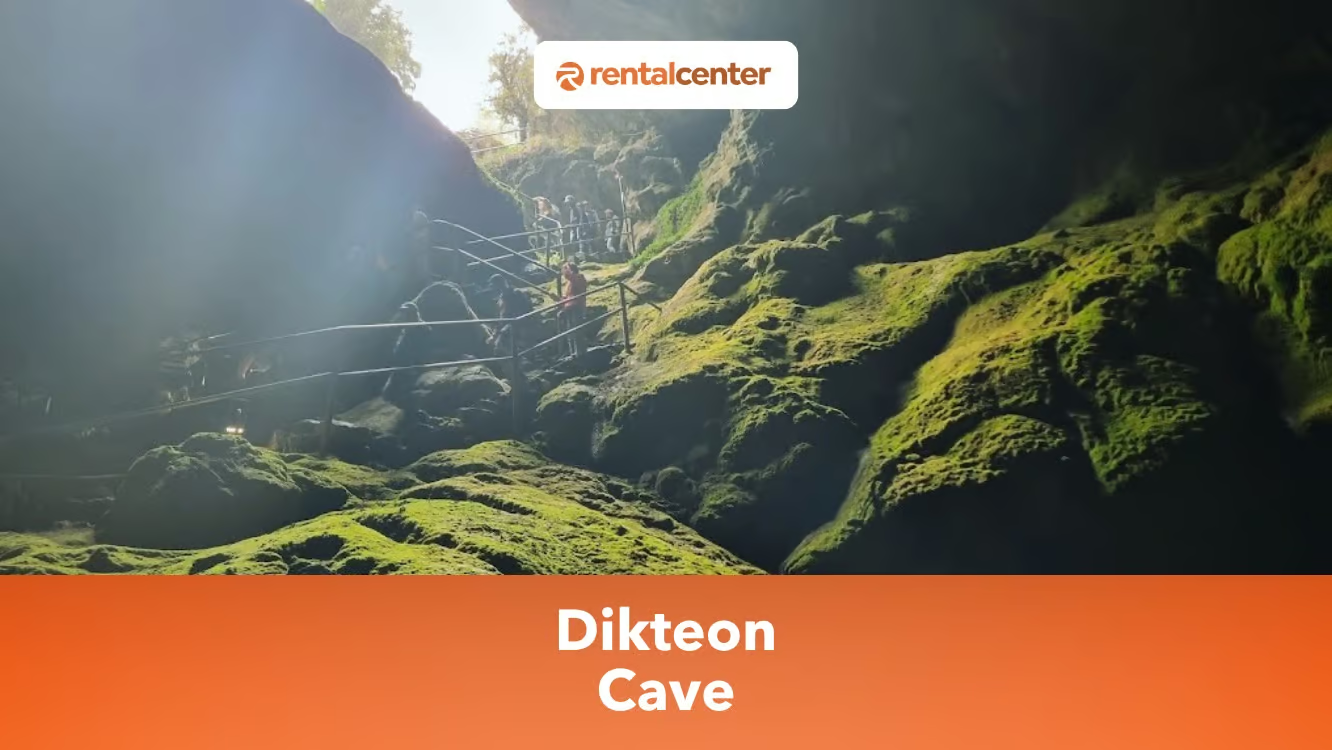
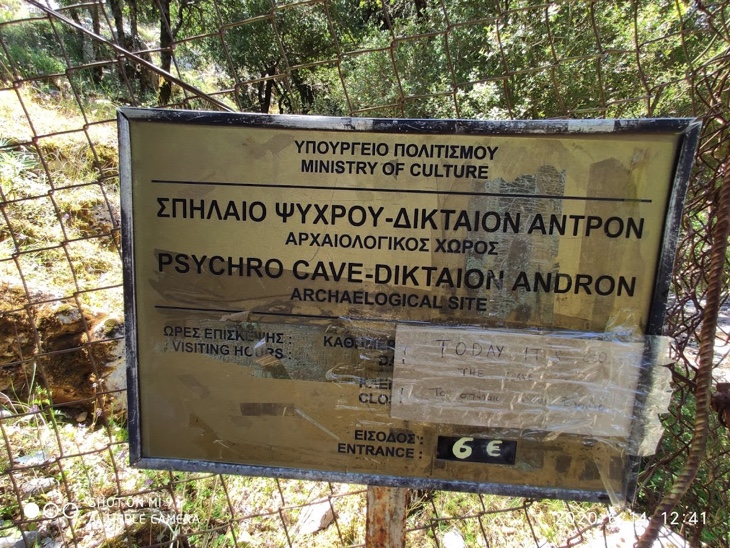
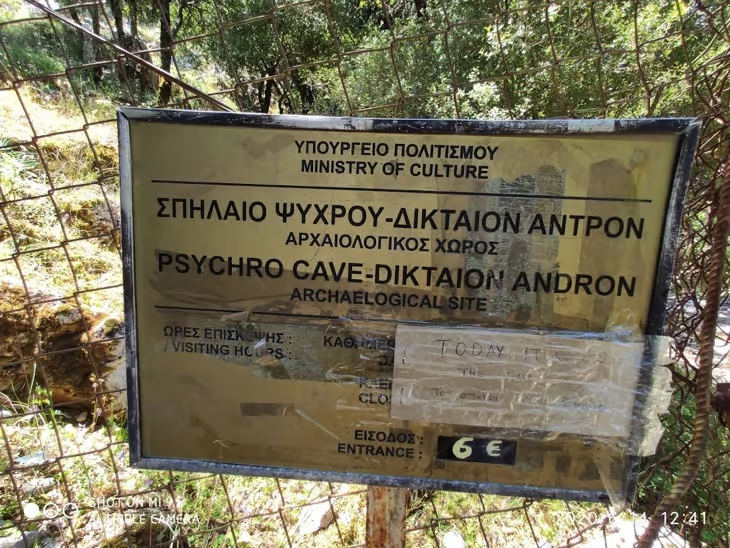
The cave draws visitors with its impressive stalagmite and stalactite formations, which create a captivating underground landscape. Visitors travel to the village of Psychro to reach the cave, located on the Lassithi Plateau in East Crete. People who visit the cave pay €6 ($6.89, £5.09) for the Psychro Cave tickets, then follow the marked path leading to the entrance, where they explore the mythical birthplace of Zeus and marvel at the natural wonders within its chambers.
Bird and bat-inhabited rock formations and an antique altar guard the entrance. A lake and other spectacular stalactites and stalagmites have been lit up for a dramatic effect in one of the cave’s other chambers. The “cloak of Zeus” stalactite, so named because it appears to have been worn away by human hands, is the primary draw of the cave.
Dikteon Cave Quick Facts
| Attribute | Value |
|---|---|
| Alternate names | Diktaion Andron, Dictaean Cave, Psychro Cave, Cave of Zeus |
| Location | Above Psychro village, Lassithi Plateau, East Crete |
| GPS coordinates | 35°09′46″N 25°26′42″E (35.1629, 25.4451), per English and German Wikipedia |
| Altitude | ~1025 metres |
| Cave area | 2200 square metres |
| Path length inside | 250 metres |
| Internal steps | 200 down, 200 up |
| Humidity | up to 85% |
| Entrance fee | €6 ($6.89, £5.09) |
| Parking | Lower lot free, upper lot around €2.5 ($2.87, £2.12) |
| Donkey ride | €10 ($11.48, £8.48) |
| Opening hours | 8 a.m. to 7 p.m. (summer), 8 a.m. to 3 p.m. (winter) |
| Distance from Heraklion | ~5 kilometers (31.07 miles), 1.5 to 2 hours by car |
| Walk from parking | 15 to 20 minutes uphill |
Fees, hours and access reflect the figures published in this article and are subject to change. Reconfirm each figure with the site operator before travelling.
Before You Go: Check the Cave’s Current Status
Opening hours, entrance fees and site access at Dikteon Cave change seasonally and during works of this kind. Verify the current details with the Lassithi Municipality or the Hellenic Ministry of Culture and Sports before planning your visit, because published third-party information – including this article – can lag behind the site’s actual status.
What is Dikteon Cave in Crete?
Dikteon Cave in Crete is a sacred cave in the Dikti mountain range, sitting at an elevation of around 1025 metres above the hamlet of Psychro. The cave goes by several different names, such as Diktaion Andron, Dictaean Cave and Psychro Cave, and it is accessible by foot and available to the public.
Greek mythology places the birth of Zeus, the supreme deity of the Olympians, inside this cave. Nymphs concealed and raised Zeus in order to keep the Greek God out of Cronus’s reach, according to Greek mythology. Legend says that the all-powerful deity was nurtured and prepared for Zeus’ destiny in the caverns of Dikteon.
Visitors find the cave’s magical atmosphere and history of association with Zeus fascinating. Dikteon Cave ranks among Crete’s best-known tourist destinations, where sightseers marvel at the spectacular stalactite and stalagmite formations inside and learn about the legends that surround such a fabled place. The Lassithi Municipality describes the interior – its large columns, stalagmites, stalactites and curtains – as making it one of the most spectacular caves in Crete.
What is Dikteon Cave Known For?
Dikteon Cave is known above all as the legendary birthplace of Zeus and as one of the most archaeologically significant caves in Crete. The Dikteon Cave, known as Dikteon Andron or Dictaean Cave, holds a prominent position among the vast number of caves in Crete and Greece, with approximately 3,000 and 8,500 caves, respectively. The Dikteon Cave, or Cave of Zeus, also boasts an impressive array of stalagmites and stalactites, creating a visually captivating environment.
Dikteon Cave held immense importance in antiquity and served as a sacred space dedicated to the worship of the supreme deity, Zeus, as evidenced by the numerous offerings discovered within its chambers. The ancient allure of the Dikteon Cave, intertwined with its mythical origins, has solidified its reputation as a destination of profound historical and cultural significance. The Lassithi Municipality notes that the cave’s identification with the mythical Dictaean Cave of Hesiod also earned it the nickname “the Bethlehem of the Ancient World”.
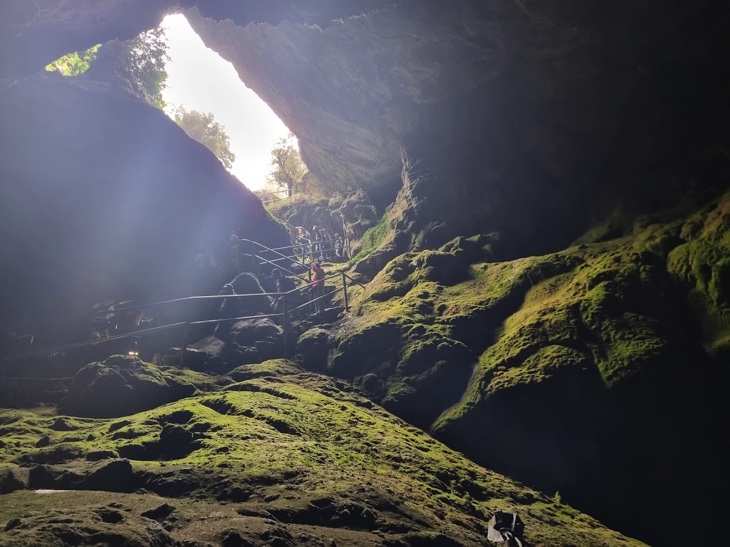
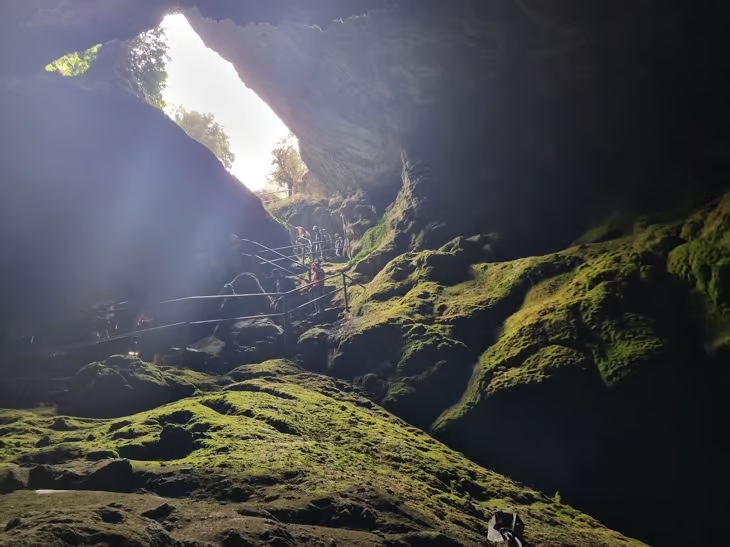
Archaeological discoveries reveal evidence of human presence in the cave as far back as the Neolithic Age, when it already served as a place of worship from the Minoan through the Roman eras. People came from all across Ancient Greece and beyond to worship Zeus and presumably other gods in the cave. The period of its greatest prosperity was the Minoan.
The cave has yielded countless discoveries, including ceramics, figurines, weapons, jewels, cereals, needles and Linear A tablets, while many more have been lost due to theft.
Who Excavated Dikteon Cave?
Joseph Hatzidakis and Federico Halbherr first excavated Dikteon Cave in 1886, according to English Wikipedia, which records Hatzidakis as President of the Syllogos at Candia and Halbherr as an Italian archaeologist. The excavation followed a hunter’s discovery of a bronze bull statuette around 1880, which triggered a treasure hunt by residents of the surrounding villages, per German Wikipedia.
Sir Arthur Evans investigated the site in 1896, English Wikipedia reports. German Wikipedia adds that the French archaeologist Demargne conducted an unofficial dig in 1897 and found a further fragment of an offering table, a second offering table of the same material, clay vessels and a gold band.
David George Hogarth, then Director of the British School at Athens, carried out the next official excavation in 1899, per German Wikipedia, which notes that Hogarth used gunpowder to break up fallen ceiling rock – a method no longer considered acceptable – yet still secured a large share of the finds from the near-surface layers and the stalactite crevices. John Boardman compiled the known finds from the official and unofficial digs in a monograph published in 1961. It took several years of study and excavation after the cave’s rediscovery in 1883 for its archaeological worth to become apparent.
Where Are the Dikteon Cave Artefacts Today?
The cave’s salvaged artefacts now populate museums around the world, including the Archaeological Museum of Heraklion. The Lassithi Municipality states that most of the findings, many of them from illegal excavations, are now housed in the Heraklion Archaeological Museum and the Oxford Museum. German Wikipedia adds that the Archaeological Museum of Agios Nikolaos holds some of the more recent finds.
What is the Myth About Dikteon Cave?
The myth about Dikteon Cave holds that Rhea gave birth to Zeus inside the cave to hide the newborn god from his father, Cronus. The Dikteon Cave, known to locals as the Cave of Zeus, therefore holds a significant mythological association in Greek mythology. The myth states that Cronus had a habit of devouring one’s own children, and that Rhea sought refuge in the Dikteon Cave to protect Zeus from him.
Rhea entrusted the Greek God to the care of the nymphs, who raised and nurtured Zeus in secret. The Greek God eventually grew up, overthrew Cronus (Zeus’ father) and became the ruler of the gods. The Dikteon Cave holds a special place in Greek mythology as the sacred birthplace of Zeus, symbolising power, majesty and the beginning of a new era. The Lassithi Municipality version of the legend adds that Rhea deceived Cronus with a rock wrapped in swaddling clothes, and that the Curetes of Dicte raised Zeus with the care of the goat Amalthea and the nymph Melisse.
Another legend has it that King Minos visited Dictaean Cave every nine years when the moon’s and sun’s orbits converged. King Minos met Zeus and established new laws to govern Crete. The myth is a variant of the prevailing one, both of which relate to the same story about Idean Cave. Another version of the renowned Europa tale claims that when Zeus turned into a bull and charmed Europa, the Greek God did so in the Dictaean Cave rather than Gortyn. Zeus appeared and mated with Europa there. Minos, Sarpedon and Radamanthys were born in Europa.
The ancient Cretan seer Epimenides dozed off for 57 years in the mystical Dictaean Cave. Epimenides remained the same age after awakening, but with a heavenly understanding and wisdom. The Dictaean Cave was the mythical home of the Harpies. The female monsters who carried Hades’ messages had the heads of birds and the bodies of women. The tale of Phineus’s punishment has become legendary.
Where is Dikteon Cave Located in Crete?
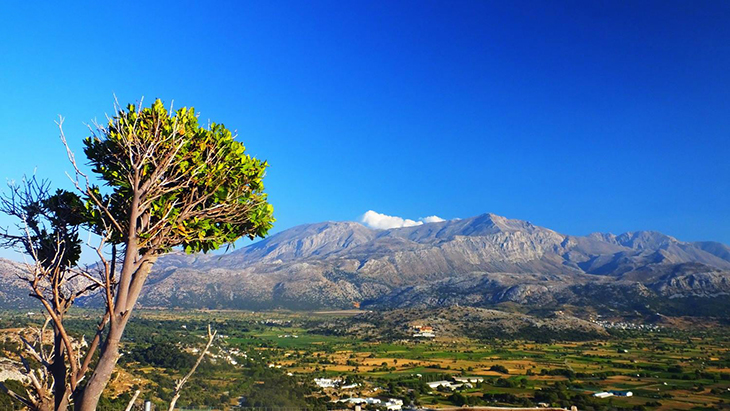
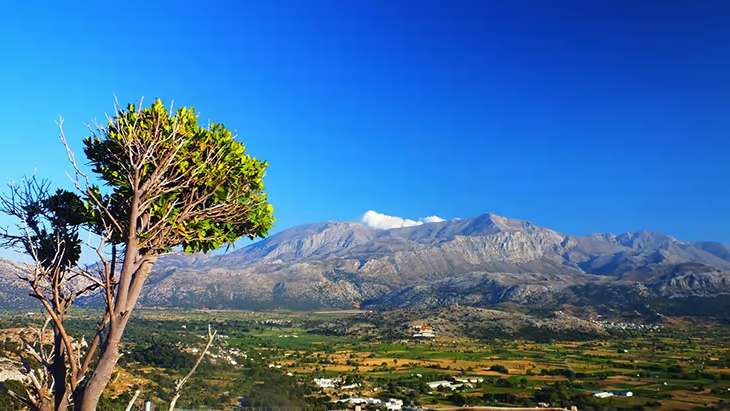
Dikteon Cave sits within the Mount Dicte range on the Lassithi Plateau in East Crete, above the village of Psychro, at coordinates 35°09′46″N 25°26′42″E (per English and German Wikipedia). Dikteon Cave lies approximately 5 kilometers (31.07 miles) southeast of Heraklion, the capital city of Crete, and the journey from Heraklion takes about 1.5 to 2 hours by car.
Driving from the nearest resort towns – Neapoli, Malia, Stalida and Hersonissos – takes approximately 45 minutes to an hour, because the final approach to the Lassithi Plateau and the village of Psychro follows a winding, uphill road rather than a straight line. This is the canonical driving time for the cave, and the rest of this guide refers back to it rather than restating it. English Wikipedia notes that in Minoan times, Malia was the closest metropolitan centre to the cave.
What Can You See in the Dikteon Cave?
Visitors see floodlit stalactites and stalagmites, an ancient altar and a still pool inside Dikteon Cave. Visitors also notice an immediate drop in temperature on entering, where humidity climbs to as much as 85% and no sunlight penetrates. The cave’s interior is enveloped in profound silence, accentuating the tranquil ambience within. Exceptional conditions contribute to the Dikteon Cave’s ecological significance, serving as a vital habitat for a diverse range of animal species.
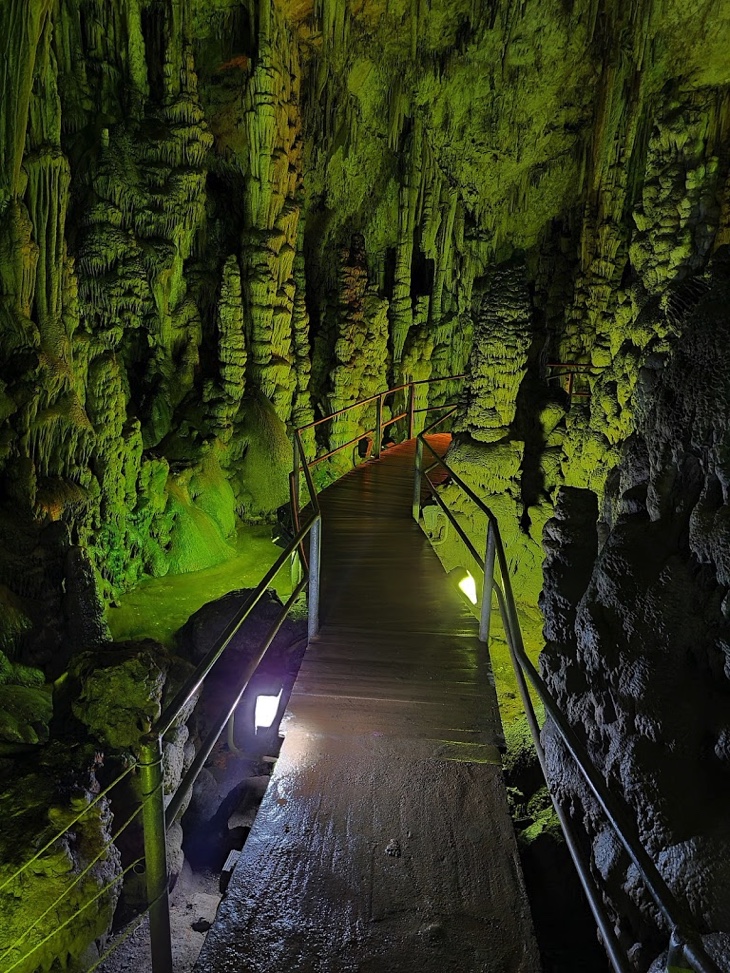
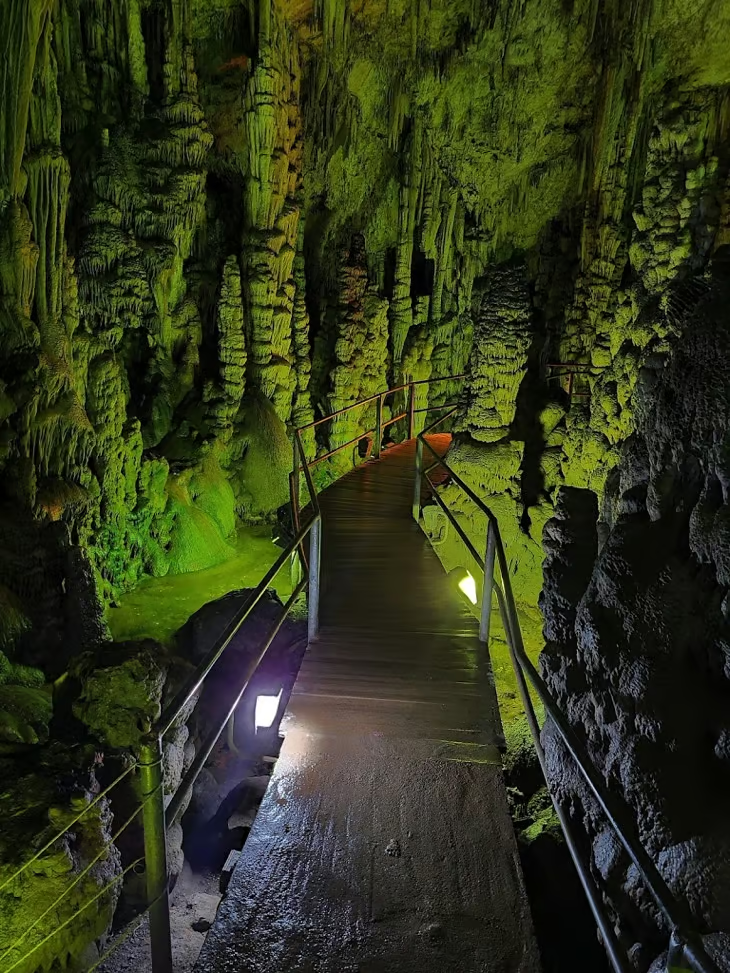
The antechamber of the cave provides a roosting place for rock doves and various avian creatures, while more profound into the cave, one encounters a plethora of life forms, ranging from arthropods to the presence of the Long-Eared Bat.
Remarkable archaeological discoveries have shed light on its historical significance within the antechamber of the Dikteon Cave. The foundations of a constructed altar, along with remnants of offerings, bear witness to the religious practices that took place within the cave. Devotees presented offerings such as olive oil, honey, wine, wheat and animal sacrifices, which were carefully positioned on the altar and ceremoniously burned.
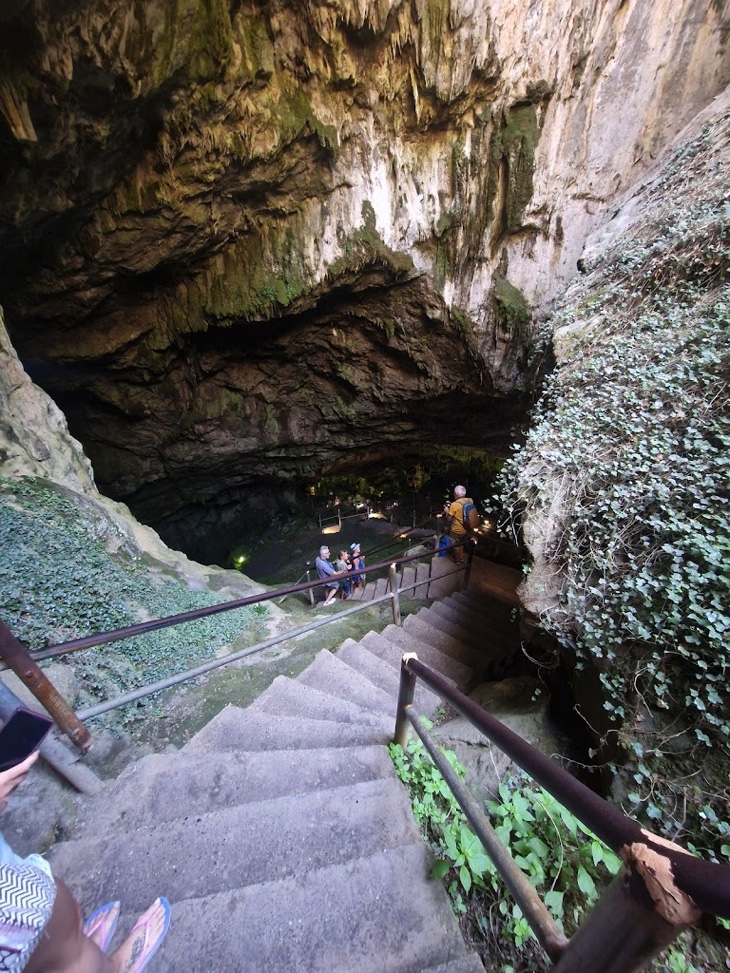
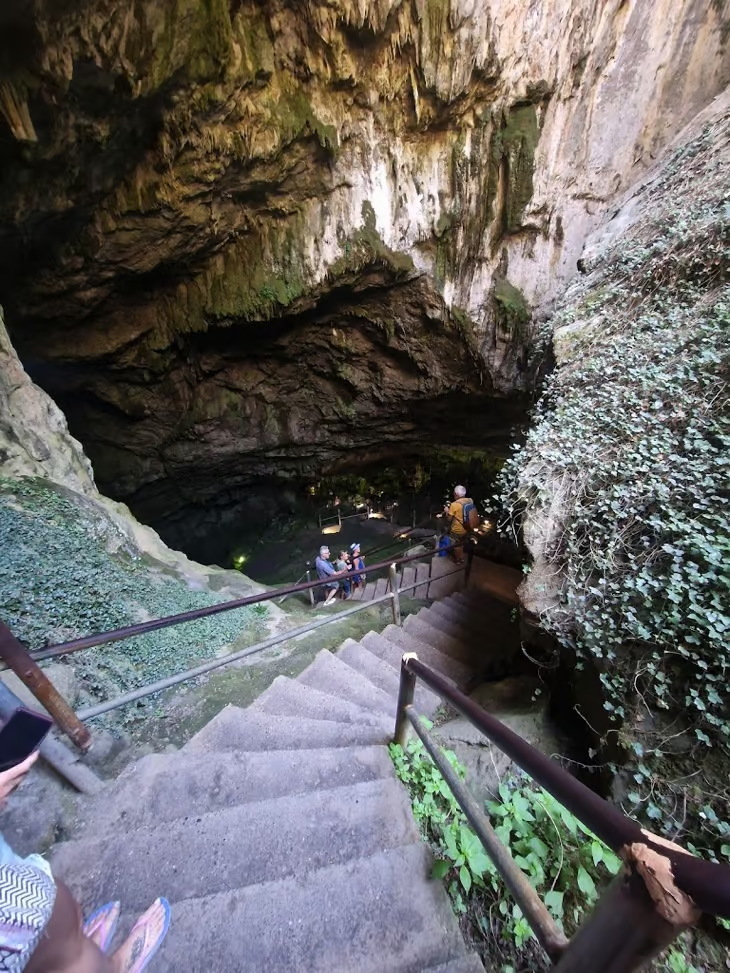
Even the resulting ashes held sacred value and were not discarded as ordinary refuse; instead, they were reverently collected in close proximity to the altar. The cave’s prolonged and continuous use over time has led to limited space, resulting in numerous finds being repeatedly exposed to fire through successive burnings of offerings on the same altar. Centuries of continuous ritual use have worn down some of the cave’s artefacts. Visitors observe the ancient walls of the temenos, the sacred space that delineates the solemnity of such a historic site, as they descend into the cave.
Bring a light jacket and sturdy shoes, because the cave stays cold and some of the steps turn slippery – a point that recent Tripadvisor reviewers of the Dikteon Antron listing raise repeatedly.
Which Cave Really Was the Birthplace of Zeus?
Two Cretan caves claim the birthplace of Zeus: Dikteon Cave on the Lassithi Plateau and the Idaean Cave (Idaion Antron) on Mount Ida. English Wikipedia places the Idaean Cave at 35°12′30″N 24°49′44″E and describes it as a deep cave with a single entrance, stalagmites, stalactites and a large number of votive cult offerings.
Both caves share overlapping myths, including the story of the infant Zeus hidden from Cronus, and both were major Minoan sanctuaries. The Lassithi Municipality dates the shift between them: it reports that Dikteon Cave transferred its role of religious significance to the Idaean Cave on Psiloritis around 700 BC. No single answer settles the rivalry, and Cretan tradition sustains both claims.
What Was Worshipped in the Dikteon Cave?
Worship in Dikteon Cave may have centred on a Minoan goddess rather than on Zeus alone, according to the Lassithi Municipality. The same source sets out the cave’s worship chronology across three phases:
- From 2800 BC, the cave served as a place of residence and burial.
- Around 2000 BC, the cave became a place of worship, taking over from the previously most important cave of Trapetza near the village of Marmaketo.
- Around 700 BC, the cave transferred its religious role to the Idaean Cave on Psiloritis.
The Lassithi Municipality argues that the balance of the finds – female offerings, hair curlers, needles, spindle whorls, hairpins and necklaces, plus figurines of the Pandemos Aphrodite type – points to the worship of a goddess rather than a god. Many archaeologists, the same source notes, associate Ariadne most closely with the deity of Psychro, alongside her lover Dionysus.
How to Get to Dikteon Cave?
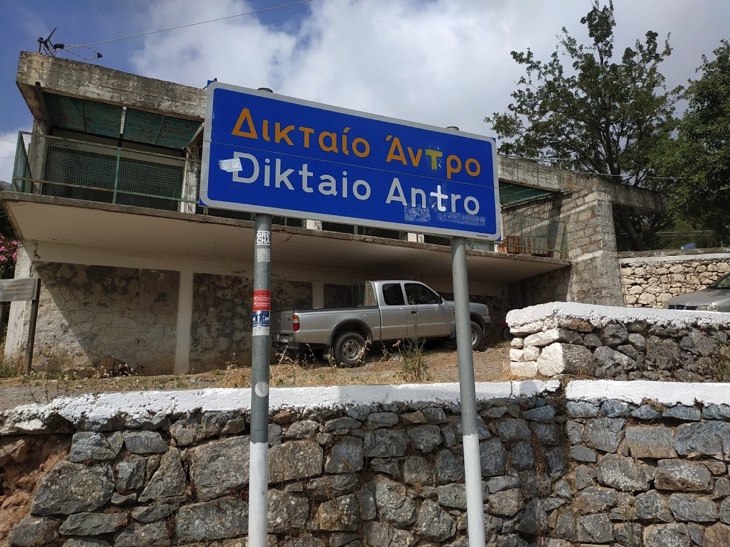
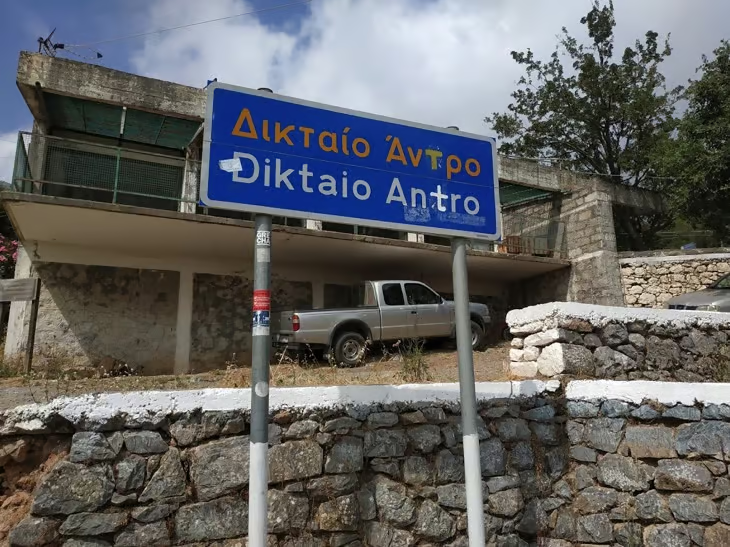
To get to Dikteon Cave, drive to the Lassithi Plateau, park at Psychro village and walk 15 to 20 minutes uphill to the entrance. The steps to get to Dikteon Cave are listed below.
- Start at a specific location on the island of Crete.
- Determine the nearest town or tourist destination to Dikteon Cave. Recommended towns include Neapoli, Malia, Stalida or Hersonissos.
- Arrange transportation, either by renting a car or hiring a taxi, to ensure flexibility and convenience.
- Set the GPS or map application to navigate to the Lassithi Plateau, located in East Crete. Such a plateau is where Dikteon Cave is situated.
- Drive along the winding and uphill road that leads to the Lassithi Plateau. Take time and drive cautiously, as the road is challenging.
- Watch for signs or directions indicating the village of Psychro, where the entrance to Dikteon Cave is located.
- Find a suitable parking spot near the entrance of Dikteon Cave.
- Purchase tickets or pay the entrance fee, if required, at the ticket booth.
- Follow the designated pathway or trail that leads to the cave entrance. Be mindful of any guidelines or instructions provided by the staff or signs along the way.
- Enter the cave and enjoy exploring the impressive geological formations and mythical significance of Dikteon Cave.
Hiking to the entrance to the cave takes approximately 15 minutes from the parking lot. Two paths lead to the entrance of the Dikteon Cave, providing visitors with a choice. The left path is considered the easier option, as the stones on the right path, being the oldest, have become worn and slippery from the footsteps of countless tourists. The journey to the cave offers a magnificent experience, with breathtaking views of the Lassithi Plateau regardless of the chosen path. Donkeys are available to transport visitors to the cave for those who prefer not to walk. Adjacent to the cave entrance, a kiosk offers tickets for a nominal fee. The pathways are well-illuminated and thoughtfully designed, extending for a length of 250 metres inside the cave, which spans an area of 2200 square metres.
How Long is the Dikteon Cave?
The Dikteon Cave encompasses an expansive area of 2200 square metres and requires a challenging 1 kilometers (0.62 miles) uphill trek to reach. Visitors are presented with a unique internal walkway comprising 200 steps descending and another 200 steps ascending once inside the cave. Dikteon Cave spans two distinct sections, the Upper Cave and the Lower Cave. Exploring the mesmerising interior, visitors are treated to a captivating 10-minute journey filled with awe-inspiring stalagmites and stalactites.
Notable archaeological excavations have revealed the presence of a temple featuring an intricately shaped courtyard and a meticulously constructed altar. The Lower Cave is particularly remarkable for its striking stone formations and the presence of a serene pond. A multitude of stalagmites and stalactites, showcasing various shapes, are believed to have served as sacred objects, potentially used in ceremonial practices and serving as gathering points for votive offerings throughout the cave.
How Much is the Tour to the Dikteon Cave?
The cost of Psychro Cave tickets is €6 ($6.89, £5.09). There are some tours available in Crete where visitors get to visit the Dikteon Cave alongside other tourist spots in Crete. People get to have a glimpse of what is believed to be the birthplace of Zeus inside the cave. Pigeons and other wild birds use the cave’s first chamber as a nesting spot. Many species of bats and cave arthropods are found in the lower Cave. The Dikteon Cave is open from 8 a.m. to 7 p.m. during the summer and from 8 a.m. to 3 p.m. during the winter.
Treat both the fee and the hours as indicative, because restoration work has interrupted normal operation at the site since 2024. Confirm the current ticket price and timetable with the site operator on the day you plan to visit.
Where to Park in Dikteon Cave?
Park in one of the two parking spots at Dikteon Cave: the lower one is free, while the upper one requires a payment of around €2.5 ($2.87, £2.12). There are two routes leading up, starting from the upper parking lot. One is near the parking lot. It is made of pebbles and is not very comfortable. The second one is located to the left of the first one and it follows the standard route.
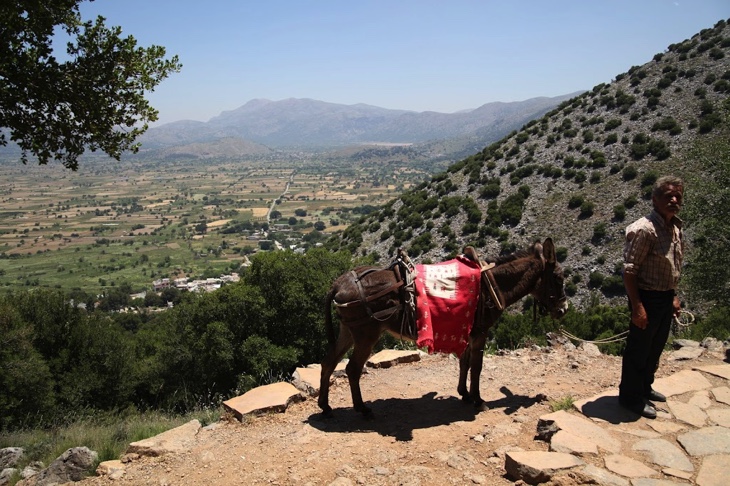
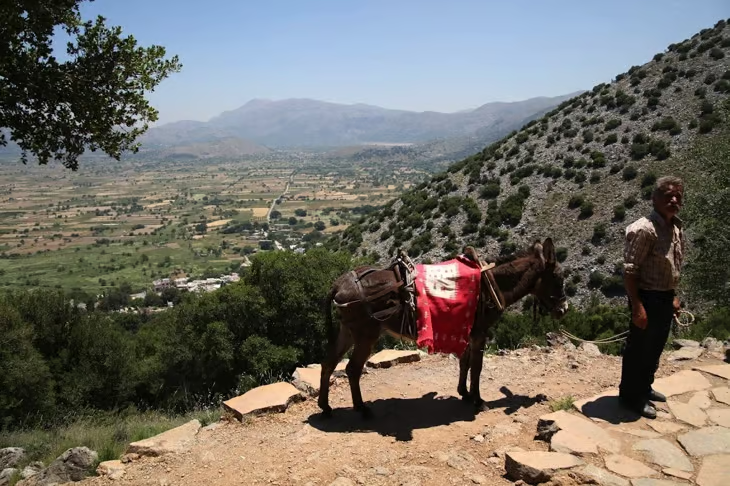
The ascent to the cave takes approximately 15 to 20 minutes. Visitors have the option to hire a donkey to help them get there for €10 ($11.48, £8.48). There was a steep, paved pathway that visitors needed to ascend for almost one kilometre. The pavement vanishes and becomes rocky as people get closer to the entrance.
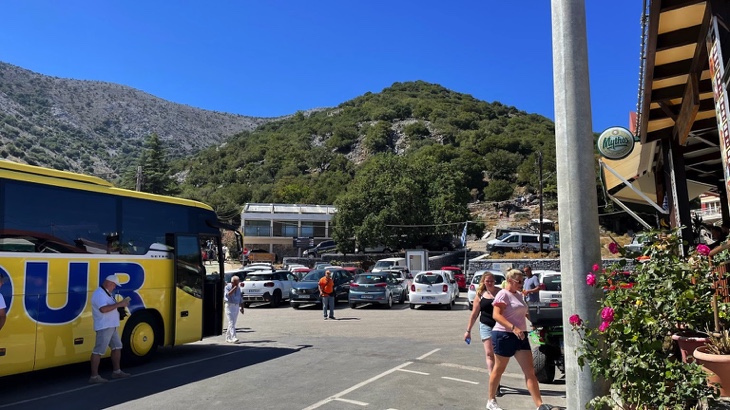

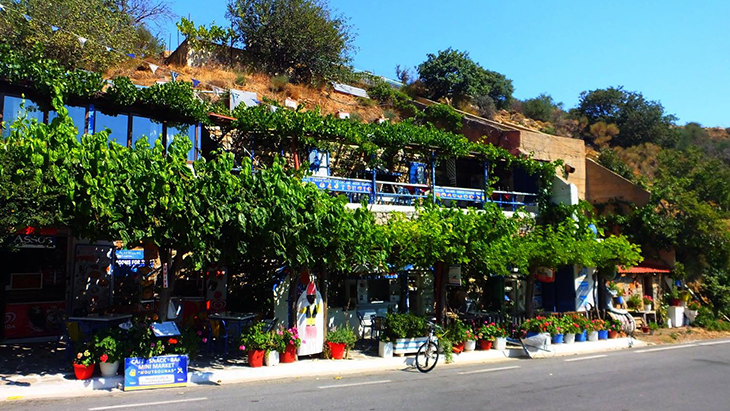
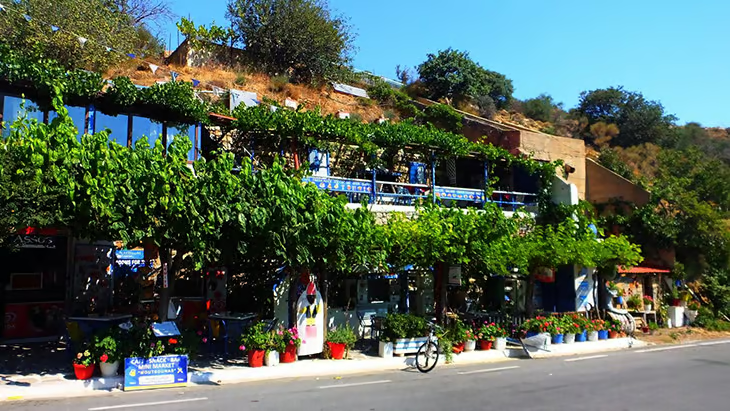
The parking space in Dikteon Cave is safe. Dikteon Cave’s parking lot gets crowded during the peak season. Visitors who wish to visit the cave must come early in the morning to secure a parking space and avoid the scorching heat of the sun. Visitors must walk around 15 minutes from the parking area to reach the cave. The Lassithi Municipality notes that Psychro offers ample parking space with many restaurants, from which the two paths lead up to the cave.
What Type of Car Rental Should You Choose when Visiting Dikteon Cave?
An SUV is an ideal ride when visiting the Dikteon Cave. An SUV (Sports Utility Vehicle) provides higher ground clearance and better stability, making it suitable for navigating winding and uphill roads. It offers ample space for passengers and luggage, ensuring a comfortable journey.

The winding, uphill final stretch up to the Lassithi Plateau is exactly why an SUV earns the recommendation for this trip, and choosing the right car to rent in Crete is essential for a comfortable and enjoyable travel experience on the island.
Where Can I Rent a Car in Crete?
Rent a car in Crete from an airport, city-centre or resort branch, all of which serve travellers heading for the Lassithi Plateau. Major international car rental companies such as Hertz, Avis and Europcar have branches in Crete, offering a wide selection of vehicles and convenient pick-up and drop-off locations, including airports and city centres.
One notable car rental company in Crete is Rental Center Crete. Rental Center Crete offers a wide range of vehicles to suit various needs and preferences. They have multiple rental locations across the island, including airports, popular tourist areas and city centres, making it convenient for travellers to pick up and drop off their rental cars. Rental Center Crete has been serving visitors to the island for many years, offering a diverse fleet of well-maintained vehicles ranging from compact cars to luxury SUVs.
They have multiple rental locations in popular tourist destinations like Heraklion, Chania, Rethymno and Agios Nikolaos, ensuring easy access for travellers. Their fleet includes a variety of car types, from economy cars for budget-conscious travellers to spacious SUVs for larger groups or families. Rental Center Crete is known for its reliable service, well-maintained vehicles and competitive prices. They even provide additional services such as optional insurance coverage, flexible rental durations and 24/7 customer support.
How to Return the Rental Car?
To return a rental car, refuel it, inspect it, bring it to the designated return area and hand back the keys. The steps to return a rental car are listed below.
- Plan ahead. Review the rental agreement to determine the specific requirements and conditions for returning the car. Note the date and time the car needs to be returned.
- Refuel the car. Fill up the gas tank to the level specified in the rental agreement. It is usually a full tank, unless otherwise indicated. Keep the fuel receipt as proof of refuelling.
- Clean the car if it is excessively dirty. Return the car in a reasonably clean condition if it is excessively dirty. Remove any personal belongings and trash from the interior and ensure the exterior is free from excessive dirt or debris.
- Inspect for damage. Conduct a thorough inspection of the car for any new damages or issues. Note any scratches, dents or other damages that were not present when someone initially rented the vehicle. Take photos or videos as evidence, if necessary.
- Return to the designated location. Follow the signs or instructions provided by the rental company to locate the designated return area. It is typically a specific parking lot or area at the rental facility or airport.
- Gather all personal belongings. Ensure that someone removes all personal belongings from the car, including any items that someone has stored in the trunk or glove compartment.
- Return the keys. Park the car in the designated spot and turn off the engine. Lock the car and proceed to the rental counter or kiosk to return the keys.
- Complete the necessary paperwork. Present the rental agreement and any other required documents to the rental staff. They are going to review the condition of the car, process the return and provide customers with a receipt or confirmation of the return.
- Confirm final charges. Verify the final charges on the rental agreement before leaving. Make sure to identify and understand any additional fees or charges and address any concerns or discrepancies with the rental staff.
- Obtain return documentation. Request a copy of the return receipt or any other necessary documents for records purposes. It serves as proof that the customer returned the car on time and in the agreed-upon condition.
When is the Best Time to Visit Dikteon Cave?
The best time to visit Dikteon Cave is the shoulder season – spring (April to May) or autumn (September to October) – when temperatures are pleasant and the site draws far fewer tourists than in summer. The summer months (June to August) offer warm and dry weather, which makes summer the most popular time to visit, and the cave tends to be crowded during such periods.
Visit during the off-peak season for a quieter and more peaceful experience. The cave and its surroundings are less crowded, allowing visitors to enjoy a more serene visit. The Dikteon Cave is open during daylight hours and visiting earlier in the day helps visitors avoid larger crowds. The morning or late afternoon light creates beautiful atmospheric conditions inside the cave, enhancing one’s overall experience. The cave is open from 8:00 a.m. to 7:00 p.m. during the summer and during the winter, the cave operates from 8:00 a.m. to 3:00 p.m. only. Travellers planning a wider island itinerary check the best time to visit Crete before they fix their travel dates.
Which Individual Should Take a Dikteon Cave Tour?
The types of individuals who should take the Dikteon Cave Tour are listed below.
- Adventure enthusiasts: The Dikteon Cave tour offers an exciting opportunity to witness the fascinating underground world and its historical significance if someone enjoys exploring unique natural formations and geological wonders.
- Nature lovers: The Dikteon Cave is located in the beautiful Mount Dicte range, surrounded by scenic landscapes. The tour is a rewarding experience for someone who appreciates nature’s beauty and wants to experience the breathtaking views of the Lassithi Plateau.
- History and mythology enthusiasts: The Dikteon Cave has significant cultural and mythological importance, as it is believed to be the birthplace of Zeus, the king of the Greek gods. The tour provides valuable insights if someone is interested in Greek mythology and wants to explore historical connections.
- Physically fit individuals: The Dikteon Cave tour involves walking on uneven terrain and climbing stairs. One gets to fully enjoy the tour and navigate through the cave’s passages if they have good mobility and stamina and are comfortable with moderate physical activity.
- Those seeking unique experiences: The Dikteon Cave tour offers a chance to discover a hidden gem and create lasting memories if someone is looking for a memorable and off-the-beaten-path experience during their visit to Crete.
Which Individual Should Not Take the Dikteon Cave Tour?
The types of individuals who should not take the Dikteon Cave Tour are listed below.
- Individuals with claustrophobia: The Dikteon Cave tour involves navigating through narrow passages and confined spaces. Individuals who experience extreme discomfort or anxiety in enclosed environments find the cave tour challenging and they need to consider their claustrophobia before participating.
- Individuals with respiratory problems: The cave environment has limited ventilation and potentially elevated humidity levels. Individuals with respiratory conditions such as asthma, chronic obstructive pulmonary disease (COPD) or other breathing difficulties must assess their ability to tolerate such conditions before taking the tour.
- Individuals with mobility issues: The Dikteon Cave tour requires navigating uneven surfaces, steps and potentially slippery areas. Individuals with mobility impairments, such as difficulty walking, using stairs or maintaining balance, find it challenging to navigate through the cave and need to assess their physical capabilities before participating.
- Individuals with a history of fainting or dizziness: The tour involves walking on uneven terrain and requires periods of prolonged standing. Individuals who have a history of fainting, dizziness or lightheadedness must consider their susceptibility to such episodes and evaluate whether the physical demands of the tour trigger these symptoms.
Is the Road Safe Drive Going to the Dikteon Cave?
Yes, the road to Dikteon Cave is safe for driving. The road climbs to the Lassithi Plateau in a series of bends, so take the ascent at a moderate speed and drive cautiously, because the route is winding and uphill rather than direct. A car with good ground clearance and stability, such as an SUV, makes the climb more comfortable.
Do Rental Cars Have Insurance?
Yes, rental cars in Crete typically come equipped with insurance coverage. The precise terms and level of coverage differ based on the rental company and the specific insurance package selected. Carefully examine both the rental agreement and insurance policy, taking note of any applicable deductibles or limitations to ensure a comprehensive understanding of the insurance provisions. The standard insurance options for rental cars in Crete encompass Collision Damage Waiver (CDW), Theft Protection (TP) and Third-Party Liability Insurance. There are supplementary insurance alternatives available to augment the coverage or decrease the deductible amount, depending on the rental company. One must become familiar with these options and enable renters to make informed decisions regarding the level of protection desired during their rental period. Tourists who are not familiar with Crete’s local rules must see to it that they abide by them to avoid conflicts and hassles during their stay. Contact the rental company directly or consult their website for detailed information on the car insurance coverage provided for their rental cars in Crete.
Frequently Asked Questions About Dikteon Cave
Is Dikteon Cave Open?
Dikteon Cave reopened to visitors in May 2026 after a renovation closure that began on 10 September 2024, according to German Wikipedia citing the Greek Ministry of Culture (page last edited 25 June 2026). The tourist-centre forecourt remained under construction at that point. Confirm the cave’s status with the Lassithi Municipality or the Hellenic Ministry of Culture and Sports before you travel, because closure notices change without warning and third-party pages update slowly.
In Which Cave Was Zeus Born?
Zeus was born in the Dictaean Cave, which most scholars identify with the Psychro Cave on the Lassithi Plateau, per the Lassithi Municipality. The Idaean Cave on Mount Ida holds a rival claim to the same myth, and Cretan tradition never resolved the dispute.
How Long is the Hike to the Zeus Cave?
The hike to the Zeus Cave takes 15 to 20 minutes uphill from the parking area at Psychro, covering roughly one kilometre. Two paths lead up: the left-hand path is the easier of the two, while the older right-hand path has been worn smooth and slippery by generations of visitors.
Which Cave in Crete is the Most Beautiful?
Dikteon Cave ranks among the most spectacular caves in Crete, in the words of the Lassithi Municipality, which credits its large columns, stalagmites, stalactites and curtain formations. Beauty in caves stays a matter of taste, and the rival Idaean Cave on Mount Ida draws its own admirers for the same reasons.
This article was reviewed on August 19th, 2026 by Harry Anapliotis of Rental Center Crete. The mythological, archaeological and status details added at that review are attributed inline to their sources: English Wikipedia (Psychro Cave), German Wikipedia (Höhle von Psychro, which cites the Greek Ministry of Culture) and the Municipality of Lassithi Plateau (visitlasithi.gr).
Entrance fees, opening hours, parking charges and the cave’s open or closed status change without notice, and the 2024–2026 restoration works make that especially true of this site. Verify current conditions with the Lassithi Municipality or the Hellenic Ministry of Culture and Sports before your visit, and consult independent visitor-review platforms such as Tripadvisor for recent first-hand accounts of access and conditions on the ground.