
Travellers arriving from Santorini, Athens or other Greek islands typically book a ferry into Heraklion first, then continue to the fortress by rental car, bus or taxi.
What is Koules Fortress?
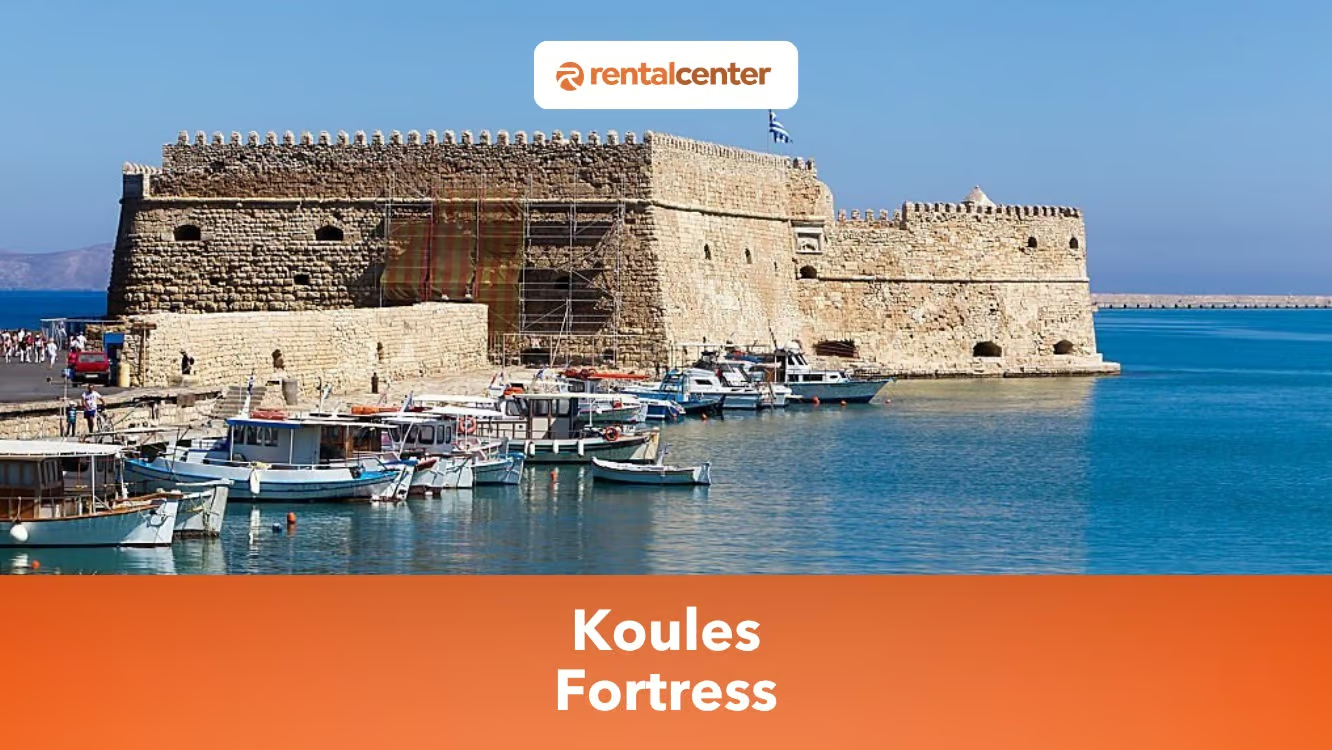
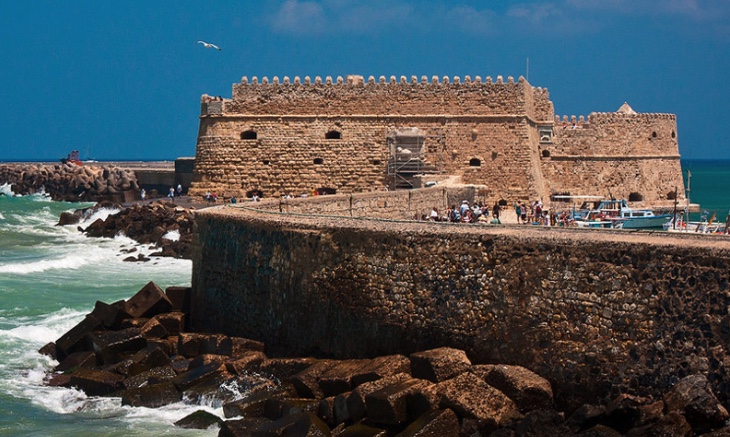
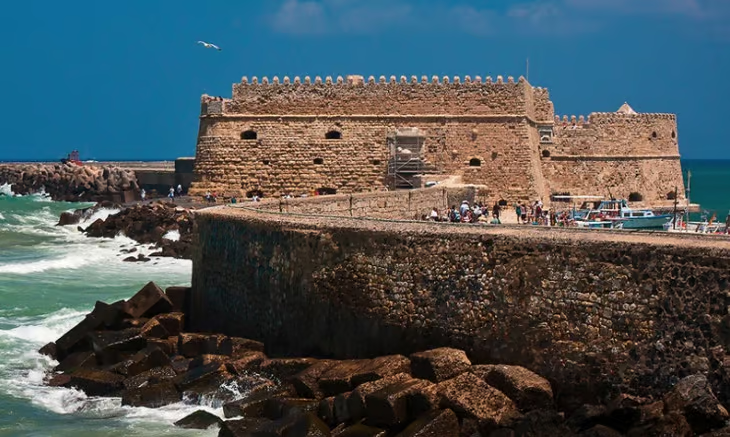
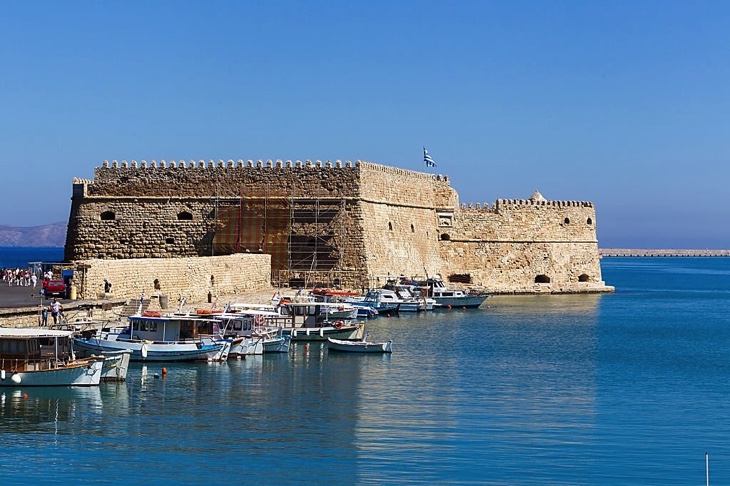
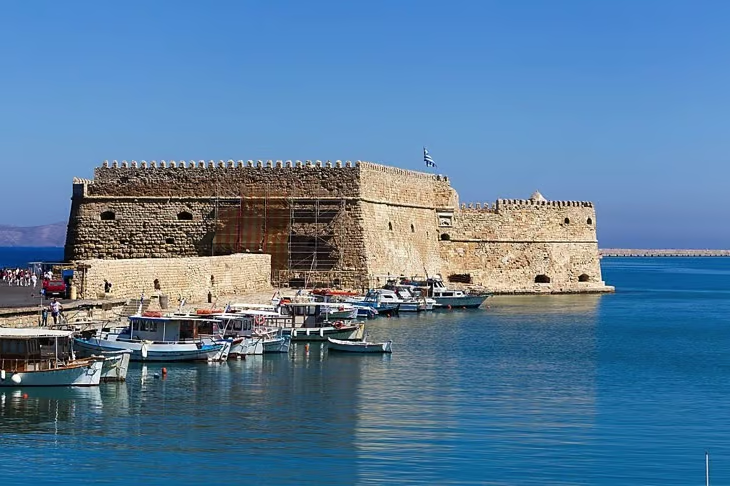
Koules Fortress is a walled stronghold that guards the entrance to Heraklion’s old harbour on Crete. Koules Fortress goes by several other names, too: locals and guidebooks call it the “Venetian Fortress”, “Rocca al Mare”, “Castello del Molo” or simply “Koules”. Two connected sections make up the building: a tall rectangular block and a lower, semi-elliptical block facing the sea. Koules Fortress has three entrances and walls up to 8.7 metres thick in places. Its 26 rooms, spread across two floors, once served as barracks, a prison, storage areas, a water reservoir, a church, a mill and a bakery. A lighthouse tower stands on the fort’s northern corner.
Opening hours, admission fees and access arrangements for Koules Fortress can change with little notice from the Hellenic Ministry of Culture. Confirm the current schedule and price before visiting.
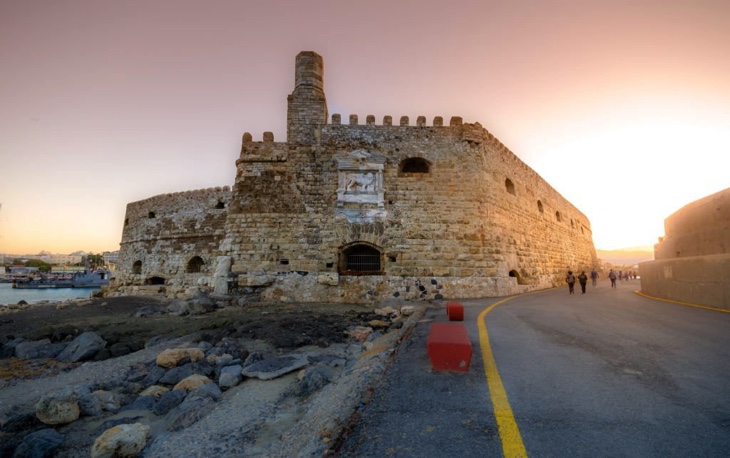
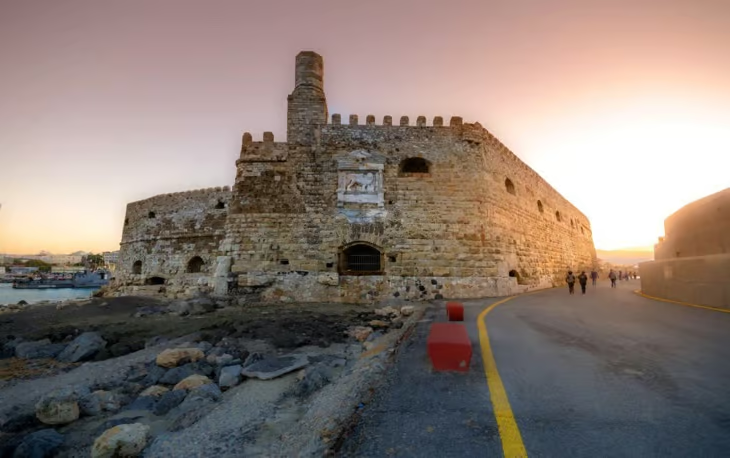
The three entrances face west, north and southwest, with the main gate on the west side. Marble reliefs originally decorated each of the fortress’s three doorways, showing the winged Lion of St. Mark, the symbol of the Republic of Venice; only two of the three have survived, worn by repeated exposure to sea air. Venetian builders shaped the fortress’s stone walls to protect the harbour’s breakwater, topping the ground floor with a wide fanlight and a vaulted roof. The same walls held 26 rooms, including the residence of the Kastelanos, the officer responsible for the castle, alongside quarters for captains and other officials.
Koules Fortress has survived repeated restorations and reopened to the public after conservation work, though there’s no official record of the exact reopening year. Today the fortress hosts occasional cultural events, and visitors tour its interior, climb to the top of its walls for views over the harbour and the city, and walk through the dungeons where prisoners were once held.
What was the Purpose of Koules Fortress Long Time Ago?
The Republic of Venice, which then governed Crete, built Koules Fortress as a bastion to protect Heraklion and its harbour from pirates, Ottoman forces and other potential attackers. Its position at the harbour entrance let Venetian officers monitor and control maritime traffic along the coast. Massive walls, bastions and cannons made Koules Fortress a genuine defensive stronghold rather than a ceremonial one.
Koules Fortress served as a military stronghold, holding the troops and supplies the Venetians needed to defend Heraklion. The fortress formed part of the wider network of coastal walls the Republic of Venice built to defend Crete. Ottoman forces eventually conquered the island in the mid-17th century, after centuries of Crete changing hands between rival powers, and kept Koules Fortress in active service, making the adjustments its defences needed under their rule.
What is the History Behind Koules Fortress?
A 1303 earthquake damaged the Byzantine tower called “Castellum Comunis” that originally stood on the site; Arab forces had first fortified the location in the 9th or 10th century, and Byzantine defenders held it afterward. In 1462, the Venetian Senate approved a programme to strengthen the defences of Candia, as Heraklion was known under Venetian rule. Continued storm and earthquake damage left the old tower unfit for gunpowder-era warfare, and in 1523 the Senate had it demolished to build the Castello a Mare in its place. Old ships filled with stone were sunk beside the site to form a breakwater and extend the platform the new fortress needed, and construction finished in 1540.
By 1630, Koules Fortress carried 43 cannons: 18 on the ground floor and 25 along the pathway leading to the roof. Ottoman batteries neutralised that firepower during the 21-year Siege of Candia, and the Ottomans took the fort in 1669 once the Venetians surrendered the city. Ottoman forces made few changes beyond adding battlements and embrasures, and later built a second, smaller fort called “Little Koules” on the landward side; the city demolished Little Koules in 1936 during a wider modernisation project.
Koules Fortress has weathered wars, sieges and changes of ruling power across five centuries, and the building still stands as a landmark of Heraklion’s harbour today.
When Was Koules Fortress Open to Tourists?
There’s no official record of the exact date Koules Fortress opened to tourists. The Ephorate of Antiquities of Heraklion, under Greece’s Ministry of Culture, restored the fortress and reopened it as a historical landmark, and it remains a popular Heraklion attraction today. Visitors tour the fort, walk its high walls and take in views over the harbour and the city. Exhibitions inside display artefacts, weapons and historical information drawn from the fortress’s centuries in use.
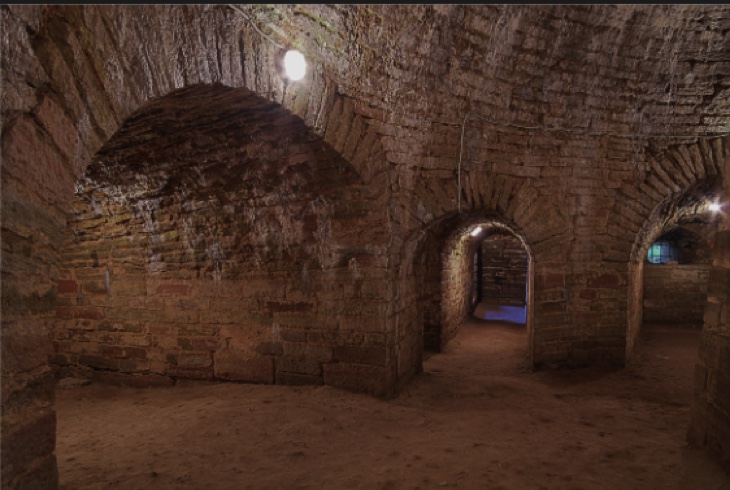
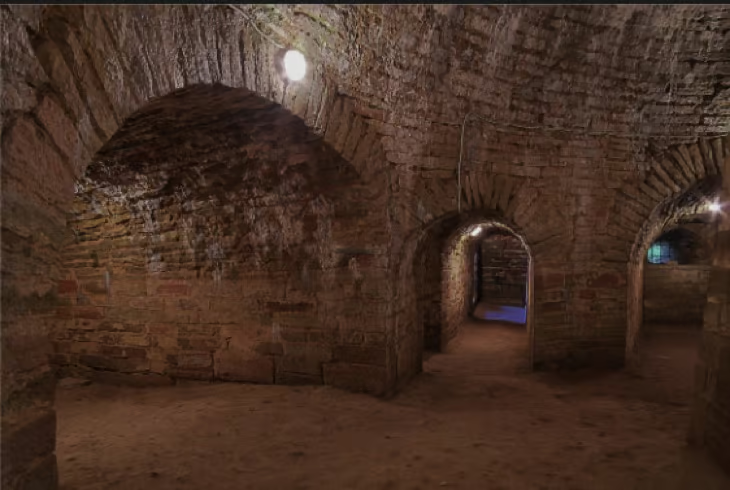
The fortress’s dungeons, originally used as prisons, remain open to visitors and stand as a stark reminder of the stronghold’s past. Low lighting and narrow passageways there can unsettle visitors uneasy in tight spaces, so it’s worth checking a visitor’s comfort level before heading down.
Where is Koules Fortress Located?
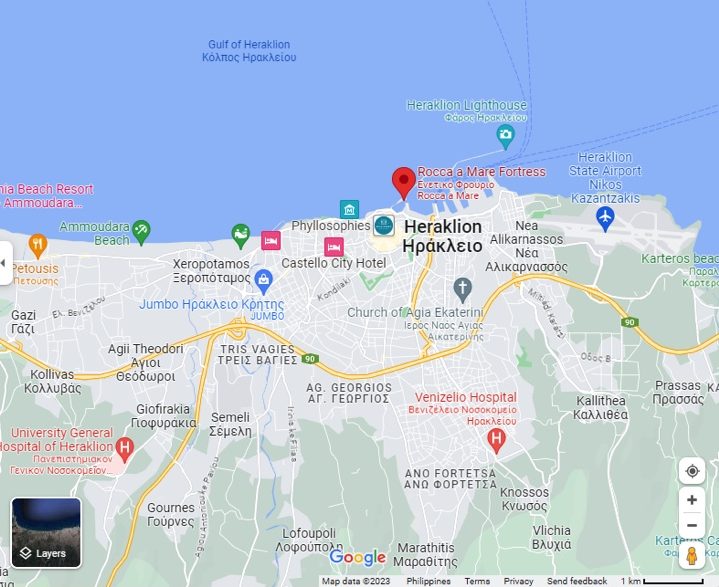
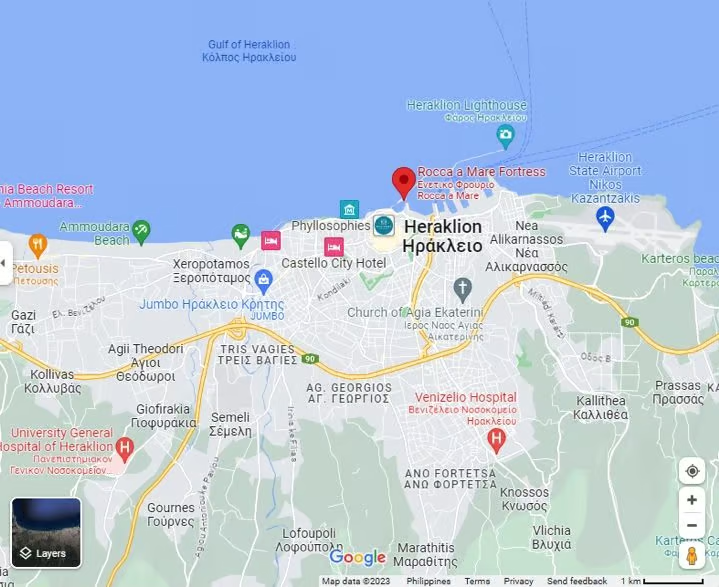
Koules Fortress stands at the entrance to Heraklion’s old harbour, in Heraklion, Crete’s regional capital and Greece’s fourth-largest city. The map below shows the fortress’s position at the harbour entrance. The fortress covers an area of 3,600 m² (39,000 sq ft), at coordinates 35°20’40.7″N 25°8’12.66″E. The Republic of Venice completed construction here at the start of the 16th century, and the building is visible from a distance across the city’s waterfront.
How Can I Get to Koules Fortress?
Four transport options get visitors to Koules Fortress: ferry, rental car, bus and taxi. Each one is listed below, with distances and timings from Heraklion Airport where they apply.
- Book a ferry. Travellers coming from Santorini, Athens or other Greek islands book a ferry into Heraklion first, then continue to the fortress by car, bus or taxi.
- Rent a car. Heraklion Airport lies about 4.8 kilometers (2.98 miles) from Koules Fortress, roughly a five-minute drive along the coast road; nearby parking lots fill up during peak hours, so check availability before you arrive (see “Where to Park Your Car” below).
- Ride a bus. Heraklion’s line 6 airport bus runs to the city roughly every 15 minutes and takes 12 to 23 minutes including transfers; check local timetables for the stop closest to the Venetian harbour.
- Take a taxi. Taxis cover the same route from the airport in about five minutes and wait at stands throughout Heraklion, or can be called from the street.
What Can You See Outside the Fortress?
Koules Fortress presents a large, square stone structure built in the 16th century to guard the city, mounted with cannons along its exterior walls. Builders sourced the stone for its walls from the old Minoan harbour, the islet of Dia and the bay of Fraki. The two-storey fortress covers roughly 3,600 square metres, and its rooftop opens onto views over the sea and the city of Heraklion. Small “sospirali lucernai” openings along the roofline once lit and ventilated the chambers below.
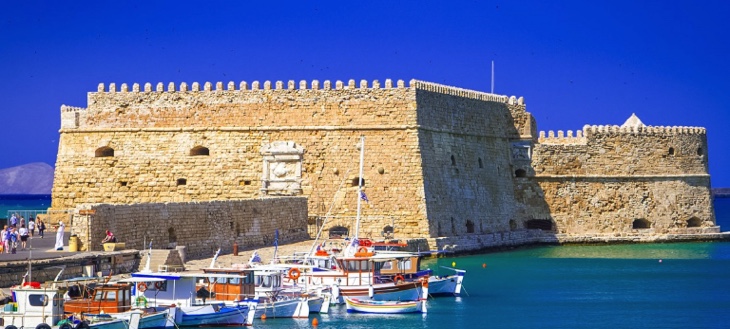
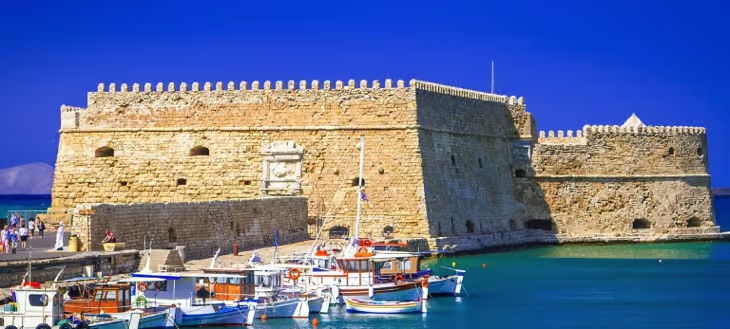
The main gate sits on the western pier, reached by a steep slope leading to three sturdy wooden doors that open onto the vaulted interior. Cafés, restaurants and workshops selling handmade Cretan goods line the harbour around the fortress, and the Venetian Arsenal, the vaulted shipyard complex where Venice once built its galleys, stands directly opposite across the water. Most visitors continue on to the Heraklion Archaeological Museum, the Historical Museum of Crete or the Morosini Fountain after touring the fort, all a short walk from the harbour.
What Can You See Inside the Fortress?
Koules Fortress mounted 43 cannons, 18 on the ground floor and 25 along an enclosed stairway to the roof, to defend the port entrance during sieges; crews moved the cannons up and down that stairway as needed.
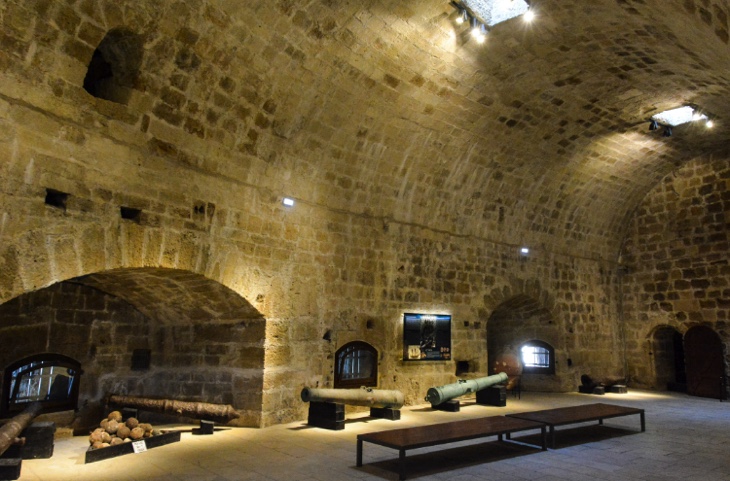
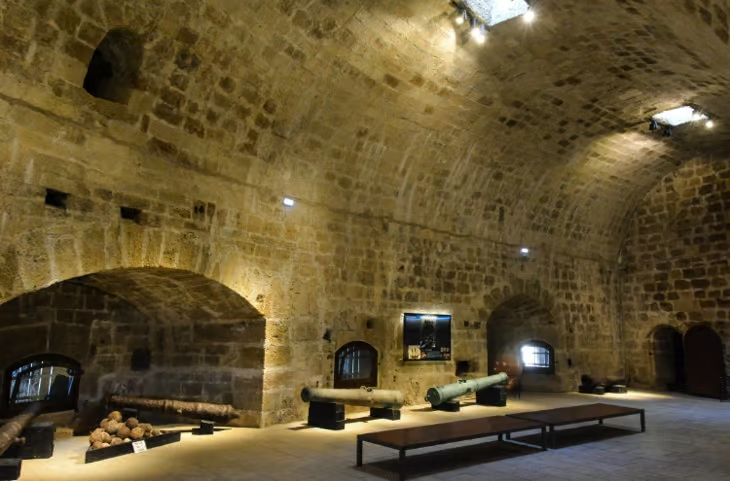
The fortress’s exhibits include relics from La Thérèse, the French flagship that came to the Venetians’ aid during the 1669 siege of Candia, alongside finds from a Cousteau-era expedition to the nearby islet of Dia. Interior displays cover the fortress’s military history through artefacts, weaponry and other period items.
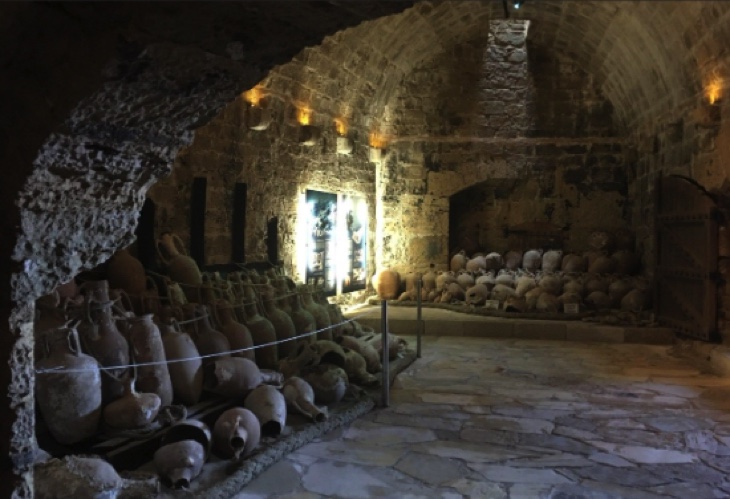
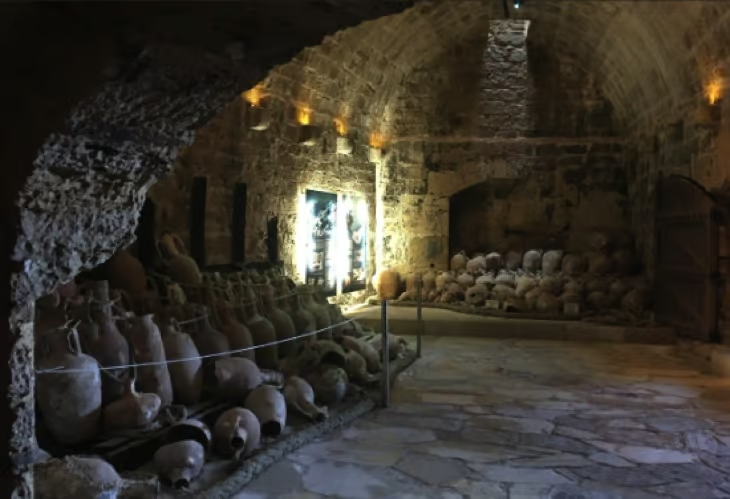
The dungeons offer a starker view of life inside the working fortification: visitors descend into poorly lit cells and narrow passages that once held prisoners, then climb back up to the fortress’s walls for panoramic views over the Venetian harbour, Heraklion and the Mediterranean beyond.
Does Koules Fortress Have a Large Number of Visitors Per Day?
Yes, Koules Fortress draws a large number of visitors most days, especially during the summer high season. There’s no official daily count, but its more than 11,900 Google reviews and 4.6-out-of-5 average rating point to a steady, high volume of tourists year-round. Visitor numbers do shift with the season, the day of the week and current travel patterns, so arriving early in the morning or on a weekday cuts down on crowds inside the fort.
How Much is the Tour for Koules Fortress?
Admission to Koules Fortress currently costs €10 ($11.48, £8.48) for a full ticket and €5 ($5.74, £4.24) for the reduced rate, set by the Hellenic Ministry of Culture and subject to change. Most visitors spend roughly 45 minutes to an hour and a half touring the rooms and rooftop, though a slower pace through the interior exhibits can stretch a visit longer. Combined tickets that bundle Koules Fortress with other Heraklion sites, and tour packages that add pickup or extra stops, typically cost more than the standalone entrance fee.
What Time Does the Koules Fortress Open?
Koules Fortress opens to the public Wednesday through Monday and closes on Tuesdays, with hours set by the Ephorate of Antiquities of Heraklion under Greece’s Ministry of Culture. From mid-April to the end of August, it’s open 8:00 a.m. to 8:00 p.m.; hours taper through autumn before settling at 8:30 a.m. to 3:30 p.m. from November to March. Last admission is 20 minutes before closing, and hours can shift with little notice, so check the current schedule before a visit.
Visiting early in the day or later in the afternoon helps avoid the largest crowds, and the fortress often feels calmer and better lit for photos outside midday in high season.
When is the Best Time to Visit Koules Fortress?
Summer, from June through August, is the best time to visit Koules Fortress, when Heraklion sees average temperatures of 20 to 30 degrees Celsius and the longest opening hours of the year. Crete’s Mediterranean climate keeps summers warm and dry and winters mild, so a visit works in any season, though summer draws the largest crowds. Visiting early in the morning or later in the day still helps avoid the busiest hours even in peak season.
Checking whether Koules Fortress or Heraklion is hosting a festival, exhibition or cultural event before a visit can add a distinctive layer to the trip; the Ephorate of Antiquities and local tourism offices publish updates on these events.
Where Can You Eat Near Koules Fortress?
Waterfront restaurants along the promenade near Koules Fortress serve Greek, Mediterranean and other cuisines with views over the Venetian harbour. Lion Square (Eleftheriou Venizelou Square), a short walk from the fortress, holds a large cluster of cafés and bars serving both traditional Cretan dishes and international menus. Heraklion’s Old Town streets, also close to the citadel, hide neighbourhood taverns serving meze, grilled meats and other regional specialties. The Heraklion Central Market, known locally as the Municipal Market or Agora, offers food stalls and small cafés selling local goods and fresh produce.
Most visitors ask locals or staff at nearby cafés for recommendations that match their taste and budget. The area’s Heraklion restaurants span most price ranges and cuisines, from casual waterfront tavernas to Old Town family-run spots.
Where to Park Your Car when Visiting Koules Fortress?
Visitors driving to Koules Fortress can choose between four parking options in Heraklion: harbour-side lots, colour-marked street spaces, free parking near supermarkets, and municipal 24-hour spots. Heraklion Harbour parking sits close to the fortress and opens daily from 6:00 a.m. to 9:00 p.m., though space runs out fastest during peak season, so arriving early or using a multi-level car park nearby is worth planning for.
Colour-marked street parking follows a simple code: yellow markings reserve spaces for special vehicles, white markings allow any visitor to park, and blue markings mean metered parking, so keep coins or a parking app ready. Free spaces near large supermarkets usually close around 9:00 p.m. and offer some of the most reliable no-cost parking in the area. Municipal 24-hour parking costs €4 ($4.59, £3.39) for the first hour and 50 cents for each additional hour, is watched over by local officials, and carries fines for street parking outside marked bays.
A rental car gives the flexibility to try a second option if the closest lot is full, something a fixed bus or taxi schedule doesn’t allow. Rules for parking in Heraklion can shift with local traffic updates, so a quick check before arrival helps avoid a wasted lap around the block. Multi-level car parks a short walk from the fortress offer secure options in the city centre or near the harbour for visitors who’d rather not search for street spaces during high season.
Is Koules Fortress Safe for Kids?
Yes, Koules Fortress is safe for children when parents supervise them on the walls and stairs. Kids get to explore the fortress’s history and architecture in a hands-on, educational setting, but parents should stop them from climbing or leaning on walls that lack safety barriers. The fortress’s dungeons, with their low lighting and narrow passageways, don’t suit small children or anyone uneasy in tight spaces, so it’s worth checking a child’s comfort level before heading down there.
Are there Near Beaches in Koules Fortress?
Yes, several beaches lie near Koules Fortress, starting with Ammoudara Beach, the longest beach in the Heraklion region. Its sandy shore and shallow water suit families, and nearby restaurants, water-sports operators and beach bars serve visitors throughout the day.
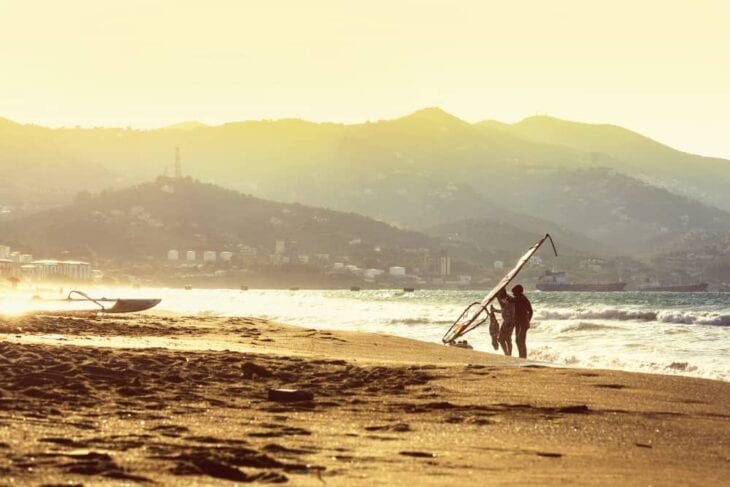
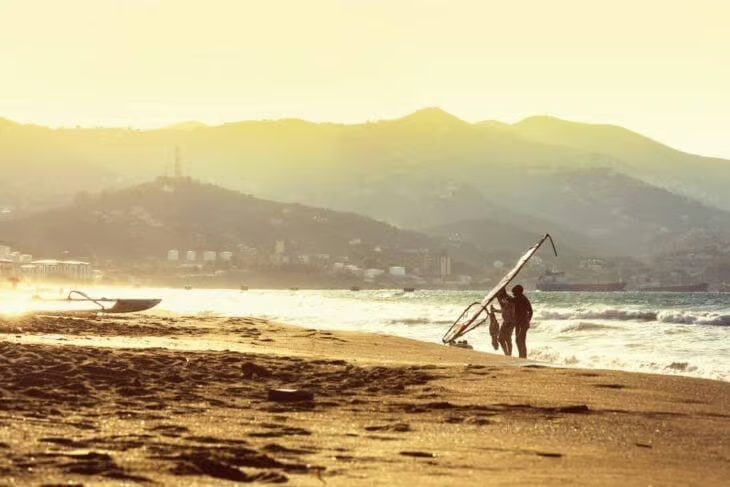
The Bay of Karteros, 7 kilometers (4.35 miles) east of Heraklion at the mouth of the Karteros Gorge, stretches 3.5 kilometers (2.17 miles) along a quieter, sandy shoreline with a range of beach amenities. Amnissos Beach, the third option, offers calmer surroundings, a few tavernas serving local food, and the nearby Minoan archaeological site of Amnisos for visitors who want to combine sea and history. Heraklion hotels along these beaches put all three within easy reach for a day trip.
Getting to Koules Fortress by Car?
A rental car turns a Koules Fortress visit into a full day around Heraklion instead of one stop. Knossos Palace, Crete’s most famous archaeological site, sits about 5 kilometers (3.11 miles) south of Heraklion, roughly a 15-minute drive from the fortress with no bus transfer or timetable to plan around. The same car reaches Ammoudara, Karteros and Amnissos beaches, the Heraklion Archaeological Museum, and the rest of the Heraklion coastline within a single afternoon, without waiting on the airport bus’s roughly 15-minute intervals.
Get a Crete car rental quote to see how much it costs to rent a car in Crete before you land at Heraklion Airport, five minutes’ drive from Koules Fortress. Picking up the car there puts it to work for the whole stay, not just the trip to the harbour.