



When it rains in Crete, the island reveals a different side: world-class museums, illuminated caves, medieval old towns, and winery tours that can fill an entire day. The best rainy-day activities in Crete are visiting the Archaeological Museum of Heraklion, exploring Sfendoni or Melidoni caves, walking the old towns of Chania and Rethymnon (especially the Fortezza), wine tasting at Lyrarakis Winery, and warming up in a kafenio with loukoumades or bougatsa. The rainy season runs November–March, averaging 86 mm in December, but a rental car turns any rainy day into an inland adventure.
Quick reference, top 12 indoor activities in Crete:
| # | Activity | Town / area | Hours | Price |
|---|---|---|---|---|
| 1 | Archaeological Museum of Heraklion | Heraklion | Tue–Sun 08:00–20:00 | €12 ($13.78, £10.17) |
| 2 | CretAquarium (Thalassokosmos) | Gournes | Daily, 09:30–17:00 (winter) | €11 ($12.63, £9.32) |
| 3 | Sfendoni Cave | Zoniana | Daily, 10:00–17:00 | €7 ($8.04, £5.93) |
| 4 | Melidoni Cave | Perama | Daily, 10:00–17:00 | €4 ($4.59, £3.39) |
| 5 | Old Venetian Harbour | Chania | Always open | Free |
| 6 | Rethymnon Old Town + Fortezza | Rethymnon | Daily, 08:00–20:00 | €4 ($4.59, £3.39) (Fortezza) |
| 7 | Nautical Museum of Crete | Chania | Tue–Sun, 09:00–17:00 | €4 ($4.59, £3.39) |
| 8 | Lyrarakis Winery | Alagni (Heraklion) | By appointment | €10 ($11.48, £8.48)–€25 ($28.70, £21.19) |
| 9 | Agia Triada Monastery (winery) | Akrotiri (Chania) | Daily | €3 ($3.44, £2.54) + tasting |
| 10 | Paraschakis Olive Oil | Near Rethymnon | Daily | Free + tasting |
| 11 | Arkadi Monastery | Inland Rethymnon | Daily, 08:00–20:00 | €3 ($3.44, £2.54) |
| 12 | Margarites pottery workshops | Mylopotamos | Most workshops daily | Free entry |
Does it rain in Crete, and when?
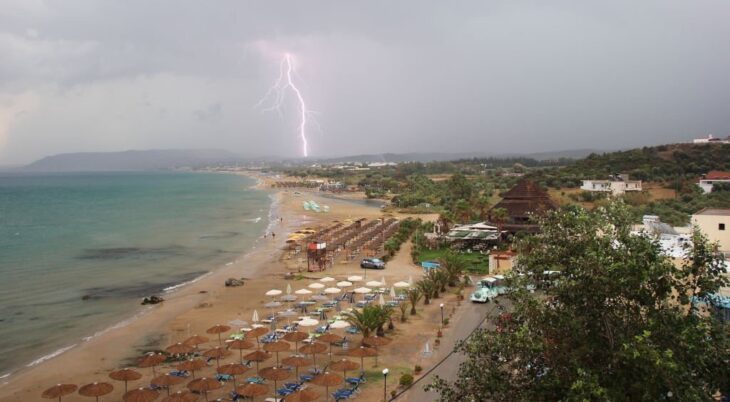
Crete’s rainy season runs from November to March, with December and January averaging 86 mm of rainfall each, the north coast receives significantly more rain than the south. Crete sits in the southern Mediterranean near North Africa, and the island’s central mountain range splits it into two distinct climate zones.
North vs south Crete climate
North Crete (closer to mainland Europe) experiences wetter and colder winters; the south stays milder year-round. Ierapetra, on the south coast, records over 300 sunny days per year, the highest in Europe.
Month-by-month rainfall guide
| Month | Average rainfall | Notes |
|---|---|---|
| Nov | 65 mm | Rainy season begins |
| Dec | 86 mm | Wettest month |
| Jan | 86 mm | Wettest month (tied) |
| Feb | 65 mm | Still wet, occasional snow in mountains |
| Mar | 50 mm | Showers + sunshine |
| Apr | 25 mm | Mostly dry |
| May–Sep | <10 mm | Effectively rain-free |
| Oct | 35 mm | Showers return |
An overview of the weather in Crete
Winters in coastal Crete are mild, but the mountains see snow; even on rainy days, sunshine usually breaks through for a few hours. Snowfall is common in the White Mountains (Lefka Ori) and Mount Ida (Psiloritis) in late autumn and winter. Coastal temperatures rarely drop below 12 °C even in January, so heavy winter coats are unnecessary, a light fleece and waterproof jacket cover most rainy days.
Indoor activities in Crete for a rainy day
The best indoor activities in Crete when it rains are the Archaeological Museum of Heraklion, CretAquarium in Gournes, and the Nautical Museum of Crete in Chania. All three are open year-round and easily reached by rental car.


1. Archaeological Museum of Heraklion
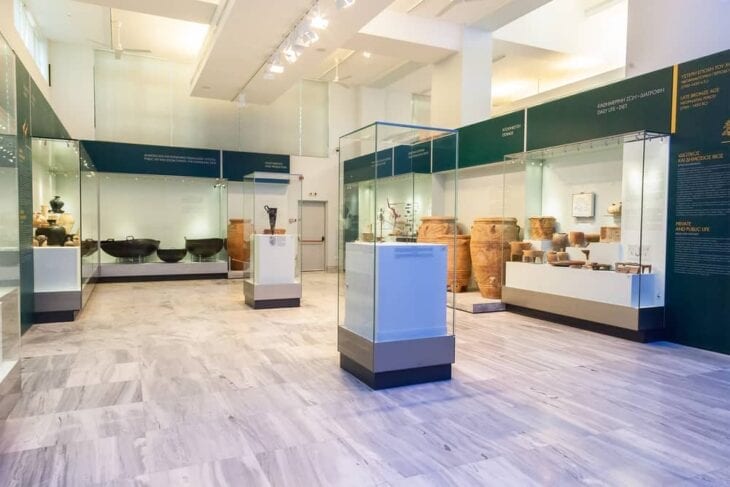
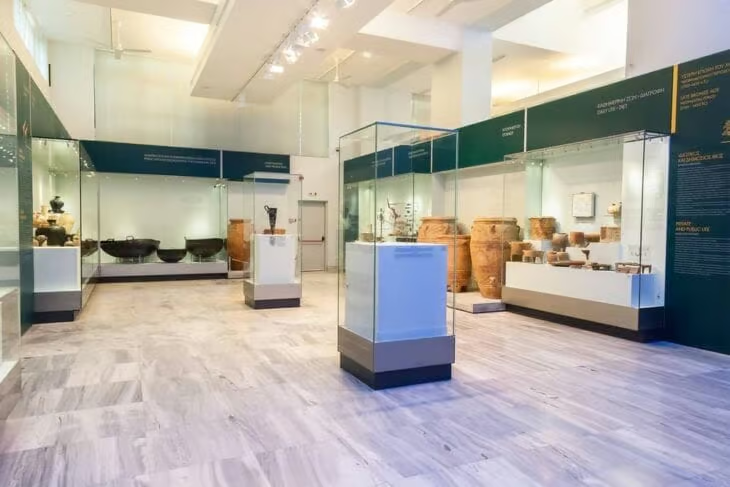
The Heraklion Archaeological Museum houses the world’s finest collection of Minoan artefacts, 20 rooms spanning 8,000 years of Cretan history, including the Phaistos Disc and the serpent goddess figurines from 1,600 BC. It is one of Europe’s most significant museums and the principal repository for finds from Knossos, Crete’s most renowned excavation site. Built above the harbour in Heraklion, it features a Bauhaus-style entry hall and 20 themed rooms.
- Highlights: Phaistos Disc; serpent goddesses; bull’s heads with projecting horns; Minoan frescoes
- Hours: Tue–Sun 08:00–20:00 (closed Mondays)
- Price: €12 ($13.78, £10.17) full / €6 ($6.89, £5.09) reduced (EU students, seniors)
- Time needed: 2–3 hours
- Source: Heraklion Archaeological Museum
2. CretAquarium (Thalassokosmos)
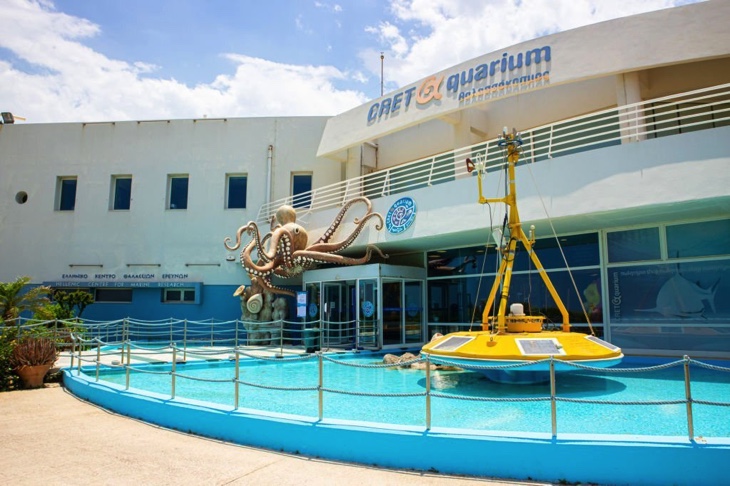
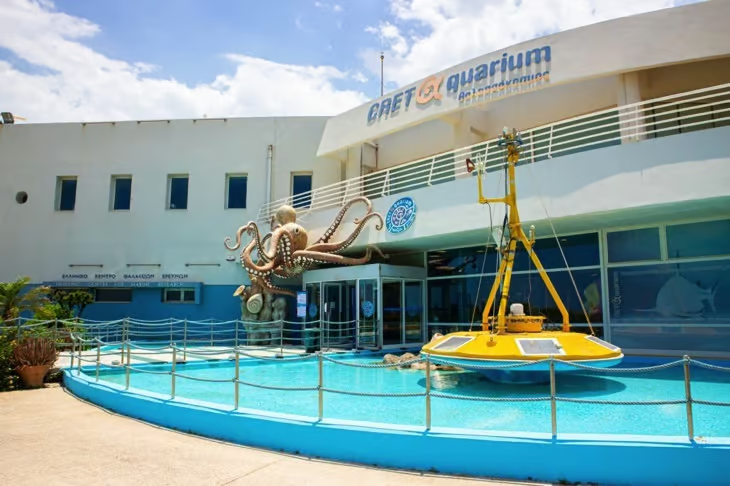
CretAquarium (Thalassokosmos) in Gournes, 15 minutes east of Heraklion, houses 60+ Mediterranean species across 35 tanks, the largest aquarium in Greece and a reliable rainy-day option for families and solo travellers alike. CretAquarium brings the Mediterranean underwater world directly to visitors, octopus, seahorses, jellyfish, and Mediterranean sharks, just 15 minutes from Heraklion city centre.
- Highlights: Mediterranean reef tank, seahorses, octopus, jellyfish ring tank
- Hours: Daily 09:30–17:00 (winter); 09:30–21:00 (summer)
- Price: €11 ($12.63, £9.32) adults / €7 ($8.04, £5.93) children (4–17) / under-4s free
- Source: Cretaquarium
3. Nautical Museum of Crete (Chania)
The Nautical Museum of Crete in Chania presents the island’s seafaring history from the Bronze Age to the German invasion of 1941, housed in an ochre-painted building beneath the half-ruined walls of Firkas Fortress. The collection’s strongest section covers Venetian rule, essential context for understanding the architecture of Chania’s harbour.
- Hours: Tue–Sun 09:00–17:00
- Price: €4 ($4.59, £3.39) adults
- Time needed: 1 hour
4. Covered markets: Chania Agora and Heraklion 1866 Street
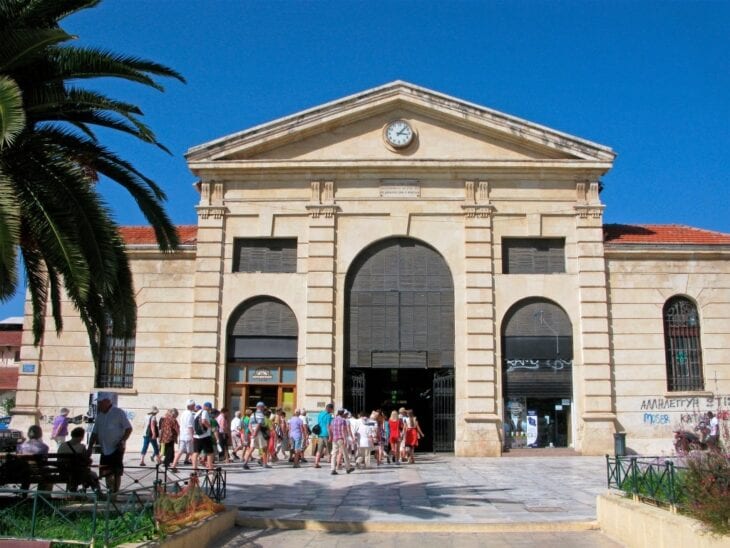
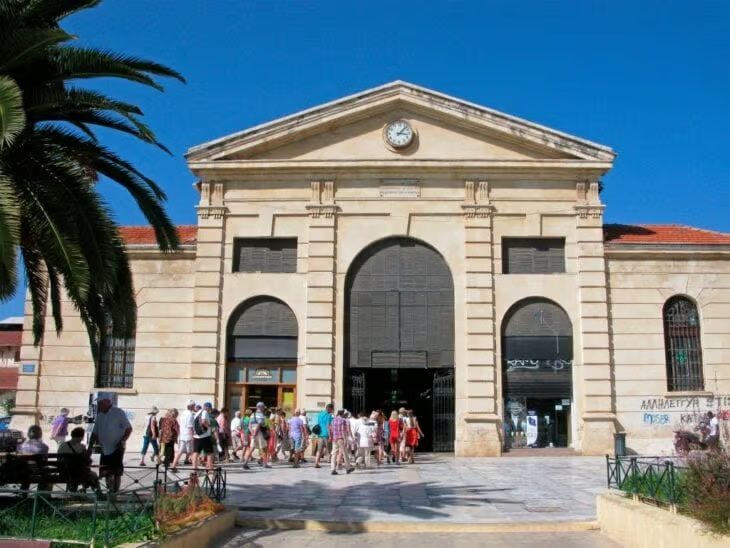
Both Chania and Heraklion have covered/semi-covered markets that work well as rainy-day refuges. The Chania Municipal Market (Agora), a cross-shaped 1913 building modelled on Marseille’s covered market, sells local cheeses, olive oil, herbs, and mountain tea (malotira) under a single roof. Heraklion’s 1866 Street Market offers food stalls, traditional pies, and a covered seating area perfect for a rainy lunch.
- Hours: Mon–Sat 08:00–14:00 (some closures Tue/Thu afternoon)
- Price: Free entry
Old towns worth exploring in the rain
Chania’s Venetian Harbour and Rethymnon’s Fortezza fortress are the two most atmospheric old-town destinations in Crete on a rainy day, offering cafes, museums, and medieval architecture.
5. Chania Old Town and the Old Venetian Harbour
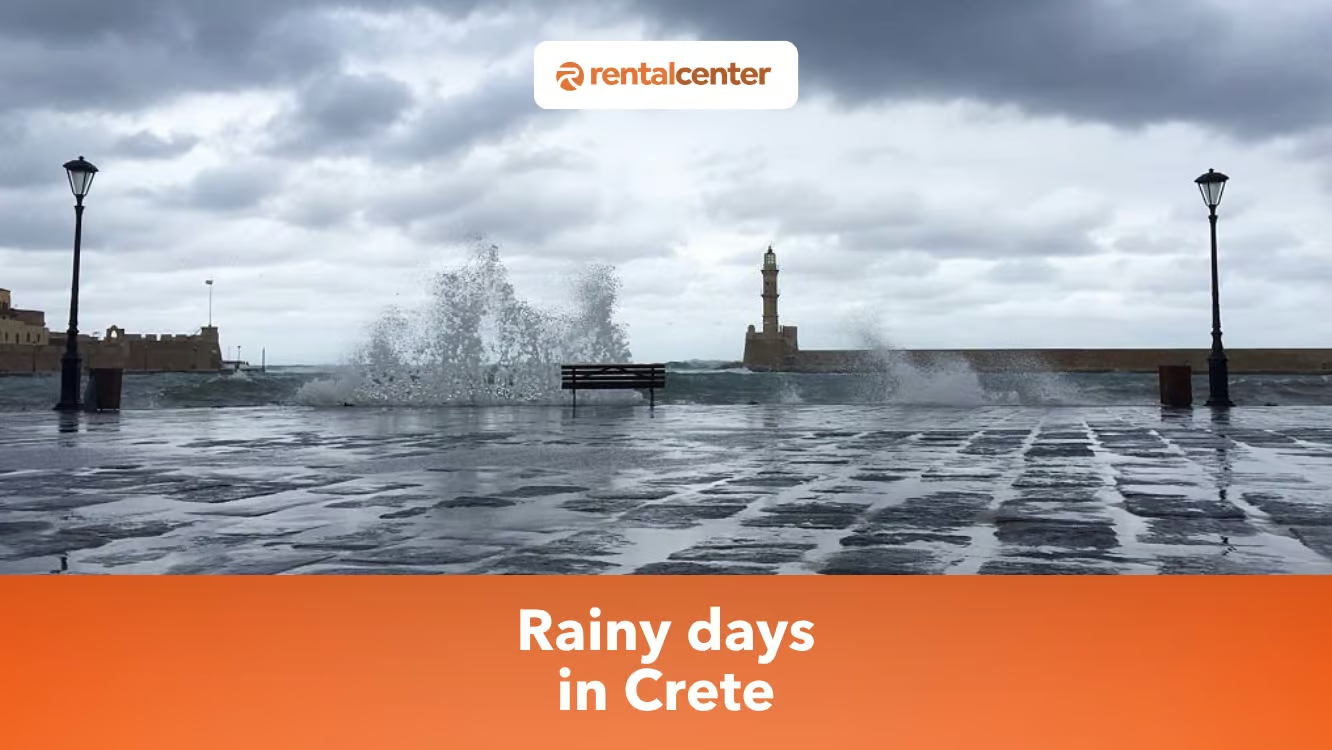
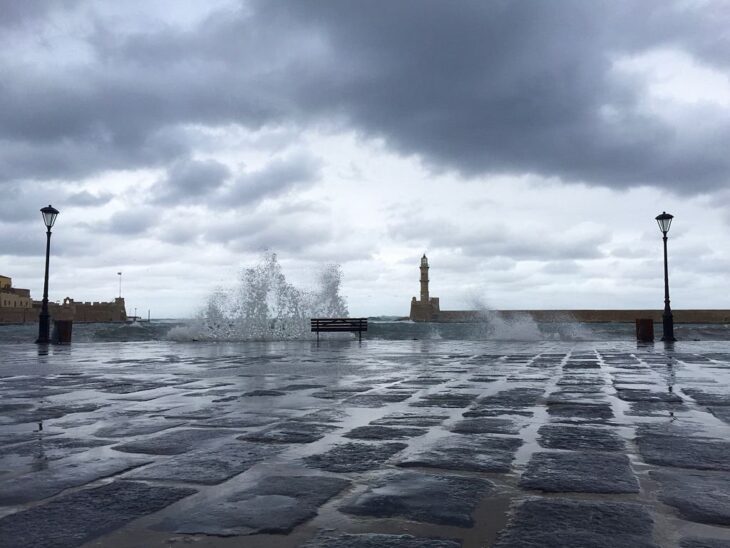
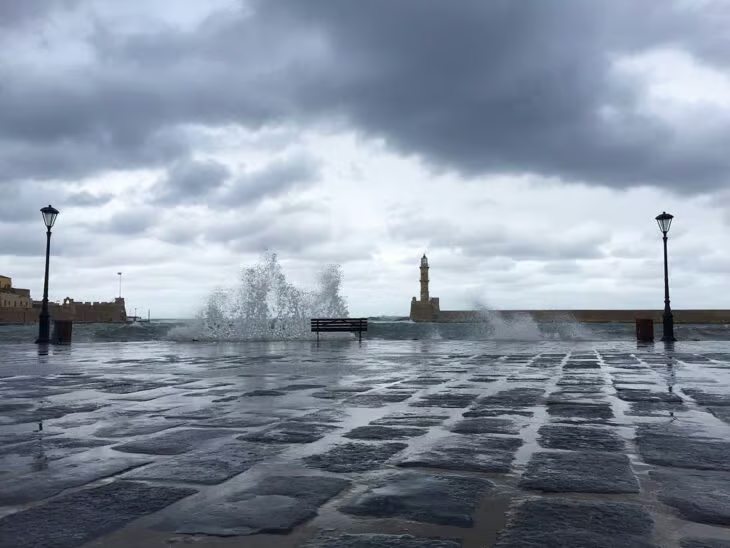
Chania’s Old Venetian Harbour is one of Greece’s most picturesque urban scenes, and the surrounding 16th-century architecture, the Venetian Lighthouse across the water, and the cobblestone quayside cafés make it as compelling in the rain as in sunshine. Take a seat at one of the lively café-tavernas that line the cobblestone quaysides for a Greek coffee while the Mediterranean slams against the port walls. Visitors with umbrellas can walk the old harbour walls for the most dramatic views.
- Highlights: 16th-century Venetian Lighthouse, harbour walls, café-tavernas, Janissaries Mosque
- Cost: Free to walk; tavernas €15 ($17.22, £12.71)–€25 ($28.70, £21.19) per person
- Best for: Rainy-day photography, Greek-coffee stops, sheltered taverna lunches
6. Rethymnon Old Town and the Fortezza
Rethymnon’s old town sits at the centre of the island, easy to reach from both Heraklion and Chania, and is arguably even more atmospheric than Chania on a rainy day. Walk the Venetian harbour walls, then climb to the Fortezza, a 16th-century Venetian fortress overlooking the sea. On Gerakari Street and Arabatzoglou Street, warm up in a kafenio with loukoumades (honey doughnuts) or freshly baked bougatsa (custard pastry). Rethymnon also houses the Archaeological Museum of Rethymnon and the Museum of Contemporary Art of Crete.
- Highlights: Fortezza fortress, Rimondi Fountain, Archaeological Museum, Contemporary Art Museum
- Hours (Fortezza): Daily 08:00–20:00 (summer); 08:30–17:00 (winter)
- Price (Fortezza): €4 ($4.59, £3.39) adults / €2 ($2.30, £1.70) reduced
- Eat: Loukoumades €3 ($3.44, £2.54) / bougatsa €3 ($3.44, £2.54) / kafenio coffee €2 ($2.30, £1.70)
Cretan monasteries on a rainy day
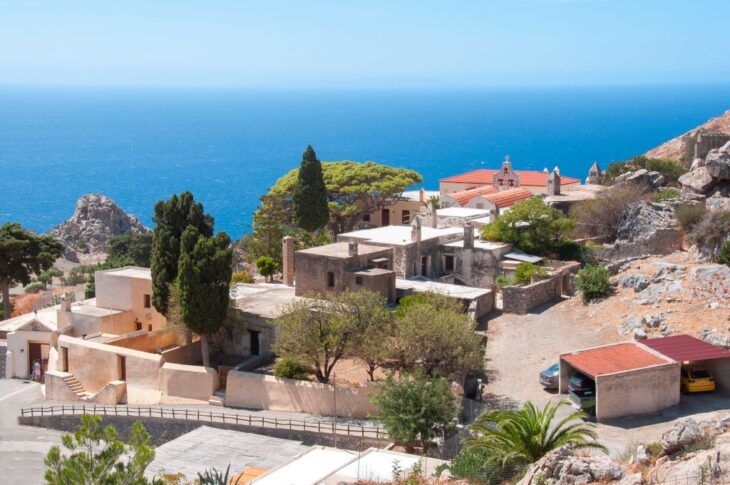
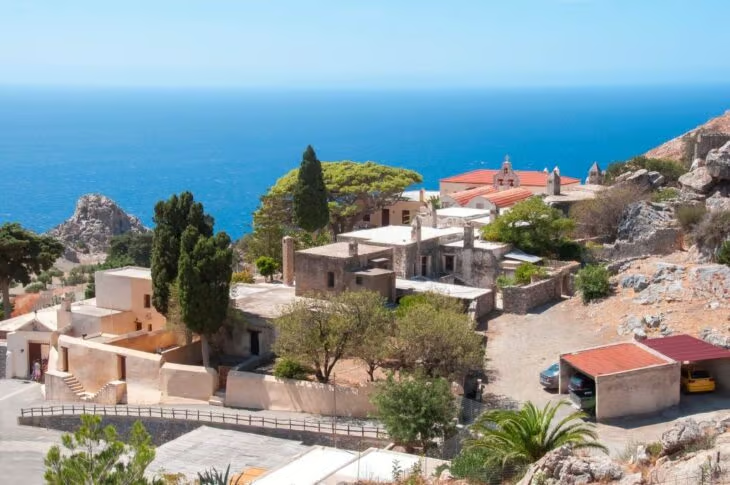
Crete has dozens of monasteries; the most visited are Arkadi (near Rethymnon, 16th century) and Preveli (active, south coast), both are open to visitors and free or very low cost.
7. Monastery of Arkadi (Rethymnon)
Arkadi Monastery tells the story of Cretan resistance in stone: built in the 16th century, it became a fortress in the 1866 uprising against Ottoman rule and remains a national symbol of independence. Today it is a peaceful spot for exploring with sweeping views from the inland Rethymnon countryside.
- Hours: Daily 08:00–20:00 (summer); 09:00–17:00 (winter)
- Price: €3 ($3.44, £2.54)
- Distance: 25 kilometers (15.53 miles) from Rethymnon
8. Monastery of Preveli (Rethymnon south coast)
Preveli Monastery is an active monastic site set on a cliffside above the Libyan Sea, 35 kilometers (21.75 miles) south of Rethymnon. Monks still live and work there. The monastery played a critical role in WWII, sheltering Allied soldiers during the German occupation. The viewpoint over the palm-fringed Preveli Beach below is exceptional even in cloudy weather.
- Hours: Daily, dawn–dusk
- Price: €3 ($3.44, £2.54)
- Best paired with: A drive across the south coast (often dry when north is wet)
9. Toplou Monastery and Agia Triada
Toplou Monastery (Sitia) and Agia Triada Monastery (Akrotiri, Chania) round out the rainy-day monastery circuit. Both run their own wineries and olive presses, a tour of either combines monastic history, religious icons, and a tasting in a single sheltered visit.
- Toplou: 18 kilometers (11.18 miles) west of Sitia; museum + winery tour ~€5 ($5.74, £4.24)
- Agia Triada: 17 kilometers (10.56 miles) north-east of Chania; entry €3 ($3.44, £2.54) + tastings
Caves to visit when it rains in Crete
Sfendoni Cave (270 m long, near Zoniana) and Melidoni Cave (near Perama) are Crete’s two most visitor-accessible cave systems and perfect all-weather activities.
10. Sfendoni Cave (Zoniana, Rethymnon)
Sfendoni Cave shelters visitors in 270 metres of illuminated chambers beneath Mount Ida, Crete’s most accessible cave system for all-weather exploration. The visitor route winds through neon-lit crystallite formations and mineral pillars, with guides explaining how the tunnels were used by Romans and by guerrilla forces during the Greek revolutions.
- Hours: Daily 10:00–17:00
- Price: €7 ($8.04, £5.93) adults / €4 ($4.59, £3.39) children
- Length: 270 m visitor route
- Location: Zoniana village, near Anogia
11. Melidoni Cave
Melidoni Cave near Perama is a domed cavern of immense historical and mythological significance, according to legend, it was the nursery of Talos, the bronze guardian of Crete, and in 1824 it became the site of an Ottoman massacre of Cretan civilians, commemorated by a memorial inside. Smaller and easier to walk than Sfendoni, Melidoni pairs well with Rethymnon old-town visits.
- Hours: Daily 10:00–17:00
- Price: €4 ($4.59, £3.39) adults
- Distance: 25 kilometers (15.53 miles) east of Rethymnon
Wine tasting and local producers
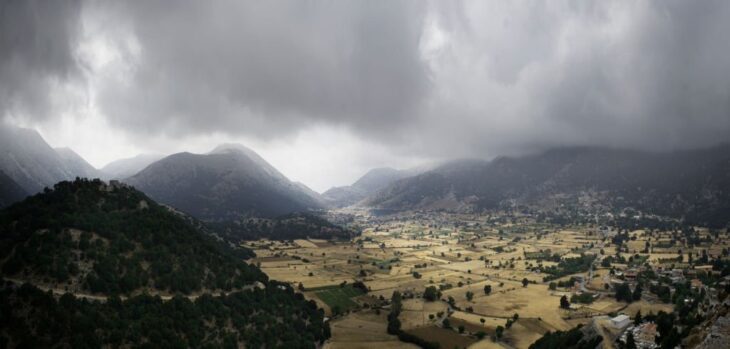
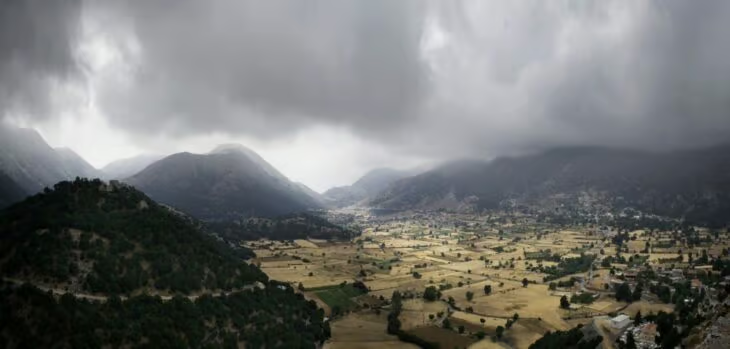
Crete produces some of Greece’s most distinctive wines from indigenous varieties including Vidiano, Vilana, Liatiko, and Kotsifali, and the most visitor-friendly wineries stay open year-round, making them perfect rainy-day stops.
12. Wine tasting at Cretan wineries
Lyrarakis Winery in Alagni (Heraklion) is the best-known visitor winery on the island, 30 minutes from Heraklion, with guided tours and tastings of award-winning whites from rare Vidiano grapes.
- Lyrarakis Winery (Alagni, Heraklion), 30 min from Heraklion; guided tours and tastings of Vidiano, Vilana, and Plyto whites; €10 ($11.48, £8.48)–€25 ($28.70, £21.19) per person
- Agia Triada Monastery Winery (Akrotiri, Chania), monastic wine production in a working 17th-century complex; tour includes the church and olive grove
- Toplou Monastery Winery (Sitia, East Crete), combine the monastery museum with a tasting of one of Crete’s most acclaimed labels
Most winery tours last 60–90 minutes and cost €10 ($11.48, £8.48)–€25 ($28.70, £21.19) per person including tastings. Booking a day ahead is recommended.
Olive oil at Paraschakis (Rethymnon)
Paraschakis Olive Oil, a family operation 30 minutes east of Rethymno, runs daily tastings showing how Crete has produced olive oil for over 4,000 years using koroneiki olives. Tour exhibits include donkey-pulled presses and stone grinders alongside modern milling. The gift shop sells oils and small-batch raki.
- Hours: Daily, year-round
- Price: Free tour with optional tasting purchase
- Distance: 30 min east of Rethymno
Pottery workshops in Margarites
Margarites village (Mylopotamos, Rethymnon) is Crete’s traditional pottery centre, a dozen workshops still throw and fire clay using techniques unchanged for centuries, and most welcome visitors at no charge.
- Distance: 27 kilometers (16.78 miles) south-east of Rethymnon
- Best for: Watching potters at work, buying souvenirs
Food and drink on a rainy day in Crete
Cretan tavernas deliver the island’s best shelter from the rain: warm, unhurried, and stocked with local specialties like kalitsounia, apaki, and fresh-pressed olive oil. On a rainy day, look for kafenia (traditional coffee houses) for a kafedaki (small Greek coffee) or a hot malotira (Cretan mountain herb tea, found nowhere else in Greece).
Cretan dishes to look for:
- Kalitsounia, small cheese pies (sweet or savoury)
- Apaki, smoked cured pork
- Staka, creamy butter sauce, often with fried egg
- Dakos, Cretan rusk salad with tomato and mizithra
- Dolmadakia, stuffed vine leaves
- Gemista, stuffed tomatoes and peppers
- Bougatsa, custard pastry (Heraklion speciality)
- Loukoumades, small honey-syrup doughnuts
- Cretan diet wines, Vidiano, Vilana, Liatiko, Kotsifali
The best taverna districts: Chania Old Town restaurants (Zampeliou and Kondylaki streets), Heraklion 1866 Market restaurants, Rethymnon Arabatzoglou Street restaurants, and the harbour at Agios Nikolaos. Most tavernas open from 12:00 to 23:00; expect to spend €15 ($17.22, £12.71)–€25 ($28.70, £21.19) per person for a full mezedes spread plus drinks.
Drive in search of better weather
When it rains on the north coast, the south coast, Matala, Ierapetra, Makrigialos, often stays dry and sunny. A 90-minute drive across the mountains can turn a washout into a beach afternoon.
| From | To | Drive time | Notes |
|---|---|---|---|
| Heraklion | Matala | ~75 min | Mesara plain, milder microclimate |
| Heraklion | Ierapetra | ~80 min | Over 300 sunny days/year |
| Chania | Paleochora | ~75 min | Across the White Mountains |
| Rethymnon | Plakias / Preveli | ~50 min | South-coast Rethymnon |
A rental car makes weather-chasing practical and turns a rainy north-coast morning into a scenic mountain drive ending on a sunny southern beach.
What to pack for a rainy day in Crete
Rain in Crete is rarely heavy enough for full waterproof gear, pack a compact umbrella, a light waterproof jacket, and shoes with grip.
- Compact travel umbrella, fits in a day bag; essential for old-town walks
- Light waterproof jacket, temperatures rarely drop below 12 °C even in January
- Waterproof walking shoes, old-town cobblestones get slippery; avoid flip-flops
- Day bag with rain cover, protects camera, wallet, and documents
- Layer fleece, sufficient under a light jacket in most rainy conditions
- Microfibre travel towel, useful after cave visits
Crete’s January coastal average is around 12 °C; mountain villages can be 5–8 °C colder. A fleece layer plus a light jacket cover most weather you’ll encounter.
Should you rent a car in Crete on a rainy day?
Yes, a rental car is the most practical tool for a rainy day in Crete: it lets you chase better weather across the island, reach inland sites like Sfendoni Cave and Arkadi Monastery, and drive between towns without waiting for infrequent winter buses. Rental Center Crete operates 24/7 at Heraklion and Chania airports year-round, with free delivery to hotels, ports, and accommodation across Heraklion, Chania, Rethymnon, and Agios Nikolaos.
Compact and economy cars handle wet asphalt comfortably; a mid-size SUV is helpful only for serious mountain drives in heavy rain. Average winter daily rates start from ~€27 ($31.00, £22.88) per day for an economy car, significantly cheaper than the €65 ($74.63, £55.09) peak summer rate.