
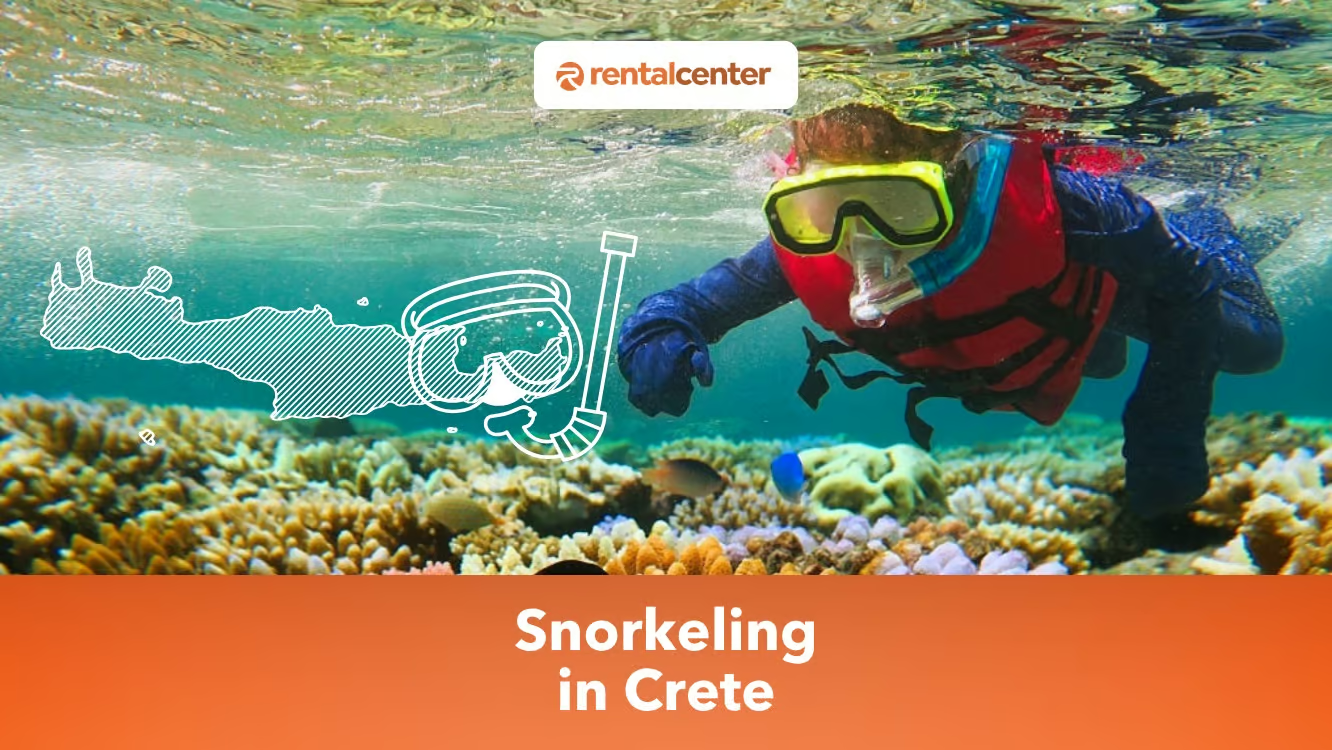
Snorkeling in Crete puts you face-to-face with loggerhead sea turtles (Caretta caretta), Mediterranean monk seals, and octopuses in waters so clear you can see 30 metres below the surface, making Crete the top snorkeling destination in Greece. This guide covers the 17 best spots, how to reach remote beaches by car, marine life you’ll encounter, gear and tour pricing, plus everything you need for a safe and memorable trip from May through October.
Mediterranean expectation-setter: Crete’s snorkeling is not Caribbean reef diving. The marine life is subtler: rocky seabeds and posidonia oceanica seagrass meadows shelter octopuses, wrasse, parrotfish, moray eels, and the occasional sea turtle. What Crete offers instead is exceptional water clarity, mild currents, and quiet bays, perfect for relaxed observation rather than colour-explosion reef encounters.
Quick reference, top 10 snorkeling spots in Crete:
| # | Spot | Region | Best for | Access |
|---|---|---|---|---|
| 1 | Elafonissi | SW Chania | Beginners, families | Car / bus, 9 kilometers (55.92 miles) from CHQ |
| 2 | Balos Lagoon | NW Chania | Calm shallow lagoon | Boat from Kissamos |
| 3 | Skinaria | S Rethymno | Visibility, expert | Car (rugged road) |
| 4 | Chrissi Island | S Lasithi | Pristine, turtles | Boat from Ierapetra |
| 5 | Dia Island | N Heraklion | Monk seals, caves | Boat from Heraklion |
| 6 | Matala | S Heraklion | Submerged Roman port | Car |
| 7 | Elounda + Olous | N Lasithi | Sunken city ruins | Car |
| 8 | Kolokytha | N Lasithi | Secluded, near Elounda | 4×4 / SUV |
| 9 | Agia Pelagia | N Heraklion | Reefs, caves | Car / bus |
| 10 | Almyrida | N Chania | Family-friendly | Car / bus |
Why Crete is one of the Mediterranean’s best snorkeling destinations
Crete’s lack of river runoff, rocky seabed, and southern Mediterranean location combine to deliver water clarity exceeding 30 metres and temperatures between 20–27 °C, conditions unmatched anywhere else in Greece.
Important safety note: Sea conditions in Crete can change rapidly, especially on the south coast. Always check the Hellenic National Meteorological Service (EMY) forecast at emy.gr before snorkeling. In an emergency, call the Hellenic Coast Guard on 108. This guide is informational, conditions at individual spots may vary from descriptions.
Water conditions and visibility
Crete’s absence of large rivers keeps sediment out of the water, delivering visibility that regularly exceeds 30 metres, enough to see the sandy bottom from the surface in lagoons like Elafonissi and Balos. The rocky coastline and seabed (caves, crevices, reefs, and posidonia oceanica seagrass meadows) provide diverse habitats for marine life and limit sand disturbance. The southern Mediterranean location keeps water temperatures between 20 °C in May and 27 °C in August, while the high salinity boosts buoyancy, letting snorkelers float without effort. Sheltered bays minimise currents for all skill levels.
Marine life you can encounter
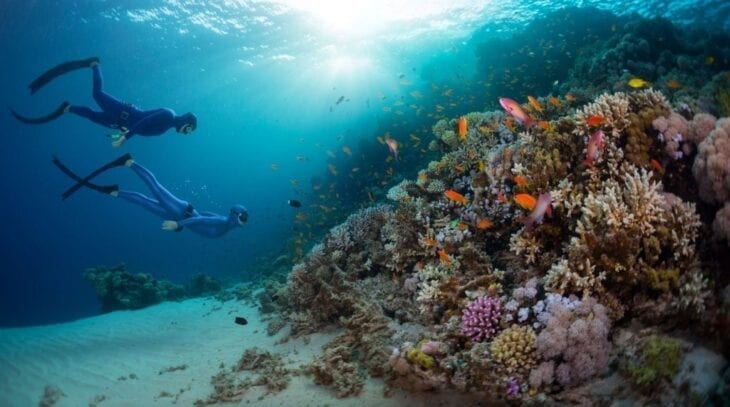
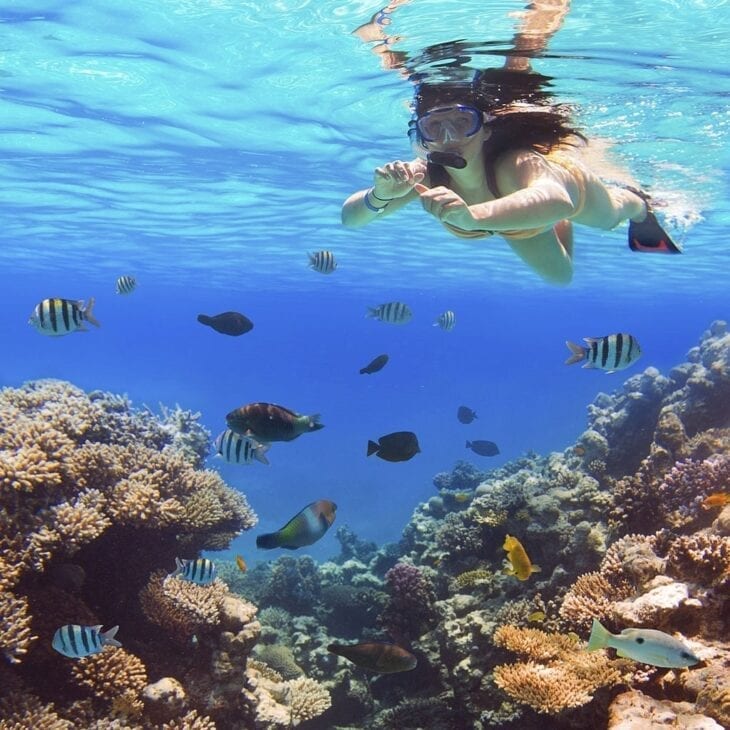
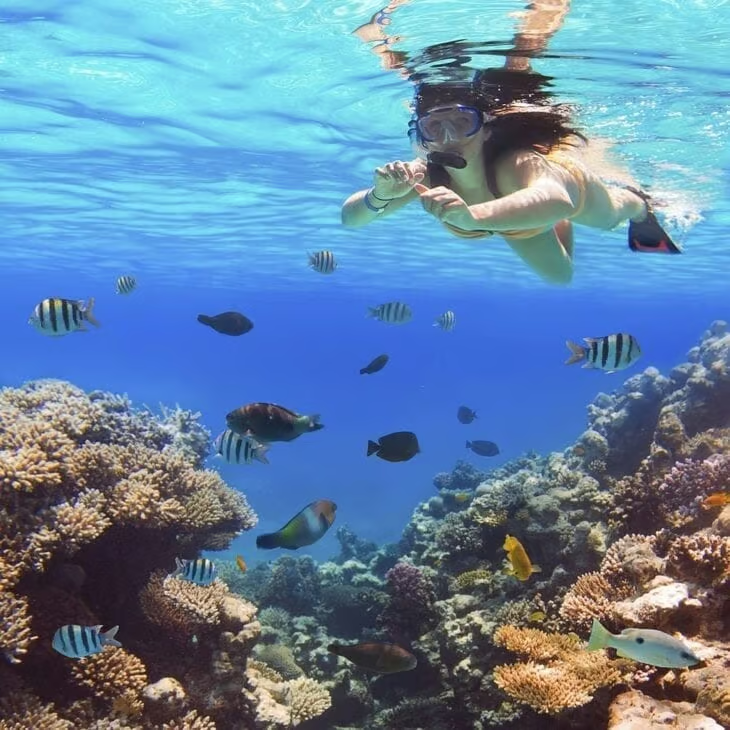
Crete’s waters host loggerhead sea turtles, Mediterranean monk seals, octopuses, moray eels, and over 50 fish species, most visible within 3–5 metres of the surface.
| Species | Where to spot | Typical depth | Notes |
|---|---|---|---|
| Loggerhead sea turtle (Caretta caretta) | Dia, Chrissi, Almyrida | 1–10 m | Protected; do not approach within 5 m |
| Mediterranean monk seal (Monachus monachus) | Dia Island, sea caves | Rare sightings | Critically endangered; report to MOm |
| Common octopus (Octopus vulgaris) | Rocky seabeds everywhere | 0–5 m | Often under rocks; camouflages instantly |
| Moray eel | Caves at Agia Pelagia, Matala | 2–8 m | Shy; never reach into crevices |
| Parrotfish & wrasse | Reefs at Elafonissi, Balos | 1–5 m | Colourful; the most common sight |
| Damselfish | Posidonia meadows | 1–3 m | Schooling, easy to photograph |
| Sea urchin (Paracentrotus lividus) | Rocky shores everywhere | 0–3 m | Hazard, wear water shoes or fin boots |
Sea turtle sightings at Dia Island are documented by ARCHELON, the Sea Turtle Protection Society of Greece (archelon.gr). Mediterranean monk seal presence around Crete is monitored by MOm / Hellenic Society for the Study and Protection of the Monk Seal (mom.gr).
Best snorkeling spots in Crete
From the pink sands of Elafonissi to the submerged Roman port at Matala, Crete’s 17 top snorkeling spots offer something for every skill level and every corner of the island. Below, each spot appears once with its key access details, then a regional summary table groups remaining spots by coast.
Elafonissi Beach (SW Crete)
Elafonissi beach sits on the southwestern tip of Crete with its famous pink-hued sand and shallow turquoise lagoon. The Elafonisi lagoon’s calm, shallow water and lack of strong currents make it ideal for beginners and families, and the rocky outcrops at the lagoon’s edge shelter colourful wrasse and parrotfish. 90.7 kilometers (56.36 miles) from Chania International Airport (CHQ), reachable by car, bus, or boat tour.
Balos Lagoon (NW Crete)
Balos’s calm, ankle- to chest-deep turquoise water surrounded by white sand and rocky formations delivers a unique snorkeling experience, and a reputation as one of Greece’s most beautiful beaches. Best accessed by boat tour from Kissamos (55.2 kilometers (34.30 miles) from CHQ); the rugged 4×4 road is an alternative for adventurers.
Skinaria Beach (S Rethymno)
Skinaria is the visibility champion of Crete’s south coast, a rugged underwater landscape, rocky seabed, and exceptional clarity. 36.2 kilometers (22.49 miles) from Rethymno; reachable by car or south-coast boat tours. Best suited for confident swimmers and intermediate snorkelers.
Chrissi Island (Golden Island, SE Crete)
Chrissi (also “Golden Island”) is a small, uninhabited Natura 2000 island 2 kilometers (1.24 miles) south of Ierapetra. Crystal-clear water, shallow lagoons, and rich marine life, including loggerhead sea turtles, make it one of the best snorkeling spots in Greece. Boat from Ierapetra harbour (61.3 kilometers (38.09 miles) from Sitia Airport).
Dia Island (N Heraklion)
Dia is 14.4 kilometers (8.95 miles) north of Heraklion and famous for clear water and rich marine life, including occasional Mediterranean monk seal sightings. Rocky coastline and secluded coves shelter octopus, moray eel, and turtle populations. Boat tours depart daily from Heraklion in summer.
Matala Beach and the submerged Roman port (S Heraklion)
Matala’s cliffside caves once hosted 1960s and 1970s hippies. Today, snorkelers explore the submerged remains of an ancient Roman port in the crystal-clear water along the rocky coastline. 66 kilometers (41.01 miles) from Heraklion International Airport (HER); reachable by car or public transport.
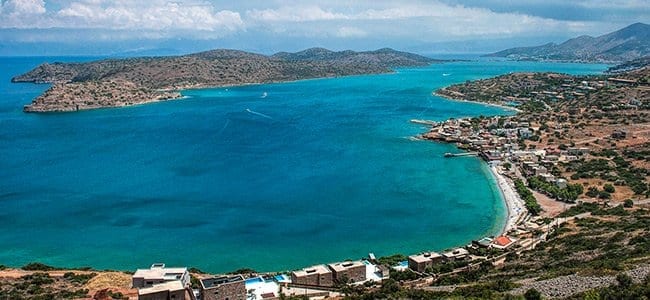
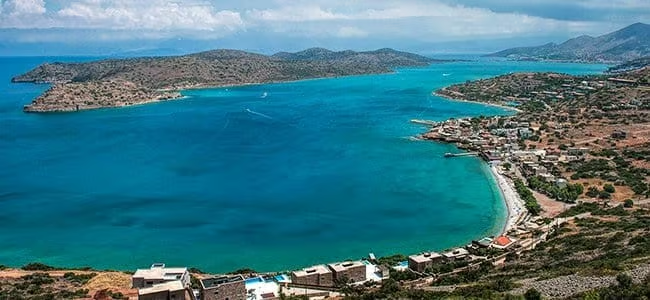
Elounda and the sunken city of Olous (N Lasithi)
Elounda, 10.4 kilometers (6.46 miles) north of Agios Nikolaos, 67.1 kilometers (41.69 miles) from HER, gives snorkelers access to the submerged ruins of the ancient Greek city of Olous just off the coast. Pair Elounda’s main beach with the more secluded Kolokytha Beach (3.2 kilometers (1.99 miles) from Elounda) for a full snorkeling day.
Kedrodasos Beach (SW Crete)
Kedrodasos delivers Elafonissi’s underwater scenery without the crowds, untouched white sand surrounded by a juniper forest. 91.1 kilometers (56.61 miles) from CHQ; access by car or taxi.
Voulisma Beach / Golden Beach (Bay of Mirabello)
Voulisma’s clear water and rocky seabed make it an excellent family-friendly snorkeling stop in the Bay of Mirabello near Agios Nikolaos. 71 kilometers (44.12 miles) from HER.
Other named snorkeling spots (one-line summary)
| Spot | Region | Distance | Best for |
|---|---|---|---|
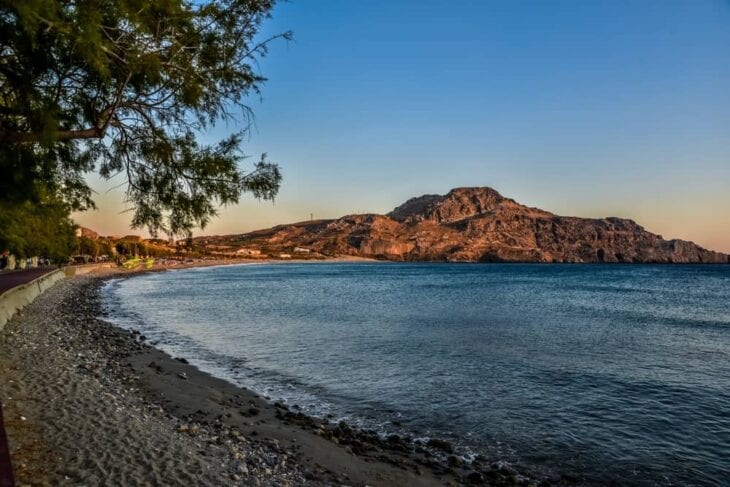
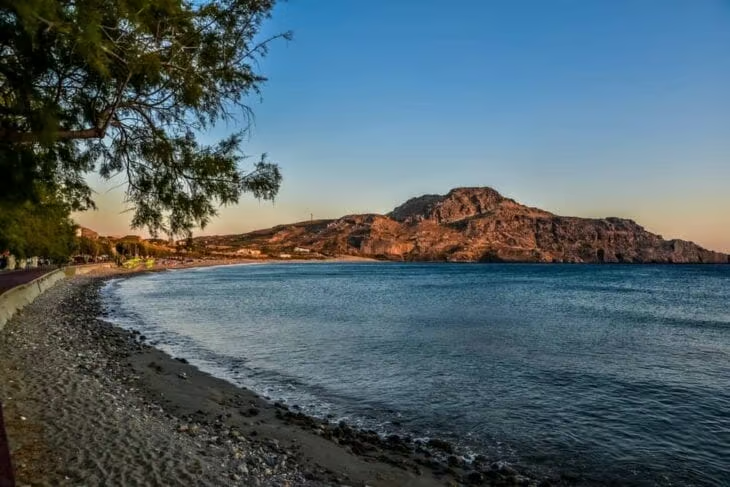
| Almyrida Beach | N Chania | 30.2 kilometers (18.77 miles) E of Chania | Family snorkeling, easy reefs |
| Bali Beach | N Rethymno | 3 kilometers (18.64 miles) from Rethymno | Calm coves, diverse marine life |
| Plakias Beach | S Rethymno | 4 kilometers (24.85 miles) S of Rethymno | Long sandy beach + rocky areas |
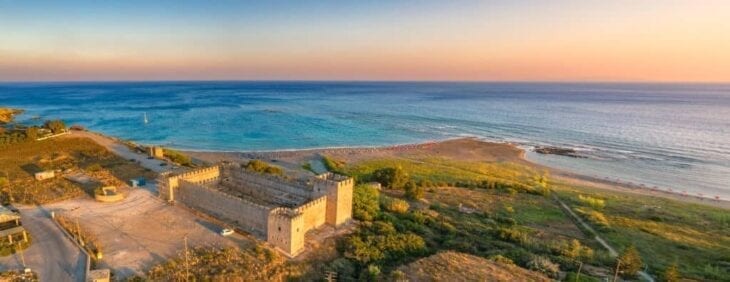
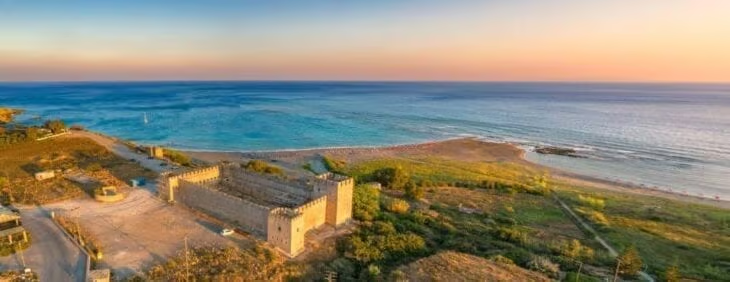
| Frangokastello Beach | S Chania | 14.7 kilometers (9.13 miles) from Sfakia | Pebbly western section, castle setting |
| Sougia Beach | S Chania | 80.1 kilometers (49.77 miles) from CHQ | Expert terrain, rocky seabed |
| Agiofarago Beach | S Heraklion | 86.5 kilometers (53.75 miles) S of Rethymno | Caves, hike-in seclusion |
| Paleochora Beaches | S Chania | 88.5 kilometers (54.99 miles) from CHQ | Pahia Ammos, Chalikia, Anydri |
| Petres Beach | N Rethymno-Chania | Between the two cities | Rocky seabed, clear water |
| Ammoudara Beach | N Heraklion | 11.1 kilometers (6.90 miles) from HER | Family-friendly, calm waters |
| Agia Pelagia | N Heraklion | 26.3 kilometers (16.34 miles) W of Heraklion | Reefs, canyons, underwater caves |
Snorkeling by region: north coast, south coast, and offshore islands
Whether you’re based in Chania, Heraklion, or Rethymno, Crete’s best snorkeling is within a 90-minute drive, here’s how the island breaks down by coast.
South coast highlights
The south coast rewards snorkelers with warmer, calmer waters and dramatically fewer tourists than the north. Top picks:
- Sougia, rocky expert-level terrain, 8 kilometers (49.71 miles) from Chania
- Frangokastello, best visibility on the pebbly western section, beneath a 14th-century Venetian castle
- Plakias, long sandy beach with mixed terrain for variety
- Agiofarago, accessible after a 20-minute hike; sea caves and pristine water, 75 kilometers (46.60 miles) south of Heraklion
- Skinaria, the south coast’s visibility champion (see full entry above)
- Matala, submerged Roman port (see full entry above)
North coast highlights
The north coast offers the most accessible spots and a denser concentration of beach clubs and resorts:
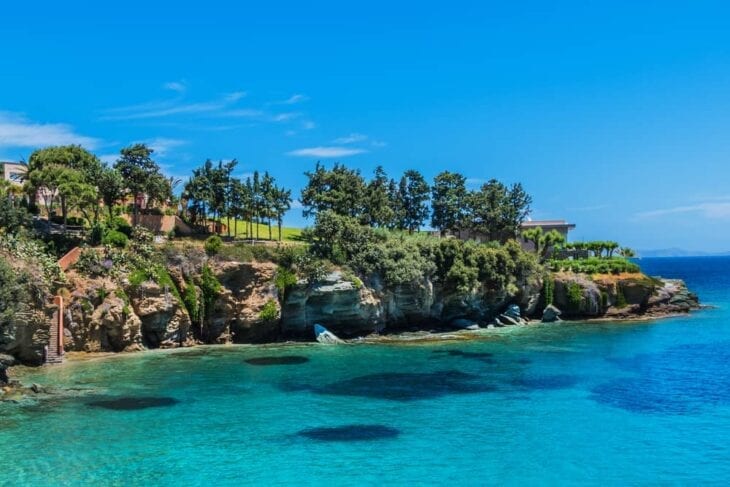
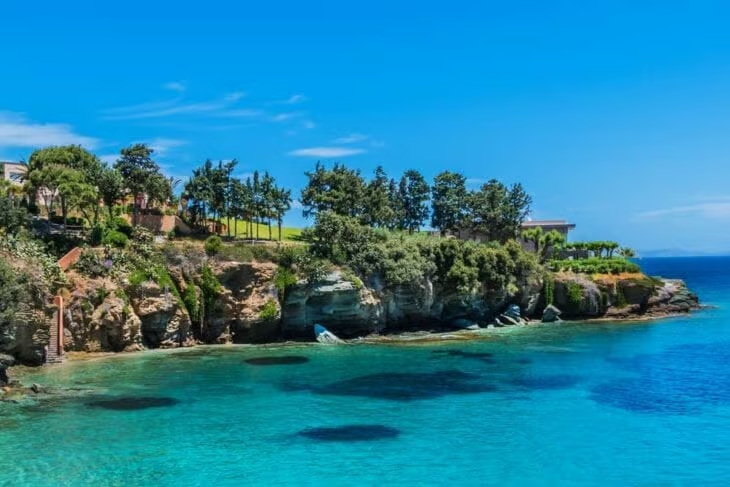
- Agia Pelagia, reefs, canyons, and underwater caves, 26 kilometers (16.16 miles) west of Heraklion
- Petres Beach, between Rethymno and Chania, rocky seabed
- Almyrida, family-friendly small coves and reefs, 3 kilometers (18.64 miles) east of Chania
- Elounda + the sunken city of Olous, historic underwater ruins
- Bali, Ammoudara, and Voulisma, all easy family snorkeling
Offshore islands
Crete’s three best offshore snorkeling islands are reachable only by boat:
- Dia Island (Heraklion), Mediterranean monk seal habitat, sea caves
- Chrissi Island (Ierapetra), Natura 2000 protected lagoon
- Gavdos Island, Europe’s southernmost point, 26 kilometers (16.16 miles) south of Hora Sfakion. Ferries from Hora Sfakion or Paleochora; remote unspoiled beaches at Agios Ioannis and Tripiti.
Best time to snorkel in Crete
May to October is the prime snorkeling season, with June and September offering the best balance of warm water, high visibility, and fewer crowds. For broader trip planning beyond snorkeling, see our companion guide on the best time to visit Crete.
| Period | Air temp | Water temp | Conditions | Notes |
|---|---|---|---|---|
| May | 22–25 °C | 20 °C | Excellent visibility | Cooler water, shorty wetsuit recommended |
| June | 25–28 °C | 22 °C | Sweet spot | Best balance: clear water + low crowds |
| July–August | 28–32 °C | 25–27 °C | Peak season | Crowded; arrive before 09:00 at popular spots |
| September | 25–28 °C | 24 °C | Sweet spot | Best balance: warm water + low crowds |
| October | 22–25 °C | 22 °C | Variable | Last reliable month |
| Nov–Apr | 10–20 °C | 16–18 °C | Off-season | Possible with 5 mm wetsuit on calm sunny days |
The slightly cooler water in June and September enhances underwater visibility, cooler water dissolves more oxygen, supporting clearer conditions for marine observation.
Can you snorkel in Crete year-round?
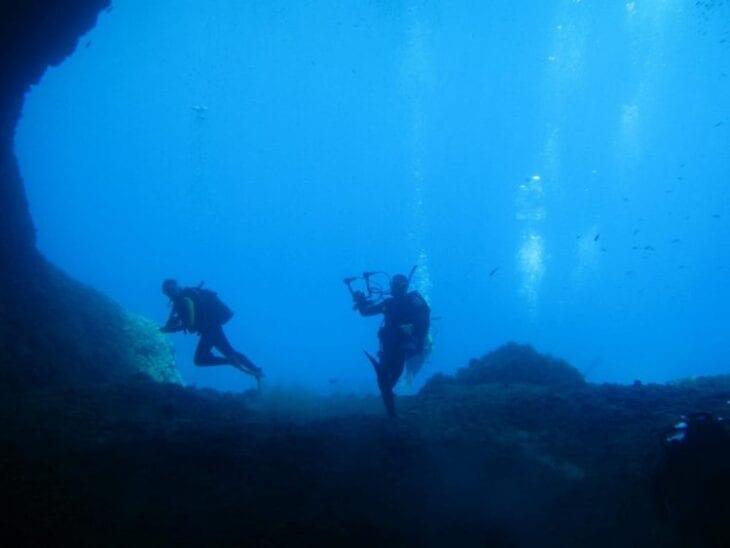
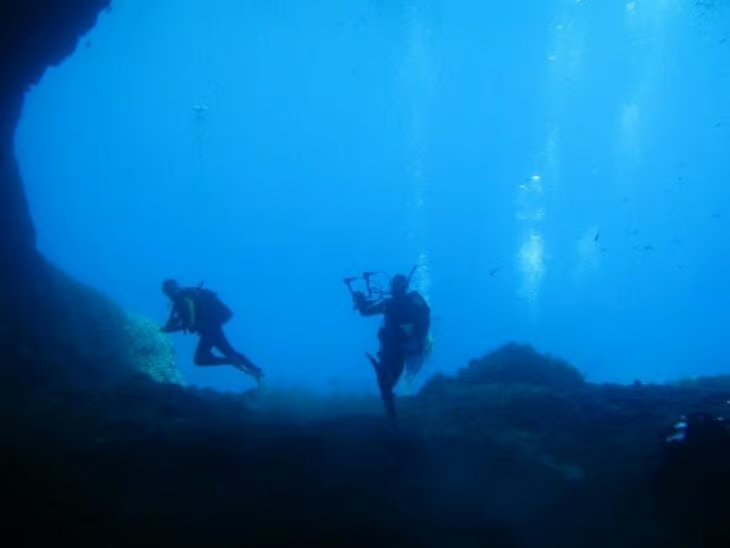
Snorkeling in Crete works year-round: even in November–April, water stays above 16 °C, cold enough to require a 5 mm wetsuit but warm enough for a rewarding hour in the water on calm sunny days. Winter brings unpredictable weather (rain, wind, rough seas) that can affect visibility, and many guided tour operators close from late October to early May. Plan and confirm operator availability in advance for off-season trips.
Guided snorkeling tours and equipment rental in Crete
Guided half-day snorkeling tours in Crete typically cost €50 ($57.69, £42.70)–€100 ($115.37, £85.40) per person and include full equipment; rental gear is available at most beach resorts and major dive centers for €10 ($11.54, £8.54)–€15 ($17.31, £12.81) per day.
Recommended dive centers and operators
| Operator | Location | Certification | Tour focus |
|---|---|---|---|
| Blue Adventures Diving | Chania | PADI 5-Star IDC since 1993 | 3-hour boat trip to two snorkeling locations including Lazaretta Island; ages 6+ |
| Kalypso Beach Dive Shop | Plakias | PADI affiliated | South-coast snorkel and dive trips |
| Diver’s Club Crete | Heraklion / Hersonissos | PADI 5-Star IDC | North-coast snorkel + intro dive packages |
| Stay Wet Crete | Sissi | PADI Resort | Boat trips and family snorkel sessions |
Most guided trips include masks, snorkels, fins, wetsuits, and underwater photography. Tours typically depart 09:00 and return mid-afternoon. Book a day in advance in peak season.
Snorkeling gear checklist for Crete
- Mask & dry snorkel, rent locally for €5 ($5.77, £4.27)–€8 ($9.23, £6.83)/day, or bring your own for the best fit
- Fins, open-heel for adults, full-foot for kids
- Shorty wetsuit (3 mm), recommended in May, June, October; not needed July–August
- 5 mm wetsuit, required for off-season (Nov–April) snorkeling
- Reef-safe sunscreen SPF 50+, protects you and the marine ecosystem
- Rash guard / UV shirt, essential for long sessions
- Dry bag for phone and valuables on boat trips
- Water shoes / fin boots, protect against sea urchins on rocky entries
What does a guided snorkeling tour cost?
Find below a table with the guided snorkeling tour costs
| Tour type | Duration | Price (per person) | Includes |
|---|---|---|---|
| Half-day group snorkel | 3–4 h | €50 ($57.69, £42.70)–€80 ($92.30, £68.32) | Full gear, boat, guide, drinks |
| Full-day boat + 2 snorkel stops | 6–8 h | €80 ($92.30, £68.32)–€120 ($138.44, £102.48) | Gear, boat, lunch, multiple sites |
| Private chartered snorkel | 4 h | €350 ($403.80, £298.90)–€500 ($576.85, £427.00) (boat for 4–6) | Captain, gear, custom route |
| Beach gear rental only | Per day | €10 ($11.54, £8.54)–€15 ($17.31, £12.81) | Mask + snorkel + fins |
Snorkeling spots that require a car to reach
Four of Crete’s most spectacular snorkeling spots, Dragon’s Beach, Loutro, Kolokytha, and Aspes, are only reachable by car, making a rental vehicle essential for serious snorkelers. A rental car unlocks Crete’s four best-kept snorkeling secrets, each inaccessible by public transport but reachable in under 2 hours from any major town.
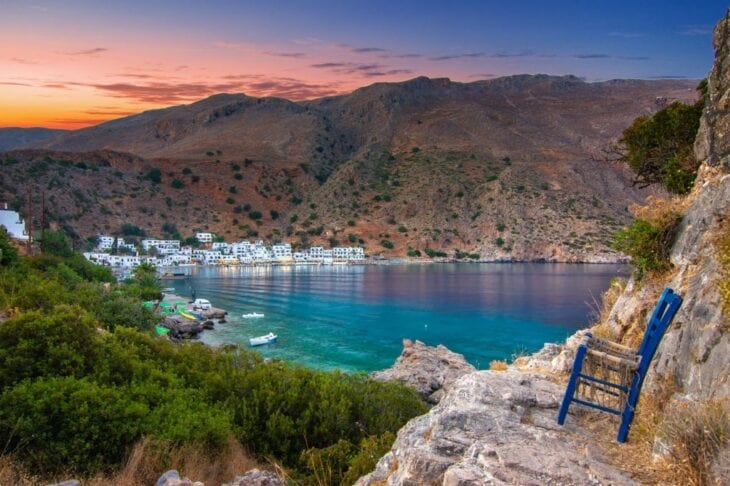
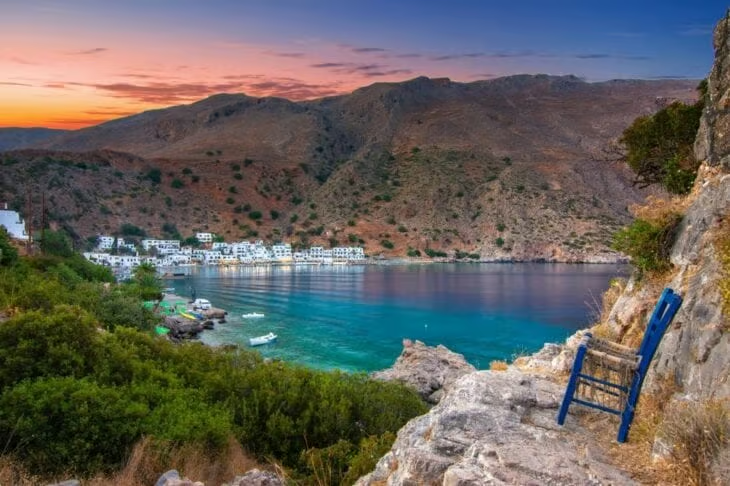
Kolokytha Beach (near Elounda, Lasithi)
Kolokytha sits on Crete’s eastern coast near Elounda, clear water, mixed sand-and-rock seabed, vibrant marine life. The unpaved coastal road requires a car with good ground clearance (compact SUV recommended). Snorkelers spot fish, octopuses, and turtle grass.
Dragon’s Beach (south coast near Lentas)
Dragon’s Beach delivers a secluded south-coast experience near Lentas. Public transport doesn’t reach it; an SUV is best for the unpaved approach. Reward: pristine clear water, uncrowded reefs, and easy parking.
Loutro (SW Chania, near Sfakia)
Loutro is a roadless village on Crete’s southwestern coast, reached by ferry from Sfakia or Paleochora (or a long mountain hike). Drive to Sfakia, park, and ferry across to Loutro’s small bay, clear water, rocky seabed, sheltered coves, and excellent visibility.
Aspes Beach (near Arvi, S coast)
Aspes Beach near Arvi rewards the rugged drive with clear, calm water and unique underwater rock formations. Winding unpaved roads make a car with good ground clearance essential.
Safety tips for snorkeling in Crete
The ten rules below apply regardless of your experience level, the most important: never snorkel alone, check sea conditions before entering, and wear sun protection even in cloudy weather.
- Know your swimming abilities, assess your comfort level honestly. Weak swimmers should take a snorkel lesson or join a guided tour.
- Check weather and sea conditions, verify forecasts at emy.gr. Avoid rough seas, strong currents, and storms.
- Use proper, well-fitted gear, ill-fitting masks fog and leak; check rental equipment carefully before use.
- Sun protection, high-SPF reef-safe sunscreen, plus a rash guard or UV shirt. Crete’s UV index reaches 10–11 in summer.
- Stay hydrated, drink water before and after each session.
- Be aware of marine life, most species are harmless, but watch for jellyfish, sea urchins (Paracentrotus lividus), and shy moray eels.
- Always snorkel with a buddy, and tell someone on shore your plan and expected return.
- Know your limits, take breaks, return to shore if fatigued.
- Watch for boat traffic, stay close to shore or in marked snorkel zones; wave an arm above the water if a boat approaches.
- Carry basic first aid, and know the Hellenic Coast Guard emergency number: 108.
Snorkeling in Crete for beginners and families
Crete is one of Europe’s friendliest destinations for first-time snorkelers, sheltered bays, calm lagoons at Elafonissi and Almyrida, and guided tours for children aged 6+ make it accessible for all.
Best beginner spots (calm, shallow, easy entry):
- Elafonissi, pink-sand lagoon, ankle-deep entry
- Balos Lagoon, turquoise sheltered water
- Almyrida, small coves with easy access
- Voulisma (Golden Beach), shallow gradient, family resort facilities
- Ammoudara, calm waters near Heraklion
Can kids snorkel in Crete?
Yes, Crete’s shallow, calm waters suit children under close adult supervision. Properly fitting gear is essential, and very young children or those not confident in swimming should stick to wading. Children should never be left unattended in the water. PADI dive centers accept snorkel students from age 6. For non-snorkeling options, see our companion guide to beaches to visit in Crete with kids and toddlers.
Best family beaches by region
| Region | Top family beach | Why it works |
|---|---|---|
| Rethymno | Preveli Beach | Palm trees, lake, swimming, gradient |
| Lasithi | Vai Beach | Europe’s largest natural palm forest, smooth sand |
| Chania | Balos Beach | Unique waters, Venetian castle island, shallow |
| Heraklion | Matala Beach | Sandy + caves, family-friendly tour access |
Which Greek island has the best snorkelling?
Crete consistently ranks as Greece’s top snorkeling island thanks to its size, diversity of spots, and water clarity exceeding 30 metres. Rhodes and Kefalonia offer excellent visibility, and the volcanic reefs around Santorini attract divers, but Crete’s combination of 17+ accessible spots, mild currents, warm temperatures (20–27 °C), and diverse marine life, including loggerhead sea turtles at Dia and Chrissi Islands, makes it the overall choice for snorkelers of any level. The island’s size also means weather can be chased: when the north coast is windy, the south is usually calm.
Should you rent a car for a snorkeling trip in Crete?
Yes, a rental car is the most practical tool for serious snorkeling on Crete: it unlocks remote spots (Dragon’s Beach, Loutro, Kolokytha, Aspes), lets you chase calm-water conditions across the island, and provides space for gear (full mask + snorkel + fins + wetsuit + dry bag) that public buses won’t accommodate.

Rental Center Crete operates 24/7 at Heraklion (HER) and Chania (CHQ) airports, with free delivery to hotels, ports, and accommodation across Heraklion, Chania, Rethymno, and Agios Nikolaos. Crete rent a car offers Compact and economy cars (Toyota Aygo, VW Polo) handle 90% of routes; compact SUVs (Peugeot 2008, Skoda Kamiq) are recommended for the unpaved southern approaches to Kolokytha, Dragon’s Beach, and Aspes.
Sources
- Hellenic National Meteorological Service (EMY), emy.gr (sea/weather forecasts)
- Hellenic Coast Guard, emergency 108
- ARCHELON, Sea Turtle Protection Society of Greece (archelon.gr)
- MOm, Hellenic Society for the Study and Protection of the Monk Seal (mom.gr)
- PADI, PADI Travel and certified Crete dive centers
- Greek National Tourism Organization (GNTO), gnto.gr (licensed-operator register)
Reviewed by Harry Anapliotis. Spot conditions, distances, and operator details are verified annually before each summer season;