

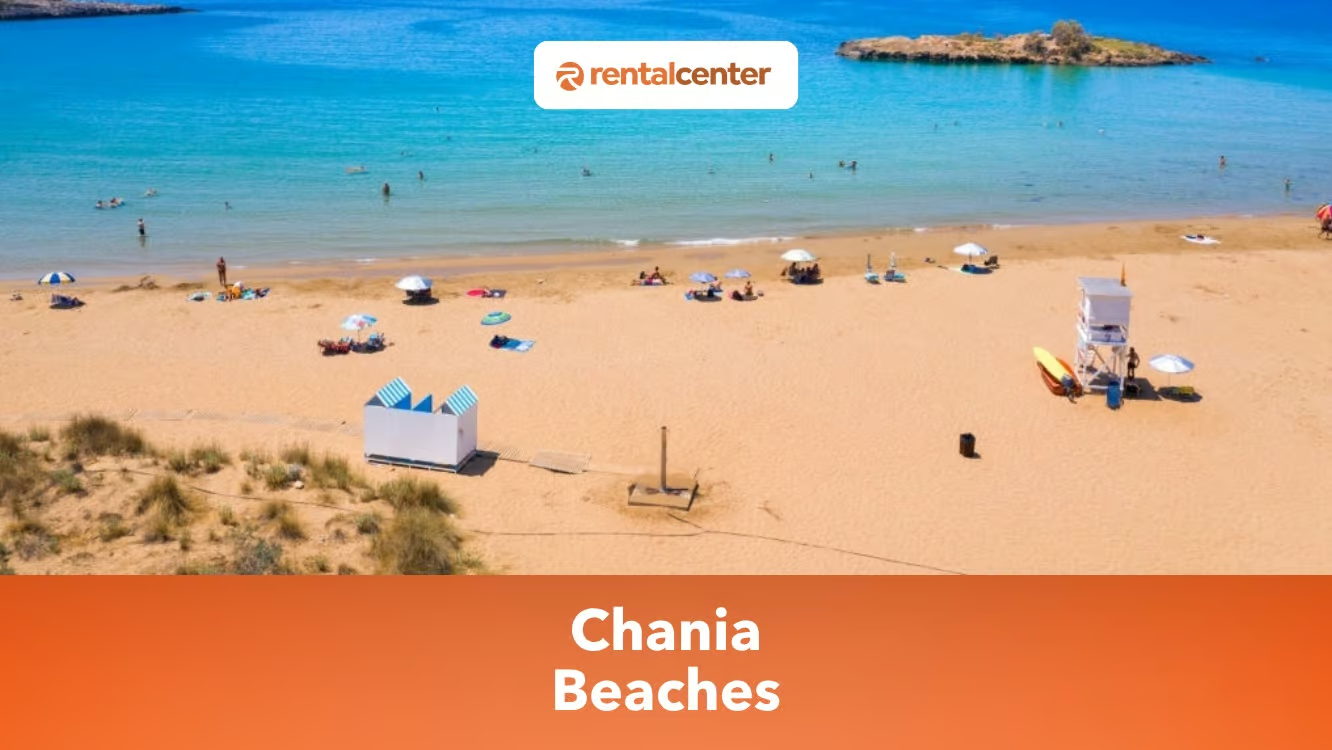
Local buses cover Chania’s in-town beaches well; Nea Chora and Chrissi Akti both sit on frequent routes. Service drops off fast outside the city, though. Seasonal excursion buses reach Elafonisi and Balos only in summer and only on fixed schedules. Renting a car at Chania Airport removes that constraint and turns any single beach on this list into a full day of beach-hopping along the coast.
Listed below are the 12 best beaches in Chania, ranked by how distinctive each one is:
- Balos Beach – a shallow turquoise lagoon on the Gramvousa Peninsula, reached by dirt road or boat.
- Elafonisi Beach – a protected pink-sand beach in the far southwest of the island.
- Falassarna Beach – a long, windy, west-facing sandy beach split into five sections.
- Seitan Limania – a narrow turquoise inlet on the Akrotiri cliffs, reached on foot.
- Stavros Beach – a mountain-backed cove on Akrotiri, the filming location for Zorba the Greek.
- Kedrodasos Beach – an unorganized beach of dunes and juniper trees next to Elafonisi.
- Marathi Beach – a sheltered, family-friendly cove on the Akrotiri Peninsula.
- Nea Chora Beach – the closest beach to Chania, a short walk from the Venetian Harbour.
- Chrissi Akti (Golden Beach) – an organized golden-sand beach west of the Old Town.
- Agioi Apostoloi Beach – a cluster of pine-backed coves west of Chania.
- Kalathas Beach – a small Akrotiri cove with an offshore islet.
- Gramvousa Beach – an island beach below a Venetian fortress, reached only by boat.
Disclaimer: Road conditions, bus schedules and facilities at these beaches change with the season. Confirm current access and opening times locally before setting out, especially for beaches reached by unpaved roads or on foot.
1. Balos Beach
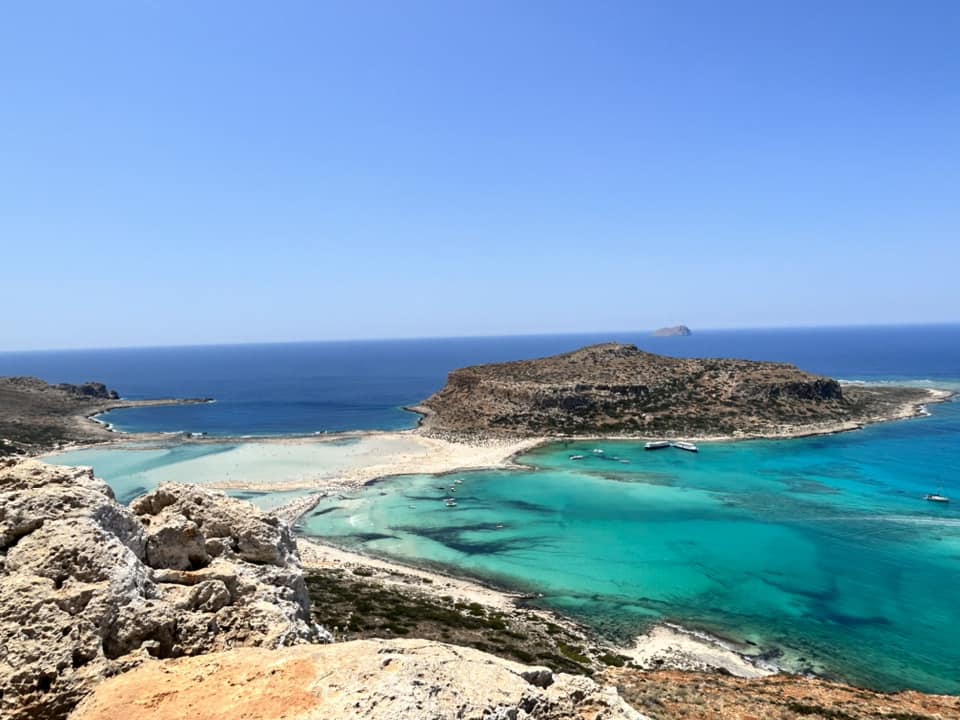
Balos Beach forms a shallow, turquoise lagoon on the tip of the Gramvousa Peninsula, about 56 kilometers (34.80 miles) northwest of Chania. The lagoon faces sandbars and calm, warm water on one side and open sea on the other, framed by a rocky cape. Reaching Balos takes a 1 to 1.5-hour drive that ends on an unpaved track leading to a clifftop car park, followed by a 20 to 30-minute hike down to the sand. Visitors who prefer not to drive can instead take a boat tour from Kissamos or Chania port, which usually also stops at Gramvousa Island. Facilities at Balos are limited to a WC and a small beach bar, so pack water and snacks. Arriving before 9:00 am secures both parking and a quieter lagoon; May and October avoid the heaviest summer crowds.
2. Elafonisi Beach
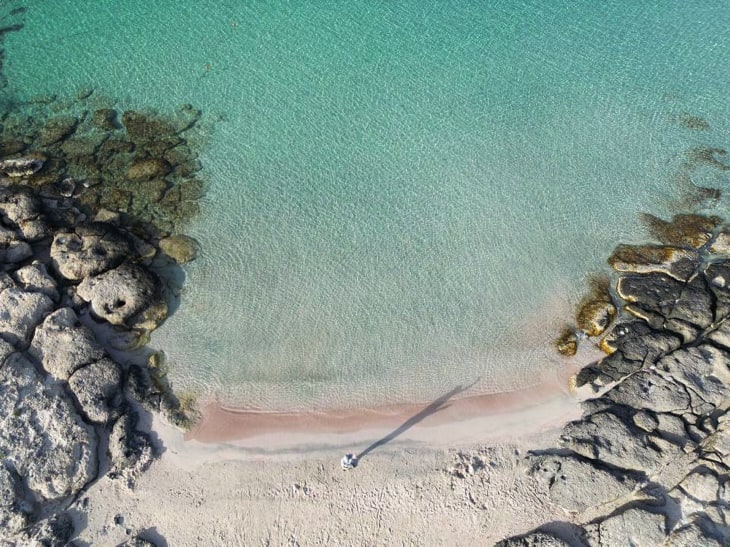
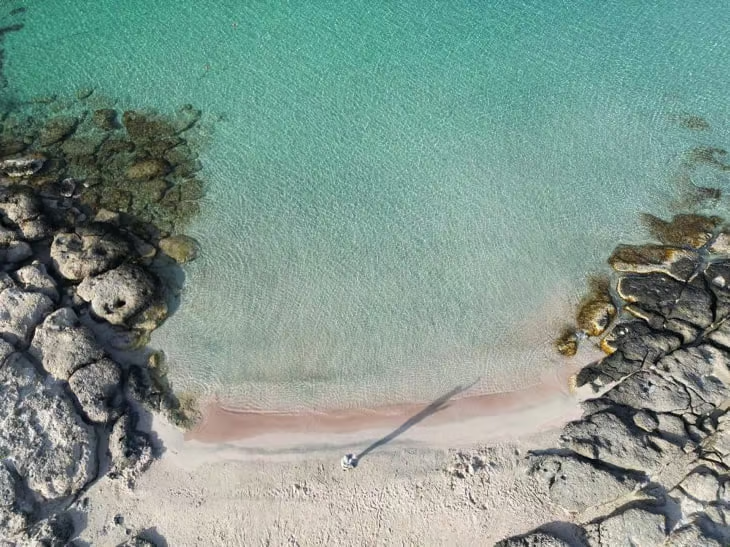
Elafonisi Beach lies about 75 kilometers (46.60 miles) southwest of Chania, at the far southwestern tip of the island, and its sand carries a pink tint from millions of crushed seashells mixed into the white grains. A shallow lagoon separates the beach’s “island” section from the mainland, shallow enough to wade across. The surrounding area is a protected Natura 2000 site, home to rare plants and nesting loggerhead sea turtles, with strict bans on removing sand, shells or plants. Elafonisi draws several thousand visitors a day at the height of summer, so spring and autumn suit visitors who want the beach without the crowds. Amenities stay basic – a taverna and a couple of snack bars – and the drive from Chania takes 1.5 to 2 hours; public buses also run seasonally.
3. Falassarna Beach
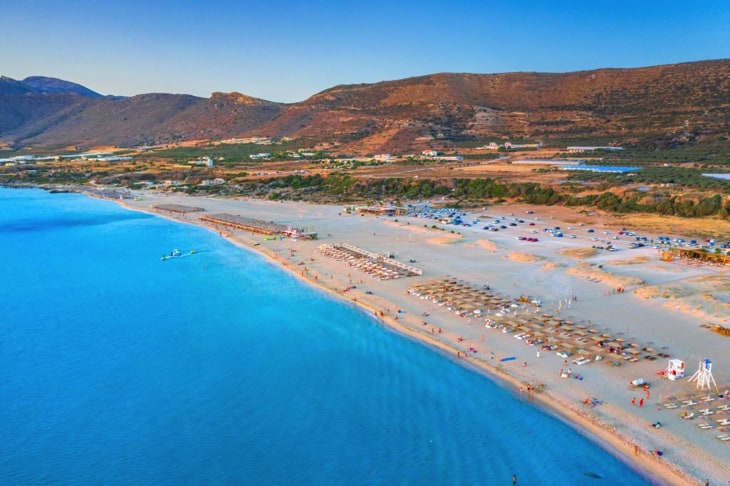
Falassarna Beach stretches along Crete’s western coast about 58 kilometers (36.04 miles) from Chania, split into five separate sandy sections across roughly 3 kilometers (1.86 miles) of coastline. Open exposure to the west brings regular wind and bigger waves than the sheltered beaches near Chania town, which makes Falassarna a regular stop for surfers and windsurfers. Natural rock pools at the northern end of the beach suit young children, and the ruins of the ancient port city of Falassarna sit nearby. The drive from Chania takes about 1 to 1.5 hours, and seasonal buses connect Falassarna to both Chania and Kissamos. Sunbeds and cabanas are available to rent, with plenty of open sand for visitors who prefer not to pay.
4. Seitan Limania
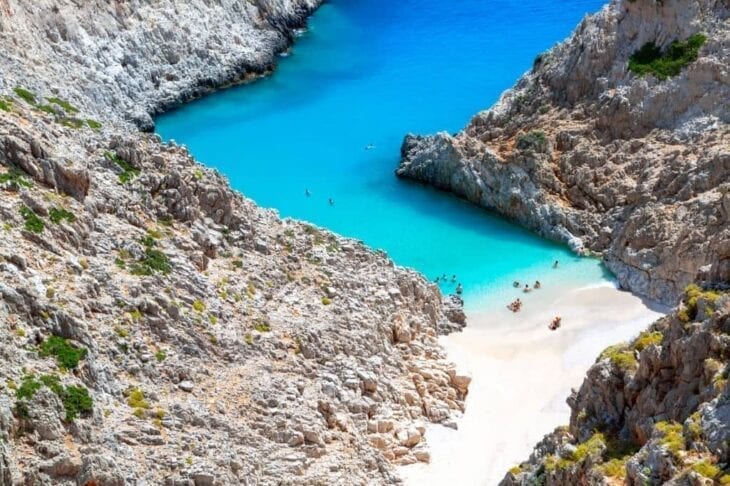
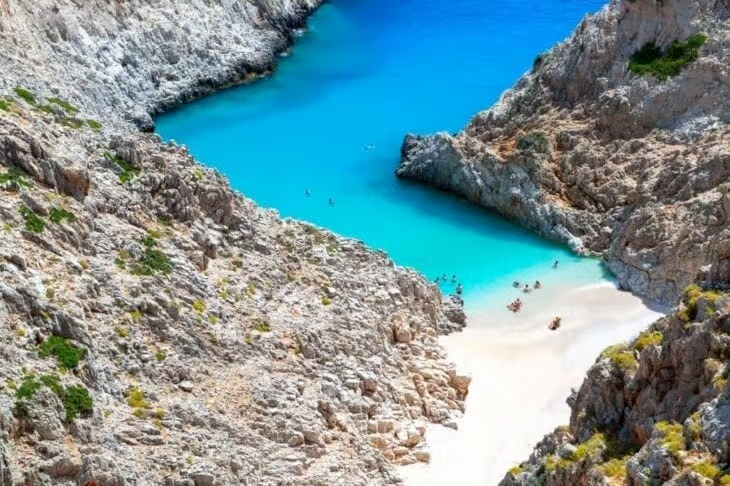
Seitan Limania cuts a narrow turquoise inlet into the cliffs of the Akrotiri Peninsula, about 22 kilometers (13.67 miles) from Chania. A steep, unpaved path connects the small clifftop car park to the sand, so sturdy footwear matters more here than at most beaches on this list. No facilities exist at the beach, so visitors bring their own water, food and sun protection – and keep food packed away, since the local goats have a reputation for stealing it. The inlet’s small size fills quickly once word gets around, so an early arrival pays off more here than at most beaches on this list. No bus service reaches Seitan Limania; a car is the only practical way in.
5. Stavros Beach
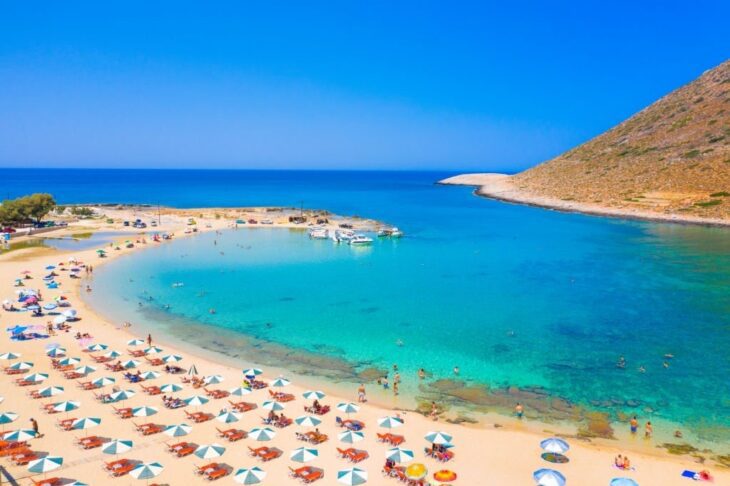
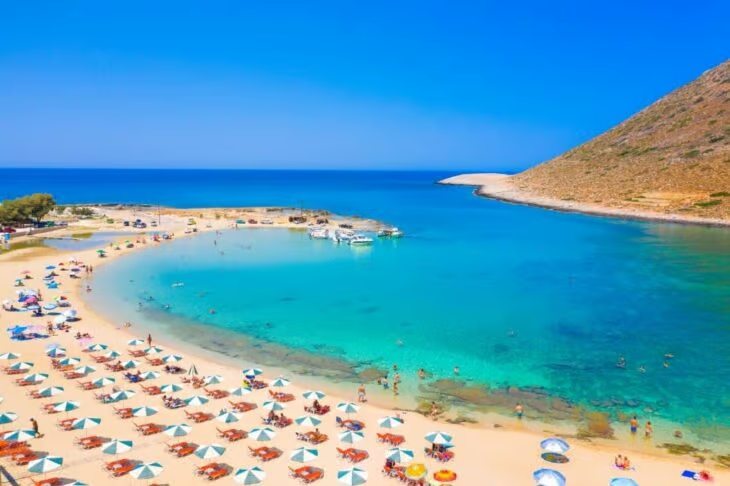
Stavros Beach shelters a sandy, mountain-backed cove on the Akrotiri Peninsula, about 17 kilometers (10.56 miles) from Chania – the same setting used to film the dancing scene in the 1964 film Zorba the Greek. The bay sits calm and shallow beneath the bare hill behind it, with sunbeds, a couple of tavernas and lifeguards on duty in season. A KTEL bus runs from Chania’s central bus station, and free parking is available on-site. Stavros beach suits families particularly well, since the enclosed bay keeps the water gentle even when the open coast turns choppy.
6. Kedrodasos Beach
Kedrodasos Beach lies about 2 kilometers (1.24 miles) along the coast from Elafonisi, reached either by a short walk from its own separate car park or by a rougher scramble along the E4 coastal trail from Elafonisi itself. The name means “cedar forest” in Greek, though the trees that back its dunes and coves are junipers rather than true cedars. No facilities exist here – no toilets, no sunbeds, no shops – which keeps Kedrodasos far quieter than Elafonisi despite sitting almost next door. No bus route serves the beach; reaching it takes a car plus a walk, whichever access point you choose.
7. Marathi Beach
Marathi Beach sits on the Akrotiri Peninsula, about 17 kilometers (10.56 miles) from Chania and a few minutes’ drive from Stavros. A small fishing pier splits the beach into two coves, both sheltered enough from the wind to stay calm through most of the year. The setting looks out toward Drapano Cape and the White Mountains in the distance, and tavernas along the shore serve fresh seafood alongside the standard sunbeds and umbrellas. Marathi works well paired with Stavros as a single Akrotiri day trip.
8. Nea Chora Beach
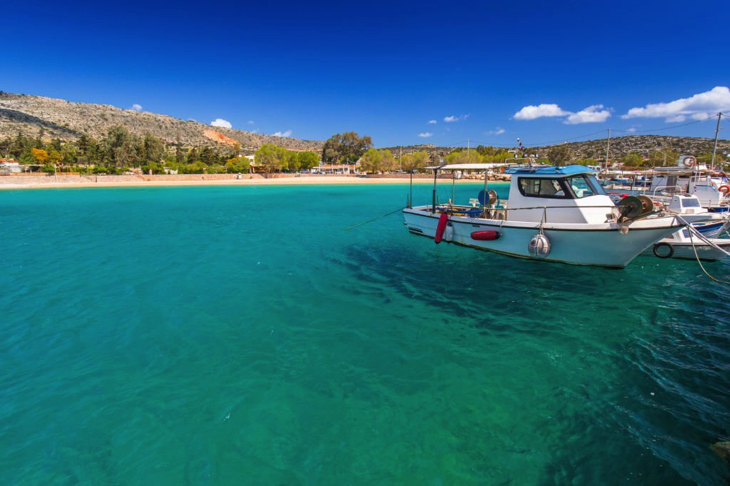
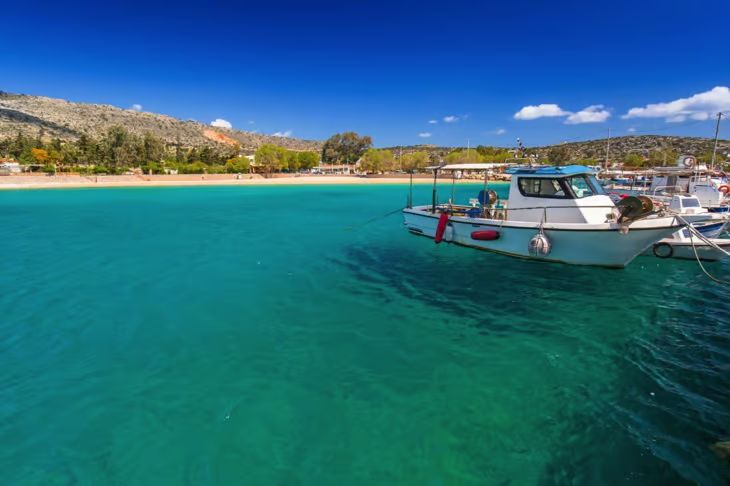
Nea Chora is Chania’s closest beach, a 15 to 20-minute walk – about 1 kilometers (0.62 miles) – west of the Venetian Harbour along Akti Papanikoli. The sandy beach is organized with sunbeds and umbrellas, and traditional fish taverns line the promenade behind it. Because it sits inside the city, Nea Chora is the one beach on this list that needs no car, bus or boat at all – just a walk from the Old Town. It gets busy with both locals and visitors in summer, but its size absorbs the crowds better than the smaller coves further out.
9. Chrissi Akti (Golden Beach)
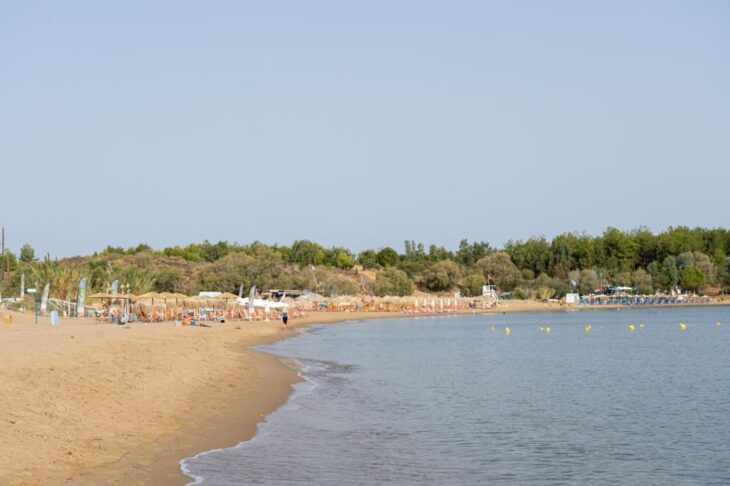
Chrissi Akti, known locally as Golden Beach, lies about 2.5 to 3 kilometers (1.86 miles) west of Chania’s Old Town, a 40-minute walk or a short bus ride or drive. Golden sand and calm, shallow water make it a popular family beach, backed by pine trees and a run of beach clubs, cafes and restaurants. Beach volleyball courts and rental equipment for stand-up paddling and other water sports line the sand in season. Parking is available nearby, though arriving before 10:00 am helps secure a spot in peak summer.
10. Agioi Apostoloi Beach
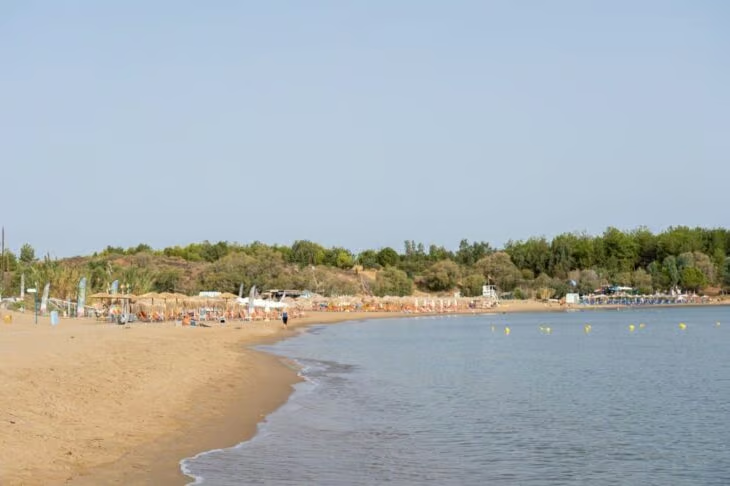
Agioi Apostoloi sits about 4 kilometers (2.49 miles) west of Chania, a cluster of small coves backed by a pine forest and named after the chapel that overlooks the middle beach. Blue Flag-certified waters and a gently sloping seabed make it well suited to families with young children. Coastal paths connect the coves to each other and on to Chrissi Akti, so beach-hopping on foot is straightforward. A municipal car park serves Agioi Apostoloi beach, though it fills up on evenings and weekends in summer.
11. Kalathas Beach
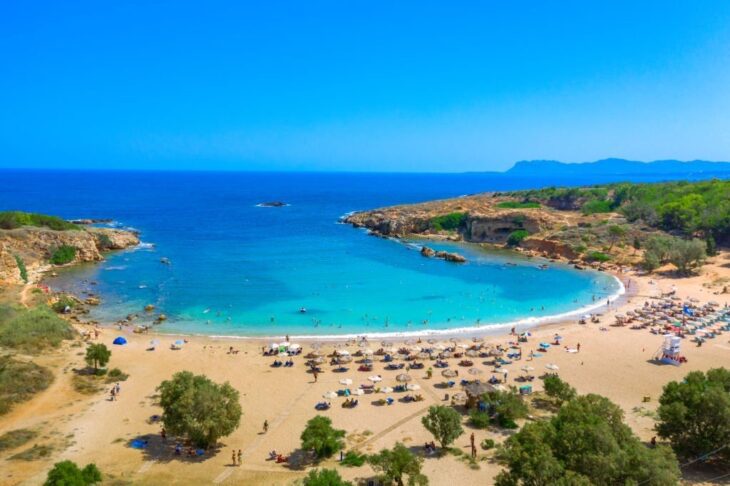
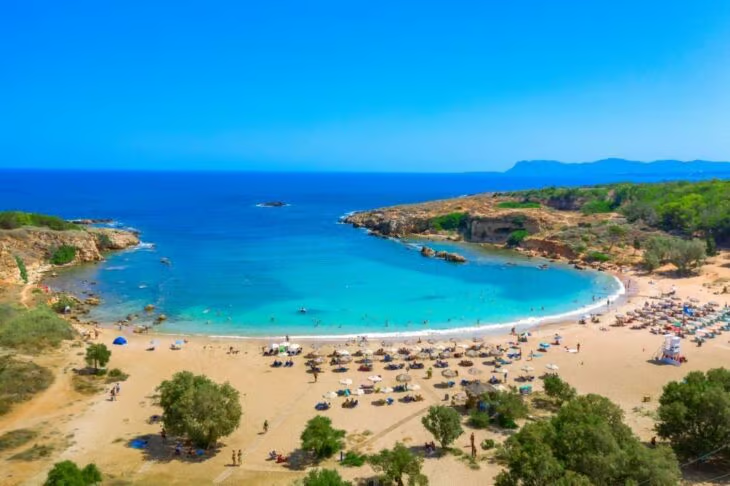
Kalathas Beach lies on the Akrotiri Peninsula, roughly a 20-minute drive from Chania, next to the village of Stavros. A small sandy cove and an offshore islet that swimmers can reach on foot give Kalathas a quieter feel than the larger Akrotiri beaches nearby. One beachside cafe, a handful of sunbeds and a small free parking area keep the setup simple. The Chania-to-Stavros bus route passes through Kalathas, making it one of the easier Akrotiri beaches to reach without a car.
12. Gramvousa Beach
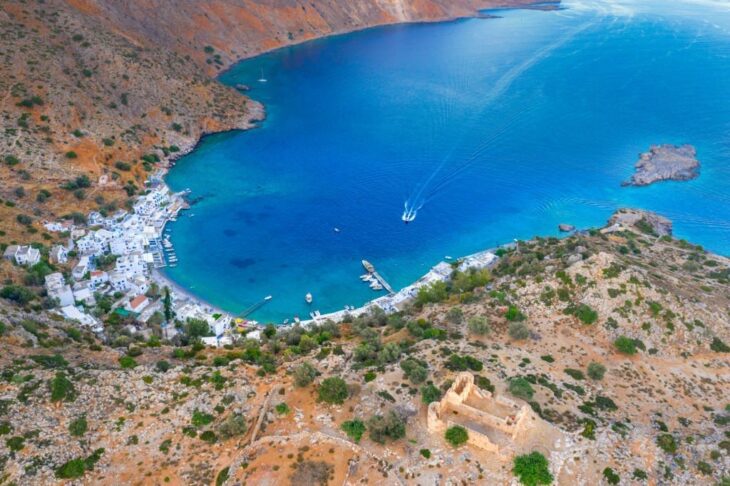
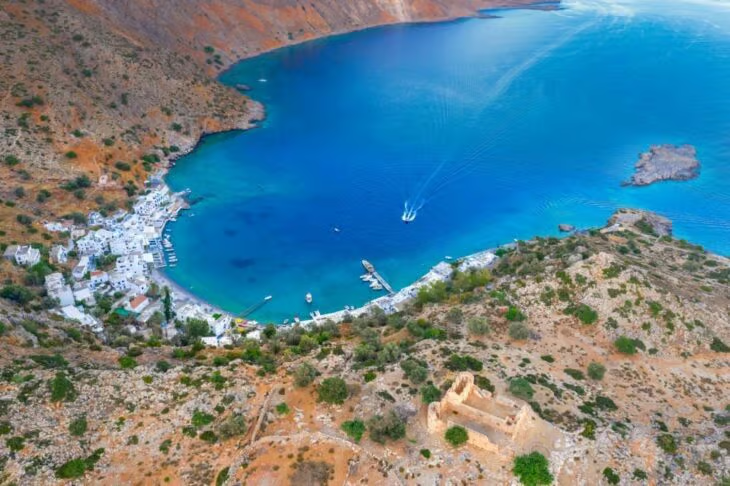
Gramvousa Beach sits on the small island of Imeri Gramvousa, reached only by the same boat that stops at Balos from Kissamos port, about a 40-minute drive from Chania. A steep Venetian fortress stands on the promontory above the beach, and the water below ranks among the clearest in the area. The boat schedule usually allows about two hours on the island, split between the beach and the hike up to the fortress for a view over Balos lagoon. Facilities are limited to a WC, so visitors bring their own food and drink.
What are the best beaches in Crete?
Listed below are three of the best beaches in Crete beyond the Chania coastline:
- Elafonisi Beach – known for its pink-tinted sand and shallow, clear water in the far southwest of Chania prefecture.
- Balos Beach – a lagoon beach on the Gramvousa Peninsula with a dramatic mountain-and-sea backdrop.
- Preveli Beach – a palm-lined lagoon beach in Rethymno, where the Kourtaliotis River meets the sea.
What is the most famous beach in Crete?
Elafonisi Beach is the most widely known beach in Crete. Its pink-tinted sand, created by crushed seashells, and its shallow, clear water have made it a fixture in international lists of the world’s beaches. Elafonisi sits in the far southwest of Chania prefecture, inside a protected Natura 2000 area, and the drive there from Chania takes 1.5 to 2 hours.
Which is the most scenic beach?
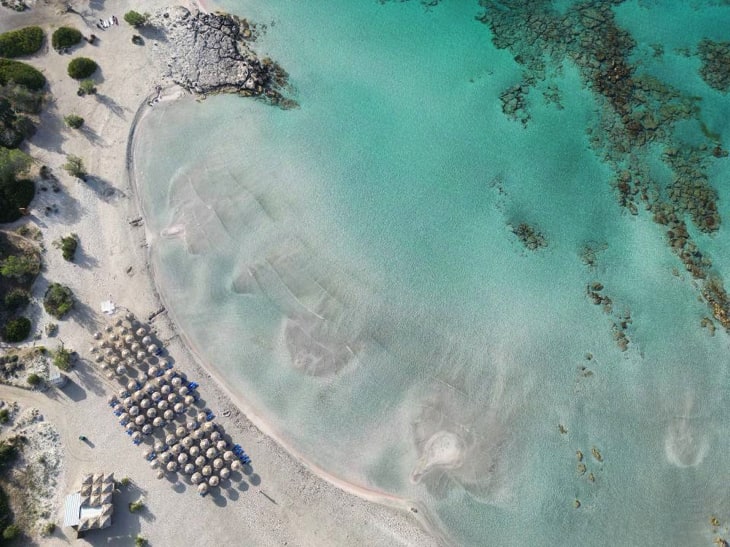
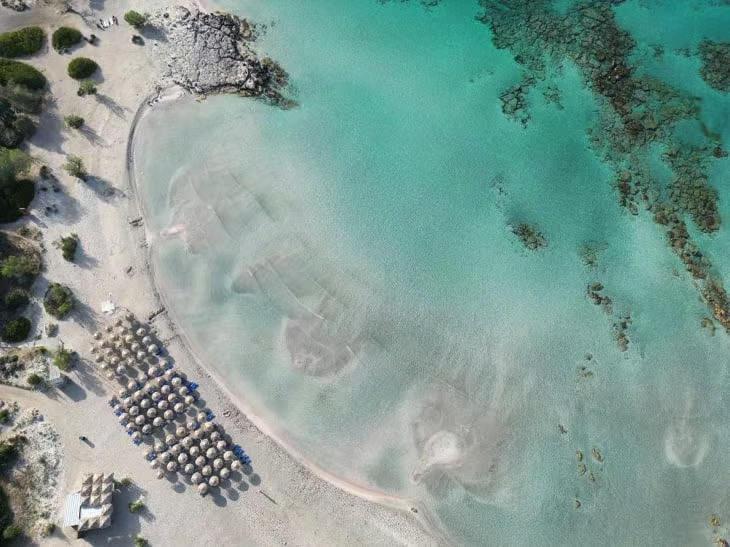
Balos Beach is widely considered the most scenic beach near Chania. Its lagoon sits between a mountain and a rocky cape, with shallow turquoise water on one side and open sea on the other, creating a view that draws photographers throughout the season. Reaching Balos takes effort – a partly unpaved drive followed by a hike, or a boat trip from Kissamos – which is part of what keeps the setting looking undisturbed.
What are the best beaches in Crete to visit with kids and toddlers?
Listed below are five of the best beaches in Crete for families with young children:
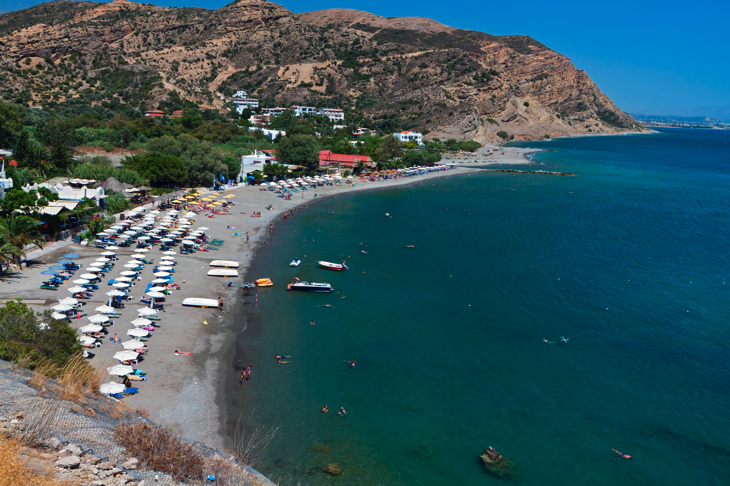
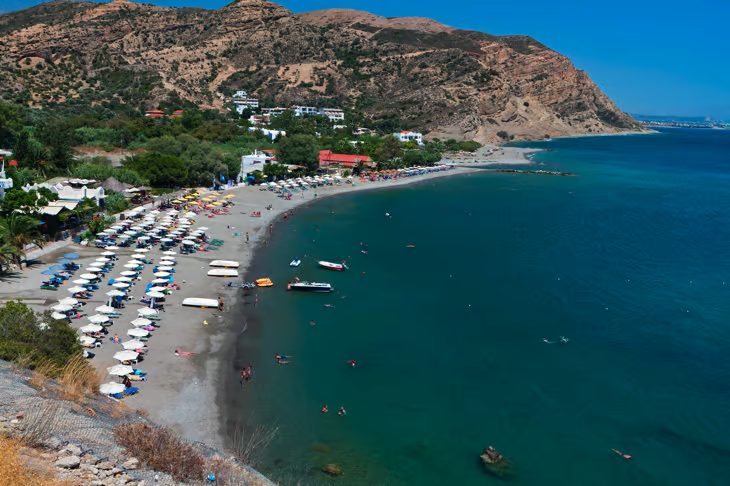
- Chrissi Akti (Golden Beach), Chania – shallow, calm water close to Chania town, with sunbeds and cafes nearby.
- Agia Pelagia – a sheltered northern-coast bay near Heraklion with smooth sand and gentle water.
- Agia Galini – a southern-coast beach with a gently sloping shoreline suited to swimming and sandcastles.
- Almyros Beach, Lasithi – golden sand and calm waves along a quiet stretch of coast.
- Bali Beach, Rethymno – a family-friendly bay used as a base for short boat trips to nearby coves.
What are the best beaches in Heraklion?
Listed below are three of the best beaches near Heraklion:
- Ammoudara Beach – shallow, calm water close to the city, with tavernas, bars and water sports along the promenade.
- Ligaria Beach – a sheltered cove with crystal-clear water suited to snorkelling.
- Karteros Beach – a mixed sand-and-pebble shoreline with beachfront tavernas serving Cretan dishes.
What are the best beaches in Rethymno?
Listed below are three of the best beaches near Rethymno:
- Preveli Beach – a palm-lined lagoon beach 4 kilometers (24.85 miles) south of Rethymno, where the Kourtaliotis River meets the sea.
- Bali Beach – a lively northern-coast beach with cafes, bars and a family-friendly atmosphere.
- Agia Galini Beach – a Blue Flag beach 5 kilometers (31.07 miles) from Rethymno, sheltered from wind and suited to families.
Which is the best month to visit Crete?
September is the best month to visit Crete for beach travel. The sea stays warm enough to swim comfortably, daytime temperatures stay mild rather than peak-summer hot, and rain stays rare. The main tourist season runs from May to September, with July and August the busiest months due to school holidays; by September, the crowds at beaches like Elafonisi and Balos thin out noticeably while the weather still supports a full beach day.
What are the top things to do in Crete besides the beaches?
Listed below are three of the top things to do in Crete away from the coastline:
- Knossos Palace – a Minoan-era archaeological site near Heraklion, with restored frescoes and courtyards dating back over 3,000 years.
- Samaria Gorge – one of Europe’s longest gorges, with a hiking route that ends at the southern coastal village of Agia Roumeli.
- Chania Old Town – a Venetian and Ottoman harbour district with narrow lanes, the Venetian Harbour and the Firkas Fortress.
What do you need to know about Crete as a tourist?
Listed below are five things to know about Crete before visiting:
- History. Crete holds sites from the Minoan civilization onward, including Knossos Palace near Heraklion.
- Landscape. The island moves between sandy coastline, the Samaria Gorge and the White Mountains within short drives of each other.
- Climate. Crete has a Mediterranean climate, with the busiest, hottest weather in July and August and calmer, milder conditions in spring and autumn.
- Food. Local dishes such as dakos (Cretan bruschetta) and raki appear on most tavern menus across the island.
- Getting around. Public buses connect the main towns and in-town beaches, but a car reaches the beaches, gorges and villages that buses skip.
Do you need to rent a car to visit the Crete beaches?
Yes, a rental car is the practical way to reach most of the beaches on this list, though not the only way. Nea Chora and Chrissi Akti sit within walking distance or a short bus ride of Chania town, but Balos ends its road in an unpaved track and a hike, Kedrodasos and Seitan Limania have no bus route at all, and Elafonisi’s and Falassarna’s seasonal buses run on fixed summer schedules only. For exactly this reason, renting a car in Chania removes those constraints and lets visitors set their own timing, combining two or three beaches – Stavros and Marathi, for instance, or Agioi Apostoloi and Chrissi Akti – in a single day.
What are the factors to consider before renting a car in Crete?
Listed below are the factors to consider before renting a car in Crete:
- Driver’s age. Rental Center Crete sets minimum ages of 21, 23 or 25 depending on the car category, with a maximum rental age of 79 and no separate young- or senior-driver fee.
- Insurance. Confirm whether the quote includes fully comprehensive cover; Rental Center Crete includes €0 ($0.00, £0.00) excess on every booking, so there is nothing extra to pay after an incident covered by the policy.
- Mileage. Ask whether the rate includes unlimited mileage, since a beach-hopping route to Balos, Elafonisi and Falassarna in one trip can easily cover 15 kilometers (93.21 miles) or more.
- Car type. A compact car suits Chania town and the paved coast road; a higher-clearance vehicle is more comfortable on the unpaved final stretch to Balos.
- Documents needed. A driving licence held for at least a year, valid ID or passport, and a credit card for the security deposit are standard; drivers with a licence not issued in the EU, US, UK, Switzerland, Australia, Canada, Israel, Russia or Ukraine need an International Driving Permit.
How much does a car rental in Crete cost?
A car rental through Rental Center Crete costs between €30 ($34.44, £25.43) and €40 ($45.92, £33.90) a day on average, depending on the car category, season and rental length; a full week typically runs around €250 ($287.03, £211.88), and a weekend rental around €78 ($89.55, £66.11). Every quote includes Greece’s 24% VAT, unlimited mileage, and fully comprehensive insurance with €0 ($0.00, £0.00) excess, so the daily rate covers the full cost of driving rather than a stripped-down base price. Rental Center Crete has run its fleet of 600 cars across 55 models out of Heraklion and Chania since 1975, carrying a 4.82/5 rating from 2,355 customer reviews.