To rent a car in Malia you need a valid driver’s license, to be at least 21 years old and a credit card for the security deposit. Consider insurance coverage, the fuel policy and whether you want to pick the car up directly at Heraklion or Chania airport before you book.
What is Malia?
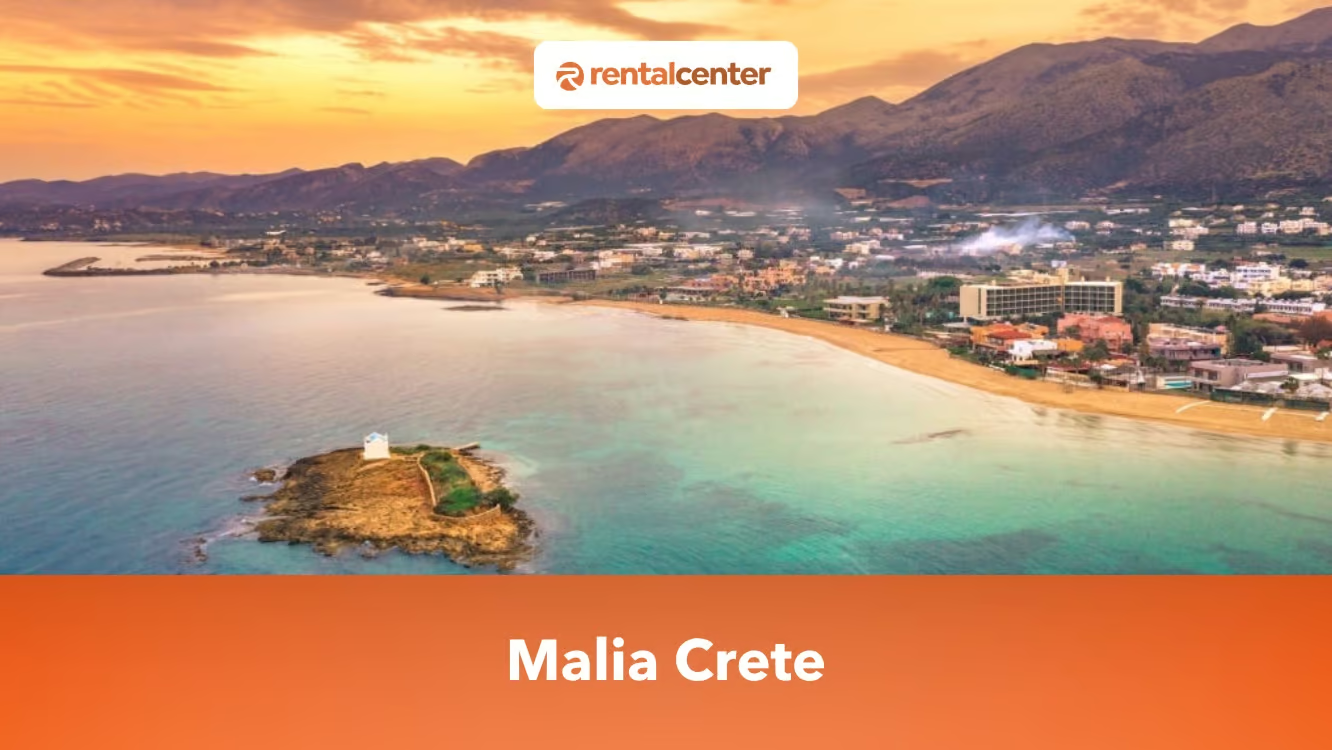
Malia is a coastal resort town in the Municipality of Hersonissos, on the northeastern coast of Crete, with a permanent population that swells many times over in summer. Malia’s municipal community had 3,522 permanent residents at the 2021 census, and the wider Malia municipal unit (Malia, Krasi and Mochos) had 5,501, according to the Hellenic Statistical Authority (ELSTAT). The Municipality of Hersonissos counted 27,220 residents in 2021, up 1.9% from 26,717 in 2011.
The name “Malia” is thought to come either from the ancient Greek “mallia” (“sheep”), a nod to the area’s history of sheep farming, or from “meli” (“honey”), since the region once produced high-quality honey. In Greek, it is written Μάλια and pronounced “Mah-lee-ah”.
Summer demand on this coast keeps growing. In the first half of 2025, visits to the Region of Crete rose 7% and travel receipts rose 18.4% on the same period of 2024, and Crete took 24% of Greece’s travel receipts for that half-year, according to the Ministry of Tourism. Visitors to Crete stayed 7.7 nights on average in 2025, according to the Greek Tourism Confederation’s research institute (INSETE).


Locals and travel writers alike describe Malia as a town with two faces. By day, its long sandy coastline draws families and couples to calm, well-organised beaches; the Old Town’s narrow lanes and traditional stone houses offer a quieter, more authentic side of Crete. By night, the town is widely described as Crete’s party capital, with a strip of bars and clubs that stays busy until sunrise. Visitors come from across the United Kingdom, Germany and the Scandinavian countries, and the ancient Minoan palace just east of town gives Malia a historical depth that many of Crete’s other party resorts lack.


Families weighing up Malia should know it leans toward the younger, louder end of Crete’s resorts: the main strip is genuinely a nightlife district, and the noise carries into the surrounding streets in peak season. That said, the Old Town, the beaches and the Minoan palace work well for a family day trip even if you choose to base yourself elsewhere, and shoulder-season visits (spring or autumn) are noticeably calmer.
Where is Malia Village located?
Malia Village sits on the northern coast of Crete, in the Hersonissos municipality, about 32 km (19.88 miles) east of Heraklion, the island’s capital and home to its main international airport. The drive between the two takes 30 to 40 minutes depending on traffic. Malia is also roughly 111 km (68.97 miles) east of Rethymno (about an hour along the northern coastal highway) and 57 km (35.42 miles) east of Agia Pelagia (20 to 25 minutes by car). Its position on the main E75 corridor puts Agios Nikolaos, Elounda and the Lassithi Plateau within easy reach by car, which is why so many visitors base themselves here and rent a vehicle rather than book day-tour buses one at a time.


How to Get to Malia (Car Rental, Bus, Taxi)
The quickest way to reach Malia from Heraklion International Airport is by rental car or taxi; the journey covers about 32 km (19.88 miles) and takes 30 to 40 minutes depending on traffic.
Heraklion airport handled 10,033,151 passengers in 2025, according to the Hellenic Civil Aviation Authority (HCAA). August alone brought 1,791,948 passengers against 125,635 in February, about 14 times as many. International arrivals at Heraklion reached 3,809,393 in 2024, according to INSETE. The terminal was designed for about 5 million passengers a year and already handled 8.1 million in 2018, according to a 2019 European Investment Bank (EIB) data sheet, and that gap helps explain the summer queues inside the terminal. Our Heraklion Airport guide covers the terminal layout and arrival-day logistics in more detail.
Two changes affect travellers flying in. First, since 1 November 2025 the airport has charged a €3 ($3.44, £2.54) terminal fee per departing passenger, which the HCAA says will apply until the new airport opens. Second, the new Heraklion airport at Kastelli, about 39 km (24.23 miles) south-east of Heraklion, is due to start trial operations within 2027, according to the Ministry of Tourism, with full opening targeted for 2028.
Four transport options connect Heraklion Airport to Malia, ranked below from fastest to slowest:
- Car rental: Pick up from one of the agencies at the airport, join the E75 and follow the signs east. The drive takes about 30 minutes; note that parking in Malia itself can be tight during peak season.
- Taxi: Available at the rank outside arrivals. The fixed-meter fare typically runs €50–60 ($57.41–68.89, £42.38–50.85) for the roughly 30-minute journey.
- Private transfer: Book online or through your accommodation. The journey takes around 30 minutes and costs roughly €50–80 ($57.41–91.85, £42.38–67.80) depending on vehicle size and passenger count.
- KTEL bus: The Heraklion-Lasithi bus stops outside the arrivals hall; tickets are bought from the driver. The route covers about 31 km (19.26 miles), takes 45 minutes to an hour, and buses run every 30 minutes in peak season, hourly off-peak. Fares run €4–5 ($4.59–5.74, £3.39–4.24).
From Chania International Airport, the journey is considerably longer, since Chania sits about 174 to 179 km (111.23 miles) from Malia. The same four options apply, in the same order of speed:
- Car rental: A car takes 2.5 to 3 hours along the E75, passing through Rethymno and Heraklion on the way.
- Taxi: This route typically costs €180–250 ($206.66–287.03, £152.55–211.88) for the 2.5 to 3-hour journey.
- Private transfer: Runs roughly €150–300 ($172.22–344.43, £127.13–254.25); ride-sharing apps such as FreeNow are usually cheaper than a taxi over this distance.
- KTEL bus: A multi-leg trip: bus or taxi to Chania’s central station, then a KTEL bus to Heraklion (about 3 hours), then another KTEL bus on to Malia (about 45 minutes). The full journey can take four hours or more.
Can you rent a car in Malia?
Yes. Malia has several car rental agencies offering vehicles at every price point, and renting locally is usually the easiest way to reach the beaches, villages and archaeological sites that a bus route won’t cover directly. A compact car such as a Fiat Panda typically costs €30–40 ($34.44–45.92, £25.43–33.90) per day in low season (November to March) and €40–60 ($45.92–68.89, £33.90–50.85) in high season (June to August). Family-sized cars, such as a Volkswagen Golf, run €40–50 ($45.92–57.41, £33.90–42.38) in low season and €60–80 ($68.89–91.85, £50.85–67.80) in high season, while SUVs, minivans and larger models range from €60–120 ($68.89–137.77, £50.85–101.70) per day depending on the model and time of year. Booking ahead, especially for the summer months, generally gets you a better rate, and it’s worth checking whether extras like GPS or a child seat are bundled into an all-inclusive price or charged separately.
Rental cars are the usual way visitors tour Crete. A survey of 3,835 foreign visitors at Chania airport in the 2021 season, run by the Mediterranean Agronomic Institute of Chania (MAICH), found that almost two in three (65%) used a rental car. The survey covers western Crete rather than Malia. A 2022 MAICH survey at the same airport found that foreign visitors kept their rental car for 7 days on average.
Greece’s rental fleet is large and young. Greek tourist car-rental firms turned over about €577 million in 2023 with about 105,000 cars averaging 3.1 years old, according to the Foundation for Economic and Industrial Research (IOBE). The car-rental group Autohellas estimates the national market at about 120,000 rental vehicles spread over some 2,500 providers, most of them small local firms.

What is the average cost to rent a car in Malia and Crete?
A small economy car in Malia typically runs €30–50 ($34.44–57.41, £25.43–42.38) per day, a mid-sized car €40–70 ($45.92–80.37, £33.90–59.33), and an SUV or minivan €60–108 ($68.89–123.99, £50.85–91.53), depending on season and demand. In other parts of Crete, the average cost of Crete car hire follows a similar pattern: economy cars from €35–55 ($40.18–63.15, £29.66–46.61) per day in Heraklion, Chania and Rethymno, mid-sized cars from €45–75 ($51.66–86.11, £38.14–63.56), and luxury or larger vehicles from €80 ($91.85, £67.80) upward.
Rental Center Crete’s own all-inclusive rate for a 7-day economy rental from Heraklion airport runs about €24 ($27.55, £20.34) per day from January to April, €28 ($32.15, £23.73) in May and October, €37 ($42.48, £31.36) in June, €46 ($52.81, £38.99) in July and €51 ($58.55, £43.22) in August (live quotes, October 2026). Every quote includes full insurance with €0 excess, unlimited mileage, one extra driver and 24% VAT, and no credit-card deposit is taken at pickup.


What are the requirements for renting a car in Malia?
Renting a car in Malia has five requirements, listed below.
- Valid driver’s license: In the Latin alphabet, or paired with an International Driving Permit if not.
- Minimum age of 21: Some companies set a higher minimum for larger or luxury vehicles.
- Credit or debit card in the driver’s name, which most companies hold for the security deposit (some local firms take no deposit).
- Passport or government-issued ID to confirm identity.
- Collision Damage Waiver (CDW) or equivalent insurance: Most companies include a basic level of insurance coverage in the rental price; check what it excludes before adding extra cover.
Fuel policy adds a sixth practical detail: most companies require the car back with the same fuel level it had at pickup, though some offer a “full-to-empty” option at an extra charge. Tell the rental company in advance if more than one person will drive, since additional drivers usually need to meet the same age and license requirements as the main renter.
What should you consider before reserving a car rental in Malia?
Beyond the paperwork, four factors shape which car and which company suit your trip, described below.
- Insurance level: Basic CDW rarely covers everything; theft and personal-accident add-ons are usually optional extras worth pricing separately.
- Driver age: Renters under 25 sometimes pay a young-driver surcharge, and some vehicle categories set a minimum age of 23 or 25 rather than 21.
- Car type: The vehicle that suits their needs depends on the group: a Fiat Panda or Nissan Micra for a couple, a larger SUV or minivan for a group with luggage.
- Pickup and drop-off logistics: Some companies serving Malia offer hotel delivery, and if you’re flying out of Crete from a different airport (Chania, or the smaller Sitia), a one-way rental avoids a return trip to Malia. Both Heraklion and Chania airports have multiple rental agencies on-site for arrival-day pickup.
Is it safe to drive around Malia?
Driving around Malia is manageable for a careful driver in a car, but Crete’s roads are deadlier than the Greek average. Crete recorded 53 road deaths in 2024, or 85.3 per million residents against 64.0 nationally, according to ELSTAT. Across Greece, July was the deadliest month on the roads in ELSTAT’s 2023 figures, and July falls in Malia’s busiest weeks.
Two wheels carry the biggest risk. A study at Rethymno hospital covering January 2018 to February 2020 counted 1,582 road-trauma patients, and 51.7% of the cases were motorcycle-related against 31.4% for cars. That gap is the strongest argument for renting a car rather than a scooter or quad on the coast road, where traffic peaks in summer. The driving in Crete guide covers road rules and safety on the island in more detail.
Best Beaches Near Malia
Malia’s beaches line the Gulf of Malia, and five beaches, ranked below from closest to town outward, cover most of what visitors need: sunbeds, clear water and, in most cases, free entry. The Hersonissos coast, which takes in most of the Gulf of Malia, has over 20 km of sandy beach, according to a 2004 study by E. Doukakis in Mediterranean Marine Science.


- Malia Beach (also called Glozanie Beach): The town’s main beach, a long sandy stretch right in the centre with sunbeds, beach bars and water sports on offer. No entrance fee; a set of sunbeds and an umbrella runs €6–9 ($6.89–10.33, £5.09–7.63). Because it sits inside the town itself, most visitors simply walk there.
- Potamos Beach: East of Malia Port, below the Minoan palace, with sunbeds, umbrellas, showers and a lifeguard in high season. Two sections of Potamos beach fly a Blue Flag in 2026. Free to enter; sunbed-and-umbrella sets cost €7–10 ($8.04–11.48, £5.93–8.48) for the day. It’s about 3 km (1.86 miles) from the centre, a short drive, taxi ride or cycle, and our Potamos Beach guide has the local details.
- Stalida Beach: A calm, family-friendly stretch between Malia and Hersonissos, 3 km (1.86 miles) from town, with showers, changing rooms and beachfront cafes. Sunbed sets cost €6–9 ($6.89–10.33, £5.09–7.63).
- Sissi Beach: A shallow, sheltered beach in the fishing village of Sissi, about 10 km (6.21 miles) east of Malia, a good pick for travellers with young children. Free entry; nearby tavernas and beach bars cover food and drink.
- Sarantaris Beach: Part of a series of small coves known locally as “Limanakia,” roughly 11 km (6.84 miles) from Malia. Quieter than the beaches closer to town, with basic sunbed rentals and a couple of tavernas.
Walking is realistic for most of central Malia: the main beach is about a kilometer, a 10 to 15 minute walk, from the town centre, and Sun Beach and Potamos Beach are both within 1.5 to 2 km (1.24 miles) along flat, pedestrian-friendly streets.
Do Malia’s beaches have Blue Flags?
Yes, but only at Potamos: two sections of Potamos beach in Malia are on the official 2026 Blue Flag list, while the main Malia town beach is not. Crete holds 154 Blue Flags in 2026, and 37 of them are in the Heraklion regional unit, which includes Malia. Water quality is high across the country: 97.1% of Greece’s 1,734 monitored bathing waters were rated excellent in the 2025 season, according to the European Environment Agency (EEA).
Potamos also hides a Bronze Age site. From 29 June to 30 July 2026, the French School at Athens and the Heraklion Ephorate of Antiquities ran a rescue excavation on the low hill at the east end of Potamos beach, where Minoan walls had been eroding under rain and beach-goers’ feet. Please keep off the exposed remains when you walk past.


Best Things to Do in Malia
Beyond the beaches, Malia’s biggest draws are the Bronze Age Minoan Palace on the town’s eastern edge, the traditional Old Town, and a handful of villages and family attractions within a 30-minute drive.
The Minoan Palace of Malia
The Minoan Palace of Malia is a Bronze Age palace complex about 3.2 km (1.99 miles) east of the modern town, and one of the six Minoan palatial centres on UNESCO’s World Heritage List. Excavations have uncovered a central courtyard, storerooms, royal quarters and workshops; what’s visible today is mostly the second palace, rebuilt after the first was destroyed around 1700 BC. The site suits anyone with an interest in Bronze Age history, and it’s an easy half-day trip by car, taxi or even bicycle from Malia. The Malia Palace guide covers its history and monuments in depth.
Admission to the Palace of Malia costs €10 ($11.48, £8.48), with a €5 ($5.74, £4.24) reduced rate, according to Hellenic Heritage, the Ministry of Culture’s official ticketing platform. EU citizens aged 25 and under enter free with an ID card or passport. EU citizens over 65 pay the reduced rate only in the low season, roughly autumn to spring, so check on the day. The summer and winter price split and the combined tickets ended on 1 April 2025, when Greece’s new state ticket rules took effect.
Entry is free on 6 March, 18 April, 18 May, the last weekend of September, 28 October, and the first and third Sundays of each month from November to March. The site closes on Tuesdays, and winter hours run 08:30 to 15:30. Tickets are sold online on the Hellenic Heritage Malia page, and the site has a café, toilets and parking.


Is the Palace of Malia open?
Yes, the Palace of Malia is open again after a long closure for flood-protection works. The site closed to visitors from 15 October 2025 to 31 March 2026. It was officially reopened on 27 May 2026, the day Greece unveiled the first UNESCO commemorative plaque for the Minoan Palatial Centres at Malia, alongside the restored Minoan drainage network.
The flood works followed damage from storms in 2019 and November 2020, when water flooded the central court. The Ministry of Culture placed Malia on its list of archaeological sites at high risk from the climate crisis, and its release of 5 August 2024 set out a project of about €3.4 to €3.5 million, funded by the EU Recovery Fund. The project covers the items below.
- Drainage: drainage ditches around all the sheltered areas and a general run-off network.
- Shelters: new high-durability shelters replacing the damaged ones.
- Rest areas: rest areas with seating and information signs for visitors.
- Accessibility: accessible ramp access for visitors with disabilities.
Heavy rain hit Crete again in early October 2026, and the site has also closed on heatwave afternoons, so check Hellenic Heritage or call the site on +30 28970 31597 before you drive over.
How busy is the Palace of Malia?
The Palace of Malia is one of the quietest major sites on Crete: it drew 45,448 visitors in 2024, about one for every 22 at Knossos, according to the Hellenic Statistical Authority (ELSTAT). Malia counted 40,310 visitors in 2023 and 36,729 in 2025, a year cut short by the works closure.
| Site | Visitors in 2024 | Visitors per Malia visitor |
|---|---|---|
| Knossos | 1,010,006 | about 22 |
| Spinalonga | 431,019 | about 9.5 |
| Phaistos | 84,637 | about 1.9 |
| Malia | 45,448 | 1 |
ICOMOS, UNESCO’s advisory body on heritage sites, describes Malia, Zakros and Zominthos as “less visited” with “current visitor levels” it calls “manageable”. Knossos, by contrast, needed timed entry slots from 2024 to control crowding, particularly from cruise-ship passengers.
Why does the Palace of Malia look so untouched?
The Palace of Malia looks untouched because it was never rebuilt after its final destruction, so no later town grew on top of it. ICOMOS singles out Malia, with Phaistos, Zakros and Zominthos, for minimal intervention and a high degree of preservation. A protection zone (Zone A) of 600 metres around the palace bans new construction, which helps explain the open fields that still surround the ruins.
Malia covers about 7,500 m², the third-largest Minoan palace after Knossos (about 22,000 m²) and Phaistos, according to ICOMOS. The six UNESCO-listed palatial sites together cover 29.5 ha.
Research at Malia continues. A 2024 study season on the houses south of the palace, published by M. Devolder and I. Caloi in the French schools’ archaeological bulletin (BAEFE) in 2025, shows that people lived there from the end of the Early Minoan period. The same study notes that the palace’s later south wing was built straight over older levels of settlement.
Malia Old Town
Malia’s Old Town sits slightly inland from the beach strip, with narrow streets and traditional Cretan architecture that contrast sharply with the resort’s modern, tourist-facing side. Entry is free, and it’s an easy walk from anywhere in town. Local tavernas and small shops selling handcrafted goods are the main reasons to linger.


Krasi Village
A 20 to 30 minute drive south of Malia, Krasi Village is known for one of Crete’s oldest and largest plane trees and its traditional stone water fountains. There’s no entrance fee; the appeal here is simply wandering the cobbled streets and stopping at a village taverna.


Lychnostatis Open Air Museum
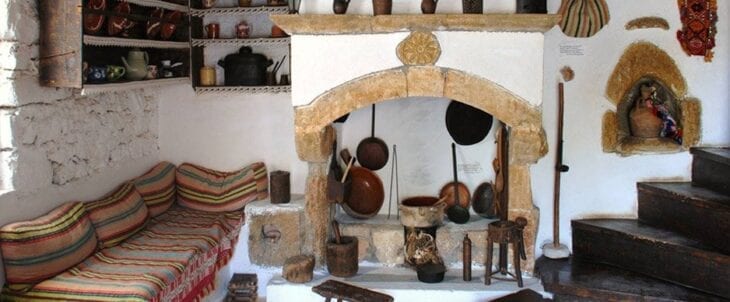
About 8 km (4.97 miles) from Malia, near the resort of Hersonissos, Lychnostatis is an open-air museum dedicated to traditional Cretan rural life, with reconstructed houses, a windmill, a chapel and both a wine press and an olive press. An audio guide is available for an extra €2 ($2.30, £1.70) on top of the entrance ticket, and the museum is easy to reach from the E75 via the Malia or Hersonissos junctions.
Mochos Village
A 25 to 30 minute drive southwest of Malia, Mochos is a hillside village known for its preserved architecture, Byzantine churches and a lively village square ringed by tavernas. Entry is free; costs come from eating and shopping locally.
Amazonas Park
Around 30 to 40 minutes southwest of Malia, Amazonas Park is a sanctuary for rescued exotic animals, parrots, monkeys and reptiles among them, with guided tours and educational programs aimed at families. Entrance costs €8 ($9.18, £6.78) for adults and €5 ($5.74, £4.24) for children, with free admission under age 2.


What is the history of Malia?
Malia’s history stretches back to the Minoan civilization: its first palace went up around 1900 BC and was wrecked by an earthquake and fire around 1700 BC. The rebuilt palace was destroyed for the last time in the 16th to 15th century BC. The Ministry of Culture puts that destruction at about 1530 BC, possibly linked to the earthquake from the Santorini eruption, while other official texts give about 1450 BC. The palace was never rebuilt, although the Ministry records limited later activity on the site around 1390 BC.
Malia may be older than its rivals. Finds dated 1900 to 1700 BC “strengthen the hypothesis” that Malia’s palace predates Knossos and Phaistos, according to the Ministry of Culture in 2024; it remains a hypothesis, not a settled fact. Archaeologist Iosif Hatzidakis discovered the palace in 1915, and the French School at Athens has worked at the site since 1921.
Mycenaeans, Romans, Byzantines, Venetians and Ottomans all left their mark on the town in the centuries that followed. The Venetians in particular used it as a coastal trading and defence post. Malia stayed a small fishing village until the tourism boom of the 1960s and 1970s changed its economy, though traditional festivals and Cretan cooking are still very much part of local life away from the strip.
Did Minoan Malia have a harbour?
Minoan Malia had no inner harbour, according to sediment cores from the marsh near the palace. A 2003 French study by L. Lespez and colleagues found that the small Malia marsh has been a freshwater environment for about 7,000 years, so it never formed a lagoon that could have served as a port. The same study names Mill Cove as the likeliest anchorage, with the palace sitting about 1.3 km inland.
A Bronze Age tsunami did reach Malia. A 2021 study in Scientific Reports, again led by Lespez, identified a deposit left by the tsunami from the Bronze Age Santorini eruption at Malia, with an inundation of up to 400 m inland.
Day Trip: Lassithi Plateau and Dikteon Cave
A short drive south from Malia takes you up to the Lassithi Plateau, a highland basin dotted with the stone windmills Crete is famous for and, at its edge, the Dikteon Cave, reputed in Greek mythology to be the birthplace of Zeus. It’s a natural extension of a day that starts at the Minoan Palace: mountain villages along the plateau serve traditional Cretan food, and the drive itself, climbing out of the coastal strip into the interior, is one of the more scenic routes near Malia. This is a trip that works far better with your own car than with an organised coach tour, since the plateau’s villages and viewpoints are spread out and suit a self-paced visit.
The Lassithi windmills are mostly a memory today. The plateau went from about 20 wooden windmills in 1900 to some 10,000 by 1951, and only about 300 remained by 2011, according to a local historian’s count cited in a 2024 National Technical University of Athens (NTUA) thesis.
| Year | Windmills |
|---|---|
| 1900 | about 20 (wooden) |
| 1951 | about 10,000 |
| 2011 | about 300 |
A pilot project restored 20 windmills on the plateau floor with a new type of perforated sail, and it won a European Heritage Award in 2015. The plateau is also known for its potatoes, about half of what it grows.
The Dikteon Cave has not always been open. It closed in October 2024 for renovation, stayed shut through 2025 and reopened on 29 May 2026, so check its status before you plan the visit around it; our Dikteon Cave guide covers the myths and access. Heavy rain flooded parts of the Lassithi Plateau in early October 2026, so check road conditions before driving up in autumn.
Day trips to Knossos and Agios Nikolaos
Malia’s location on the E75 also puts two of Crete’s most-visited destinations within easy day-trip range. Heraklion, home to the Palace of Knossos, Crete’s most visited archaeological site, is around 30 to 40 minutes west by car. Knossos passed one million visitors in 2024 (1,010,006, according to ELSTAT), and has used timed entry slots since 2024 to manage the crowds, so arrive early; our Knossos Palace guide covers the ruins and access. Agios Nikolaos, with its lake-harbour, marina and waterfront tavernas, is roughly an hour east. From the Agios Nikolaos area, boats run to Spinalonga, the former leper-colony island that drew 431,019 visitors in 2024. Both towns are straightforward to combine with a morning at the Malia palace or a beach afternoon, provided you have a car rather than relying on connecting bus routes.
Malia Nightlife
Dimokratias Street, known locally as the Malia Strip or Beach Road, is the centre of Malia’s nightlife: a run of bars, pubs and clubs that stays busy from early evening until sunrise.
By day, the Strip is a fairly ordinary tourist street: souvenir shops, beachwear boutiques, cafes and a mix of Greek tavernas and international fast food. After dark it becomes something else entirely, with themed nights, live DJ sets and a young, mostly international crowd filling the bars and clubs until the early hours. The busiest stretch runs from June through August, when the town’s population multiplies many times over with summer visitors.
Malia is genuinely built for a party holiday. That’s the honest answer if you’re weighing it up for a group trip focused on nightlife. It’s less suited to families with young children specifically because of that same reputation: the noise and crowds on the Strip are constant in peak season, even though the beaches and Old Town remain calm.
Five nightclubs anchor Dimokratias Street, listed below in order of distance from the town centre.
- Zig Zag Club (Dimokratias 101), about 0.6 km (0.37 miles) from the town centre. A large dance floor, multiple bars and a strong sound system draw a young, international crowd. Entry runs €10–20 ($11.48–22.96, £8.48–16.95).
- Corkers (Dimokratias 110), 0.9 km (0.56 miles) from the centre, right on Beach Road, with a more laid-back, beachfront feel and a mixed pop/electronic playlist. Entry runs €10–15 ($11.48–17.22, £8.48–12.71).
- Apollo Club (Mattheou Zahariadi 1), 1 km (0.62 miles) from the centre, hosting regular international DJs and live sets. Entry runs €15–27 ($17.22–31.00, £12.71–22.88).
- The Venue (Dimokratias 35), 1.2 km (0.75 miles) from the centre, known for international DJ bookings and a spacious interior with multiple bars and VIP areas. Entry runs €15–27 ($17.22–31.00, £12.71–22.88).
- Candy Club (Dimokratias 19), 1.2 km (0.75 miles) from the centre, with a large dance floor and rotating DJ line-up. Entry typically runs €10–22 ($11.48–25.26, £8.48–18.65), depending on the night.
Along the seafront, Pleasure Beach Club, Nisos Beach Club and the Windmill Beach Bar are three well-known daytime beach-bar spots, the last recognisable by its windmill structure and sea views, all three popular for a sunset drink before heading into town for the night.
Where to Stay in Malia
Malia has accommodation across every budget, ranked below from lowest to highest starting rate, from simple garden-set hotels near the centre to a five-star adults-only resort on the seafront.
- Stelios Gardens Hotel, about 0.8 km (0.50 miles) from the centre, with landscaped gardens, an outdoor pool and an on-site restaurant. Rooms start from around €60 ($68.89, £50.85) per night depending on season.
- Notos Heights Hotel Malia (Ioannou Papamanoli 6), a 0.7-kilometer drive from the centre, with modern, well-appointed rooms close to the beaches and nightlife. Rates start from around €80 ($91.85, £67.80) per night.
- Real Palace Hotel, 0.9 km (0.56 miles) from the centre, a relaxed, budget-friendly option with a pool, hot tub and games room. Rates start from around €80 ($91.85, £67.80) per night.
- SunVillage Malia Boutique Hotel & Suites, on Malia Beach, 0.75 km (0.47 miles) from the centre, combining beach and town proximity. Rates start from around €100 ($114.81, £84.75) per night.
- Ikaros Beach Resort & Spa, 1.4 km (0.87 miles) from the centre, an adults-only resort with bay views, six restaurants, three bars, a spa and a private beach. Rates start from around €200 ($229.62, £169.50) per night.
Ratings on booking platforms shift over time, so check current reviews on your preferred site before booking rather than relying on a fixed score.
How do hotel prices change by month?
Hotel prices in Greece peak in August and drop by more than a third in May and October, according to the 2025 annual hotel survey by ITEP, the research institute of the Hellenic Chamber of Hotels. The survey covers Greece as a whole, not Malia alone, but it gives a fair picture of the seasonal swing a resort town faces.
| Month | Occupancy of seasonal hotels | Average asking price, double room |
|---|---|---|
| May | 53% | €120 ($137.77, £101.70) |
| August | 90% | €194 ($222.73, £164.42) |
| October | 47% | €123 ($141.22, £104.24) |
August rates rose 17.5% on 2024. The median August room cost €141 ($161.88, £119.50), and a quarter of rooms went for €90 ($103.33, £76.28) or less. Most Greek hotels are seasonal: 62% open only part of the year, for 5.8 months on average, and online travel agencies brought in 36% of bookings in 2025. Our guide to prices in Crete compares hotel, food and car-hire costs across the island.
Where to Eat and Shop in Malia
The top places to eat in Malia range from beachfront tavernas to a gastropub with its own craft beer, and shopping covers everything from souvenir strips to a Sunday market.


- Avli (Old Town), set in an 18th-century mansion with a private garden, known for Cretan dishes such as marinated, grilled beef liver. A meal runs €15–25 ($17.22–28.70, £12.71–21.19) per person.
- The Red Lion Gastro Pub (Dimokratias 96), open since 1999, brewing its own craft beer and serving steaks, burgers and BBQ ribs in a beer garden with live sports on TV. Expect €10–20 ($11.48–22.96, £8.48–16.95) per person.
- Milos (Malia Beach Road), fresh seafood and traditional Greek dishes in an elegant setting; prices run slightly higher, €25–40 ($28.70–45.92, £21.19–33.90) per person.
- Drossia Restaurant (Paraliaki Odos), a garden setting serving traditional Greek dishes at €15–25 ($17.22–28.70, £12.71–21.19) per person.
- San Giorgio Restaurant (Dimokratias 33), a lively, central spot with attentive service, €12–20 ($13.78–22.96, £10.17–16.95) per person.
For shopping, the Malia Strip is lined with souvenir shops and beachwear boutiques, while the Old Town offers a more traditional, locally-run alternative. Supermarkets cover everyday essentials, Agios Nikolaos (about an hour away by car) has a wider range of shops if you want an upscale day out, and Malia holds a weekly Sunday market for fresh produce and clothing.
Practical Info: Medical Center, Police, Best Time to Visit and UNESCO Status
Malia has its own 24-hour private medical unit but relies on nearby Hersonissos for police services. Spring and autumn bring the mildest weather for visiting, and it is the Minoan palace, not the modern town, that carries UNESCO World Heritage status.
Medical center: Cretan Medicare operates a Malia unit at Dimokratias 86, open 24/7, reachable on +30 28970 31661 or by email at reception-malia@cretanmedicare.gr. It offers emergency medicine, general practice, pediatrics, radiology and surgery, and is part of a wider network with units in Hersonissos and Stalida for more complex cases.
Police: Malia has no police station of its own. The nearest is the Hersonissos Police Department (Minoos 8, Chersonisos), about 9 km (5.59 miles) away, reachable on +30 28970 21000, +30 28970 22100 or +30 28970 22222.
Best time to visit: Spring (April-May) and autumn (September-October) bring comfortable temperatures of 20-25°C, smaller crowds and easier sightseeing conditions than the peak summer months of June to August, when temperatures regularly climb past 30°C. Shoulder months are also cheaper and emptier: seasonal hotels in Greece were 53% full in May and 47% in October 2025, against 90% in August (ITEP). October 2024 was the Palace of Malia’s busiest month, with 8,290 visitors, according to ELSTAT.
Why is Malia considered an archaeological site?
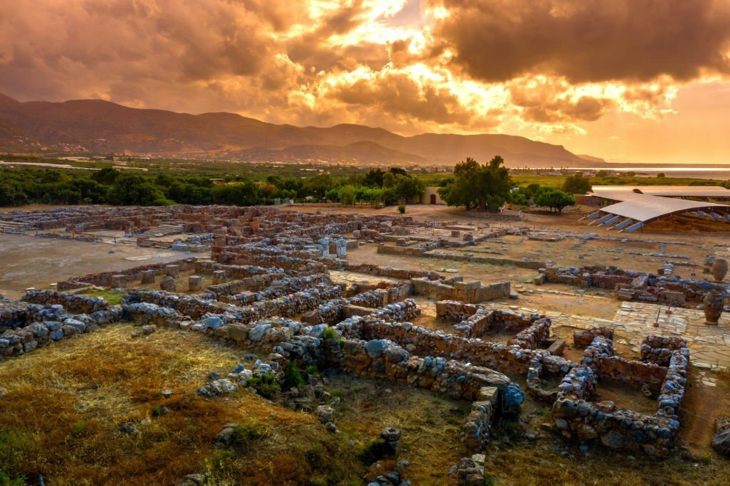
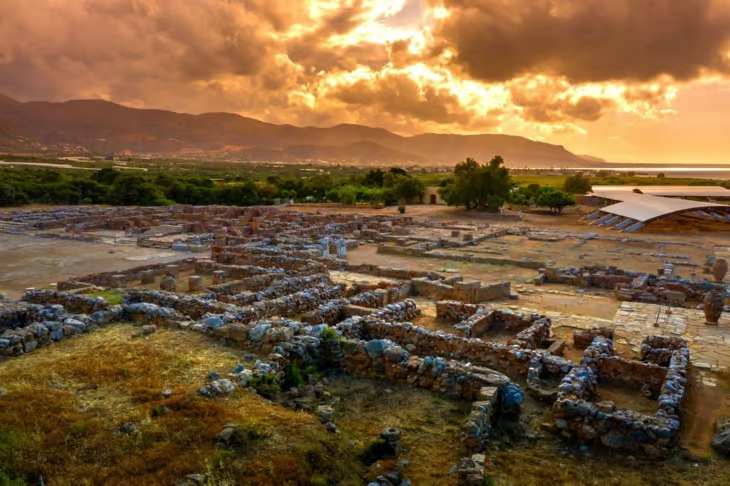
Malia is an archaeological site primarily because of the Palace of Malia, three kilometers east of the modern town, the third-largest of the Minoan palaces by size and often described as the most “provincial” in style. Spanning about 7,500 square meters, it offers a direct, walkable connection to Bronze Age Crete without the crowds of Knossos.
Is Malia a UNESCO World Heritage Site?
Yes, the Palace of Malia is a UNESCO World Heritage Site. On 12 July 2025, UNESCO’s World Heritage Committee inscribed the Minoan Palatial Centres of Crete as a single serial listing covering six sites: Knossos, Phaistos, Malia, Zakros, Zominthos and Kydonia (decision 47 COM 8B.25). The six sites cover 29.5 ha in total. On 27 May 2026, Malia became the first of the six palaces to receive its UNESCO commemorative plaque, unveiled by the Ministry of Culture as the site reopened after its flood-protection works. It’s the archaeological palace specifically that carries the designation, not the modern resort town around it, a distinction worth knowing before you visit. For the full list of Cretan UNESCO sites, including the still-tentative Spinalonga fortress, see our UNESCO World Heritage Sites in Crete guide.


Are there any movies about Malia?
Yes, “The Inbetweeners Movie,” a comedy spin-off of the British sitcom, follows four friends on a post-school holiday in Malia and leans heavily into the town’s nightlife-and-misadventure reputation. It’s one of the reasons Malia is so strongly associated with young, party-focused travel in the UK market specifically.
Best Villages Near Malia
Seven traditional villages sit within a short drive of Malia, listed below from closest to furthest, each offering a different pace from the resort strip.


- Stalis (Stalida), 3 km (1.86 miles) east, a calmer coastal village with a long sandy beach and a good range of restaurants and shops.
- Sissi, 6 km (3.73 miles) east, a small fishing village with a harbour, traditional tavernas and a sandy beach.
- Anissaras, 12 km (7.46 miles) west, an upscale area with well-maintained hotels and access to the Crete Golf Club.
- Hersonissos, 12 km (7.46 miles) west, a larger resort with a long beach, a waterfront promenade and water parks, good for families wanting more organised activities.
- Milatos, 12.5 km (7.77 miles) northeast, an unspoiled village with whitewashed houses and a pebble beach good for snorkeling.
- Analipsi, 17 km (10.56 miles) east, a quiet resort between Stalis and Hersonissos, popular with families wanting a calmer base close to the bigger resorts’ amenities.
- Gouves, 23 km (14.29 miles) west, split between a seafront lower village and a hillside upper village, with a water park and an aquarium.


FAQ
Is Malia worth visiting?
Yes, if you’re after a budget-friendly beach holiday with a genuine party scene attached. Malia combines sandy beaches, a well-known nightlife strip and easy access to the Minoan palace and inland villages, and its central position on the northern coast makes it a workable base for exploring the rest of Crete by car.
Is Malia expensive?
No. Malia sits toward the affordable end of Crete’s resorts. Hotel rooms typically range from €30–100 ($34.44–114.81, £25.43–84.75) per night depending on season and standard, street food like gyros or souvlaki costs €2–5 ($2.30–5.74, £1.70–4.24), and beach access itself is free. Drinks at the bigger clubs cost more than in a village taverna, but even then a beer or cocktail usually runs €3–8 ($3.44–9.18, £2.54–6.78).
August is the expensive month. Across Greece, the average asking price for a double room was €194 ($222.73, £164.42) in August 2025 against €120 ($137.77, £101.70) in May, according to ITEP. Car hire follows the same curve: a week’s all-inclusive economy car from Rental Center Crete works out at about €24 ($27.55, £20.34) per day from January to April and €51 ($58.55, £43.22) per day in August.