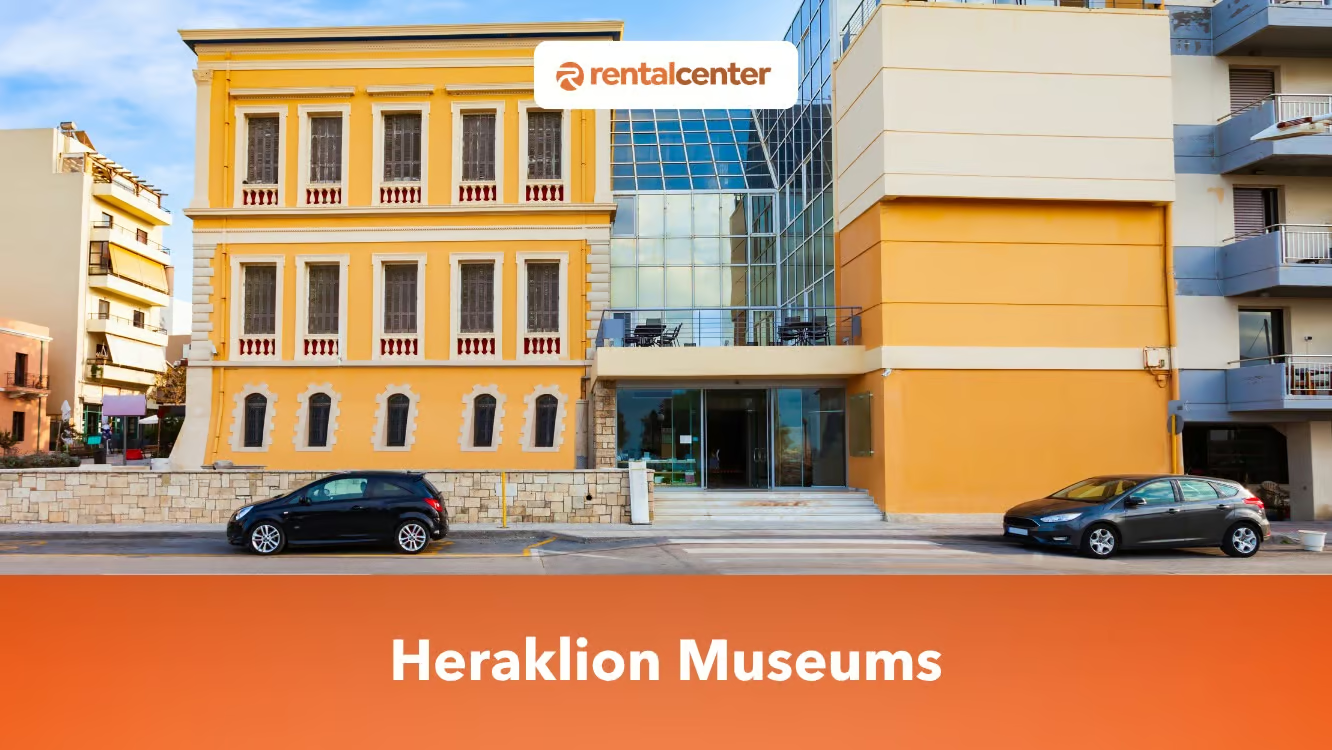
Heraklion's museums tell the island's story across millennia. The Heraklion Archaeological Museum offers an in-depth look at Crete's Minoan civilisation through artefacts spanning from the Neolithic period to Roman times. The Historical Museum of Crete covers art and history from early Christian times to the modern era, with Byzantine art, sculptures, and folk artefacts. The Natural History Museum of Crete - housed in a former power plant - focuses on the diverse flora and fauna of the Eastern Mediterranean. With this variety, every visitor finds something that resonates. Read article
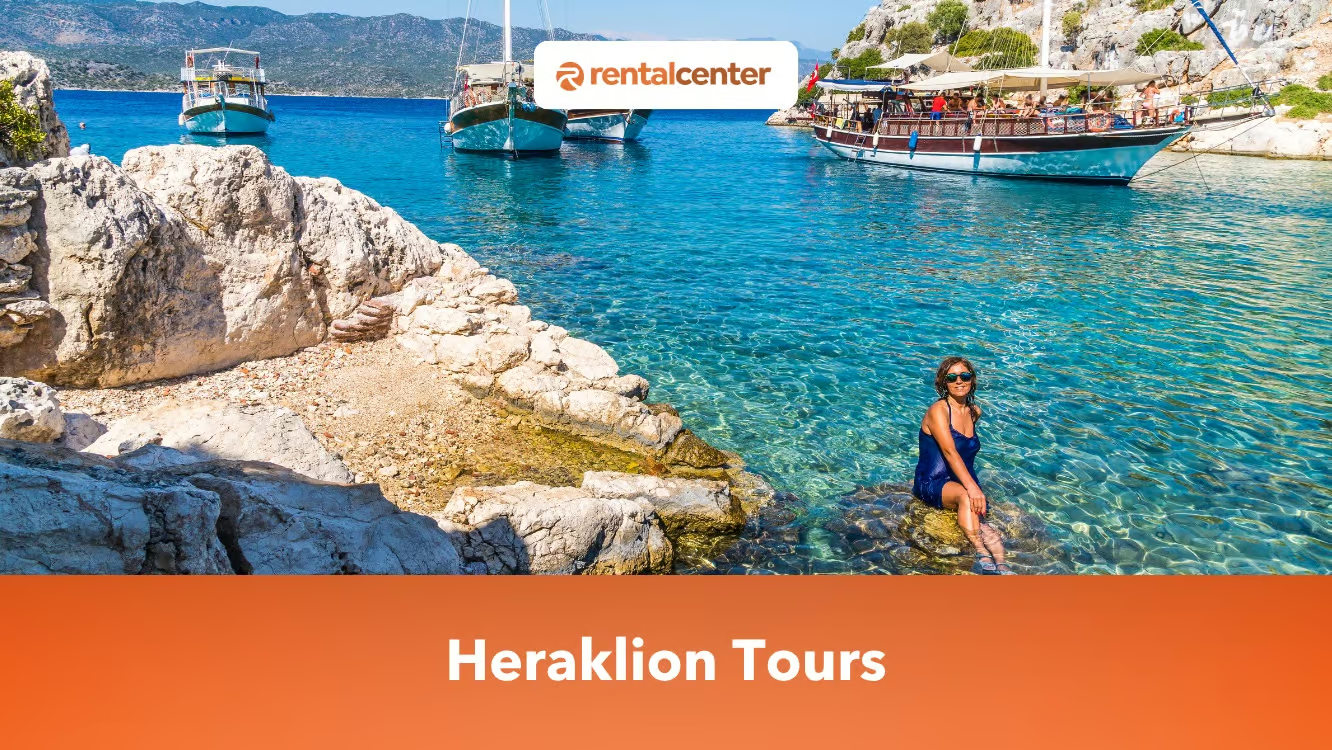
Heraklion is the biggest and most important city on the Greek island of Crete. Heraklion is significant to history and culture because it was one of the most significant places in the Minoan society, which lived thousands of years ago. Heraklion is now a busy, modern city with a mix of historical places, a lively culture and beautiful scenery. Heraklion sits
on the northern coast of the biggest Greek island, Crete, which is the fifth-largest island in the Mediterranean Sea. The city occupies the middle of the northern coast of Crete. Read article

Zorba the Greek (1964) is the most famous movie filmed in Crete - shot at Stavros Beach near Chania and winner of three Academy Awards. Crete attracts international film productions with its diverse landscapes, ancient Minoan ruins, and Greece's 40% EKOME production cash rebate, having hosted over 20 international and Greek productions - from Disney's The Moon-Spinners (1964) to Amazon Studios' Killer Heat (2023). This guide covers all 13 notable films shot on the island, their exact filming locations, IMDb scores, streaming availability, and how to visit the sets today. Read article

Crete is a secure and flexible travel destination, particularly suitable for solo travelers throughout the year. Crete remains a safe destination for solo travelers, supported by cultural awareness, smart planning, and centralized accommodations that reduce isolation risks. The island offers safety-focused solo travel tips that enhance personal security while exploring. Centrally located and well-reviewed lodgings enable easy access to public areas, minimizing night-time walking risks. Read article
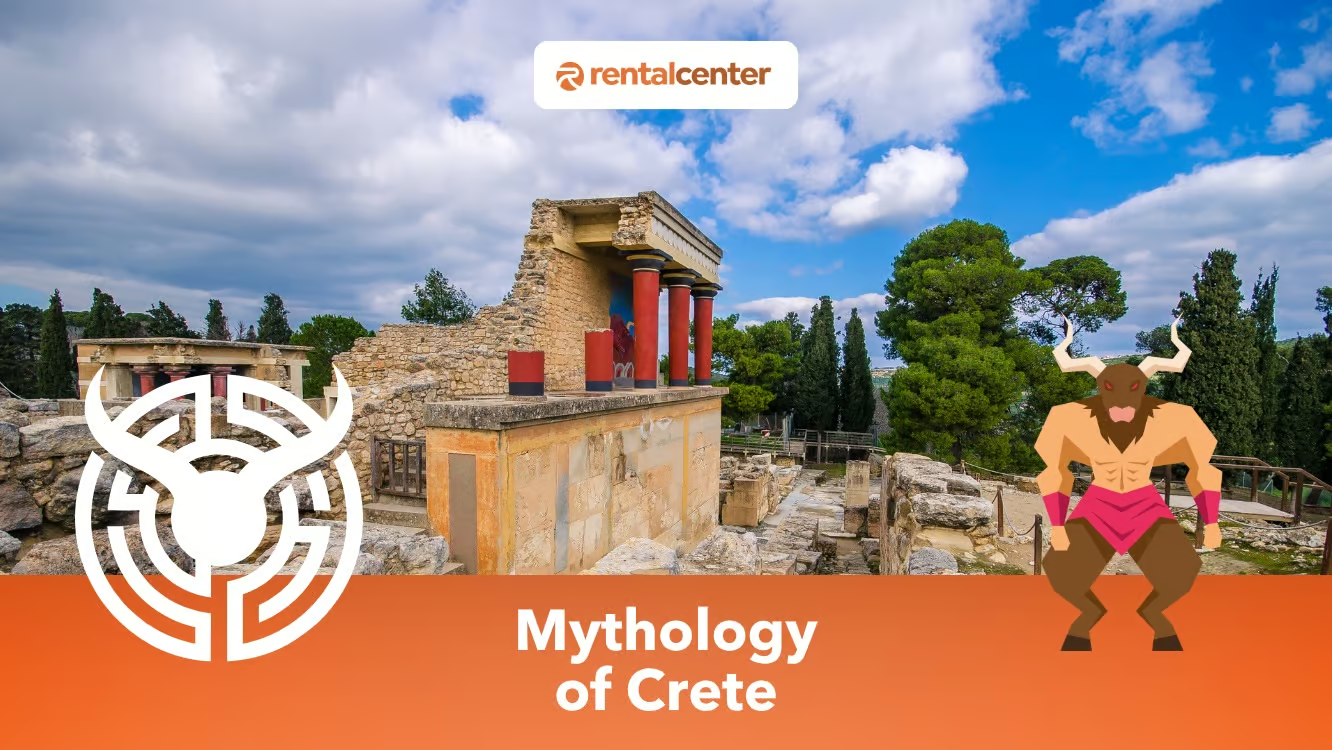
Greek mythology gives Crete a founding cast of gods and goddesses. Zeus, the king of the gods, took the shape of a white bull to carry the mortal maiden Europa across the sea to the island. Europa then gave birth to Minos, Rhadamanthus and Sarpedon, the three legendary Cretan kings. Rhea, wife of Cronus and mother of Zeus, gave the island its nurturing and protecting goddess. Read article

Crete offers day boat cruises from a dozen departure ports - from the iconic Balos lagoon cruise from Kissamos (shared ferry from €37 ($42.48, £31.36) pp) to Spinalonga from Agios Nikolaos, Chrissi Island from Ierapetra, and even a high-speed ferry day trip to Santorini from Heraklion (from ~€80 ($91.85, £67.80) pp return). Trip types run from budget group ferries to private yachts, glass-bottom and snorkelling boats, sunset catamarans, and self-drive boat rentals (no licence needed for engines under 30 HP). Below you'll find every route by departure port, with durations, price ranges, what's included, and how to book - plus how to reach each port by car. Read article
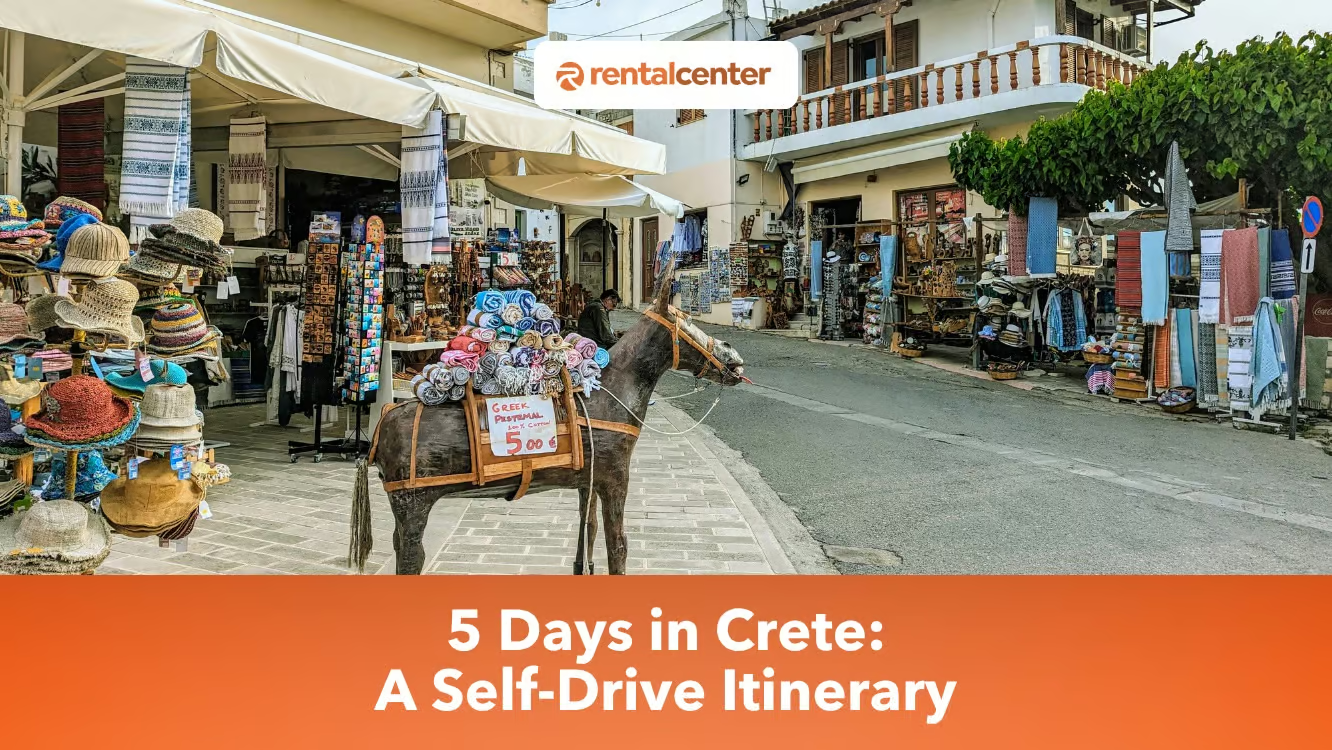
Crete is the largest of the Greek islands, a gem in the Mediterranean with a rich tapestry of history and natural beauty. Crete spans across its vast landscape, allowing visitors to find a blend of stunning beaches, ancient ruins and picturesque towns. 5 days in Crete offer ample opportunity to dive deep into the essence of the island. Read article

East Crete's Lasithi region is home to some of Greece's finest and least-crowded beaches. Vai Beach (the largest natural palm forest in Europe), Chrissi Island (reachable only by boat from Ierapetra), and Elounda (overlooking Spinalonga) are the standout destinations - but the region has 20+ beaches covering every style from family-friendly bays around Agios Nikolaos to isolated snorkelling coves on the southern coast. This guide is organised by traveller type, with a quick-reference table, an East-vs-West comparison, distances and parking notes per beach, and practical tips for getting there by car. Read article
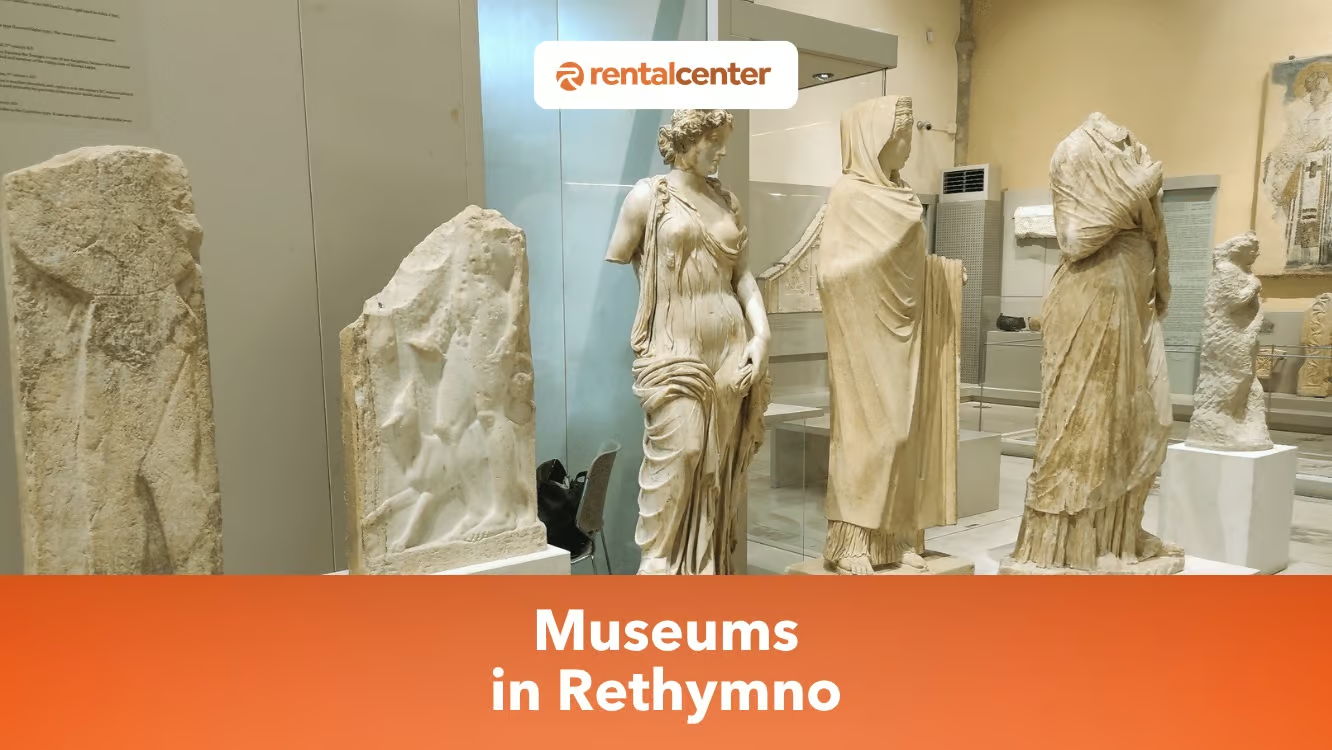
Rethymno's museums span more than 3,000 years of history - from Minoan artefacts at the Archaeological Museum and prehistoric fossils at the Paleontological Museum to contemporary Greek art at the Museum of Contemporary Art of Crete (CCA). Several sit within walking distance of the Fortezza in the Venetian Old Town, while a handful - the Museum of Ancient Eleutherna, the Military Museum of Chromonastiri, and the monastery museums - require a car. This guide covers all 11, with opening hours, ticket prices, addresses, and highlights for each. Read article

Crete's festivals draw visitors from across Europe - 24 distinct events span religious feast days, harvest celebrations, and international arts programs. Whatever your preference, you'll find a festival in Crete that suits your taste, and because the calendar runs nearly year-round, almost any visit month is a festival opportunity. Read article

How we selected these bars: We visited each location personally and evaluated them on drink quality, atmosphere, value for money, location, and suitability for travellers arriving by car or scooter from other parts of Crete. Bars are grouped by category (beach, Old Town, rooftop) to help you plan an evening itinerary. Bar details - including hours and menus - change seasonally. Confirm opening times directly with the venue before visiting, especially outside the June–September peak season. Read article

Yes - Rethymno has a lively nightlife scene that runs year-round. The Venetian Old Town and harbor area host bars, clubs, and taverns open until 3–4 AM in summer. The 3-km El Venizelos beach strip and the pedestrian Ari Velouchioti Street are the two main nightlife corridors. The best clubs - Ice Club, Metropolis, and Fortezza Night Club - are all within 10 minutes' walk of each other near the Old Town harbor. Read article

The Greek population carries the demographic imprint of centuries of migration, war, and economic transformation - from the 1923 population exchange with Turkey to the post-2008 brain drain. Greece concentrates nearly one-third of its people in Athens, while rural islands and mountain communities continue to depopulate, creating stark regional contrasts in services and opportunity. Read article

Read article
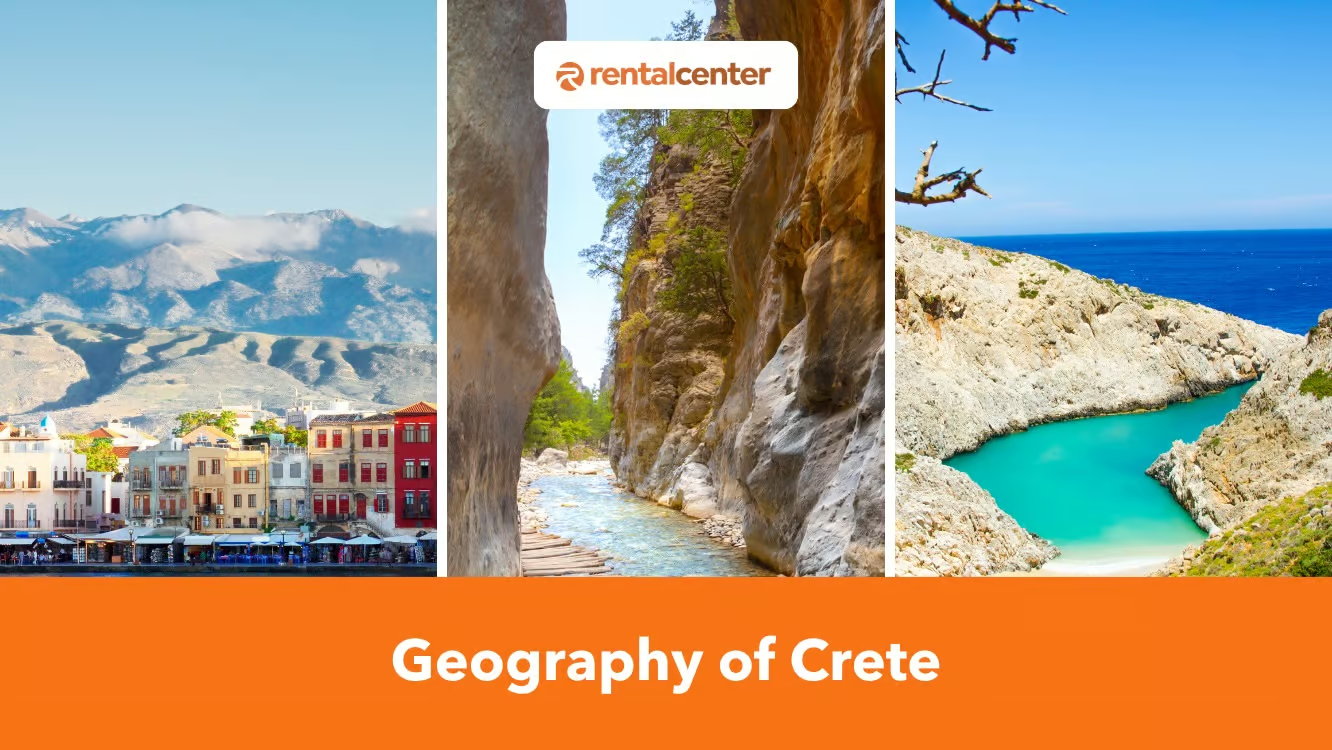
The northern coast concentrates natural harbors and fertile plains, hosting major cities such as Heraklion and Chania, while the steep southern coast drops to the Libyan Sea. This physical landscape has shaped Cretan culture, history, and economy since the Minoan era, and it explains why Crete supports beaches, forests, and agriculture unusual for an island of its size. Read article

To hire a car in Crete (and elsewhere in Greece), you must be at least 21 years old, hold a valid driver's licence held for 1+ year, carry mandatory third-party liability (TPL) insurance, and present a credit card in the main driver's name for the security deposit. EU, US, UK, Swiss, Australian, Canadian, Israeli, Russian, and Ukrainian licences are accepted without an International Driving Permit (IDP) under Greek Law 4850 (November 2021); all other nationals must carry an IDP. This guide covers every requirement - age, licence, IDP, insurance, documents, and driving rules. Read article
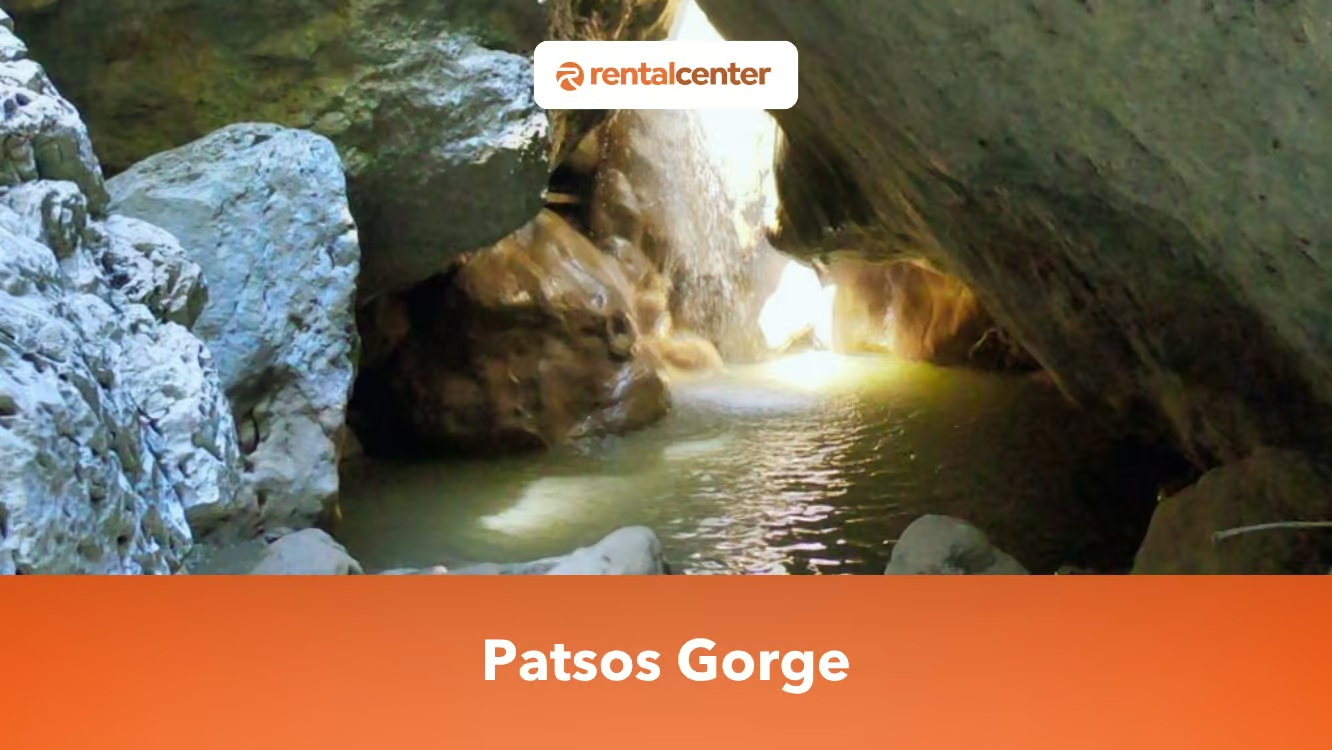
The gorge, also called the St. Antonios Gorge, cuts north of the settlement of Patsos in the region of Sivritos, in the Rethymno region of Crete, about 37 km (22.99 miles) southwest of Rethymno city. It winds through the foothills of the White Mountains and forms part of the Patsos Natural Park. A small river runs through the ravine year-round, feeding dense shade, plane trees, and a lush, garden-like floor. Walkers follow a short, well-marked riverside path from the entrance, cross the stream several times, and reach the cave chapel near the start of the route. Crossing the gorge takes roughly two and a half hours in summer and takes longer when the water runs high. One rental car from Rethymno gets you to the trailhead in about 45 minutes on well-maintained roads. Read article
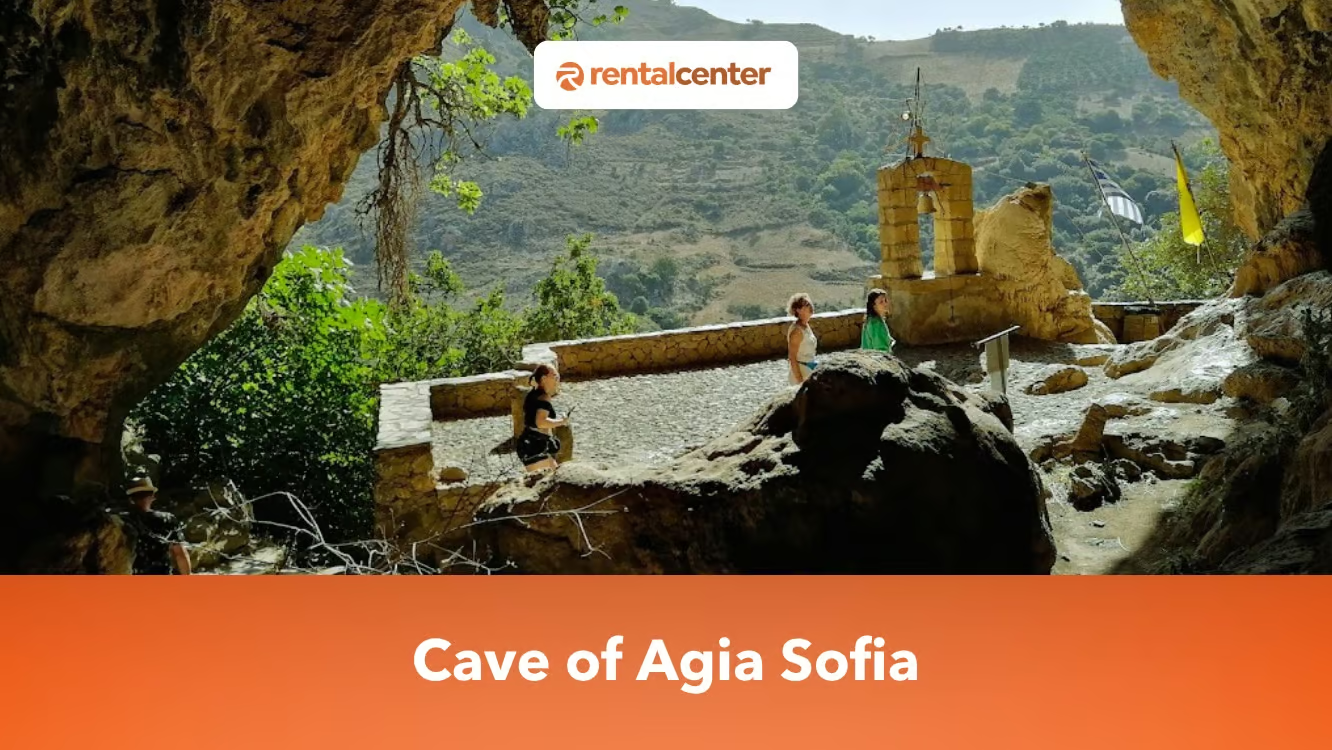
The cave forms a single large chamber whose figure is almost circular, with a diameter of 50 m, a height that reaches 20 m in places and an entrance opening of 20 m, according to Incredible Crete, the Region of Crete's official tourism portal. CretanBeaches reports an entrance width of 25 m and two chambers on different levels, and MeetCrete describes a 20 m ceiling and a 70 m diameter - so treat the figures as a range rather than a single survey. The chapel of Agia Sofia itself measures 6 x 3 m and stands at the left edge of the entrance, per Incredible Crete. Read article
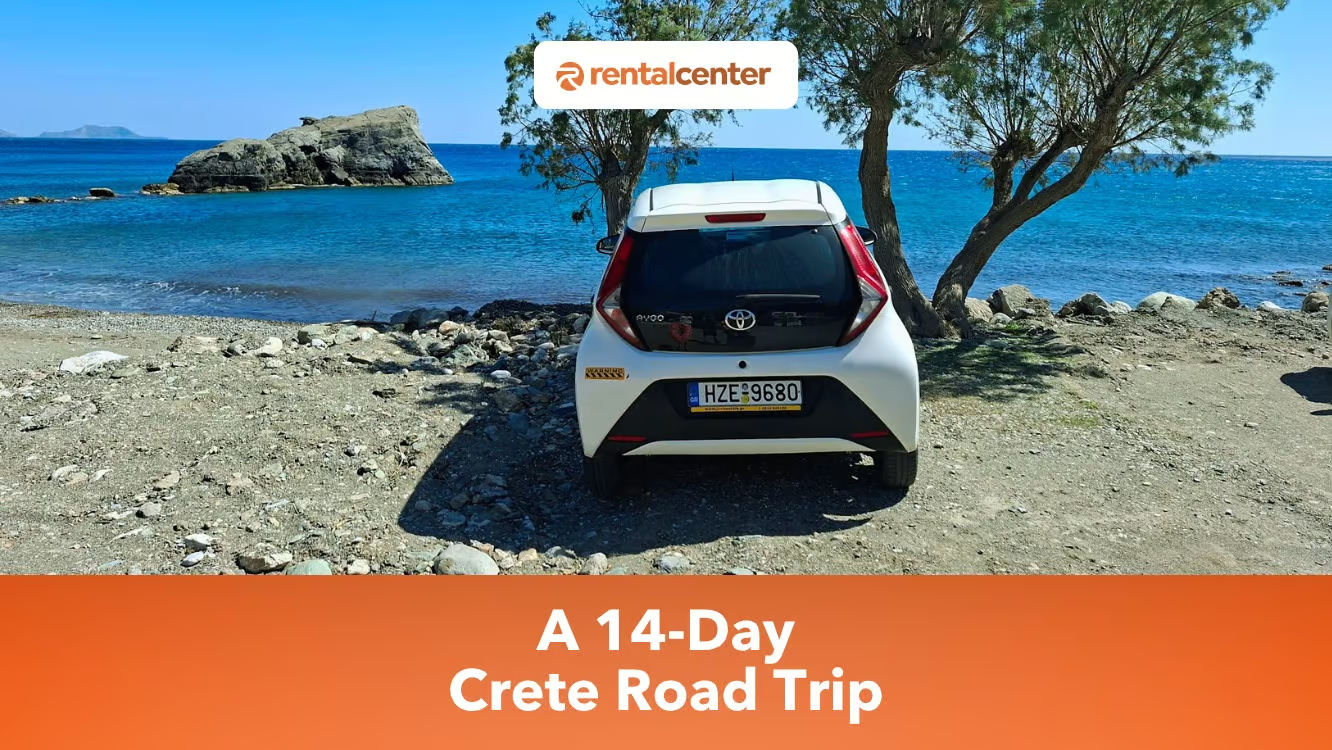
Crete takes you through Greece's largest and most topographically diverse island: classic Greek-island white sand beaches and turquoise water, charming authentic villages, and also amazing mountains, gorges, waterfalls, and caves - all within 90 minutes of driving. Add the legendary vineyards and olive groves, the historic attractions spanning the Neolithic era through WWII, and famous towns like Chania and Heraklion, and you have an epic Greek road trip. Read article
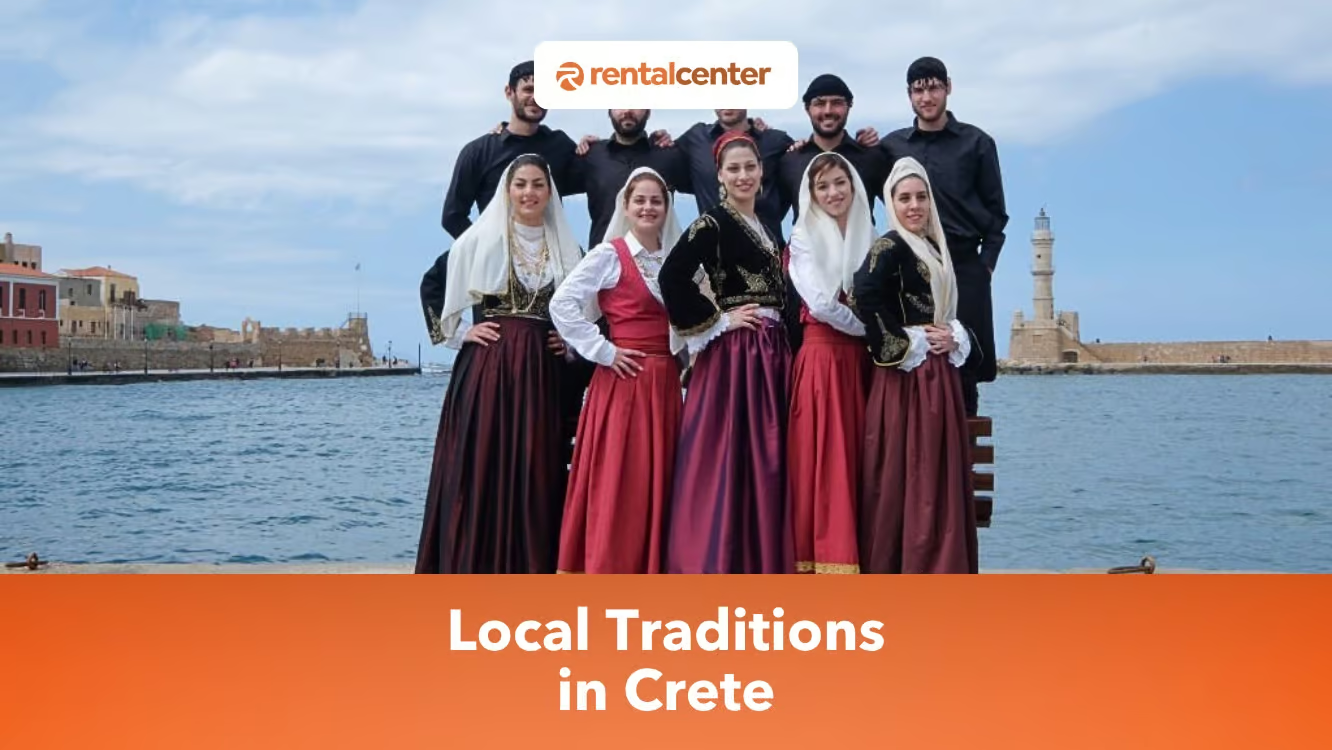
Cretan culture is distinct from mainland Greece because it is built on 5,000 years of continuous tradition - from Minoan rituals (c. 2700–1450 BCE) to Ottoman-era dances - that Cretans still perform at weekly village feasts. Every layer of conquest (Minoan, Roman, Byzantine, Venetian, Ottoman) deposited something that Cretans absorbed and made their own. Read article