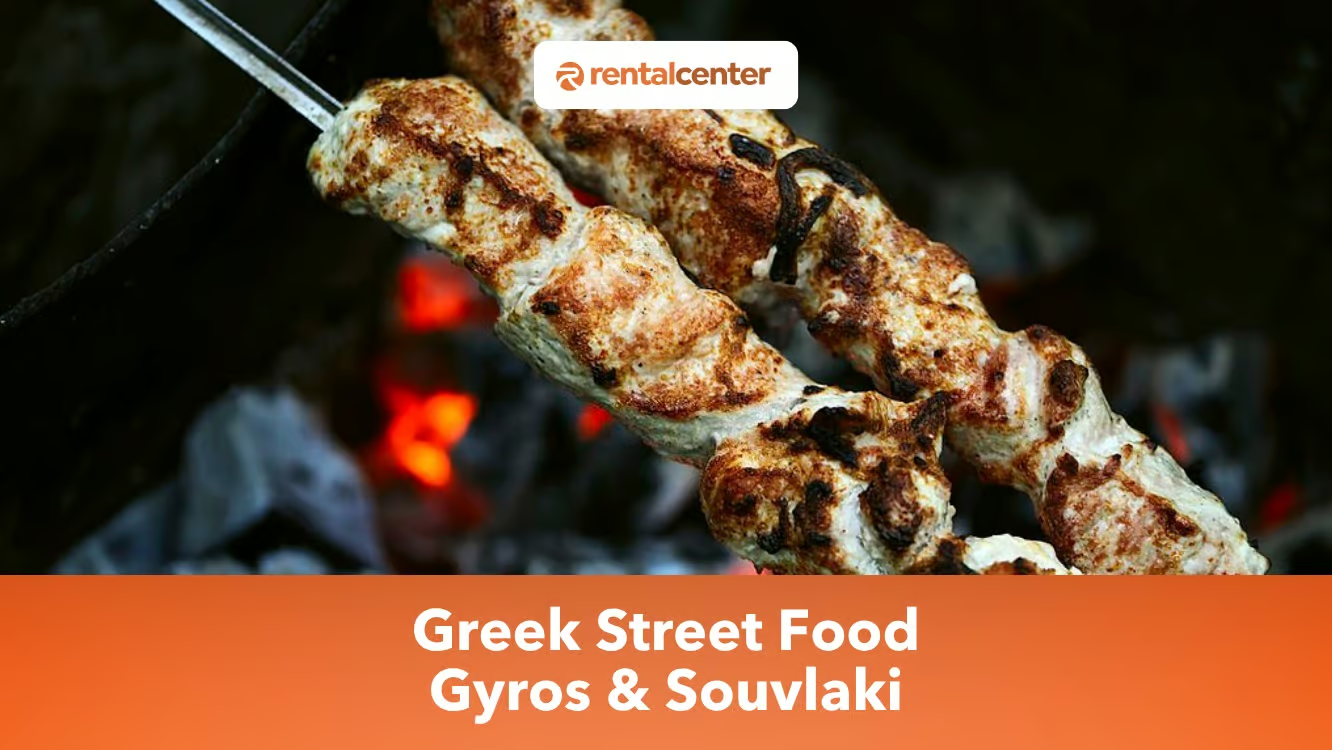
Crete serves excellent gyros and souvlaki everywhere, from harbour-side stalls in Chania to market-square shops in Heraklion. The island adds one distinct twist: a thick spoon of cool strained yogurt replaces the ketchup or mustard used up north. Gyros and souvlaki fill the everyday food scene you’ll meet while touring Crete, and a rental car reaches the least touristy spots for both, from a family-run stall on a Heraklion back street to a stand by the Chania market where locals queue. This guide covers what gyros and souvlaki are, how to order them like a local, and where the highest-rated spots sit in Crete’s main cities right now.
What Is Gyros, and How Do You Say It?
Gyros takes its name from the Greek word for “to turn,” because the meat cooks on a spit that rotates constantly next to a strong heat source. The fat melts away as the meat turns, and the edges crisp while the inside stays juicy.


The “g” is a hard g, not a soft “j” as many visitors say it, and the “y” sounds like an “i.” That makes the correct pronunciation “GEE-ros,” not “JY-ros.”
What Else Can You Order at a Gyros or Souvlaki Shop?
Most gyros and souvlaki shops in Crete also serve a Greek salad, a Cretan salad or dakos, burgers, club sandwiches, and vegetarian or vegan options, especially during religious fasting periods. Shops serve Crete’s three most popular street foods – gyros, kalamaki and souvlaki – by the portion or by the piece, and you’ll find all three on the main streets of Chania and Heraklion.


Where to Find the Best Gyros in Heraklion
Cine Gyros, on Konitsis Street in a quiet residential pocket of Heraklion, holds a 4.6 to 4.8-star rating across Tripadvisor and Google – the most consistently recommended gyros spot in the capital right now. Cine Gyros sits off the main tourist strip, so the crowd is mostly locals, and pita sizes run from about €4 ($4.59, £3.39) to €10 ($11.48, £8.48) depending on portion. The owner is known for chatting with regulars and offering recommendations.


Closer to the centre, Hovoli, on Plateia Daskalogianni, holds a 4.4-star rating from over 800 Tripadvisor reviews and is a convenient, quick stop near the main sights. Chop Chop, on Idis Street beside the Archeological Museum of Heraklion, rates 4.5 stars and is known for generous portions at low prices. A short walk away, Thraka, also on Plateia Daskalogianni, serves its gyros with thrakopsomo, a special bread found only at this shop, and holds a 4.4-star rating from around 150 reviews.
For the biggest portions in the city, head to Petousis, on 62 Martiron Street, open almost around the clock and popular with the late-night crowd from the nearby bars.
These ratings and prices reflect current Tripadvisor and Google listings, since shops in Crete open, close and change hands often.
Souvlaki in Rethymnon
Rethymnon‘s old town and marina area hold several souvlaki shops and tavernas. A steady lunchtime queue of locals is the simplest quality signal here – follow the line, not the menu with the most photos. Expect the same Cretan touch as elsewhere on the island: grilled meat, warm pita, and a spoon of strained yogurt rather than ketchup.
Gyros in Chania
Locals and visiting food writers independently point to Oasis, on Voloudaki Street, as Chania’s top-rated gyro spot. Oasis still sells a gyro for as low as €2 ($2.30, £1.70), one of the lowest prices left on the island, though it’s takeaway only with no seating.
Closer to the centre near Chania’s central market, Delish Food Street Story serves a well-reviewed chicken gyro with pitas from €3 ($3.44, £2.54) to €4 ($4.59, £3.39).
Regional Variations of Gyros and Souvlaki Across Greece
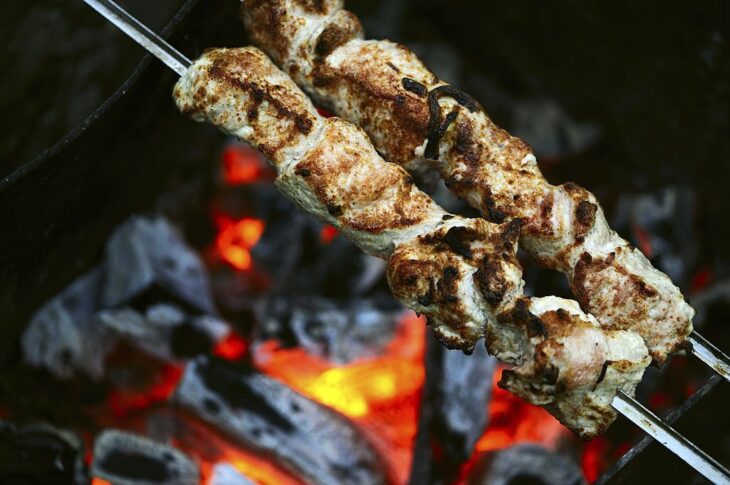
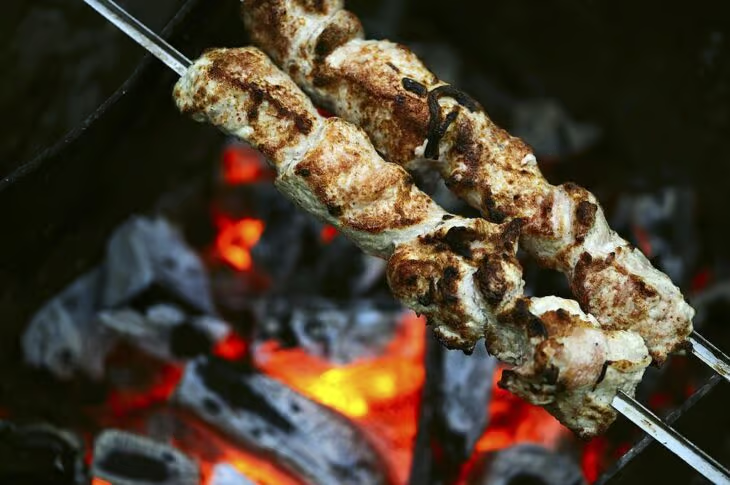
The words gyros, souvlaki and kalamaki mean different things depending on where in Greece you order them. In the north, gyros means a pita wrap of shaved, spit-roasted meat. Souvlaki there means skewered, grilled meat on a stick – what Crete calls kalamaki instead. The word “souvla” means the spit itself, and the ending “-aki” makes a word small, so kalamaki literally means “little spit.”


Athens skips the word “gyros” entirely: locals order “pita gyros” for the wrap and call the skewer “souvlaki” – the dish Crete calls kalamaki.
Crete generally follows the Athenian naming, so a souvlaki here means a grilled pita wrap, not a skewer. The topping is what makes Cretan souvlaki different: instead of the ketchup and mustard common up north, it comes with a thick smear of cool, strained Greek yogurt, plus fries, tomato slices, salt and oregano.
Can Vegans or Vegetarians Eat Gyros or Souvlaki?
No, traditional gyros and souvlaki wraps are meat-based and not suitable for vegans or vegetarians, but most shops now offer plant-based alternatives. Common plant-based options include:
- Patatopita – fried potatoes, tomato, onion and herbs in a wrap.
- Calamari or octopus pita – fried or grilled seafood in place of meat.
- Falafel wrap – chickpea or fava-bean falafel served with tahini sauce.
The Local’s Ordering Guide
Knowing these nine terms before you order gets you the exact dish you want, whether that’s a wrap, a plate or a skewer.


- Arabic Pita – a thinner, larger flatbread made from wheat flour, water, yeast and salt, used to wrap gyros and other Mediterranean-style sandwiches.
- Pita Bread – a round, flat bread made from wheat flour and water, used to wrap gyros, souvlaki and fries.
- Gyro – seasoned pork or chicken cooked on a vertical rotisserie and shaved off to order, usually served in pita or on a plate with fries, tomato, onion and tzatziki. Lamb isn’t the standard meat for Greek gyros; that’s more typical of döner-style variants outside Greece.
- Kalamaki or Skewer – cubed, marinated pork or chicken grilled on a stick over an open flame; also called temachio. One “kalamaki” is one stick.
- Kebap – the Turkish version of gyro, typically made with ground beef or lamb rather than pork or chicken.
- Portion or Merida – a plate of grilled meat served with tomato, onion, pita and yogurt or tzatziki on the side.
- Mix Grill – an assortment of gyro meat, sausage, hot dog and burger (bifteki), sometimes with kebab, served with fries, tomato, onion and yogurt.
- Skepasti – grilled meat sandwiched between two pitas, sometimes with melted cheese.
- Tzatziki – a sauce of yogurt, garlic, cucumber, olive oil, lemon juice and dill or mint, served as a topping or dip.
FAQ
Is gyro or shawarma healthier?
Neither is clearly healthier on its own. Both are grilled or spit-roasted meat wrapped in flatbread, and the calorie count comes mainly from the portion size, the fries, and how much sauce goes in – not the meat itself.
Do they use lamb in gyros in Greece?
No, Greek gyros is traditionally made with pork or chicken, not lamb. Lamb is more common in Middle Eastern döner-style wraps than in Greek gyros shops.
How do I order a lighter gyro?
Ask for it as a merida (plate) without pita, or swap the fries for a Greek salad, since the bread and fries carry most of the extra calories, not the grilled meat itself.