

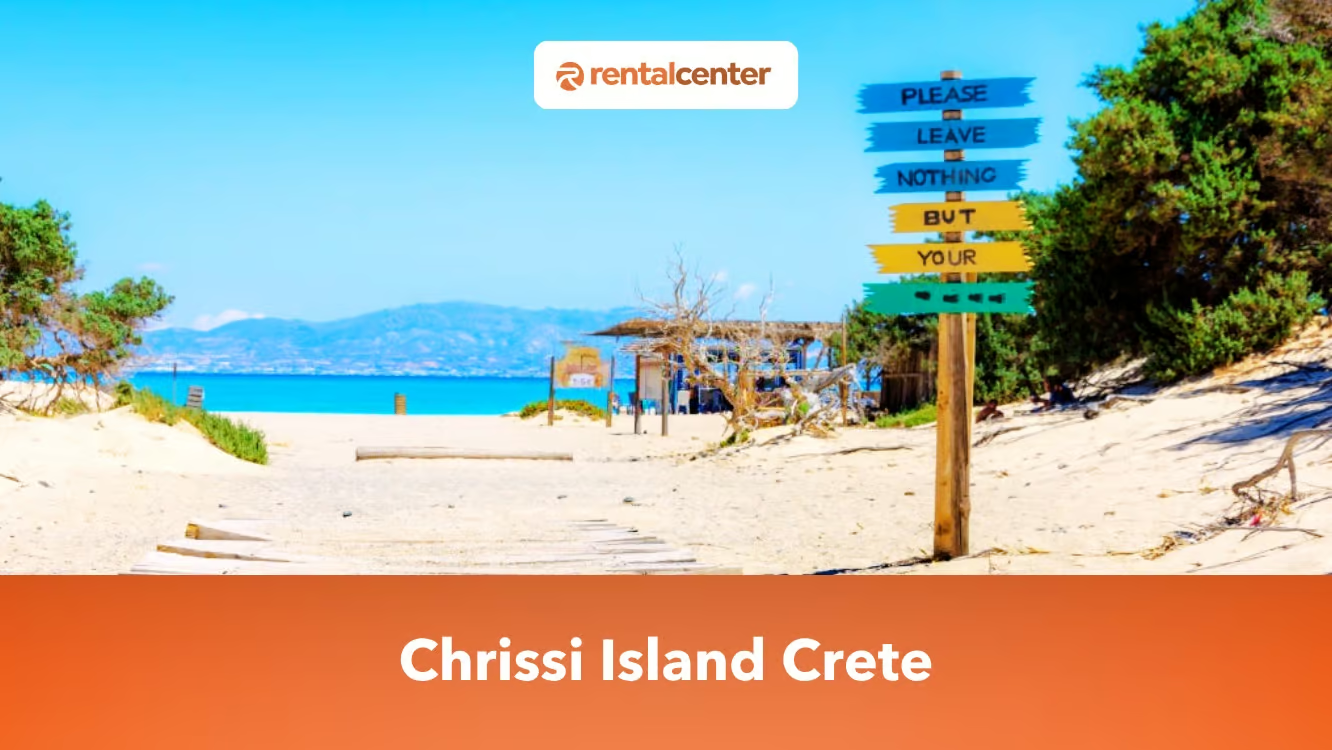
Chrissi Island (Greek: Gaidouronisi, meaning “Golden”) is an uninhabited, protected island in the Libyan Sea, 15 km (9.32 miles) south of Ierapetra on Crete’s southern coast. Since May 2022, the Crete regional administration has banned visitors from landing on Chrissi so the protected Natura 2000 ecosystem can recover. Setting foot on the island and entering its interior and cedar forest are prohibited. The island measures about 7 km (4.35 miles) by 2 km (1.24 miles) and rises to just 30 metres at its highest point. It shelters the largest naturally occurring Lebanon cedar forest in Europe – covering 70% of its land area – six named beaches with distinctive pink-tinted shell sand, and 49 types of fossils dating back hundreds of thousands of years. These features are the reason Chrissi is protected. Boat excursions from Ierapetra that still operate anchor offshore at a sheltered spot; you reach the water by swimming from the boat, and the island interior stays off-limits. Confirm the current access and operating status with the Ierapetra port authority or your boat operator before booking, because the rules can change.
Chrissi takes its name – “Golden” in Greek – from the pink-tinted shell sand that covers its beaches. The locals of Ierapetra simply call it “the Island.” The white sand beaches and African cedar woods are the natural features that earned Chrissi its protected status.
Visiting Chrissi: Closure and Protection Rules
Chrissi Island is closed to landing. Since May 2022, the Crete regional administration has prohibited visitors from going ashore so the protected Natura 2000 ecosystem can recover. The ban followed years of overtourism – roughly 200,000 day-trippers per year – that depleted the island’s groundwater and left litter that damaged the protected cedar and juniper trees, some of them over 100 years old. The Crete regional administration imposed the ban in May 2022, reported by ORF on 13 May 2022 and FAZ on 25 May 2022.
The protection rules are clear and apply to all visitors. Going ashore, entering the island interior, and entering the protected cedar forest are all prohibited. Camping, open fires, and smoking on the island are prohibited too. Collecting stones, shells, sand, or plants is also forbidden under Natura 2000 regulations. Boat excursions that still operate anchor offshore at a sheltered spot; access to the water and shallows is by swimming from the boat. Access and operating rules can change, so confirm the current status with the Ierapetra port authority or your boat operator before you book.
What is Chrissi Island?
Chrissi Island – also called Gaidouronisi in Greek – is a 7 km (4.35 miles)-by-2 km (1.24 miles) uninhabited island in the Libyan Sea, protected under the European Natura 2000 Networking Programme (Natura 2000). A unique cedar forest, 200 to 300 years old, covers 70% of the island; it is the largest naturally occurring Lebanon cedar forest in Europe, with trees 7 to 10 metres tall and one metre in diameter. The island’s highest point reaches only 30 metres above sea level. The cedar forest is closed to entry to let the protected ecosystem recover.

Chrissi stayed uninhabited through most of its history, yet recent archaeological excavations have recorded human activity on the northern side of the island as early as the Minoan era. These sites reveal traces of buildings and artefacts, evidence that people fished, extracted salt, and processed shells to make Royal Purple – a dye produced in classical antiquity from the mucus of the spiny dye-murex snail, a species common in the Mediterranean Sea. On the northwest part of the island stands a church dedicated to Saint Nicholas, known as Agios Nikolaos, most likely dating to the 13th century.
Where is Chrissi Island Located?
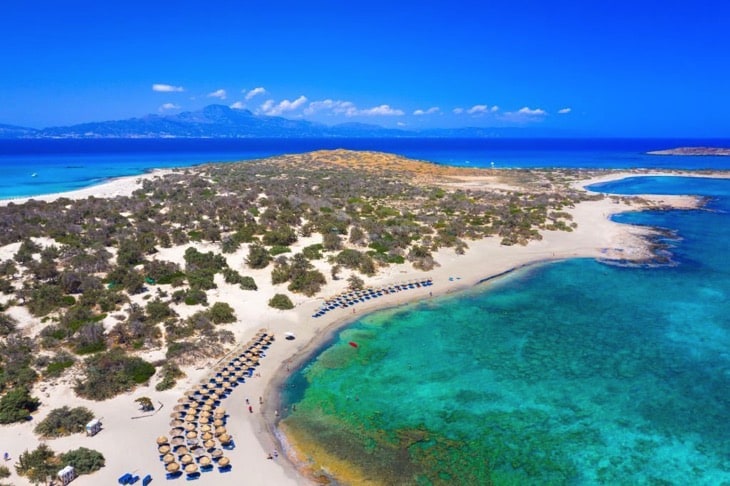
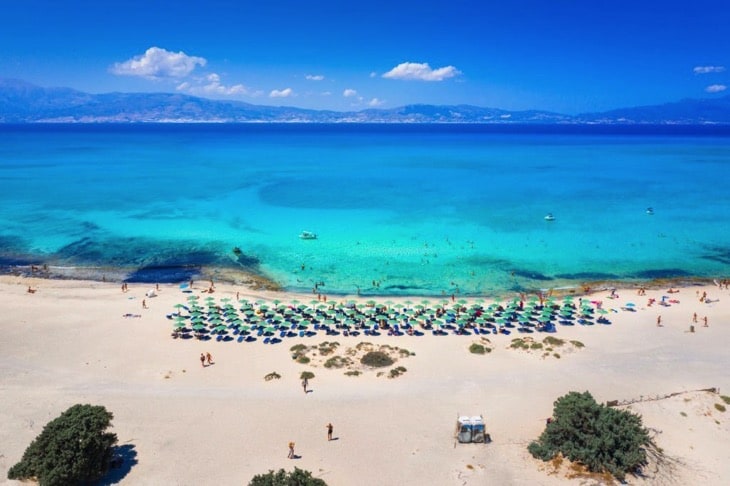
Chrissi Island sits 15 km (9.32 miles) south of Ierapetra, in the Lassithi region, surrounded by the Libyan Sea. It is a flat islet, 7 km (4.35 miles) long and 2 km (1.24 miles) wide, famous for tropical blue water that covers every hue of blue and green. The protected forest of large juniper trees rises behind beaches filled with thousands of broken shells that tint the sand pink. Ierapetra is the southernmost town on Crete’s coast and the closest mainland departure point for boat excursions to the waters around the island.
Chrissi Island Beaches
Chrissi Island has six named beaches, each with a different character – from the pink shell-sand dunes of Belegrina (Golden Beach) to the rocky shore of Chatzivolakas and the shallow water of Kataprosopo (5 metres deep). These beaches lie inside the protected zone and cannot be visited on foot, because landing on the island is banned. The six beaches are listed below in order of their prominence.

- Belegrina / Golden Beach (Chrissi Ammos): Belegrina is the island’s signature beach, with clear blue water, white sand tinted pink from hundreds of shattered shells, and towering junipers that hold the sand in place.
- Chatzivolakas (Hatzivolakas) Beach: Chatzivolakas stretches west of Belegrina and is the longest beach on Chrissi. Its bottom is mostly stony.
- Kataprosopo Beach: Kataprosopo faces the islet of Mikronissi at the easternmost part of Chrissi, split in half by a thin strip of rocky terrain. The juniper vegetation is sparser here than on the other eastern beaches. The water is just 5 metres deep.
- Kendra Beach: Kendra sits at the western and southern ends of Chrissi, near the small Cape Kendra. The bottom is mostly rocky and there is no tall vegetation for shade.
- Vages Beach: Vages forms along the eastern and southern ends of the island. Its bottom is mostly rocky, except for the sandy eastern side.
- Vougiou Mati Beach: Vougiou Mati lies on the southern side of the island. It is a long, rocky beach that forms on the east side of the quay.
Chrissi Island Nature and Ecosystem
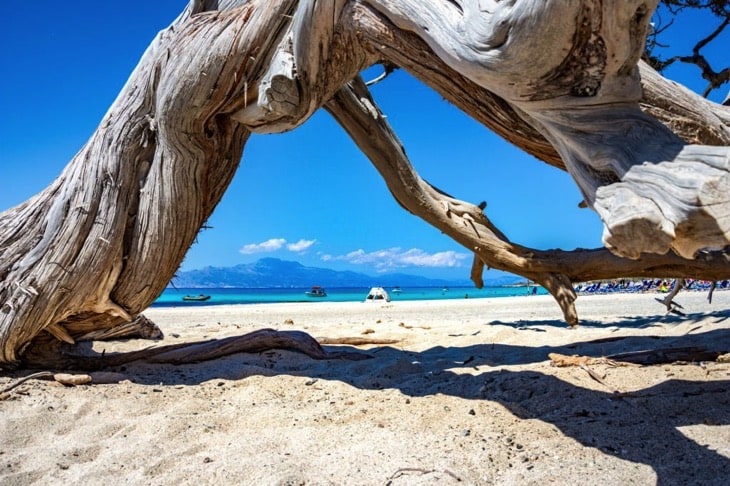
Seventy percent of Chrissi Island is covered by a 200 to 300-year-old cedar forest – the largest naturally occurring Lebanon cedar forest in Europe, with trees 7 to 10 metres tall and one metre in diameter. The European Natura 2000 Networking Programme protects the island’s scenery and ecosystem. This protected ecosystem is the reason the island is closed to landing, and collecting stones and shells is strictly prohibited.
Wildlife and Fossils
Chrissi shelters a significant ecology that includes Caretta-Caretta sea turtles and the Monk Seal (Monachus monachus), alongside non-poisonous snakes, lizards, worms, and rabbits. The island also holds a rare geological record: 49 types of fossils, produced after being trapped by hardened lava between 350,000 and 70,000 years ago, when the island was still underwater. These distinct natural features set Chrissi apart from other islands around Crete.
Minoan History and Royal Purple Dye
Minoan-era inhabitants left their mark on Chrissi’s northern shore. Archaeological excavations have uncovered traces of buildings and artefacts showing that people fished, extracted salt, and processed shells to make Royal Purple – a dye prized in classical antiquity. The dye came from the mucus of the spiny dye-murex snail, the purple dye murex, a species found across the Mediterranean Sea.
What You Can See Around Chrissi Island?
Visitors to the waters around Chrissi Island can view the island’s exterior – its beaches, cedar canopy, and the silhouette of the Agios Nikolaos church and the lighthouse – from a boat anchored offshore, since going ashore is banned. The Church of Agios Nikolaos dates to the 13th century and was built on the site of an ancient building; it served as a religious centre for the hermits who once lived here, and near it lie ancient graves, some dating back to the Roman Empire. Swimming in the clear water from the anchored boat is the only on-water access; the island interior and cedar forest stay off-limits.
How to Get to Chrissi Island?
You cannot land on Chrissi Island. Since May 2022, going ashore has been banned to protect the Natura 2000 ecosystem, so there is no walk-on day trip and no landing by ferry. Boat excursions from Ierapetra that still operate anchor offshore at a sheltered spot; access to the water is by swimming from the boat, and the island itself stays off-limits. Operating status can change from season to season, so confirm the current rules with the Ierapetra port authority or your boat operator before you book, rather than assuming a scheduled crossing runs.


Getting to Ierapetra by Car
Renting a car in Crete is the most flexible way to reach Ierapetra, letting you set your own schedule and explore the south coast on the way. There are 5 main factors to consider before you book a rental car in Crete, listed below in order of importance.
- Insurance: Insurance protects you against the cost of damage when renting a car; without it, you carry the full repair cost yourself. Crete car rental includes collision damage waiver insurance, and a driver’s credit card is required as a guarantee.
- Documents needed for renting a car: A valid driving licence is essential, and you cannot collect a car without one. You also present a credit or debit card, along with a passport or ID card.
- Driver’s age: The legal age to drive in Crete is 18 years old, so younger drivers cannot rent a car. The driver must hold a valid driving licence and carry essential documents such as an ID or passport.
- Car type: A larger car carries a group or family in comfort, while a smaller car handles Crete’s narrow roads better. Choosing the right car type is a key part of deciding what to rent in Crete.
- Driver’s gender: Both women and men can drive in Crete, so gender places no limit on renting. The driver must be of legal age; gender does not affect eligibility.
How much does a car rental in Crete cost?
Crete is best travelled by rented car, which gets you quickly to the island’s top destinations. Crete car rental costs vary by number of people, itinerary, car type, destination, and duration. The average cost of renting a car in Crete is around €25 ($28.70, £21.19) to €40 ($45.92, £33.90) per day. A car rented for a whole week costs an average of €250 ($287.03, £211.88), and a weekend rental costs around €78 ($89.55, £66.11). Most car rental shops in Crete offer online booking, so you can pick your car, follow the steps, and reserve a vehicle on their website. Check and secure all the required documents before you book.

Practical Tips for Visiting the Chrissi Island Area
Chrissi Island is closed to landing, so plan around the closure. The three tips below help you prepare.
- Confirm access before booking: Going ashore has been banned since May 2022 to protect the Natura 2000 ecosystem. Check the current access and operating status with the Ierapetra port authority or your boat operator before you book, because the rules can change.
- Prepare for an offshore excursion: Access is swimming from a boat anchored offshore at a sheltered spot when excursions run. Pack water, food, sunscreen, and a hat, since you stay on or near the boat and the island interior is off-limits.
- Respect the protection rules: Going ashore, entering the cedar forest, camping, open fires, and smoking on the island are all prohibited. Collecting shells, sand, stones, or plants is also forbidden under Natura 2000 regulations.
What Does the Chrissi Island Map Look Like?
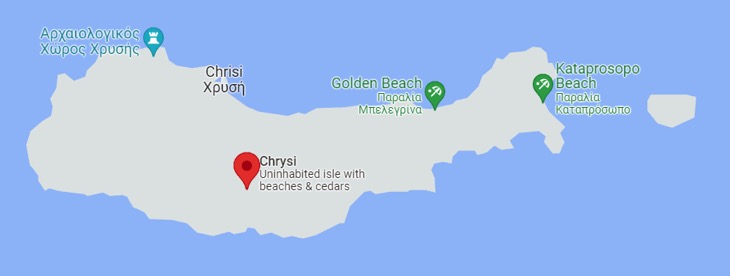
On the map, Chrissi Island appears as a long, flat islet 7 km (4.35 miles) by 2 km (1.24 miles), ringed by six beaches and lying 15 km (9.32 miles) south of Ierapetra in the Libyan Sea. Its six beaches sit around the island’s perimeter: Vougiou Mati and Belegrina (Golden Beach) on the south and north sides, Chatzivolakas to the west of Belegrina, Kataprosopo and Vages on the eastern side, and Kendra at the western and southern ends. The Agios Nikolaos church and the lighthouse stand at the western end of the island. The whole island is a protected zone that is closed to landing.

Where to Stay Near Chrissi Island?
Ierapetra is the closest town to Chrissi Island, with accommodation ranging from affordable, comfortable rooms to upscale villas. The Enorme Santanna Beach is a luxury hotel in Ierapetra, a few kilometres from the island; it offers modern amenities, a pool, a restaurant, a bar, and a spa. Tylissos Beach Hotel sits just a few metres from its own beach and offers an outdoor swimming pool, a poolside bar, and a snack bar with free sun loungers for guests. Rooms at Tylissos Beach Hotel come with air conditioning and furnished balconies with sea views.
Where to Eat Near Chrissi Island?
Three restaurants near Ierapetra are popular with travellers visiting the area. BOHEME café-bar-restaurant is a modern-themed café for a laid-back meal with a great view, serving sandwiches, meat dishes, salads, and appetisers. Vira Potzi offers fantastic views of the Cretan sea and serves traditional Greek cuisine and seafood with friendly service. Levante Restaurant Fish Tavern is the place for seafood – the rates run a bit higher than other restaurants, but the servings are large, and it opens seven days a week.

Is the Ierapetra Area Safe?
Yes, the Ierapetra area is safe. Crime rates in Ierapetra are low, as in other parts of Greece. Visitors to Mediterranean destinations like Ierapetra are considered secure, and the locals are welcoming and friendly. Still, keep an eye on your belongings and avoid walking alone late at night, as you would in any travel destination.
Is the Area Good for Children?
Yes, the Ierapetra area suits families with children well. The mainland beaches near Ierapetra offer shallow, clear water and stretches of sand that are safe for play, since Chrissi Island itself is closed to landing. Many of these rank among the best beaches in Crete for young children.
What are the factors to consider before renting a car in Crete?
Listed below are the factors to consider before renting a car in Crete.
- Insurance: Car rental insurance is important, as it protects a passenger against the cost of damage when renting a car. Crete car rental includes insurance for collision damage waiver and a driver’s credit card is required as a guarantee.
- Driver’s age: The legal age requirement when driving in Crete is 18 years old. The driver must have a valid driving licence and essential documents like an ID or passport.
- Driver’s gender: Women and men are able to drive in Crete. As long as the driver is of the legal age of 21, driving is permitted in Crete, regardless of gender.
- Car type: Travelling with groups or family members requires a much bigger car. Car rental companies in Crete offer a variety of cars to choose from. Selecting a smaller car is best when driving in Crete. The reason for that is that some Greek roads are narrow. The car type is one big factor in answering the question of how to choose the right car to rent in Crete.
- Documents needed for renting a car: One important document needed for renting a vehicle is a valid driving licence. However, a credit or debit card is presented, including a passport or an ID card.
Frequently Asked Questions
Can you visit Chrissi Island?
You cannot land on Chrissi Island. Since May 2022, going ashore has been banned to protect the Natura 2000 ecosystem, so there is no walk-on day trip. Boat excursions from Ierapetra that still operate anchor offshore; access is swimming in the water from the anchored boat, and the island interior and cedar forest stay off-limits. Confirm the current status with the Ierapetra port authority or your boat operator before booking.
Is Chrissi Island open to visitors?
No. Chrissi Island has been closed to landing since 2022, when the Crete regional administration banned visitors from going ashore to let the protected Natura 2000 ecosystem recover after overtourism damaged the island’s cedar and juniper trees. You cannot walk the island or enter the cedar forest. Boat excursions that still run anchor offshore at a sheltered spot; the only access is swimming in the water from the boat, and the rules can change – so confirm the current status with the Ierapetra port authority or your boat operator before you book.
Why is Chrissi Island closed?
Chrissi Island is closed because overtourism damaged its protected ecosystem. Roughly 200,000 day-trippers per year depleted the island’s groundwater and left litter that harmed the protected cedar and juniper trees, some of them over 100 years old. In May 2022, the Crete regional administration banned landing so the Natura 2000 ecosystem could recover.
Where is Chrissi Island?
Chrissi Island sits 15 km (9.32 miles) south of Ierapetra in the Libyan Sea, off Crete’s southern coast. It is a flat, uninhabited islet about 7 km (4.35 miles) long and 2 km (1.24 miles) wide, and the whole island is a protected Natura 2000 zone that is closed to landing.
Can you swim at Chrissi Island?
Swimming near Chrissi Island is possible only where boat excursions from Ierapetra still operate, because the boat anchors offshore at a sheltered spot and you swim from the boat. Going ashore or entering the island is not permitted, because landing has been banned since 2022. Confirm whether excursions are currently running with the Ierapetra port authority or your boat operator before you book.