







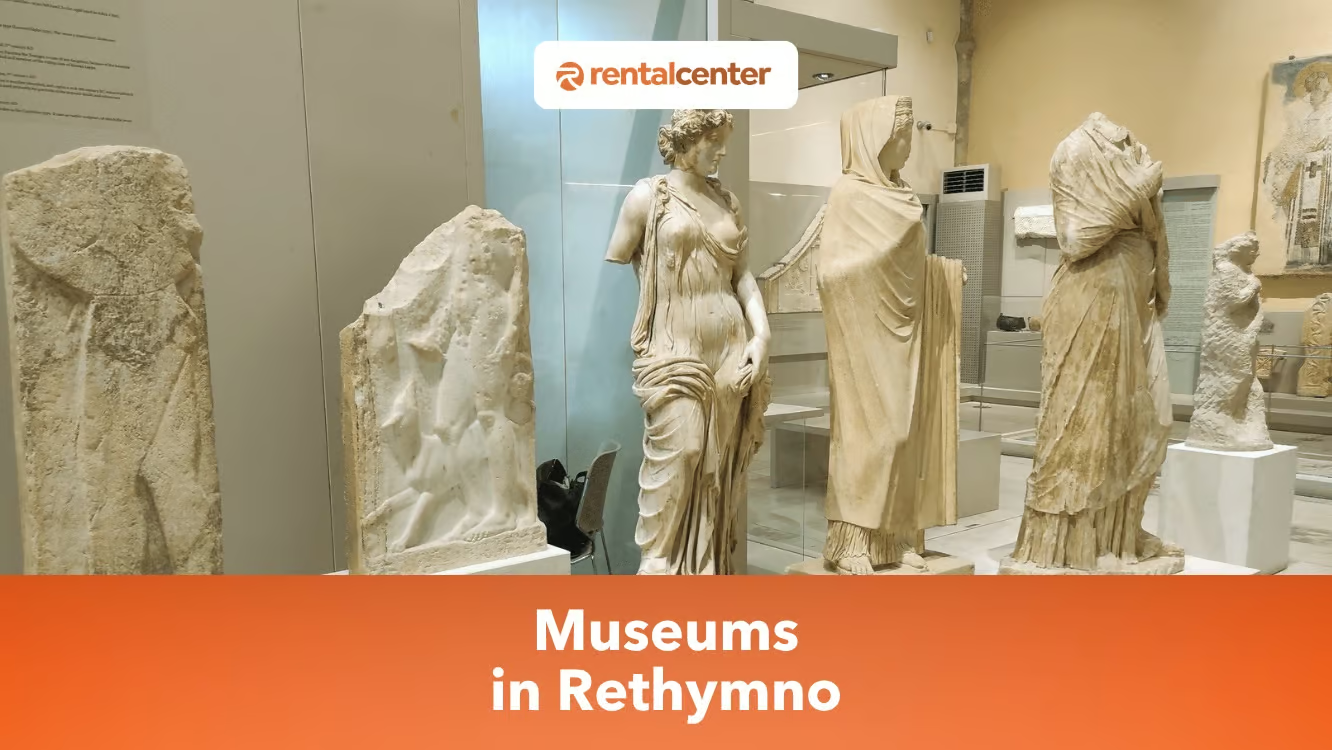
Rethymno’s museums span more than 3,000 years of history – from Minoan artefacts at the Archaeological Museum and prehistoric fossils at the Paleontological Museum to contemporary Greek art at the Museum of Contemporary Art of Crete (CCA). Several sit within walking distance of the Fortezza in the Venetian Old Town, while a handful – the Museum of Ancient Eleutherna, the Military Museum of Chromonastiri, and the monastery museums – require a car. This guide covers all 11, with opening hours, ticket prices, addresses, and highlights for each.
Practical information (hours, prices, addresses) was verified in July 2026 against official museum sources, including the Greek Ministry of Culture website (culture.gov.gr). The Archaeological Museum of Rethymno is currently operating from a temporary location at 4 St. Francis Street while its permanent facility in the Pentagon bastion is being prepared. Always confirm current details with the museum before your visit.
The best museums in Rethymno at a glance:
- Archaeological Museum of Rethymno – artefacts from the Late Neolithic to the Roman period, currently housed in the Church of St. Francis.
- Paleontological Museum of Rethymno – 300 million years of Cretan natural history inside the restored 9-domed Mastabas Mosque.
- Museum of Contemporary Art of Crete (CCA) – around 500 works of modern Greek and international art.
- Historical and Folk-Art Museum – traditional Cretan life in a restored Venetian mansion in the Old Town.
1. Archaeological Museum of Rethymno
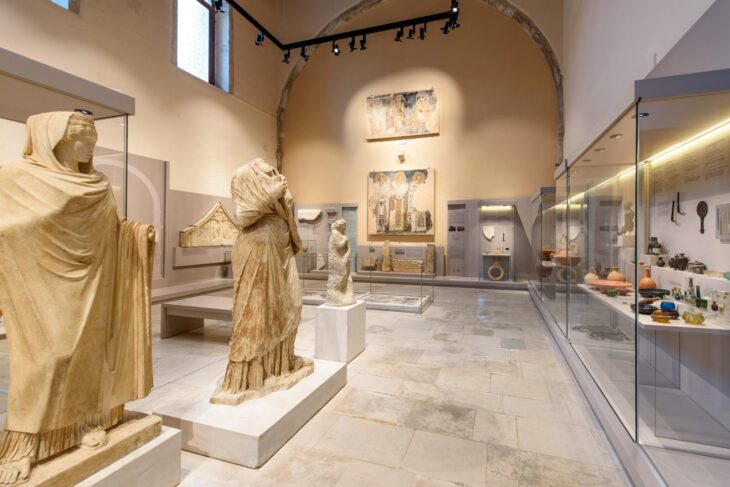
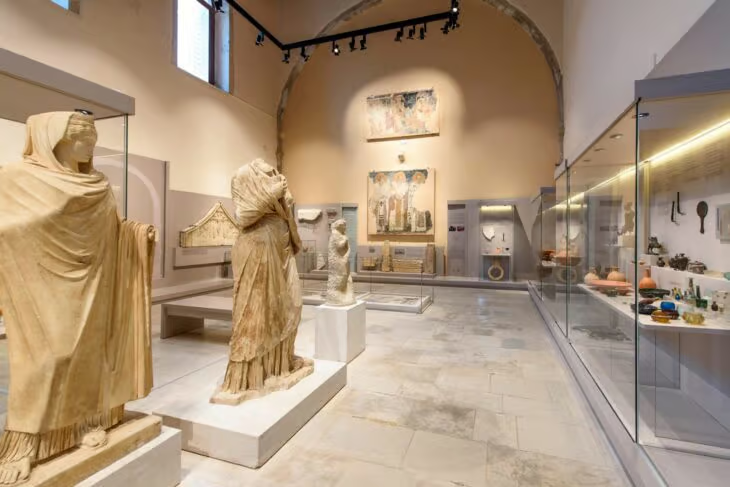
The Archaeological Museum of Rethymno (4 St. Francis Street, tel. +30 28310 27506) is currently housed in the 16th-century Church of St. Francis – a temporary location while the museum’s permanent home in the Pentagon bastion, opposite the entrance to the Fortezza, is being prepared. Established in 1887 by the Society of Friends of Education, it holds a diverse collection of artefacts spanning from the Late Neolithic and Proto-Minoan eras to the late Roman period: pottery, tools, figurines, coins, weaponry, ceramics, jewellery, marble statues, steles, temple columns, and everyday objects. The exhibits are organised chronologically and by excavation site, giving visitors a coherent overview of the archaeological history of the Rethymno region.
Visitor information – Archaeological Museum of Rethymno
- Address: 4 St. Francis Street, Rethymno (temporary location)
- Opening hours: Tue–Sun; summer (Apr–Oct) 09:00–17:00; winter (Nov–Mar) 08:30–15:30. Closed Mondays.
- Admission: €5 ($5.77, £4.27) | Reduced rates for students and seniors
- Free entry: first Sunday of each month, November–March, and on designated Greek national holidays
- Phone: +30 28310 27506
2. Paleontological Museum of Rethymno
The Paleontological Museum of Rethymno (Satha & Markellou St., admission €4 ($4.61, £3.42)) presents 300 million years of Cretan natural history inside the beautifully restored 9-domed Mastabas Mosque. The Goulandris Natural History Museum (GNHM) received stewardship of the historic mosque from the Ministry of Culture and, after a comprehensive restoration and museological study, transformed it into the Paleontological Museum, which now operates as a branch of the GNHM.
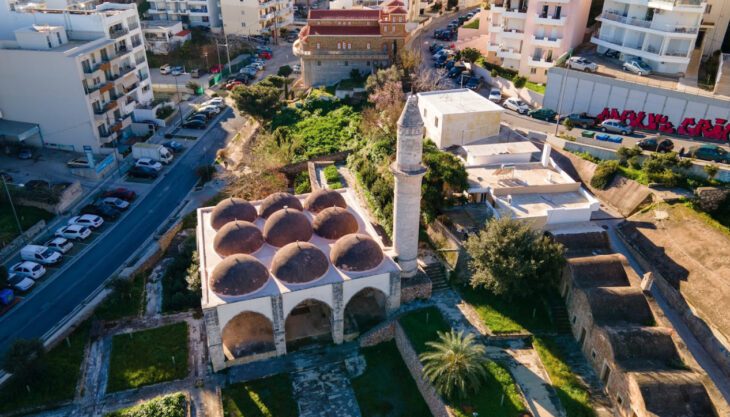
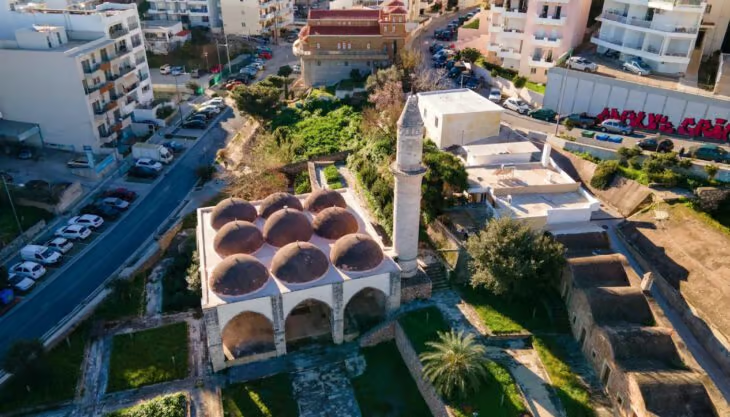
The core of the collection – sourced from the Municipality of Rethymno and officially transferred to GNHM – was studied and conserved in partnership with the University of Athens. It features life-sized, anatomically accurate reconstructions of endemic mammals: visitors can explore the world of dwarf Cretan elephants, dwarf hippopotamuses, and polymorphous Cretan deer, and learn about their place in Greek mythology. The museum’s 250-square-metre garden showcases trees and plants indigenous to Crete – plane, orange, olive, carob, and Cretan palm trees, oleanders, laurels, and shrubs such as wild rose, lavender, dittany, and rosemary. Alongside its static exhibits, the museum runs events, guided tours, and educational programmes for Greek and international visitors.
Visitor information – Paleontological Museum of Rethymno
- Address: Satha & Markellou St., Rethymno (Mastabas Mosque)
- Opening hours: Apr–Oct, Mon–Sat 09:00–15:00; Nov–Mar, Tue/Thu/Sat 09:00–15:00
- Admission: €4 ($4.61, £3.42) | Reduced rates available
- Car required: No – central, walkable from the Old Town
3. Museum of Contemporary Art of Crete (CCA)
The Museum of Contemporary Art of Crete (CCA, 32 Mesologiou St., tel. +30 28310 52530, admission €3 ($3.46, £2.56)) holds approximately 500 works across painting, drawing, and aquarelle – including the complete career output of the painter Lefteris Kanakakis and works by more than 120 Greek and international artists. Founded in 1992 as the Municipal Gallery “L. Kanakakis” and housed in a restored Venetian building, it is today Crete’s leading contemporary-art institution, with a permanent collection complemented by rotating temporary exhibitions.

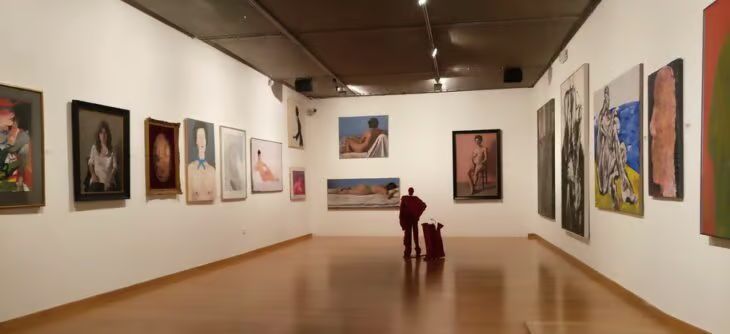
The museum’s exhibitions have spotlighted artists such as Apostolos Palavrakis, Lucas Samaras, Bedri Baykam, and Panos Kokkinias, and while it focuses on Greek artists it has also presented American, South Korean, and other international work. Admission is free for all visitors every Thursday.
Visitor information – Museum of Contemporary Art of Crete
- Address: 32 Mesologiou St., Rethymno
- Opening hours: May–Oct, Tue–Fri 09:00–14:00 & 19:00–21:00, Sat–Sun 10:00–15:00; Nov–Apr, Tue–Fri 09:00–14:00 (Wed & Fri also 18:00–21:00), Sat–Sun 10:00–15:00
- Admission: €3 ($3.46, £2.56) | Free every Thursday
- Phone: +30 28310 52530
- Car required: No – central
4. Historical and Folk-Art Museum of Rethymno
The Historical and Folk-Art Museum of Rethymno (28 M. Vernardou St., €4 ($4.61, £3.42) admission, open Mon–Sat 10:00–15:00) preserves traditional Cretan life inside a restored two-storey Venetian mansion in the Old Town, near the Rimondi Fountain, the Neratze Mosque, and the Archaeological Museum. Established in 1974, it holds historical and folk artefacts from across Crete, with a particular focus on the Rethymno prefecture, dating from the 4th century BC onward.
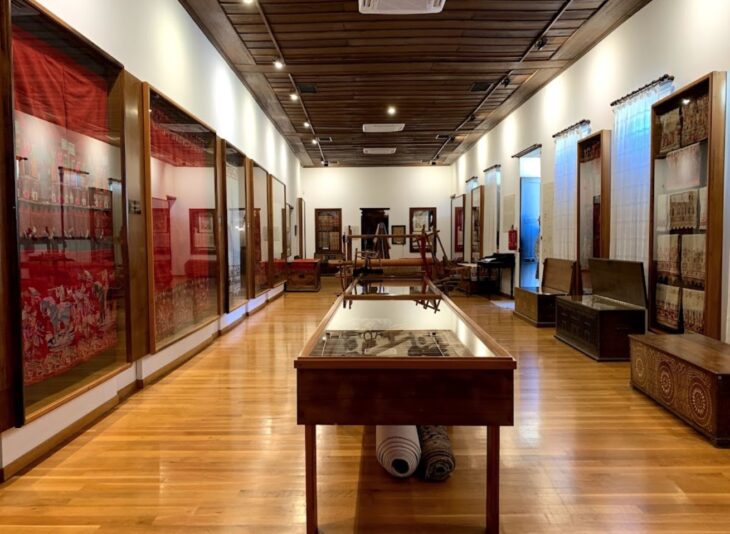
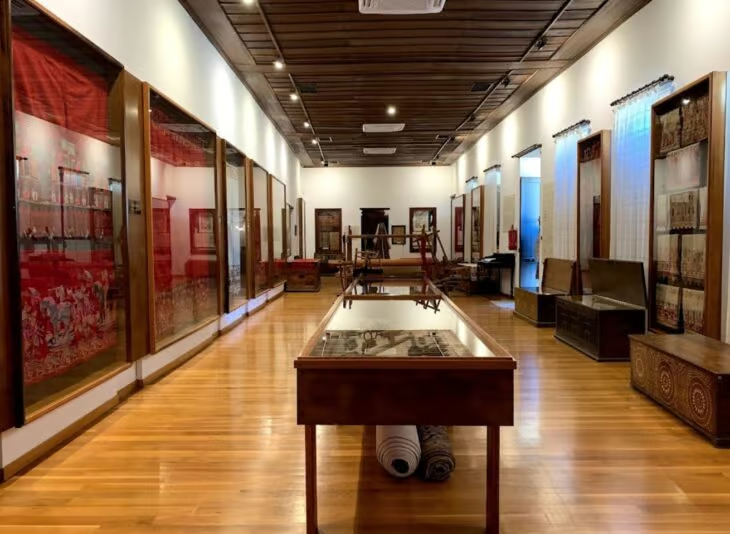
The exhibits – many from private donations – illustrate traditional farming methods, bread-making, and trades such as blacksmithing and shoemaking. The historical collection, spanning the 4th century BC to the 20th century AD, includes weaponry used by Cretans during the island’s many conflicts, as well as documents, photographs, maps, and items relating to Arkadi and the Battle of Crete.
Visitor information – Historical and Folk-Art Museum
- Address: 28 M. Vernardou St., Old Town, Rethymno
- Opening hours: Mon–Sat 10:00–15:00
- Admission: €4 ($4.61, £3.42) | Reduced rates available
- Car required: No – in the Old Town
5. Stagakis Cretan Lyra Workshop and Museum
The Stagakis Workshop and Museum in central Rethymno is the only place in Crete where you can watch a Cretan lyra being hand-crafted from scratch and buy an instrument directly from the makers. This multi-generational family enterprise, led by Manolis Stagakis, has built the iconic pear-shaped, three-stringed Cretan lyra for over three generations, and its handcrafted instruments – prized for their tone and craftsmanship – are favoured by some of Crete’s finest musicians.
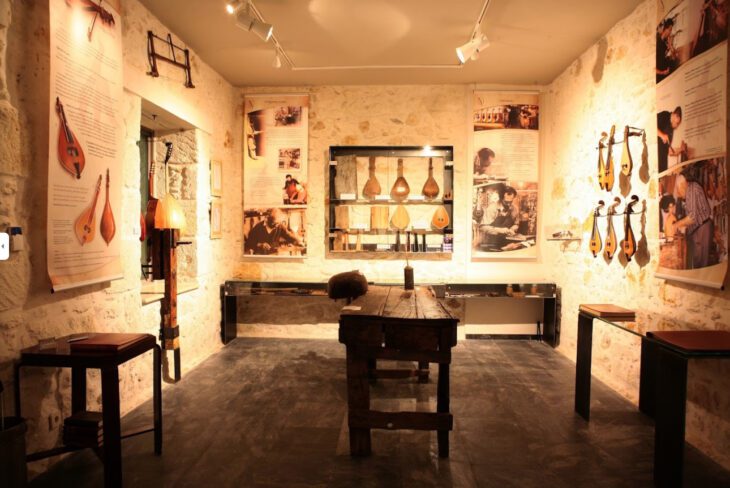
The museum showcases the family’s 65-year legacy with a small permanent exhibition of Cretan lyras and other Greek stringed instruments such as the mandola, bouzouki, and tzouras. The highlight is watching Manolis and his son Dimitris at work; visitors occasionally enjoy impromptu live Cretan music from local musicians.
Visitor information – Stagakis Lyra Workshop and Museum
- Address: Central Rethymno (Old Town area)
- Opening hours: Typically Mon–Sat during workshop hours – call ahead to confirm
- Admission: Free (workshop visit); instruments for sale
- Car required: No – central
6. Military Museum of Chromonastiri
The Military Museum of Chromonastiri (€3 ($3.46, £2.56) admission, ~1 kilometers (6.21 miles) from Rethymno, open Tue–Fri 09:00–15:00) chronicles Greek military history from the Venetian era to World War II inside the restored 17th-century Villa Claudio. The local community transferred Villa Claudio – once home to the noble Claudio family – to the Greek Army in 1997, which converted the Venetian mansion into a museum, opened in 2010.


Its collection spans the Venetian era, the Hellenic Revolution of 1821, the Macedonian Liberation Wars, and WWII: weapons, uniforms, medals, military equipment, and an extensive photographic archive of the Greek armed forces. The outdoor area displays warplanes and military vehicles, with periodic temporary exhibitions.
Visitor information – Military Museum of Chromonastiri
- Address: Village of Chromonastiri, ~1 kilometers (6.21 miles) from Rethymno centre
- Opening hours: Tue–Fri 09:00–15:00 | Sun 10:00–14:00 | Sat groups only | Closed Mondays
- Admission: €3 ($3.46, £2.56) | Reduced: €1.5 ($1.73, £1.28)
- Car required: Yes – no direct public bus from Rethymno
7. Museum of Ancient Eleftherna
The Museum of Ancient Eleutherna (23 kilometers (14.29 miles) from Rethymno, near the Eleutherna archaeological site) is the only museum in Greece dedicated entirely to a single site, displaying 3,500 years of finds from Prehistoric to Byzantine times. Inaugurated on 19 June 2016, it became only the fourth site-dedicated archaeological museum in Greece, joining those of Olympia, Delphi, and Vergina. Its exhibits cover the period from 3000 BC to 1300 AD, drawn from the nearby site and the necropolis of Orthi Petra. The ongoing excavations, directed by Professor Nikolaos Stampolidis of the University of Crete, began in the mid-1980s.
Room A presents artefacts from regions beyond Crete – Attica, the Peloponnese, the Cyclades, Asia Minor, Cyprus, Phoenicia, and Egypt – illuminating public, political, religious, and private life in Eleutherna, with digital installations enhancing the displays. Room B is devoted to religion and worship, from the early Iron Age to the Byzantine era, and features the Archaic sculpture known as the Lady of Eleutherna, related to the Lady of Auxerre in the Louvre. Room C focuses on funerary findings from the Orthi Petra necropolis, shedding light on burial customs from the era of Homeric Greece – including a pyre that recalls the funeral of Patroclus in the Iliad – alongside fine jewellery, weaponry, grave goods, bronze and ceramic vessels, figurines, and a notable bronze shield.
Visitor information – Museum of Ancient Eleutherna
- Address: Eleutherna, ~23 kilometers (14.29 miles) southeast of Rethymno
- Opening hours: Seasonal – generally Wed–Mon 08:30–15:30; confirm before visiting
- Admission: Approx. €4 ($4.61, £3.42) | Reduced rates available
- Car required: Yes – best reached by car
8. Folk Museum of Spili
The Folk Museum of Spili (village of Spili, 3 kilometers (18.64 miles) from Rethymno, free admission, open daily 10:00–18:00) documents 19th- and early-20th-century Cretan rural life across several rooms of a traditional stone house. The collection emphasises the agricultural cycle: hand-carved wooden ploughs, terracotta pithari (storage jars), grape-pressing equipment, and woven grain baskets show how Cretan families worked the land. Textiles are a highlight – locally hand-woven wool blankets and embroidered wedding dresses display patterns that varied from village to village. The kitchen display, with its wood-burning hearth and ceramic cooking vessels, illustrates traditional food preparation methods unchanged for centuries.
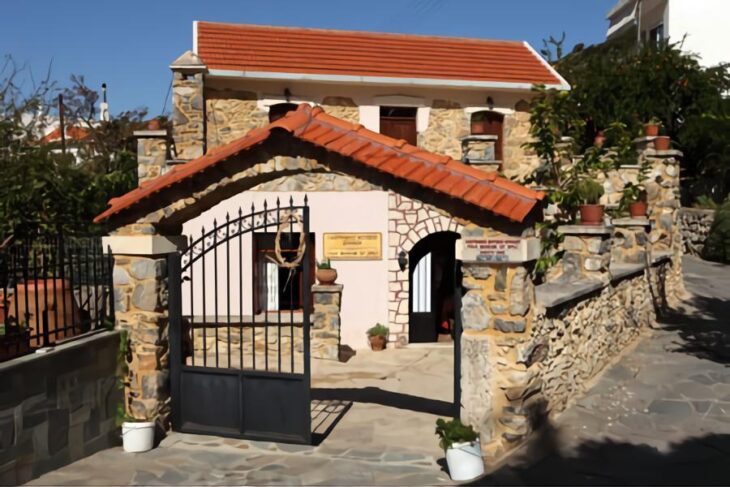
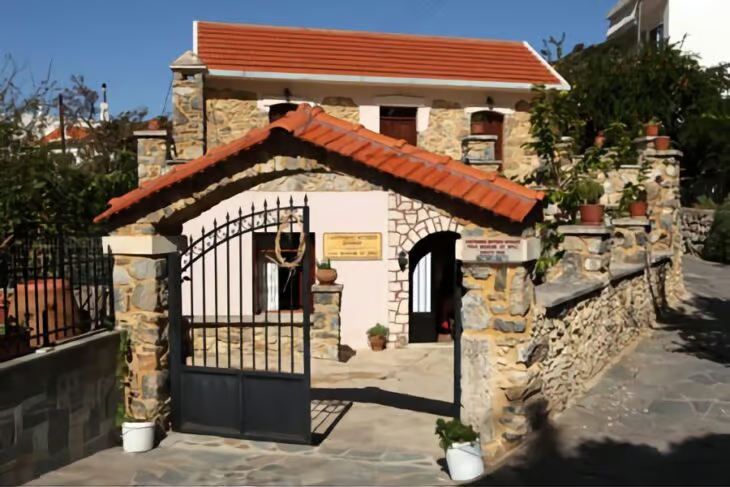
Spili itself rewards a visit: the village is known for its Venetian lion-head fountain and its tavernas serving local dishes, making it an easy half-day trip combined with the museum.
Visitor information – Folk Museum of Spili
- Address: Village of Spili, ~3 kilometers (18.64 miles) south of Rethymno
- Opening hours: Daily 10:00–18:00
- Admission: Free (donations welcome)
- Car required: Yes – 30 min by car, or KTEL bus toward Plakias
9. Arkadi Monastery
Arkadi Monastery (23 kilometers (14.29 miles) southeast of Rethymno) is a working Eastern Orthodox monastery and national heritage site where 943 Cretans chose death over surrender during the 1866 revolt against Ottoman rule – the event that drew international attention to the Cretan struggle for independence. Set on a fertile plateau and fortified by a thick defensive wall, its 16th-century catholicon (church) shows a distinct Renaissance influence, combining Roman and baroque elements. During the 16th century the monastery was a centre of education and culture, with a school and a well-stocked library.
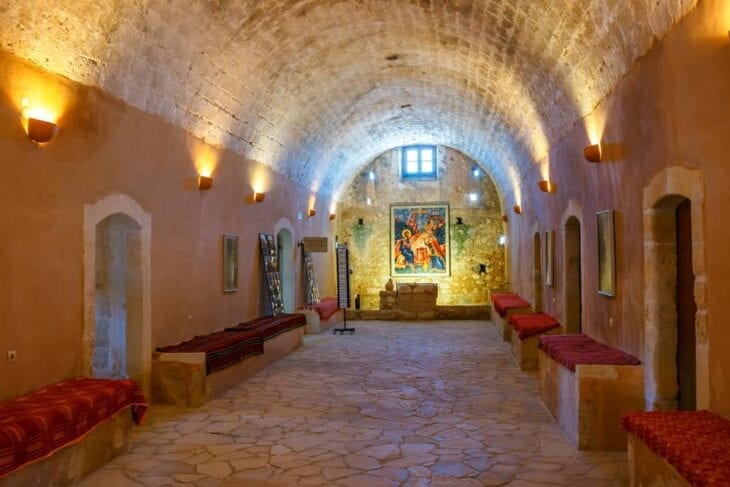
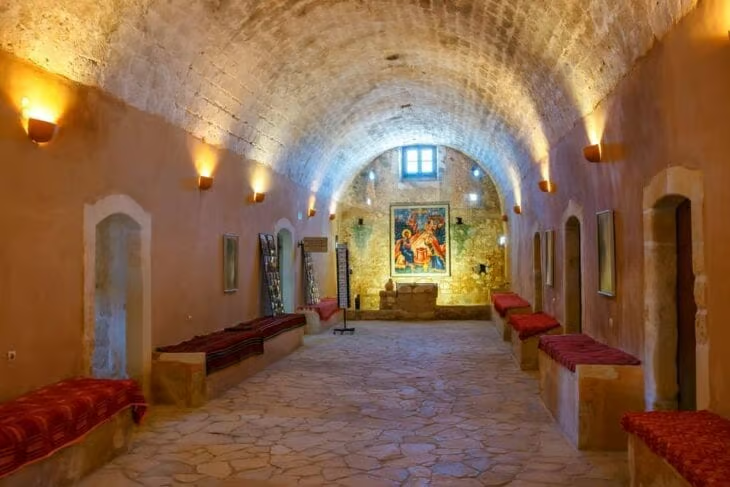
In the revolt of 1866, the monastery sheltered hundreds of Greeks, mostly women and children. After a three-day battle, and on the orders of the abbot, the defenders detonated barrels of gunpowder rather than surrender – a collective sacrifice that became a symbol of Cretan resistance. November 8 is commemorated each year in Arkadi and Rethymno.
Visitor information – Arkadi Monastery
- Address: Arkadi, ~23 kilometers (14.29 miles) southeast of Rethymno
- Opening hours: Daily, seasonal (roughly 09:00–19:00 in summer, shorter in winter)
- Admission: Approx. €3 ($3.46, £2.56) (includes the small monastery museum)
- Car required: Yes – best reached by car
10. Preveli Monastery Museum
Preveli Monastery Museum (4 kilometers (24.85 miles) from Rethymno, best reached by car) houses 17th-century icons, embroidered vestments, ecclesiastical vessels, and a library of around 1,000 volumes inside one of Crete’s most dramatically situated monasteries, overlooking the Libyan Sea. Among its most significant exhibits are early 18th-century sacerdotal vestments, the Eulogistic Cross of Efraim Prevelis (latter half of the 18th century), a 1798 parchment declaring the monastery a stauropegion, a silver-bound Gospel from 1807, the 1840 rood-screen in the aisle of Saint John the Theologian, and a gold-plated chalice with cover from 1847.
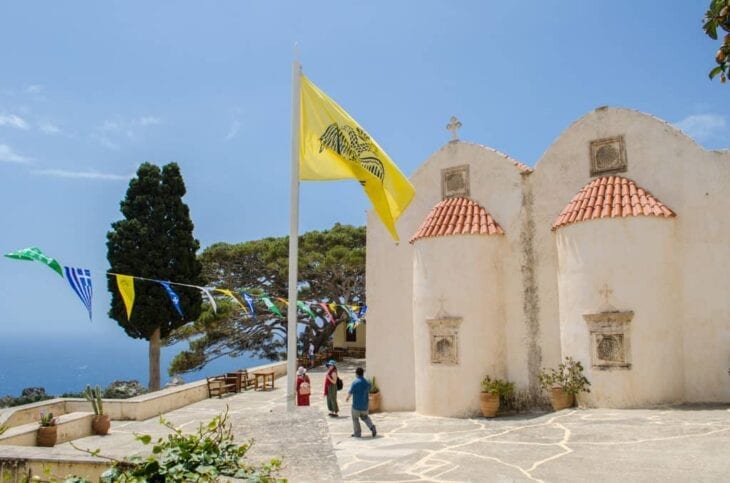
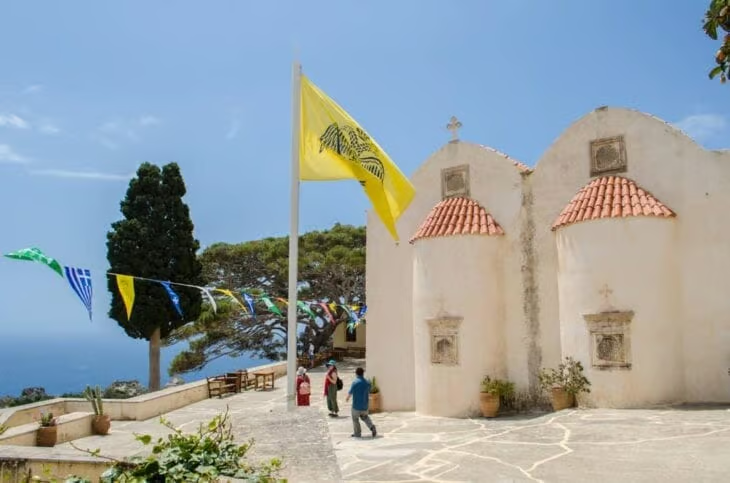
The monastery is also remembered for sheltering Allied soldiers after the Battle of Crete in WWII, helping many escape to Egypt by submarine.
Visitor information – Preveli Monastery Museum
- Address: Preveli, ~4 kilometers (24.85 miles) south of Rethymno
- Opening hours: Daily, seasonal – generally 09:00–19:00 in summer
- Admission: Approx. €3 ($3.46, £2.56)
- Car required: Yes – best reached by car or guided tour
11. Museum of Wooden Sculpture, Axos
The Museum of Wooden Sculpture in Axos (54 kilometers (33.55 miles) from Rethymno, €5 ($5.77, £4.27) adults / €3 ($3.46, £2.56) students) displays over 100 life-size wood carvings by the self-taught sculptor George Koutantos, with the largest works reaching up to 6 metres. Set at the entrance to the village of Axos – roughly an hour’s drive from Rethymno – it traces Koutantos’s journey from his first carvings at the age of nine to his mature masterpieces. Standout works include “The Eagle and the Snake” (6 metres), “My Parents and I” (3 metres tall), and “The Little Mermaid” (5 metres long).
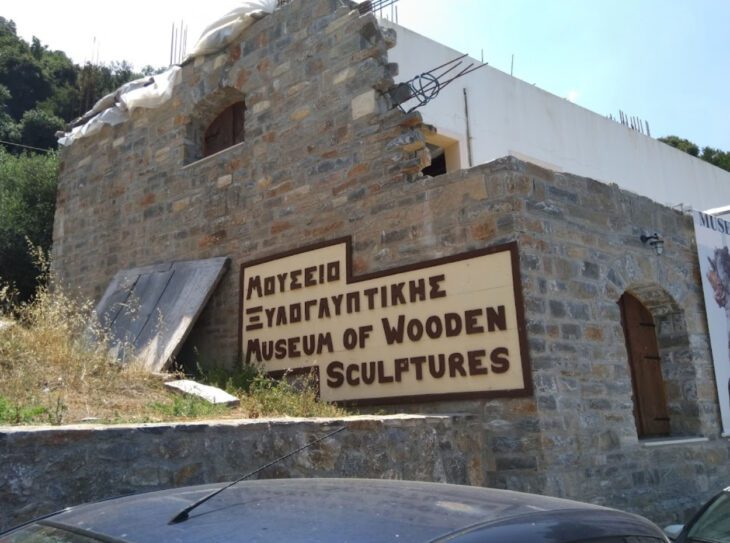
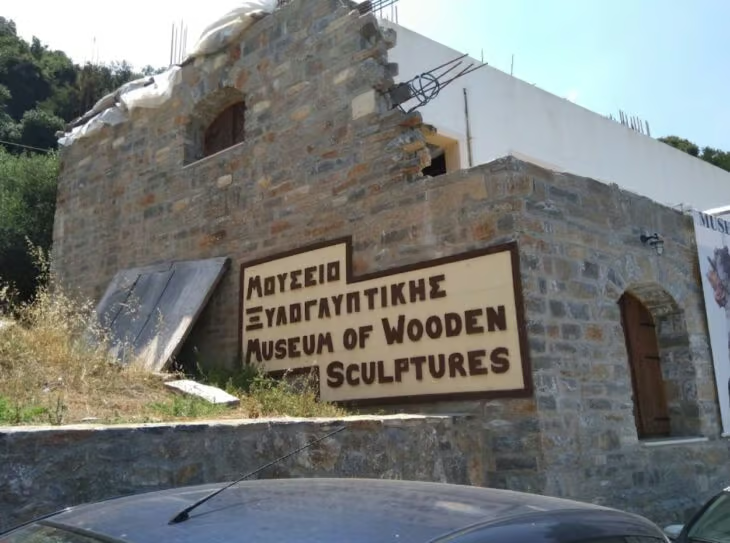
The museum offers a rich window onto Cretan woodworking and craftsmanship, an essential stop for anyone interested in the island’s folk-art tradition.
Visitor information – Museum of Wooden Sculpture, Axos
- Address: Village of Axos, ~54 kilometers (33.55 miles) from Rethymno
- Opening hours: Daily, seasonal – call ahead to confirm
- Admission: €5 ($5.77, £4.27) adults | €3 ($3.46, £2.56) students
- Car required: Yes – about 1 hour by car
Practical Tips for Visiting Rethymno’s Museums
Most city-centre museums in Rethymno are open Tuesday–Sunday and lie within walking distance of the Fortezza and the Venetian Old Town. The remote museums and monastery museums need a car.
Free admission days at Greek state museums
Greek state museums – including the Archaeological Museum of Rethymno – offer free admission on the following dates each year:
- 6 March (in memory of Melina Mercouri)
- 18 April (International Monuments Day)
- 18 May (International Museums Day)
- The last weekend of September (European Heritage Days)
- 28 October (Ohi Day, Greek national holiday)
- The first Sunday of every month, 1 November through 31 March
Note: The Museum of Contemporary Art of Crete (CCA) offers free admission every Thursday throughout the year.
Which Rethymno museums need a car?
Most city-centre museums – the Archaeological Museum, the CCA, the Historical and Folk-Art Museum, and the Stagakis Lyra Workshop – are walkable from the Old Town. Five sites require a car or taxi: the Military Museum of Chromonastiri (~1 kilometers (6.21 miles)), the Museum of Ancient Eleutherna (~23 kilometers (14.29 miles)), Arkadi Monastery (~23 kilometers (14.29 miles)), the Folk Museum of Spili (~3 kilometers (18.64 miles)), Preveli Monastery Museum (~4 kilometers (24.85 miles)), and the Museum of Wooden Sculpture in Axos (~54 kilometers (33.55 miles)). Car hire from Rethymno starts at roughly €30 ($34.61, £25.62) per day.
Best order to visit
For a single day in town, combine the Archaeological Museum, the Historical and Folk-Art Museum, the CCA, and the Stagakis Workshop into a compact Old Town loop on foot. Dedicate a second day to a driving route – Arkadi Monastery and the Museum of Ancient Eleutherna pair well, as both lie southeast of Rethymno.
Do you need to rent a car to visit Rethymno Museums?
Yes, renting a car to visit Rethymno Museums can be advantageous for several reasons. While some museums in the city centre are easily accessible on foot, several others, such as the Museum of Ancient Eleutherna and the Military Museum of Chromonastiri, are situated outside the city, often in more remote or rural areas. Having a car offers tourists the flexibility to explore these museums at their own pace, especially if they wish to visit multiple museums in a day or explore the surrounding regions. Additionally, public transportation to some of these locations may be limited, making a car rental in Rethymno a practical choice for reaching these attractions conveniently.

What are the factors to consider before renting a car in Crete?
Listed below are the factors to consider before renting a car in Crete.
- Insurance: Car rental insurance is important, as it protects a passenger against the cost of damage when renting a car. Crete car rental includes insurance for collision damage waiver and a driver’s credit or debit card is required as a guarantee.
- Driver’s age: The legal age requirement when driving in Crete is 18. The driver must have a valid driving licence and essential documents like an ID or passport.
- Driver’s gender: Both women and men can drive in Crete. As long as the driver is of the legal age of 18, driving is permitted in Crete, regardless of gender.
- Car type: Travelling with groups or family members requires a much bigger car. Car rental companies in Crete offer a variety of vehicles to choose from. Selecting a smaller car is best when driving in Crete. The reason for that is that some Greek roads are narrow. The car type is one important factor in how to choose the right car to rent in Crete.
- Documents needed for renting a car: One important document required for renting a vehicle is a valid driving licence. However, a credit or debit card may also be presented, including a passport or an ID card.
How much does a car rental in Crete cost?
Crete is best travelled using a rented vehicle. Tourists may quickly get to Crete’s top destinations using a rented car. Crete car rental costs vary depending on the number of persons, itinerary, car type, destination and duration. Crete’s average car rental price is around €30 ($34.61, £25.62) to €40 ($46.15, £34.16) per day. A car rented for a whole week will cost an average of €250 ($288.43, £213.50). Renting a vehicle for the weekend will cost around €78 ($89.99, £66.61). Crete car rental rates differ depending on the car type. Car rental companies offer a variety of cars depending on customers’ liking. Most car rental shops in Crete provide an online booking system whenever customers want to book a car. Simply follow the process and instantly book a vehicle on their website. Before availing of a rental car service in Crete, check and secure all the requirements.
Do you need a map to visit the museums of Rethymno?
No, while a map can be a helpful tool for navigating the city and locating museums in Rethymno, it is not an absolute necessity. Rethymno is a relatively compact and pedestrian-friendly city and many of its museums, especially those in the city centre, are well-marked with clear signage. Visitors can often explore the Old Town, harbour and central areas without the need for a map, as the streets are well-laid out and easy to navigate.
Is public transportation in Rethymno reliable?
Yes, public transportation in Rethymno and Crete, including buses and ferries, is generally reliable for getting around the island. The bus network connects many towns, cities and tourist destinations, offering a cost-effective way to travel. However, the frequency and coverage of routes can vary, with more frequent services in popular tourist areas. Ferries are an essential mode of transport to reach islands or the mainland and are known for their reliability. While the public transportation system in Crete may not be as extensive as in some urban areas, it serves the island’s transportation needs well and tourists can rely on it to reach various attractions and locations.
Frequently Asked Questions
What is Rethymno most famous for?
Rethymno is famous for its remarkably well-preserved Venetian Old Town, the hilltop Fortezza fortress, the long sandy Rethymno beaches, and a cluster of museums spanning Minoan archaeology to contemporary art. The city blends Venetian and Ottoman architecture and is one of Crete’s most atmospheric historic centres.
Which museum in Rethymno should I visit first?
Start with the Archaeological Museum of Rethymno for an overview of the region’s ancient history, then the Historical and Folk-Art Museum for traditional Cretan life – both are central and walkable. If you have only one day, add the Museum of Contemporary Art of Crete.
Are Rethymno museums open on Sundays?
Most state museums in Rethymno are open Tuesday–Sunday and closed on Mondays, though hours are shorter in winter. The Archaeological Museum is open on Sundays; always confirm current hours before visiting, especially off-season.
Is the Archaeological Museum of Rethymno worth visiting?
Yes. It holds a compact but rich collection spanning the Late Neolithic to the Roman period, currently displayed in the historic Church of St. Francis. It is central, inexpensive (€5 ($5.77, £4.27)), and offers a clear, chronological introduction to the region’s archaeology.
Which are the most visited museums in Rethymno?
The most visited are the Archaeological Museum, the Historical and Folk-Art Museum, and the Museum of Ancient Eleutherna – all offer significant collections and can be combined into a one- or two-day itinerary.