








Olives in Crete are harvested between late October and January, with November and December marking the busiest weeks across the island’s 30 million olive trees. This guide covers when the harvest happens by region, how the olives are picked and pressed into Crete’s celebrated extra virgin olive oil (EVOO), and how visitors can join a harvest experience.
Note: Olive harvest timing varies by region, altitude, and season. Coastal groves typically begin in early November; mountain groves may not start until late December. Dates in this article reflect the typical season for most of Crete. Contact local agritourism operators for current-season scheduling.
When Are Olives Harvested in Crete?
Crete’s olive harvest begins in late October and runs through January, with the busiest weeks falling in November and December when families and hired hands fill the island’s groves. The harvest window is long because Crete’s varied terrain – from sea-level coastal groves to inland slopes above 700 m – produces olives that ripen at different times.
Coastal vs. Mountain Timing
| Region / Altitude | Typical harvest window | Notes |
|---|---|---|
| Coastal groves (Heraklion, Chania, Rethymno coast) | Late October – early December | Earliest harvest; warm sun ripens fruit first |
| Mid-altitude groves (200–500 m) | November – mid-December | The heart of the season; most family harvests fall here |
| Mountain groves (500–800 m) | Mid-December – late January | Cooler air slows ripening; latest pickings |
| Highest groves (above 800 m) | January (some years) | Smaller crop; pickers compete with the first frost |
How to Know When Olives Are Ready to Pick
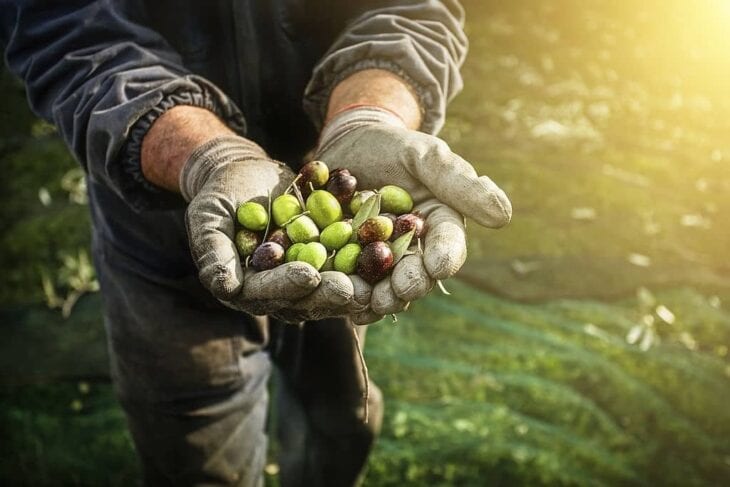
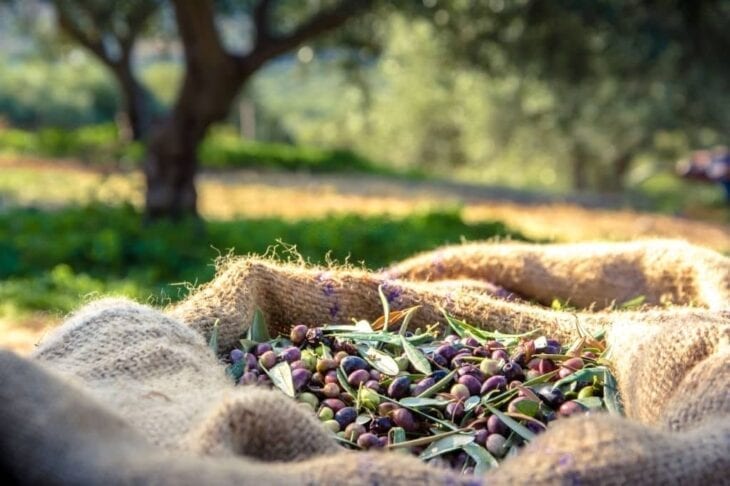
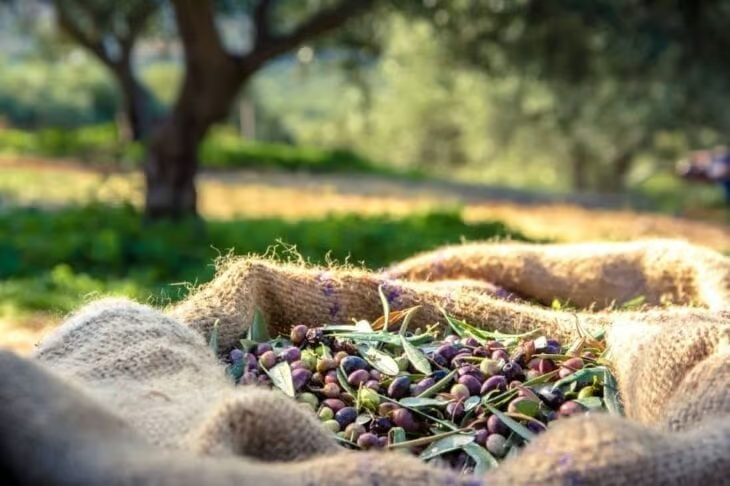
Harvest timing depends on the ripeness of the fruit. Olives change colour through a clear sequence as they ripen: green → yellow-green → straw → rose → red-brown → black. For extra virgin olive oil, most Cretan growers harvest when olives are 70–80% ripe – still partly green or turning rose – because:
- Fully black olives have higher acidity (above the 0.8% EVOO threshold) and lower polyphenol content.
- Earlier-picked olives produce oil with stronger antioxidants and the characteristic peppery finish.
- Late-harvested olives yield more oil per kilo but lower-grade oil.
In coastal areas, this stage arrives in early November; in mountain groves, the harvest can wait until December or January.
How Are Olives Harvested in Crete?
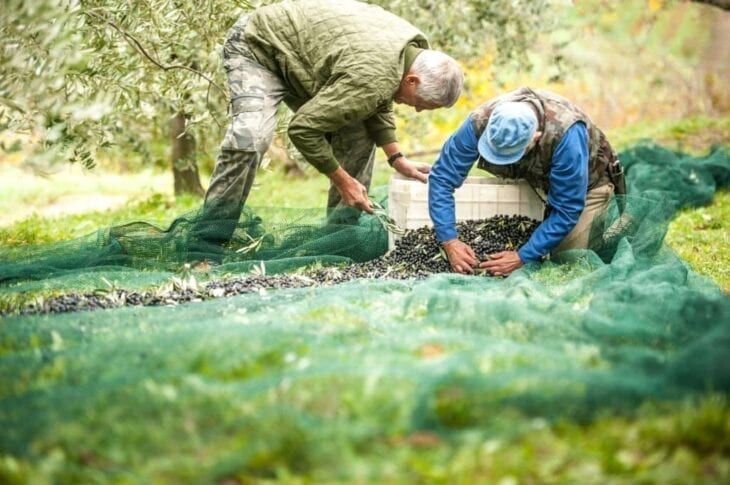
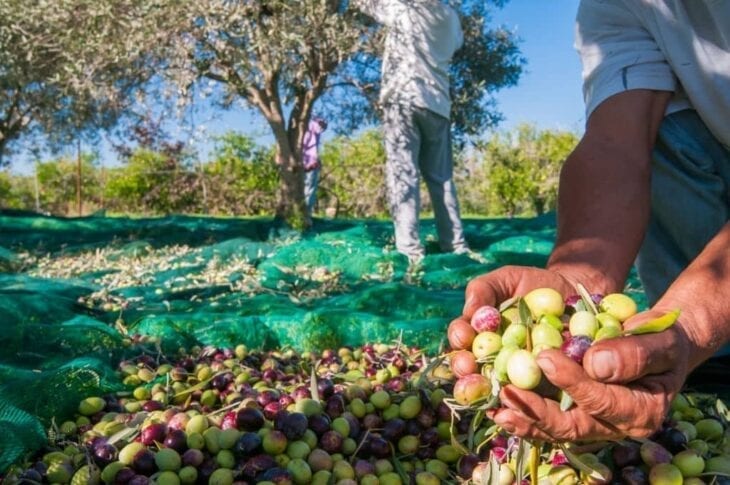
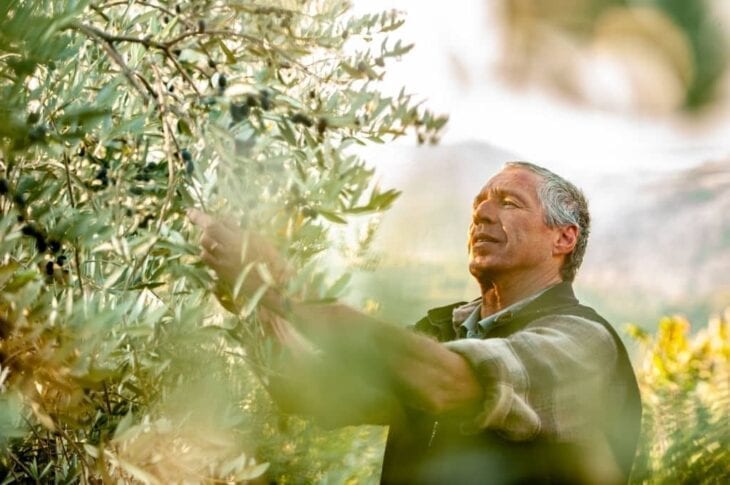
Most Cretan olives are harvested by hand rake or mechanical vibrating comb, with large nets spread beneath the trees to catch the falling fruit. Of all the agricultural events that mark the Cretan calendar, the olive harvest is one of the most labour-intensive – and warmly anticipated. Many people, including residents of Heraklion, Athens, and even Thessaloniki, take time off work to return to their family groves; the more hands, the lighter the work.
The Three Main Harvest Methods
Cretan olives are harvested using three main methods:
- Hand rake (most common): A long-handled rake (the masevelo) is drawn through the branches, knocking ripe olives onto nets spread below. The traditional name for this gathering work is liomazema. Used by virtually all family operations.
- Mechanical vibrating comb (elettiko): A generator-powered stick with rotating rubber fingers shakes fruit from branches – faster than hand-raking but louder, and best on flat ground.
- Shaker harvester: Used on larger commercial groves; grips the trunk and vibrates it to release the crop in seconds.
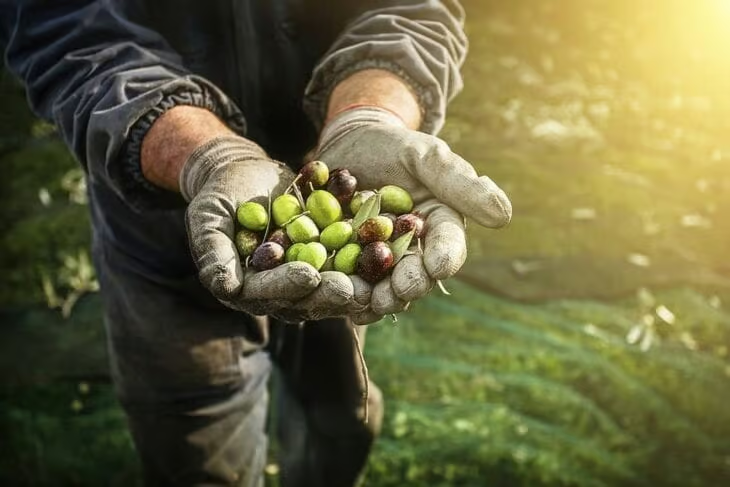
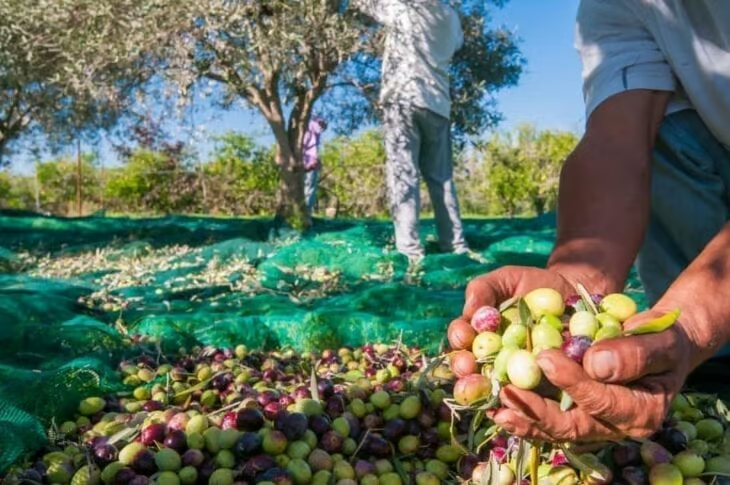
Once growers judge the olives to be at 75–80% ripeness, pickers spread the black mesh nets under the trees and begin harvesting. Harvesters rake the ripe olives from the branches, letting them fall onto the nets below. Workers then gather the fallen fruit into bins, filtering out leaves and bits of stem as they go. It’s sociable work, and in many cases festive – the olive harvest often serves as a family reunion.
From Grove to Bottle: How Cretan Olive Oil Is Made
After harvest, olives are cold-pressed within hours at the village mill, producing extra virgin olive oil with acidity below 0.8% – the standard that sets EVOO apart. Most communities have their own press; producers usually book an appointment because the season is so busy. Pressing within 12–24 hours of harvest preserves the polyphenols and oleic acids that give Cretan oil its peppery flavour and health profile.
The process at the mill, step by step:
- Wash and de-leaf. Workers wash the olives and pick out remaining leaves before pressing.
- Stone milling. A stone mill (or modern hammer mill) grinds the clean olives – pits and all – into a paste.
- Malaxation. The paste is gently kneaded for 20–40 minutes at under 27 °C, encouraging oil droplets to coalesce.
- Cold pressing / centrifugation. A centrifuge separates the oil from the remaining water and solids, yielding fresh-pressed Cretan EVOO.
- Settling and storage. The oil rests briefly to allow any fine particles to settle, then is bottled or stored in stainless-steel tanks.
This is how Cretan extra virgin olive oil (EVOO) is made – cold-pressed at under 27 °C to preserve the polyphenols and oleic acids that give Koroneiki-variety oil its distinctive flavour. Inferior grade oils use heat or chemical extraction, which destroys these compounds and pushes acidity beyond the 0.8% EVOO threshold. A standard 45 kg bag of Cretan olives yields approximately 9–10 kg of oil (a yield of about 20–22%).
The rich scent of olives being pressed fills the air across Cretan villages from November through January – one of the most evocative smells of the Cretan year.
Why Cretan Olive Oil Is Different: The Koroneiki Variety
Crete’s dominant variety, Koroneiki, produces small, oil-rich olives with high polyphenol content, giving Cretan extra virgin olive oil its characteristic peppery finish and exceptional health profile.
- Koroneiki trees thrive in Crete’s rocky, dry terrain and resist drought – well-suited to the island’s climate.
- The variety’s high oleic acid content (typically 65–80%) gives Cretan EVOO its stability (a long shelf life) and its monounsaturated-fat health profile.
- Koroneiki olives are small but rich in polyphenols (especially oleocanthal and oleuropein), the natural antioxidants linked to anti-inflammatory effects in scientific studies.
- Crete also produces PDO-certified oils from Sitia, Kolymvari, and Viannos – among the most decorated Cretan EVOOs.
- Many Koroneiki groves exhibit biennial bearing (heavy crop one year, lighter the next) – a natural rhythm that affects both pricing and harvest scheduling.
For a scientific overview of Cretan olive oil quality and polyphenol content, see Kiritsakis, A.K. (1998), Olive Oil: From the Tree to the Table (Food & Nutrition Press), and the Hellenic Ministry of Rural Development and Food standards for PDO Cretan olive oils.
How to Join the Olive Harvest in Crete
Visitors in Crete between October and January can join a harvest experience through specialist agritourism operators – no experience required, just willingness to work outdoors. Extra hands are always welcome.
Agritourism Operators and Harvest Experiences
- Cretan Gastronomy Center (Argyroupoli, Rethymno regional unit) – offers complete educational experiences combining harvest work, olive oil tasting, and cooking sessions with fresh local produce.
- Hand Picked Greece – agritourism specialist providing curated, hands-on experiences specifically built around the olive harvest.
- Local farm stays – many family-run estates across the Heraklion, Rethymno, and Chania regions accept guests during harvest season; ask your accommodation host.
What to Expect on a Harvest Day?
A typical harvest experience includes:
- Morning in the grove – raking olives onto nets, gathering, and filling bins (3–4 hours)
- Communal lunch – Cretan dishes prepared with this year’s oil, often with raki and mantinades
- Mill visit – watching your morning’s harvest being washed, milled, and pressed into oil
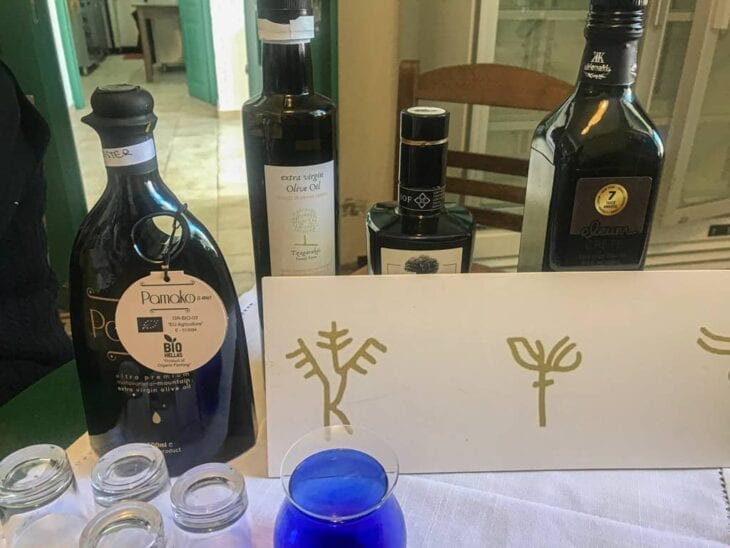
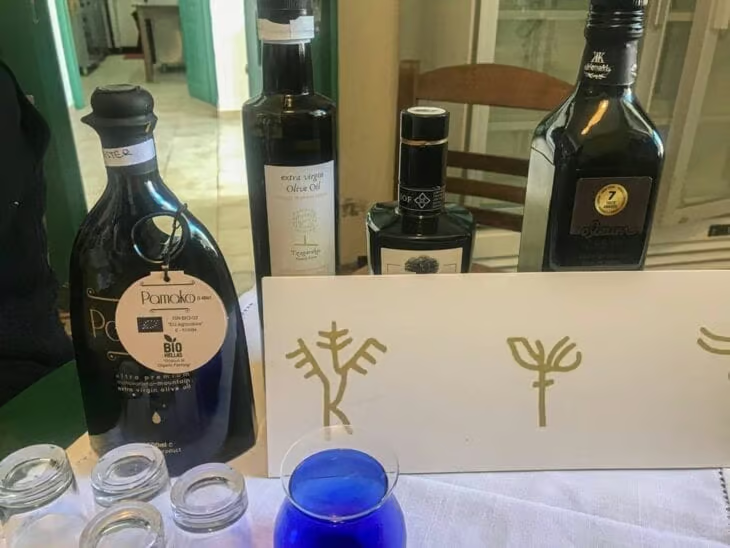
- Olive oil tasting – comparing freshly-pressed oil with last year’s, and sometimes other varieties
- Soap or cooking workshop – making olive oil soap, learning to cook with EVOO, or visiting other artisan producers
Olive oil tastings are deeply rewarding. High-quality EVOO is complex and nuanced; freshly-pressed oils often have a peppery, almost spicy bite, with a hit of acidity. There’s a reason a bowl of fresh oil and country bread – the humblest of repasts – can be so satisfying.
The Oldest Olive Tree in Crete: Vouves
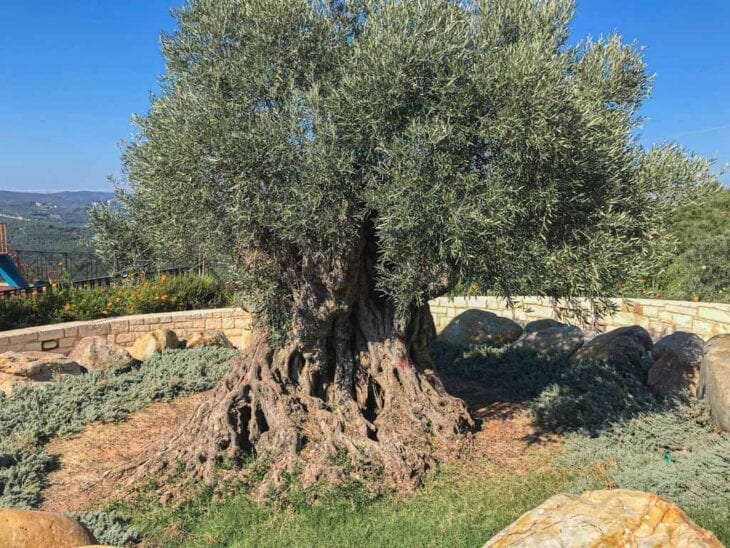
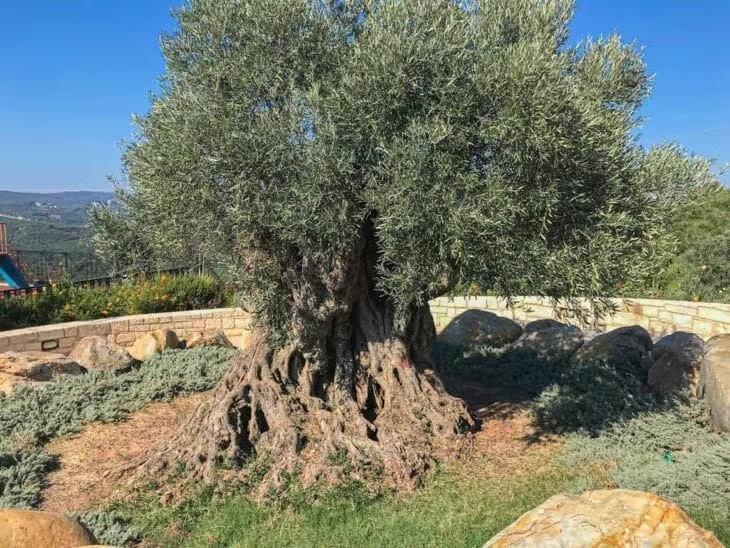
The Olive Tree of Vouves, in the Chania region near Kolymvari, is estimated to be at least 3,000–4,000 years old and still produces olives – making it one of the oldest living trees in the world. Crete is blessed with about 30 million olive trees, but this single tree at Ano Vouves is unique.
Tree-ring analysis suggests it is at least 2,000 years old; the University of Crete estimates roughly twice that – around 4,000 years, making it a living relic of the Bronze Age and Minoan civilization. Its trunk is enormous: over 4.5 m in diameter and about 12.5 m in circumference. It has been declared a protected natural monument.
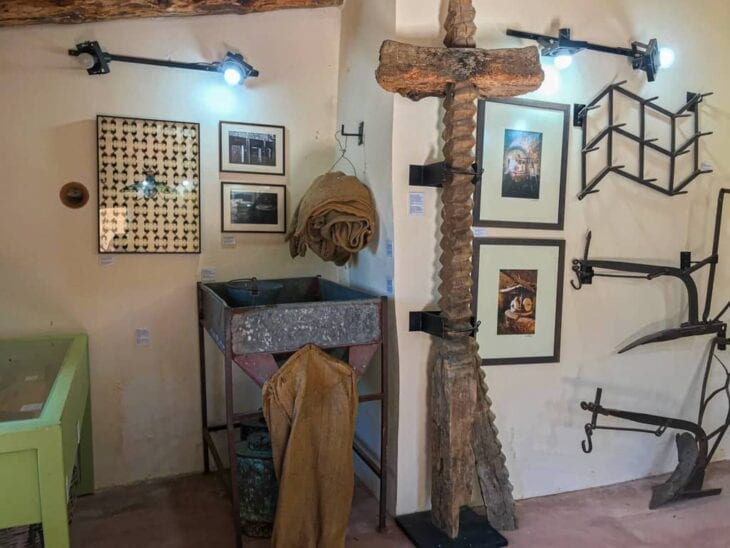
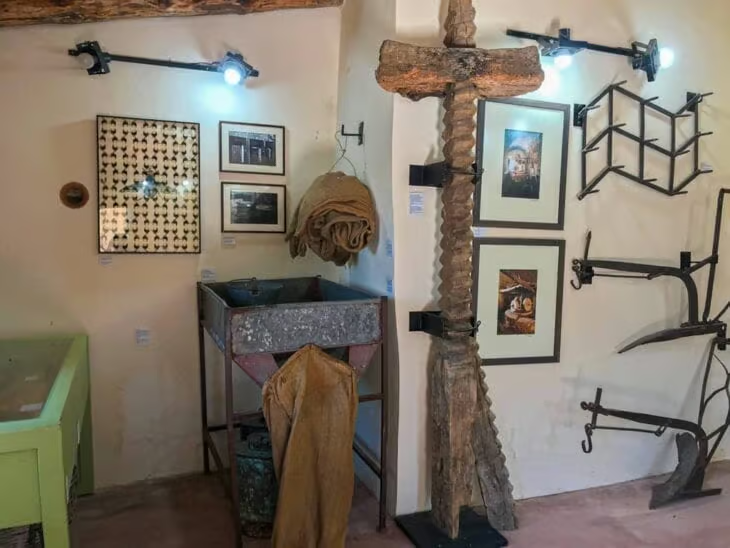
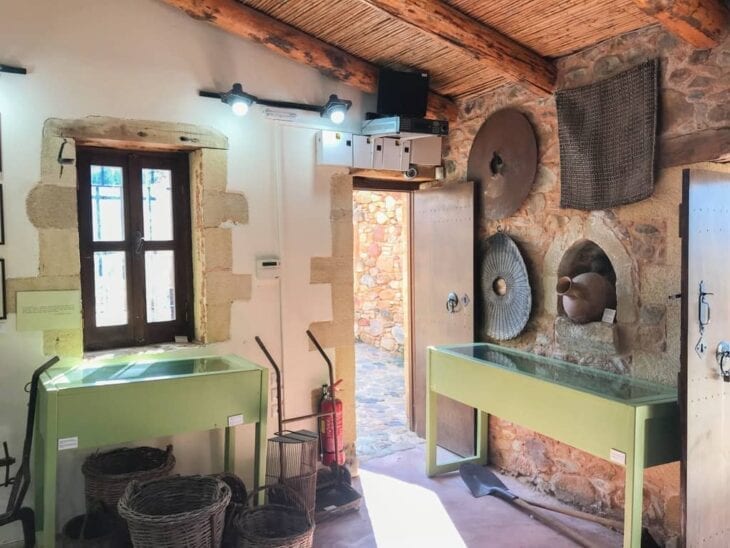
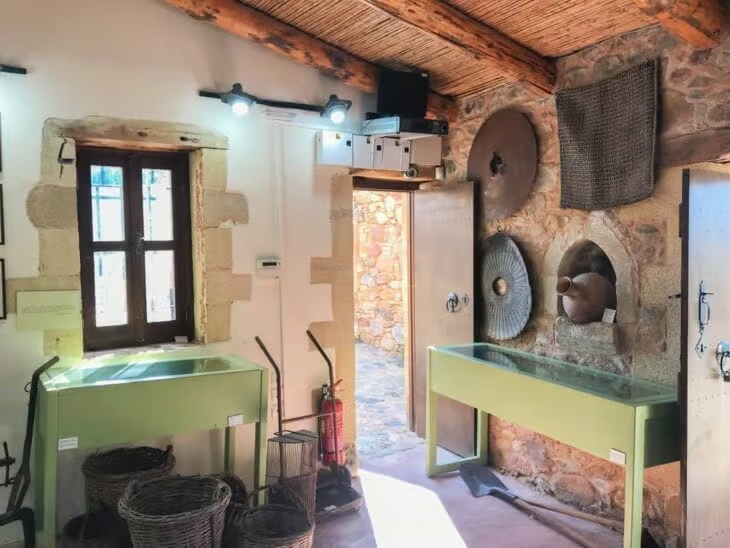
It still produces olives – and honours: wreaths made from this tree crowned the victors of the 2004 Olympic Games in Athens and the 2008 Beijing Olympics. There is a small museum near the famous tree displaying traditional olive-harvesting tools and explaining the long history of olive cultivation on Crete. The Olive Tree of Vouves is well worth the drive.
Frequently Asked Questions
Here are answers to the most common questions travellers have about Cretan olive oil and the harvest season.
What month do they pick olives in Greece?
In Crete and most of Greece, olives are picked from late October through January, with November and December as the peak weeks. Mountain groves can run into late January some years.
Can I bring olive oil back from Crete?
Yes – passengers flying within the EU can bring unlimited amounts of olive oil in checked luggage. For carry-on, the standard 100 ml liquid rule applies. Heraklion and Chania airports both stock locally produced Cretan olive oil in airside shops, making it easy to buy just before boarding.
Can I take olives or olive oil from Greece to the United States?
For the US, commercially packaged olive oil is permitted in checked luggage with no quantity limit (subject to airline weight rules). Whole or unpasteurised olives may be subject to USDA agricultural restrictions – check the latest US Customs and Border Protection rules before travelling.

Which Greek island produces the best olive oil?
Crete produces more olive oil than any other Greek island, and is consistently ranked among the world’s top extra virgin olive oil sources. The island accounts for roughly 35% of all Greek olive oil production. PDO-certified oils from Sitia, Kolymvari, and Viannos are among the most decorated Cretan EVOOs.
When should I book an olive harvest experience in Crete?
Book at least 2–3 months ahead for November–December dates – the most popular weeks fill up quickly. Some operators offer last-minute slots in late October or January when demand is lighter.
Why is Cretan olive oil considered healthy?
Cretan EVOO from the Koroneiki variety is high in monounsaturated oleic acid (typically 65–80%) and rich in polyphenols (especially oleocanthal and oleuropein) – both linked to anti-inflammatory effects in published research. The Mediterranean Diet, of which Cretan olive oil is a cornerstone, has been studied since the 1958 Seven Countries Study by Ancel Keys, which identified Crete as having one of the longest life expectancies in the world.