Crete Geography: Beaches, Mountains, Gorges and Plateaus

Crete Geography: Beaches, Mountains, Gorges and Plateaus

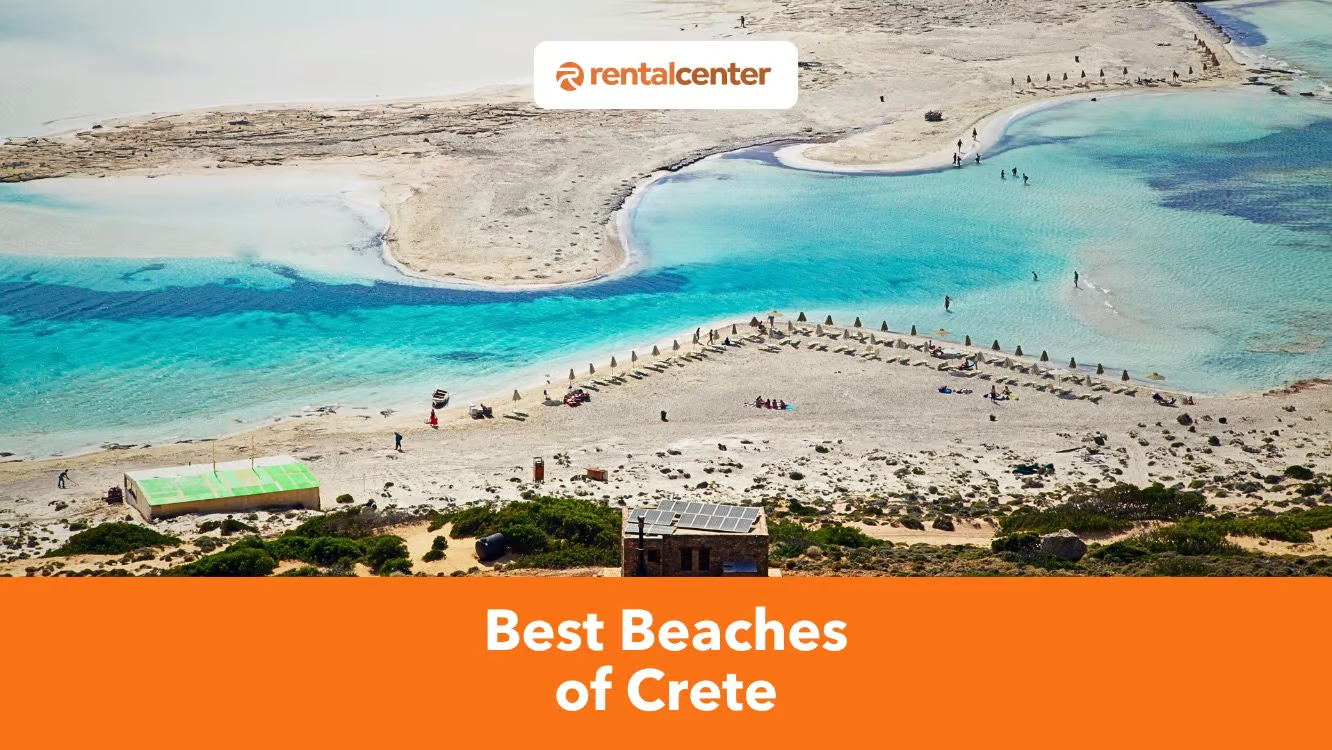
Crete's geography is remarkably diverse, featuring stunning beaches, rugged mountain ranges, fertile plateaus, and dramatic gorges. The island is divided into four main regions: Heraklion, Lasithi, Rethymno, and Chania, each with distinct geographical characteristics. Read article

Greek Language: Facts, History, Structure and Culture

Greek Language: Facts, History, Structure and Culture

Greek, one of the oldest recorded Indo-European languages, dates back to the 15th century BCE. Modern Greek, the official language of Greece, evolved from Ancient Greek and has been in use since Greece's independence in 1829.Greek, a highly inflected language, has a rich grammatical structure and notable dialects, including Cretan, Pontic, and Tsakonian. Its alphabet, with 24 letters, defines its identity. Read article

11 Famous Food and Drinks to Try in Crete

Famous Food and Drinks to Try in Crete

Crete, the largest and most populous Greek island, is known for its beaches, ancient ruins, and vibrant cities. Crete offers diverse adventures and Cretan foods, allowing visitors to explore its renowned culinary tradition. Cretan cuisine, one of the world’s oldest, combines simplicity with rich flavor, making it both nutritious and delicious. While it shares some similarities with Greek cuisine, Cretan cooking has unique characteristics that set it apart. Cretan cuisine emphasizes fresh, local ingredients, including fish, mountain herbs, greens, bulbs, distinctive cheeses, and the famous Cretan olive oil. Cretan Drinks  Crete’s mountainous landscape and strong traditional culture further distinguish it from mainland Greece. Crete’s drink culture centers around three main drinks: raki (tsikoudia), a strong grape-based spirit, local wines, craft beers from the island’s expanding microbrewery scene, greek coffee and Cretan Mountain Tea. Read article

15 Ways to Choose the Right Car to Rent in Crete

Choose Crete car hire

As a tourist making preparations for a vacation to Crete in Greece, deciding on the right Crete car rental has a significant impact on the quality of their time there. It is necessary to choose a car that is not only comfortable but fuel efficient given the multitude of twisting roads and steep hills on Crete. Consider the requirements, the number of people who are travelling with, the amount of money available, and the terrain that one is going to be driving on when selecting the vehicle to hire on Crete. SUVs such as the Volkswagen T-Roc and Nissan Qashqai are good for travelling on more difficult terrain, whilst compact vehicles such as the Fiat Panda and the Hyundai i10 are perfect for driving in the city and on roads that are narrower. Consider renting a minivan if someone is going on a trip with a large group of people or if they have a lot of luggage. Therefore, it is crucial to rent a car that is durable, meets one’s needs, and does not surpass their budgetary limits. Read article

Cretan Wines, Wineries in Crete & Wine Routes

Cretan Wines and wineries

Crete’s wine culture spans over 4000 years, evidenced by Europe’s oldest vineyard discovered in Kato Zakros and a 3500-year-old wine press found in Archanes. Wine deeply intertwines with Cretan life, with viniculture festivals showcasing traditions enhanced by modern knowledge and technology. Carefully selected vineyard sites and favorable climate nurture distinct grape varieties, yielding premium wines that pair excellently with nutritious Cretan cuisine, making it a culinary highlight for visitors. Read article

Crete Historical Sites, Landmarks, Fortresses and Points of Interest

crete historical sites

The island of Crete is not just a beautiful holiday destination. It is one of the richest cultures and landmarks. There are many archaeological sites on the island of Crete. Crete is the largest and most populous island in Greece. The island of Crete is mostly mountainous, and its character is defined by a high mountain range crossing from west to east. It is located in the southern part of the Aegean Sea, separating the Aegean from the Libyan Sea. Read article

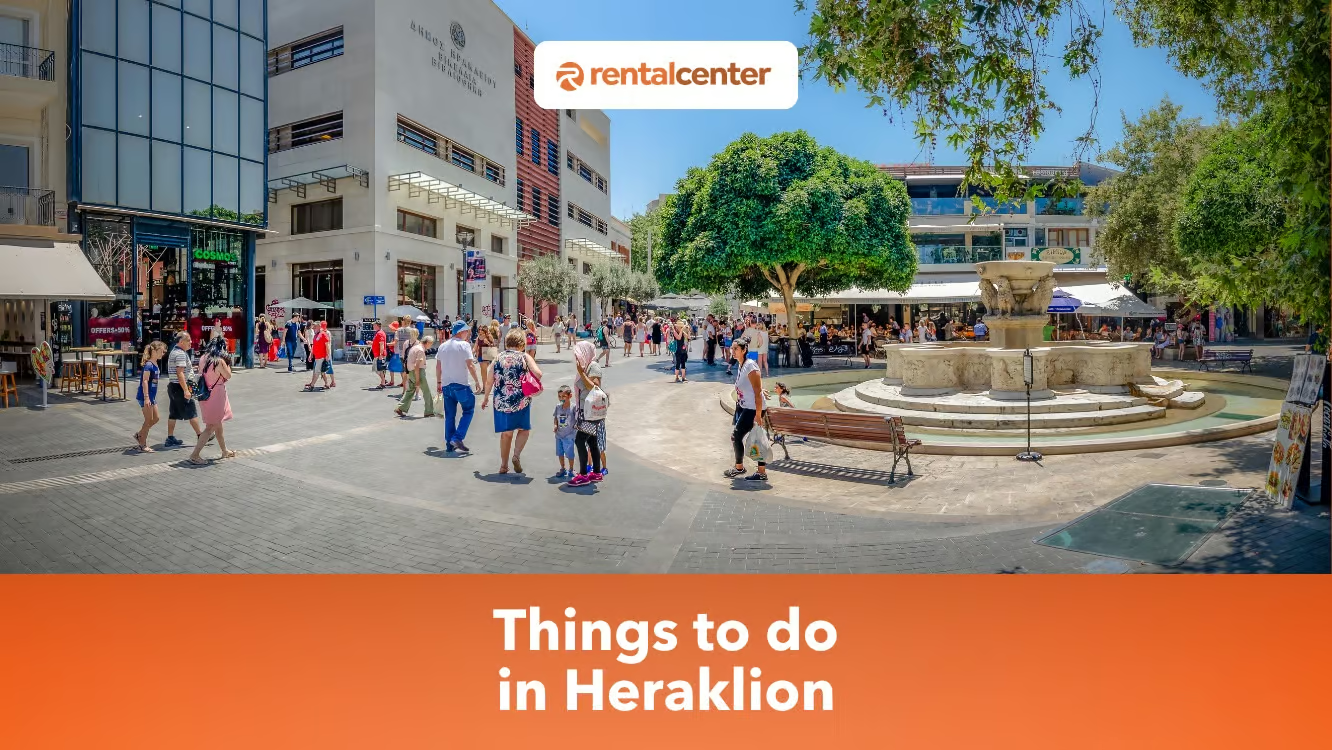
Heraklion Crete: History, Tour, Cost, Travel Guide and Car Rentals

Heraklion

Heraklion, or Iraklion, is the capital of the island of Crete. It is Greece’s fifth-largest city. Its name derives from the ancient Roman port of Heracleum. The ancient history of Heraklion is strongly associated with the Minoan Palace of Knossos. Ancient Historians refer to Heraklion as the port of Knossos, the heart of the Minoan Civilization. The city centre is inside the fortress built by the Venetians and fortified by the Ottomans. The Heraklion Archaeological Museum is the city’s most important attraction. The Archaeological Museum of Heraklion is where the most beautiful frescoes can be seen. At present, Heraklion is Europe’s fastest-growing destination for 2017. Heraklion, today, is a modern town that offers extensive facilities that cater for all needs of its visitors. Tourists who visit Heraklion will also love hiking and walking tours around the area. One can easily explore the nearest cafés, museums, and local markets. There are several ways to explore and tour going to the Heraklion. One can opt to use a public bus or taxi. Read article

12 Archaeological Sites of Crete

Crete Archaeological Sites

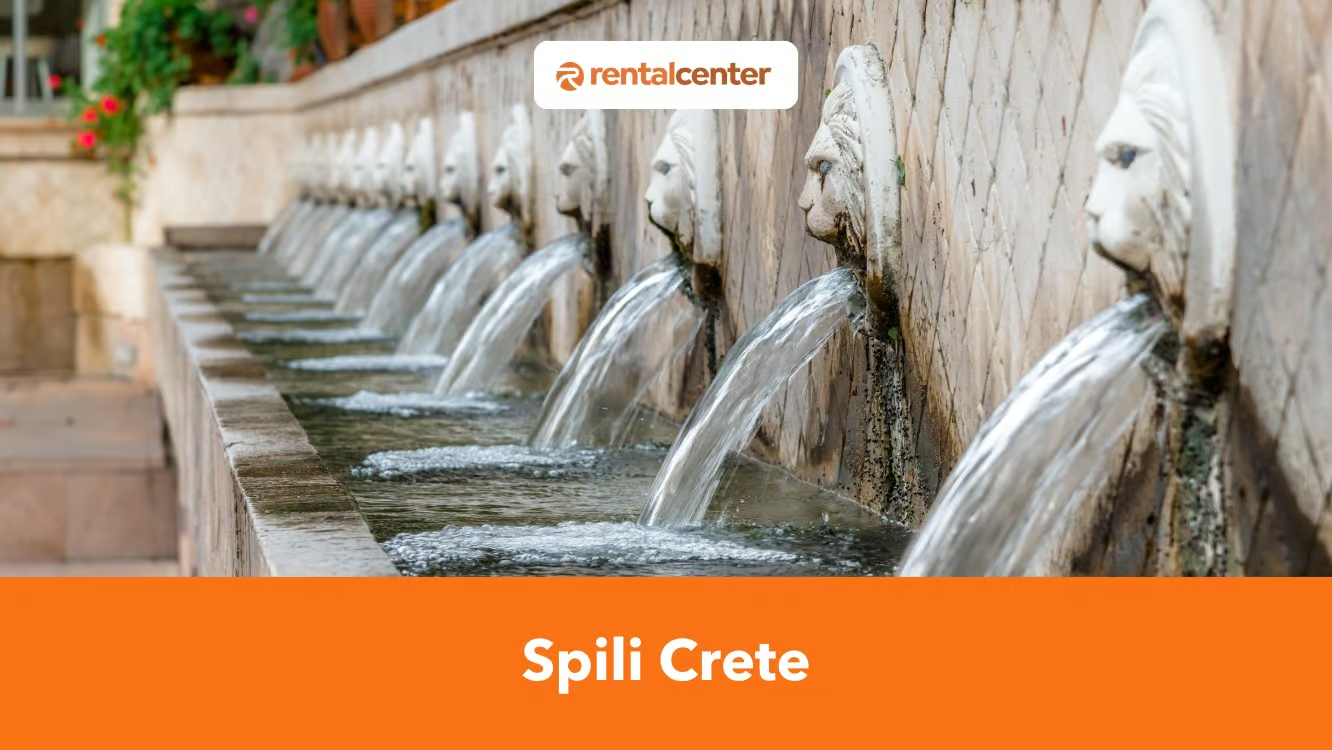
Crete is an island in Greece that has a long and illustrious history that dates back thousands of years. It is home to a large number of famous archaeological sites, and ancient Greek ruins, each of which provides a unique perspective on the history of the island. Some of the well-known archaeological sites of Crete include the Knossos archaeological site, Phaistos archaeological site, Spinalonga archaeological site, Gortyna, Aptera, Malia palace, Petras, Kommos, Falassarna, Gournia, and the Armeni archaeological site. The history of Crete dates back to the Neolithic period, around 7000 BCE, when the first settlements were established on the island. In the Bronze Age, Crete was home to the Minoan civilization, which flourished from around 2600 to 1100 BCE and was one of the most advanced civilizations of its time. The Minoans developed a sophisticated culture, which included impressive architecture, art, and a writing system that is still not fully deciphered. Read article

Icarus and Daedalus: The Story of the popular Greek myth!

Icarus and Daedalus: The Story of the popular Greek myth!

Daedalus and Icarus were father and son in Greek mythology. Daedalus was a skillful architect and craftsman, while Icarus was his only child. King Minos of Crete imprisoned Daedalus and Icarus in the Labyrinth, a maze-like structure that housed the Minotaur, a monstrous creature with the head of a bull and the body of a man. Daedalus made wings of feathers and wax to escape from the island for himself and his son. Daedalus warn Icarus not to fly too close to the sun or too low to the sea, but Icarus was overcome by excitement and flew higher and higher until the wax melted and his wings fell apart. Icarus fell into the sea and drowned. In his honour, the sea near Icaria, where his body was washed ashore, was called the Icarian Sea. Read article

18 Best Crete Gorges You Need to Visit

Best Crete Gorges

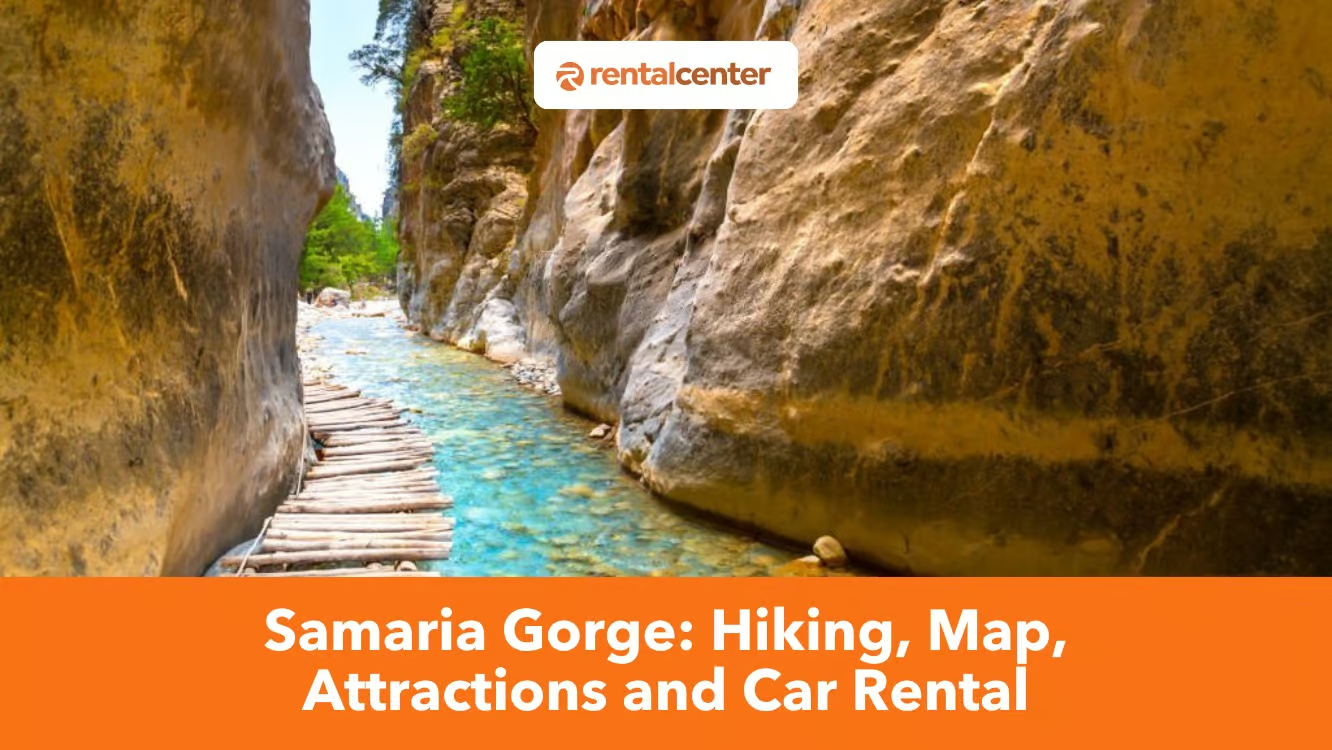
Crete is the largest and most populous island in Greece. It is ranked 88th largest island in the world. Crete hosts the largest number of gorges in Greece. For years, hiking has been a tourist attraction in Crete. More and more tourists, mostly from German-speaking countries, come for hiking. Most Crete Gorges hikes start in the mountains and end at sea.  Some gorges will require mountaineering equipment to climb. Other gorges can be accessed by walking on easy trails for just a few hours. The Samaria Gorge National Park is one of the most prominent gorges in Crete. It has been Greece’s National Park since 1962. Most hikers will love the Samaria Gorge National Park because it offers many hiking trails with majestic views. The Samaria Gorge National Park can be considered a Crete budget-friendly gorge. The Topolia Gorge, in the inland area of Kissamos, offers an impressive landscape. Topolia Gorge is known to locals as the “Gorge of Caves”, due to the many caves found along its route. According to local traditions, Topolia Gorges hosted fairies and the magical Minoan Goddess Vritomartis. The Ha Gorge is located on the west side of the Thrypti mountains near Vasiliki and the small village of Monastiraki. The gorge is very narrow, and the walls rise hundreds of metres. The area inside Ha Gorge is an important wildlife habitat. Crete has the best gorges every tourist needs to visit. Read article

14 Ancient Cities in Crete

Ancient Cities in Crete

Crete is the biggest island in Greece that contains plenty of stunning archaeological ruins and historical cities. It has plenty of ancient cities with different historical stories that will amaze tourists in their city. The first civilizations that lived in Crete were the civilizations Minoan. Crete also became the primary location for the Aegean’s Bronze Age culture. The culture of Minoan arose in the 15th century, where Crete was renowned for its largest cities and buildings. In modern day, the ancient cities of Crete became popular with tourists for its incredible attractions. Each of the cities can offer both historical sites and nature adventures. Read article

Agios Nikolaos Crete: History, Travel Guide and Car Rentals

Agios Nikolaos

Agios Nikolaos is a picturesque coastal town located on the northeastern part of the island of Crete in Greece. The town was built around a beautiful, deep inlet of the sea known as the Gulf of Mirabello. This natural harbour is surrounded by high cliffs and linked to the sea by a narrow channel. At the center of Agios Nikolaos is the charming Lake Voulismeni, which adds to the scenic landscape of the town. Read article

Milatos Crete: Beaches, Things to do, Travel Guide and Car Rental

Milatos, Crete

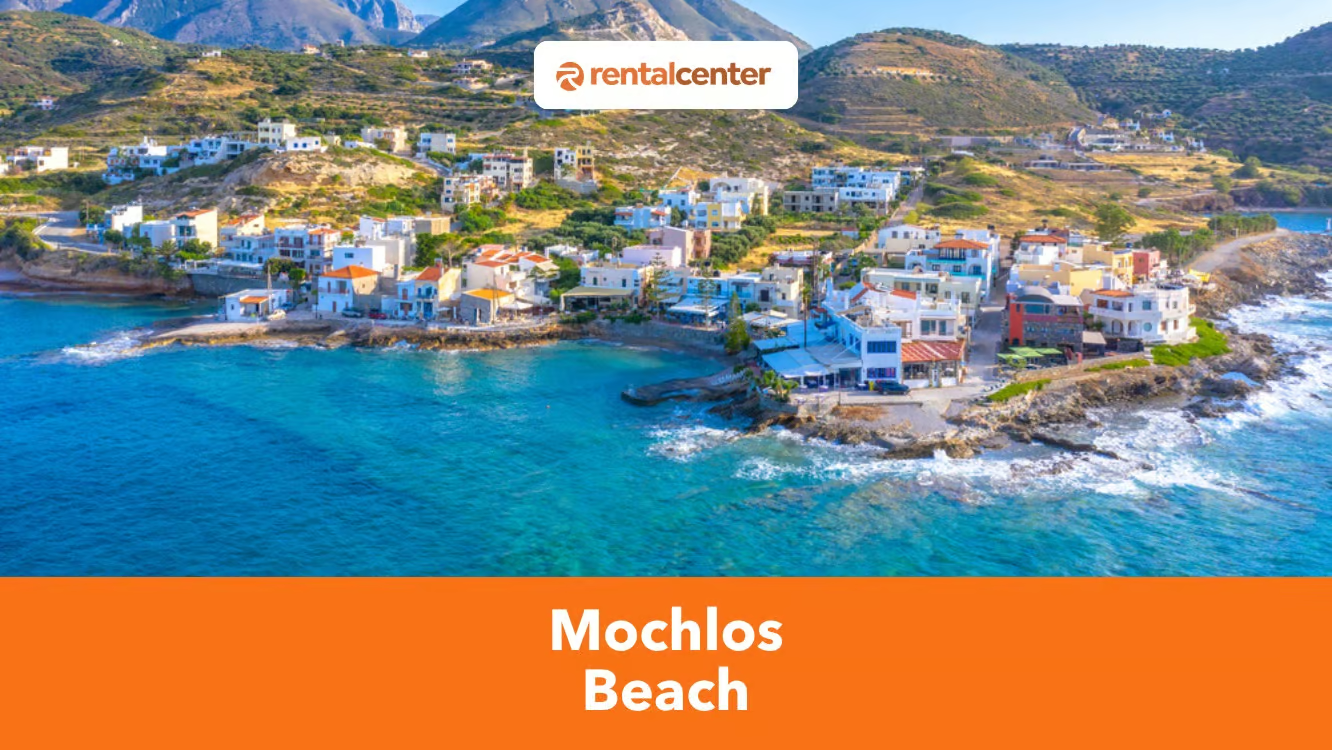
Milatos is a village located on the northern coast of Crete, Greece, 47.2 kilometers (29.33 miles) east of Heraklion and 25 kilometers (15.53 miles) from Agios Nikolaos. The village consists of the main settlement, located 1 kilometer (0.62 miles) inland, and the coastal area known as Paralia Milatou or Milatos Beach. Milatos has ties to the ancient Minoan city of Milatos, which was destroyed by the city of Lyttos in the 3rd century BC. Homer mentions Milatos as one of the Cretan towns that sent troops to fight in the Trojan War, according to legend. The best way to get to Milatos is by rental car, bus and taxi. A medium-sized rental car is the best vehicle for visiting Milatos, offering a balance of comfort, maneuverability, and fuel efficiency. Renting a car in Crete is popular among tourists and prices starting from €30 ($33, £27) per day for a medium-sized vehicle. Factors to consider when renting include insurance coverage, driver's age and gender, car type, hotel delivery, one-way rental possibility, and required documents. Read article

Istro Beach: Location, Map, Travel Tips and Car Rental

Istro Beach

Istro Beach on Crete's eastern coast, 12 km (7.5 miles) southeast of Agios Nikolaos, has turquoise waters, golden sand and calm sea, ideal for swimming and snorkeling. Istro Beach holds Blue Flag status, ensuring excellent water quality, safety and amenities like sunbeds, umbrellas, showers, changing rooms and beachside cafes. Visitors can enjoy jet skiing, paddleboarding, and banana boat rides. Istro Beach is accessible by rental car, with nearby parking, as well as buses and taxis from towns like Agios Nikolaos. Read article

Pachia Ammos Beach: A small sandy beach near Ierapetra Crete!

Pachia Ammos Beach

Pachia Ammos Beach, a sandy stretch on Crete's southern coast, lies near Mirthios village, 10 kilometers (6.21 miles) east of Ierapetra, 95 kilometers (59 miles) from Heraklion, and 17 kilometers (10.6 miles) east of Agios Nikolaos. This secluded beach, bordered by steep cliffs and the Libyan Sea, features soft beige sand that blends into calm blue waters. The name "Pachia Ammos" aptly refers to the beach's dense sands. Read article

Vathi Beach Kritsa: A gem beach near Agios Nikolaos Crete!

Vathi Beach Kritsa

Vathi Beach is a man-made beach 10 kilometers south of Agios Nikolaos in the Kritsa area of eastern Crete. Created in 2010 alongside the Daios Cove hotel, Vathi Beach is in a narrow, circular bay, well-protected from wind, resulting in calm, waveless waters ideal for swimming and families. Vathi Beach is popular for a beach experience and serves as a base for exploring Mirabello Bay's cultural and natural attractions. Vathi Beach sits in a narrow, wind-protected bay, facing east on Mirabello Bay. Vathi Beach is an artificial beach, created during the construction of the Daios Cove hotel in 2010. Vathi beach is lesser-known due to its recent creation.

What is Vathi Beach?

Vathi Beach is a man-made beach 10 kilometers south of Agios Nikolaos in the Kritsa area of eastern Crete. Created in 2010 alongside the Daios Cove hotel, Vathi Beach is in a narrow, circular bay, well-protected from wind, resulting in calm, waveless waters ideal for swimming and families. Fine white sand enhances the blue-green sea colors. Daios Cove resort organizes and maintains the beach, offering sun loungers, umbrellas, showers, and toilets. While easily accessible to hotel guests, others reach the beach via a concrete path and staircase to the left of the hotel entrance. Lesser-known due to its recent creation, Vathi Beach is popular for a beach experience and serves as a base for exploring Mirabello Bay's cultural and natural attractions.

Where is Vathi Beach located?

Vathi Beach lies 10 kilometers south of Agios Nikolaos in Kritsa, Crete. Vathi Beach sits in a narrow, wind-protected bay, facing east on Mirabello Bay. Vathi Beach is an artificial beach, created during the construction of the Daios Cove hotel in 2010. The bay was filled with fine, whitish sand, enhancing the color of the clear waters. Daios Cove hotel operates and organizes the beach. Calm, wave-free waters make Vathi Beach ideal for families. Visitors can explore the rocky gulf shores with snorkeling masks.

How does the Vathi Beach Map look?

Find below an image showing the map of Vathi beach.

What are the activities in Vathi Beach?

The activities of Vathi Beach with a focus on water sports, swimming, snorkeling and enjoying the sandy shore, while also serving as a base for exploring the cultural and natural wonders of the region.Scuba diving is available for exploring the underwater world around Vathi Beach. Snorkeling is popular, particularly along the rocky bay edges. Clear waters make snorkeling ideal for observing marine life. Jet skiing, sailing, and waterskiing rentals are also available.Calm, waveless waters make Vathi Beach ideal for families to swim and relax. Umbrellas and beach mats are available for rent. Tamarisk trees around the beach provide natural shade.

When is the best time to visit Vathi Beach?

Summer is best time to visit Vathi Beach on a beach-focused trip, while the shoulder seasons of late spring and early fall provide pleasant weather for sightseeing with fewer crowds. Winter is the quietest time but can still be enjoyable, especially if you base yourself in larger towns like Agios Nikolaos near Vathi Beach.Summer is the most popular time to visit Crete, with hot, dry weather averaging 27.5°C to 29.5°C (81.5℉ to 85.1℉). Summer offers 9 to 12 hours of sunshine daily with minimal rainfall. Summer guarantees good weather for beach holidays, swimming, and water sports.Spring and autumn have warm weather, with temperatures ranging from 17°C to 23.7°C (62.6℉ to 74.7℉). Spring and autumn offer 5 to 10 hours of sunshine daily but with a higher chance of rain than in summer. Late April to early June and September to early October are ideal for sightseeing, hiking, and exploring with fewer crowds.Crete’s winter is mild, wet, and blustery, with temperatures averaging 15.3°C to 17°C (59.5℉ to 62.6℉). Winter has about 4 hours of sunshine daily and a high likelihood of rain from December to February. Tourist sites, accommodations, and restaurants may reduce hours or close in winter, especially in smaller villages.

How do you get to Vathi Beach?

Vathi Beach is accessible by car, with a drive from Agios Nikolaos. From Nikos Kazantzakis International Airport in Heraklion, rent a car and take the national road along Crete's northern coast. The drive takes about an hour. Turn left before the Daios Cove hotel entrance, follow the road to nearby houses, and take the narrow street leading to staircases down to the beach.

What are the factors to consider before renting a car in Crete?

Listed below are the factors to consider before renting a car in Crete:

How much does a car hire in Crete cost?

Crete car hire costs vary by trip duration, vehicle type, rental company, and season. A week-long car rental in Crete typically costs €185 ($233, £165) to €255 ($320, £228) for an economy or compact car. Day-trip rentals usually range from €32 ($40, £29) to €46 ($58, £41) per day. Night trips or weekend rentals average €65 ($82, £58) to €93 ($117, £84) for two to three days. Economy and mini cars, like the Fiat Panda or Peugeot 208, are the most budget-friendly, often costing 7% less than other car types. These smaller vehicles are ideal for couples or solo travelers, renting for as low as €17 ($21, £15) to €19 ($24, £17) per day. Larger vehicles like SUVs or luxury cars can cost double or triple the price of an economy car. Peak season (June to August) sees higher rates, with prices potentially doubling compared to off-season. Rental Center Crete is a local car hire company in Crete that provides Premium Insurance included to all rentals.

Is Vathi Beach worth visiting?

Yes, Vathi Beach Kritsa is definitely worth visiting. Vathi is a well-protected beach in a narrow bay, 10 kilometers south of Agios Nikolaos. The bay's circular shape shields Vathi from the open sea, creating calm waters ideal for swimming and families. The beach features fine white sand and blue-green waters. Daios Cove resort organizes and maintains the beach. Vathi is ideal for snorkeling, with rocky shores and underwater caves around the bay's edges. Vathi, a man-made beach created in 2010, is lesser-known and usually less crowded than other area beaches. Sunbeds, umbrellas, showers, and other facilities are available. Nearby restaurants and cafes offer additional options.

Is Vathi Beach safe?

Yes, Vathi Beach is considered very safe for visitors, including families with children. The water is clear, calm, and shallow with no strong currents. Lifeguards are on duty to ensure safety. Waveless waters and a sandy shore make the beach ideal for families.

Are children permitted at Vathi Beach?

Yes, children are certainly permitted at Vathi Beach. Vathi Beach is a best beach for toddlers and well-suited for families. The beach's sheltered bay protects it from strong winds and rough waves, providing a secure setting for young swimmers. Read article

Kavros Beach: A Long Sandy Beach near Georgioupolis Crete!

Kavros Beach Guide

Kavros Beach is a 10 kilometres (6.21 miles) long, sandy shoreline on Crete's northern coast, situated between Rethymno and Chania. The beach is known for its fine golden sand and calm seas, making it an ideal spot for swimming and watersports. The nearby village of Kavros offers a range of accommodation, dining, and shopping options, catering to various visitor needs. Read article

Filaki Beach: A Naturist-friendly beach near Sfakia Crete!

Filaki Beach

Filaki Beach is one of the nudist-friendly beaches managed by Vritomartis Naturist Resort. It is located 3 km (1.86 miles) east of Chora Sfakia and 75 km (46.6 miles) south of Chania. Filaki Beach derives its name from the Greek word "filaki", which means "prison", reflecting its remote location. Read article

Mades Beach: A Small Pebbly beach near Heraklion Crete!

Mades Beach

Mades Beach, located on the northern coast of Crete, is a pebbly beach within a bay.  Mades is from the Greek word "mado" which means easily cracked rocks. Its rocky seabed, clear waters and two small islets make it a perfect place for swimming, snorkelling, beach sports and hiking. Mades Beach is located 20 kilometres (12.42 miles) northwest of Heraklion and is easily accessible by car rental, public transport or taxi. The best time to visit is during the summer months, between June and August when the weather is ideal for swimming and outdoor activities. Mades Beach has been well-preserved through environmental regulations and sustainable tourism practices. Visitors can stay at nearby hotels and enjoy dining at restaurants. Mades Beach offers free entry and is perfect for families, making it an ideal choice for a summer getaway.

What is Mades Beach?

Mades Beach is a small, pebbly beach inside a bay on the northern coast of Crete. It is located within the Gulf of Heraklion, about 20 kilometres (12.42 miles) northwest of Heraklion. Mades Beach's characteristics are the rocky seabed and two small islets. The rocky seabed is ideal for snorkelling, spearfishing and fishing due to the abundance of marine life.Mades Beach derives its name from the Greek verb "mado", meaning "to crack easily". It refers to the unstable and easily cracked stones and rocks that compose the landscape surrounding the beach. Mades Beach's history is relatively unknown, as it remained a small fishing hamlet and summer retreat. Few permanent residents only occupy homes during the summer months, making it a protected paradise.

Where is Mades Beach located?

Mades Beach is located on the northern coast of Crete, inside the Gulf of Heraklion, 20 kilometres (12.42 miles) northwest of Heraklion and 4 kilometres (2.42 miles) from the main beach of Agia Pelagia. Mades Beach is part of Crete's Malevizi region and lies adjacent to the small coastal village of Made. Mades Beach's specific geographic coordinates are a latitude of 35.3991° North and a longitude of 25.0331° East.

How does the Mades Beach Map look?

Below is an image of the map of Mades Beach Beach.

What are the activities in Mades Beach?

Mades Beach offers 4 popular activities. These are swimming, snorkelling, beach sports and hiking. Firstly, swimming is an everyday activity in the calm, clear blue waters of Mades Beach. The beach slopes gently into the sea, making it ideal for families and children. There are strong currents of waves and lifeguards are on duty during the peak summer months for safety. Secondly,  snorkelling the rocky seabed is a great activity to observe marine life. There are colourful fish and sea creatures to explore and equipment can be rented on the beach. Thirdly,  beach volleyball, frisbee, soccer and other fun beach sports and games are often played in the area. The fine pebbles provide a good surface for recreational activities. Lastly, hiking the scenic coastal paths and trails near Mades Beach. The hike offers beautiful views of the sea and surrounding landscape. One popular short hike is to the two small islets located opposite the west end of the beach.

When is the best time to visit Mades Beach?

The best time to visit Mades Beach is during the summer months, between June and August. It offers moderately warm temperatures to enjoy swimming and sunshine. Mades Beach’s average temperatures range from the mid 20°C to low 30°C (70°F to low 90°F). There is minimal natural shade available, making it advisable to bring an umbrella for sun protection. Sunscreen, hats and sunglasses are essential for a comfortable and safe beach experience.

How do you get to Mades Beach?

There are three ways to get to Mades Beach. These are by rental car, by public transportation and by taxi. Firstly, by rental car, renting a car is the most convenient way to reach Mades Beach. It takes around 20-25 minutes to drive there from Heraklion. Rental cars can take the main highway west towards Chania/Rethymno, exit at Ligaria/Mades and follow signs to the beach.Secondly, by public transportation, there is no direct bus to Mades Beach. Visitors can take public transportation from Heraklion to Agia Pelagia. Visitors can ask the driver to stop at the turn-off for Mades. Lastly, by taxi, taxis from Heraklion to Mades Beach take around 30 minutes. Taxi fare is around €35 to €40 ($37 to $42, £30 to £34) each way and rice may rise in peak season.

What are nearby attractions in Mades Beach?

Listed below are the nearby attractions in Mades Beach.

What are the factors to consider before renting a car in Crete?

Listed below are the factors to consider before renting a car in Crete.

How much does a car rental in Crete cost?

Crete is best travelled using a rented vehicle. Tourists can visit Crete's top destinations using a rented car. Crete car rental costs vary depending on the number of persons, itinerary, car type, destination and duration. Crete's average car rental price is around €30 to €40 ($32 to $42, £26 to £34) per day. A car rented for a week will cost an average of €250 ($266, £204). Renting a vehicle for the weekend will cost around €78 ($86, £67). Rental Center Crete rates differ depending on the car type. Car rental companies offer a variety of cars depending on customers' liking. Most car rental shops in Crete provide an online booking system when customers want to book a car. Simply follow the process, book a vehicle on their website, check and secure all the requirements.

How much does it cost to get to Mades Beach?

Mades Beach does not charge an entrance or admission fee. Visitors can walk right onto the beach area without having to pay. Mades Beach's costs to consider are the transportation, food and sunbed rentals. Driving and parking your car is one of the most convenient options for the Mades Beach getaway. Parking is available right by the beach. Mades Beach's food and drinks can be purchased from the small beach bar nearby. Another option to control costs is by bringing your snack supplies and drinks.

Where to stay near Mades Beach?

Listed below are the best hotels near Mades Beach.

Where to eat near Mades Beach?

Listed below are the best restaurants in and near Mades Beach.

Is Mades Beach worth visiting?

Yes, Mades Beach is worth visiting. It is ideal for individuals searching for a peaceful beach experience. The calm, clean waters are ideal for swimming and paddling. Snorkelers can also explore the interesting rocky areas and diverse marine life. Mades Beach is easily accessible from Heraklion.

Is Mades Beach safe?

Yes, Mades Beach is a safe destination for visitors. The beach has a good safety record and the local authorities take measures to ensure the well-being of tourists. Mades Beach always follows standard safety guidelines, such as paying attention to water conditions and heeding any posted warnings or flags regarding swimming conditions.

Do you need to book in advance to visit Mades Beach?

No, visitors do not need to book in advance to visit Mades Beach. It is a public beach, like most of the best beaches in Crete. Visitors can typically access the beach freely without the need for reservations. Mades Beach is relatively secluded and less crowded on the northern coast of Crete.

Are children permitted at the Mades Beach?

Yes, children are permitted at Mades Beach, as it is one of the most well-known beaches for kids and toddlers in Crete. Visitors must supervise their children closely, especially in or near the water. Mades Beach is best for families to relax and enjoy nature. Responsible parenting and safety precautions are always essential when visiting with children.

How was the preservation of Mades Beach?

Mades Beach has been well preserved over the years due to laws protecting its natural environment. Mades Beach's preservation method limits tourist crowds and man-made structures to prevent overuse and habitat disruption. Standard practices like waste management, wildlife protections and activity regulations allow enjoying the area sustainably. Maintaining a moderate number of visitors is the most effective method to uphold the peaceful atmosphere of Mades Beach. General Greek and EU environmental regulations restrict pollution, development and wildlife disturbances and enforce standard sustainable tourism practices to help keep Mades Beach's beauty. Read article

Argilos Beach: A Natural Clay Spa Beach in Xerokampos Crete

Argilos Beach 2023

Argilos Beach is a natural clay spa beach located in the Xerokampos settlement on the southeastern coast of Crete. The beach's unspoiled environment makes it a perfect destination for those seeking natural beauty. Argilos Beach provides a stunning backdrop for a relaxing day by the sea with its crystal-clear waters, fine golden sand and surrounding cliffs.One of the standout features of Argilos Beach is the presence of natural clay. The beach is rich in white clay, which visitors can use for a unique spa experience. Many beachgoers set themselves in mud baths by scooping up the clay and applying it to their skin, which is believed to have beneficial properties. Read article

Page 7 of 16
15678916
Rental Center Crete Large Hero